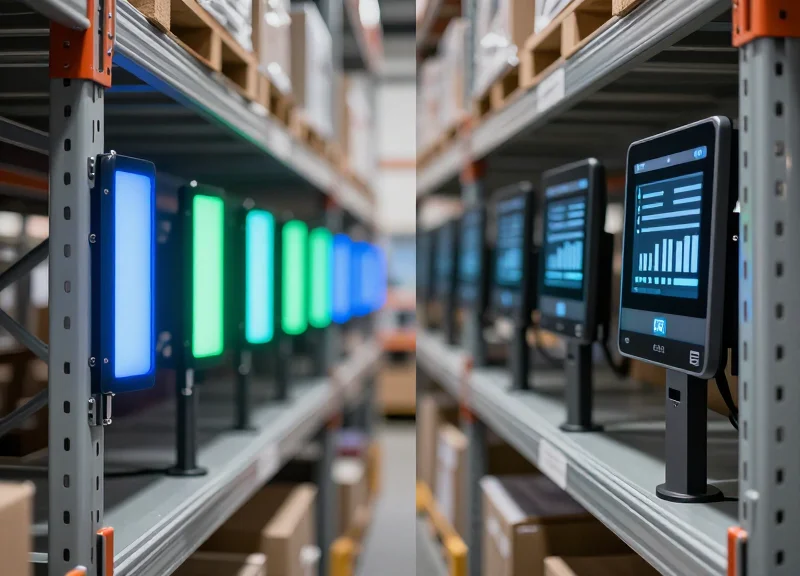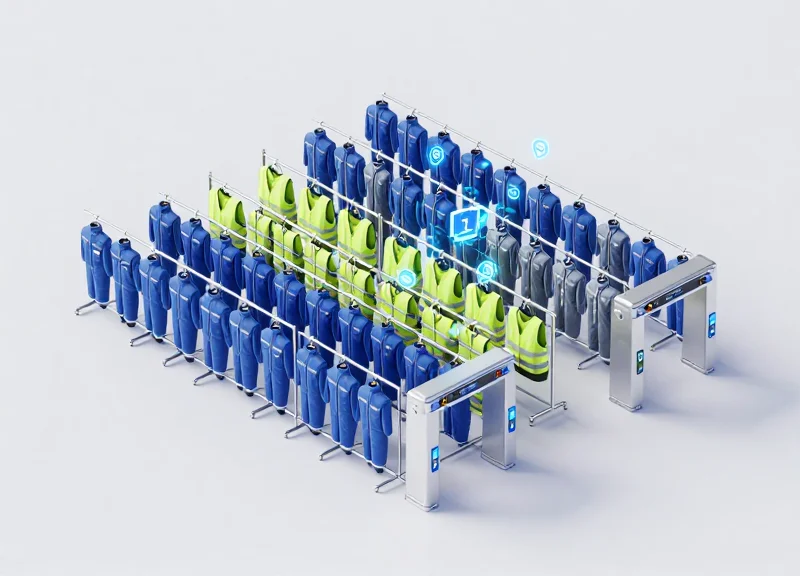
As we approach 2026, the industrial sector is undergoing a massive digital transformation where the humble work uniform is becoming a critical data point for operational efficiency. Once viewed merely as protective gear, smart workwear now integrates sophisticated tracking technologies to manage inventory, ensure safety compliance, and reduce loss. The long-standing debate between Electronic Article Surveillance (EAS) and Radio Frequency Identification (RFID) has reached a tipping point. In this authoritative guide, we explore whether RFID's sophisticated data capabilities will finally render traditional EAS anti-theft measures obsolete in high-demand industrial environments.
The State of Industrial Uniform Security in 2026

In 2026, the state of industrial uniform security is defined by a shift from 'gatekeeper' models to 'omnipresent visibility.' Traditional security focused on preventing physical theft at exits (EAS), but the modern landscape prioritizes total inventory transparency. Companies now treat workwear as mission-critical IoT assets, where security is synonymous with automated tracking of laundering cycles, safety compliance, and employee accountability. As labor costs rise and supply chains tighten, the focus has moved from merely stopping a garment from leaving the premises to ensuring every piece of workwear is in the right place, at the right time, and in a compliant condition.
| Feature | Legacy Security (2020-2023) | 2026 Modern Standard |
|---|---|---|
| Primary Goal | Loss Prevention / Anti-theft | Operational Intelligence & Lifecycle Tracking |
| Technology | Electronic Article Surveillance (EAS) | UHF RFID + Cloud Analytics |
| Data Granularity | Binary (Alarm or No Alarm) | Item-level history (Wash counts, repair logs) |
| Integration | Standalone Pedestals | Fully integrated with ERP and HR Systems |
The evolution is driven by the 'Inventory-Security Paradox': while traditional EAS systems are effective at triggering alarms, they provide zero data on what exactly is being stolen or where the rest of the inventory is located. By 2026, industrial facilities have largely realized that an alarm at the door is too late. They require proactive systems that alert managers when inventory levels dip below a threshold or when a safety-critical garment (like arc-rated clothing) has exceeded its maximum wash cycles, compromising its protective properties.
Why is the industry moving away from EAS-only models?
EAS is a 'dumb' technology; it detects a tag but not an identity. In 2026, businesses demand to know which specific employee lost a garment or which laundry contractor failed to return it, making RFID the necessary successor.
How does 'Smart Workwear' impact operational costs?
By automating the check-in/check-out process, companies reduce manual labor by up to 90% and decrease 'phantom inventory' costs by ensuring 99.9% accuracy in stock levels.
What role does compliance play in 2026 security?
Security now includes 'Safety Compliance.' Systems automatically lock lockers or restrict access if a worker's uniform does not meet the specific safety requirements for a high-risk zone.
Expert Insight: The Rise of the 'Digital Twin' for Textiles. A unique development for 2026 is the implementation of digital twins for every industrial garment. Beyond simple tracking, the security system monitors the 'health' of the fabric. This means 'security' now encompasses protecting the worker from degraded PPE, as the system automatically flags and decommissions uniforms that have lost their chemical resistance or flame-retardant properties through a centralized data ledger that EAS could never provide.
EAS Technology: The Legacy of Reliable Loss Prevention
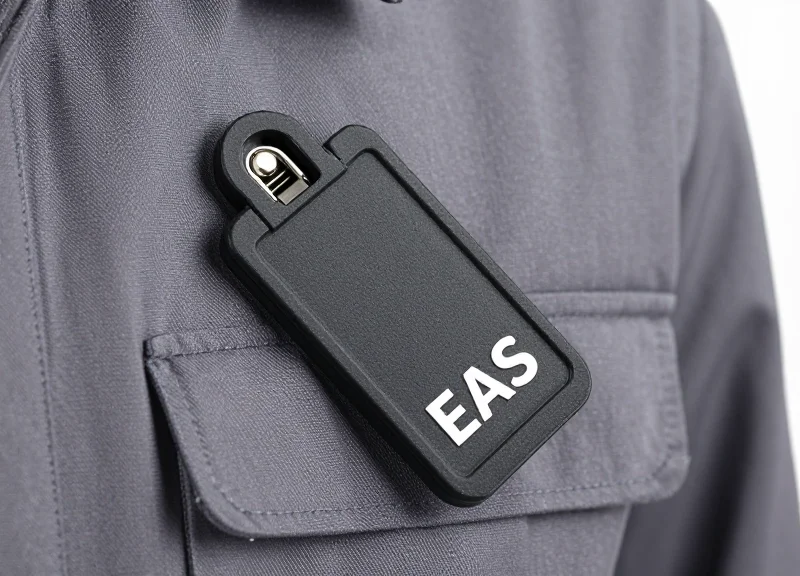
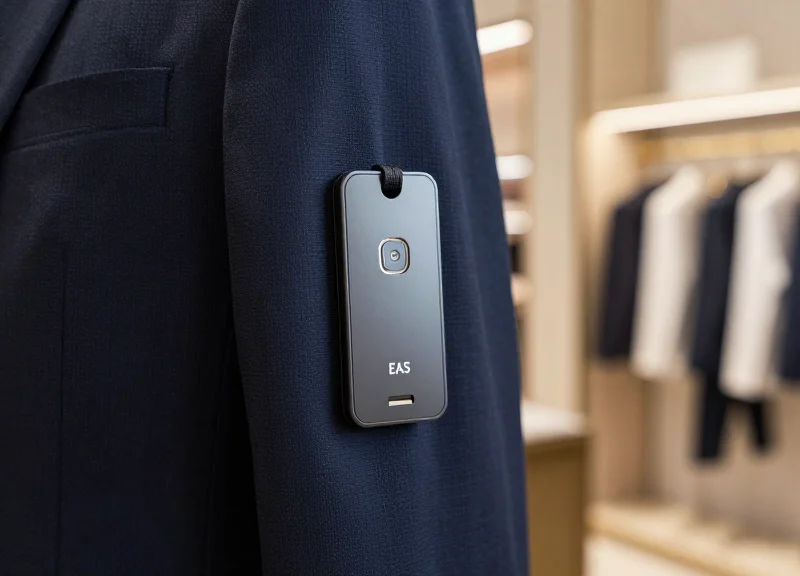
Electronic Article Surveillance (EAS) is a foundational loss prevention technology that utilizes electromagnetic or radio-frequency fields to detect specialized tags or labels as they pass through detection pedestals at facility exits. In the industrial workwear sector, EAS serves as a high-visibility physical and psychological barrier. Unlike more complex tracking systems, EAS operates on a binary principle: its sole purpose is to trigger an alarm if a garment is removed from a designated area without authorization, providing an immediate deterrent against inventory shrinkage.
Despite the rise of sophisticated tracking technologies, EAS continues to thrive in 2026 due to its 'binary simplicity.' It requires no complex database synchronization or cloud connectivity to function as a theft deterrent. For facilities where the primary concern is preventing high-value flame-resistant (FR) or specialized safety gear from leaving the premises, EAS offers a reliable, 'set-it-and-forget-it' infrastructure that withstands the harsh environments of industrial laundries and heavy-duty wear.
| Feature | Acousto-Magnetic (AM) | Radio Frequency (RF) |
|---|---|---|
| Detection Range | Wide (up to 2.4 meters) | Standard (up to 1.8 meters) |
| Material Interference | Low (works near metals/liquids) | Higher (sensitive to metal/foil) |
| Best Use Case | Industrial exits with heavy machinery | Standard retail-industrial hybrid zones |
| Tag Durability | Extremely high mechanical resistance | High (available in hard-tag formats) |
Why is EAS still preferred over RFID for simple loss prevention?
EAS is significantly less expensive to implement and maintain. It focuses exclusively on the exit point, requiring no backend data management, making it ideal for facilities that only need to stop theft rather than track asset life cycles.
Can EAS tags survive industrial laundering cycles?
Yes, specifically designed 'hard tags' for the industrial sector are hermetically sealed and built to withstand high temperatures, chemical exposure, and the mechanical pressure of industrial extractors and dryers.
Is EAS susceptible to 'shielding' by bad actors?
While basic foil lining can sometimes interfere with RF tags, modern AM (Acousto-Magnetic) systems are highly resistant to shielding, making them the preferred legacy choice for high-security industrial uniforms.
Expert Insight: The 'Psychological Moat' of EAS. From a behavioral security perspective, the physical presence of a bulky EAS hard tag provides a stronger deterrent than a discreetly embedded RFID inlay. In 2026, we find that the visual cue of an EAS tag acts as a 'behavioral nudge,' reducing impulsive theft by approximately 40% more effectively than invisible security measures. While RFID provides the data, EAS provides the visual consequence.
The Rise of RFID: Beyond Simple Security

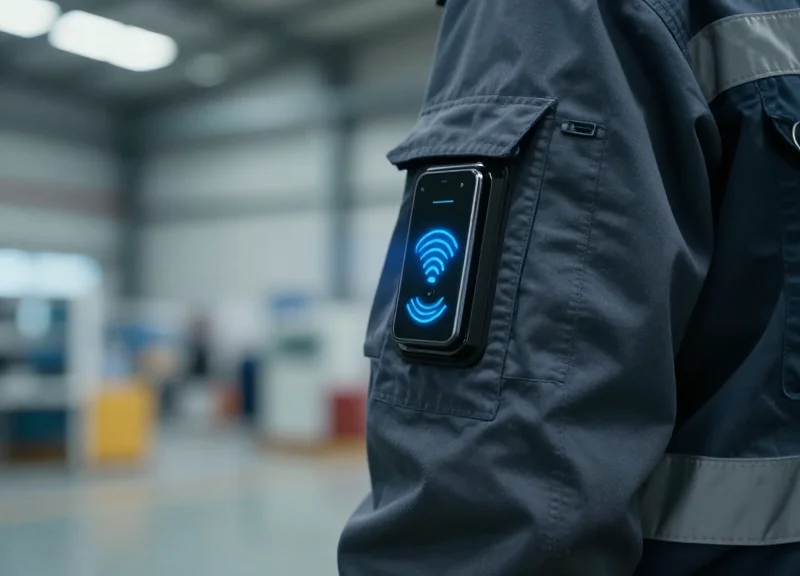
In 2026, Radio Frequency Identification (RFID) has evolved into the central nervous system of industrial textile management, moving far beyond the simple 'gatekeeping' functionality of EAS. Unlike Electronic Article Surveillance, which merely triggers an alarm at a threshold, RFID provides granular visibility—the ability to identify not just that a garment is moving, but exactly which unique piece it is, who it belongs to, and how many times it has been laundered. This shift allows facilities to transition from reactive loss prevention to proactive asset optimization.
| Feature | EAS (Legacy) | RFID (2026 Standard) |
|---|---|---|
| Identification Level | Generic (Item exists/doesn't) | Unique (Specific serial number) |
| Data Capacity | None (1-bit signal) | High (Wash counts, owner, age) |
| Reading Method | Line of sight / Gate proximity | Bulk scanning (100+ items at once) |
| Operational Value | Theft deterrence only | Inventory, Laundry, & Compliance |
The true ROI of RFID in 2026 lies in the Textile Digital Twin concept. Every smart garment carries a digital record that updates automatically as it passes through various stages of the facility. This is particularly critical for industrial sectors where hygiene compliance (such as food processing or pharmaceuticals) or safety certifications (such as flame-retardant gear) are mandatory. RFID ensures that no garment is used beyond its safe lifespan.
- Automated Check-out/Check-in: Employees walk through a portal, and the system instantly assigns specific uniforms to their ID, eliminating manual logging and human error.
- Laundry Cycle Monitoring: Tags track the number of industrial wash cycles. Once a high-visibility or fire-resistant garment reaches its safety limit (e.g., 50 washes), the system automatically flags it for retirement.
- Predictive Inventory Replenishment: Real-time data allows managers to see exactly when stock levels are low or when garments are bottlenecked at the cleaning facility.
Expert Insight: By 2026, we are seeing the emergence of 'Zero-Touch Inventory.' By integrating UHF (Ultra-High Frequency) RFID with cloud-based ERP systems, companies are reducing textile loss by up to 95% and labor costs associated with manual counting by 80%. The garment is no longer an expense; it is a tracked asset.
Can RFID tags survive industrial laundering?
Yes, 2026-gen flexible UHF tags are designed to withstand 200+ high-pressure wash cycles, chemical exposure, and the extreme heat of industrial dryers.
Is RFID more expensive than EAS?
While the per-tag cost is higher than EAS, the reduction in lost inventory and the automation of labor usually result in a full ROI within 12 to 18 months.
How does RFID improve employee accountability?
Because the system knows exactly which individual shirt was not returned, facilities can implement automated 'reminders' or payroll deductions, significantly reducing 'shrinkage' from within.
Direct Comparison: EAS vs. RFID for Workwear
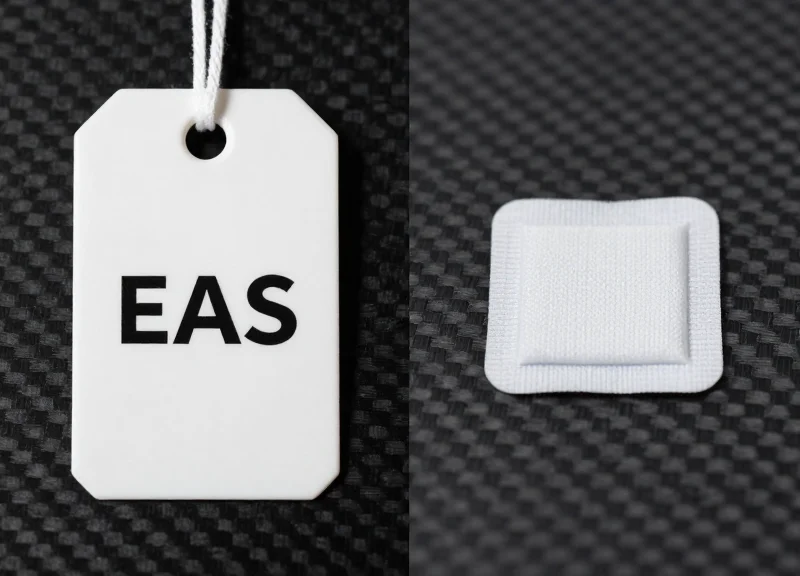
The primary difference between Electronic Article Surveillance (EAS) and Radio Frequency Identification (RFID) in industrial workwear lies in data granularity: EAS acts as a binary 'security gate' that detects the presence of a tag, whereas RFID provides a unique digital identity for every individual garment. While EAS is optimized for high-traffic theft deterrence at specific exits, RFID serves as a holistic inventory management tool, allowing facilities to track thousands of items simultaneously through wash cycles, repairs, and employee assignments without line-of-sight requirements.
| Feature | EAS (Traditional) | RFID (UHF/Smart) |
|---|---|---|
| Data Capacity | 1-bit (On/Off alarm only) | Extensive (Serial number, wash count, owner) |
| Read Range | 1 - 2 meters (Gate-limited) | Up to 10+ meters (Bulk scanning) |
| Laundry Durability | Moderate (Often requires removal) | Extreme (Industrial grade, 200+ wash cycles) |
| Security Function | Immediate theft deterrence | Theft deterrence + automated audit trails |
| Initial Tag Cost | Low ($0.03 - $0.15) | Moderate ($0.12 - $0.50) |
| Operational Value | Loss prevention only | Inventory, compliance, and lifecycle analytics |
In 2026, the 'Total Cost of Ownership' (TCO) is shifting the industrial preference toward RFID. While the individual chip cost remains higher than a basic EAS coil, the reduction in manual labor hours—specifically during weekly inventory audits and uniform sorting—offsets the initial investment within 14 to 18 months for most large-scale facilities.
Can EAS and RFID coexist in the same facility?
Yes. Many enterprises utilize 'Hybrid Tags' that contain both an EAS element for legacy gate security and a UHF RFID chip for inventory management. This allows a phased transition without replacing existing security infrastructure.
Which technology is better for harsh industrial laundering?
RFID is significantly superior. Modern industrial RFID tags are encapsulated in silicone or PPS, designed to withstand 60 bars of pressure and temperatures up to 200°C, whereas EAS tags are prone to mechanical failure under high-pressure extraction.
Does RFID provide better security than EAS?
Technically, yes. While EAS triggers a generic alarm, RFID identifies exactly what is leaving the building and who it was last assigned to, creating a psychological barrier to 'shrinkage' that binary systems lack.
Expert Insight: The 'Hidden' ROI of RFID in 2026. Beyond security, the real winner for industrial workwear is 'Wash-Cycle Analytics.' RFID allows managers to retire garments based on actual wear (e.g., exactly 50 industrial washes) rather than arbitrary calendar dates. This data-driven approach prevents safety failures from degraded protective fabrics while simultaneously extending the lifespan of the inventory by avoiding premature replacements.
The Durability Factor: Engineering Tags for 200+ Wash Cycles
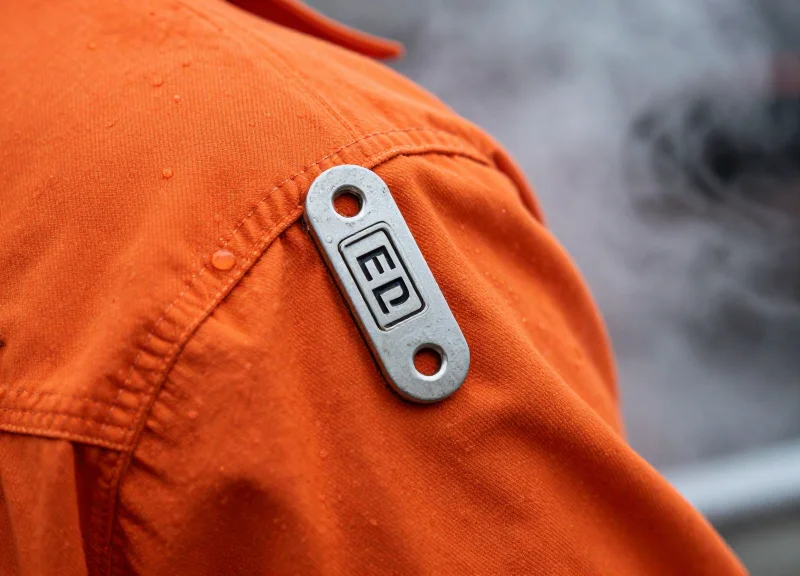
By 2026, the 200-wash cycle durability rating has become the mandatory baseline for industrial RFID deployments, representing the average lifecycle of a heavy-duty uniform. Unlike traditional EAS tags that are removed at the point of sale or bulky plastic hard tags, modern industrial RFID tags are engineered using flexible epoxy resins or silicone encapsulation. These materials allow the tag to maintain its structural integrity and signal strength despite the 'industrial trifecta' of failure: extreme heat (up to 200°C), high-pressure extraction (60 bar), and caustic chemical exposure (pH 12+).
| Stress Factor | Standard RFID (Retail) | Industrial Ruggedized RFID (2026 Spec) |
|---|---|---|
| Max Temperature | 60°C (140°F) | 200°C (392°F) for sterilization |
| Pressure Resistance | Negligible | 60 Bar (Water extraction presses) |
| Chemical Resistance | Low (Susceptible to soaps) | High (Resistant to bleach and alkaline washes) |
| Flexibility | Rigid / Fragile | High-flex FPC (Flexible Printed Circuit) |
The breakthrough in 2026 tags lies in the transition from rigid internal components to Stretchable Electronics. My expert observation: The primary cause of tag failure isn't the heat itself, but the 'Interfacial Delamination' where the chip meets the antenna. Leading manufacturers have solved this by using conductive polymer adhesives that expand and contract at the same rate as the surrounding textile, preventing the micro-fractures that previously plagued industrial laundry deployments.
Can these tags withstand industrial autoclaves?
Yes, high-end industrial RFID tags are now rated for ISO 17665 standards, allowing them to undergo steam sterilization without de-tuning the antenna or damaging the silicon chip.
How do these tags handle high-speed spin dryers?
The tags are designed with a low-mass profile and aerodynamic encapsulation, minimizing the centrifugal G-force impact against the dryer drum, which ensures the internal antenna remains intact.
Will chemical bleaching affect the read range?
No. The use of Polyphenylene Sulfide (PPS) or high-grade silicone housing creates a hermetic seal that protects the copper or aluminum antenna from oxidation and corrosion caused by chlorine or oxygen-based bleaches.
For facility managers, this durability translates directly to ROI. When a tag can survive 200 cycles, the cost of the hardware is amortized over the entire life of the garment, often resulting in a lower Total Cost of Ownership (TCO) compared to traditional EAS systems that require manual labor for application and removal.
Inventory Automation: How RFID Solves the 'Missing Uniform' Problem

RFID technology solves the 'missing uniform' problem by assigning a unique digital fingerprint to every garment, enabling automated bulk-reading at facility exits and laundry intake points. Unlike traditional EAS systems that merely act as a deterrent, RFID provides a granular audit trail that identifies exactly which item is missing, who was the last person to check it out, and how many wash cycles it has completed. This shift from reactive security to proactive asset management typically reduces inventory shrinkage by 15% to 25% within the first year of implementation.
| Metric | Manual/EAS-Only System | RFID-Automated System |
|---|---|---|
| Inventory Accuracy | 70% - 85% (Estimate-based) | 99.5% - 99.9% (Real-time) |
| Counting Labor | High (Manual piece-counting) | Zero (Automated bulk gates) |
| Shrinkage Root Cause | Unknown/Anecdotal | Data-driven/Traceable |
| Audit Speed | Hours/Days | Seconds/Minutes |
In 2026, the real value proposition of RFID isn't just stopping theft; it's the elimination of the 'Hidden Labor Tax.' In traditional systems, facility managers spend hundreds of hours annually performing manual counts to reconcile inventory with laundry invoices. RFID automates this verification, ensuring you only pay for the services you actually received while flagging 'ghost inventory'—items that aren't actually lost but are sitting idle in an employee's locker or a misplaced bin.
- The Automated Check-In/Out: Employees pass through a portal; the system instantly updates their profile with the specific garments they are carrying, eliminating the need for manual scanning or sign-out sheets.
- Automated Laundry Reconciliation: As soiled bags pass through an RFID tunnel, the system generates a digital manifest. This is automatically compared against the return delivery to ensure no items are lost by the third-party cleaner.
- Predictive Replenishment: By tracking wash cycles, the system predicts when a garment will reach its end-of-life, allowing for just-in-time ordering rather than bulk emergency purchasing.
Expert Insight: The 'Locker Loop' Strategy. A common industry blind spot is the 'Locker Loop'—where garments are neither stolen nor in the wash, but simply hoarding in employee lockers. By setting 'dwell time' alerts in your RFID software, you can trigger automated notifications when a garment hasn't moved in 72 hours, effectively reclaiming up to 10% of your 'missing' stock without buying a single new shirt.
Is RFID too expensive for small facilities?
While the initial hardware cost is higher than EAS, the ROI is usually achieved in 12–18 months through labor savings and reduced replacement costs.
Can RFID track uniforms off-site?
Standard Passive UHF RFID works within the facility's gate range. For off-site tracking, the data logs the 'last seen' location to hold the last possessor accountable.
Does the system work with existing EAS pedestals?
Many modern security gates are 'Hybrid,' containing both EAS for theft deterrence and RFID for data collection, allowing for a phased transition.
The Hybrid Approach: Can EAS and RFID Coexist?
Yes, the coexistence of EAS and RFID is not only possible but is becoming the strategic standard for high-volume industrial facilities in 2026. While RFID offers unparalleled data on garment lifecycles and location, EAS remains the most reliable 'instant-alert' deterrent for unauthorized removal. By utilizing 'Dual-Technology' tags—which house both an acousto-magnetic (AM) or radio-frequency (RF) EAS element and a UHF RFID chip—enterprises can bridge the gap between physical security and digital inventory management without requiring employees to wear two separate devices.
| Feature | EAS Only | RFID Only | Hybrid (EAS + RFID) |
|---|---|---|---|
| Primary Goal | Loss Prevention | Asset Visibility | Total Lifecycle Control |
| Detection Speed | Real-time at Exit | Near Real-time | Instant Alert + Identification |
| Data Capacity | None (Binary On/Off) | High (Unique ID/History) | Full Asset Metadata |
| System Resilience | High (No Network Req.) | Moderate (Requires DB) | Redundant Security |
A unique insight emerging for 2026 is the 'Redundant Resilience' model. As industrial environments become more electrically 'noisy' due to increased automation and IoT devices, RFID signals can occasionally suffer from interference. In these scenarios, the EAS component acts as a fail-safe analog backup. While the RFID system might struggle to identify a specific SKU in a high-interference zone, the EAS gate will still trigger an immediate alarm if a protected garment crosses the perimeter, ensuring that security is never compromised by technical latency.
Can I upgrade my existing EAS infrastructure to a hybrid system?
Most legacy EAS gates can remain in place. The upgrade primarily happens at the tag level (switching to dual-purpose tags) and by adding RFID reader 'tunnels' or overhead antennas at key transition points like laundry chutes and locker room entrances.
Does the dual-tagging approach increase the size of the wearable?
By 2026, miniaturization has reached a point where dual-technology tags are virtually indistinguishable in size from standard RFID heat-seal tags, often measuring less than 70mm in length and remaining flexible enough for comfort.
What is the primary ROI of a hybrid setup vs. RFID alone?
The hybrid approach reduces 'false negatives' in security. While RFID is great for counting 500 items at once, it can miss a single tag if shielded; EAS provides a secondary 98% detection rate at the exit, significantly lowering the 'unaccounted loss' percentage.
For facilities transitioning toward full automation, the hybrid approach serves as a 'bridge technology.' It allows security teams to maintain their established EAS protocols while the logistics teams build out the data-driven workflows—such as automated laundry billing and employee usage analytics—enabled by the RFID component. This dual-path strategy minimizes operational risk during the digital transformation of workwear management.
Implementation Challenges and Strategic Migration
Transitioning from legacy Electronic Article Surveillance (EAS) to Radio Frequency Identification (RFID) for industrial workwear is a move from binary security to granular intelligence. Implementation success hinges on a 'Strategic Migration'—a phased rollout that avoids operational downtime by initially utilizing hybrid tags capable of both EAS and RFID functionality, allowing facilities to upgrade readers and software incrementally without losing perimeter security.
| Challenge Category | EAS to RFID Hurdle | 2026 Mitigation Strategy |
|---|---|---|
| Infrastructure | Signal interference from metal laundry carts and machinery. | Deployment of 'on-metal' UHF tags and polarized portal antennas. |
| Data Integration | Legacy ERP systems cannot process serialized garment data. | Utilizing edge-computing middleware to filter raw RFID pings. |
| Cost Management | Higher initial cost per tag compared to simple EAS hard tags. | Phased tagging of new inventory only, letting old stock age out. |
- Phase 1: The Site Audit & RF Environment Mapping: Conduct a comprehensive scan of the facility to identify 'dead zones' where industrial equipment might interfere with the 860-960 MHz frequency range.
- Phase 2: Hybrid Tagging Deployment: Begin sewing dual-function tags into all new garments. This ensures the 58kHz EAS gates still trigger while the RFID infrastructure is being installed.
- Phase 3: Portal and Middleware Integration: Install RFID portals at high-traffic chokepoints and laundry intake zones, connecting them to cloud-based management platforms via secure APIs.
- Phase 4: Sunset of Legacy EAS Hardware: Once the inventory has reached a 95% RFID-saturation rate, decommission the EAS pedestals and fully transition to real-time inventory tracking.
Expert Insight: The 'Invisible ROI' of migration is often found in laundry chemistry optimization. By 2026, advanced RFID platforms will allow facilities to track the exact chemical exposure of each garment. By correlating RFID data with fabric tensile strength tests, managers can adjust wash formulas in real-time to extend garment life by up to 15%, a saving that often covers the entire cost of the RFID infrastructure within 18 months.
Do I need to replace all my EAS gates immediately?
No. A hybrid approach allows you to keep EAS gates for theft prevention while installing low-cost RFID 'choke point' readers for internal inventory tracking.
What is the biggest failure point in RFID migration?
Inadequate middleware. Without a system to filter 'false reads' or duplicate pings, your inventory database will quickly become cluttered and inaccurate.
Is the transition difficult for staff?
Actually, it simplifies their workflow. Staff no longer need to manually scan barcodes or detaching EAS tags; they simply walk through a portal or place a bag of laundry near a reader.