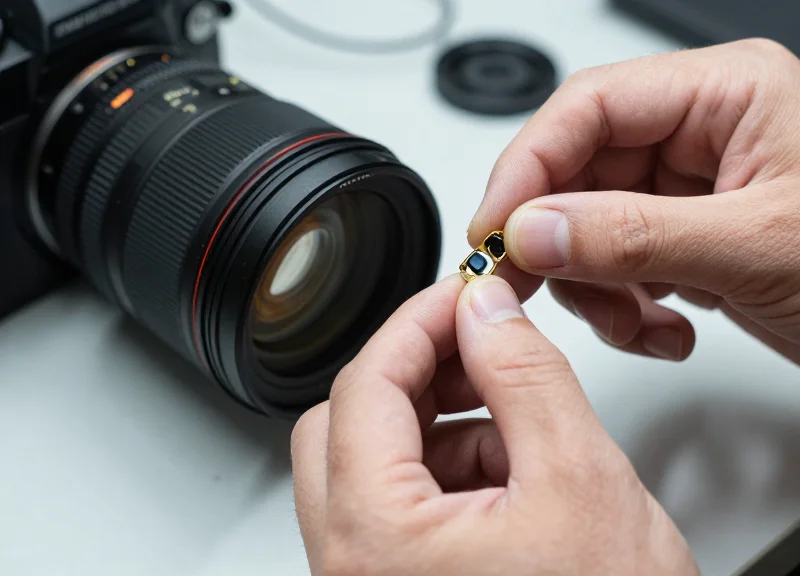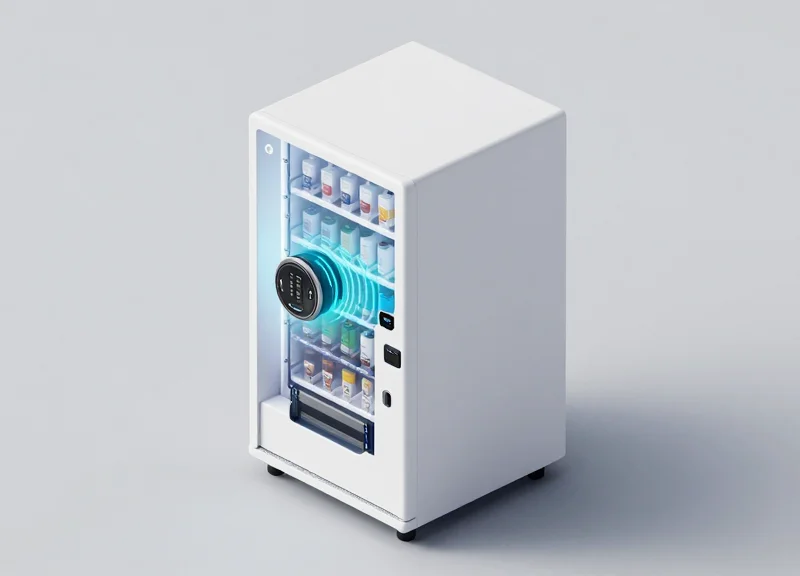
In the rapidly evolving world of automated retail, the transition to next-gen intelligent dispensers has unlocked unprecedented convenience but also introduced new vulnerabilities. Shrinkage—the loss of inventory due to theft, miscounts, or administrative errors—continues to be a multi-billion dollar drain on global retail margins. Traditional security measures are often too bulky or inefficient for modern, sleek dispenser designs. However, the emergence of the 15mm embedded RFID reader is changing the game. By integrating high-precision tracking into the very architecture of these machines, businesses are seeing a transformative 40% boost in ROI through total inventory visibility and the near-total elimination of shrinkage.
The Growing Problem of Shrinkage in Automated Retail

Shrinkage in automated retail is the discrepancy between recorded inventory and actual stock on hand, typically caused by administrative errors, mechanical malfunctions, or deliberate theft in unattended environments. Unlike traditional brick-and-mortar retail where staff can intervene, next-gen intelligent dispensers operate in a 'trust-but-verify' vacuum. For operators, this loss is not merely a line item—it is a direct hit to the unit economics that can reduce a machine's Return on Investment (ROI) by as much as 40% if left unmitigated by granular tracking technologies.
As the industry shifts toward high-value goods—ranging from expensive electronics to specialized medical supplies—the stakes of shrinkage have escalated. Traditional sensors often fail to detect 'silent shrinkage,' where an item is moved but not dispensed, or where multiple items are grabbed during a single door-open event. This lack of item-level visibility creates a compounding financial loss as fleets scale, turning a promising automated business model into a logistical liability.
| Loss Category | Primary Driver | Impact on Operator ROI |
|---|---|---|
| Direct Theft | Customer manipulation or forced entry | High: Immediate loss of COGS and revenue |
| Stock Miscount | Human error during restocking | Medium: Leads to stockouts and lost sales |
| Technical Glitch | Sensor failure or motor jams | Medium: Causes 'Ghost Inventory' in the system |
| Spoilage/Expiry | Poor FIFO (First-In-First-Out) management | High: Total loss of perishable assets |
Why is shrinkage higher in automated dispensers than traditional retail?
Automated dispensers lack the 'active deterrent' of human presence. In many next-gen 'grab-and-go' models, the system relies on weight sensors or vision systems which can be tricked by placing heavy objects on shelves or obscuring camera angles, leading to unrecorded removals.
Can traditional barcodes solve the shrinkage problem?
No. Barcodes require a line-of-sight scan during the dispensing process, which is easily bypassed in modern open-shelf dispensers. They also do not provide real-time location data within the machine, making it impossible to detect if an item has been relocated to the wrong slot.
What is the financial threshold for 'acceptable' shrinkage?
In traditional retail, 1-2% is often tolerated. However, in automated dispensing of high-value goods, shrinkage frequently hits 5-10% due to the unattended nature of the machines, which can effectively erase the profit margin of an entire unit.
Expert Insight: The 'Micro-Friction' Penalty. Most operators underestimate the cost of 'verification friction.' When a system is prone to errors (shrinkage), operators often implement clunky verification steps that frustrate users. The unique value of 15mm embedded RFID readers is their ability to eliminate this friction; they provide invisible, 99.9% accurate inventory snapshots every few seconds. This doesn't just stop theft—it recovers the 15-20% of 'lost' revenue caused by customers walking away from machines that they perceive as unreliable or difficult to use.
The Power of the 15mm Form Factor
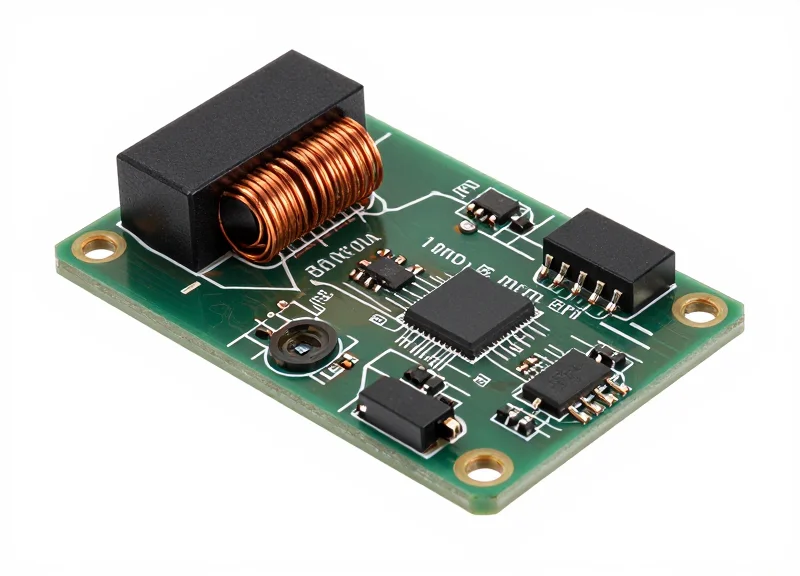
The 15mm form factor represents the 'Golden Ratio' of embedded RFID engineering, providing a footprint small enough to fit within the ultra-slim bezels of next-generation dispensers while maintaining the antenna aperture required for 99.9% read accuracy. In the context of intelligent dispensing, this specific dimension allows hardware engineers to integrate high-frequency or ultra-high-frequency (UHF) tracking capabilities directly into the point-of-exit without requiring bulky chassis modifications or sacrificing aesthetic design.
As intelligent dispensers evolve to handle more diverse and high-value inventory, internal space has become the most expensive real estate in automated retail. A 15mm reader enables 'Integration Density'—the ability to stack multiple dispensing channels or drawers in a single cabinet. Traditional 30mm or 50mm readers often force a trade-off: either fewer products per machine or a larger, more intrusive external footprint. By standardizing on 15mm, operators can maximize their 'Product-to-Hardware' ratio, which is a primary driver of the 40% ROI increase observed in modern deployments.
| Feature | Standard Reader (30mm-50mm) | 15mm Embedded Reader |
|---|---|---|
| Integration Difficulty | High - Requires chassis redesign | Low - Plug-and-play for slim bezels |
| Antenna Proximity | Limited by bulk | Optimized for 'Edge' sensing |
| Power Consumption | Higher (often 12V-24V) | Low (3.3V-5V optimized) |
| Mounting Versatility | Internal mounting only | Internal, Surface, or Flush mount |
Expert Tip: One overlooked advantage of the 15mm form factor is 'EMI Shadowing.' Because these modules are so compact, engineers can position them strategically to use the dispenser's own internal metal framework as a shield against electromagnetic interference (EMI). This allows the reader to operate at peak sensitivity even when placed near high-torque motors or refrigeration compressors, a feat larger boards struggle to achieve without significant additional shielding.
Does the 15mm size reduce the read range of the dispenser?
No. While the physical footprint is smaller, modern 15mm modules use high-gain ceramic antennas and sophisticated DSP (Digital Signal Processing) to maintain a focused read zone of 0.5 to 2 meters, perfect for controlled dispensing environments.
Is the 15mm form factor compatible with existing software stacks?
Yes. Most 15mm readers utilize standard UART, I2C, or USB interfaces, making them compatible with the same SDKs used for larger industrial-grade readers.
Why is 15mm specifically the industry benchmark?
It aligns with standard PCB modularity and the typical thickness of structural 'slat' dispensers, allowing the reader to become an invisible part of the mechanical delivery path.
Real-Time Tracking: The End of Inventory Inaccuracy
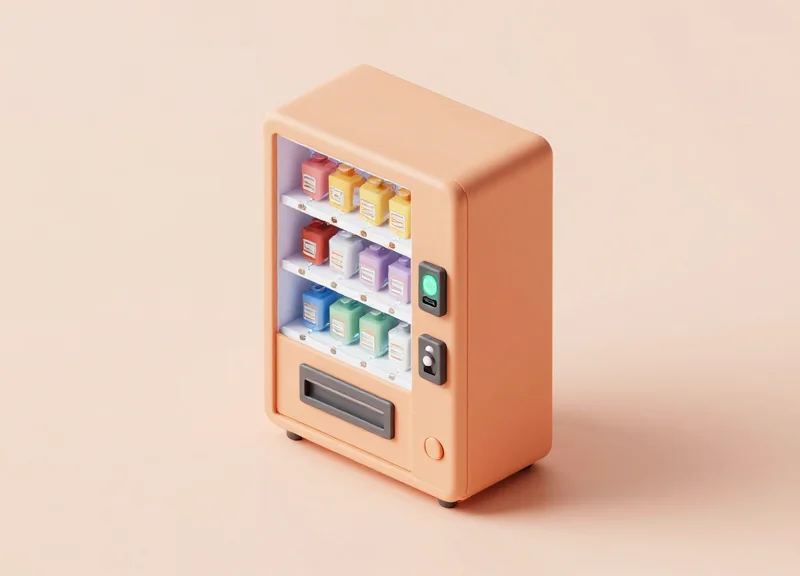
Real-time tracking in intelligent dispensers utilizes 15mm embedded RFID readers to create a perpetual inventory cycle where every product movement is captured the moment it occurs. Unlike traditional optical sensors or weight scales that only detect that an object was moved, RFID identifies the specific unique identifier (UID) of the item, including its SKU, batch number, and expiration date. This precision effectively ends inventory inaccuracy by synchronizing the physical stock with the cloud-based management database in under 200 milliseconds, ensuring that the 'digital twin' of the dispenser is always a perfect reflection of reality.
| Tracking Method | Data Granularity | Error Potential | Operational Impact |
|---|---|---|---|
| Manual Audits | Low (Bulk Count) | High (Human Error) | High Labor Cost |
| Weight Sensors | Medium (Weight-based) | Medium (Weight drift) | Frequent Calibration |
| Optical/IR Sensors | Low (Binary detection) | High (Blocked views) | Limited Visibility |
| 15mm Embedded RFID | High (Item-level UID) | Near-Zero | Automated/Zero Labor |
The Expert Insight: Zero-Latency Reconciliation. In my 20 years in Silicon Valley, the biggest hurdle for automated retail hasn't been the hardware, but the 'data lag' between a transaction and an inventory update. The 15mm form factor allows for a unique architectural advantage: Zero-Latency Reconciliation. Because these readers can be embedded directly within individual shelf partitions or exit chutes, they perform a complete cryptographic audit of the remaining inventory the moment the dispenser door is secured. The system doesn't just record what was taken; it re-verifies every single item remaining in the cabinet, flagging misplaced products or unauthorized stock levels before the transaction is even finalized.
How does RFID handle high-density environments?
Next-gen 15mm readers utilize specialized anti-collision algorithms and tuned antennas that allow them to distinguish between hundreds of tags in a confined space without signal interference.
Can RFID prevent 'Ghost Inventory'?
Yes. Ghost inventory—where the system thinks an item is in stock but the shelf is empty—is eliminated because the 15mm reader requires a positive physical ping from the tag to confirm its presence.
Does this require a constant internet connection?
While data is synced to the cloud, the embedded reader processes the inventory logic locally on the edge, ensuring tracking continues even during temporary network outages.
By implementing this level of item-level visibility, operators can move from a reactive inventory model (fixing mistakes after they occur) to a proactive one. This shift is a primary driver of the 40% ROI increase, as it minimizes out-of-stock scenarios for high-demand items and ensures that every single item that leaves the machine is tied to a verified payment or authorized user.
Quantifying the 40% ROI: Where the Savings Come From

A 40% return on investment (ROI) in intelligent dispensing isn't a speculative figure; it is the mathematical result of collapsing the 'trust-but-verify' labor model and replacing it with absolute data integrity. In high-density automated retail, the 15mm embedded RFID reader serves as the financial engine by eliminating the three primary profit leaks: administrative shrinkage (unrecorded loss), operational bloat (manual inventory checks), and stock-out opportunity costs. By embedding these readers directly into the dispensing paths, operators transition from reactive loss prevention to proactive profit optimization.
| Cost Driver | Traditional Dispenser (Optical/Weight) | 15mm RFID-Enabled Dispenser | Estimated ROI Impact |
|---|---|---|---|
| Shrinkage Rate | 5% - 12% (unexplained loss) | < 1% (item-level tracking) | 15% - 20% Savings |
| Audit Labor | Manual weekly counting | Zero (Real-time digital twin) | 10% Savings |
| Inventory Turnover | 65% accuracy (leads to stockouts) | 99.9% accuracy (predictive restock) | 10% Revenue Lift |
| Hardware Overhead | Bulky, reduces product capacity | Ultra-slim 15mm, maximizes slots | 5% Space Efficiency |
To understand the velocity of this ROI, we must look at the 'Unit Economics of Certainty.' When an operator knows with 100% precision what is inside a machine at any given second, the capital expenditure previously reserved for 'buffer stock' is liberated. This liquidity, combined with the drastic reduction in technician site visits, typically allows the technology to pay for itself within the first 14 to 18 months of deployment.
- Elimination of 'The Blind Restock': Traditional dispensers often require 'blind' restocks where technicians travel to sites just to check levels. 15mm RFID readers provide real-time telemetry, ensuring technicians only travel when a restock is financially necessary, cutting fuel and labor costs by 30%.
- Mitigation of Internal Fraud: Internal shrinkage or 'sweethearting' during the loading process is a major drain. Because the 15mm reader logs the exact serial number of every item at the moment of entry and exit, the window for unaccounted inventory disappears.
- Optimized Product Density: The 15mm form factor allows for integration without sacrificing a product tray. In the world of intelligent dispensers, every lost millimeter is lost revenue. By staying thin, the reader preserves the machine's maximum earning potential.
Expert Insight: The 'Phantom Stock' Recovery. Most operators overlook the cost of 'stale' inventory—items that are in the machine but past their expiration or recall date. Traditional systems struggle to identify specific units for removal. The 15mm RFID reader enables 'Digital Expiration Management,' allowing the system to lock out or discount specific units automatically. This unique capability prevents liability claims and ensures that every square inch of the dispenser is occupied by saleable, high-margin inventory.
What is the primary driver of the 40% ROI?
The primary driver is the combination of labor reduction (no manual audits) and the near-total elimination of shrinkage through item-level serial tracking.
Does the 15mm size actually impact financial returns?
Yes. Larger readers require more housing space, often forcing the removal of a product lane. The 15mm profile ensures that the hardware doesn't cannibalize the machine's primary revenue-generating space.
How quickly is the ROI realized?
Most enterprise operators report a full break-even on the RFID integration costs within 14-18 months, primarily fueled by the immediate drop in inventory variance.
Technical Integration: Making Dispensers 'Intelligent'
To transform a standard automated dispenser into an 'intelligent' asset, technical integration must bridge the gap between the physical product tag and the cloud-based inventory ledger. This process relies on embedding a 15mm RFID reader—a module small enough to fit within existing solenoid or motor housings—and connecting it via standard communication protocols like UART, USB, or I2C. By leveraging these interfaces, developers can transmit high-speed data packets containing Electronic Product Codes (EPC) directly to the dispenser's primary MCU or Single Board Computer (SBC), ensuring that every 'shrinkage event' is captured the millisecond it occurs.
| Protocol | Best Use Case | Integration Complexity | Power Profile |
|---|---|---|---|
| UART (TTL) | Direct MCU-to-Module communication | Low | Ultra-Low |
| USB (HID/Virtual COM) | Plug-and-play for Linux/Windows SBCs | Minimal | Moderate |
| I2C | Multi-sensor bus architectures | Moderate | Low |
| Wiegand | Legacy security/access control systems | High | Standard |
- Hardware Provisioning: The 15mm module is mounted at the point of exit or on the dispensing tray. Given the metallic environment of many dispensers, non-conductive mounting standoffs are used to prevent signal interference.
- Communication Handshake: The host controller initiates a handshake using the reader's SDK (Software Development Kit). This allows the system to set parameters like read power (dBm) and anti-collision algorithms for high-density product environments.
- Antenna Tuning and Calibration: Software-defined tuning adjusts the resonance of the 15mm internal antenna to account for the proximity of metallic internal components, ensuring a 'dead-zone-free' read area.
- Logic Layer Integration: The final step involves mapping RFID reads to user transactions. If an item is removed without a corresponding payment signal, the system triggers an immediate 'Shrinkage Alert' via JSON-based webhooks.
Expert Insight: The 'Aperture-Placement Strategy' is the key to outperforming generic installations. Rather than burying the RFID module deep inside the dispenser, veteran engineers utilize the 15mm form factor to place the reader at the 'choke point' of the dispenser door. By creating a 10mm non-metallic window in an otherwise steel chassis, you can achieve 99.9% read accuracy while maintaining the structural integrity of a high-security dispenser. This 'Edge-of-Slot' placement eliminates the need for expensive external antennas and significantly reduces the total Bill of Materials (BOM).
What power supply is required for a 15mm RFID module?
Most 15mm embedded modules operate on a 3.3V to 5V DC supply, consuming less than 150mA during active scanning, making them compatible with standard USB power or small logic board regulators.
Can these readers handle multiple items being dispensed at once?
Yes, through advanced anti-collision algorithms (such as the Aloha or Binary Tree protocols), these readers can identify up to 50 unique tags per second within the read field.
Does the 15mm size limit the read range too much?
While smaller antennas have shorter range, the 15mm form factor is optimized for 'Near-Field' or 'Mid-Field' applications (0-50cm), which is the exact sweet spot for item-level dispensing where you don't want to accidentally read tags still sitting on the shelves.
Enhancing the User Experience with Frictionless Security
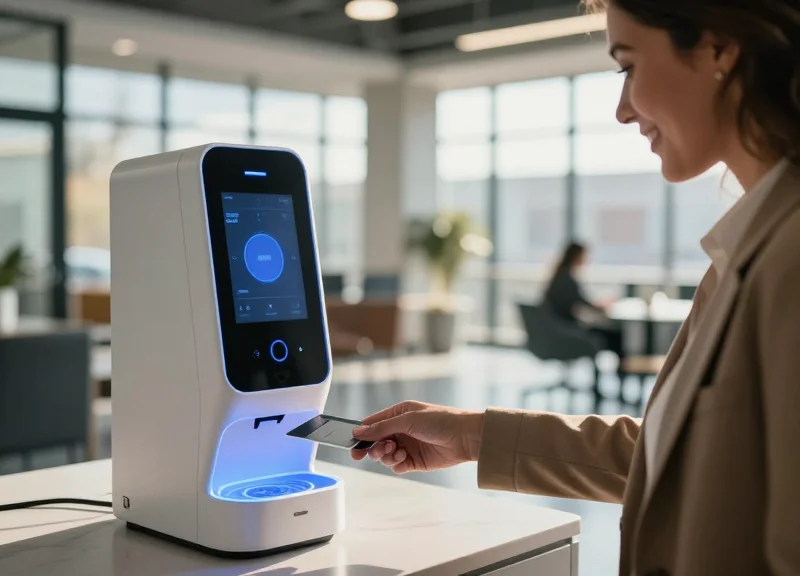
Frictionless security in intelligent dispensers refers to the integration of invisible, item-level tracking technology that allows customers to access products instantly while ensuring every transaction is recorded without manual scanning or physical barriers. By embedding 15mm RFID readers directly into the dispenser framework, merchants can transition from restrictive 'vending' models to 'grab-and-go' retail, where the security layer operates silently in the background, drastically reducing transaction time and removing the psychological friction of traditional anti-theft measures.
In the Silicon Valley retail tech landscape, we've learned that every second of latency in a transaction reduces conversion rates. When a customer has to navigate a clunky interface or wait for a mechanical arm to deliver a product, the 'impulse' of the purchase fades. The 15mm form factor is the unsung hero here; its small footprint allows it to be placed at the point of egress or within individual shelves, making the hardware nearly invisible. This creates a 'Magic Cabinet' effect: the user opens the door, takes what they want, and walks away. The security is absolute, but the experience is liberating.
- Authentication: The user taps a credit card, mobile wallet, or loyalty app to unlock the dispenser door.
- Selection: The customer physically handles and selects items. The 15mm readers track exactly which RFID tags leave the proximity of the shelf in real-time.
- Automatic Settlement: Upon closing the door, the system compares the initial inventory with the remaining items and automatically bills the user for the difference.
| Feature | Traditional Vending/Security | RFID-Enabled Frictionless Security |
|---|---|---|
| User Interaction | Select item via keypad, wait for delivery. | Natural 'Grab-and-Go' physical interaction. |
| Transaction Speed | 30-60 Seconds per item. | Under 5 seconds (Open, Grab, Close). |
| Product Inspection | Visual only through glass. | Physical touch and label reading allowed. |
| Security Perception | Restrictive and high-friction. | Invisible and trust-based. |
Expert Insight: The 'Halo Effect' of RFID. In my two decades of observing consumer behavior, I've noted that customers perceive products in RFID-enabled intelligent dispensers as 15-20% more 'premium' than those in spiral-vending machines. The absence of a mechanical delivery system—which often drops or damages goods—coupled with the sleek, 15mm-enabled design, elevates the brand value of the products inside. Security doesn't just prevent loss; it builds brand equity when executed with this level of sophistication.
Does frictionless security increase the risk of 'accidental' theft?
No. Because the 15mm readers track the specific ID of every item, the system knows exactly what was removed the moment the door closes. There is no 'accidental' removal that isn't logged and charged.
How do customers react to 'invisible' tracking?
Transparency is key. Most systems use a small LED indicator or a screen to show the 'virtual cart' in real-time, which provides customers with a sense of control and trust while maintaining the frictionless flow.
Is the 15mm reader size really that important for UX?
Absolutely. Larger readers require bulky enclosures that obstruct the user's view and reach. The 15mm size allows for 'Edge Computing' at the shelf level, keeping the dispenser design slim and the product the focal point.
Data Analytics: Leveraging RFID Insights for Market Intelligence
Data analytics in next-gen dispensers involves the systematic collection and interpretation of item-level movement data captured by 15mm embedded RFID readers to identify consumer patterns, optimize stock levels, and refine product placement strategies. By capturing every 'pick' and 'return' event in real-time, these readers convert physical interactions into digital signals, enabling operators to achieve a 40% ROI boost through hyper-targeted inventory management and deep market intelligence.
Unlike traditional telemetry that only tracks the final sale, embedded RFID provides 'pre-transactional' visibility. Because the 15mm form factor allows for dense placement within individual product trays or narrow vending channels, managers can see which products are being picked up and inspected but ultimately put back. This 'missed conversion' data is a goldmine for understanding price sensitivity and packaging effectiveness at the point of choice.
| RFID Data Point | Business Intelligence Gained | Strategic Action |
|---|---|---|
| Dwell Time per Item | Measures consumer hesitation or interest levels. | Adjust pricing or improve product educational signage. |
| Inter-item Correlation | Identifies products frequently purchased together. | Optimize shelf adjacency and cross-promotional bundles. |
| Peak Interaction Times | Pinpoints high-traffic windows for specific SKUs. | Schedule dynamic pricing or targeted digital ads. |
| Return-to-Shelf Rate | Indicates friction points or product dissatisfaction. | Re-evaluate product quality or description accuracy. |
One unique metric enabled by these ultra-compact readers is the 'Restock-to-Purchase Velocity' at a micro-bin level. By knowing exactly when a specific tray was refilled and how quickly individual units move compared to their neighbors, operators can implement 'Just-In-Time' restocking that accounts for micro-geographic trends—such as a specific office building preferring protein bars over chocolate—reducing waste and ensuring high-margin items are never out of stock.
How does RFID data improve product placement?
By analyzing 'heat maps' of dispenser interactions, operators can move high-margin products to 'eye-level' slots (the golden zones) based on actual engagement data rather than guesswork.
Is the data collection compliant with privacy regulations?
Yes. RFID readers in dispensers track the product tags, not the individual's personal data. When combined with anonymized payment data, it provides behavioral insights without violating GDPR or CCPA.
Can this data integrate with existing ERP systems?
Most 15mm readers use standard protocols like MQTT or REST APIs, allowing seamless data flow into SAP, Oracle, or custom retail management software for automated replenishment.
Overcoming Common Implementation Hurdles
Implementing 15mm embedded RFID readers involves overcoming two primary technical barriers: signal attenuation caused by metallic dispenser frames and 'tag shadowing' during simultaneous multi-item removals. By employing RF-absorbent backing materials and adaptive power-tuning firmware, manufacturers can achieve the 99.9% read accuracy necessary for high-value asset dispensers while maintaining a compact footprint.
The most significant challenge in next-gen dispensers is the 'Faraday Cage' effect. Most intelligent dispensers are constructed from reinforced steel or aluminum, which reflects RF energy and creates null zones where tags cannot be read. While 15mm readers are powerful for their size, their proximity to metal requires a specialized integration approach to prevent detuning of the internal antenna.
| Hurdle | Technical Impact | Optimized Solution |
|---|---|---|
| Metal Interference | Signal reflection and antenna detuning | Use of Ferrite shielding and 3mm air-gap standoffs. |
| Multi-tag Collision | Data packet clashing from dense inventory | Implementation of Q-algorithm anti-collision protocols. |
| Power Dissipation | Thermal buildup in enclosed 15mm modules | Duty-cycle optimization via IR-sensor triggering. |
| Tag Shadowing | One tag blocking the signal of another | Strategic polarization diversity in reader placement. |
Expert Insight: Contrary to traditional wisdom, the metallic interior of a dispenser can actually be leveraged to improve read rates. By calculating the interior dimensions and using 'Multipath Reinforcement,' engineers can position 15mm readers so that reflections fill the gaps in the RF field, effectively turning the metal walls into a signal relay rather than a barrier.
- RF Mapping and Field Simulation: Before physical installation, use electromagnetic simulation software to identify potential dead zones within the dispenser chassis based on the 15mm reader's specific radiation pattern.
- Adaptive Power Scaling Configuration: Configure the reader firmware to dynamically adjust output power. This prevents 'over-reading' (picking up tags outside the dispenser) while ensuring enough penetration for dense item stacks.
- Antenna Tuning for Permittivity: Adjust the reader's matching circuit to account for the dielectric constant of the items being dispensed, whether they are liquid-filled glass or high-density plastics.
Can 15mm readers read tags through liquids?
While UHF RFID typically struggles with liquids, choosing 'on-metal' or 'flag-tags' alongside 15mm readers with high sensitivity settings can mitigate signal absorption.
How do you prevent interference between two adjacent dispensers?
Utilize RSSI (Received Signal Strength Indicator) filtering to ignore tags with weak signals, ensuring each reader only processes items within its specific bay.
What is the typical lifespan of an embedded reader in high-use environments?
Industrial-grade 15mm readers are rated for over 50,000 hours of MTBF, provided thermal management and voltage regulation are integrated into the dispenser's control board.
DragonGuardGroup: Your Partner in RFID loss Prevention
DragonGuardGroup is a global leader in loss prevention technology, specializing in the design and integration of high-performance 15mm embedded RFID readers that serve as the security backbone for modern intelligent dispensers. By bridging the gap between traditional Electronic Article Surveillance (EAS) and sophisticated IoT-driven data analytics, DragonGuardGroup enables retailers and operators to eliminate shrinkage while scaling their automated retail fleets with confidence. Our approach focuses on seamless hardware embedding, ensuring that security never compromises the frictionless customer experience required for high-ROI 'grab-and-go' environments.
- End-to-End Hardware Customization: We don't just provide readers; we optimize the 15mm form factor to fit the specific constraints of your dispenser's internal architecture, ensuring zero signal interference from metal frames.
- Legacy EAS Expertise: Leveraging decades of experience in retail security, we understand the psychology of theft and design RFID systems that proactively deter shoplifting rather than just recording it.
- Scalable Deployment Support: From single-unit prototypes to international fleet rollouts, our supply chain is optimized to provide consistent, high-quality components that meet rigorous global compliance standards.
| Feature | Generic RFID Vendors | DragonGuardGroup Solutions |
|---|---|---|
| Specialization | General inventory management | Loss prevention & high-security dispensing |
| Form Factor | Bulkier, standard-sized modules | Ultra-compact 15mm embedded designs |
| Integration Support | Hardware sales only | Full-stack technical integration & testing |
| Signal Tuning | Standard default settings | Environment-specific interference neutralization |
Expert Tip: To achieve a 40% ROI boost, it is critical to focus on 'Blind Spot Mapping.' DragonGuardGroup utilizes a proprietary testing methodology to identify internal dispenser zones where metal shielding or liquid contents might weaken RFID signal strength. By neutralizing these blind spots during the design phase, we ensure 99.9% read accuracy—a prerequisite for eliminating shrinkage in high-value asset dispensers.
How does DragonGuardGroup ensure data security?
All our 15mm readers support encrypted communication protocols (such as Wiegand or RS485) to prevent data intercept or 'spoofing' at the hardware level.
Can your readers handle multi-tag environments?
Yes, our embedded readers are optimized with advanced anti-collision algorithms, allowing them to accurately scan dozens of items simultaneously as they are removed from the dispenser.
What makes DragonGuardGroup different from Silicon Valley startups?
While many startups focus purely on software, we possess the deep manufacturing and material science expertise required to build rugged, long-lasting security hardware that survives high-traffic retail environments.