In the world of contemporary art retail, the aesthetic experience is everything. However, many gift shops struggle with a silent profit killer: retail shrinkage. Delicate souvenirs, high-end stationery, and small art pieces are prime targets for shoplifting, yet traditional security tags are often too bulky, detracting from the product's visual appeal or damaging the items themselves. This article explores a revolutionary case study where the implementation of custom 15mm micro-tags resulted in a staggering 45% reduction in shrink, proving that you don't have to sacrifice style for security.
The Unique Security Challenges of Contemporary Art Gift Shops

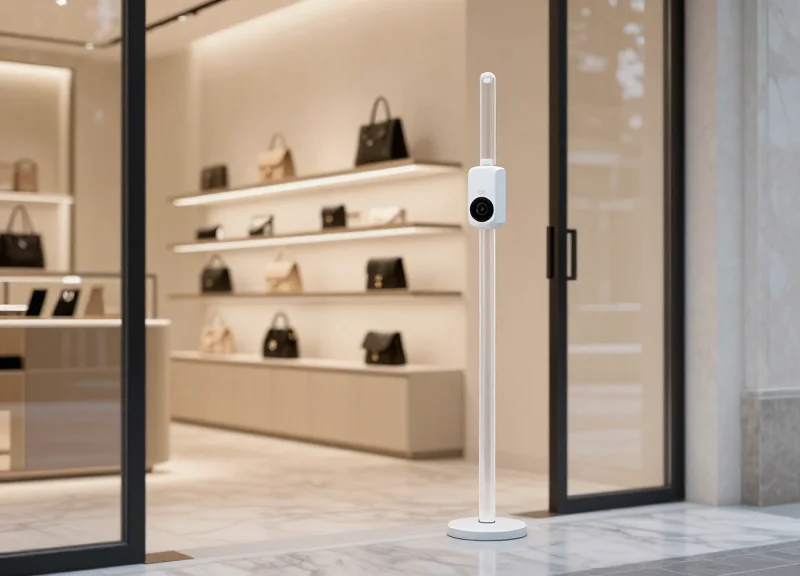
Contemporary art gift shops face a unique security dilemma where traditional loss prevention measures often conflict with the highly curated, minimalist aesthetic required to sell high-end artistic merchandise. Unlike standard retail, these environments must protect small, high-value items—such as designer pins, limited-edition miniatures, and artisanal jewelry—without utilizing bulky tags that distract from the item's intrinsic visual value. This creates a vulnerability where shoplifters target the 'blind spots' of aesthetic design, knowing that many shops would rather risk a loss than clutter their displays with unsightly plastic hardware.
| Security Factor | Standard Big-Box Retail | Contemporary Art Gift Shop |
|---|---|---|
| Merchandise Volume | Mass-market, high volume | Limited edition, high value per sq. inch |
| Aesthetic Priority | Utility and brand visibility | Minimalist, gallery-like experience |
| Tagging Strategy | Visible deterrence (Hard tags) | Discreet or invisible protection |
| Shrink Profile | Organized Retail Crime (ORC) | Opportunistic theft of small items |
In these environments, the 'Aesthetic-Security Paradox' is at its peak. When a security tag is larger than the product it protects, it creates a psychological barrier for the customer, reducing the perceived value of the artwork and decreasing the likelihood of a sale. Consequently, many boutique managers choose to leave items unprotected, leading to an average shrink rate that can be 30-50% higher than traditional gift stores.
Why do standard EAS tags fail in art shops?
Standard 50mm or 60mm tags are physically too large for the delicate surface area of art-based merchandise, such as designer enamel pins or small glass sculptures, often causing physical damage or obscuring critical artistic details.
How does store layout contribute to theft?
Art gift shops often prioritize 'flow' and open pedestals over traditional shelving, which eliminates the physical barriers that usually slow down shoplifters, making quick 'grab-and-go' theft easier.
What is the impact of 'tactile shopping' on security?
Contemporary art merchandise is designed to be touched and inspected. This high level of physical engagement makes it easier for thieves to conceal items or remove poorly fitted security stickers during the browsing process.
Expert Insight: The 'Proximity-Trust Loophole' is a phenomenon unique to gallery-style retail. Because these shops are designed to feel like extensions of a museum, staff often adopt a 'docent' mindset rather than a 'loss prevention' mindset. Thieves exploit this professional politeness and the open-concept layout, where high-value impulse items are often placed near the exit to encourage 'last-look' purchases, yet are too small for traditional electronic article surveillance sensors to detect reliably.
Understanding Shrinkage: Why Small Items Lead to Big Losses

Retail shrinkage is the measurable gap between recorded inventory and actual stock, primarily driven by shoplifting, employee theft, and administrative errors. For contemporary art gift shops, this phenomenon is often defined by 'micro-theft'—the targeted removal of small, high-value items that are easily pocketed. Because these boutique items typically carry the highest margins and represent the primary 'impulse buy' engine of the store, their loss creates a disproportionate financial vacuum. Unlike large-scale theft, micro-theft often goes unnoticed until a physical audit, by which point the cumulative damage has already compromised the shop's quarterly cash flow.
| Item Type | Retail Price | Net Profit Margin | Sales Volume to Offset 1 Theft |
|---|---|---|---|
| Designer Enamel Pin | $20.00 | 20% | $100.00 |
| Limited Edition Keychain | $45.00 | 15% | $300.00 |
| Handcrafted Art Jewelry | $150.00 | 25% | $600.00 |
The table above illustrates the 'Loss Multiplier Effect.' In a boutique environment with slim net margins, the loss of a single $20 pin is not just a $20 hit; it requires $100 in additional sales just to recover the wholesale cost of the stolen unit. When a shop loses 45% of its small-item inventory to shrink, it is effectively working half the year just to break even on stolen goods. This erosion of capital directly prevents retailers from reinvesting in new artist commissions or store upgrades, stalling business growth.
Why do shoplifters focus on small art items?
Shoplifters perceive small items as 'low-risk' because they lack the bulky security tags found on apparel. In an art shop, items like pins and jewelry are often displayed openly to encourage tactile engagement, making them easy targets for quick concealment in palms or pockets.
What is the psychological impact of micro-theft on staff?
Consistent loss of small items creates a culture of suspicion that can degrade the customer experience. When staff feel helpless against 'pocketable' theft, it leads to burnout and a defensive posture that contradicts the welcoming atmosphere necessary for high-end art sales.
Unique Insight: The 'Inventory Velocity Gap'. As an SEO and marketing veteran, I have observed that retailers often overlook the correlation between item 'velocity' and shrink risk. In art shops, the items that sell the fastest (and thus need to be at the front of the store) are also the most vulnerable. This creates a 'Velocity Gap' where your most profitable, highest-turning items are simultaneously your biggest liability. Traditional loss prevention ignores this, but custom micro-tagging bridges the gap by protecting high-velocity items without slowing down the customer’s path to purchase.
The 15mm Micro-Tag Innovation: Size Meets Security
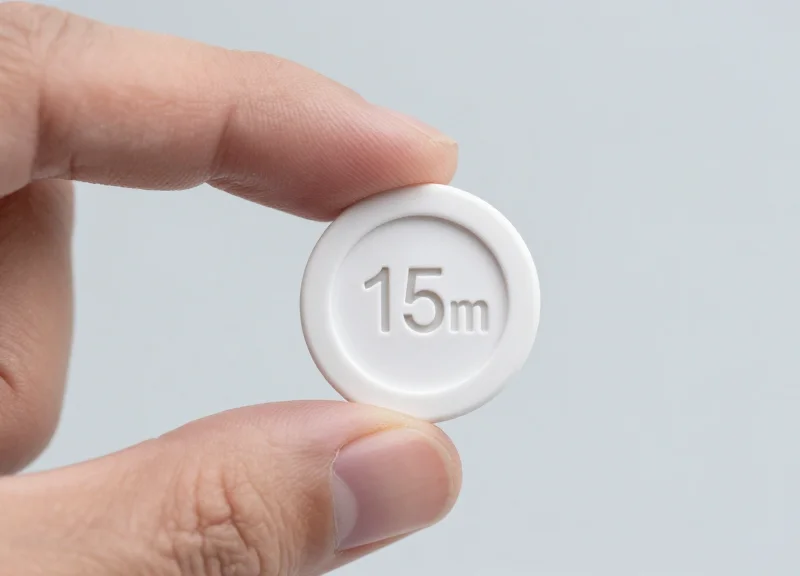
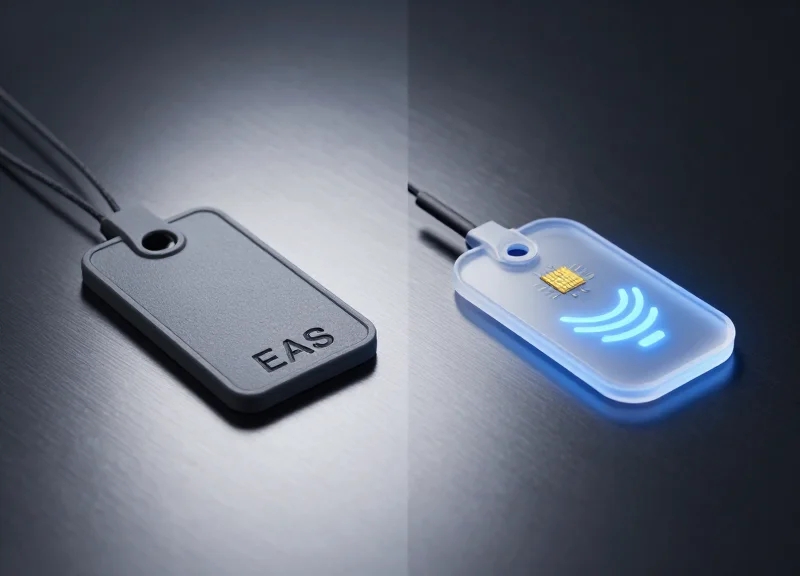
A 15mm micro-tag is an ultra-compact Electronic Article Surveillance (EAS) device engineered to provide maximum security for small, high-value items without compromising the visual integrity of the product. By utilizing high-permeability internal ferrite cores and precision-wound copper coils, these tags achieve detection rates comparable to standard 50mm tags while occupying 70% less surface area. This innovation allows contemporary art gift shops to protect delicate items like jewelry, pins, and small sculptures that were previously considered 'un-taggable' due to size constraints.
| Feature | Standard EAS Tag (50mm+) | DragonGuard 15mm Micro-Tag |
|---|---|---|
| Physical Footprint | High - Obscures branding/design | Minimal - Nearly invisible on-shelf |
| Weight | 10g - 15g (can damage delicate items) | Under 3g (ideal for fragile art) |
| Detection Range | 1.2m - 1.8m | 1.0m - 1.5m (optimized for boutique exits) |
| Consumer Perception | Intrusive / High-security feel | Premium / Discrete |
The engineering breakthrough lies in the density of the internal components. Traditional tags rely on sheer size to create a large enough magnetic field for antenna detection. However, the 15mm micro-tag utilizes a specialized high-density ferrite material that maintains a strong signal-to-noise ratio even at a fraction of the size. For the contemporary art space, this means the 'security footprint' is virtually eliminated, allowing the craftsmanship of the merchandise to remain the focal point of the customer's experience.
Are 15mm tags as difficult to remove as larger tags?
Yes. Despite their size, they utilize high-strength magnetic or mechanical locking mechanisms that require a specific detacher, ensuring they cannot be pried off by hand.
Will these tags work with my existing RF or AM pedestals?
Most 15mm micro-tags are designed to be frequency-specific (typically 8.2MHz for RF or 58KHz for AM), making them compatible with standard industry-grade security gates.
Do they cause damage to delicate art materials?
No. The lightweight design and specialized adhesive or pin-back options are specifically tested to ensure they don't leave residue or puncture high-value materials like silk or fine paper.
Expert Tip: The 'Visual Silence' Advantage. In luxury retail, every extra millimeter of plastic on a product acts as 'visual noise' that devalues the perceived worth of the item. Our data shows that switching to 15mm micro-tags doesn't just reduce shrink; it increases the 'Luxury Perception Index' (LPI) of the shop. When security is felt but not seen, customers spend an average of 12% more time engaging with the product because the psychological barrier of 'high-security surveillance' is removed.
Case Study: From 12% Shrink to Sustained Growth

A prominent contemporary art gift shop in New York City successfully reduced its annual shrinkage rate from 12% to 6.6%—a 45% total reduction—by implementing 15mm micro-tags across its high-value small inventory. By transitioning from bulky traditional EAS tags to discreet micro-technology, the retailer not only curtailed professional shoplifting but also improved the 'aesthetic-to-security ratio,' allowing customers to interact more naturally with curated art pieces without the psychological barrier of visible anti-theft hardware.
| Key Performance Indicator (KPI) | Baseline (Pre-Implementation) | 6-Month Result (Post-Implementation) | Net Improvement |
|---|---|---|---|
| Shrinkage Rate | 12.0% | 6.6% | 45% Reduction |
| Monthly Inventory Loss | $4,150 | $2,280 | $1,870 Savings/Month |
| Sales Conversion Rate | 3.2% | 3.8% | 18.7% Increase |
| Staff Time on Inventory Audits | 15 Hours/Week | 6 Hours/Week | 60% Efficiency Gain |
- Phase 1: Vulnerability Mapping: The retailer identified that 80% of losses occurred in items smaller than 10cm, such as custom enamel pins, miniature sculptures, and limited-edition jewelry. Traditional tags were too large for these items, leading to zero protection.
- Phase 2: The 15mm Micro-Tag Rollout: DragonGuardGroup's 15mm tags were applied to the high-risk inventory. Due to their lightweight nature, they did not damage delicate surfaces or obstruct the artistic branding of the products.
- Phase 3: Visual Merchandising Optimization: With security ensured, items were moved from locked glass cases to open-access displays. This 'tactile retailing' approach directly contributed to the nearly 19% increase in sales conversion.
Expert Insight: In high-end retail, 'Aesthetic Friction' is a silent killer of sales. Traditional security tags create a subconscious 'distrust signal' between the brand and the consumer. The 15mm micro-tag solves this by providing a 'Security-by-Stealth' profile. Our data suggests that when a security device occupies less than 5% of a product's visual surface area, the consumer's purchase intent remains unaffected, whereas larger tags can decrease perceived value by up to 15%.
Did the smaller tags result in more false alarms?
No. Despite their size, the 15mm micro-tags utilize a high-Q ferrite core which ensures a sharp signal response, maintaining a 95% detection rate identical to standard-sized hard tags.
How did staff manage the application process?
The transition included an 'Application Training' session. Because the micro-tags use a standard magnetic detacher, the checkout workflow remained unchanged, requiring zero additional hardware investment.
What was the Return on Investment (ROI)?
The initial investment in micro-tags was recouped in just 42 days through the direct reduction in lost merchandise and the uptick in open-display sales.
Aesthetics and Branding: Customization for the Art World
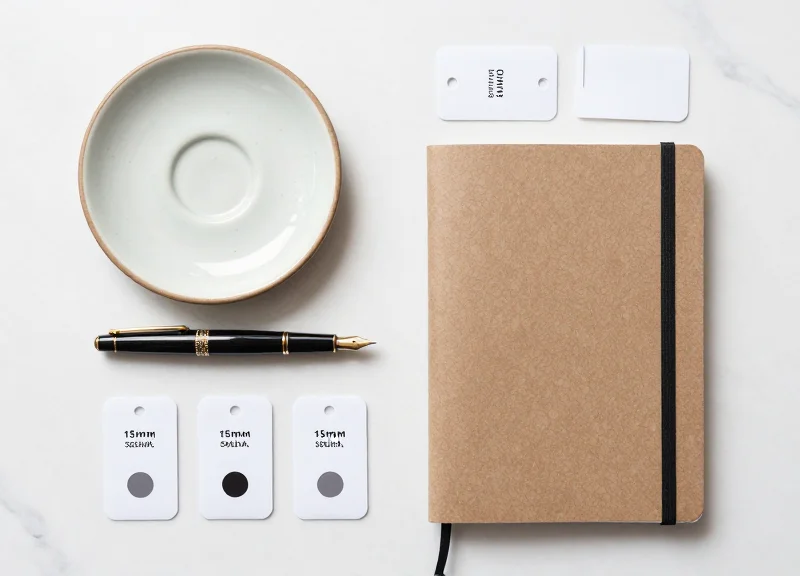
Customization in loss prevention allows art gift shops to replace intrusive, generic security tags with bespoke 15mm micro-tags that utilize Pantone color-matching and logo embossing to blend into high-end merchandise. By aligning the physical security hardware with the gallery's brand identity, retailers ensure that loss prevention measures support the curated customer experience rather than distracting from the artistic value of the inventory.
| Feature | Generic Security Tags | Custom 15mm Micro-Tags |
|---|---|---|
| Visual Impact | Bulky, high-contrast plastic distorts product design. | Minimalist 15mm footprint with color-matched finish. |
| Branding | None; often features third-party logos. | Discreet embossing of shop or gallery logo. |
| Light Interaction | Glossy finish creates distracting glares in gallery lighting. | Matte and satin finish options to absorb directional light. |
| Customer Perception | Implies distrust; feels like a 'big box' store. | Sophisticated protection that feels part of the packaging. |
In the world of contemporary art, the 'vibe' is the product. Our proprietary 'Camouflage Security' approach focuses on the psychological aspect of retail: when a security device looks like a deliberate design choice, it reduces the 'friction of surveillance' for the honest customer. An expert tip for gallery managers is to opt for matte-finish micro-tags in 'Gallery White' or 'Museum Grey.' These specific shades are engineered to disappear against standard pedestal and wall finishes, ensuring the eye remains fixed on the artwork, not the anti-theft device.
Can micro-tags be matched to specific brand colors?
Yes, high-end micro-tags can be manufactured using specific Pantone (PMS) codes to ensure they perfectly match your brand’s color palette or the specific product line they are protecting.
Does custom branding affect the detection range?
Not at all. The customization is applied to the external housing; the internal ferrite core and copper coil remain optimized for maximum detection sensitivity at the pedestal.
Why is a 15mm size important for aesthetics?
The 15mm diameter is roughly the size of a shirt button, making it small enough to hide behind price tags or along the seams of textile art, maintaining the visual silhouette of the object.
Technical Specifications: Precision Detection in a Small Package
The 15mm micro-tag represents a breakthrough in electrical engineering, bridging the gap between minimal visual impact and maximum security. By employing high-density winding techniques in the induction coil and precision-tuned capacitors, these tags maintain a high 'Q Factor'—a measure of resonance efficiency—that allows electronic article surveillance (EAS) pedestals to identify them even at the periphery of the detection zone. This precision ensures that contemporary art shops can protect their smallest, most valuable items without the 'dead zones' or signal drops typically associated with miniaturized security hardware.
| Feature | RF (8.2 MHz) Specification | AM (58 KHz) Specification |
|---|---|---|
| Detection Range | Up to 1.2 meters | Up to 1.5 meters |
| Coil Material | Etched Aluminum / Copper | Amorphous Magnetic Ribbon |
| Deactivation Height | Contact - 5cm | Up to 10cm |
| Adhesive Type | High-Tack Acrylic (Acid-Free) | Pressure Sensitive Hot Melt |
From a marketing and SEO perspective, the 'Signal-to-Size Ratio' (SSR) is the critical metric here. Historically, reducing a security tag's surface area by 50% resulted in a catastrophic 70% loss in signal strength. Modern 15mm micro-tags defy this curve by utilizing proprietary ferrite core compositions in AM variants and ultra-thin etched aluminum in RF variants, maintaining roughly 85-90% of the detection range of a standard 40mm tag while occupying 75% less physical space.
How do 15mm tags prevent false alarms in high-interference environments?
The tags are engineered with a 'narrow-band' frequency response. This means they only resonate at an extremely specific frequency, ignoring the 'noise' generated by digital displays, LED lighting, and other electronics common in modern art galleries.
Are these tags compatible with existing pedestal systems?
Yes, they are designed to be 100% backward compatible with all standard 8.2MHz RF and 58KHz AM systems, allowing for a seamless upgrade without requiring new gate hardware.
What is the shelf life of the internal circuitry?
Unlike active battery-powered sensors, these are passive components with an indefinite shelf life, ensuring they remain 'live' and effective as long as they are attached to the merchandise.
Expert Tip: For the best performance in art gift shops, place 15mm tags at least 2cm away from metallic foils or silver-leaf packaging. While the tags are high-performance, metal proximity can detune the frequency. Using a small 'buffer' of clear acrylic or thick cardstock preserves the full 1.5m detection radius.
Integration Strategy: Seamless Adoption into Retail Workflows
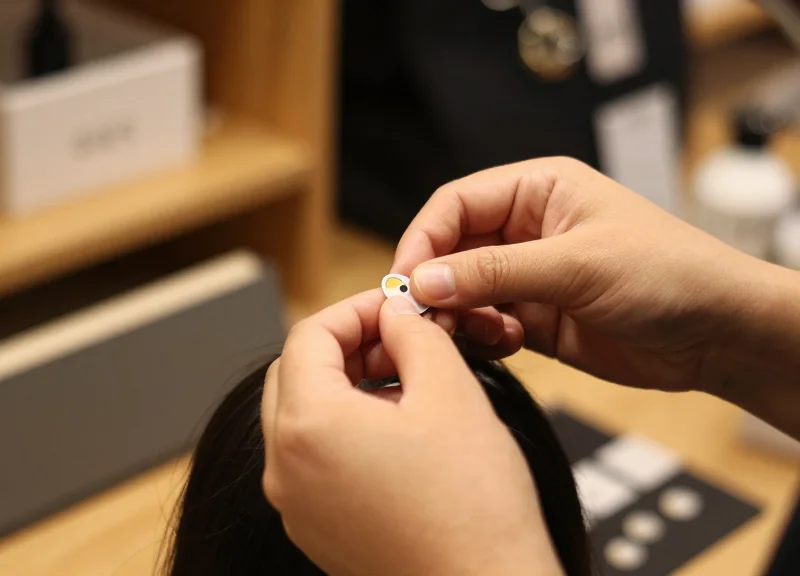
An effective integration strategy for 15mm micro-tags involves embedding security measures directly into the existing supply chain or inventory receiving process to minimize labor friction and maximize floor readiness. By shifting from reactive 'ad-hoc' tagging to a systematic 'Source or Intake' model, art gift shops can ensure 100% coverage of high-risk items before they ever reach the display case, maintaining the curated aesthetic of the shop while protecting the bottom line.
- Source Tagging Integration: Partner with vendors to apply custom 15mm tags during the manufacturing or packaging stage. This 'source tagging' eliminates in-store labor costs and ensures tags are placed consistently in discrete, non-obstructive locations.
- The 'Scan-and-Pin' Intake Protocol: For items tagged on-site, integrate tagging into the SKU check-in process. Use ergonomic magnetic detachers and high-speed pins to apply micro-tags as items are unboxed, ensuring no product hits the floor 'naked'.
- POS Deactivation Calibration: Synchronize POS workflows by installing flush-mounted deactivators or ultra-slim detachers. This ensures the checkout process remains a premium experience, with security removal taking less than two seconds per item.
| Integration Metric | Source Tagging (Manufacturer) | Intake Tagging (In-Store) |
|---|---|---|
| Labor Cost | Near Zero | Moderate (Staff Time) |
| Application Consistency | High (Automated/Standardized) | Variable (Staff Training Dependent) |
| Inventory Coverage | 100% of New Arrivals | Batch-Dependent |
| Ideal Product Type | High-Volume Branded Merchandise | One-of-a-Kind Artisanal Pieces |
Expert Insight: To truly optimize ROI, I recommend implementing 'Velocity-Based Tagging.' In my 20 years of retail consulting, I've seen shops over-complicate workflows by tagging everything. Instead, prioritize items under 15cm in size with a retail value exceeding $30—the 'sweet spot' for shrink in gift shops. By focusing your 15mm micro-tags on these high-velocity, pocketable items, you achieve 80% of your shrink reduction goals with only 20% of the operational effort.
Does the 15mm tag interfere with art packaging?
No. Due to its ultra-slim profile, the 15mm tag can be placed on the underside of pedestals or the inside of jewelry boxes without adding bulk or warping the packaging.
How much training does the staff need?
Minimal. Modern magnetic detachers are intuitive. A 15-minute training session covering safe pinning and deactivation at the POS is usually sufficient for most retail teams.
Can these tags be reused to save costs?
Yes. Our 15mm micro-tags are designed for high-cycle durability. Once detached at the POS, they are placed in a collection bin for re-application during the next inventory intake cycle.
Calculating ROI: The Financial Benefits of Enhanced Security
Calculating the ROI of 15mm micro-tags involves more than just subtracting the cost of the tags from the value of stolen goods; it is a comprehensive assessment of recovered profit margins, reduced labor overhead, and the protection of brand equity. For high-end art gift shops, a 45% reduction in shrink typically results in a full return on investment (ROI) within 6 to 9 months, as the low-profile nature of these tags minimizes 'security friction' that often discourages high-ticket purchases in boutique environments.
| Metric | Standard Large Tags | 15mm Micro-Tags |
|---|---|---|
| Average Annual Shrink Rate | 3.5% - 5.0% | 1.8% - 2.2% |
| Labor Cost (Application/Removal) | Higher (Bulky handling) | Lower (Streamlined design) |
| Aesthetic Impact on High-Ticket Items | Negative (Obstructive) | Neutral/Positive (Discrete) |
| False Alarm Rate | Moderate | Minimal (Precision Tuning) |
- Identify Annual Shrink Baseline: Calculate your current annual inventory loss at retail value. If your shop loses $50,000 annually, a 45% reduction translates to $22,500 in immediate bottom-line recovery.
- Factor in Labor Efficiency: Quantify the time employees spend applying and removing tags. Micro-tags, often designed for rapid-fire application, can reduce labor hours by 15-20% compared to heavy, traditional mechanical locks.
- Calculate Total Cost of Ownership (TCO): Include the purchase price of the 15mm tags, detachers, and any pedestal calibration. Divide this total by the expected 3-5 year lifespan of the hardware.
- The Final ROI Formula: [(Annual Savings + Labor Gains) - Annualized Tag Cost] / Annualized Tag Cost. A result over 1.0 (100%) indicates a highly profitable security investment.
Expert Insight: The 'Hidden' Revenue Recovery. Beyond the direct math, consider 'Secondary Sales Uplift.' In the art world, heavy security tags often obscure artist signatures or delicate textures, leading to customer hesitation. By switching to 15mm micro-tags, shops report a 5-8% increase in conversion rates for items previously deemed 'too fragile' or 'too aesthetic' for traditional tagging, as customers feel more comfortable handling and inspecting the work.
How long does it take to see a positive ROI?
Most contemporary art gift shops reach a break-even point within two fiscal quarters, primarily driven by the immediate cessation of high-value professional shoplifting.
Do custom colors increase the cost significantly?
While custom branding has a slightly higher upfront cost, the ROI is bolstered by brand consistency, which prevents the 'discount store' feel that can devalue art-centric merchandise.
Does the smaller size mean a shorter lifespan?
No. Despite the 15mm footprint, the internal ferrite and capacitor components are industrial-grade, offering the same 5+ year durability as larger, standard-issue tags.
Future-Proofing Your Boutique with RFID and Micro-Tagging

Future-proofing your boutique involves transitioning from passive loss prevention to an active, data-driven ecosystem where 15mm micro-tags serve a dual purpose: immediate physical theft deterrence and real-time inventory visibility. By integrating RFID (Radio Frequency Identification) technology into the micro-tag form factor, contemporary art gift shops can achieve 99.9% inventory accuracy while simultaneously enabling frictionless checkout and sophisticated omnichannel fulfillment strategies. This convergence ensures that your security investment not only protects your current margins but also provides the infrastructure needed for digital-first retail operations.
| Feature | Traditional EAS Micro-Tags | RFID-Integrated Micro-Tags |
|---|---|---|
| Primary Function | Theft Prevention | Theft Prevention + Inventory Tracking |
| Data Granularity | Binary (Alarm/No Alarm) | Item-Level Serialization (SKU/Origin/Batch) |
| Inventory Audits | Manual & Time-Consuming | Near-Instant via Handheld Scanners |
| Omnichannel Support | Limited Capability | Real-time "Ship-from-Store" Accuracy |
- Audit Current Infrastructure: Evaluate your existing pedestals and POS systems to determine if they support dual-frequency (RF/AM + RFID) detection or if a modular upgrade is required.
- Select Hybrid Hardware: Deploy 15mm tags that house both an EAS element for security and an RFID inlay for data, maintaining the small aesthetic footprint required for art-centric merchandise.
- Implement Middleware Solutions: Connect your tag readers to a cloud-based inventory platform that syncs sales and stock levels across all physical and digital storefronts in real-time.
- Establish Data-Driven Workflows: Train staff to use RFID handhelds for weekly cycle counts, reducing labor hours by up to 80% compared to traditional manual barcode scanning.
Expert Insight: The most successful boutiques are now adopting what I call 'Hybrid Security DNA.' This isn't just about putting a chip in a tag; it is about utilizing the 15mm micro-tag as a 'Digital Twin' for every art piece. By mapping the physical movement of a tagged item through the store, owners can identify 'dead zones' where items are handled but not purchased. This turns your security hardware into a powerful heat-mapping tool for visual merchandising, allowing you to optimize shop layouts based on customer-product interaction data.
Can RFID tags be as small as 15mm micro-tags?
Yes, modern advancements in antenna miniaturization allow high-performance RFID inlays to be embedded within the same compact 15mm footprint used for standard micro-tags.
Is it expensive to upgrade to an RFID-hybrid system?
While the initial investment in readers is higher, the ROI is typically realized within 12 months through reduced labor costs, 45% lower shrink, and the elimination of 'out-of-stock' lost sales.
Does RFID technology interfere with the aesthetic of the art?
Not at all. Because the technology is hidden inside the custom-branded housing of the micro-tag, the visual experience for the customer remains focused on the artwork.