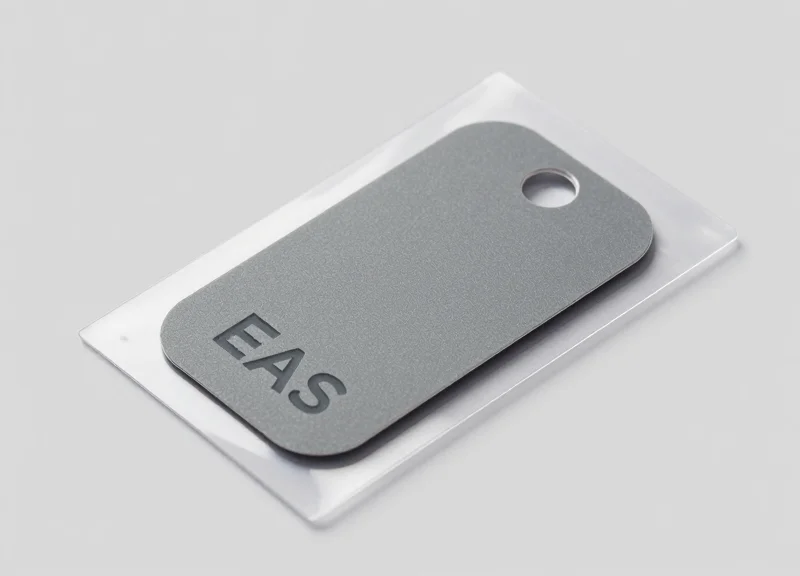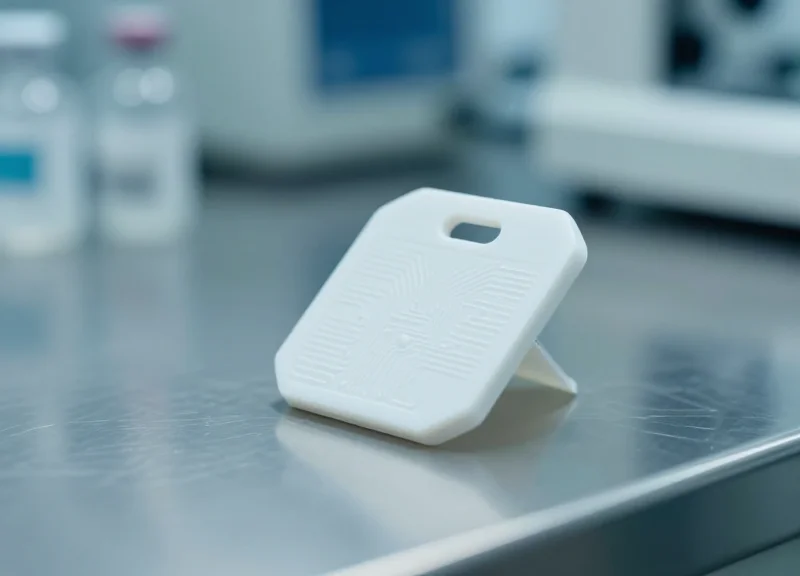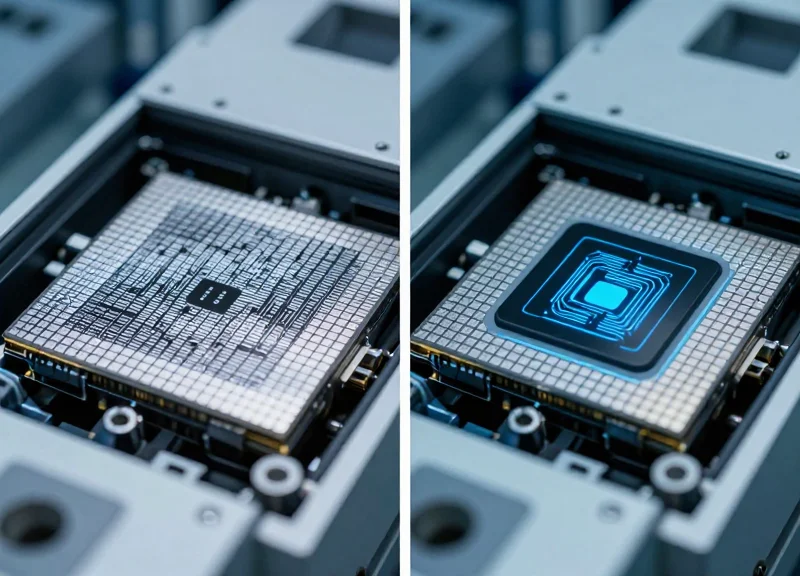
As we approach 2026, the semiconductor industry is undergoing a massive shift in how materials are tracked within the cleanroom. Traditional barcoding, once the gold standard, is increasingly viewed as a bottleneck and a contamination risk in advanced manufacturing environments. Passive RFID technology has emerged as the superior alternative, offering contactless, high-speed data acquisition that meets the rigorous demands of sub-nanometer fabrication. This transition isn't just about speed; it's about the fundamental integrity of the semiconductor supply chain in an era of hyper-automation where every micro-particle and second of downtime counts.
The Evolution of Tracking in Semiconductor Manufacturing
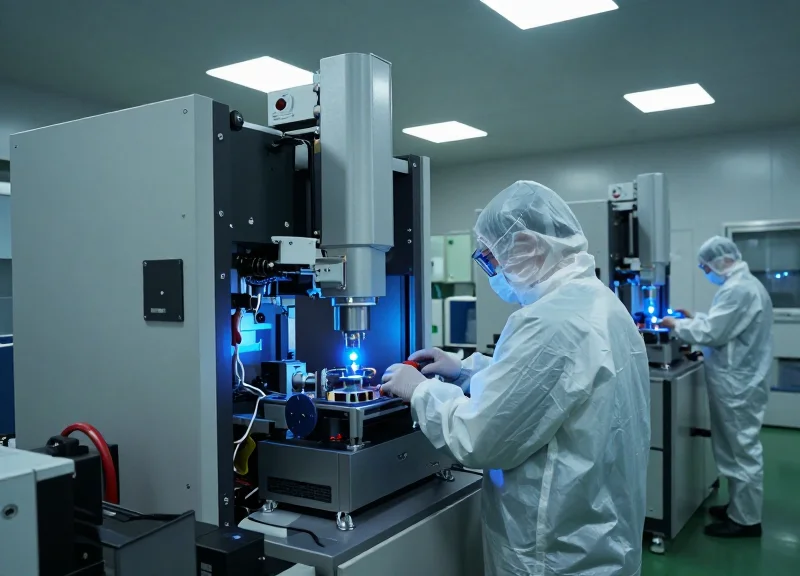
The evolution of tracking in semiconductor manufacturing represents the shift from human-centric visual identification to machine-centric, autonomous data capture. In 2026, tracking is no longer just about inventory management; it is a critical component of cleanroom integrity and yield optimization. As fabs transition to sub-2nm nodes, the industry is phasing out visual labeling and barcodes in favor of passive RFID to eliminate line-of-sight requirements, reduce particulate shedding, and enable real-time synchronization with AI-driven Manufacturing Execution Systems (MES).
| Era | Primary Technology | Operational Driver | Key Limitation |
|---|---|---|---|
| 1990s - Legacy | Manual Logs / Paper | Basic Record Keeping | Human Error & Contamination |
| 2010s - Standard | 1D/2D Barcoding | Digital Inventory | Line-of-Sight & Label Peeling |
| 2026 - Modern | Passive RFID | Autonomous 2nm Fabs | Initial Infrastructure Cost |
Historically, barcodes were the gold standard for tracking Front Opening Unified Pods (FOUPs) and high-value reticles. However, as throughput speeds have increased and cleanroom protocols have tightened, the friction of manual or camera-based scanning has become a bottleneck. In the high-density environment of 2026 wafer fabs, the 'Silent Fab' concept has emerged, where every asset communicates its location and status without a single human intervention or visual scan.
- Why is visual labeling considered a contamination risk in 2026?: Traditional adhesive labels and ink-based barcodes are prone to 'outgassing' and microscopic particulate shedding. At the 2nm node, even a single stray fiber from a barcode label can result in a catastrophic yield loss, making integrated passive RFID tags the only viable 'clean' solution.
- What is the 'Line-of-Sight' bottleneck?: Barcoding requires a clear path between the scanner and the label. In 2026, automated overhead transport (OHT) systems move at speeds where visual alignment is often impossible, whereas RFID can be read through pod walls and around corners at high velocities.
- Expert Tip: The 'Dark Fab' Advantage: Passive RFID allows for 'Dark Fab' operations where lighting is reduced to save energy. Since RFID uses radio waves rather than light-based optics, tracking remains 100% accurate in low-light or zero-light automated environments.
This evolution is also fueled by the massive data requirements of modern digital twins. A barcode provides a static snapshot; a passive RFID tag, when integrated with modern sensors, provides a continuous data stream. By 2026, the transition is expected to be near-total among Tier-1 foundries, as the cost-per-tag has finally aligned with the industry's need for extreme scalability.
The Physical Limits of Barcoding in Cleanrooms
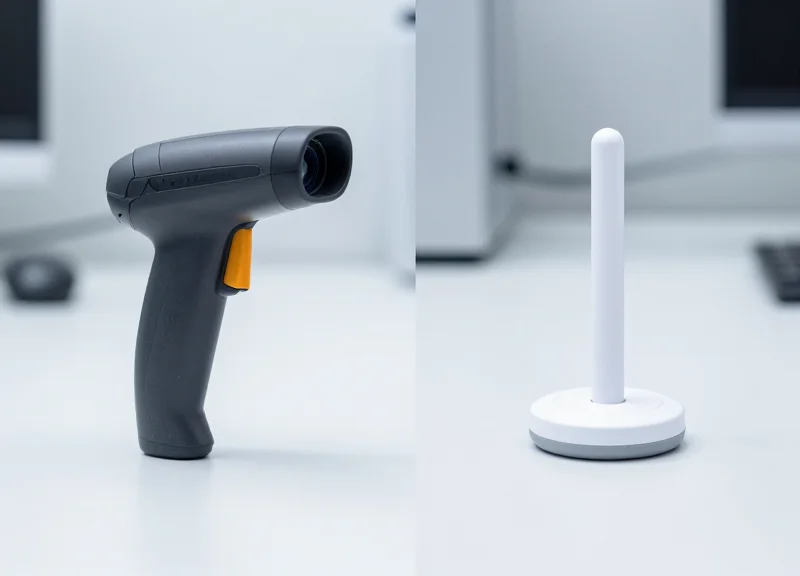
The physical limit of barcoding in modern cleanrooms is defined by the 'Line-of-Sight' (LoS) bottleneck. Unlike passive RFID, which uses electromagnetic fields to transmit data through non-metallic materials, barcodes require a clear, unobstructed optical path between the scanner and the label. In the high-density environment of a 2026-standard wafer fab, where thousands of FOUPs (Front Opening Unified Pods) and reticle pods are in constant motion, the need to mechanically align a scanner with a visual tag introduces 'Angular Latency'—a compounding delay that can reduce overall Equipment Effectiveness (OEE) by up to 15% in fully automated facilities.
| Physical Attribute | 2D DataMatrix/Barcode | Passive UHF RFID |
|---|---|---|
| Read Requirement | Direct Line-of-Sight | Non-Line-of-Sight (NLOS) |
| Scan Velocity | 1-2 seconds per item | Up to 1,000 items per second |
| Orientation Sensitivity | High (Must face scanner) | Low (Omnidirectional) |
| Contamination Risk | Visual occlusion (dust/smudge) | Impervious to surface debris |
| Simultaneous Reading | Impossible (Sequential only) | Bulk/Batch reading enabled |
Beyond simple visibility, the physical degradation of labels in caustic cleanroom environments poses a significant risk. Traditional adhesives and thermal-printed inks are susceptible to outgassing and structural failure when exposed to the aggressive chemical cleaning cycles required for sub-5nm lithography nodes. If a barcode's contrast ratio drops by even 10% due to chemical wear, the first-pass read rate (FPRR) plummets, requiring manual human intervention—an anathema to the 'Dark Fab' philosophy of zero-human presence.
Why is the 2026 'Dark Fab' incompatible with barcodes?
Dark Fabs rely on lights-out automation. Barcoding requires high-intensity localized lighting and precise robotic orientation to read tags, whereas RFID allows autonomous overhead transport (OHT) systems to identify cargo while in motion without stopping to align.
How does 'Angular Latency' impact semiconductor yield?
Every second a FOUP waits to be scanned is a second where thermal or atmospheric variables can shift. RFID's instant identification eliminates the 3-5 second mechanical 'handshake' required for optical scanning, maintaining tighter process windows.
Can barcodes survive high-temperature chemical baths?
Rarely. Even high-grade polyimide labels struggle with long-term exposure to aggressive solvents and heat. Passive RFID tags, encapsulated in PEEK or ceramic, offer a lifetime of 10+ years without data loss or physical peeling.
Expert Insight: The 'Micro-Shadowing' Phenomenon. In 2026, as we stack more components into tighter 3D-IC architectures, we encounter 'micro-shadowing' where the physical geometry of a carrier or machine part casts a shadow over a barcode, rendering it unreadable to optical sensors. Passive RFID eliminates this because RF waves diffract around obstacles and penetrate plastic housings, ensuring 100% visibility of the internal silicon even when the external visual path is blocked.
Contamination Risk: The Hidden Cost of Visual Labels
In advanced semiconductor manufacturing, visual labels are increasingly viewed as 'contamination batteries.' Unlike integrated circuits, traditional adhesive-backed barcodes are composed of multi-layered materials—paper or polyester facestock, chemical adhesives, and thermal transfer inks—that degrade over time. In a Class 1 cleanroom environment, the microscopic 'sloughing' of these materials becomes a primary source of particulate matter. Furthermore, the adhesives used in these labels are notorious for outgassing Volatile Organic Compounds (VOCs), which can settle on silicon wafers and cause irreversible Airborne Molecular Contamination (AMC), directly impacting die yield and device reliability.
| Contamination Factor | Traditional Barcode Labels | Passive RFID (Encapsulated) |
|---|---|---|
| Particulate Generation | High: Edge-fraying and ink flaking release sub-micron debris. | Negligible: Hermetically sealed in PEEK or PTFE housings. |
| Chemical Outgassing | Significant: Adhesives release VOCs under vacuum or high heat. | Zero: Materials are selected for ultra-low outgassing (NASA-grade). |
| Sterilization/Cleaning | Poor: Degrades when exposed to IPA or ultrasonic cleaning. | Excellent: Fully resistant to harsh chemical baths and plasma. |
| Structural Integrity | Variable: Subject to peeling, curling, and adhesive dry-out. | Permanent: Single-piece construction ensures long-term stability. |
The transition to passive RFID tags in 2026 is driven by the 'Encapsulation Advantage.' Modern RFID tags for cleanroom use are typically encased in high-performance polymers like PEEK (Polyether ether ketone) or PTFE (Polytetrafluoroethylene). These materials are chemically inert and physically robust, ensuring that the tracking mechanism itself never interacts with the ambient atmosphere. This eliminates the 'hidden cost' of visual labeling: the thousands of dollars lost per wafer lot due to a single microscopic fiber or adhesive droplet migrating from a barcode label onto a lithography mask.
How does outgassing from labels affect 3nm nodes?
At the 3nm and 2nm nodes, even trace amounts of molecular outgassing can alter the refractive index of lithography optics or cause 'haze' on masks. Traditional labels release plasticizers and solvents that are incompatible with these precision environments, whereas passive RFID uses low-outgassing epoxies that meet strict ISO 14644-15 standards.
Why is 'Micro-Abrasion' a concern for barcodes?
Every time a barcode is handled or subjected to high-velocity airflow, micro-abrasions occur at the edges. This mechanical wear releases particles. RFID is a non-line-of-sight, contactless technology, meaning there is zero mechanical interaction with the tag during data acquisition, thus zero wear-induced shedding.
Can passive RFID withstand aggressive cleanroom solvents?
Yes. Unlike barcode inks that smudge or dissolve when exposed to Isopropyl Alcohol (IPA) or Hydrogen Peroxide (H2O2) vapors, encapsulated RFID tags are rated for continuous exposure to these sterilization agents without degrading the internal silicon or antenna.
Expert Tip: When auditing your cleanroom for 2026 compliance, perform a 'Tape Test' on your current barcode inventory. Even 'cleanroom-certified' labels often fail the long-term outgassing benchmarks required for EUV lithography. Switching to PEEK-encapsulated passive RFID doesn't just improve logistics; it serves as a critical infrastructure upgrade for yield protection.
Passive RFID: A Technical Deep Dive for Engineers
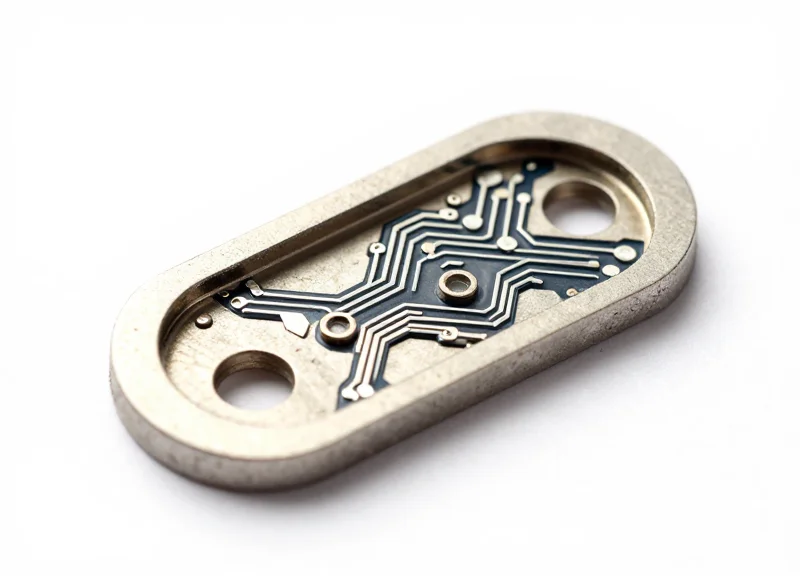
Passive RFID (Radio Frequency Identification) in semiconductor cleanrooms is governed by the physics of modulated backscatter. Unlike active tags that require an internal power source, passive RFID tags utilize the electromagnetic energy emitted by the reader to energize a microchip and transmit data. In 2026, the industry has standardized on UHF (Ultra-High Frequency) RAIN RFID, operating between 860 MHz and 960 MHz. This technology allows for the simultaneous identification of hundreds of items—such as FOUPs (Front Opening Unified Pods) or reticle boxes—without direct line-of-sight, leveraging the ability of RF waves to penetrate non-metallic enclosures.
| Technical Specification | Legacy RFID (Pre-2022) | 2026 Standard Passive RFID |
|---|---|---|
| Chip Sensitivity (dBm) | Approximately -18 dBm | Down to -24 dBm (High Sensitivity) |
| Energy Harvesting Efficiency | 15-20% | 40%+ via optimized Schottky diodes |
| Memory Architecture | Fixed User Memory | Dynamic partitioned memory with ECC |
| Interference Mitigation | Basic Frequency Hopping | Adaptive interference rejection & LBT (Listen Before Talk) |
The absence of a battery is the critical engineering advantage in a fab. In a high-vacuum or chemically sensitive environment, batteries represent a double failure point: they are potential sources of outgassing and require maintenance cycles that disrupt automated workflows. Passive tags, encapsulated in chemically inert polymers like PEEK or PTFE, offer an almost infinite operational lifespan. The 2026 generation of RFID ICs (Integrated Circuits) also features 'Auto-Tune' capabilities, which automatically adjust the tag's input impedance to compensate for the detuning effects caused by proximity to silicon wafers or metallic tool surfaces.
How does backscatter work in a metallic environment?
Modern readers use circular polarization and spatial diversity to mitigate multipath interference (reflections) common in fabs. The tag modulates its internal impedance, changing its radar cross-section to 'reflect' data back to the reader.
What is the impact of RF on sensitive lithography equipment?
Passive RFID operates at extremely low power levels (typically under 2W ERP). High-precision cleanroom installations utilize 'Shielded Zones' and beam-forming antennas to ensure RF energy is directed only where needed, preventing interference with sensitive sensors.
Can passive RFID handle the data requirements of 2026 fabs?
Yes. While the TID (Tag ID) is fixed, modern chips include expanded User Memory (up to 2k bits) and support high-speed bulk reads, allowing for the transfer of calibration data or maintenance logs directly from the tag at the point of use.
Unique Engineering Insight: As of 2026, the transition to 'Sensor-on-Chip' passive RFID is the true game changer. These chips use the same harvested RF energy to power microscopic capacitive sensors that monitor ambient humidity or temperature within a FOUP, transmitting this telemetry alongside the ID. This allows engineers to detect environmental seal failures in real-time without adding a single battery to the cleanroom floor.
Eliminating Human Error via Automated Data Capture

Eliminating human error in semiconductor manufacturing is achieved by shifting the 'point of truth' from a manual scan to an automated, infrastructure-based event. While barcoding requires a human or robot to align a scanner perfectly with a label, passive RFID facilitates 'zero-touch' data capture where FOUPs (Front Opening Unified Pods) and AGVs (Automated Guided Vehicles) communicate autonomously. By integrating RFID readers directly into load ports and transport rails, fabs can achieve a 100% accuracy rate in material tracking, effectively removing the risks of mis-scans, missed labels, and data entry lag that plague manual systems.
| Feature | Manual Barcode Scanning | Automated Passive RFID |
|---|---|---|
| Data Capture Trigger | Human intent / Line-of-sight scan | Proximity-based autonomous handshake |
| Error Probability | High (mis-alignment, obscured labels) | Near-Zero (electromagnetic induction) |
| Throughput Impact | Frequent pauses for scanning | Continuous flow (Scan-on-the-move) |
| MES Integration | Delayed or batch updates | Real-time, sub-millisecond updates |
In the 2026 fab environment, the integration of RFID readers into Automated Material Handling Systems (AMHS) transforms every piece of equipment into an intelligent node. When an AGV transports a FOUP to a tool's load port, the built-in RFID reader verifies the batch identity and processing requirements before the door even opens. This hardware-level verification loop ensures that the wrong wafer never enters the wrong tool—a mistake that can cost millions in scrapped silicon.
- Proximity Detection: As a FOUP approaches a station, the fixed RFID reader energizes the passive tag via an RF field.
- Instantaneous Handshake: The tag transmits its unique ID and history without requiring any mechanical alignment or human trigger.
- MES Validation: The system cross-references the ID with the Manufacturing Execution System to confirm the recipe and location.
- Automated Gatekeeping: The tool only proceeds if the data matches, preventing 'wrong-slot' or 'wrong-process' errors automatically.
Expert Insight: The End of 'Phantom Inventory'. One of the most significant advantages of RFID in 2026 is the total elimination of 'Phantom Inventory'—items that are physically present but lost to the digital system because a human forgot to scan them out of a zone. In a passive RFID-enabled fab, the environment itself is 'aware.' If a FOUP is moved, the network of sensors updates the MES instantly. My experience in high-volume fabs shows that this real-time spatial awareness reduces cycle time by up to 12% simply by eliminating the time engineers spend searching for 'misplaced' lots.
Can RFID readers interfere with sensitive lithography equipment?
No. Modern passive RFID operates at specific UHF frequencies (860-960 MHz) and low power levels that are strictly regulated and shielded to ensure zero EMI interference with fab instrumentation.
How does automated capture handle high-density FOUP storage?
Advanced 'anti-collision' algorithms allow RFID readers to distinguish between dozens of tags in a single field, ensuring each FOUP in a storage rack is identified individually and accurately.
Chemical Resistance and Thermal Stability
In the semiconductor manufacturing environment of 2026, the durability of an identification carrier is as critical as the data it holds. While traditional adhesive barcodes rely on surface-level thermal printing and external glues, high-performance passive RFID tags are engineered with hermetically sealed enclosures. These tags are designed to survive the 'Wet Bench'—the aggressive chemical baths involving sulfuric acid (H2SO4), hydrofluoric acid (HF), and isopropyl alcohol (IPA)—that typically dissolve barcode adhesives or bleach the visual ink. Furthermore, as wafer processing pushes thermal limits, RFID's ability to withstand sustained exposure to temperatures exceeding 200°C without loss of functionality ensures end-to-end traceability from deposition to final packaging.
| Environmental Factor | Traditional Barcode Labels | Encapsulated Passive RFID |
|---|---|---|
| Temperature Ceiling | 60°C - 100°C (Adhesive Failure) | Up to 250°C (Ceramic/FR4 builds) |
| Acid/Solvent Resistance | Low (Peeling, Ink Bleeding) | High (PPS/Epoxy Encapsulation) |
| Cleaning Cycle Life | 10-50 Cycles (Degradation) | 1,000+ Cycles (Hermetic Seal) |
| Data Integrity Risk | High (Scratches/Fading) | Zero (Non-optical reading) |
How do RFID tags handle Hydrofluoric (HF) acid exposure?
Premium semiconductor-grade RFID tags utilize Polyphenylene Sulfide (PPS) or specialized ceramic housings that are chemically inert. Unlike barcodes, which use porous paper or synthetic top-sheets that soak up acid and cause delamination, these materials prevent any chemical ingress to the internal chip.
Can RFID tags survive the extreme heat of annealing or bake-out processes?
Yes. High-memory passive tags specifically designed for the fab can endure temperatures up to 250°C. They utilize high-TG (glass transition temperature) resins and ceramic substrates that prevent the internal antenna from expanding and breaking the connection to the IC.
Do cleaning solvents affect the read range of the tag?
No. Because RFID uses radio waves rather than light, surface staining, clouding from IPA, or minor chemical etching on the tag's exterior does not affect the signal's ability to penetrate the housing and reach the reader.
Expert Insight: The 'Micro-Particle' Advantage. A critical but often overlooked factor is the coefficient of thermal expansion (CTE) mismatch. In barcodes, the adhesive and the label substrate expand at different rates during thermal cycling, causing the edges to lift and shed sub-micron particles—a nightmare for cleanroom yields. Passive RFID tags, particularly those molded directly into FOUP handles or using 'Over-molded' techniques, eliminate the adhesive interface entirely. This move from 'surface-stuck' to 'integrated' identification is the primary reason the 2026 standard has shifted away from visual labeling.
Calculating the ROI: RFID vs. Barcode Maintenance

Calculating the ROI of RFID over barcoding involves weighing the high upfront CAPEX of readers against the significant OPEX savings from eliminated manual labor, a 99.9% reduction in 'lost lot' incidents, and the zero-maintenance lifecycle of passive tags. In 2026 semiconductor cleanrooms, the typical Return on Investment (ROI) is realized within 12 to 18 months, driven primarily by the transition from active human scanning to passive, autonomous data capture that protects high-value wafer yields.
| Cost Variable | Visual Barcoding (Legacy) | Passive RFID (Modern) |
|---|---|---|
| Annual Tag Replacement | 15% - 25% (Due to chemical degradation) | < 1% (Encapsulated durability) |
| Labor Overhead | High (Manual scan per lot movement) | Near-Zero (Automated gate/tool entry) |
| Data Accuracy Rate | ~96.5% (Human error/read failures) | > 99.99% (Automated verification) |
| Average 'Lost Lot' Recovery | 2 - 4 hours per incident | Real-time geolocation |
| Equipment Maintenance | Frequent (Handheld scanner repairs) | Low (Fixed reader infrastructure) |
The 'Ghost Scan' Tax: One original insight often overlooked in ROI models is the cost of 'Ghost Scans'—situations where a barcode is scanned but the data fails to sync, or the wrong lot is associated with a tool recipe. In 2nm nodes, where a single FOUP can hold $250,000 worth of wafers, a single mis-processing incident due to a visual labeling error costs more than the entire RFID infrastructure for a bay. Passive RFID eliminates this risk by using hardware-level handshakes between the tag and the tool.
- Audit Manual Touchpoints: Quantify the total hours spent by technicians scanning barcodes. In high-volume fabs, this often equates to 15-20 full-time equivalents (FTEs) per year.
- Calculate Scrap Risk: Analyze historical data on 'mis-processed' lots. Multiply the frequency by the average wafer value to find the 'yield protection' value of RFID.
- Assess Tag Durability Costs: Compare the cost of replacing peeling, degraded barcode labels versus the 10-year lifespan of a high-purity PFA-encapsulated RFID tag.
- Factor in Tool Downtime: Estimate the cost of tools sitting idle while operators wait for barcode confirmation or search for missing lots.
How does RFID affect tool utilization rates?
By automating the FOUP identification process at the load port, RFID typically increases tool OEE (Overall Equipment Effectiveness) by 3-5% compared to manual barcoding.
Is the initial CAPEX for RFID readers a barrier?
While the initial cost is higher, the 'cost per read' over five years is roughly 80% lower than barcoding when labor and label replacement are factored in.
What is the primary driver of ROI in 2026?
The shift toward 300mm and 450mm automated fabs makes manual scanning a bottleneck; the ROI is now driven by throughput speed rather than just labor savings.
Integration with Industry 4.0 and AI Systems

For a semiconductor fab to achieve true Industry 4.0 maturity, the 'data latency' inherent in manual scanning must be eliminated. Passive RFID serves as the high-velocity sensory layer of the facility, providing the real-time telemetry required for AI engines to orchestrate production. While barcodes provide a reactive 'snapshot' of a moment in time, RFID generates a continuous stream of events that feeds the 'Digital Twin' of the fab, allowing for sub-second adjustments to lot priorities, equipment loading, and environmental controls.
| Feature | Barcoding (Legacy Systems) | Passive RFID (Industry 4.0) |
|---|---|---|
| Data Update Frequency | Manual / Batch-driven | Real-time / Event-driven |
| AI Input Quality | Fragmented and historical | Continuous and contextual |
| Digital Twin Fidelity | Low (Delayed representation) | High (Mirror-image synchronization) |
| Process Automation | Semi-autonomous (requires human scan) | Fully autonomous (M2M communication) |
One of the most significant shifts in 2026 is the use of RFID data for Predictive Queue Management. By analyzing the movement patterns and dwell times of FOUPs (Front Opening Unified Pods) tracked by RFID, AI algorithms can predict bottlenecks before they manifest, rerouting Automated Material Handling Systems (AMHS) to optimize tool utilization rates by up to 15%.
- Data Ingestion: Fixed RFID readers at tool ports and AGV nodes capture movement data without human intervention, streaming it to a central message broker (e.g., MQTT or Kafka).
- Contextualization: The MES (Manufacturing Execution System) correlates RFID events with process recipes and environmental sensor data (temp/humidity) to create a multi-dimensional data set.
- AI Inference: Machine Learning models analyze the real-time feed to detect anomalies, such as a FOUP spending 5% longer in a nitrogen purge station than expected, signaling a potential valve failure.
- Autonomous Execution: The AI system issues a command to the AMHS to reroute subsequent lots and schedules a maintenance window for the tool, preventing unplanned downtime.
Expert Insight: The 'Shadow Inventory' Solution. A unique advantage of RFID in 2026 is the elimination of 'Shadow Inventory'—lots that are physically present but invisible to the MES due to missed barcode scans. In a high-volume fab, just a 0.5% scanning error rate can lead to millions in lost throughput. RFID ensures 100% visibility, meaning the AI brain always knows the exact location of every silicon wafer, eliminating the need for manual cycle counts and audits.
Can RFID be integrated into existing MES platforms?
Yes. Most modern MES providers have native RFID middleware connectors that translate EPC (Electronic Product Code) data into standard manufacturing transactions.
How does RFID support 'Green' AI initiatives?
By optimizing transport paths and reducing tool idle time through better scheduling, RFID-enabled AI significantly lowers the energy footprint per wafer start.
Does RFID interfere with fab wireless networks (Wi-Fi 6E)?
No. Passive RFID operates in the UHF range (860-960 MHz), which is far removed from the 2.4GHz, 5GHz, and 6GHz bands used by modern fab communications, ensuring zero interference.
Standardization and Compliance in 2026
In 2026, standardization in the semiconductor industry is defined by the full-scale adoption of the SEMI E144-0325 and E142.1 standards, which designate passive RFID as the primary medium for automated carrier identification. Unlike visual barcodes that lack a unified global data structure, passive RFID provides a standardized, encrypted electronic data exchange protocol. This transition is no longer a choice of operational preference; it is a compliance requirement for participation in the global 'Digital Twin' supply chain, ensuring that every FOUP (Front Opening Unified Pod) and wafer carrier is identifiable across different manufacturing ecosystems without manual re-labeling or data entry.
| Compliance Metric | Legacy Barcoding (2020-2024) | Passive RFID (2026 Standard) |
|---|---|---|
| SEMI E144 Compatibility | Non-compliant/Partial | Native Support |
| Data Integrity Assurance | Visual confirmation only | Hardware-level ECC (Error Correction) |
| Geopolitical Trade Audit | Manual Logbooks | Automated Chain of Custody |
| Sustainability (E-waste) | High (Adhesive waste) | Zero (Permanent tag lifecycle) |
The shift is largely driven by the 'Silicon DNA' initiative, a regulatory framework requiring granular provenance tracking for advanced node chips. As geopolitical trade restrictions and the CHIPS Act 2.0 mandate stricter oversight on where and how silicon is processed, passive RFID serves as the immutable record. It allows auditors to verify the 'cleanliness' of the production path without breaking the vacuum or opening FOUPs. Barcodes simply cannot store the multi-layered encryption keys necessary to satisfy these new security protocols, making them a liability in highly regulated 2nm and 3nm production environments.
Why is SEMI E144 critical for 2026 compliance?
SEMI E144 provides the specification for RFID identification of carriers. In 2026, it serves as the foundation for inter-fab interoperability, ensuring that a wafer carrier moving from a foundry in Taiwan to an OSAT in Arizona can be read by different equipment brands without configuration changes.
How does passive RFID satisfy new ESG (Environmental, Social, and Governance) mandates?
Passive RFID eliminates the need for chemical adhesives and plastic-coated labels used in barcoding, which frequently degrade into micro-contaminants. By utilizing battery-free, permanent tags, fabs reduce their chemical waste footprint and meet 2026 'Green Cleanroom' certifications.
Can barcode systems still pass a 2026 regulatory audit?
While not illegal, barcode-only systems typically fail the 'automated data integrity' requirement of modern audits because they rely on Line-of-Sight (LoS) and human intervention, which are flagged as high-risk points for data manipulation.
Expert Tip: To future-proof your facility, ensure your RFID hardware supports 'UHF Gen2 V2' security features. By late 2026, the industry expects a mandatory update to the 'Authenticated Read' protocol, which prevents 'tag cloning'—a security vulnerability that visual barcodes can never address. Transitioning now to compliant passive RFID systems is not just an efficiency play; it is an essential step to avoid being locked out of high-value Tier-1 supply contracts.