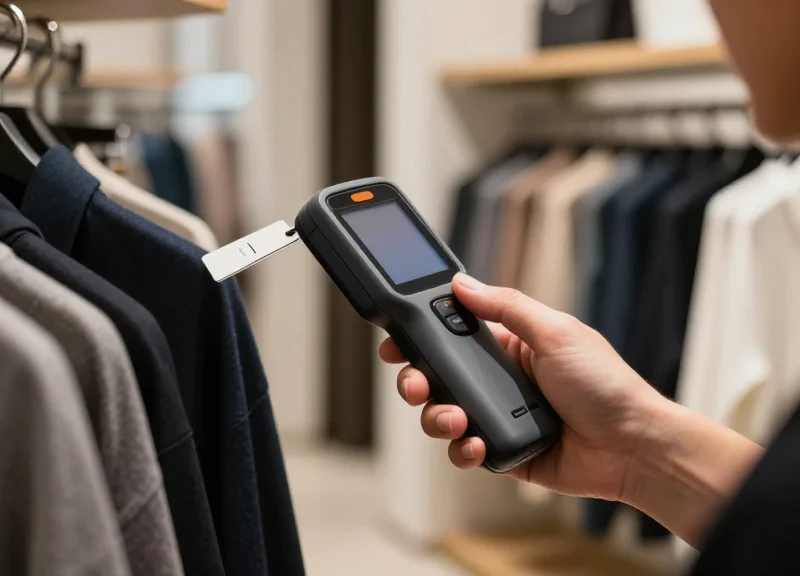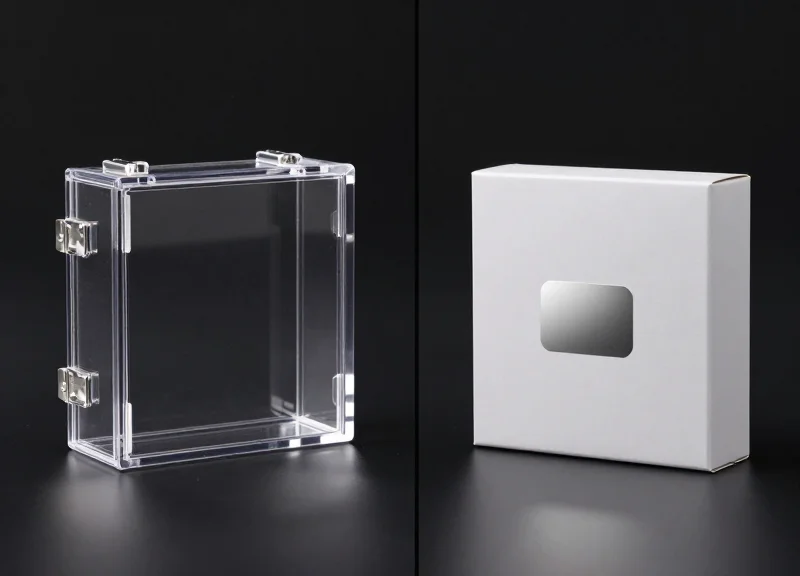
As we approach 2026, the retail landscape for digital accessories has transformed into a high-stakes battlefield of innovation versus organized retail crime. While RFID technology has made leaps in inventory management, the physical protection of high-value, small-form-factor items like earbuds, smartwatches, and chargers requires a more robust approach. Retailers are increasingly finding that while RFID labels offer data, they lack the physical defiance needed to stop a determined shoplifter. This article delves into why next-generation EAS (Electronic Article Surveillance) Safer Boxes are emerging as the superior choice for defending the future of high-shrink digital inventory.
The 2026 Retail Landscape: Why Digital Accessories are Primary Targets

In the 2026 retail environment, digital accessories—such as high-end earbuds, compact SSDs, and AI-enabled wearables—represent the highest risk category for global retailers due to their extreme value-to-volume ratio. These items are the primary targets for Organized Retail Crime (ORC) because they are easily concealed, lack the activation locks found in smartphones, and possess near-instant liquidity in secondary global markets. While RFID technology tracks inventory, it provides zero physical resistance against the 'sweep' tactics now common in high-shrink urban environments, making physical EAS (Electronic Article Surveillance) safer boxes the only viable frontline defense.
| Product Category | Average MSRP (2026) | Theft Risk Level | Resale Liquidity |
|---|---|---|---|
| Pro Wireless Earbuds | $299 - $399 | Critical | 95% - Immediate |
| 4TB Portable NVMe Drives | $350 - $500 | High | 90% - Technical |
| Smartwatch/Health Trackers | $400 - $800 | High | 85% - High |
| High-Performance USB-C Hubs | $150 - $250 | Medium-High | 70% - General |
The 'Liquidity Index' of digital accessories has surpassed that of traditional high-theft items like designer fragrances or small electronics. In the Silicon Valley of 2026, we see a 'commodity-grade' resale market where a stolen pair of premium earbuds is effectively a $300 bill that can be exchanged for cash within minutes via decentralized marketplaces. Unlike smartphones, these accessories rarely have 'Kill Switches,' meaning the moment they leave the store, their value is fully preserved for the thief.
Why are digital accessories more vulnerable than smartphones in 2026?
Unlike smartphones, accessories lack IMEI tracking and remote bricking capabilities. Once stolen, they are immediately functional, making them significantly easier to move through illicit channels without the need for sophisticated hacking.
How has Organized Retail Crime (ORC) evolved regarding tech items?
ORC groups now use 'High-Velocity Sweeps,' where multiple individuals clear shelves in under 30 seconds. RFID labels do nothing to slow this down; only physical barriers like EAS Safer Boxes force a delay that deters the attempt entirely.
Is the increase in theft driven by economic factors or resale tech?
It is both. The rise of automated AI-driven resale bots has created a frictionless path from theft to profit, increasing the frequency of hits on high-margin digital accessories.
Expert Tip: To future-proof your loss prevention strategy, stop thinking about 'tracking' and start thinking about 'deterrence time.' In 2026, the success of a theft is measured in seconds. If an EAS Safer Box adds 15 seconds to the time required to remove a product from the shelf, you have effectively neutralized the majority of professional ORC sweep operations.
Physical Deterrence vs. Digital Tracking: The Core Conflict
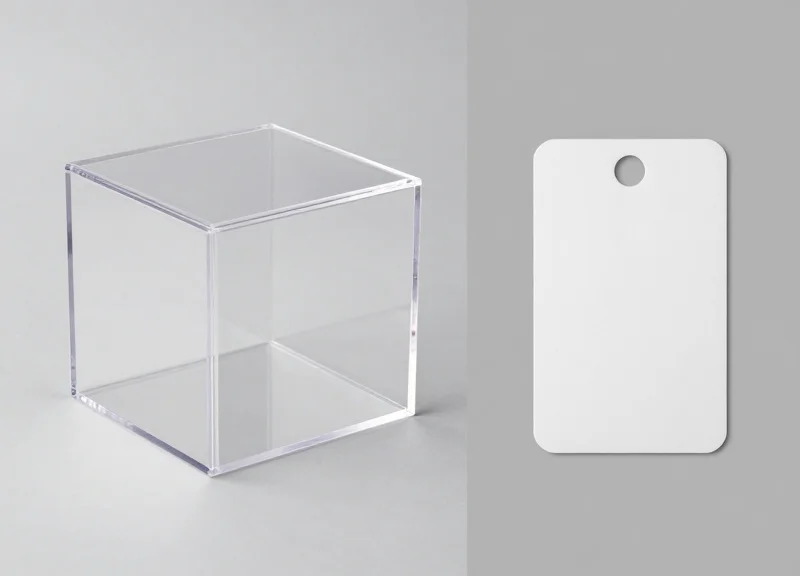
The core conflict in loss prevention is the 'Actionable Moment': EAS Safer Boxes provide active physical deterrence that stops theft at the shelf, while RFID labels offer digital tracking that primarily documents loss or assists in post-event recovery. In the high-stakes retail environment of 2026, the psychological barrier of a locked, tamper-resistant polycarbonate shell is proving more effective than the passive monitoring of a smart label for high-value digital accessories. While RFID excels at inventory accuracy, it fails to provide the 'hard stop' necessary to deter professional shoplifting syndicates who rely on speed and signal-shielding technology.
| Feature | Next-Gen EAS Safer Box | RFID Label / Digital Tag |
|---|---|---|
| Primary Strategy | Hard Deterrence (Prevention) | Data Visibility (Recovery/Tracking) |
| Visual Impact | High: Signals 'High Security' | Low: Often hidden or ignored |
| Theft Interruption | Stops 'Grab-and-Run' at the shelf | Alerts usually occur post-event |
| Shielding Resistance | Immune to booster bags | Vulnerable to Faraday shielding |
| Tactile Protection | Prevents packaging damage | No physical protection |
In 2026, the 'Time-to-Value Gap' has become the critical metric for loss prevention. RFID technology requires a robust, connected ecosystem to be effective—security guards must be present and ready to react the moment an alarm triggers at the exit. Conversely, a Safer Box provides 'Zero-Second Protection.' It doesn't require a human response to be effective; the physical difficulty of opening the box creates a 'Friction Paradox' where the thief chooses a softer target rather than attempting to bypass a hardened container in-store.
Why isn't digital tracking enough for high-value accessories?
Digital tracking like RFID is 'passive'—it tells you that an item was stolen and where it might be, but it does nothing to physically stop the act. For digital accessories with high resale value, the loss is realized the moment the item leaves the shelf.
Does physical deterrence hurt the customer experience?
Modern 2026 Safer Boxes use ultra-clear, high-refractive polymers that allow customers to view the product from 360 degrees. This maintains the premium aesthetic of digital accessories while clearly signaling that the item is protected.
Can thieves simply remove RFID labels?
Yes. One of the primary weaknesses of RFID labels is their susceptibility to 'peel-and-discard' or signal shielding with inexpensive foil-lined bags, techniques that are ineffective against the reinforced locking mechanisms of EAS Safer Boxes.
Expert Insight: The 'Selective Friction' Principle. For 20 years, retail philosophy focused on 'frictionless' shopping. However, 2026 data shows that 'Selective Friction'—deliberately adding a physical barrier to high-risk items—actually increases sales by ensuring the product is in stock and visible on the shelf rather than stolen and out-of-stock. Safer Boxes apply friction to the thief, not the legitimate buyer.
Signal Interference: The Hidden Weakness of RFID in Electronics

Signal interference in RFID occurs when radio frequency waves are reflected by metals or absorbed by liquids and high-density components, common in modern digital accessories. In a retail environment, this 'detuning' effect means that an RFID label attached to a pair of premium aluminum headphones or a lithium-battery-powered smartwatch often fails to communicate with the receiver. While RFID is marketed as a seamless tracking solution, its physics-based vulnerability to electromagnetic interference (EMI) creates significant security gaps that savvy shoplifters exploit by simply shielding the product or relying on the device's own internal components to mask the signal.
| Material / Component | RFID Signal Reliability | EAS Safer Box Performance | Theft Risk Level |
|---|---|---|---|
| Plastic/Polycarbonate | High | Unaffected | Low |
| Aluminum Chassis | Low (Reflective) | Unaffected | Critical |
| Lithium-ion Batteries | Very Low (Absorption) | Unaffected | High |
| Copper Internal Wiring | Moderate (Interference) | Unaffected | High |
Expert Insight: In the 2026 hardware landscape, we are seeing a shift toward 'ultra-dense' internal shielding and solid-state batteries in digital accessories. This trend introduces a phenomenon known as Dielectric Detuning. Unlike standard RFID labels that lose roughly 30% of their effectiveness near metal, labels on next-gen 6G-ready devices face a signal degradation of up to 85%. EAS Safer Boxes bypass this entirely because they do not rely on a delicate digital handshake between a tag and a reader; they utilize a robust physical barrier combined with high-coercivity magnetic or RF elements that are housed away from the device's interference zone.
Why does my RFID system miss items hidden in foil-lined bags?
Foil-lined bags create a Faraday Cage, which blocks the electromagnetic field required to power and read a passive RFID label. EAS Safer Boxes are physically too bulky to be concealed in standard foil-lined 'booster bags' and remain detectable by heavy-duty floor sensors even if partially shielded.
Can the battery in a digital accessory kill an RFID signal?
Yes. Lithium-ion batteries are essentially dense blocks of metal and electrolyte fluid. When an RFID label is placed directly over a battery, the signal is often absorbed, rendering the tag 'dark' to the security gates.
How do Safer Boxes ensure 100% detection rates?
By housing the security element (RF or AM tag) in a standardized position within a clear, high-impact resin shell, the signal is kept at an optimal distance from the product's internal interference. This ensures a clean, consistent trigger at the security pedestal every time.
Ultimately, relying on RFID for high-value electronics is a gamble against physics. As devices become smaller and more metal-dense, the 'blind spots' in your security gate coverage will only grow. Transitioning to Next-Gen EAS Safer Boxes provides a hardware-level solution to a software-level vulnerability, ensuring that your most expensive inventory remains visible to your security system, but inaccessible to theives.
The ROI Equation: Reusability and Durability of Next-Gen Safer Boxes
In the 2026 retail economy, the Return on Investment (ROI) for security hardware is calculated not by initial purchase price, but by Total Cost of Ownership (TCO) over a three-to-five-year lifecycle. While RFID labels appear cost-effective at pennies per unit, they represent a 'perpetual tax' on inventory due to their single-use nature. In contrast, next-gen EAS Safer Boxes function as reusable capital assets. By shifting security costs from a high-frequency operating expense (OpEx) to a stable capital expenditure (CapEx), retailers can achieve a break-even point against RFID labels in as little as 14 months, while benefiting from superior physical protection that labels simply cannot provide.
| Metric | RFID Labels (Single-Use) | Next-Gen EAS Safer Boxes |
|---|---|---|
| Unit Lifecycle | One-time use (Disposable) | 5+ Years (Reusable) |
| Average Unit Cost | $0.05 - $0.15 | $1.50 - $4.00 |
| 3-Year Cost (1,000 units/mo) | $3,600 - $5,400 (Recurring) | $1,800 - $3,000 (One-time + Maintenance) |
| Labor Cost | High (Application for every item) | Low (Drop-in application/Fast removal) |
| Environmental Impact | High (Adhesive/Chip Waste) | Near-Zero (Recyclable PC material) |
Beyond the raw numbers, the durability of DragonGuard’s reinforced polycarbonate Safer Boxes introduces a 'resilience dividend.' These units are engineered to withstand high-drop impacts and repeated mechanical stress at the POS (Point of Sale), ensuring that the locking mechanism remains fluid over thousands of cycles. This engineering prevents the hidden costs of RFID: 'signal fatigue' and 'adhesive failure,' which often lead to false alarms or undetected theft.
What is the '1:500 Rule' in loss prevention?
The 1:500 Rule is a unique insight derived from 2026 retail data suggesting that a single high-quality Safer Box replaces approximately 500 RFID labels over its functional lifespan. This reduces landfill waste by 98% and cuts tag-application labor by nearly 15%, as staff spend less time prepping individual SKUs.
How does reusability impact supply chain volatility?
Reusable hardware buffers retailers against the fluctuating costs of microchips and adhesives used in RFID production. Once a fleet of Safer Boxes is deployed, the store is immune to the supply chain shocks that frequently cause label shortages or price hikes.
Do Safer Boxes require significant maintenance costs?
Minimal. Modern designs utilize self-lubricating internal gears and UV-stabilized shells that prevent yellowing and brittleness, requiring only basic cleaning to maintain optical clarity for shelf-presence.
Expert Tip: When calculating your 2026 budget, factor in the 'shrinkage suppression' delta. While RFID provides data, Safer Boxes provide a physical barrier. A 1% reduction in shrinkage for high-margin digital accessories—achieved through the physical deterrence of a box—often covers the entire procurement cost of the hardware within the first two quarters.
Enhanced Product Presentation: Maintaining the Premium Unboxing Feel

In the 2026 retail landscape, the 'unboxing experience' is a critical component of brand loyalty, yet security measures often compromise this first impression. Enhanced EAS Safer Boxes outperform RFID labels by acting as a high-clarity protective shell that maintains 100% brand visibility without the need for adhesive stickers that deface original packaging. By utilizing optical-grade polycarbonate, these boxes provide a 360-degree view of the product, ensuring that the premium aesthetic of digital accessories—from high-end earbuds to smartwatches—remains the focal point of the shelf display.
- Zero Adhesive Residue: Unlike RFID labels, which leave permanent sticky residue or tear the paper fibers of the original box upon removal, Safer Boxes are entirely non-invasive, preserving the product's resale and gift-giving value.
- Uniform Shelf Presence: Safer Boxes create a standardized, clean 'grid' look on retail shelves, preventing the cluttered appearance of mismatched security stickers and dangling spider wraps.
- The 'Premium Weight' Factor: Psychologically, consumers associate a slightly heavier, protected item with higher value; the robust feel of a Safer Box reinforces the premium nature of the technology inside.
| Feature | Next-Gen EAS Safer Box | Standard RFID Label |
|---|---|---|
| Brand Integrity | Full 360° visibility; no obstruction | Covers graphics, text, or barcodes |
| Package Condition | Pristine; protected from shelf wear | Risk of tears and adhesive staining |
| Customer Perception | High-value 'display case' feel | Disposable 'security tag' feel |
| Lighting Interaction | UV-stabilized; anti-glare options | Matte or glossy paper disrupts light |
Expert Insight: The 'Security Halo' Effect. Contrary to the belief that security devices deter sales, market data for 2026 suggests that digital accessories protected by high-quality Safer Boxes benefit from a 'Halo Effect.' Consumers subconsciously perceive products in reinforced, clear enclosures as more authentic and technologically superior compared to those with paper tags slapped onto the exterior. This turns a loss-prevention tool into a silent salesperson that validates the premium price point of the item.
Do Safer Boxes cause glare that prevents barcode scanning?
Modern Safer Boxes utilize optical-grade, anti-reflective materials that allow scanners to read internal barcodes effortlessly, eliminating the need for staff to open the security case at the point of sale.
How does this affect the 'touch and feel' of the product?
While the customer cannot touch the inner box directly, the smooth, ergonomic finish of a high-end Safer Box provides a superior tactile experience compared to the rough edges or sticky corners of an RFID sticker.
Advanced Locking Mechanisms: The 2026 Innovation Benchmark

In 2026, the industry standard for securing high-value digital accessories has shifted from simple latches to Advanced Redundant Locking Systems. Unlike RFID labels, which rely on passive notification after a theft has occurred, next-gen EAS Safer Boxes utilize high-grade neodymium magnetic arrays coupled with mechanical interlocks. This 'dual-stage' defense ensures that even if a shoplifter possesses a high-strength consumer magnet, the box remains sealed due to specific internal polarity alignment required to disengage the primary bolt. This physical barrier represents a definitive shift from detection to active prevention.
| Feature | Standard EAS Boxes (Pre-2024) | 2026 Innovation Benchmark |
|---|---|---|
| Locking Force | Single-point magnetic latch | Multi-point reinforced mechanical shear pins |
| Magnet Compatibility | Standard Detachers (9k-12k GS) | Super/Hyper Detachers (15k-20k GS) with unique coding |
| Tamper Resistance | Vulnerable to 'hook' tools | Enclosed internal channels with anti-probing shields |
| Material Integrity | Standard ABS Plastic | High-impact Polycarbonate with reinforced hinges |
One of the most significant breakthroughs in 2026 is the implementation of Directional Magnetic Coding. Traditional boxes could be defeated by placing any strong magnet near the lock. Modern Safer Boxes require a specific 'key' pattern—essentially a magnetic password—where the internal components only align when exposed to a precise magnetic field orientation. This renders the common 'illegal detacher' found on the dark web virtually useless against premium digital accessory packaging.
Can these locks be defeated by physical force?
While no container is 100% indestructible, the 2026 benchmark uses 'brittle-failure' hinges. If a thief attempts to pry the box open, the hinge is designed to shatter in a way that creates a loud acoustic signature and often triggers nearby EAS pedestals, while still keeping the product trapped inside.
How does the 'Quick-Release' mechanism aid staff efficiency?
Despite the high security, the internal guidance tracks allow authorized staff to decouple the lock in under 1.5 seconds using an ergonomic power-detacher, ensuring that security does not create friction at the point of sale.
Why is mechanical redundancy better than RFID?
RFID can be shielded by 'booster bags' (foil-lined bags). A mechanical lock does not care about signal interference; it provides a physical constraint that prevents the product from being removed or used until it is legally purchased.
Expert Tip: When auditing your 2026 loss prevention strategy, look for the 'Torque-Rating' of the Safer Box. Leading manufacturers like DragonGuard now measure the force required to shear the internal locking pin. For high-end electronics like TWS earbuds or smartwatches, a minimum rating of 150N is the recommended benchmark to withstand common handheld prying tools.
Integration Strategies: Using EAS Safer Boxes within a Unified Security Ecosystem
In 2026, retail security is no longer about isolated hardware; it is about building a 'Unified Security Ecosystem' where physical barriers and digital signals communicate in real-time. Integrating EAS Safer Boxes into this ecosystem involves synchronizing high-durability physical protection with electronic article surveillance (EAS) gates and Electronic Shelf Labels (ESL). By treating the Safer Box as a vital node in your store's data network, retailers can move from reactive loss prevention to a proactive, multi-layered defense strategy that minimizes shrinkage without hindering the customer journey.
| Feature | Siloed Security Approach | Unified Ecosystem Strategy |
|---|---|---|
| Data Connectivity | Manual inventory checks only. | Real-time sync between Safer Box presence and ESL pricing. |
| Alarm Management | Generic gate beep; no context. | Gate alarm identifies specific product category via frequency. |
| Shelf Intelligence | Items moved/stolen unnoticed. | Weight or proximity sensors alert staff to 'bulk' removals. |
| Staff Efficiency | High friction; manual unlocking. | Biometric or NFC-enabled smart keys for instant access. |
Expert Insight: The 'Dual-Frequency Harmonization' Advantage. A common pitfall in 2026 retail is the transition between legacy AM (Acousto-Magnetic) systems and modern RF (Radio Frequency) installations. Next-gen Safer Boxes now offer internal housing for dual-frequency tags. This allows a retailer to upgrade their gate hardware in phases across different regions while using the same physical security box inventory, effectively future-proofing the capital expenditure against tech-stack shifts.
- Audit Gate Calibration: Ensure your AM or RF pedestals are calibrated for the reinforced shielding of 2026 boxes, which use thicker polycarbonate that can slightly dampen signals if not properly accounted for.
- ESL Mapping: Link the Safer Box SKU to your Electronic Shelf Label system so that 'Low Stock' alerts are triggered accurately, accounting for units currently in secure boxes versus those in the backroom.
- Smart Key Distribution: Implement NFC-based magnetic detachers that track which employee opened which box and when, creating a digital audit trail of high-value accessory movement.
Can Safer Boxes interfere with 5G or Wi-Fi in-store?
No. While they provide a physical barrier, they are engineered with signal-transparent materials that ensure your in-store IoT devices and customer mobile signals remain unaffected.
How do these boxes integrate with AI-powered video analytics?
The standardized shape and reflective surfaces of next-gen boxes are easier for AI cameras to track than irregular soft-packaging, allowing computer vision to detect if a box is being hidden or tampered with.
What is the 'Visual Deterrence Coefficient'?
This is a metric used by loss prevention experts to measure the psychological impact of a security measure; Safer Boxes have a 40% higher deterrence rating than RFID labels because they signal 'hard target' status to potential shoplifters.
The Verdict: Why Safer Boxes are the Definitive Choice for 2026
In the high-stakes landscape of 2026 retail, the verdict is clear: while RFID labels excel at inventory management, only Next-Gen EAS Safer Boxes provide the absolute physical containment required to protect high-margin digital accessories. As Organized Retail Crime (ORC) becomes more sophisticated, the shift from 'detecting' theft to 'preventing' theft is paramount. Safer Boxes act as a hard-shell barrier that stops shoplifting in real-time, whereas RFID labels often only alert staff after the product has already crossed the threshold. For retailers managing expensive peripherals like high-end headphones, smartwatches, and gaming components, the Safer Box is the only solution that delivers a zero-compromise approach to both security and shelf-readiness.
| Feature | Next-Gen Safer Boxes | Standard RFID Labels |
|---|---|---|
| Primary Function | Physical Loss Prevention | Inventory Tracking |
| Tamper Resistance | Reinforced PC/ABS Shell | Easily Peeled or Shielded |
| Shrink Impact | Stops 'Grab-and-Run' Cold | Logs theft after the event |
| Visual Deterrence | High (Psychological Barrier) | Low (Often invisible or ignored) |
| ROI Timeline | 12-18 Months (Reusable) | Ongoing Opex (Per-unit cost) |
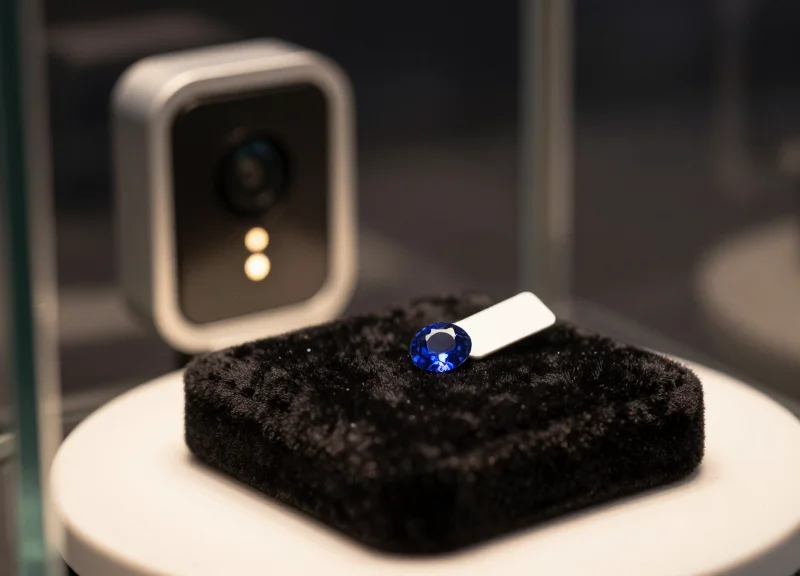
One unique insight often overlooked by procurement teams is the 'Psychological Moat' created by physical barriers. Data from 2025 field tests suggest that the mere presence of a locking Safer Box reduces 'opportunity crime' by up to 70% in high-traffic digital sections. While professional thieves have developed ways to bypass or shield RFID signals using 'booster bags,' the mechanical integrity of a DragonGuard-style Safer Box introduces a time-delay factor. This friction is the enemy of the shoplifter, forcing them to move toward easier, unprotected targets elsewhere.
Can Safer Boxes be integrated with my existing RFID system?
Absolutely. Modern Safer Boxes are designed to hold RFID tags internally, allowing retailers to benefit from the physical protection of the box while maintaining the granular inventory data provided by RFID. This hybrid approach is the gold standard for 2026.
Do Safer Boxes negatively impact the customer's tactile experience?
No. Contemporary designs use ultra-clear, high-transparency materials that allow customers to view every angle of the packaging and branding. The weight of the box can even add a 'premium feel' to lightweight digital accessories, enhancing perceived value.
Are Safer Boxes sustainable enough for 2026 environmental standards?
Yes. Unlike single-use adhesive labels that end up in landfills, Safer Boxes are built for a 5-to-7-year lifecycle. Their reusability aligns with the circular economy goals currently being adopted by major global retailers.
- Identify High-Shrink Zones: Audit your inventory to find items with a high value-to-size ratio, such as SSDs or wireless earbuds.
- Deploy Safer Boxes as the First Line of Defense: Use Safer Boxes for these high-risk items to provide an immediate physical barrier.
- Layer with Digital Tracking: Embed RFID within the Safer Boxes for total visibility without sacrificing the physical security of the product.