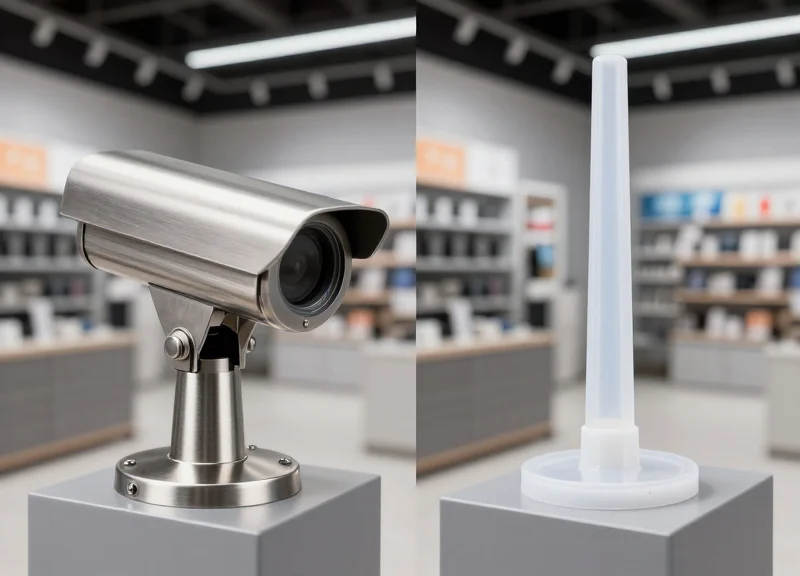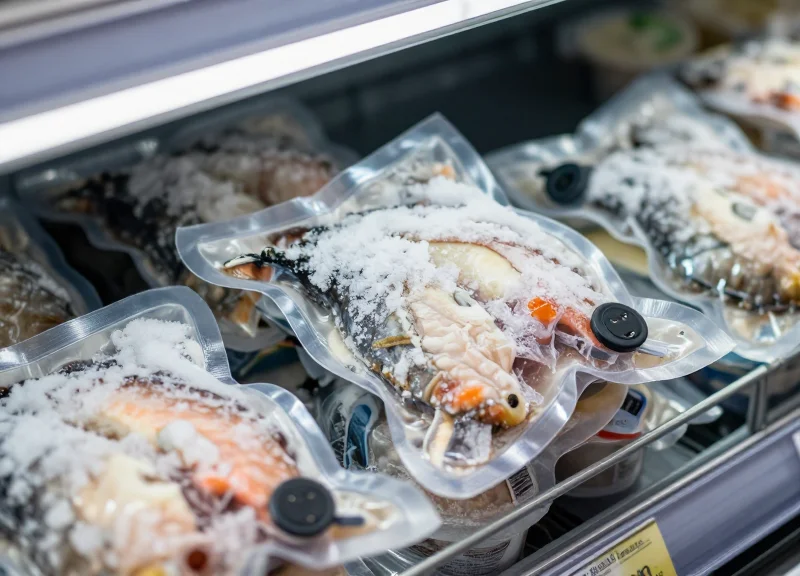
Protecting high-value frozen inventory presents a unique set of challenges for modern retailers. From the extreme sub-zero temperatures of ice cream freezers to the metallic properties of vacuum-sealed seafood packaging, standard security measures often fall short. Signal shielding and adhesive failure are common pain points that lead to increased shrink and lost revenue. In this guide, we dive into the specialized technology of cold-resistant Electronic Article Surveillance (EAS) tags and provide actionable strategies to ensure your frozen goods remain secure and detectable from the shelf to the checkout.
The Unique Challenges of Loss Prevention in the Frozen Aisle
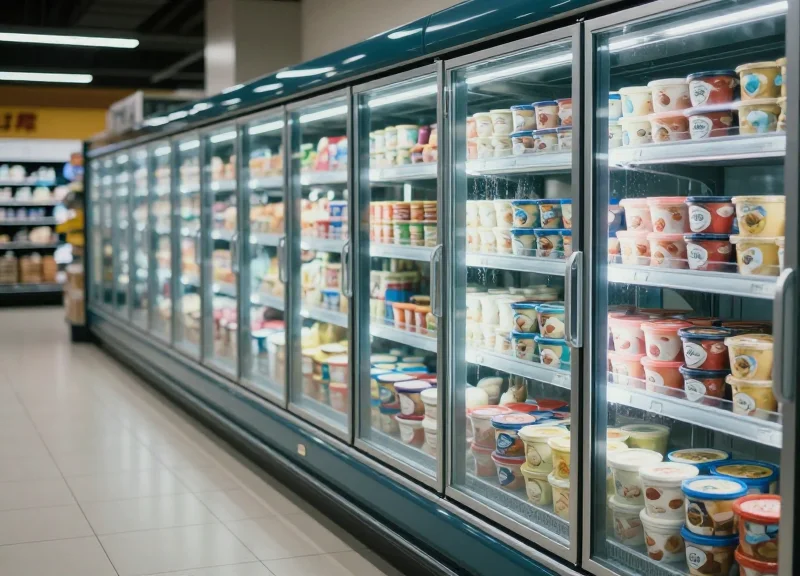
Loss prevention in the frozen food sector is uniquely difficult because it sits at the intersection of high resale value and hostile environmental conditions. Unlike dry goods, frozen items like premium ice cream and vacuum-packed seafood are subject to extreme sub-zero temperatures and constant condensation, which creates a 'Signal Shielding' effect. This phenomenon occurs when frost or moisture layers interfere with the radio frequency (RF) or acousto-magnetic (AM) waves of standard Electronic Article Surveillance (EAS) tags, leading to false alarms or, more dangerously, a total failure of the tag to trigger the pedestal at the exit.
| Environmental Factor | Standard Retail Aisle | Frozen Food Section |
|---|---|---|
| Ambient Temp | 20°C to 24°C | -18°C to -25°C |
| Adhesive Status | Stable / Permanent | Brittle / Loss of Tack |
| Moisture Level | Low / Controlled | High Condensation / Frost |
| Signal Interference | Minimal | High (Water/Ice Shielding) |
Why is vacuum-packed seafood a 'super-target' for shoplifters?
Premium seafood has a high 'value-to-size' ratio, making it easy to conceal. Furthermore, vacuum-sealed packaging often involves metallic films or thick plastics that further contribute to signal attenuation for standard security tags.
How does 'Thermal Shock' affect tag performance?
Thermal shock occurs when a tag applied at room temperature is suddenly moved to a freezer. The rapid contraction of the adhesive layer causes standard tags to 'pop off' or lose their bond, a process known as adhesive failure.
What is the 'Moisture Barrier' effect in EAS technology?
Ice and water are surprisingly effective at absorbing RF energy. In a frozen environment, a thin layer of frost can act as a physical shield, significantly reducing the detection range of the EAS system.
Expert Insight: Most retailers overlook the 'Micro-Climate' of the packaging. Even if your freezer is set to -20°C, the surface of a seafood bag can fluctuate during the defrost cycle of the display case. This constant expansion and contraction of the packaging material requires a specialized, high-tack cryogenic adhesive that remains flexible at the molecular level. Standard 'all-temperature' labels typically fail because they are designed for refrigeration (1-5°C), not the deep-freeze environments required for high-end frozen perishables.
Decoding Signal Shielding: Why Your Tags Might Not Be Beeping

Signal shielding in the frozen food aisle is the result of 'Detuning' and 'Attenuation,' physical phenomena where high-moisture content, dense frost layers, and metallic-lined vacuum packaging absorb or deflect the Radio Frequency (RF) or Acousto-Magnetic (AM) waves emitted by EAS gates. When these signals cannot penetrate the product's environment or return a clear 'echo' to the pedestals, the security system fails to trigger, essentially rendering the tag invisible to the sensors.
| Interference Factor | Physical Mechanism | Impact on EAS Performance |
|---|---|---|
| Liquid Moisture | High Dielectric Constant | Strong signal absorption; reduces detection range significantly. |
| Frost & Condensation | Signal Scattering | Diffuses waves, causing inconsistent or 'weak' alarm triggers. |
| Metallic/Foil Liners | Faraday Cage Effect | Total signal reflection; blocks communication between tag and gate. |
| Sub-Zero Temperature | Adhesive Crystallization | Causes tag 'lift,' creating an air gap that detunes RF resonance. |
Expert Insight: The Dielectric Shift. Most retailers don't realize that ice and liquid water interact with RF signals differently. While liquid water is a massive absorber of 8.2MHz (RF) signals, crystallized ice is less conductive but creates a refractive barrier. The real danger is the 'thaw-refreeze' cycle; as a product sits in a shopping cart and begins to sweat, that thin film of liquid moisture acts as a cloak, effectively 'stealthing' the tag even if the customer hasn't removed it.
Why does vacuum-packed seafood often trigger false negatives?
Many premium seafood vacuum bags utilize a microscopic layer of aluminum (metallized PET) to extend shelf life. This metal layer acts as a Faraday shield, reflecting the EAS signal away from the tag's internal antenna before it can vibrate or resonate.
Does the fat content in ice cream affect signal strength?
Surprisingly, yes. High-density fats and sugars create a different dielectric environment than pure water. In large containers (pints/quarts), the 'bulk' of the product can absorb the signal if the tag is placed too far from the container's outer edge.
Can frost buildup on the detection gate affect performance?
While less common, extreme humidity near the store entrance can cause condensation on the EAS pedestals themselves. This moisture can create electrical 'noise' that desensitizes the system, making it harder to pick up signals from cold-resistant tags.
- Identify the Barrier: Check if the packaging contains foil or if the product is 'sweating' excessively.
- Test Resonance: Use a field strength meter to see if the signal is being absorbed by the product's water mass.
- Optimize Placement: Move the tag away from the thickest part of the frozen mass or any metallic labels.
Essential Characteristics of Cold-Resistant EAS Tags
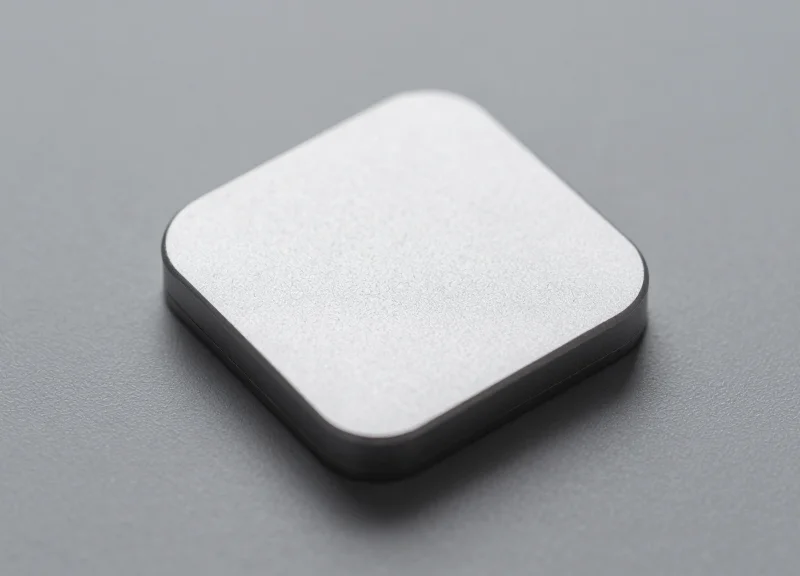
Cold-resistant Electronic Article Surveillance (EAS) tags are specialized security devices engineered to maintain structural integrity and signal frequency stability in sub-zero environments. Unlike standard retail tags, these variants utilize advanced materials designed to counteract 'adhesive crystallization' and 'frequency drift'—the two primary causes of security failure in frozen food aisles. To function reliably at -20°C (-4°F), a tag must transition from a general-purpose security tool to a ruggedized electronic component capable of withstanding thermal contraction and heavy condensation.
| Feature | Standard EAS Tags | Cold-Resistant EAS Tags |
|---|---|---|
| Adhesive Type | General Acrylic (beaded) | Low-Temperature Cryo-Adhesive |
| Operating Temp | 0°C to 40°C | -25°C to 10°C |
| Housing Material | Standard ABS Plastic | High-Impact, Frost-Resistant Polymer |
| Signal Stability | Prone to 'detuning' via frost | Shielded resonance circuitry |
- Cryogenic Adhesives: The adhesive must maintain a 'high-tack' state even as temperatures drop. Standard adhesives reach their glass transition point and become brittle, causing tags to fall off. Cold-resistant tags use specialized rubber-based or modified acrylic adhesives that remain flexible.
- Moisture-Locked Circuitry: Frost is essentially frozen moisture. When a product is moved to a warmer environment, condensation forms instantly. Cold-resistant tags feature vacuum-sealed internal components or hydrophobic coatings to prevent moisture from shorting the circuit.
- Thermal-Stable Substrates: Materials contract at different rates. The tag substrate must match the thermal expansion coefficient of the packaging to prevent 'peel-off' during the freezing process.
Expert Insight: The Glass Transition Temperature (Tg) Factor. Most retailers ignore the Tg of their security labels. For ice cream and seafood applications, the adhesive's Tg should be at least 10 degrees lower than your lowest freezer setting. If your freezer hits -20°C and your tag's adhesive has a Tg of -10°C, the molecular structure turns into a hard, non-sticky solid, rendering your loss prevention efforts useless the moment the product is stocked.
Can I use standard hard tags on frozen seafood?
While the electronics might work, the plastic pins and clutches in standard hard tags often become brittle and shatter in the cold. You should specifically source 'Impact-Modified' tags designed for the frozen chain.
Do cold-resistant tags work through frost buildup?
Yes, provided they are calibrated for 'High-Q' performance. These tags have a sharper resonance peak that can penetrate the thin layer of ice crystals that typically shield lower-quality signals.
Are these tags reusable?
Hard tags are typically reusable if they use stainless steel internal components to prevent rust from condensation. Disposable labels, however, are strictly single-use due to adhesive degradation after thawing.
Best Practices for Applying EAS Labels to Ice Cream Tubs
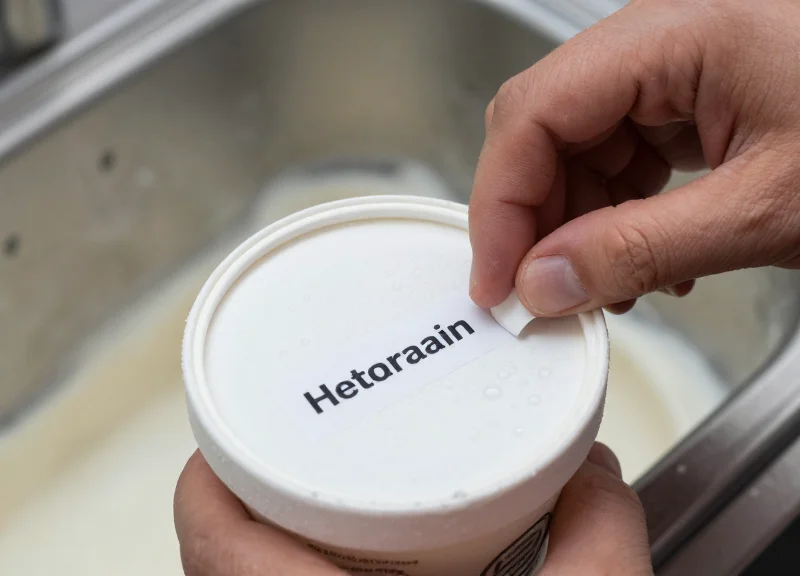
To successfully apply EAS labels to ice cream tubs, you must overcome the 'Condensation Barrier'—a thin layer of moisture that prevents standard adhesives from forming a molecular bond with the plastic substrate. The most effective strategy involves applying cold-chain specific labels either at the point of manufacture before flash-freezing or using a high-tack, pressure-sensitive adhesive designed to displace surface frost during in-store application. Proper placement on the bottom rim or side wall, rather than the lid, ensures that signal shielding from the lid's internal foil seal is avoided while maintaining the container's structural integrity.
- The 'Dry-Rub-Apply' Protocol: Before applying the label to a tub taken from the freezer, use a microfiber cloth to wipe the target area to remove frost. Rub the area briskly to create a localized 'thermal bloom' (a slight rise in surface temperature) before immediately pressing the label down.
- Firm Pressure for Mechanical Interlock: Unlike standard labels, cold-resistant EAS tags require a minimum of 3 seconds of firm thumb pressure. This 'dwell time' allows the specialized aggressive adhesive to flow into the microscopic textures of the polyethylene or paperboard tub.
- Strategic Rim Placement: Position labels near the bottom rim of the tub. This area is typically more rigid, reducing the risk of the label peeling when consumers squeeze the container to check for hardness, and it provides a clear line of sight to floor-mounted pedestals.
| Placement Zone | Detection Strength | Adhesion Durability | Risk of Shielding |
|---|---|---|---|
| Lid Center | High | Medium | Very High (Foil Seals) |
| Side Wall | Medium | High | Low |
| Bottom Rim | Very High | Very High | Minimal |
Expert Tip: Beware of the 'Substrate Energy' mismatch. Most modern ice cream tubs are coated with a silicone-based anti-moisture film. Standard rubber-based adhesives will 'butterfly' (peel off) within minutes. Always specify an acrylic-based, high-tack adhesive (HTA) formulated specifically for Low Surface Energy (LSE) plastics to ensure the tag survives the transition from the freezer to the customer's shopping basket.
Can I hide the EAS label under the lid?
While aesthetically pleasing, placing labels inside or under the lid is discouraged. Many premium ice cream brands use foil induction seals which create a Faraday cage effect, completely shielding the signal and rendering the EAS system useless.
Does the label need to be 'dead' to go in the microwave?
While most tubs aren't microwaved, if they are, standard AM/RF labels can spark if they contain metal foils. If your product is microwave-safe, ensure you are using 'Microwave-Safe' certified EAS labels.
What is the ideal application temperature?
For maximum bond, apply labels when the tub surface is at room temperature (above 15°C/60°F). If applying in-situ in the freezer aisle, you must use 'All-Temp' adhesives rated for application down to -10°F.
Securing Vacuum-Packed Seafood: Overcoming Foil Interference
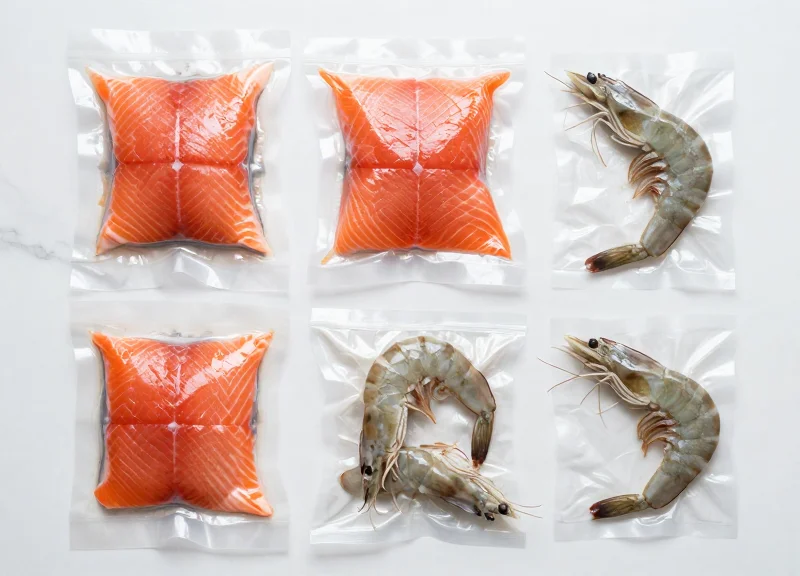
To effectively secure vacuum-packed seafood, EAS tags must be positioned outside the 'signal shadow' created by metallic foils; this is achieved by identifying non-conductive application zones or utilizing product header cards to create a physical buffer between the tag and the shielding material. Because aluminum-lined bags act as a Faraday cage, the electromagnetic signal of the tag is neutralized if it is placed directly over the foil. Success depends on isolating the tag from the metal to ensure the EAS gates can trigger the resonance required for an alarm.
| Placement Zone | Detection Probability | Reasoning |
|---|---|---|
| Direct Foil Center | Near Zero | Maximum signal shielding; the foil absorbs the RF/AM frequency. |
| Transparent Window | Moderate to High | Plastic film allows signal penetration, provided moisture is minimal. |
| Cardboard Header Card | Highest | Creates an 'Air-Gap' that prevents the metal from grounding the tag's signal. |
| Package Seam/Edge | Moderate | Diffraction at the edge can sometimes allow signal escape, but unreliable. |
- Identify the Foil-Free Zone: Examine the packaging for areas where the aluminum lining is absent, such as clear plastic windows or top-seal flaps.
- Clean the Surface: Even in cold storage, use a dry cloth to remove surface frost or oils from the seafood juices to ensure the cold-resistant adhesive bonds permanently.
- Apply with the 'Offset' Method: Place the EAS label at least 1-2 centimeters away from the edge of the foil-lined area to minimize signal attenuation.
- Pressure Activation: Apply firm, even pressure for 3 seconds; cold-grade adhesives are pressure-sensitive and require this to 'set' in sub-zero environments.
Expert Tip: The 'Header Card Buffer' Strategy. In my 20 years of retail security consulting, I have found that the most effective way to protect high-shrink frozen seafood like king crab legs or premium salmon is to integrate the EAS tag inside the cardboard header card during the packaging process. By placing the tag between two layers of cardstock at the very top of the bag, you create a 3-5mm 'air-gap' from the foil-lined product pouch. This minor distance significantly reduces the capacitive coupling between the tag and the foil, boosting detection rates by up to 45% compared to direct-on-foil application.
Does the moisture in frozen seafood block the signal?
Yes, water is a polar molecule that absorbs RF energy. This is why tags must be placed on the driest part of the packaging, typically the top seal, to avoid the 'moisture dampening' effect.
Can I use standard EAS labels for seafood?
No. Standard labels use water-based adhesives that crystallize and fail in freezers. You must use specialized rubber-based or hot-melt adhesive tags designed for temperatures below -20°C.
Is AM or RF technology better for foiled seafood?
Acousto-Magnetic (AM 58kHz) technology generally performs better near liquids and metals than Radio Frequency (RF 8.2MHz), but both require the 'air-gap' strategy to work with aluminum foil.
Source Tagging vs. In-Store Application for Frozen Goods
Source tagging involves integrating EAS (Electronic Article Surveillance) security labels into the product's packaging during the manufacturing or primary packaging stage, whereas in-store application requires retail staff to manually apply tags before items reach the freezer case. For frozen goods like ice cream and seafood, source tagging is generally the superior method because it allows for application in a controlled, dry environment before the product enters the cold chain, ensuring maximum adhesive bonding and consistent tag placement to avoid signal shielding.
| Feature | Source Tagging (Factory) | In-Store Application (Retail) |
|---|---|---|
| Adhesive Reliability | High (Applied to dry, room-temp surfaces) | Low (Risk of condensation and frost interference) |
| Labor Costs | Low (Automated integration) | High (Manual labor per unit) |
| Tag Concealment | Excellent (Can be hidden inside packaging) | Limited (External application only) |
| Signal Consistency | High (Precision robotic placement) | Variable (Subject to human error/misplacement) |
While source tagging is the gold standard for high-volume items like premium ice cream, in-store application remains a necessity for specialty seafood items or smaller retail chains without manufacturer partnerships. However, applying tags in-store to frozen goods presents a unique challenge: the 'Condensation Paradox.' When a warm tag is applied to a frozen surface in a retail environment, the temperature differential creates a microscopic layer of moisture (latent condensation) that prevents the adhesive from fully curing. This often leads to tags falling off inside the freezer or failing to trigger alarms due to moisture-induced signal attenuation.
Expert Tip: The 'Pre-Wipe' Protocol. If you must tag in-store, never apply a label directly to a frosted surface. Use a microfiber cloth with an isopropyl alcohol solution to remove surface frost and moisture immediately before application. This creates a temporary dry window that allows cold-resistant adhesives to form a mechanical bond with the packaging substrate before the frost returns.
Is source tagging more expensive for small retailers?
While it requires upfront negotiation with suppliers, source tagging typically reduces total cost of ownership by eliminating the labor hours spent on manual tagging and reducing shrink caused by tag failure.
Can in-store tags survive -20°C temperatures?
Only if they use specialized rubber-based or acrylic adhesives designed for low temperatures. Standard EAS labels will lose 'tack' and peel off as the adhesive becomes brittle in the cold.
Does source tagging help with 'Signal Shielding' in seafood?
Yes. Factory integration allows the tag to be placed in an optimized location away from metallic liners or moisture traps that are difficult to identify during a quick in-store application.
Integrating RFID with EAS for Enhanced Cold Chain Visibility

Integrating RFID with EAS (Electronic Article Surveillance) creates a 'dual-layered' intelligence system that addresses the two greatest threats to cold chain profitability: shrinkage and inventory inaccuracy. By embedding a Radio Frequency Identification chip alongside the EAS resonator in a single cold-resistant housing, retailers can transition from simple 'alarm-based' security to real-time, item-level visibility. This means a single tag can trigger a store alarm if stolen and simultaneously provide data on the product's origin, batch number, and dwell time in the freezer, ensuring that high-value seafood and ice cream are managed with surgical precision.
| Feature | Standalone EAS | Standalone RFID | Integrated RFID+EAS |
|---|---|---|---|
| Primary Function | Theft Deterrence | Inventory Tracking | Total Asset Protection |
| Cold Chain Utility | High (Loss Prevention) | High (Logistics) | Maximum (Visibility + Security) |
| Data Capacity | None (Bit-only) | High (EPC Data) | High (Security + Item Data) |
| Exit Detection | Excellent | Variable (Signal Drift) | Optimized via Dual Frequency |
- Select Dual-Frequency Cold-Chain Inlays: Utilize tags specifically engineered with hydrophobic PET substrates to prevent micro-condensation from interfering with the RFID antenna's frequency response.
- Map Freezer Read Zones: Calibrate RFID readers to account for the 'Multipath Effect' caused by metal freezer shelving, ensuring 99.9% read accuracy through the ice cream's moisture content.
- Sync EAS Alarms with Cloud Inventory: Integrate the exit gate event with your inventory management software to automatically flag exactly which item was removed from the store.
Does the cold kill RFID chips?
No, most passive RFID chips are rated for -40°C. The failure point is typically the adhesive or the antenna bond, which is why specialized cold-resistant tags are necessary.
Can RFID track temperature as well?
Yes, high-end integrated RFID tags can include semi-passive temperature sensors to log thermal excursions, though these are more expensive than standard labels.
How does moisture affect the read rate?
Frozen water (ice) is less disruptive to RF signals than liquid water, but 'sweating' products can still cause signal attenuation. Integrated tags solve this by using tuned antennas.
Expert Tip: To maximize ROI, use the RFID component for 'First-In, First-Out' (FIFO) management. In frozen seafood, where quality degrades over months, the RFID data can alert staff to pull older stock to the front. This reduces 'invisible shrinkage' caused by expired products, often saving more money than theft prevention alone.
Testing Protocols: Validating Detection in Sub-Zero Environments
A robust testing protocol for sub-zero EAS tags is a structured validation process designed to ensure that cold-resistant labels and hard tags maintain their resonance frequency and signal strength at temperatures between -18°C and -30°C. This protocol moves beyond simple detection checks, incorporating 'Thermal Dwell' and 'Frost Interference' metrics to guarantee that the hardware survives the transition from the warehouse to the customer's shopping cart without adhesive failure or signal shielding.
| Test Phase | Target Metric | Duration | Success Criteria |
|---|---|---|---|
| Pre-Freeze Baseline | Signal Amplitude | Immediate | 100% detection at 1.5m gate width |
| Deep Freeze Dwell | Frequency Stability | 48 Hours | Shift < 0.2 MHz in AM/RF spectrum |
| Thermal Shock | Adhesive Peel Strength | 4 Cycles | No edge lifting or label curling |
| Condensation Audit | Detectability Range | 15 Minutes | Consistent alarm trigger at exit gates |
- Establish the Dry Benchmark: Apply the EAS tag to a room-temperature product. Test the detection range through the security pedestals to establish a 100% signal baseline before environmental stressors are applied.
- Accelerated Cold Aging: Place the tagged item in a blast freezer for a minimum of 24 hours. This simulates the standard supply chain journey and tests the expansion/contraction of the tag's internal antenna.
- The 'Moisture Wipe' Stress Test: Remove the product from the freezer and allow it to sit in a humid environment for 10 minutes. This creates surface condensation—a primary cause of signal 'detuning' in standard tags.
- Dynamic Gate Passage: Simulate a shoplifting event by passing the 'sweating' product through the EAS gates at various speeds (walking, running, and hidden inside a shopping bag) to verify signal penetration.
Expert Tip: Retailers often overlook 'Frost-Layer Attenuation.' In long-term storage, a layer of micro-ice crystals can form over the tag. While ice is non-conductive, it changes the dielectric constant of the environment immediately surrounding the tag's capacitor. Always include a 'Heavy Frost' test category in your protocol to ensure your detection system's sensitivity is tuned to compensate for this natural seasonal buildup.
How often should we re-test our cold-chain tags?
We recommend a quarterly audit or whenever you switch suppliers. Adhesive formulations can change subtly, and environmental humidity varies by season, affecting detection reliability.
Does the seafood's salt content affect the test results?
Yes. Brine-heavy products can create a 'Faraday effect' when wet. Your testing should specifically include high-salinity items to ensure the tags are placed in positions least affected by liquid conductivity.
Should we test tags while the product is inside a cart?
Absolutely. Metal shopping carts provide additional shielding. A valid test must include the product placed at the bottom of a wire cart to ensure the signal can still reach the EAS pedestals.
Maintenance and Troubleshooting for Cold Chain Security
To maintain high detection rates for cold-resistant EAS tags on ice cream and seafood, retailers must look beyond the tags themselves and focus on the health of the detection infrastructure. Cold chain environments are notoriously hostile to electronic security systems because rapid temperature shifts between the freezer and the sales floor create micro-condensation and signal 'noise.' Effective maintenance ensures that pedestals remain sensitive enough to pick up specialized tags through frost layers while troubleshooting protocols help identify whether a failure is due to tag placement, hardware misalignment, or environmental interference.
| Symptom | Probable Cold Chain Cause | Corrective Action |
|---|---|---|
| Phantom Alarms | Condensation on pedestal internal PCB or electrical interference from nearby freezer compressors. | Install moisture-resistant gaskets on pedestal bases and move antennas 3+ feet from heavy machinery. |
| Weak Detection | Signal attenuation caused by heavy frost buildup on vacuum-packed products. | Increase the gain (sensitivity) of the EAS controller and switch to wide-gap detection antennas. |
| Deactivation Failure | Low-temperature adhesive on tags creates a thicker profile, requiring more magnetic flux for deactivation. | Recalibrate deactivator pads to 'High Power' mode and verify height clearance of the scanner. |
Expert Tip: The 'Thermal Drift' Factor. In many retail environments, EAS antennas are tuned during store hours when the HVAC is active. However, when freezers cycle or nighttime temperatures drop, the copper coils in the antenna can physically contract, shifting the resonant frequency. For cold chain applications, I recommend utilizing 'Auto-Tuning' digital pedestals that automatically adjust their frequency response in real-time to compensate for thermal-induced signal drift.
- Monthly Pedestal Base Inspection: Check for salt and water accumulation near the floor mounts, which is common during winter months or near seafood cases. Corrosion can degrade the grounding wire, leading to inconsistent detection.
- Deactivation Strength Validation: Use a field strength meter to ensure deactivators are projecting a magnetic field high enough to penetrate the thick cardboard or plastic layers used in frozen food packaging.
- System Recalibration: Request a technician to adjust the Signal-to-Noise Ratio (SNR) specifically for the environment's peak humidity levels to prevent false triggers caused by condensation-induced shorts.
Why do my tags work in the warehouse but fail at the door?
This is often due to 'Signal Shielding' from ice crystals. If the product has significant frost buildup, the water content in the ice can absorb RF/AM energy. Ensure tags are placed on the flattest, driest surface of the package.
Can frozen seafood foil bags be 'de-sensitized' by the freezer?
The freezer doesn't de-sensitize the tag, but the aluminum lining in vacuum bags becomes more conductive at lower temperatures, increasing the 'Faraday Cage' effect. Maintenance should include testing 'boosted' tags for these specific items.