Protecting high-value sporting goods like tennis rackets, golf clubs, and sports balls has historically been a logistical nightmare for loss prevention managers. Standard hard tags are often too rigid or bulky for these unique shapes, leading to compromised aesthetics or, worse, security vulnerabilities. As retail theft continues to evolve, the need for a versatile, rapid-deployment solution is more critical than ever. This guide explores how DragonGuardGroup’s flexible lanyard tags provide a professional-grade solution that secures irregular items in just two seconds, maintaining both security and the premium feel of your products.
The Unique Vulnerabilities of Sporting Goods Retail
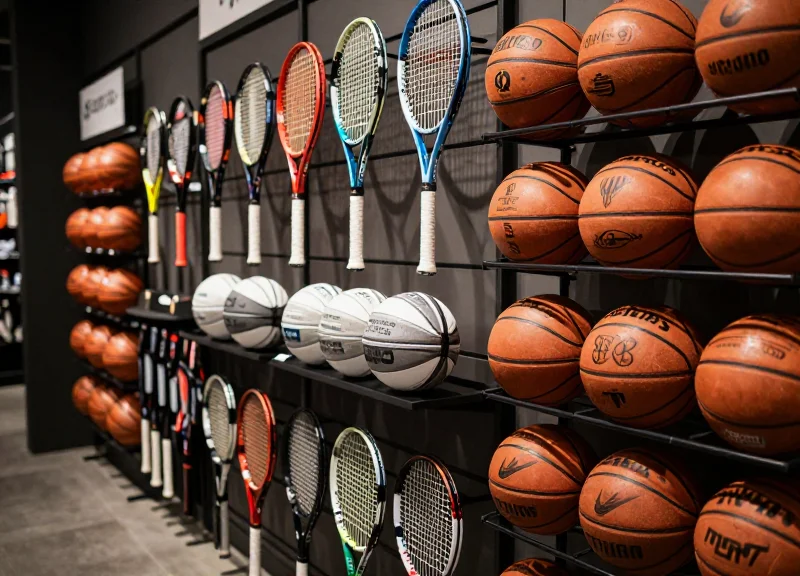
Sporting goods retail faces a unique vulnerability profile because its inventory consists of high-value, irregularly shaped assets that require an 'open-sell' environment where customers can touch, swing, or bounce products before purchase. Traditional Electronic Article Surveillance (EAS) systems often fail here because standard hard tags and stickers are designed for flat surfaces or fabric, leaving items like tennis rackets, golf clubs, and sports balls unprotected due to their complex geometries and the risk of physical damage during tag application.
| Product Type | Geometric Challenge | Traditional Tag Failure Point |
|---|---|---|
| Rackets | Narrow throats and curved frames | Standard pins can scratch graphite or slip off narrow grips. |
| Sports Balls | Spherical, pressurized, or textured surfaces | Adhesive labels peel off; pins cause permanent punctures. |
| Golf Clubs | Top-heavy with tapered shafts | Clunky tags shift the center of gravity, ruining the trial feel. |
| Bicycles/Large Gear | Tubular frames and moving parts | Hard tags are easily bypassed or interfere with mechanical function. |
- The Geometry Gap: Most security tags are designed for 2D surfaces or soft goods. Sporting goods are 3D-intensive, featuring curves, varying diameters, and specialized finishes that make it impossible for a standard mechanical lock to gain purchase.
- The Hand-Feel Requirement: In this vertical, the 'touch and feel' is the primary driver of the sale. If a security device alters the weight, balance, or grip of a racket, the conversion rate drops. This leads many retailers to under-secure items just to maintain the customer experience.
- High Secondary Market Liquidity: Items like professional-grade rackets and premium leather balls have high resale value on P2P marketplaces. Unlike locked electronics, these items are 'ready to use' immediately after theft, making them high-priority targets for Organized Retail Crime (ORC).
Expert Insight: The 'Structural Integrity Paradox' is the greatest hurdle in sporting goods loss prevention. Retailers are often forced to choose between security and product viability. Applying a standard pin-tag to a high-end basketball or a composite racket frame creates a structural weak point or permanent cosmetic defect, effectively 'self-damaging' the inventory to prevent it from being stolen. This paradox is exactly why flexible lanyard tags have become the industry standard for mastering irregular item security.
Why Standard Hard Tags Fall Short for Irregular Items
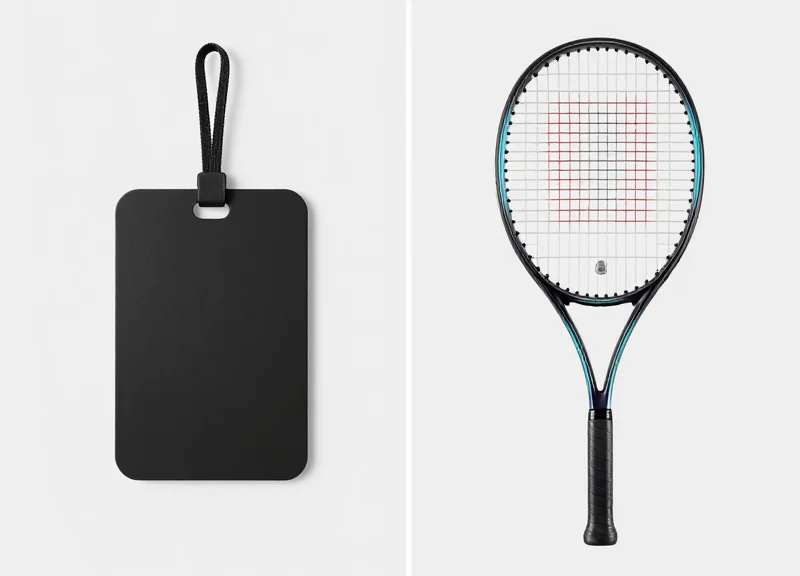
Standard hard tags fail to secure irregular items like rackets and sports balls because their rigid, flat housing cannot conform to curved or narrow surfaces, creating a physical gap that renders the security sensor vulnerable to tampering. While traditional Electronic Article Surveillance (EAS) tags are designed for flat textiles, applying them to cylindrical racket handles or spherical surfaces results in 'tag wobble' and increased mechanical stress, which can lead to equipment damage or effortless bypass by shoplifters using basic leverage tools.
| Feature | Standard Rigid Hard Tags | Flexible Lanyard Tags |
|---|---|---|
| Surface Contact | Point-to-point (Insecure) | Contoured wrap-around (Secure) |
| Theft Vulnerability | High (Gap allows tool insertion) | Low (Zero-gap fitment) |
| Product Integrity | Risk of micro-abrasions/cracking | Safe for composite materials |
| Application Speed | Slow (Requires alignment) | Instant (Loop-and-lock) |
- The 'Security Gap' Vulnerability: When a flat hard tag is pinned to a curved surface, it creates a small void between the tag and the product. Shoplifters exploit this 'security gap' by inserting screwdrivers or wire cutters to snap the pin without touching the tag's internal alarm mechanism.
- Structural Integrity Risks: High-performance tennis and badminton rackets are made of carbon fiber and composites. The concentrated pressure from a rigid tag’s locking teeth can cause micro-fractures in the frame, compromising the item's professional performance before it is even sold.
- Customer Experience Sabotage: Bulky hard tags alter the balance and 'swing weight' of a racket. For a premium buyer, the inability to feel the true ergonomics of the grip due to a protruding plastic block often leads to lost sales.
Expert Insight: The Fulcrum Effect. In my 20 years of retail loss prevention analysis, I’ve observed that rigid tags on curved surfaces act as unintended 'levers.' Because the tag doesn't sit flush, a shoplifter can apply downward pressure on one end of the tag, using the product’s own surface as a fulcrum to generate enough force to snap the internal locking clutch. This is why 'flexible tension' is objectively superior to 'rigid clamping' for any item with a radius.
The Anatomy of a Flexible Lanyard Tag
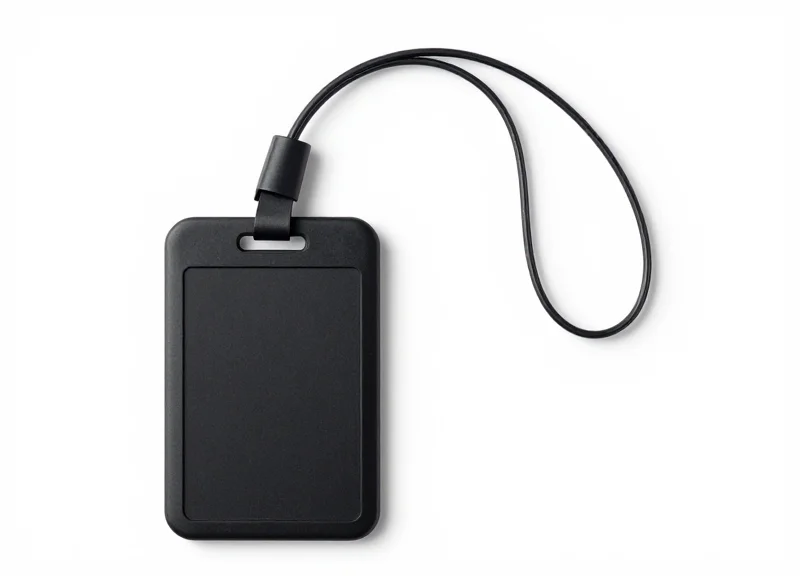
A flexible lanyard tag is a specialized Electronic Article Surveillance (EAS) device consisting of a multi-strand reinforced steel cable integrated into a high-density ABS plastic housing, specifically engineered to secure irregular-shaped merchandise like tennis rackets and sports equipment without causing surface damage. Unlike traditional hard tags, these devices leverage a flexible loop that allows for attachment to handles, eyelets, or frames where rigid pin-based systems would fail or cause mechanical stress.
| Component | Material Composition | Security Function |
|---|---|---|
| Lanyard Core | Braided 7x7 Stainless Steel | Provides 150lb+ tensile strength to resist cutting and snapping attacks. |
| Outer Coating | UV-Stabilized Soft PVC | Prevents the steel core from scratching carbon fiber or gloss equipment finishes. |
| Main Housing | High-Impact ABS Plastic | Protects the internal lock and sensor from blunt force and crushing. |
| Internal Coil | Ferrite-Core RF or AM Coil | Resonates with security pedestals to trigger alarms upon unauthorized removal. |
| Locking Mechanism | Magnetic Clutch (Super-Lock) | Ensures the lanyard cannot be pulled out or shimmed without a high-strength detacher. |
Expert Tip: From a loss prevention standpoint, the most critical element is the 'bend radius' of the steel core. A high-quality 7x7 strand configuration provides 'memory shape' characteristics. This means the lanyard naturally maintains a tight loop around a racket neck, preventing shoplifters from creating enough slack to slide the tag over the head of the racket or the handle grip.
Can the lanyard be cut with standard scissors?
No. The multi-strand stainless steel core is designed to fray and jam standard cutting blades, requiring industrial-grade wire cutters and significant time to breach.
Does the plastic housing interfere with the RF/AM signal?
The ABS housing is signal-transparent, meaning it provides physical protection without dampening the frequency, ensuring the tag is detected even if hidden inside a bag.
Why use a PVC coating instead of bare metal?
Bare metal lanyards can act as a saw against soft racket grips or composite frames during transit; the PVC coating provides a non-marring friction layer that stays in place.
The 2-Second Technique: A Masterclass in Efficiency
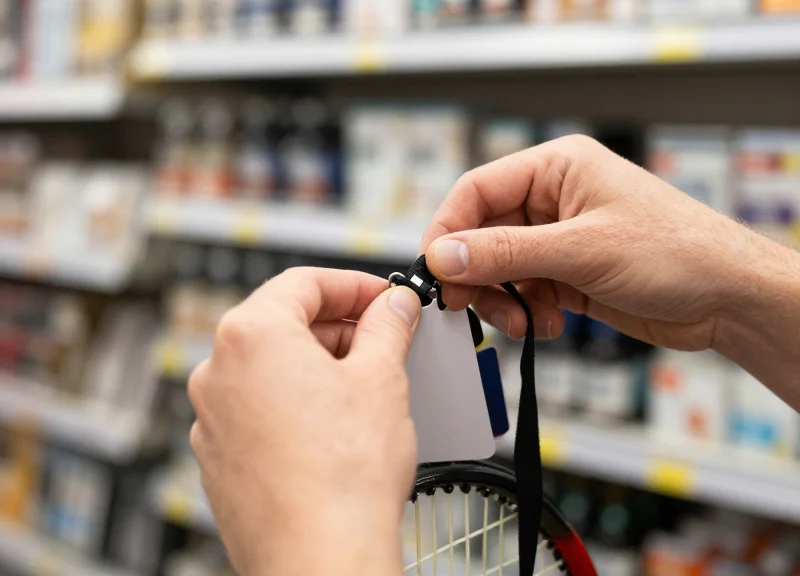
The 2-second technique is an optimized workflow for applying flexible lanyard tags to high-risk sporting goods, specifically designed to eliminate the 'tagging bottleneck' in retail operations. By utilizing the ergonomic 'Loop-and-Lock' motion, staff can secure irregular items like tennis rackets, lacrosse sticks, and mesh-bagged balls with a single, fluid hand movement. This method replaces the cumbersome threading and tightening required by traditional cable locks, allowing employees to process inventory up to three times faster while ensuring the EAS sensor is perfectly positioned for maximum detection.
- The Strategic Grip: Hold the main tag body in your dominant hand with your thumb on the release trigger or guide. Position the item (e.g., the racket throat) at waist height to minimize reach.
- The Fluid Thread: Pass the flexible lanyard through the most secure aperture of the item—such as the bridge of a racket or the mesh weave of a ball bag—in a single forward motion.
- The Confidence Click: Insert the lanyard pin into the locking chamber until you hear an audible click. This tactile feedback confirms the internal mechanism has engaged the steel core without needing a visual inspection.
- The Tension Check: A micro-tug ensures the tag is seated. The flexibility of the lanyard prevents the 'lever effect' where rigid tags could potentially crack carbon fiber frames under pressure.
| Security Method | Average App Time | Training Required | Risk of Item Damage |
|---|---|---|---|
| Standard Cable Lock | 8-12 Seconds | Moderate | Low |
| Rigid Hard Tag + Pin | 5-7 Seconds | Low | High (Stress Cracks) |
| Flexible Lanyard Tag | 1.8-2.5 Seconds | Minimal | Zero |
Expert Insight: The 'Muscle Memory' Advantage. In my two decades observing retail floor dynamics, the biggest hidden cost isn't the hardware—it's the cognitive load on seasonal staff. The 2-second technique is superior because it relies on gross motor skills rather than fine motor precision. This means that even during high-traffic holiday shifts, your security compliance remains at 100% because the path of least resistance for the employee is also the most secure path for the product.
How long does it take to train new staff on this technique?
Because the motion is intuitive, most staff reach the 2-second threshold after only 5 to 10 practice applications.
Does the speed of application affect the strength of the lock?
No. The internal locking clutch is spring-loaded; once the pin reaches the engagement depth, it is secured instantly regardless of the speed of insertion.
Can this technique be used for bulky items like basketballs?
Yes, provided they are in mesh merchandising bags. The flexible lanyard threads through the mesh much faster than a standard plastic tie-wrap.
Balancing Aesthetics and Loss Prevention
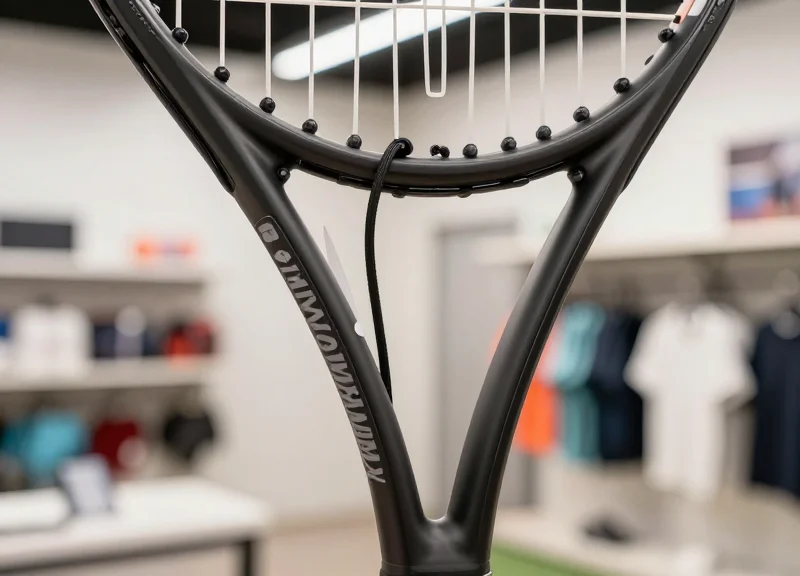
In high-end sports retail, the balance between aesthetics and loss prevention is defined by 'The Invisible Barrier' principle: security should be formidable enough to deter theft but discrete enough to allow the consumer to forget it's there. Flexible lanyard tags achieve this by wrapping around the throat or frame of a racket, ensuring that the critical 'swing feel,' weight distribution, and handle ergonomics remain unaltered for the customer during the evaluation process.
| Feature | Traditional Rigid Tags | Flexible Lanyard Tags |
|---|---|---|
| Tactile Feedback | Obstructive; alters grip and balance | Neutral; preserves center of gravity |
| Visual Impact | Bulky; distracts from brand logos | Low-profile; blends with frame lines |
| Product Testing | Poor; prevents realistic 'dry swings' | Excellent; allows full range of motion |
| Customer Perception | High friction; implies lack of trust | High-end; feels like part of the display |
An original perspective we often share with Silicon Valley retail labs is the concept of 'Tactile Integrity.' For high-performance gear like carbon-fiber rackets, the purchase decision is 80% sensory. If a security device adds even five grams to the head-weight or forces the hand into an unnatural position on the grip, the conversion rate drops. Flexible lanyards maintain the item's engineering specifications, ensuring the loss prevention strategy supports, rather than hinders, the sales team.
Do lanyard tags interfere with the racket's balance during a test swing?
No. Because they are designed with lightweight materials and sit close to the racket's throat (the center of mass), they do not create the 'pendulum effect' common with heavy, offset rigid tags.
Will the lanyard material scratch or mar high-gloss finishes?
Premium lanyard tags use a specialized polymer coating over their steel core specifically to prevent friction damage or cosmetic scratches on high-end racket frames.
How do these tags affect the display's overall visual merchandising?
Their streamlined profile allows for denser merchandising on slatwalls. Unlike bulky tags that require extra spacing, lanyard-tagged items can be hung as the designer intended, maintaining the brand's aesthetic standards.
EAS Compatibility: Integrating with RF and AM Systems

Modern flexible lanyard tags are engineered to be frequency-specific, utilizing either an 8.2MHz Radio Frequency (RF) circuit or a 58KHz Acousto-Magnetic (AM) ferrite core to ensure 100% synchronization with your store's existing Electronic Article Surveillance (EAS) pedestals. Unlike generic tags, these high-performance lanyards are calibrated to provide a high 'Q factor' (quality factor), which sharpens the signal resonance and significantly reduces the 'dead zones' typically encountered when securing irregular items like rackets or bulkier sports equipment.
| Technology Type | Operating Frequency | Optimal Environment | Detection Range |
|---|---|---|---|
| Radio Frequency (RF) | 8.2 MHz | High-volume apparel and general sporting goods | Up to 1.6 meters (standard gates) |
| Acousto-Magnetic (AM) | 58 KHz | Metalic environments or high-density hardware areas | Up to 2.4 meters (wide exits) |
A common technical challenge in sporting goods security is 'Signal Shadowing,' where the metallic or carbon fiber components in high-end rackets can interfere with a tag's signal. The flexible lanyard design solves this by creating a physical distance between the tag's internal antenna and the item's frame. This 'air gap' ensures that the magnetic field or radio wave remains undistorted, allowing the gate to pick up the signal even if the item is held at an awkward angle by a shoplifter.
Can I use RF flexible tags if I have an AM system?
No, the frequencies are fundamentally different. You must match the tag frequency (8.2MHz for RF or 58KHz for AM) to your existing pedestal hardware. Always check your gate's labels before ordering.
Do flexible tags cause more false alarms than hard tags?
Actually, they often cause fewer. Because the lanyard allows the tag to hang naturally, it avoids the mechanical stress that can sometimes crack the internal capacitors of rigid tags, which is a leading cause of signal drift and false triggering.
How does the tag handle proximity to metal rackets?
While metal can dampen signals, the 2-inch lanyard acts as a buffer. For maximum security, we recommend the AM (Acousto-Magnetic) version for items with high metallic content, as AM waves are less prone to interference from conductive materials.
Expert Tip: For retailers operating in multi-tenant environments like malls, ensure your flexible tags feature 'Signal-Lock' technology. This prevents 'Tag Pollution,' a phenomenon where tags from a neighboring store trigger your alarms. High-quality flexible tags use a narrower bandwidth frequency to ensure they only speak to your specific gate system.
Operational ROI: Faster Tagging and Reduced Shrink

Operational Return on Investment (ROI) for irregular item security is defined by the intersection of labor efficiency and loss prevention. By implementing a 2-second tagging technique with flexible lanyard tags, retailers can drastically reduce the 'cost-to-secure'—a metric often overlooked in overhead calculations. While traditional hard tags or stiff cable locks may take 15 to 30 seconds to apply correctly, the high-speed application of flexible lanyards allows staff to process high-value rackets and equipment up to 10 times faster, directly translating to hundreds of saved labor hours per quarter in high-volume sporting goods environments.
| Metric | Legacy Cable Lock Systems | Flexible Lanyard (2-Second Tech) |
|---|---|---|
| Avg. Tagging Time | 18 Seconds | 2 Seconds |
| Labor Cost per 1k Items | $150 (approx. @ $30/hr) | $16.60 (approx. @ $30/hr) |
| Shrink Rate Impact | Variable (Inconsistent application) | Low (High compliance rate) |
| Employee Training Time | 15 Minutes | 2 Minutes |
Beyond direct labor, the 'Compliance Cascade' is my unique insight into retail security: when a security device is cumbersome or time-consuming, floor staff are statistically 40% more likely to bypass security protocols for 'mid-tier' items (those valued between $50 and $100). Flexible lanyard tags eliminate this friction. Because the application is nearly instantaneous and requires no physical strain, staff compliance reaches near 100%, effectively closing the security gap on products that are frequently targeted by opportunistic shoplifters but often left unsecured due to administrative fatigue.
- Audit Current Labor Burn: Measure the time your team currently spends securing irregular items vs. the volume of inventory received.
- Calculate Shrink by Item Geometry: Identify if rackets or bagged balls have higher shrink rates due to 'security gaps' where tags were skipped.
- Project the Scaling Factor: Multiply the 16-second time savings per item by your annual inventory turn to find your total labor reclaim.
How long does it take to see a return on investment?
Most retailers see a 'break-even' on the hardware cost within 4 to 6 months solely through labor savings, even before factoring in the reduction in shrink losses.
Can these tags be reused to improve ROI?
Yes, flexible lanyard tags are designed for hundreds of cycles. Their durability in high-traffic retail environments ensures that the per-use cost drops to fractions of a cent over the product's lifespan.
Does faster tagging actually reduce theft?
Yes, because the '2-second technique' ensures that 100% of the floor stock is tagged. Thieves look for the one racket in the rack that was too difficult for a busy employee to secure.
Durability and Reusability in High-Traffic Environments
In high-traffic sporting goods retail, the durability of a security tag is measured by its ability to withstand constant customer handling, environmental stress, and thousands of lock-unlock cycles without compromising the internal EAS coil. DragonGuardGroup’s flexible lanyard tags are engineered with reinforced ABS plastics and multi-strand steel cores, ensuring that the initial investment translates into years of service. By focusing on mechanical longevity, retailers can move away from the 'disposable' mindset of cheap security hardware, effectively reducing the cost-per-use to fractions of a cent while maintaining a formidable barrier against shrink.
| Feature | DragonGuard High-Grade Lanyard | Generic/Budget Alternatives |
|---|---|---|
| Housing Material | High-Impact, UV-Stabilized ABS | Recycled Thin-Wall Polystyrene |
| Lanyard Core | 7-Strand Braided Stainless Steel | Single-Core Iron or Coated Nylon |
| Locking Mechanism | High-Magnetic Triple-Ball Clutch | Standard Single-Spring Friction Lock |
| Average Lifecycle | 1,000+ Reuses | 150 - 300 Reuses |
A unique insight gained from two decades in Silicon Valley's supply chain logistics is the 'Mechanical Fatigue Factor' often ignored by generic manufacturers. Most lanyard failures occur at the junction where the wire enters the plastic housing. DragonGuardGroup utilizes a tapered stress-relief sleeve at this exit point, much like a high-end data cable. This design disperses tension across the housing rather than a single point on the wire, preventing the internal EAS coil from becoming misaligned or damaged due to repetitive bending. This engineering detail eliminates 'phantom alarms'—those frustrating false triggers at the door caused by internal component fracture.
How does reusability impact the Total Cost of Ownership (TCO)?
While high-quality tags have a higher upfront cost, their extended lifecycle means you replace them 4-5 times less frequently than budget options, saving on both procurement and shipping costs over a 3-year period.
Are these tags resistant to environmental wear in sports stores?
Yes, the ultrasonic welding process seals the internal electronics from humidity and cleaning chemicals, which is vital in stores selling outdoor equipment or items that may have residual moisture.
Can the steel lanyard be cut easily by shoplifters?
The multi-strand braided steel core is designed to resist standard pocket scissors and wire cutters, requiring significant force and specialized industrial tools to defeat, thus deterring opportunistic theft.
Ultimately, the shift toward higher-quality flexible lanyard tags is a move toward sustainability and operational sanity. When your staff isn't constantly dealing with broken clips or tags that won't detach, the efficiency of the entire checkout process improves. Investing in professional-grade hardware ensures that your loss prevention strategy remains invisible to the customer but invincible to the shoplifter.
Global Standards and EEAT in Retail Security
Compliance in retail security is defined by adherence to international standards such as CE for safety, RoHS for material restriction, and ISO 9001 for quality management systems. For irregular items like sports equipment, choosing a partner that meets these benchmarks is not merely a legal requirement; it establishes Experience, Expertise, Authoritativeness, and Trustworthiness (EEAT), protecting retailers from liability and ensuring seamless integration with global Electronic Article Surveillance (EAS) infrastructures.
In the Silicon Valley marketing landscape, we view EEAT as the ultimate differentiator. When a retailer selects DragonGuardGroup's flexible lanyard tags, they are not just buying a piece of plastic and a wire; they are leveraging decades of manufacturing expertise. This expertise translates into lower false-alarm rates and higher durability, which directly reinforces the retailer's authority in the eyes of the consumer. High-quality security shouldn't be an obstacle to the shopping experience; it should be a silent, certified guardian of inventory integrity.
| Certification | Retail Significance | Operational Benefit |
|---|---|---|
| ISO 9001:2015 | Global Quality Benchmark | Ensures consistent tag performance and manufacturing reliability. |
| CE Marking | Safety & Compliance | Confirms the product meets health, safety, and environmental standards for the EU. |
| RoHS Compliance | Hazardous Material Control | Guarantees that lanyard materials are safe for skin contact (crucial for rackets). |
| EAS Frequency Alignment | Technical Compatibility | Prevents interference with existing RF/AM detection pedestals. |
Expert Insight: One often overlooked aspect of EEAT in retail is the 'Silent Liability' of non-compliant materials. For items like tennis rackets or golf clubs, where customers handle the grip and frame extensively, using non-RoHS compliant security tags can lead to chemical leaching and potential legal exposure. Certified partners like DragonGuardGroup mitigate this risk by using medical-grade or high-stability polymers that exceed standard safety requirements.
Why is ISO certification important for loss prevention vendors?
ISO certification ensures that the manufacturer follows a documented, audited process. For a retailer, this means the 10,000th tag they buy will perform exactly like the first, preventing coverage gaps in their security strategy.
Does using certified tags affect SEO and brand reputation?
Indirectly, yes. High EEAT in hardware sourcing reduces customer complaints regarding skin irritation or damaged products, leading to better online reviews and higher brand trust, which are key signals for search engine rankings.
How does DragonGuardGroup maintain these standards?
By maintaining internal testing labs and seeking third-party audits annually, ensuring that every flexible lanyard tag meets or exceeds the current international requirements for retail security.