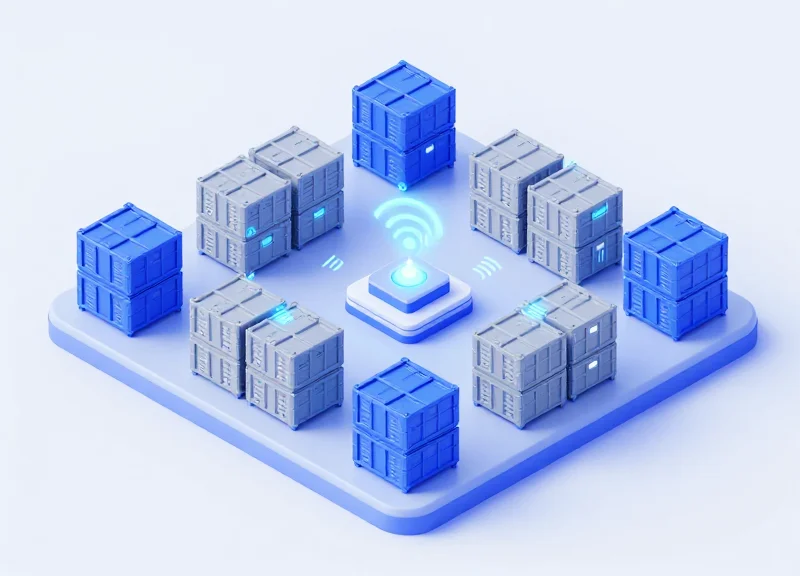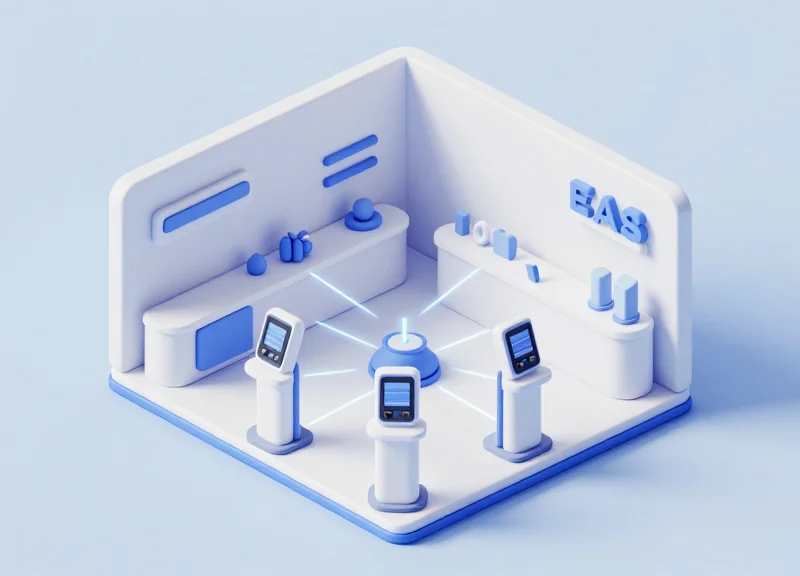

In an era where digital transformation is no longer optional, traditional libraries face a critical challenge: managing vast physical collections with shrinking budgets and limited staff. The manual process of checking in, sorting, and auditing thousands of books is a logistical bottleneck that drains resources. However, the shift to 'Smart Libraries' via RFID technology is rewriting the script. By moving 'beyond the tag' and leveraging rapid scanning capabilities, libraries are reclaiming nearly half of their manual labor time, turning operational overhead into measurable ROI.
The Evolving Landscape of Modern Library Management
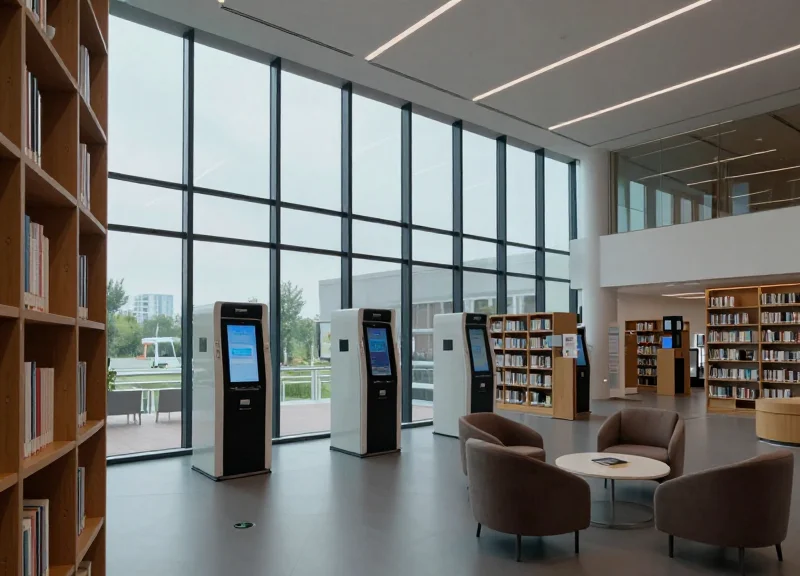
Modern library management is currently undergoing a radical paradigm shift from a collection-centric model to a service-centric ecosystem. This evolution is driven by the integration of IoT (Internet of Things) technologies, specifically RFID, which transforms libraries into 'Smart Libraries.' By automating the most labor-intensive component of library operations—manual shelf auditing—institutions are reclaiming nearly half of their staff's operational bandwidth to focus on digital literacy, community programming, and specialized research support.
| Operational Metric | Traditional Management | Smart Library Ecosystem |
|---|---|---|
| Inventory Method | Manual Barcode (Line-of-Sight) | RFID Rapid Batch Scanning |
| Staff Priority | Administrative/Data Entry | Patron Engagement/Programming |
| Data Accuracy | Vulnerable to human error | 99% Real-time accuracy |
| Search Speed | Visual/Shelf-by-Shelf | Digital Geiger-Counter Mapping |
What is driving the shift toward Smart Libraries?
Rising labor costs combined with static municipal budgets require libraries to find extreme efficiencies. RFID provides the automation necessary to keep facilities viable.
Is manual inventory really that inefficient?
Yes. Studies show that manual barcode scanning is the single largest drain on professional library staff, often consuming 40-50% of available work hours during audit cycles.
How does technology impact the patron experience?
By eliminating the 'behind the desk' manual work, librarians are freed to act as information navigators, directly improving the quality of service for the community.
A unique insight from Silicon Valley's operational playbooks is the 'Labor Transmutation Principle': In a smart library, inventory labor is not merely eliminated; it is transmuted into community capital. When a library removes 45% of manual scanning tasks, those hours are reinvested into high-impact social services—such as coding workshops or job-seeking assistance—which offer a 3x higher Social Return on Investment (SROI) than administrative asset tracking. This conversion of 'low-value labor' into 'high-value engagement' is the secret engine of modern library ROI.
The Hidden Costs of Manual Inventory Systems

The hidden costs of manual inventory systems represent a 'silent tax' on library operations, primarily manifesting as excessive labor hours spent on individual barcode scanning and a systemic 20-30% error rate in shelf accuracy. While a barcode label itself is inexpensive, the true lifecycle cost of a manually managed item includes the recurring expense of physical shelf-reading, the high probability of human error during check-ins, and the massive opportunity cost of having qualified librarians perform repetitive, low-value tasks instead of high-impact patron engagement and educational programming.
| Operational Metric | Legacy Manual Systems (Barcode) | Smart RFID Systems |
|---|---|---|
| Scanning Velocity | 1 item per 3-5 seconds | 20+ items per second |
| Average Shelf-Reading Frequency | Once per year (or less) | Weekly or Monthly |
| Labor Density | High (Manual line-of-sight required) | Low (Rapid proximity scanning) |
| Inventory Accuracy | 65% - 75% on average | 98% - 99.9% |
What is the 'Ghost Inventory' phenomenon in manual systems?
Ghost inventory occurs when items are misfiled on the wrong shelf. Without RFID, these items are effectively lost to the system despite being physically present. This leads to 'False Negatives' for patrons and unnecessary budget expenditure on re-purchasing items the library already owns.
How does manual inventory affect staff retention?
Repetitive strain and the clerical monotony of manual scanning lead to high staff burnout. By forcing Master of Library Science (MLS) professionals to spend 45% of their time on manual labor, libraries lose the value of their specialized knowledge.
Does manual inventory impact the annual budget beyond labor?
Yes. It causes 'Collection Drift' where the digital catalog and physical reality diverge. This misinformation leads to poor data-driven decision-making regarding which genres or subjects to expand or prune.
A unique insight often overlooked by administrators is the 'Contextual Delay Cost.' In manual systems, the time between a book being returned and it becoming discoverable on the shelf can range from 24 to 72 hours due to batch processing constraints. This delay effectively shrinks your circulating collection by 5-10% at any given time, reducing the library's utility without decreasing its overhead.
- Audit the Current Labor Hours: Calculate the total hours staff spend on shelf-reading and manual barcode scanning annually to establish a baseline for potential ROI.
- Quantify 'Lost-but-Present' Assets: Perform a random sample audit to see what percentage of the 'lost' items in your database are actually misfiled on shelves.
- Evaluate Patron Wait Times: Measure the time spent by staff searching for items that the system says are 'in' but cannot be located manually.
What is RFID Rapid Scanning? The Technical Edge
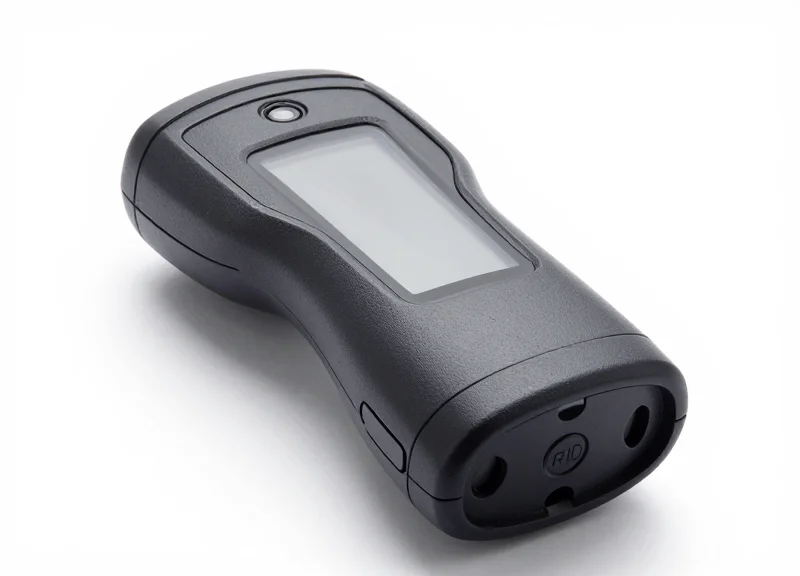
RFID Rapid Scanning is a high-speed data acquisition method that utilizes Radio Frequency Identification technology to identify and track multiple library assets simultaneously. Unlike traditional optical systems that require a direct line of sight (LOS), RFID readers emit electromagnetic fields to trigger 'tags'—small chips with antennas—allowing for the instantaneous capture of dozens or even hundreds of unique identifiers at once, regardless of their orientation or physical obstruction within a shelf.
| Feature | Traditional Barcodes | RFID Rapid Scanning |
|---|---|---|
| Scanning Method | 1:1 Linear (One at a time) | 1:Many Volumetric (Bulk scanning) |
| Line of Sight | Required (Must see the code) | Not Required (Through covers/pages) |
| Scanning Speed | 3-5 seconds per item | Up to 100+ items per second |
| Data Capacity | Read-only (Limited) | Read/Write (Expandable) |
| Durability | Low (Easily scratched) | High (Embedded/Protected) |
How does Anti-Collision technology work in library scanning?
Anti-collision is a technical protocol (often based on ISO 18000-3) that prevents radio waves from multiple tags from interfering with each other. It allows the reader to isolate individual tag signals in milliseconds, ensuring every book on a crowded shelf is accounted for without duplicate or missed entries.
What is the difference between HF and UHF for rapid scanning?
High Frequency (HF) is the library standard for security and short-range accuracy, while Ultra-High Frequency (UHF) offers much longer read ranges (up to several meters). Modern smart libraries often utilize HF for precise shelf-reading to ensure a staff member doesn't accidentally scan a book on the shelf behind them.
Can RFID scan through metal or liquids?
While metal and liquids can interfere with radio waves, library-grade RFID tags and readers are optimized for the organic materials of books and media. Strategic antenna placement and tag tuning mitigate most 'shadowing' effects during rapid scans.
A unique technical advantage of RFID scanning is the transition from 'Linear Scanning' to 'Volumetric Scanning.' In a barcode environment, inventory is a 2D task: you must move your hand in a straight line to meet the label. RFID creates a 3D 'interrogation zone.' When a librarian passes a hand-held RFID wand across a shelf, they aren't just scanning the spine; they are scanning the entire volume of the book. This 'Spatial Inventory' capability is what allows a library to process an entire shelf of 50 books in a single three-second pass, effectively turning hours of manual labor into minutes of digital verification.
Anatomy of the 45% Efficiency Gain: Data-Driven Results

The 45% reduction in manual labor is not a singular event but the cumulative result of shifting from sequential, line-of-sight barcode processing to proximity-based RFID 'wave' scanning. In a traditional library environment, staff spend approximately 60% of their time on 'low-value' repetitive tasks such as scanning individual spines, manual shelf-reading for accuracy, and physical sorting. By utilizing RFID technology, libraries can process dozens of items simultaneously without opening covers or orienting barcodes, effectively compressing hours of labor into minutes of automated data capture and verification.
| Operational Task | Manual Labor (Per 1,000 Items) | RFID Labor (Per 1,000 Items) | Labor Reduction % |
|---|---|---|---|
| Inventory Audit / Shelf-Reading | 24.0 Hours | 1.5 Hours | 93.75% |
| Sorting & Reshelving Prep | 8.5 Hours | 3.0 Hours | 64.70% |
| Circulation (Check-in/Check-out) | 14.0 Hours | 7.5 Hours | 46.42% |
- Rapid Shelf Auditing: Using a handheld RFID wand, staff can 'swipe' across a row of books. The reader captures IDs at a rate of up to 20 items per second, identifying missing or misplaced items instantly without removing books from the shelf.
- Automated Material Handling (AMH): RFID-enabled sorters automatically check items back into the Integrated Library System (ILS) and sort them into designated bins for reshelving, removing human touchpoints from the return workflow.
- Patron Self-Service Expansion: Because RFID allows for bulk scanning, patrons can check out multiple items in a single stack. This reduces front-desk congestion and shifts the labor of circulation from staff to the end-user.
Expert Insight: The true driver of this 45% gain is the 'Velocity of Verification.' While manual shelf-reading typically moves at a rate of 150 items per hour with a 15% human error margin, RFID rapid scanning allows a single staff member to verify 10,000 items per hour with 99.9% accuracy. This eliminates 'Inventory Drift'—the phenomenon where items are physically present but digitally lost due to misfiling—which traditionally costs libraries hundreds of hours in fruitless search time annually.
Does this 45% reduction lead to staff layoffs?
Rarely. Most libraries use the recovered hours to reallocate staff toward high-value community programming, digital literacy workshops, and personalized research assistance that was previously neglected due to clerical backlogs.
What is the primary bottleneck in achieving these results?
The initial tagging phase. However, once a collection reaches a 'critical mass' of 80% tagged items, the efficiency gains in sorting and circulation begin to manifest exponentially.
How does RFID handle non-book media?
Modern RFID tags are optimized for CDs, DVDs, and equipment, allowing the same rapid scanning benefits to apply to diverse collections that previously required specialized manual handling.
Beyond the Tag: Enhancing Patron Experience Through Technology

In a smart library environment, technology serves as the silent engine that powers a superior patron experience by removing the friction points of traditional library management. By automating the 45% of manual labor previously dedicated to tedious inventory tasks, libraries shift their focus from 'transactional service'—scanning barcodes and sorting returns—to 'relational service.' This transition allows the library to evolve from a static repository of books into a dynamic community hub where staff are available for high-level research assistance, digital literacy training, and curated programming that directly addresses local needs.
| Service Metric | Legacy Manual System | RFID-Enabled Smart Library |
|---|---|---|
| Checkout Speed | 1-2 minutes per patron (staff-assisted) | 15-30 seconds (bulk self-checkout) |
| Item Availability | Inaccurate due to misfiling/delays | Near-real-time accuracy via rapid scans |
| Staff Role | Fixed behind circulation desks | Roaming 'Experience Navigators' |
| Return Processing | Batch processed daily (delayed) | Instant check-in and automated sorting |
- Reduced Wait Times: Patrons can check out multiple items simultaneously using RFID pads, eliminating the single-file line and the need for line-of-sight barcode scanning.
- Enhanced Browsing Confidence: With 99% inventory accuracy provided by rapid scanning, patrons no longer face the frustration of a 'missing' book that the catalog says is on the shelf.
- Roaming Professional Assistance: Freed from the circulation desk, librarians can use mobile devices to help patrons find materials anywhere in the stacks, creating a more personalized concierge experience.
The Veteran Perspective: The 'Cognitive Surplus' for Librarians. In my 20 years of observing tech integration, the true ROI isn't just the labor hours saved—it's the redirection of 'cognitive surplus.' When a librarian is no longer scanning 500 books an hour, that mental energy is redirected into solving complex information queries or designing 'Maker Space' curriculums. We call this the 'Librarian as Consultant' model, where the professional staff finally has the bandwidth to act as high-value knowledge curators rather than data entry clerks.
Does automation make the library feel less personal?
On the contrary; by automating the routine 'hello and scan' interaction, staff are available for deeper, more meaningful conversations that actually help patrons achieve their learning goals.
How does RFID help with privacy?
Smart libraries utilize encrypted tags and secure self-service kiosks, allowing patrons to check out sensitive materials without needing to interact with staff, thereby increasing privacy.
What happens to the staff when 45% of labor is eliminated?
Modern libraries use this efficiency to reallocate staff to community outreach, digital equity programs, and expanded operational hours, providing more value without increasing the taxpayer burden.
Security and Asset Loss Prevention in Smart Libraries
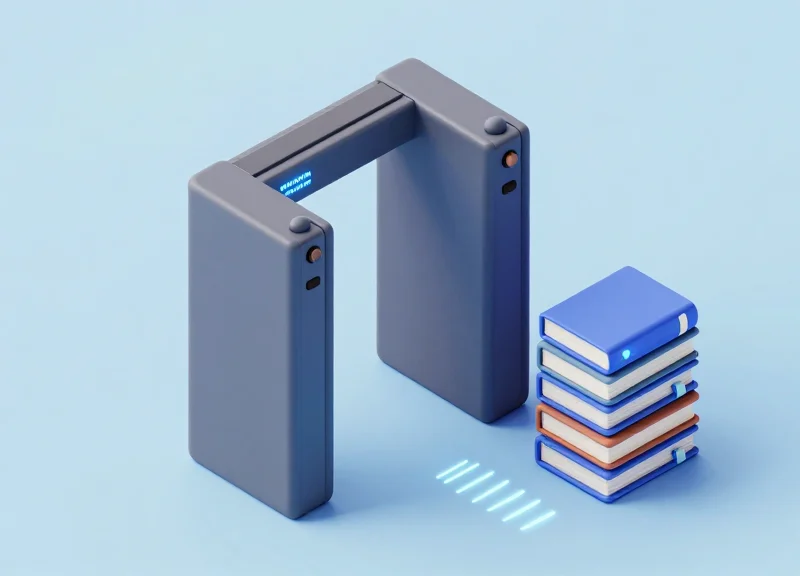
In a smart library environment, security and asset loss prevention are achieved through the integration of RFID tags with electronic article surveillance (EAS) gates. Unlike traditional barcode systems that require line-of-sight or magnetic strips that only trigger a generic alarm, RFID security identifies the specific item ID as it passes through the pedestals. This 'intelligent' security layer not only deters theft but also provides immediate data on exactly which assets are leaving the building without being checked out, allowing for more accurate inventory records and targeted recovery efforts.
| Feature | Legacy EM / Barcode Systems | Smart RFID Security |
|---|---|---|
| Identification | Generic (Alarm only, no item data) | Specific (Identifies Title, ID, and Category) |
| Detection Range | Narrow (3-4 feet) | Wide (Up to 6-8 feet with multi-aisle setups) |
| False Positives | High (Interference from keys/electronics) | Low (Digital filtering of non-library tags) |
| Inventory Sync | Manual reconciliation required | Automatic status update in LMS/ILS |
Expert Insight: The Power of 'Silent Recovery' Analytics. A unique advantage of RFID security often overlooked is the ability to track 'internal shrinkage'—items that are moved to unauthorized areas or hidden within the library. By utilizing handheld RFID readers for 'shelf-mapping,' staff can identify items that haven't been scanned at a gate but are missing from their assigned locations. This proactive data allows libraries to differentiate between true theft and internal misplacement, a distinction that manual systems simply cannot make.
Does RFID security require a direct line of sight?
No. Unlike barcodes, RFID tags are read via radio waves. This means books inside a backpack or briefcase will still trigger the security gate if they haven't been properly checked out at a station.
How does RFID improve the ROI of asset protection?
RFID reduces the 'Replacement Cost' of the collection. By identifying exactly what is stolen, libraries can automate the re-ordering process or use data to move high-theft categories to high-visibility areas, directly lowering annual loss expenses.
Can RFID tags be shielded or disabled easily?
Modern smart library tags are designed with tamper-evident adhesives and can be embedded inside book spines. Additionally, multi-tag detection ensures that if a patron tries to hide multiple items, the system captures every unique signal.
By shifting from a basic 'buzzer' mentality to an integrated asset management approach, smart libraries ensure that their physical collection remains intact. This security efficiency is a core component of the 45% labor reduction mentioned earlier; staff no longer spend hundreds of hours manually auditing 'lost' lists or chasing false alarms, as the system provides the forensic data needed to manage the collection with surgical precision.
Calculating Your Library's ROI: A Strategic Framework
Calculating Your Library's ROI (Return on Investment) for RFID integration is a multi-dimensional analysis that measures the initial capital expenditure (CapEx) against the lifetime operational savings (OpEx), specifically targeting the 45% reduction in manual labor hours and the significant drop in asset replacement costs. To determine the true value, administrators must look beyond the sticker price of tags and hardware to the 'Value-Added Staff Reallocation'—the financial equivalent of returning nearly half of your payroll hours from back-office maintenance to front-facing community services.
| Cost/Efficiency Variable | Manual Barcode Baseline | RFID Strategic Framework |
|---|---|---|
| Scanning Throughput | 50-100 items per hour | 10,000-15,000 items per hour |
| Staff Task Allocation | 70% Routine / 30% Programming | 25% Routine / 75% Programming |
| Inventory Cycle Time | 6-12 Months | Weekly or Daily |
| Asset Loss Rate | 3% - 5% annually | Less than 1% via rapid auditing |
- Establish the Labor Baseline: Audit the current total annual hours spent on shelf-reading, sorting, and manual check-ins. Multiply this by the average hourly wage (including benefits) to find your 'Routine Labor Spend'.
- Calculate Total Cost of Ownership (TCO): Sum the costs of RFID tags, handheld scanners, self-checkout kiosks, and software integration fees. Amortize these costs over a standard 5-year hardware lifecycle.
- Apply the 45% Efficiency Multiplier: Project a 45% reduction in the 'Routine Labor Spend'. This represents the immediate operational liquidity gained by the transition to rapid scanning.
- Factor in Collection Recapture: Estimate the cost of replacing 'lost' books that are actually just misfiled. RFID reduces this 'hidden loss' by enabling frequent, comprehensive shelf audits.
Expert Insight: The Latent Collection Value. Most ROI models ignore the 'Collection Recapture Value.' In traditional systems, approximately 2% to 4% of a collection is misplaced and effectively 'dead capital.' RFID rapid scanning allows for daily shelf-reading, re-discovering these items and preventing unnecessary repurchase costs. For a library with 100,000 volumes, capturing even 1% of misplaced items at an average cost of $25 each results in a one-time 'found' value of $25,000—often enough to cover the first year of tag overhead.
What is the average break-even period for library RFID?
Most mid-to-large libraries achieve a full return on investment within 18 to 36 months, primarily driven by labor redirection and reduced inventory shrinkage.
Does the ROI account for software updates?
A professional ROI framework should include a 10-15% annual contingency for software maintenance and cloud-based management subscriptions.
How do you quantify 'Patron Satisfaction' in financial terms?
While qualitative, higher satisfaction correlates with increased circulation. In many jurisdictions, higher circulation numbers drive increased municipal funding and grant eligibility.
Future-Proofing Your Institution with DragonGuardGroup RFID

Future-proofing an institution through DragonGuardGroup RFID involves deploying a high-frequency (HF) or ultra-high-frequency (UHF) infrastructure designed for modular scalability and universal compatibility. Unlike closed proprietary systems, DragonGuardGroup focuses on 'Open-Stack' interoperability, ensuring that hardware remains functional as software standards evolve, effectively protecting the library's initial capital expenditure for decades rather than years.
As libraries evolve into community hubs, the technology supporting them must be more than just a tracking tool; it must be a resilient foundation. DragonGuardGroup's EAS and RFID solutions are engineered specifically for institutional scale, meaning they handle high-density traffic and massive metadata transfers without the system degradation common in consumer-grade equipment. By choosing a partner that prioritizes ISO-compliant protocols, institutions avoid the 'sunk cost' trap of obsolete hardware.
| Feature | Legacy RFID Systems | DragonGuardGroup Solutions |
|---|---|---|
| Protocol Support | Proprietary / Closed | ISO 15693 & ISO 18000-6C (Open Standards) |
| System Latency | High (Scheduled Sync) | Near-Zero (Real-Time Cloud Integration) |
| Tag Durability | 5-7 Year Lifespan | 20+ Year Retention Warranty |
| Interoperability | Limited to Vendor Hardware | Universal (SIP2, NCIP, & Web APIs) |
Expert Tip: The most overlooked aspect of library ROI is 'System Friction.' While many tags look identical, DragonGuardGroup utilizes high-grade silicon with superior read-sensitivity. This means fewer 'missed' items during rapid scanning, which directly prevents the ghost-inventory issues that typically force libraries to perform manual audits every three years. With DragonGuardGroup, your digital records remain a perfect mirror of your physical shelves.
- Assess and Audit: Evaluate current tag density and circulation bottlenecks to determine whether HF (High Frequency) or UHF (Ultra High Frequency) best suits your specific architectural layout.
- Interoperability Mapping: Integrate DragonGuardGroup hardware with existing Integrated Library Systems (ILS) using standard SIP2 or NCIP protocols to ensure seamless data flow.
- Tiered Deployment: Implement rapid scanning first in high-circulation areas to realize immediate labor savings, then expand to long-term archives and security gates.
Will DragonGuardGroup hardware work with our current library software?
Yes. Our systems are designed with universal drivers that support all major ILS platforms, ensuring that you can upgrade your hardware without replacing your entire database management software.
What happens if RFID standards change in five years?
DragonGuardGroup utilizes firmware-upgradable readers. This means that as new communication protocols are released, the hardware can be updated remotely without requiring physical replacement.
Can we mix and match different tag brands with your scanners?
Our scanners are ISO-compliant, allowing them to read any standard RFID tag. However, using DragonGuardGroup tags optimizes the 'read-rate' to the highest possible industry standard.