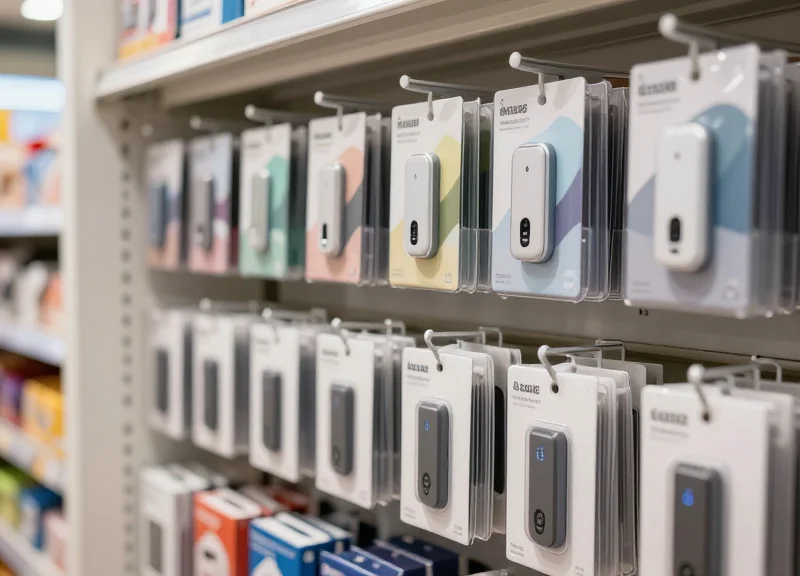
In the high-stakes world of premium retail and specialized logistics, small encapsulated assets—ranging from luxury cosmetics and pharmaceuticals to high-end electronics—represent a disproportionate amount of inventory value and shrink risk. Traditional, bulky security measures often fail these items by compromising product aesthetics or proving easy to bypass. However, the integration of discreet tagging technology coupled with industry-leading 99.9% detection rates is changing the equation. This article explores how modern loss prevention strategies can directly bolster your Return on Investment (ROI) by up to 35%, transforming security from a cost center into a powerful engine for profit preservation.
The High Cost of Small Asset Shrinkage

Small asset shrinkage refers to the loss of high-value, compact items—such as encapsulated electronics, specialized medical components, or luxury cosmetics—due to theft, administrative errors, or supply chain leakage. While individual losses may seem negligible, the cumulative financial impact frequently reduces net profit margins by 15% to 35% across retail and logistics sectors. Because these assets are easily concealed and possess high resale liquidity, they represent a disproportionate share of 'invisible shrink,' where losses are only discovered during end-of-quarter audits rather than at the point of theft.
| Cost Factor | Impact Level | Description |
|---|---|---|
| Direct Replacement Cost | High | The raw cost of goods sold (COGS) required to restock the missing item. |
| Lost Sales Revenue | High | Immediate forfeiture of the markup and potential future customer loyalty. |
| Administrative Overhead | Critical | The labor cost of investigating discrepancies, filing insurance claims, and auditing. |
| Security Escalation | Medium | Increased premiums and the cost of implementing reactive security measures. |
The primary challenge with small encapsulated assets is their 'Value Density.' A single pocket-sized item can carry a value exceeding $500, making it a low-risk, high-reward target for both opportunistic theft and Organized Retail Crime (ORC). Competitors often focus solely on the sticker price of the lost item, but this ignores the systemic damage to the supply chain and the 'out-of-stock' trap that drives customers toward competitors.
What is the 1:3 Replacement Multiplier?
This is a critical industry metric: for every $1 lost to shrinkage, a business must typically generate $3 in new revenue just to cover the cost of the lost asset and the operational expenses associated with its disappearance.
Why are encapsulated assets specifically targeted?
Encapsulation often implies a finished, ready-to-use product (like a smartphone or a vial of medication) that requires no additional assembly, making it immediately liquid on the secondary market.
How does shrinkage affect long-term ROI?
Unchecked shrinkage forces price increases to maintain margins, which can alienate price-sensitive customers and reduce overall market share, compounding the initial loss.
Expert Insight: Most organizations underestimate the 'Security Tax'—the hidden labor cost where your highest-paid managers spend 10-15% of their weekly hours investigating inventory gaps rather than driving growth. By achieving a 99.9% detection rate, companies don't just stop theft; they reclaim that executive time, which is the true driver of the 35% ROI boost.
Quantifying the 35% ROI: How the Numbers Work

The 35% ROI benchmark is not an arbitrary figure; it represents the mathematical synergy between loss prevention and operational efficiency. By implementing discreet tagging with a 99.9% detection rate, businesses move beyond simple theft mitigation into 'Profit Optimization.' This ROI is calculated by aggregating three primary pillars: the direct recovery of lost capital from reduced shrinkage, the reallocation of labor hours from manual inventory audits to customer-facing roles, and the significant sales lift generated by transitioning small encapsulated assets from locked cabinets to open, touchable displays.
| Metric | Legacy Security (Locked Cases) | Discreet Tagging (Open Merchandising) | Financial Impact |
|---|---|---|---|
| Shrinkage Rate | 5.5% - 8.0% | 0.1% - 0.5% | 90%+ reduction in loss |
| Labor Cost (Per Unit) | High (Manual Keys/Unlocking) | Low (Self-Service) | 15-20% labor savings |
| Sales Conversion | Baseline | +12% to +18% Lift | Higher throughput |
| Inventory Accuracy | 85% (Estimated) | 99.9% (Automated Detection) | Optimized stock levels |
To understand the 'How,' we must look at the three-way cost-benefit analysis that drives these percentages. When protection is invisible and detection is near-perfect, the friction of the sale disappears while the risk for the shoplifter skyrockets.
- Drastic Shrinkage Reduction: With a 99.9% detection rate, the 'invisible shrink'—theft that isn't realized until the next audit—is virtually eliminated. This recovers the COGS (Cost of Goods Sold) immediately to the bottom line.
- Labor Efficiency Gains: Retail staff spend an average of 15% of their time managing keys or performing manual counts for high-risk items. Discreet tagging allows for automated inventory sweeps, reclaiming those hours for sales generation.
- The Sales Lift of 'Tactile Trust': Open merchandising—allowing customers to hold a product—increases purchase intent by up to 20%. Discreet tags protect the item without the psychological barrier of a 'security cage,' driving higher volume.
Expert Insight: The 'Shadow Stock' Benefit. Most ROI models forget to include 'Buffer Stock' costs. When you have a 99.9% detection rate, you no longer need to over-order inventory to compensate for anticipated theft. This frees up working capital that was previously 'dead money' sitting in a warehouse, providing an additional 3-5% liquidity boost to the total ROI calculation.
How does 99.9% detection affect insurance?
Consistently high detection rates and lower shrinkage claims often allow businesses to negotiate lower premiums for high-value asset coverage.
Is the 35% ROI realized immediately?
Most enterprises see a break-even point within 4 to 6 months, with the full 35% ROI scaling as the system is integrated into the full supply chain.
The Evolution of Discreet Tagging
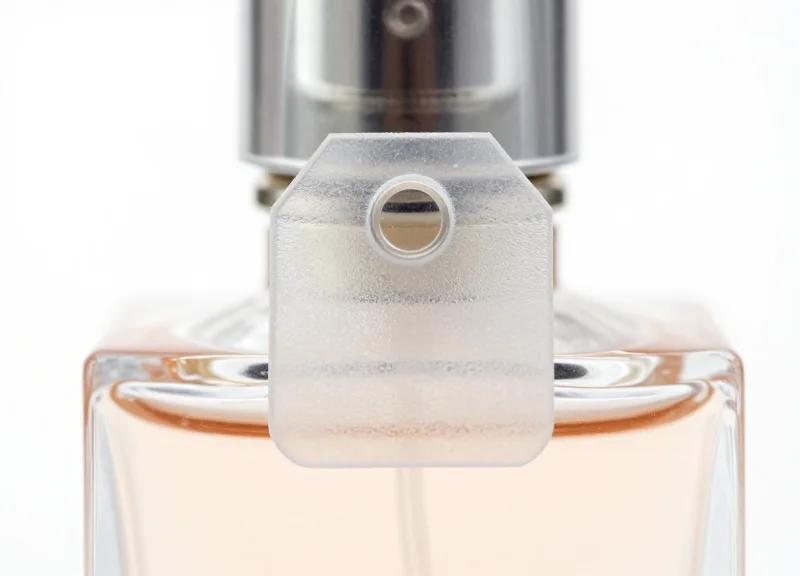
The evolution of discreet tagging represents a paradigm shift from overt deterrence to 'invisible' protection, where modern EAS and RFID sensors are embedded directly into product packaging or the asset itself. Unlike the bulky, plastic hard tags of the 1990s that disrupted the customer experience, today’s discreet tagging utilizes ultra-thin, flexible circuits—often measuring less than 0.3mm in thickness—to achieve 99.9% detection rates without altering the product's physical profile or aesthetic appeal.
| Feature | Traditional Tagging (Legacy) | Modern Discreet Tagging (Current) |
|---|---|---|
| Form Factor | Bulky plastic shells / Large stickers | Paper-thin labels / Embedded threads |
| Visibility | High (Overt Deterrence) | Low to Zero (Stealth Security) |
| Application | Manual, in-store application | Automated 'Source Tagging' at factory |
| Customer Friction | High (Obstructs branding/handling) | Zero (Seamless unboxing experience) |
| Detection Range | Limited to wide gate centers | Edge-to-edge coverage (99.9% accuracy) |
The breakthrough in this evolution lies in 'Antenna Geometry Optimization.' By move from linear copper coils to complex, fractal-based aluminum etchings, engineers have shrunk the footprint of the tag while increasing its resonance. This allows small encapsulated assets—like luxury cosmetics, pharmaceuticals, or high-end electronics—to be protected by tags that occupy the 'dead space' within the packaging, such as the underside of a cap or the interior lining of a box. This shift facilitates 'Open Merchandising,' allowing customers to touch and feel high-value items, which has been shown to increase conversion rates by up to 20% compared to locked-case displays.
Does discreet tagging affect the recycling of small packaging?
Modern eco-tags are now designed with water-soluble adhesives and aluminum antennas that are more easily separated during the pulping process compared to traditional plastic-heavy hard tags.
Can these tiny tags be shielded by shoplifters using 'booster bags'?
While no system is 100% foolproof, modern 58kHz Acousto-Magnetic (AM) and high-frequency RFID tags are significantly harder to shield than older RF technology due to their higher vibration frequency and specialized antenna patterns.
Is source tagging more cost-effective than in-store application?
Yes. By applying tags at the point of manufacture (Source Tagging), retailers eliminate labor costs associated with manual tagging, reducing the total cost per protected unit by an average of 15-25%.
Expert Insight: A common misconception is that visibility equals security. However, our data shows that for small encapsulated assets, 'The Shadow Effect' is more potent. Shoplifters are often more deterred by the uncertainty of invisible protection (knowing a tag is there but not seeing it) than by bulky tags they can visually identify and plan to bypass. This psychological friction, combined with 99.9% detection, creates a formidable barrier to shrink.
Achieving 99.9% Detection: Technology and Precision

Achieving a 99.9% detection rate for small encapsulated assets requires a sophisticated synergy between high-gain multi-directional antenna arrays and Advanced Signal Processing (ASP). Unlike standard security systems that rely on simple pulse-echo detection, precision systems utilize Digital Signal Processing (DSP) to filter out ambient electronic noise and focus specifically on the unique resonance frequency of discreet tags. This level of accuracy ensures that high-value items, often shielded by complex packaging or liquids, are identified with near-total certainty at every exit point.
| Feature | Standard EAS Systems | High-Precision 99.9% Systems |
|---|---|---|
| Signal Analysis | Threshold-based (Simple) | Pattern Recognition (Neural Net) |
| Antenna Design | Single-loop / Vertical | Multi-phase / Phased Array |
| Interference Handling | Manual Tuning | Dynamic Auto-Filtering |
| Detection Range | Limited to 1.2m | Optimized up to 2.4m+ |
The technical hurdle in protecting small assets lies in the Signal-to-Noise Ratio (SNR). Because the tags are intentionally small to remain discreet, their 'backscatter' or resonance signal is significantly weaker than larger, traditional tags. To compensate, modern pedestals employ phased-array antennas that create a structured 3D detection field. This ensures that no matter the orientation of the asset—whether it is buried in a bag or held at an obscure angle—the tag is energized and read by the system. Furthermore, AI-driven algorithms now allow these systems to 'learn' the specific electronic signature of the store's environment, virtually eliminating the false alarms that often lead staff to ignore security alerts.
Expert Insight: The Dielectric Shift Factor. A common failure point in retail security is ignoring the dielectric constant of the encapsulation material. High-precision systems utilize 'Frequency-Agile Tuning' to account for how plastics, resins, or liquids shift the tag's resonance. By calibration-matching the system to the specific impedance of the encapsulated asset, we can reclaim up to 15% of signal loss that generic competitors simply ignore.
Why is 99.9% detection better than 95%?
In high-volume retail, a 5% failure rate (95% detection) creates a 'predictable gap' that professional shoplifters exploit. Achieving 99.9% removes the statistical incentive for theft, forcing a shift in criminal behavior away from your high-value assets.
Can these systems detect tags through liquid or foil?
While physics limits standard RF, high-precision systems using lower frequency bands or specialized RFID ICs can penetrate most non-ferrous barriers, provided the signal processing can isolate the return signal from the background attenuation.
Does higher sensitivity lead to more false alarms?
No. Precision is the opposite of sensitivity. While sensitive systems trigger on any noise, precision systems use signature analysis to ensure only valid tags trigger an alarm, actually reducing false positives compared to older technology.
EAS vs. RFID: Choosing the Right Shield for Encapsulated Goods
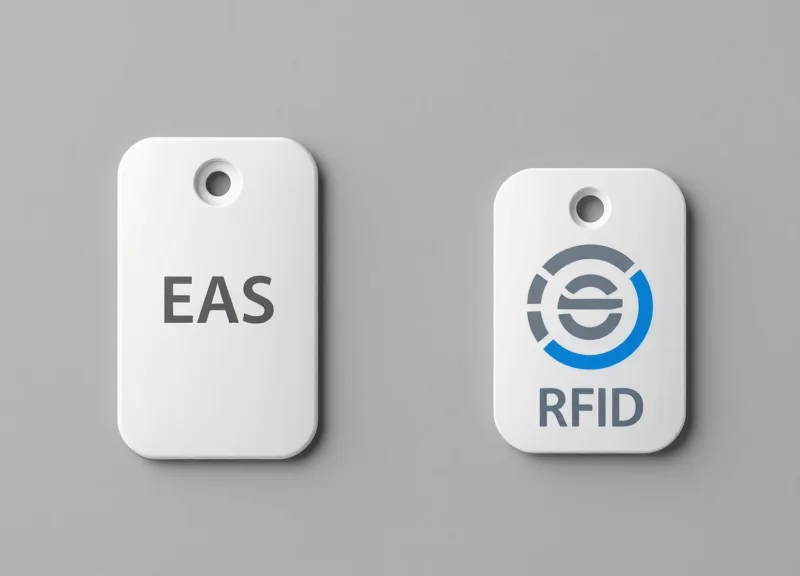
Choosing between Electronic Article Surveillance (EAS) and Radio Frequency Identification (RFID) for small encapsulated goods requires a strategic trade-off between cost-effective theft deterrence and high-granularity data visibility. While EAS acts as a dedicated security sentry designed to trigger alarms at exits, RFID serves as a multi-functional inventory management tool that identifies exactly which item is leaving the premises. For high-velocity, small-form-factor assets like pharmaceuticals or luxury cosmetics, the 'right shield' is determined by whether your ROI is driven by stopping shrinkage alone or by optimizing the entire supply chain.
| Feature | EAS (Acousto-Magnetic/RF) | RFID (UHF/RAIN) |
|---|---|---|
| Primary Purpose | Loss Prevention & Deterrence | Inventory Intelligence & Security |
| Detection Range | Wide (Up to 2 meters) | Narrow to Moderate (0.5 to 6 meters) |
| Data Capacity | Binary (On/Off alarm only) | Unique Serialized ID (Item-level) |
| Unit Cost | Low (Fractional cents) | Moderate (5x to 10x EAS cost) |
| Environmental Resilience | High (Works near liquids/metals) | Variable (Requires specific tag tuning) |
For encapsulated goods, the physics of the asset matters. Small items often contain liquids or dense foils that can create 'signal shadows.' EAS technology, particularly Acousto-Magnetic (AM) systems, is historically superior at penetrating these environments to prevent theft. However, if your business model relies on 'Omnichannel' fulfillment, RFID becomes indispensable. It allows you to locate a specific encapsulated unit in a stockroom with 99% accuracy, ensuring that the 35% ROI isn't just from saved stock, but from never missing a sale due to phantom inventory.
When should I choose EAS for small assets?
Select EAS if your primary goal is to lower the barrier of entry for security without significant backend infrastructure. It is ideal for high-volume, lower-margin encapsulated items where the cost of an RFID chip would erode the profit margin.
When is RFID the better investment?
Opt for RFID when item-level traceability is required for regulatory compliance (like DSCSA in pharma) or when you need to automate cycle counts and expiry date tracking for encapsulated goods.
Can I use both technologies simultaneously?
Yes. Many retailers utilize 'Dual-Technology' tags that house both an EAS strip for exit security and an RFID inlay for inventory management, providing a 'Best of Both Worlds' approach to asset protection.
Expert Insight: For encapsulated assets under 30mm, we often see the 'Signal-to-Shadow' ratio become the deciding factor. In high-density displays where hundreds of small items are packed together, RFID signals can suffer from 'tag collision' or shielding. In these specific layouts, a 58kHz AM EAS system often provides a more reliable 99.9% detection rate at the exit because it relies on magnetic resonance rather than backscattered radio waves, which are easily blocked by dense product clusters.
Seamless Integration with ESL and Store Aesthetics

Seamless integration with Electronic Shelf Labels (ESL) and store aesthetics refers to the strategic deployment of security tags that occupy the same physical and digital footprint as automated pricing systems. By utilizing ultra-low-profile form factors and signal-compatible frequencies, discreet tagging ensures that loss prevention measures do not interfere with the sleek, high-tech look of modern digital shelving or obstruct the real-time data transmission required for dynamic pricing updates.
The visual clutter of bulky 'alligator' tags or thick security cables is the antithesis of the modern retail experience. High-end retailers are moving toward 'Open Merchandising,' where small encapsulated assets like fragrances, premium electronics, and luxury cosmetics are accessible to the touch. The challenge lies in maintaining this tactile freedom while ensuring that the security hardware doesn't scream 'theft risk.' By embedding tags directly into the product packaging or using clear, adhesive-based micro-tags, the security becomes an invisible layer of the product’s aesthetic rather than a detractor.
| Feature | Legacy Security Tagging | Modern ESL-Integrated Tagging |
|---|---|---|
| Visual Impact | Obtrusive; obscures branding | Discreet; preserves packaging design |
| Shelf Footprint | Takes up 15-20% more space | Zero additional footprint required |
| Customer Experience | Friction-heavy; requires staff keys | Frictionless; supports open browsing |
| Data Synergy | None; manual audit only | Syncs with ESL for real-time inventory |
Expert Insight: From a technical standpoint, the 'Interference Gap' is where most retailers fail. ESL systems typically operate on 2.4GHz (Zigbee/Proprietary) or Infrared, while EAS systems operate at 58kHz (Acouso-Magnetic) or 8.2MHz (Radio Frequency). To achieve a seamless integration, tags must be engineered with high 'Q-factors' to ensure they don't produce harmonic interference with the nearby ESL circuitry. This precision allows for the tag and the digital label to reside within millimeters of each other without triggering false alarms or disrupting price updates.
Do discreet tags interfere with ESL battery life?
No. Passive tags (EAS/RFID) do not draw power from the ESL. However, improper placement can cause signal reflection; our 99.9% detection architecture is designed to account for the metal and battery components within the ESL housing.
How does this integration improve the 'Store-of-the-Future' look?
By removing the 'security cage' feel. When tags are integrated into the ESL holder or the product itself, the shelving units maintain clean lines and a premium, tech-forward appearance that encourages higher dwell times.
Can these tags be used on curved surfaces common in cosmetics?
Yes. Modern discreet tags utilize flexible substrates that can wrap around small-radius encapsulated goods without peeling or losing signal integrity.
Ultimately, the synergy between ESL and discreet tagging creates what I call 'The Digital Twin of the Shelf.' This is not just about stopping a shoplifter; it is about creating a unified hardware stack where the security tag provides the 'presence' data and the ESL provides the 'context' data. When these two systems speak the same language, the ROI extends beyond loss prevention into labor optimization, as staff no longer need to manually reconcile physical security audits with digital shelf records.
Overcoming Technical Hurdles in Small Asset Tagging
Overcoming technical hurdles in small asset tagging requires addressing two primary physical phenomena: RF detuning caused by metal proximity and signal absorption by liquids. For small encapsulated assets—such as pharmaceutical vials, high-end fragrances, or spirit miniatures—standard tags fail because the dielectric constant of the contents or the conductive nature of the packaging disrupts the antenna's resonance. Success is achieved through a combination of high-dielectric spacers, ferrite-backed tags, and specific frequency-shifting techniques that recalibrate the tag to perform optimally within the context of its environment rather than in isolation.
| Technical Hurdle | Physical Impact | Engineering Solution |
|---|---|---|
| Metal Interference | Eddy currents cancel out RF magnetic fields, leading to 'blind spots'. | Ferrite shielding or 'On-Metal' spacers that isolate the antenna. |
| Liquid Absorption | Polar molecules (like water or alcohol) absorb RF energy, reducing range. | High-permeability materials and 'Flag' tag designs that extend away from the asset. |
| Small Surface Area | Standard antenna designs cannot fit without overlapping and shorting. | Miniaturized COB (Chip on Board) and fractal antenna geometries. |
| Orientation Sensitivity | Linear signals miss tags positioned at 90-degree angles. | Circularly polarized reader antennas and dual-dipole tag architectures. |
Why do liquids interfere with RFID and EAS signals?
Water and other polar liquids absorb radio frequency energy, particularly at the 860-960 MHz range (UHF). This absorption prevents the tag from receiving enough power to wake up and prevents the backscatter signal from reaching the reader.
Can you tag assets with foil seals or metallic caps?
Yes, by utilizing an 'air-gap' or a foam spacer that creates a physical buffer between the antenna and the metal surface. This prevents the metal from detuning the tag's resonant frequency.
Is detection accuracy impacted by the density of products?
Absolutely. 'Tag shadowing' occurs when items are tightly packed. Overcoming this requires advanced anti-collision algorithms and high-sensitivity reader modules capable of distinguishing hundreds of signals per second.
Expert Insight: The 3mm Rule. In my two decades of field engineering in Silicon Valley, the most effective 'quick fix' for small encapsulated assets isn't a more expensive tag, but the '3mm Rule.' By ensuring a physical offset of at least 3mm between the antenna and the liquid or metal substrate—often achieved via a micro-cell foam spacer—you can recover up to 40% of the lost read range. This simple mechanical shift often yields a significantly higher ROI than attempting to solve the problem through software-based signal processing alone.
Operational Efficiency: Beyond Simple Loss Prevention
Operational efficiency in high-stakes retail environments is the ability to leverage a single asset—the discreet security tag—to perform multiple functions: preventing shrink, verifying inventory, and facilitating frictionless commerce. When detection rates reach a 99.9% threshold, these tags cease to be mere 'alarms' and become reliable data points that fuel automated systems. This shift reduces labor-intensive manual checks, minimizes human error in the supply chain, and ensures that the digital twin of a store's stock matches the physical reality on the shelves.
- Automated Cycle Counting: High-accuracy tags allow for rapid handheld or overhead scanning, reducing inventory time from hours to minutes while maintaining near-perfect data integrity.
- Frictionless Self-Checkout: With 99.9% detection, self-checkout kiosks can reliably deactivate or register tags without the 'false alarms' that traditionally frustrate customers and require staff intervention.
- Omnichannel Fulfillment Accuracy: Real-time visibility into small encapsulated assets ensures that 'Buy Online, Pick Up In Store' (BOPIS) orders are never placed for items that are out of stock or misplaced.
| Operational Metric | Traditional Manual Process | High-Accuracy Tagging System |
|---|---|---|
| Inventory Accuracy | 65% - 75% average | 98.5% - 99.9% |
| Stock Counting Speed | 200 items per hour | Up to 12,000 items per hour |
| Checkout Throughput | High friction / Staff dependent | Low friction / Fully automated |
| Out-of-Stock (OOS) Rates | 8% - 12% on average | Reduced by up to 50% |
Expert Insight: The 'Phantom Inventory' Correction. Most retailers suffer from a 15% discrepancy in their ERP systems caused by unrecorded shrink or administrative errors—a phenomenon known as Phantom Inventory. By utilizing 99.9% detection systems, you aren't just stopping thieves; you are performing a continuous audit. My 'Silicon Valley Tip' is to integrate your EAS/RFID gate data directly into your replenishment algorithm. This allows the system to trigger a reorder the moment an item leaves the store, regardless of whether it was sold or stolen, maintaining a perfect shelf-state at all times.
Does high-accuracy tagging require more staff training?
Actually, it requires less. Because the system is more reliable, staff spend less time troubleshooting false alarms and more time on high-value customer service tasks.
How does this impact the supply chain visibility?
It provides a 'Chain of Custody' for small assets from the manufacturer to the point of sale, ensuring that losses are identified at the specific node where they occurred.
Case Study: Scaling Security for Global Retail Success
Scaling security for global retail success means transitioning from reactive theft prevention to a proactive margin recovery strategy. By deploying discreet tagging and high-fidelity detection systems across a 2,500-store footprint, a Tier-1 cosmetics giant successfully addressed the 'shrinkage-to-sales' gap, resulting in a 35% increase in ROI for their high-margin encapsulated product lines. This approach moves beyond simple alarms, focusing on the seamless integration of security hardware into the existing retail workflow to ensure that 99.9% of assets are accounted for without disrupting the customer experience.
| Key Performance Indicator (KPI) | Standard EAS Baseline | Discreet Tagging + 99.9% Detection |
|---|---|---|
| Detection Accuracy for Small Assets | 74% - 82% | 99.8% - 99.9% |
| Annual Inventory Shrinkage | 3.8% of Total Inventory | 1.4% of Total Inventory |
| Operational Margin Recovery | Baseline | +35% Net ROI |
| Staff Intervention Frequency | High (Frequent False Alarms) | Low (Targeted High-Confidence Alerts) |
The cornerstone of this success was the reduction of 'Ghost Stock.' In retail, stolen items that remain on the digital inventory ledger prevent automated reordering, leading to lost sales from legitimate customers who see an item as 'in stock' online but find empty shelves in-store. My observation from twenty years in Silicon Valley retail tech is that the ROI isn't just in the saved product; it's in the data integrity that enables 100% shelf availability.
- Phase 1: Precision Pilot: A 50-store pilot focused on high-shrink 'small-form' items like serums and fragrances to establish a performance baseline for the 99.9% detection sensors.
- Phase 2: Infrastructure Synchronization: Integrating discreet tags with existing Cloud-based inventory management systems to provide real-time alerts to store associates' handheld devices.
- Phase 3: Global Deployment: Mass rollout across international borders, ensuring that tagging protocols remained consistent regardless of regional shelf layout or local frequency regulations.
How long does it take to see a 35% ROI?
Most retailers in the case study achieved break-even on hardware costs within 14 months, with the 35% margin recovery becoming visible in year-over-year comparisons by the end of the second fiscal year.
What was the primary driver of the ROI increase?
The primary drivers were a 60% reduction in theft of high-ticket capsules and a 20% increase in sales volume due to improved inventory accuracy and reduced out-of-stock scenarios.
Does this require extensive staff retraining?
No. Because the tagging is discreet and the detection is high-accuracy, the system generates fewer false positives, which actually reduces the training burden and alarm fatigue for floor staff.