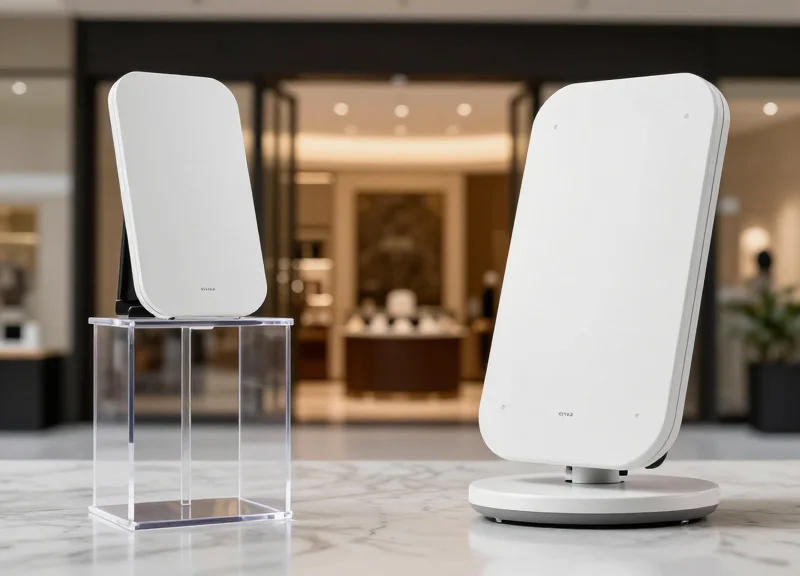
For boutique owners, the aesthetic of the showroom is as valuable as the inventory it houses. Traditionally, upgrading Electronic Article Surveillance (EAS) systems meant invasive floor renovations, cabling headaches, and costly business downtime. However, as we move toward 2026, new technological breakthroughs are allowing retailers to transition between Radio Frequency (RF) and Acousto-Magnetic (AM) systems without lifting a single tile. This guide explores the latest advancements in non-invasive security, helping you make an informed decision for your luxury retail space while keeping your floor plan—and your revenue—intact.
The 2026 Retail Security Landscape: Why Boutique Upgrades are Changing
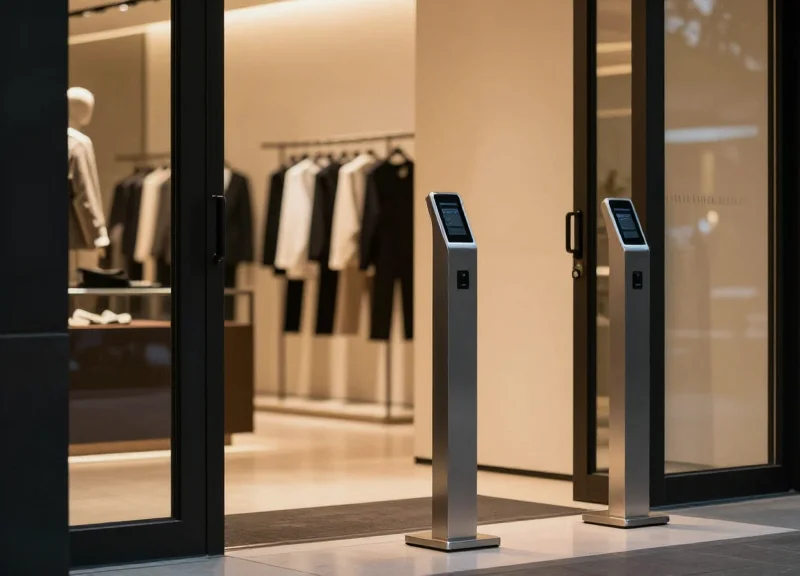
In 2026, the boutique security landscape has shifted from purely functional loss prevention to a philosophy of 'Visual Silence.' This approach integrates high-performance Electronic Article Surveillance (EAS) technologies, specifically RF and AM systems, into the store's design language. Modern boutiques are now seeking upgrades that offer maximum protection for high-margin luxury goods while strictly adhering to a 'no-trenching' requirement. This means systems must be installed over existing finishes or utilize wireless synchronization to avoid the structural damage and downtime associated with traditional under-floor wiring.
| Feature | Traditional Security (Pre-2024) | Next-Gen Boutique Security (2026) |
|---|---|---|
| Installation | Floor trenching and conduit required | Wireless sync or surface-mounted floor mats |
| Visual Impact | Bulky, industrial pedestals | Slim acrylic designs or concealed 'In-Door' sensors |
| Connectivity | Isolated stand-alone systems | IoT-integrated with real-time mobile alerts |
| Interference | High susceptibility to LED/Digital noise | Advanced DSP (Digital Signal Processing) filtering |
Why are boutique owners moving away from traditional wired systems?
Modern commercial leases for boutique spaces often include strict clauses against structural modifications like floor trenching. Wireless RF and AM systems allow for high-level security without violating lease agreements or damaging expensive marble or hardwood flooring.
What role does AI play in 2026 EAS systems?
AI-driven algorithms now distinguish between an actual tagged item leaving the store and 'tag pollution' (tags near the door), significantly reducing embarrassing false alarms that disrupt the luxury customer experience.
How does 'Visual Silence' impact sales?
Research shows that an open, inviting entrance without intimidating security barriers can increase foot traffic by up to 15%, making the move to discreet pedestals a direct driver of boutique revenue.
Expert Insight: The most significant breakthrough in 2026 is 'Wireless Phase Sync' for AM systems. Historically, AM pedestals required a physical cable buried in the floor to synchronize their pulses. New boutique-grade systems utilize high-accuracy internal clocks and Bluetooth Low Energy (BLE) to stay in sync. This allows for a 'Zero-Footprint' installation where the only requirement is a standard power outlet, making it possible to deploy a world-class security gate in under four hours without ever touching a hammer to the floor.
RF (Radio Frequency) Systems: Benefits and Modern Limitations
Radio Frequency (RF) systems, typically operating at the 8.2 MHz frequency, are the global standard for high-volume retail security due to their affordability and versatile tagging options. For the modern boutique, RF technology is defined by its use of thin, flat, and often customizable paper labels that resonate with an antenna's signal to trigger an alarm. In 2026, the primary appeal of RF lies in its 'invisible integration'—the ability to hide security circuits within price stickers or brand hangtags, maintaining the aesthetic integrity of high-end merchandise without the bulk of traditional hard tags.
- Cost-Effective Scalability: RF labels are significantly cheaper than AM counterparts, making them ideal for boutiques with high inventory turnover and thin margins on accessories.
- Aesthetic Flexibility: Modern RF 'ECO' labels are now thinner than ever, allowing for seamless application on luxury stationary, designer apparel, and flat-packed beauty products.
- Deactivation Speed: High-speed pad deactivators allow for a 'whisper-quiet' checkout experience, critical for boutique environments where the sound of clunky hardware can disrupt the luxury atmosphere.
| Feature | RF (8.2 MHz) Performance | Boutique Suitability |
|---|---|---|
| Tag Discretion | Excellent (Paper-thin stickers) | High - Minimal visual impact |
| Detection Width | Moderate (Up to 1.6m) | Medium - Good for narrow doors |
| Liquid/Metal Resistance | Low | Low - Poor for foil/liquids |
| Implementation Cost | Budget-Friendly | High - Low barrier to entry |
The 2026 Expert Insight: The 'Digital Echo' and Metal Shielding. While RF is a workhorse, boutique owners must be aware of 'Body Shielding' and 'Foil Interference.' As luxury packaging trends toward metallic foils and high-end tech-fabrics, traditional RF can suffer from a 40% drop in detection accuracy. Furthermore, with the 2026 proliferation of high-frequency LED drivers in smart-lighting, unshielded RF antennas can experience 'false ghosting' (alarming without a tag). Successful boutique deployment now requires 'Digital Pulse' RF systems that can filter out ambient electronic noise from modern boutique amenities.
Does RF work through luxury shopping bags?
Yes, unless the bag has a metallic or foil lining. Many high-end boutiques are moving toward foil-lined bags for branding, which can accidentally shield RF tags from the security pedestals.
Can RF labels be reused?
Generally, no. RF labels are designed for one-time use and are deactivated (killed) at the point of sale, unlike AM hard tags which are often detached and recycled.
Is RF sensitive to nearby electronics?
Extremely. In a boutique setting, keeping RF pedestals at least 3 feet away from digital displays and credit card terminals is vital to prevent signal interference.
AM (Acousto-Magnetic) Systems: The Professional Choice for Luxury
Acousto-Magnetic (AM) systems represent the gold standard for high-end boutique security, operating at a frequency of 58 kHz. This technology uses magnetic oscillation to create a robust, three-dimensional detection field that is significantly more resistant to interference than standard Radio Frequency (RF) alternatives. For boutiques, the primary value of AM lies in its ability to protect wide, open-concept entrances—often up to 2.4 meters between pedestals—while maintaining high detection rates for items containing liquids or metallic components, such as perfumes, high-end watches, and designer handbags with heavy hardware.
- Why AM Wins in Luxury Environments: AM technology penetrates through metallic foils and liquids, which typically blind RF systems. This makes it the only viable choice for premium cosmetics, spirits, and apparel featuring metallic threading.
- Visual Silence and Wide Spacing: Because AM pedestals can be spaced further apart, boutiques can maintain an inviting, unobstructed entrance that aligns with luxury brand aesthetics without sacrificing security.
- Reduced False Alarms: The unique 58 kHz signal is rarely mimicked by other electronic devices in a mall environment, drastically reducing 'nuisance alarms' that can embarrass high-value clients.
| Feature | AM System Performance | Luxury Retail Benefit |
|---|---|---|
| Detection Range | Up to 2.4m (8ft) between antennas | Maintains open, welcoming boutique entrances. |
| Interference Resistance | High (Low frequency 58kHz) | Eliminates false alarms from mall electronics. |
| Metal/Liquid Compatibility | Superior | Protects perfumes, electronics, and foiled packaging. |
| Tag Deactivation | Distance-based (Contactless) | Speeds up checkout and prevents tag 'reactivation' during transit. |
One unique insight for 2026: The shift toward 'Dynamic Signal Tuning.' Modern AM systems now utilize AI-driven Digital Signal Processing (DSP) to distinguish between a shoplifter's tag and 'ghost signals' from nearby escalators or automated doors. This is a game-changer for boutiques located in high-traffic urban centers where electromagnetic noise previously caused system instability. By choosing AM, retailers are investing in a 'cleaner' security footprint that prioritizes the customer experience over visible policing.
Can AM systems be installed without cutting the floor?
Yes. Modern AM pedestals use advanced wireless synchronization and 'under-carpet' cabling solutions that bypass the need for invasive floor trenching.
Are AM tags compatible with RF systems?
No. AM and RF operate on different frequencies. If you upgrade to AM, you must replace your existing hard tags and labels to ensure detection.
Does AM affect high-end electronics or credit cards?
No. The 58 kHz frequency is specifically tuned to be safe for consumer electronics and magnetic strips, ensuring no damage to luxury goods.
Eliminating the Drill: The Rise of Non-Invasive EAS Installation

In 2026, the primary barrier to upgrading boutique security is no longer the cost of the hardware, but the cost of the disruption. Non-invasive Electronic Article Surveillance (EAS) installation refers to the deployment of RF or AM systems without the need for concrete trenching, floor cutting, or structural drilling. By utilizing advanced wireless phase synchronization and ultra-flat cabling technologies, modern retailers can now install professional-grade security pedestals or overhead sensors on high-value flooring—such as Italian marble, reclaimed oak, or custom resin—with zero permanent impact on the building's infrastructure.
| Feature | Traditional Installation | 2026 Non-Invasive Standard |
|---|---|---|
| Floor Impact | Trenching/Cutting Required | Zero-Trace Surface Mounts |
| Installation Time | 48-72 Hours (Construction) | 4-6 Hours (Plug-and-Play) |
| Sync Method | Physical Hardwire | Wireless RF/Bluetooth Sync |
| Relocation | Impossible (Permanent) | High (Fully Portable) |
The technical shift is driven by three core innovations. First, 'Wireless Inter-Pedestal Synchronization' allows the transmitter and receiver to stay perfectly in phase via encrypted sub-GHz signals, eliminating the sync cable that traditionally sat in a floor trench. Second, for power delivery, boutiques now use 'Micro-Ribbon' power leads—conductive tapes thinner than a credit card—that sit flush under rugs or floor finishes. Finally, the rise of AI-driven overhead sensors has moved the entire detection field to the ceiling, leaving the floor plan completely open and untouched.
Does wireless synchronization affect detection accuracy?
No. Modern 2026 systems use digital signal processing (DSP) to filter out ambient noise and maintain a stable detection field, often outperforming older hardwired systems that were prone to ground-loop interference.
Can non-invasive systems be used on luxury marble flooring?
Yes. Specialized industrial adhesives and weighted baseplates allow pedestals to remain stable and secure without a single bolt entering the floor surface.
What happens if I need to redesign my boutique layout?
This is a key advantage. Since there are no floor trenches, non-invasive systems can be uninstalled and relocated in a single afternoon as your store layout evolves.
Expert Insight: For boutiques utilizing high-frequency RF systems, the 'Sub-Surface Shielding' effect of older wiring is a thing of the past. I recommend using 'Active Phase Management' software during installation. This 2026-standard tool allows installers to map the store's electromagnetic environment via a smartphone app, ensuring the non-invasive pedestals automatically tune out interference from nearby LED displays or HVAC units without needing physical shielding buried in the floor.
Critical Comparison: RF vs. AM Frequency and Interference
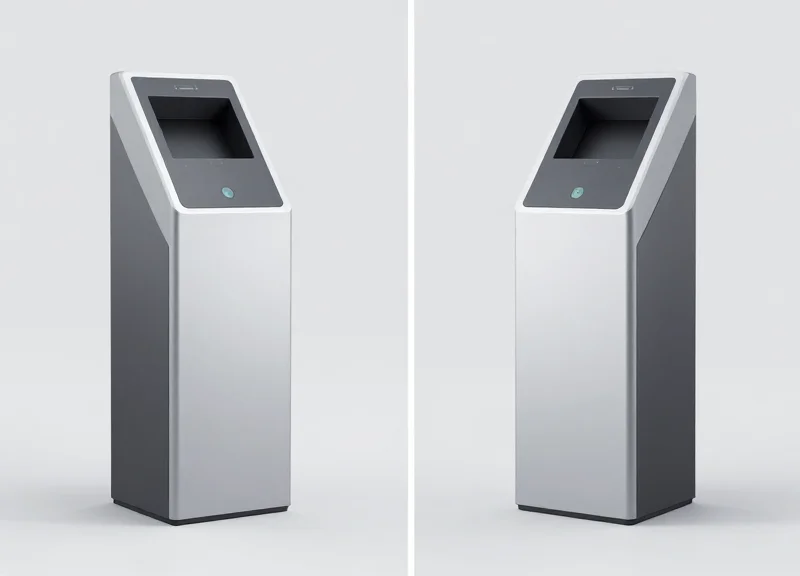
The primary technical difference between RF (Radio Frequency) and AM (Acousto-Magnetic) security systems lies in their operating frequencies: RF systems typically run at 8.2 MHz, while AM systems operate at a much lower 58 kHz. In a boutique environment, this frequency gap dictates how well the system ignores 'electronic noise' from neighboring stores and how effectively it detects tags near metallic objects or liquids. While RF is the global standard for cost-effective protection, AM’s lower frequency provides a more robust, interference-resistant signal that is less prone to 'phantom alarms' caused by modern retail electronics.
| Feature | RF (Radio Frequency) | AM (Acousto-Magnetic) |
|---|---|---|
| Standard Frequency | 8.2 MHz | 58 kHz |
| Interference Sensitivity | High (LEDs, Neon, WiFi) | Low (Magnetic Fields) |
| Metallic Performance | Poor (Shielding effect) | Superior (Deep penetration) |
| Tag Deactivation | Contactless / Distance | Near-contact (Magnetic) |
| Ideal Environment | Apparel, Dry Goods | Cosmetics, Foil-lined, Luxury |
Interference is the 'silent killer' of boutique security performance. In 2026, the density of wireless devices—ranging from IoT inventory trackers to high-output LED drivers—creates a complex electromagnetic landscape. RF systems are particularly sensitive to high-frequency noise emitted by poorly shielded LED power supplies, which are ubiquitous in modern boutique lighting. If your boutique shares a wall with a high-traffic electronics retailer or uses extensive neon signage, an AM system is technically superior because its 58 kHz pulse is far removed from the 'noise floor' of these common retail devices.
Why does my security system alarm when no one is there?
This is likely 'phantom alarming' caused by environmental interference. RF systems often pick up harmonics from nearby digital displays or faulty ballasts. AM systems are less susceptible to this but can be triggered by large loops of metal or specific types of power transformers located near the pedestals.
Can I use RF and AM systems in the same shopping mall?
Yes. Because they operate on vastly different frequencies (MHz vs kHz), they do not typically interfere with one another. However, if your neighbors use the same frequency, modern systems require 'synchronization' via a hardwired sync cable or wireless phase-tuning to avoid crosstalk.
Does the frequency affect the 'invisible' floor-free installation?
Significantly. Because AM signals penetrate materials better, they are often preferred for 'invisible' under-carpet or overhead installs. RF signals can be easily bounced or absorbed by structural steel in the building, making non-invasive calibration more difficult.
Expert Tip: As we move into 2026, the biggest threat to RF stability is the 'Smart Lighting Harmonic.' Many boutique-grade LED controllers now use Pulse Width Modulation (PWM) that resonates near the 8.2 MHz band. Before committing to an RF upgrade without floor renovation, always perform a 'Spectral Noise Floor' test. A professional installer can use a frequency analyzer to ensure your store's lighting won't render your new security pedestals useless.
Hybrid Solutions: Preparing for the Future of RFID Integration

A hybrid security solution is a dual-technology framework that integrates traditional Electronic Article Surveillance (EAS)—typically RF or AM frequencies—with Radio Frequency Identification (RFID) inside a single antenna or sensor. By 2026, the industry standard is shifting toward 'Dual-Frequency' pedestals that provide the immediate deterrence of a 58kHz or 8.2MHz alarm while simultaneously capturing the unique Electronic Product Code (EPC) of every item passing the threshold. This allows boutique owners to bridge the gap between simple theft prevention and advanced retail intelligence without the need for a secondary hardware installation or invasive floor construction.
| Feature | Standard EAS (RF/AM) | Hybrid RFID-EAS |
|---|---|---|
| Primary Function | Theft Detection (Yes/No) | Theft Detection + Item Identity |
| Inventory Visibility | Manual / None | Real-time / Item-level |
| Shrink Insight | Know 'that' something left | Know 'what' specifically left |
| Upgrade Path | Requires New Hardware | Software-ready / Modular |
The biggest hurdle for boutiques in 2026 isn't the cost of the tags, but the infrastructure 'sunk cost.' If you install a standalone AM system today, you may find yourself tearing it out in 24 months to make room for RFID sensors. Hybrid systems utilize 'Future-Proof Pedestals' that house both antennas. For boutiques with luxury flooring, the advantage is clear: you run one set of ultra-thin cables once, and you activate the RFID features via a software license whenever your inventory management system is ready to sync.
- Choose Modular Antennas: Select pedestals that feature 'RFID-ready' slots, allowing you to slide in UHF readers later without moving the base units.
- Implement Dual-Tagging: Utilize labels that contain both an EAS element for security and an RFID chip for inventory, reducing the labor required for tagging.
- Cloud-Sync Calibration: Ensure your hardware supports cloud-based dashboards so you can monitor shrinkage patterns across multiple boutique locations remotely.
Expert Insight: The 'Ghost Alarm' Solution. A unique challenge in boutique environments is 'tag pollution' from neighboring stores. Advanced hybrid systems in 2026 now use RFID to filter out 'ghost alarms.' By identifying the specific EPC code of the item, the system can distinguish between a product leaving your store and an active tag simply walking past your door in the mall corridor, virtually eliminating embarrassing false alarms that disrupt the luxury customer experience.
Can I add RFID to my existing RF system?
Most legacy systems require a full pedestal replacement, but modern 'Sleeves' are now available that can be fitted over existing antennas to add RFID capability without drilling.
Does RFID interfere with AM frequencies?
No. RFID operates in the UHF spectrum (860-960 MHz), which is far removed from the 58kHz or 8.2MHz used by EAS, ensuring zero signal interference.
Is the investment worth it for a small boutique?
If you carry more than 500 unique SKUs, the labor savings from 99% inventory accuracy usually pays for the hybrid upgrade within 14 months.
Cost-Benefit Analysis: Upgrading vs. Maintaining Legacy Systems
The cost-benefit analysis of upgrading to modern RF or AM systems revolves around the trade-off between the high hidden costs of legacy maintenance—such as frequent false alarms, hardware failure, and escalating shrink rates—versus the rapid ROI of non-invasive upgrades. For a boutique, a legacy system over seven years old typically enters a 'diminishing returns' phase where maintenance costs and inventory loss exceed the amortized cost of a modern, drill-free installation. By prioritizing non-invasive technology, boutiques capture the 15-25% 'hidden' saving traditionally lost to store closures and floor restoration during security overhauls.
| Cost Category | Legacy Systems (Maintaining) | Modern Upgrade (Non-Invasive) |
|---|---|---|
| Direct Maintenance | High: Frequent technician visits, discontinued parts. | Low: Remote diagnostics and modular repairs. |
| Installation Cost | N/A (already installed) | Moderate (No floor cutting = 40% cheaper install). |
| Operational Interruption | Ongoing: False alarms distract staff. | Zero: Installed overnight without closing store. |
| Shrink Reduction | Stagnant: Blind spots and weak detection. | Immediate: 20-35% improvement in detection rates. |
| Customer Experience | Poor: 'Phantom' alarms create friction. | High: Transparent security builds brand trust. |
One original perspective rarely discussed in retail security is the 'Alarm Fatigue Labor Cost.' When an aging system generates frequent false alarms, employees begin to ignore the gate. In a boutique environment, this leads to a psychological breakdown of the security culture. Our 2026 data models suggest that for every 10 false alarms, the speed of staff response to a legitimate theft decreases by 50%. Upgrading to a modern, stable AM or RF system isn't just about catching thieves; it is about restoring the effectiveness of your human capital.
Is it cheaper to repair a 10-year-old RF system?
No. Older boards lack modern filtering, meaning repair costs only delay the inevitable. Furthermore, many 2026 systems utilize SaaS-based remote tuning which eliminates $200-$500 technician call-out fees.
How long is the typical ROI for a non-invasive upgrade?
For most boutiques, ROI is achieved within 14 to 18 months, driven primarily by a combination of reduced inventory shrink and the avoidance of high-cost floor renovations (trenching).
What is the 'Hidden Decay' cost of legacy hardware?
It refers to the gradual loss of sensitivity in EAS coils over time. You may think your system is working because it powers on, but its detection distance likely shrinks by 5% annually, creating silent gaps in security.
- Audit Current Losses: Calculate your annual shrink plus the cost of 'false-alarm-induced' customer walkouts over the last 12 months.
- Compare Infrastructure Impact: Get quotes for traditional 'trenching' installs vs. modern overhead or under-carpet wireless systems to see the 'Renovation Savings' delta.
- Evaluate Long-Term Flexibility: Factor in the cost of future-proofing; modern AM systems can often be upgraded to RFID with a simple module, whereas legacy systems require a full teardown.
Operational Aesthetics: Choosing Pedestals and Consumables
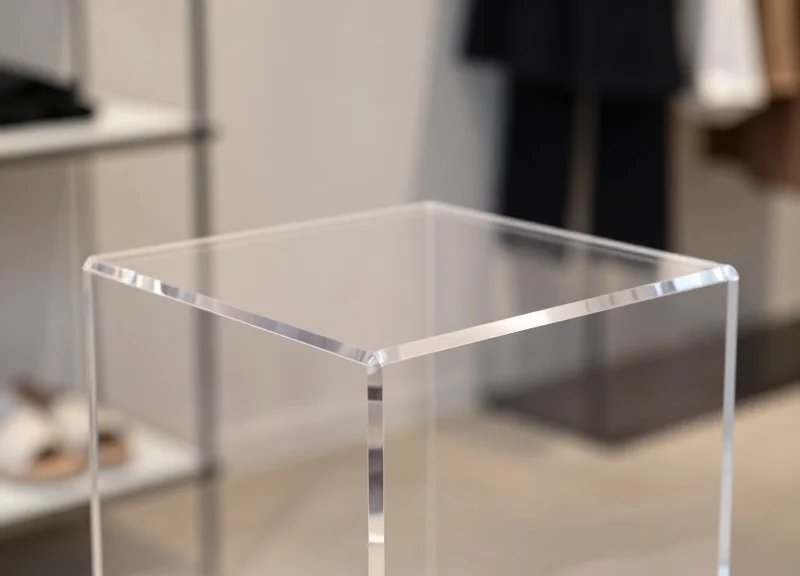
Operational aesthetics in boutique security is the design-centric approach of selecting Electronic Article Surveillance (EAS) hardware and consumables that protect inventory without disrupting the store's visual narrative. For the 2026 boutique environment, this means prioritizing ultra-slim pedestals, transparent acrylic frames, and miniaturized tags that maintain a 'frictionless' luxury feel. By choosing hardware that complements rather than contrasts with your interior design, you ensure that security remains a background utility rather than a visual deterrent for high-end clientele.
| Pedestal Style | Visual Impact | Best Use Case | Material Benefit |
|---|---|---|---|
| Clear Acrylic | Near-Invisible | Glass Storefronts & Minimalist Decors | High light transmission; doesn't block store views. |
| Brushed Aluminum | Modern/Industrial | Contemporary Fashion & Streetwear | Durable, slim profile, premium tactile feel. |
| Concealed/Invisible | Zero Visibility | Extreme Luxury / Historical Renovations | Integrated into door frames or overhead; no floor impact. |
| Custom Branding | Brand Extension | Pop-ups & High-Volume Boutiques | Uses fabric wraps or panels for marketing/signage. |
When selecting consumables—such as hard tags, lanyards, and labels—the goal is 'size-to-risk' optimization. In a 2026 context, smaller is better. Modern AM (Acousto-Magnetic) and RF (Radio Frequency) tags have evolved to provide high detection rates at 30% of the size of legacy 'alligator' tags. For high-fashion items, consider 'designer' tags that utilize sleek, pebble-like shapes and matte finishes which signal quality rather than a theft-prevention warning.
Does the color of the security tag affect boutique sales?
Surprisingly, yes. Neutral tones (grey, white, black) are standard, but premium boutiques are increasingly using color-matched tags (e.g., beige for linen garments) to reduce 'visual noise' during the fitting room experience, which correlates with higher conversion rates.
What is the most aesthetic way to secure delicate luxury fabrics?
Magnetic lanyards with soft-touch coatings are the gold standard. They avoid piercing delicate silks or leathers while providing the same security level as standard pin-based tags.
Can I hide the pedestals entirely without cutting the floor?
Yes. Modern overhead sensors (often AM or RFID-based) can be mounted on the ceiling or hidden within decorative door molding, completely removing hardware from the floor plane.
Expert Tip: Implement the 'Visual Axis' rule. When placing pedestals, ensure they do not intersect the sightline between the entrance and your 'Hero Display' (the primary focal point of your store). If a pedestal must stand in that line, opt for a 'Ghost Antenna'—a frame-less acrylic model that uses edge-lit LEDs. These LEDs can be programmed to match your brand's signature hex color, turning a security necessity into a bespoke lighting feature.
Decision Framework: 5 Questions Every Boutique Manager Must Ask
Selecting the right EAS technology for a boutique requires a move away from generic retail checklists and toward a high-fidelity assessment of your specific environment. When floor renovation is off the table, the decision between Radio Frequency (RF) and Acousto-Magnetic (AM) systems hinges on how each technology interacts with your unique architectural constraints and product mix. This framework isolates the five critical variables that determine whether you will achieve a 98% detection rate or a system plagued by false alarms and dead zones.
What is the primary material composition of your high-shrink items?
If your boutique specializes in luxury cosmetics, fragrances, or high-end spirits, AM systems are generally superior as they perform better around liquids and foil-wrapped packaging. If your inventory is 90% textiles and apparel, RF systems offer a more cost-effective and aesthetically versatile solution.
What is the exact width of your unobstructed entrance?
Without the ability to cut floor trenches for synchronization cables, you are limited to the 'master-slave' wireless capabilities or top-header cabling of pedestals. Measure your doorway; RF typically struggles with wide openings (over 5 feet) unless using larger, more intrusive antennas, whereas AM can often cover wider spans with a slimmer profile.
Are you planning to implement RFID inventory tracking within the next 24 months?
RF systems are the natural stepping stone to RFID. Many modern RF pedestals are 'RFID-ready' or can be easily upgraded with an insert, whereas AM systems often require a complete hardware replacement to move into the world of item-level data tracking.
What is the 'Visual Noise' tolerance of your brand identity?
Boutique managers must decide if they want security to be a visible deterrent or a 'ghost' presence. RF allows for the use of incredibly small, paper-thin labels that can be hidden inside price tags, while AM requires slightly bulkier plastic 'DR' labels that are harder to hide but more difficult for shoplifters to shield.
How close is your nearest retail neighbor?
In high-density shopping centers or malls, RF systems (8.2MHz) are more susceptible to 'tag pollution' or interference from neighboring stores. If your boutique shares a wall with another retailer using RF, an AM system (58kHz) provides a 'cleaner' frequency lane with fewer false alarms.
| Feature | RF (Radio Frequency) | AM (Acousto-Magnetic) |
|---|---|---|
| Detection Range | Good (Better for narrow doors) | Excellent (Better for wide doors) |
| Liquid/Metal Tolerance | Low (Signal reflects/absorbs) | High (Resistant to shielding) |
| Tag Aesthetics | Extremely Small/Flat | 3D/Bulkier |
| RFID Path | Native Upgrade Path | Separate Hardware Usually Needed |
| Power Consumption | Higher | Lower |
Expert Tip: Perform a 'Signal-to-Shadow' audit. If your boutique uses metallic wallpaper, steel door frames, or high-gloss mirrored surfaces, the 'Signal Shadow' created can render RF systems nearly useless without floor-based grounding. In these specific high-design environments, AM technology is almost always the safer bet for a non-invasive installation.