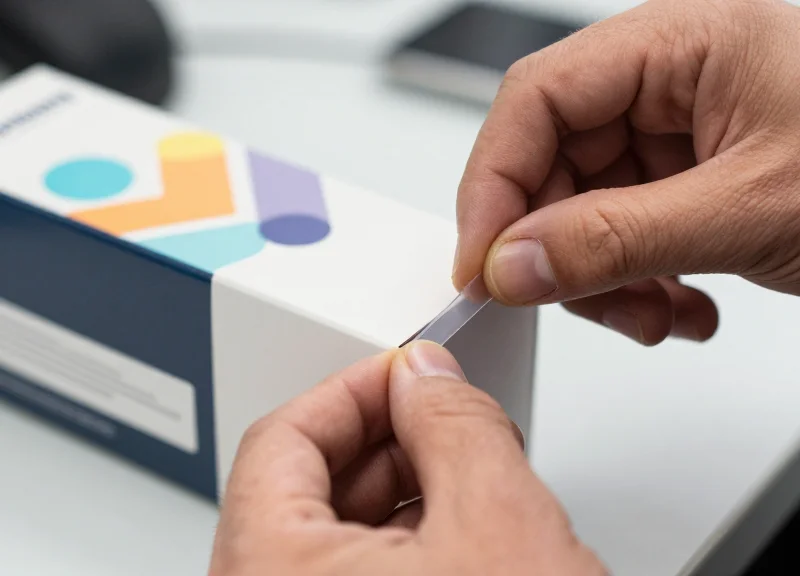
In the high-stakes world of retail loss prevention, the conflict between security and aesthetics is a constant challenge. For technicians, the goal is simple yet difficult: protect the product from theft without compromising the brand's visual identity or its legal compliance. Improperly placed Electronic Article Surveillance (EAS) tags can lead to checkout frustrations, regulatory fines, and a poor customer experience. This handbook provides a definitive technical framework for applying 100% discreet EAS tags that maintain full visibility of barcodes and critical regulatory data.
The Strategic Importance of Discreet EAS Tagging

Discreet EAS (Electronic Article Surveillance) tagging is the professional practice of applying security sensors—such as AM, RF, or RFID labels—in a manner that remains invisible to the consumer while ensuring 100% detection rates at store exits. By concealing tags within packaging or beneath branding elements, retailers eliminate the 'security-first' aesthetic that often signals a high-theft environment, thereby fostering a more trusting and premium shopping atmosphere. Strategically, this approach protects the brand's visual identity and ensures that critical data, such as UPC barcodes and FDA-mandated warnings, remain fully legible for both scanners and customers.
From a psychological perspective, overt security measures can inadvertently create 'Cognitive Friction.' When a shopper sees a large, clumsily placed security sticker over a product's benefits or ingredients, it triggers a subconscious defensive response. This phenomenon, known as the 'Loss Prevention Paradox,' suggests that while visible tags may deter some shoplifters, they can also decrease sales by signaling that the product is either dangerous, overly targeted, or sold in a low-trust neighborhood. Discreet tagging bypasses this friction entirely.
| Feature | Overt (Visible) Tagging | Discreet (Hidden) Tagging |
|---|---|---|
| Customer Perception | High-security/Low-trust environment | Premium/High-trust environment |
| Information Access | May obscure barcodes or ingredients | Protects all regulatory & marketing data |
| Theft Deterrence | Visual deterrent; easily bypassed/removed | Psychological deterrent; harder to locate |
| Brand Integrity | Interrupted packaging design | Preserved brand aesthetics |
Expert Tip: Modern retail analytics show that 'Visual Noise'—the clutter created by multiple stickers, tags, and price labels—can reduce the efficacy of AI-driven shelf-scanning systems by up to 15%. Discreet tagging is not just about the customer; it is about maintaining a clean data environment for the next generation of automated inventory management.
Does discreet tagging increase the risk of shoplifting?
No. In fact, it often leads to higher apprehension rates or 'shelf-clearing' prevention because the shoplifter cannot easily find and neutralize the tag before exiting. It relies on the 'unknown' factor rather than just a visual warning.
Will hidden tags interfere with product scanning at checkout?
Only if applied incorrectly. The goal of a technician's handbook is to teach placement that avoids 'dead zones' and ensures that the EAS signal can pass through the packaging without hitting metallic foils or obstructing the barcode.
Is discreet tagging more expensive to implement?
While it requires more precision during the application phase, the ROI is typically higher due to reduced markdowns on 'damaged' packaging and increased sell-through rates from improved shelf presentation.
Choosing the Right Technology: AM vs. RF Form Factors

To achieve 100% discreet tagging, the choice between Acousto-Magnetic (AM) and Radio Frequency (RF) technology is dictated by the product's material composition and the available surface area that does not contain regulatory text or barcodes. AM tags, operating at 58 kHz, are typically narrower but thicker (3D profile), making them ideal for insertion into box flaps or narrow cavities. In contrast, RF tags, operating at 8.2 MHz, are paper-thin and flexible but require a larger surface area to maintain the resonance of their internal circuit coils, making them better suited for flat surfaces under secondary packaging layers.
| Feature | AM (Acousto-Magnetic) | RF (Radio Frequency) |
|---|---|---|
| Standard Frequency | 58 kHz | 8.2 MHz |
| Physical Profile | Raised/Thick (Plastic Housing) | Ultra-Thin (Paper/Label Style) |
| Metal/Liquid Interference | Low (Works well with foil/liquids) | High (Signal dies near metal/liquid) |
| Typical Dimensions | 45mm x 11mm (approx.) | 40mm x 40mm (approx.) |
| Deactivation Distance | Up to 10-15cm | Must be near-contact |
### Expert Insight: The 'Dielectric Shift' in Stealth Tagging One original technical challenge often overlooked by junior technicians is the 'Dielectric Shift.' When you hide an RF label inside a high-moisture product (like a luxury face cream) or behind a metallic-ink logo, the dielectric constant of the material shifts the tag's resonant frequency away from 8.2 MHz. This results in 'tag blindness' at the gate. If your goal is a discreet application that actually works, always use AM technology for liquid-heavy products or items with heavy foil stamping, even if the AM tag is slightly harder to hide due to its thickness.
When should I prioritize RF for discreet placement?
RF is superior when tagging flat, non-metallic items like books, apparel hangtags, or cardboard envelopes where a 'bump' from an AM tag would be physically obvious to a shoplifter's touch.
Can AM tags be applied to curved surfaces?
No. AM tags rely on a magnetostrictive strip that must be free to vibrate. Bending the tag to fit a curved surface will pin the strip and prevent the tag from alarming at the gate.
Which technology is easier to hide near barcodes?
AM tags are easier because their narrow 'DR' format allows them to be placed adjacent to barcodes without overlapping, whereas RF squares often require significant clearance to avoid obscuring regulatory data.
Ultimately, the 'handbook rule' is simple: Use AM for depth and RF for area. If you have a deep box flap, tuck an AM tag inside. If you have a wide, flat underside of a luxury box, an RF label under the top layer of paper is the gold standard for invisibility.
Identifying 'No-Go' Zones on Product Packaging
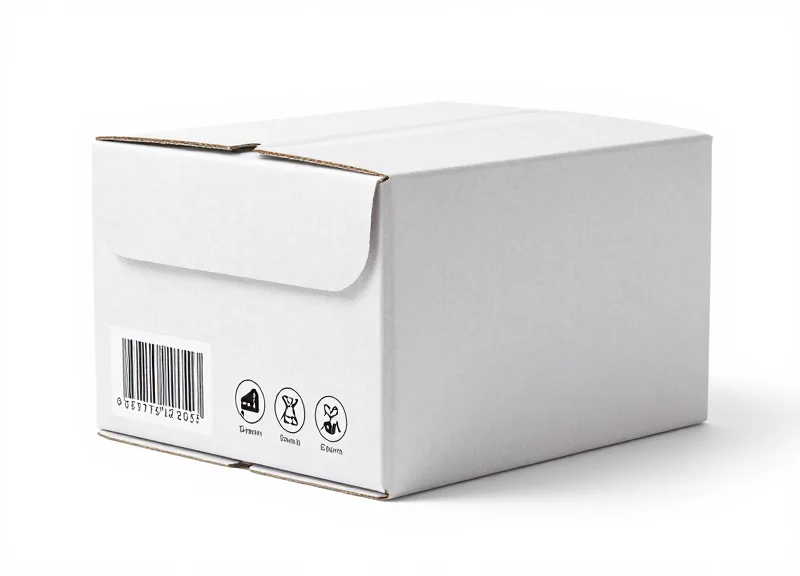
No-Go zones are specific, protected areas on retail packaging where the placement of EAS tags is strictly prohibited to ensure that product identifiers, safety warnings, and legal disclosures remain fully visible and functional. Obstructing these zones—which include UPC/EAN barcodes, nutrition facts, and batch codes—can result in shipment rejections, fines from big-box retailers, and potential legal liability if consumer safety information is obscured.
From an operational standpoint, covering a barcode is a cardinal sin of loss prevention. It forces manual entry at the point of sale (POS), increasing transaction times and human error. However, the 'No-Go' map extends beyond the obvious. As a veteran in retail logistics, I’ve seen thousands of dollars in chargebacks simply because a technician covered a small 'Best Before' date or a 'Choking Hazard' warning. You must treat the packaging as a legal document.
| Zone Category | Specific Element | Reason for Exclusion |
|---|---|---|
| Identification | UPC / EAN / QR Codes | Prevents POS scanner failure and inventory tracking errors. |
| Regulatory | Nutrition / Ingredient Panels | Legal requirement for consumer health and allergy awareness. |
| Traceability | Lot Numbers / Expiration Dates | Critical for recall management and freshness rotation. |
| Safety | Warning Labels / UL Marks | Protects the brand from liability regarding misuse or hazards. |
| Marketing | Primary Brand Logo | Maintaining brand equity and visual recognition on the shelf. |
Expert Technician Tip: The 'Quiet Zone' Rule. Many technicians assume that if they don't touch the black bars of a barcode, they are safe. In reality, every GS1-compliant barcode requires a 'Quiet Zone'—the blank white space to the left and right of the bars. Placing a tag even partially in this white space can cause laser diffraction, rendering the barcode unreadable. Always maintain a 3mm buffer from any scannable edge.
Can I place a tag on the bottom of the box?
Usually, yes. The bottom is often the safest place, provided it does not cover the primary barcode or mandated recycling symbols (like the Mobius loop) required in certain jurisdictions.
What if the tag is smaller than the barcode?
Size does not matter; never layer an EAS tag over a barcode. Even a small overlap can prevent the scanner from achieving a 'global' read of the code structure.
Is it okay to cover the price tag?
Avoid this. While not a 'regulatory' zone, covering a price tag creates friction at the POS and leads to customer frustration if they cannot verify the cost before reaching the register.
The Art of Internal vs. External Application

The choice between internal and external EAS application is a strategic decision that balances labor costs against security efficacy and brand presentation. Internal application involves placing the tag inside the product packaging or between layers of material, making it invisible to the consumer and potential shoplifters. External application, while more visible, utilizes high-performance adhesive labels placed strategically on the outer surface, often disguised behind price stickers or secondary branding elements. The primary goal for both methods is to maintain 'Signal Transparency'—ensuring that the tag's frequency can penetrate the packaging material to reach the EAS pedestals at the store exit.
| Feature | Internal Application | External Application |
|---|---|---|
| Visibility | 100% Invisible (Hidden) | Low to Moderate (Discreetly Placed) |
| Tamper Resistance | Extreme (Requires opening package) | High (If using high-bond adhesives) |
| Signal Performance | Subject to 'Faraday' shielding risks | Optimal (Direct line-of-sight) |
| Application Cost | Higher (Labor or Source-Tagging) | Lower (Rapid manual application) |
### Internal Application: The 'Ghost' Technique When applying tags internally, technicians must account for the material density of the product inside. For example, placing an RF tag directly against a liquid container or metallic foil will 'detune' the tag, rendering it inert. To master internal application, use these specific techniques:
- The Hang-Tag Sandwich: Insert ultra-thin AM labels between two layers of cardstock on heavy-duty hang-tags. Ensure the adhesive is centered to prevent 'pillowing' or edge-peeling that reveals the tag.
- Flap-Tucking: Place the tag on the inside of the bottom-closing flap of a box. This avoids the 'bump' look on the front face and keeps it away from the product's primary magnetic field.
- Cavity Placement: In molded plastic inserts (blister packs), place the tag in the void space between the plastic mold and the cardboard backing. This provides a natural air gap.
Expert Insight: The Air-Gap Principle. In my 20 years of retail security, the most common failure in discreet tagging is 'Signal Damping.' If you are tagging items with high dielectric constants (like perfumes or dense electronics), always ensure a 3mm to 5mm air gap between the tag and the product. Even a thin layer of corrugated cardboard can act as a buffer, preventing the product itself from absorbing the RF/AM energy meant for the security pedestal.
Will internal tags be deactivated at the POS?
Yes, standard deactivation pads are designed to penetrate most non-metallic packaging up to 6 inches. However, ensure the internal tag is not shielded by heavy foil liners.
Does internal placement affect the detection range?
Minimally. While external tags have the best range, internal tags typically only see a 5-10% reduction in detection distance, which is usually negligible for standard 3-6 foot wide exits.
Can I use external tags on curved surfaces?
Yes, but use 'Flexible-Circuit' tags. Rigid tags applied to curves often 'wing' at the edges, making them easy to peel off and highly visible to the eye.
Precision Application Techniques for Small Merchandise

Precision application for small merchandise is the process of integrating Acousto-Magnetic (AM) or Radio Frequency (RF) tags onto items with minimal surface area—such as cosmetics, pharmaceuticals, and micro-electronics—using specialized alignment tools to ensure the tag remains functional without obstructing barcodes or legal disclosures. For these high-value, low-real-estate items, successful tagging relies on 'Micro-Positioning,' where the technician utilizes the product's natural geometry to shield the tag from view while maintaining a clear signal path to the pedestals.
- The Micro-Calibration Phase: Before mass application, use a digital caliper to measure the 'Dead Zone'—the area on the packaging that contains no regulatory text or barcodes. For small items like lipstick or mascara, this is often a narrow vertical strip opposite the ingredient list.
- Tool-Assisted Placement: Discard manual finger-application. Use anti-static, fine-tip tweezers or a custom-designed vacuum pickup tool to position the tag. This prevents skin oils from degrading the adhesive and allows for sub-millimeter accuracy.
- The 'Pressure-Dwell' Execution: Once positioned, apply localized pressure for 3 seconds. For curved surfaces like vials, use a soft-silicone roller to ensure the tag edges are fully bonded, preventing 'edge-lift' which leads to tag tampering or accidental removal.
| Product Category | Optimal Tag Type | Strategic Placement Zone | Critical Clearance |
|---|---|---|---|
| Cosmetics (Tubes) | Thin-Profile AM | Base of the tube, parallel to the crimp | 2mm from the expiration date stamp |
| Pharmaceutical Vials | Transparent RF | Vertical orientation behind the brand logo | Must not overlap the NDC or dosage info |
| Small Electronics | Ferro-Magnetic AM | Internal battery compartment flap | Keep 5mm from internal antennas |
Expert Technician Tip: The 'Shadow-Line' Insight. In the world of premium cosmetics, we utilize the 'Shadow-Line' technique. By placing the tag along the natural structural ridges or the darkest part of the packaging’s color gradient, the slight 'bump' of the EAS circuit becomes visually neutralized by the light-play of the packaging. This psychological invisibility is more effective than physical concealment for maintaining a luxury brand aesthetic.
How do I tag items with curved surfaces without the tag popping off?
Use 'High-Tack' adhesive tags specifically designed for low-surface-energy plastics. Always apply the tag vertically (lengthwise) on cylindrical items to minimize the mechanical tension that causes flat tags to spring off curved surfaces.
Will tagging small electronics interfere with their functionality?
Generally, no, but you must avoid placing AM tags directly over a device's internal speaker or microphone, as the metallic components in the tag can cause minor magnetic interference with delicate audio drivers.
Is it better to use a larger tag for better detection on small items?
Actually, the opposite is true for precision tagging. A smaller, well-placed tag that doesn't peel is more reliable than a large tag that is partially obscured or damaged because it was too big for the item's surface area.
Leveraging Source Tagging for Seamless Integration
Source tagging is the strategic process of embedding Electronic Article Surveillance (EAS) technology directly into a product or its packaging during the manufacturing stage. By shifting security application from the retail floor to the production line, brands can achieve 'invisible' protection that is physically integrated into the item, ensuring it never obscures barcodes, legal disclosures, or brand aesthetics while arriving shelf-ready.
The transition from manual application to source tagging is a paradigm shift for loss prevention. Instead of technicians struggling to find a clear 1-inch square on a crowded cosmetic box, the EAS component is treated as a standard bill-of-materials (BOM) item. This level of integration allows for high-speed application that is more consistent and reliable than manual human placement.
- Design Integration: Collaborate with packaging engineers to identify 'dead spaces' within the structural design, such as between corrugated layers or inside the lining of a luxury bag, to house the tag.
- Tag Certification: Work with vendors like Checkpoint or Sensormatic to ensure the specific tag chosen is certified for the product’s material—avoiding interference from metallic foils or liquids.
- Automated Application: Incorporate high-speed applicators into the assembly line that can place tags with sub-millimeter precision, far exceeding manual capabilities.
- Verification & Deactivation Testing: Perform 'Closed-Loop' testing to ensure the embedded tag can be reliably deactivated through the packaging at the point of sale (POS) without requiring physical access.
| Feature | Manual In-Store Tagging | Factory Source Tagging |
|---|---|---|
| Placement Consistency | Variable (Human Error) | Absolute (Machine Applied) |
| Labor Cost | High (Retail Associate Time) | Low (Integrated into Production) |
| Discretion | External (Often Visible) | Internal (100% Invisible) |
| Speed to Shelf | Delayed by Tagging Process | Immediate (Shelf-Ready) |
| Regulatory Risk | High (Potential to cover info) | Zero (Part of Package Design) |
Expert Insight: The 'Shadow Tagging' Advantage. A unique advantage of source tagging is the ability to use 'conductive ink' or 'substrate-integrated' circuits. In high-end apparel or premium electronics, the EAS circuit can actually be printed onto the internal side of the primary packaging. This creates a 'shadow tag' that has zero physical footprint—it is literally part of the paperboard itself—making it impossible for shoplifters to identify or remove without destroying the product packaging.
Does source tagging require a minimum order quantity (MOQ)?
Generally, yes. Manufacturers typically require MOQs ranging from 10,000 to 50,000 units to justify the calibration of high-speed application machinery.
Can source tagging be used for both AM and RF technologies?
Absolutely. Source tagging providers offer both Acousto-Magnetic (AM) labels for liquids/metals and Radio Frequency (RF) labels for general merchandise.
What happens if a source-tagged item is returned?
Returns must be 're-activated' using a specialized technician's tool, or a new manual tag must be applied if the internal circuit was permanently neutralized at the POS.
Maintaining Compliance: Regulatory Standards for Retail Security
Compliance in retail security refers to the non-negotiable legal requirement that Electronic Article Surveillance (EAS) tags must never obstruct, deface, or render illegible any mandatory consumer information. This includes, but is not limited to, nutrition facts panels, ingredient lists, safety warnings, country-of-origin markings, and standardized barcodes. Failure to adhere to these standards can result in hefty fines from bodies like the Federal Trade Commission (FTC) or the Food and Drug Administration (FDA), and in some jurisdictions, it may even void product warranties or consumer return rights.
| Regulatory Body / Standard | Regulated Content | Compliance Requirement |
|---|---|---|
| FDA / USDA | Nutrition & Drug Facts | Zero obstruction allowed; tags must be 1/8 inch away from text borders. |
| FTC (FPLA) | Consumer Commodity Info | Identity of commodity and net quantity must remain fully visible. |
| GS1 International | Barcodes (UPC/EAN) | Tags must not overlap the 'Quiet Zone' (white space) around the barcode. |
| EU MDR / CE Mark | Medical & Safety Marks | Safety symbols and CE certification marks must remain visible for liability. |
Expert Insight: The 'Destructive Adhesion' Liability. One often overlooked compliance risk is not just where the tag is placed, but the strength of the adhesive used. If a discreet tag is placed over a non-mandatory area but uses an adhesive so strong that it tears the underlying packaging—and the mandatory info—upon removal by the consumer, the retailer can be held liable for 'Information Masking.' Always utilize 'retail-grade' adhesives that offer a clean peel if the tag is intended to be removed post-purchase.
Can I place a tag over a QR code if there is a standard barcode elsewhere?
No. In modern retail, QR codes often link to mandatory digital transparency disclosures or 'SmartLabel' ingredients. Obscuring these is increasingly treated as a regulatory violation equivalent to covering the physical label.
Does 'Discreet Placement' provide a legal defense for obscured warnings?
Absolutely not. Regulatory bodies prioritize consumer safety and the 'right to know' over a retailer’s loss prevention strategy. Aesthetics never override the legal requirement for legible safety warnings.
What are the risks of tagging imported goods?
Imported goods often have smaller labels containing translated instructions. Applying tags to these items requires extreme precision, as even a small 10mm x 10mm tag can cover critical translated safety data.
The Technician's Toolkit: Tools for Consistent Placement
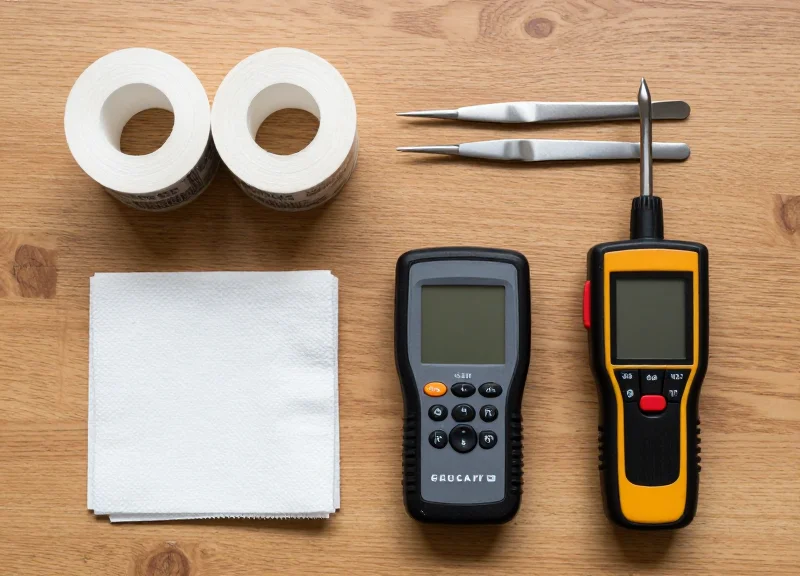
To achieve 100% discreet EAS tag placement at scale, technicians must move beyond manual 'peel-and-stick' methods and utilize a specialized toolkit including hand-held automatic applicators, micro-precision tweezers for tight tolerances, and custom-machined alignment jigs. These tools ensure that every tag is placed at the exact same 'X-Y' coordinate, maintaining aesthetic consistency while guaranteeing that barcodes, expiration dates, and regulatory symbols remain fully visible and scannable.
- Semi-Automatic Hand-Held Applicators: These devices use a mechanical trigger to peel and dispense the label. They are essential for high-volume retail environments where speed is critical but precision cannot be sacrificed.
- Non-Conductive Precision Tweezers: For ultra-small EAS tags used in cosmetics or jewelry, ceramic or anti-static tweezers allow for granular control without interfering with the tag's delicate internal circuitry.
- Custom Alignment Jigs (L-Frames): A simple physical guide made of acrylic or metal that fits over the product corner. It creates a hard stop for the applicator, ensuring the tag is always 5mm from the barcode without ever overlapping it.
| Tool Category | Best Use Case | Key Advantage |
|---|---|---|
| Manual Label Dispenser | Stationary workstation tagging | Low cost; reduces backing paper waste |
| Pistol-Grip Applicator | High-volume floor inventory | Ergonomic; eliminates finger oils on adhesive |
| 3D-Printed Contoured Jigs | Irregularly shaped luxury goods | Repeatable accuracy on curved surfaces |
| Backlit Inspection Tables | Quality control & audit | Verifies tag concealment through packaging |
Expert Insight: In the Silicon Valley high-tech retail sector, we have seen a shift toward '3D-Printed Rapid Jigs.' Instead of using generic rulers, technicians now use 3D-printed shells that fit perfectly over specific SKU packaging. This eliminates human error entirely, allowing even entry-level staff to hit a 0.5mm tolerance for tag placement, which is vital when working with the 'Safety Zone' near UPC codes.
Why should I use a tool instead of my hands?
Hand application leaves skin oils on the adhesive, which can cause the tag to peel off over time. Tools also prevent 'human drift,' where placement shifts slightly as the technician becomes fatigued.
How do I maintain my applicators?
Regularly clean the rollers with 90% isopropyl alcohol to remove adhesive buildup. A sticky roller is the primary cause of jammed tags and crooked application.
Can tools help with regulatory compliance?
Yes. By using a jig with a 'dead zone' cutout, you physically block the applicator from covering the MSRP, barcode, or ingredients list, making compliance automated rather than elective.
Validation and Testing: The Final Quality Check
Validation and testing represent the critical final stage in the EAS application process, ensuring that discreetly placed tags are both reliably detectable by exit pedestals and completely neutralizable by Point-of-Sale (POS) deactivators. This dual-verification protocol prevents 'failure to alarm' incidents (security gaps) and 'failure to deactivate' scenarios (embarrassing false alarms for customers). By systematically auditing the signal strength and deactivation height of hidden tags, technicians can confirm that aesthetic concealment has not compromised functional performance.
- The Three-Axis Detection Test: Pass the tagged item through the exit pedestals at three distinct heights (waist, shoulder, and floor) and three orientations (horizontal, vertical, and diagonal) to ensure the tag is not shielded by the product's internal components.
- Deactivation Verification (The 5-Inch Rule): Ensure the tag deactivates at a height of at least 5 inches from the deactivation pad. If a discreet tag requires direct contact to deactivate, it increases the risk of 'phantom' alarms after the customer leaves.
- The 'Shadow Tag' Audit: Periodically test a 'dead' tag alongside a live one to ensure that the detection system is specifically picking up the hidden tag and not being triggered by secondary environmental interference.
| Test Metric | Minimum Standard | Optimal Performance |
|---|---|---|
| Detection Rate | 92% pass rate on first walk-through | 99.5% pass rate across all orientations |
| Deactivation Height | 2-3 Inches from pad | 5-8 Inches from pad |
| False Alarm Rate | < 1 in 1,000 passes | < 1 in 10,000 passes |
Expert Insight: The 'Faraday Pocket' Trap. Veteran technicians know that discreet placement often involves tucking tags near electronic components or foil-lined packaging. This can create a localized 'Faraday Cage' effect that suppresses the tag's resonance. Always perform a 'Stress Test' by placing the tagged product inside a shopping bag filled with other items; if the signal drops more than 20% compared to a solo pass, the tag placement must be adjusted to a less shielded location.
Why do hidden tags cause more false alarms?
Hidden tags are often placed further from the deactivation surface. If the POS operator doesn't know the exact location of the tag, they may not pass the item close enough to the deactivator to fully kill the signal.
How do I test tags without disrupting store operations?
Use a handheld EAS field tester. These devices allow you to verify tag resonance and deactivation status silently, without needing to walk through the exit pedestals repeatedly.
What is the 'Reactivation Phenomenon'?
Some low-quality AM tags can 'wake up' if they are partially deactivated or exposed to strong magnetic fields. Validation should include a re-test 30 minutes after deactivation to ensure the tag remains dormant.