As we approach 2026, the retail landscape for oversized home goods—from sectional sofas to industrial-sized rolls of carpeting—is undergoing a technological revolution. For decades, Electronic Article Surveillance (EAS) served as the primary gatekeeper against shrink. However, as supply chains become more complex and the demand for real-time inventory precision reaches an all-time high, the limitations of traditional EAS have become glaring. Next-Gen RFID is no longer just a luxury; it is the essential infrastructure that is rapidly outpacing EAS by providing not just security, but deep operational intelligence for the most challenging product categories in retail.
The Evolution of Retail Security: Why EAS is Reaching Its Limits

Traditional Electronic Article Surveillance (EAS) is reaching its functional ceiling because it operates as a binary deterrent—either a tag is present or it is not—offering zero data on 'what' is moving through the gates. For oversized home goods and long-roll materials, the physical limitations of Acousto-Magnetic (AM) and Radio Frequency (RF) EAS technologies are becoming critical liabilities. In 2026, the retail environment demands more than a simple alarm; it requires high-fidelity item-level tracking that EAS, hampered by signal attenuation and physical bulk, simply cannot provide.
| Feature | Traditional EAS (AM/RF) | Next-Gen RFID (RAIN/UHF) |
|---|---|---|
| Data Capacity | Binary (On/Off) | Unique SKU & Serial Data |
| Detection Range | Narrow (1.5m - 2m) | Wide (Up to 12m+) |
| Material Interference | High (Metals/Liquids) | Mitigated (Advanced On-Metal Tags) |
| Inventory Integration | None | Real-time Accuracy (99%+) |
The fundamental flaw for oversized goods lies in the 'Signal-to-Bulk' ratio. Large-scale items like rolled carpets, industrial linoleum, or metal-reinforced furniture create significant physical barriers that disrupt the low-frequency signals used by EAS. When these items are stacked or moved in bulk, they create 'dead zones' where EAS pedestals fail to trigger. Furthermore, because EAS cannot distinguish between a $10 floor mat and a $2,000 hand-woven Persian rug, retailers are left blind to high-shrinkage patterns that impact the bottom line.
Why does EAS fail with long-roll materials like carpeting?
Long-roll materials often contain metallic fibers or dense backing that causes signal attenuation. In EAS systems, the tag must be within a very specific orientation to the pedestal; with rolls over 3 meters, the distance from the tag to the sensor often exceeds the effective range of traditional gates.
Can EAS provide inventory analytics for large stock?
No. EAS is purely a loss prevention tool. It cannot tell a retailer if an item is out of stock, misplaced in the warehouse, or currently being moved to the loading dock, making it an isolated silo in a modern omnichannel supply chain.
What is the 'False Alarm' fatigue associated with EAS?
EAS systems are prone to 'tag pollution' and interference from other electronics. For large home goods stores with heavy machinery and metallic infrastructure, the high rate of false positives leads to staff desensitization, effectively rendering the security measure useless.
Expert Insight: The Density Barrier. A unique challenge surfacing in 2026 is the 'Dense Material Shielding' effect. As home goods manufacturers use more sustainable, high-density composites and recycled metallic filaments, the electromagnetic transparency of products is decreasing. EAS signals, which rely on simple resonance, are increasingly absorbed or deflected by these new materials, whereas next-gen RFID uses sophisticated beam-steering and backscatter modulation to 'see' through the bulk.
Defining Next-Gen RFID in the 2026 Context
Next-Gen RFID in 2026 represents a paradigm shift from simple proximity-based identification to high-fidelity spatial intelligence. Unlike traditional Electronic Article Surveillance (EAS) which merely triggers a binary alarm, the 2026 iteration of RFID leverages ultra-high-sensitivity ICs (Integrated Circuits) and 'material-agnostic' antenna designs. These systems are specifically engineered to maintain a signal through the dense, signal-absorbing bulk of oversized home goods—such as memory foam mattresses and lumber—and the signal-reflecting properties of long-roll textiles or metallic-flecked wallpapers.
| Feature | Traditional RFID (Pre-2023) | Next-Gen RFID (2026 Standard) |
|---|---|---|
| Effective Read Range | 3 to 7 Meters | 15 to 22 Meters |
| Material Penetration | High Interference (Liquid/Metal/Dense Fiber) | Material-Aware (Impedance Matching) |
| Sustainability Profile | Plastic Substrates / Etched Copper | Biodegradable Paper / Graphene Ink |
| Data Granularity | Static SKU / Serial Number | Dynamic Lifecycle + Carbon Footprint Data |
- Adaptive Impedance Matching: A 2026 breakthrough where the tag's chip automatically adjusts its electrical characteristics to compensate for the material it is attached to, ensuring consistent performance on both moisture-heavy timber and dry synthetic rolls.
- Printable Graphene Antennas: Moving away from toxic chemical etching, modern tags use conductive graphene inks that offer superior flexibility for rolls and are fully recyclable.
- Massive Parallel Reading: The ability for overhead readers to process over 1,500 tags per second, essential for inventorying high-density storage of oversized items.
One unique insight for 2026 is the emergence of 'Deep-Stack Signal Diffraction.' Previously, tags buried in the center of a 12-foot carpet roll were 'blind' to readers. Next-Gen RFID utilizes sub-millimeter wave adjustments that allow signals to diffract around the internal layers of a roll, effectively turning the material itself into a secondary conduit for the radio frequency rather than a barrier. This turns a traditional logistics nightmare into a transparent data point.
Can 2026 RFID tags be recycled with the packaging?
Yes. The latest standards mandate 'Zero-Waste' construction, utilizing wood-pulp substrates and metal-free antennas that can be processed in standard paper recycling streams without contamination.
Does the increased range lead to 'false reads' from the street?
No. 2026 systems utilize Beamforming and RSSI (Received Signal Strength Indicator) filtering to create 'Virtual Geofences,' ensuring only tags within the store's physical footprint are recorded.
Overcoming the 'Bulk' Barrier: RFID for Furniture and Large Decor

In 2026, overcoming the 'bulk barrier' means moving past the physical limitations of Electronic Article Surveillance (EAS) by using Next-Gen RFID's ability to perform volumetric scanning. Unlike traditional EAS, which requires a tag to pass directly between two narrow sensors, modern RFID utilizes high-gain, beam-forming antennas to capture data from oversized items like sofas, armoires, and large-scale decor regardless of their orientation or the density of the surrounding materials. This shift allows retailers to process entire pallets of furniture or complex geometric items in seconds, a feat physically impossible for gate-dependent EAS technology.
| Feature | Traditional EAS (Acousto-Magnetic) | Next-Gen RFID (2026 Standards) |
|---|---|---|
| Detection Path | Line-of-sight / Proximity gate | Omnidirectional / Spatial |
| Bulk Processing | Single item per pass | 1,000+ items per minute (palletized) |
| Material Sensitivity | High interference with metal/mirrors | Advanced Tuning for dense wood/fabrics |
| Data Granularity | Binary (On/Off alarm) | Unique SKU, Batch, and Origin data |
The 'Bulk' barrier isn't just about size; it’s about the physics of signal propagation. Oversized home goods often feature complex internal structures—metal springs in a mattress, lead-lined mirrors, or dense mahogany frames—that create 'shadow zones' for older wireless technologies. 2026-era RFID tags utilize auto-tune technology that adjusts impedance in real-time based on the mounting surface. This ensures that even when a tag is buried deep within a stack of flat-packed furniture, the signal penetrates the 'bulk' to provide 99.9% read accuracy, effectively turning an invisible inventory into a real-time digital map.
How does RFID handle metallic furniture components?
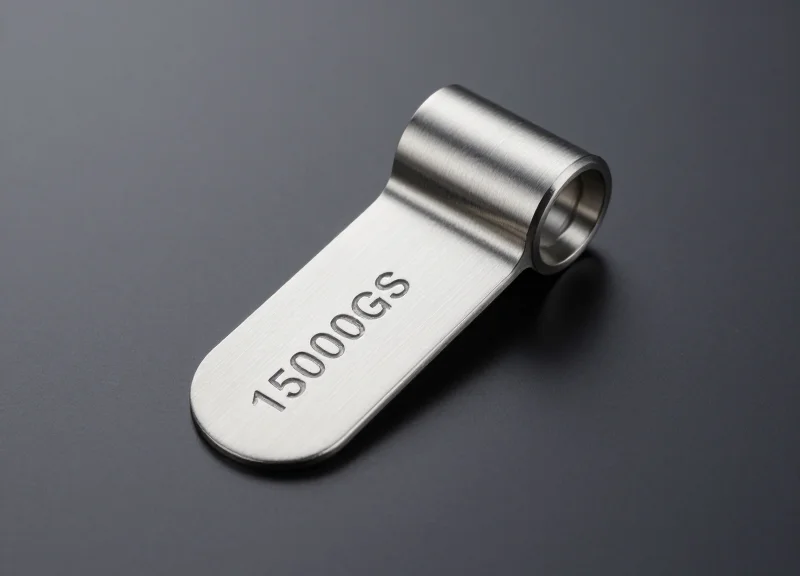
Modern 'on-metal' RFID tags use a spacer or a PIFA (Planar Inverted-F Antenna) design to leverage the metal surface as an amplifier rather than a shield, ensuring clear reads on metal-heavy decor.
Can RFID track items stacked in high-density warehouses?
Yes, through 'Waveguide' antenna technology, RFID readers can now pinpoint the exact location of a specific oversized item within a 3D stack, reducing search times by up to 80% compared to EAS or manual barcode scanning.
Does the size of the tag increase with the size of the furniture?
No. While the furniture is bulky, the 2026 silicon chips are smaller than ever. The read range is determined by antenna sensitivity at the reader level, not just the physical size of the tag.
Expert Insight: The 'Shadow Scanning' Breakthrough. A unique development in 2026 is the use of passive 'relay' tags in furniture packaging. For exceptionally dense shipments, retailers are now using secondary low-cost inlays that act as signal boosters. This 'Shadow Scanning' technique allows a single handheld reader to reach the center of a shipping container of heavy home goods without the operator ever having to move a single box. This effectively eliminates the 'dead zones' that previously made RFID unreliable for industrial-scale home decor logistics.
Precision for Long-Roll Materials: Tracking Textiles and Flooring

Next-Gen RFID enables precision tracking for long-roll materials by utilizing linear-encoded tags that associate specific length data with unique serial numbers. Unlike traditional EAS, which only signals if a product is present, 2026-era RFID systems allow retailers and distributors to monitor exactly how many linear yards or meters remain on a roll, where it is located within a 10-centimeter radius, and its specific dye-lot or manufacturing batch—all without unrolling the material.
| Feature | Traditional EAS | Next-Gen RFID (2026) |
|---|---|---|
| Measurement Accuracy | None (Binary: In/Out) | Linear Yardage Tracking |
| Signal Penetration | Blockaded by dense synthetic fibers | High-sensitivity chips for dense rolls |
| Inventory Velocity | Manual cycle counts required | Instantaneous bulk-read updates |
| Cut-Piece Management | Impossible to track remnants | Dynamic updates for remaining stock |
One of the most significant hurdles for textiles and flooring has been the 'Faraday effect' created by certain synthetic backings or metallic-treated fabrics. In 2026, Next-Gen RFID tags utilize 'Air-Gap' spacer technology and high-permittivity substrates. This ensures that even when a tag is buried deep within a stack of heavy-duty carpet rolls or high-GSM upholstery fabric, the signal remains clear and readable for overhead sensors.
- Core-Integrated Tagging: The RFID tag is embedded directly into the cardboard or PVC core during manufacturing, ensuring the ID stays with the roll until the very last yard is sold.
- Automated Linear Subtraction: As staff cut lengths for customers, the cutting station's integrated RFID reader detects the specific roll and prompts the user to input the cut length, automatically updating the cloud-based inventory.
- Zonal Mapping: Fixed ceiling readers map the warehouse or showroom floor, providing a 'heat map' of roll locations to eliminate time wasted searching for specific SKUs.
Expert Insight: The 'Digital Swatch' Revolution. The true differentiator in 2026 is the ability to use the RFID tag as a digital ledger. We are seeing industry leaders store 'Cut-History' metadata directly on the chip's user memory. This means that even if a roll is disconnected from the central ERP for a period, the tag itself can tell a handheld reader its exact remaining length and the date of its last inspection—a level of decentralized intelligence that EAS could never achieve.
Does RFID work through thick carpets or heavy rugs?
Yes. 2026-era UHF RFID tags utilize high-gain antennas specifically tuned to penetrate dense organic and synthetic fibers, allowing for 99.9% read rates even in bulk stacks.
Can RFID track remnants and off-cuts?
Absolutely. When a roll is cut, new 'mini-tags' can be printed and associated with the parent roll's data, ensuring that even small remnants are tracked as sellable assets rather than shrinkage.
Is the tag visible to the customer?
Usually no. Tags are typically placed on the interior of the core or hidden within the product's backing, maintaining aesthetic integrity while providing full security and tracking.
From Loss Prevention to Inventory Excellence
In the 2026 retail landscape, the transition from Electronic Article Surveillance (EAS) to Next-Gen RFID represents a fundamental shift from 'security-first' to 'data-first' operations. While traditional EAS is a binary system designed only to alert staff when an item crosses a threshold without authorization, Next-Gen RFID provides a continuous stream of item-level intelligence. For retailers of oversized home goods and long-roll materials, this means moving beyond catching shoplifters to solving the multi-billion dollar problems of phantom inventory, inaccurate stock counts, and inefficient replenishment cycles.
| Feature | Traditional EAS (Reactive) | Next-Gen RFID (Proactive) |
|---|---|---|
| Data Granularity | Binary (Alarm/No Alarm) | Item-Level (SKU, Serial, Age, Location) |
| Primary Value | Shrink Reduction | Omnichannel Fulfillment & Accuracy |
| Inventory Visibility | Zero Visibility | 99%+ Real-Time Accuracy |
| Labor Impact | Manual 'Blind' Audits | Automated Digital Cycle Counts |
The 'Inventory Excellence' model leverages the unique digital identity of every RFID tag. For oversized items like sofas or heavy rugs, which are labor-intensive to move for manual counts, RFID allows for rapid, non-line-of-sight auditing. This eliminates 'Phantom Inventory'—instances where the system thinks an item is in stock because it wasn't stolen (EAS didn't trip), but it is actually misplaced or lost in a massive warehouse. By 2026, the integration of RFID with AI-driven analytics allows retailers to predict stockouts before they happen, ensuring that high-value floor space is always occupied by available, sellable goods.
Does RFID replace the need for security gates in 2026?
No, it evolves them. RFID-enabled 'Smart Exits' still trigger alarms but provide security teams with the exact description and value of the item being removed, allowing for more professional and informed recovery efforts.
How does RFID improve ROI for long-roll materials?
By tracking the exact linear footage remaining on a roll via its digital twin, retailers avoid 'dead stock' at the end of a roll and can automate markdowns for remnants, maximizing every inch of material profit.
Can RFID help with supply chain disputes?
Absolutely. Because RFID logs every touchpoint from manufacture to the showroom floor, retailers have an immutable record to prove where a loss or damage occurred, shifting liability back to the responsible party.
Expert Insight: The 'Halo Effect' of RFID. One often overlooked 2026 data point is the 'Halo Effect' on sales. When retailers transition oversized goods from EAS to RFID, they typically see a 2-4% lift in top-line revenue simply because stock-level accuracy reaches a threshold where 'available to promise' (ATP) for online orders becomes 100% reliable. In the oversized category, where shipping costs are high, this precision prevents the catastrophic expense of canceled orders or split shipments caused by inventory errors.
Integration with ESL and Digital Twin Technology

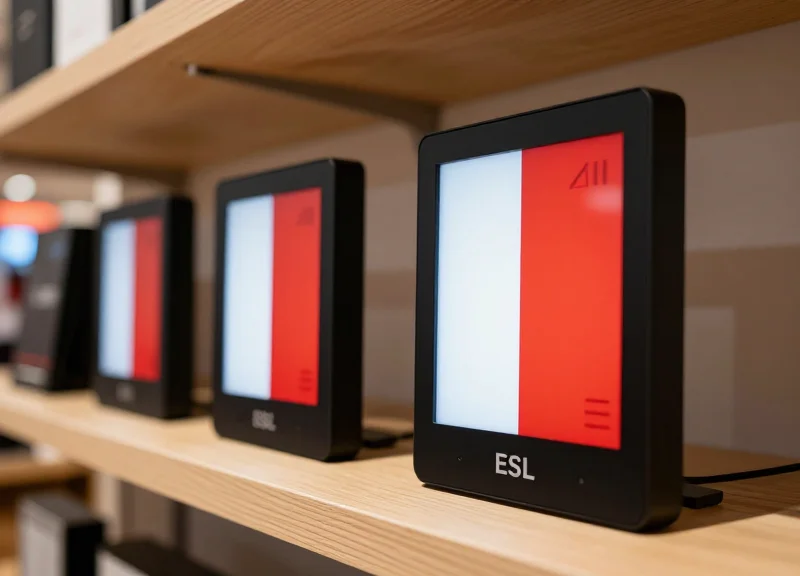
By 2026, the integration of Next-Gen RFID with Electronic Shelf Labels (ESL) represents the 'central nervous system' of the modern warehouse and showroom. Unlike traditional EAS, which acts as a binary alarm, this synergy creates a live Digital Twin—a virtual, high-fidelity replica of every physical asset. When an RFID-tagged oversized item moves, its corresponding ESL and digital model update instantly, ensuring that price, location, and availability are perfectly synchronized across all sales channels without human intervention.
| Feature | Traditional EAS + Paper | RFID + ESL Digital Twin (2026) |
|---|---|---|
| Inventory Visibility | Manual counts; static records | Real-time spatial tracking |
| Pricing Agility | Labor-intensive manual labeling | Instant, dynamic price updates |
| Data Accuracy | High error rates in bulky stock | 99.8% precision for 'Digital Twin' |
| Oversized Item Tracking | Gate-limited security only | Zonal location & shelf-level accuracy |
Expert Insight: The 'Spatial Choreography' Factor. In 2026, we are seeing a shift toward using ESL access points as secondary RFID readers. This creates a 'spatial choreography' where the signal strength (RSSI) from a furniture tag is triangulated by nearby ESLs. This allows managers to visualize heatmaps of where oversized items—like modular sectionals—are being moved or tested by customers, providing 'path-to-purchase' analytics that were previously impossible for large-scale goods.
- Tag-to-Label Pairing: Each unique RFID tag on a long-roll material (e.g., premium carpet) is digitally 'married' to an ESL at the point of display, linking physical batch data to customer-facing info.
- Automated Delta Updates: As stock is depleted or moved from the backroom to the showroom floor, the Digital Twin detects the 'delta' change and updates the ESL display to reflect 'Last Item' or 'Restocked' status.
- Predictive Replenishment: AI models analyze the Digital Twin data to predict when bulky inventory will run out, triggering automated procurement orders before the physical shelf is empty.
Can ESLs be used to locate specific oversized items in a dark warehouse?
Yes. Next-gen ESLs often include programmable LEDs that can flash when an RFID-associated item is 'called' by the system, allowing workers to find specific rolls of fabric or furniture crates in seconds.
Does the Digital Twin handle returns and damage reports?
Absolutely. If an RFID tag is flagged as 'damaged' in the system, the Digital Twin immediately removes it from available sellable stock and can update the ESL to show a 'Floor Model Clearance' price.
Is this integration cost-prohibitive for large-format retailers?
While the initial CAPEX is higher than EAS, the ROI is realized through a 40% reduction in labor costs related to inventory audits and a significant increase in sell-through via accurate omnichannel availability.
The ROI of Transitioning: Beyond the Unit Cost

In 2026, calculating the Return on Investment (ROI) for RFID in the oversized home goods and long-roll sector requires moving beyond the 'price-per-tag' comparison. While a traditional EAS tag may cost less upfront, its value is binary: it either alarms or it doesn't. Next-gen RFID, conversely, provides a multi-dimensional ROI by slashing labor costs associated with manual cycle counts by up to 90%, reducing shrinkage by providing item-level visibility throughout the supply chain, and unlocking 99%+ inventory accuracy that facilitates profitable omnichannel fulfillment.
| Financial Metric | Traditional EAS (Status Quo) | Next-Gen RFID (2026 Standard) |
|---|---|---|
| Inventory Audit Labor | High: Manual barcode scanning of bulk items. | Low: Automated bulk scanning/drones. |
| Shrinkage Insight | Reactive: Alert sounds at the exit only. | Proactive: Real-time 'last seen' location data. |
| Accuracy Rate | 65-75%: Frequent stockouts/overstocks. | 98-99.8%: Optimal stock levels. |
| Direct Tag Cost | $0.02 - $0.05 | $0.08 - $0.15 (High-performance sub-strates) |
The 'Hidden Cost of Inaction' is the most significant factor in this financial transition. For retailers dealing with flooring rolls or heavy furniture, the labor required to move and scan individual items during a traditional EAS-based audit often costs more than the inventory loss it seeks to prevent. RFID allows a single warehouse worker to audit an entire 50,000-square-foot facility in hours rather than days, effectively turning a sunken labor cost into a competitive advantage.
What is the typical break-even period for RFID in large-format retail?
Most retailers see a full return on investment within 12 to 18 months, driven primarily by the reduction in safety stock and the elimination of manual labor hours.
How does RFID affect insurance premiums for high-value goods?
Carriers are beginning to offer lower premiums or 'smart' coverage options for facilities that utilize RFID, as it provides an immutable digital trail that significantly lowers the risk of 'unexplained loss'.
Can RFID reduce the 'Long-Roll' waste factor?
Yes. By tracking the exact remaining length on a roll digitally, retailers avoid the common 'short-roll' write-offs that occur when manual measurements are estimated incorrectly.
The 1:10 Data Value Multiplier (Expert Insight): In the 2026 landscape, we no longer view the RFID tag as a loss-prevention tool, but as a data-generation asset. For every $1 spent on specialized RFID tags for oversized goods, companies are realizing roughly $10 in total value. This is achieved through 'Inventory Velocity'—the ability to identify precisely which high-margin rugs or furniture pieces are stagnating in the warehouse and moving them to high-traffic showrooms before they require deep discounting. Traditional EAS is a security expense; Next-Gen RFID is a profit-optimization engine.
Addressing Metadata and Supply Chain Transparency
Next-Gen RFID transcends simple loss prevention by acting as a decentralized database for oversized goods and long-roll materials. Unlike traditional Electronic Article Surveillance (EAS), which provides a binary 'present/not present' signal, these 2026-standard tags store high-fidelity metadata—including mill origin, chemical treatments, and carbon footprint. This capability transforms a simple tag into a Digital Product Passport (DPP), allowing retailers and regulators to verify the entire lifecycle of a product—from the timber yard to the living room floor—with a single scan.
| Feature | Traditional EAS | Next-Gen RFID (2026) |
|---|---|---|
| Data Capacity | None (1-bit signal) | 512-bit to 2KB+ User Memory |
| Regulatory Compliance | Non-compliant for DPP | Full DPP/ESG Support |
| Granularity | Category Level | Unique Serialized Item Level |
| Lifecycle Tracking | Point-of-Sale only | End-to-End (Circular Economy) |
By 2026, the regulatory landscape—specifically the EU’s Ecodesign for Sustainable Products Regulation (ESPR)—will mandate that large-scale home goods like textiles and furniture carry accessible digital data. Next-Gen RFID tags facilitate this by allowing 'offline' data retrieval. Even in environments without active cloud connectivity, such as a remote construction site or a deep-aisle warehouse, a handheld reader can pull critical safety specifications or fire-retardant certifications directly from the tag's user memory.
How does RFID metadata assist in ESG reporting?
RFID tags in 2026 can store carbon footprint data and recycled content percentages. This allows companies to automate Environmental, Social, and Governance (ESG) reporting by aggregating data directly from physical inventory rather than relying on disparate paper invoices.
Can metadata be updated throughout the supply chain?
Yes. Unlike printed barcodes or static EAS, Next-Gen RFID allows for 'Read/Write' operations. This means quality control stamps, shipping milestones, or warranty activations can be digitally appended to the item as it moves through the value chain.
What role does this play in product recalls for home goods?
If a specific batch of flooring adhesive is found to be defective, RFID allows retailers to isolate only the affected rolls via metadata (Batch/Lot #), preventing the massive waste and cost of broad-spectrum recalls.
Expert Insight: The 'Immutable Edge' Strategy. A unique advantage of 2026 RFID silicon is the ability to lock specific memory banks while leaving others open. We recommend a 'layered data' approach: manufacturing origin and material safety data are 'hard-locked' at the factory (immutable), while ownership and location history remain 'write-capable.' This creates a tamper-proof audit trail that prevents greenwashing and ensures that 'sustainable' claims are backed by unalterable digital evidence located on the product itself.
Implementation Roadmap: Moving from EAS to RFID
Transitioning from traditional Electronic Article Surveillance (EAS) to Next-Gen RFID for oversized home goods is no longer a simple hardware swap; in 2026, it is a strategic migration toward a comprehensive data ecosystem. A successful roadmap involves a phased integration where legacy security pedestals are augmented with high-sensitivity RFID sensors. This allows retailers to maintain loss prevention standards while simultaneously gaining real-time, SKU-level visibility across complex, metal-dense environments common in large-format furniture and flooring retail.
- Phase 1: Environmental RF Audit: Conduct a site-wide mapping of radio frequency interference. Oversized goods often involve metal frames or foil-backed insulation that can deflect signals; identifying these 'dead zones' early ensures proper reader placement.
- Phase 2: Hybrid Tagging Pilot: Deploy dual-technology tags that contain both an EAS ferrite and an RFID chip. This enables a 'bridge' period where your security stays active while you calibrate your data collection accuracy.
- Phase 3: Edge Gateway Deployment: Install overhead RFID portals and beam-steering antennas at transition points (loading docks and showroom exits) to automate tracking without impeding forklift or heavy machinery traffic.
- Phase 4: API & Middleware Sync: Connect the RFID data stream to your ERP and Warehouse Management System (WMS). This replaces manual cycle counts with a persistent 'Digital Twin' of your inventory.
| Implementation Metric | Legacy EAS Approach | 2026 RFID Migration |
|---|---|---|
| Infrastructural Footprint | Bulky physical pedestals | Discreet overhead/Edge sensors |
| Installation Complexity | Hard-wired, siloed power | Power-over-Ethernet (PoE) & Mesh |
| Data Integration | None (Alarm only) | Full API-based inventory sync |
| Staff Training | Reactionary (Alarm response) | Proactive (Data-driven replenishment) |
Expert Insight: The 'Invisible Buffer' Technique. In 2026, elite retailers are moving away from physical gate-keeping. By using AI-driven phased array antennas, you can create 'virtual fences' around oversized stock. This is a game-changer for long-roll materials like carpeting or luxury vinyl planks, as it allows for seamless movement of goods via automated guided vehicles (AGVs) without the risk of damaging expensive EAS pedestals or creating bottlenecks at the exit.
Can we use existing EAS wiring for RFID?
In many cases, yes. Modern PoE (Power over Ethernet) RFID readers can often utilize the existing electrical conduits used by legacy EAS systems, reducing labor costs by up to 30%.
What is the typical 'Dark Period' during transition?
With a hybrid tagging strategy, there is zero 'dark period.' The legacy EAS continues to provide security while the RFID system is brought online and calibrated in the background.
How does RFID handle the 'Metal Shielding' effect of large furniture?
Next-gen 'On-Metal' and 'Flag' tags are designed to create a physical gap between the chip and the metallic surface, ensuring high read rates even on stainless steel appliances or reinforced bed frames.