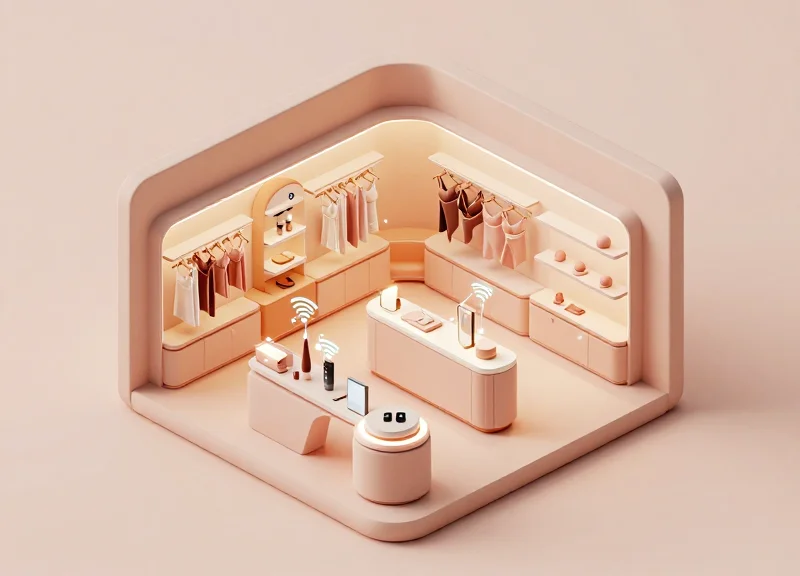
In the intimate world of lingerie retail, the distance between the storefront and the checkout is measured in the fitting room. While traditional footfall counters tell you how many people entered your store, they remain silent on the most critical phase of the customer journey: the try-on experience. By 2026, the industry is pivoting toward 'Fitting Intelligence.' Powered by RFID technology, this shift allows retailers to decode customer preferences at the item level, transforming the fitting room from a black hole of data into a powerhouse of conversion insights.
The Evolution of Retail Analytics: Beyond Simple Headcounts

The evolution of retail analytics represents a fundamental transition from 'Quantitative Footfall'—the simple counting of bodies crossing a threshold—to 'Contextual Intelligence,' which measures high-intent engagement. For decades, retailers relied on infrared beams or thermal cameras to measure success via traffic volume. However, in the high-stakes lingerie sector, these metrics are increasingly obsolete because they fail to capture what happens after the entry: the movement of specific garments into the fitting room and the subsequent conversion behavior that defines the bottom line.
| Metric Category | Traditional Analytics (2010-2020) | Advanced Fitting Intelligence (2026+) |
|---|---|---|
| Primary Focus | Traffic Volume (How many people?) | Behavioral Intent (How do they interact?) |
| Data Source | Door Sensors / Wi-Fi Sniffing | RFID Item Tracking / Smart Mirrors |
| Key Blind Spot | The Fitting Room (The 'Black Box') | Full Visibility into Try-on Ratios |
| Actionability | Staffing schedules based on peaks | Inventory optimization and personalized sales |
In the Silicon Valley retail-tech ecosystem, we have observed that 'Footfall' is often a vanity metric. A store can have a 20% increase in traffic but a 10% decrease in revenue if the fitting room experience is friction-heavy. For lingerie specifically, the fitting room is where 85% of purchasing decisions are finalized. Traditional counters can tell you a customer is in the store, but they cannot tell you she took three different bra sizes into a cubicle and left them all behind because of a recurring fit issue.
Why is 'Fitting Intelligence' more valuable than 'Footfall' for lingerie brands?
Lingerie is a high-touch, fit-dependent category. Fitting Intelligence provides the 'Try-on to Buy-on' ratio, identifying which specific SKUs are being rejected in the dressing room, whereas footfall only measures general interest.
Can traditional cameras track item-level behavior?
No. Due to privacy regulations and physical barriers in dressing areas, optical cameras cannot track which items a customer is trying on. RFID-powered 'Fitting Intelligence' respects privacy while providing 100% accuracy on garment movement.
What is 'Conversion Leakage' in this context?
Conversion Leakage occurs when a high-intent shopper enters a fitting room but leaves without purchasing because the correct size or a coordinating item wasn't immediately available to them.
Expert Insight: The most successful retailers in 2026 will treat the fitting room as a 'Conversion Laboratory.' By shifting focus from the front door to the dressing room door, brands can identify 'Abandoned Hero' products—items that are tried on frequently but never purchased. This data allows for real-time adjustments in manufacturing or design that a simple headcount could never reveal. We call this moving from 'Passive Counting' to 'Active Conversion Optimization.'
Why Traditional Footfall Counters Fall Short in Lingerie
Traditional footfall counters—typically infrared (IR) beams or overhead thermal cameras—measure store occupancy but fail to capture the high-touch complexity of the lingerie customer journey. While these systems accurately record a body crossing a threshold, they provide zero visibility into 'Fitting Intelligence': the specific interaction between a customer and a product. In intimate apparel, where a purchase is almost entirely dependent on fit and feel, knowing how many people entered a store is a vanity metric; knowing which garments entered the fitting room and were subsequently rejected is the only data that drives revenue.
| Feature | Legacy Footfall Counters | RFID Fitting Intelligence |
|---|---|---|
| Data Granularity | Binary (In/Out) | SKU-Level (Size, Color, Style) |
| Privacy Compliance | Low (Camera concerns) | High (Sensor-based, anonymous) |
| Conversion Insight | Front-door only | Fitting room trial-to-sale ratio |
| Merchandising Action | Staffing schedules | Inventory & fit optimization |
The fundamental flaw of legacy systems in the 2026 retail landscape is the 'Privacy Paradox.' In lingerie retail, the most valuable data is generated in the fitting room—the most private space in the store. Cameras are ethically and legally non-viable here, leaving traditional counters blind at the most critical juncture of the sale. Infrared beams can count a person entering a stall, but they cannot distinguish if that person brought three bras or ten, or if they are trying on a 34B versus a 36C. This creates a data vacuum where retailers see high traffic but cannot explain low conversion rates.
Why is 'Traffic-to-Sales' a misleading KPI for lingerie?
Traditional footfall-based conversion rates ignore the 'Browsing vs. Trying' distinction. In lingerie, a customer may browse for 20 minutes but never enter a fitting room due to lack of size availability. A footfall counter marks this as a failed sale due to 'poor closing,' whereas the reality was a supply chain or fit-availability issue that only RFID could detect.
What are the technical limitations of IR beams in small boutiques?
Infrared sensors suffer from 'occlusion' and 'shadowing' in the narrow aisles typical of lingerie boutiques. Multiple people entering at once are often counted as one, leading to data inaccuracies of up to 15-20%—a margin of error that renders high-end inventory planning impossible.
How does 'Fitting Room Blindness' affect inventory?
Without RFID, retailers don't know which items are 'Fitting Room Heroes' (tried on often but never bought). This usually indicates a consistent fit issue with a specific lace or wire design that generic door-counters simply cannot identify.
Expert Insight: The Trial-to-Transaction Gap. In my two decades observing Silicon Valley retail tech, I have seen that lingerie has a 'Trial-to-Transaction' gap 40% wider than standard apparel. Because fit is subjective and technical, the fitting room acts as a 'Point of Truth.' Traditional counters only measure the 'Point of Entry.' By ignoring what happens between the door and the register, retailers are effectively flying blind. In 2026, the competitive edge belongs to those who track the garment, not just the body.
Defining 'Fitting Intelligence': The RFID Advantage
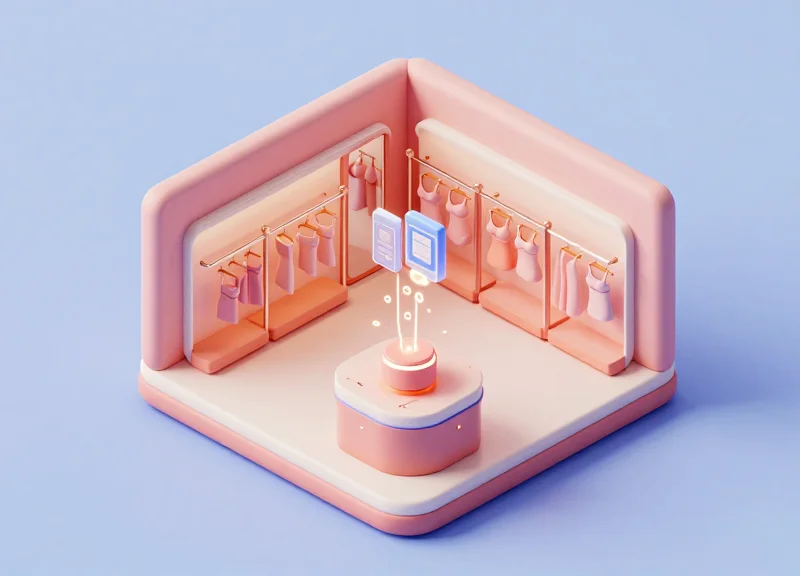
Fitting Intelligence is the ecosystem of sensors and software that uses Radio Frequency Identification (RFID) to track exactly which SKUs enter a dressing room, how long they remain there, and whether they ultimately proceed to the point of sale. While traditional footfall counters treat every visitor as a generic digit, Fitting Intelligence treats them as a collection of specific product preferences. This technology provides a high-definition view of the retail 'blind spot,' allowing lingerie brands to analyze the conversion funnel at the most critical decision-making point: the moment of try-on.
| Capability | Traditional Footfall Counters | RFID Fitting Intelligence |
|---|---|---|
| Data Resolution | Binary (Occupied/Empty) | Granular (SKU, Size, Color) |
| Conversion Context | None (Quantity Only) | High (Why an item didn't sell) |
| Cross-Sell Tracking | Impossible | Tracks sets and coordinates |
| Staff Alerts | Manual/Estimated | Automated via item detection |
One unique insight provided by Fitting Intelligence is the 'Set-Match Mystery.' In the lingerie sector, the attachment rate of matching coordinates is a primary KPI. RFID data reveals the specific moment a customer decides to break a set—for instance, taking a matching bra and panty into the room but leaving the panty behind. This is the 'smoking gun' for fit issues or pricing friction that traditional analytics miss entirely, allowing merchandisers to identify if a specific lace pattern is itchy or if a silhouette is failing in the larger size runs.
What is SKU-level visibility?
It is the ability to distinguish a 34B Red Lace Balconette from a 36C Black Silk Plunge without line-of-sight, even when items are hidden in bags or draped over chairs.
How does RFID improve lingerie inventory?
By tracking what is in the fitting room, the system prevents 'phantom stock'—where an item appears available in the system but is actually sitting in a dressing room stall.
Can it identify 'Fitting Room Heroes'?
Yes. It identifies items that are 'fitting room heroes' (frequently tried on) but 'conversion zeroes' (never purchased), signaling a design or fit flaw rather than a lack of interest.
Solving the 'High Traffic, Low Conversion' Paradox

In the lingerie sector, the 'High Traffic, Low Conversion' paradox occurs when a specific garment—often a hero product or seasonal trend—is frequently selected for the fitting room but rarely proceeds to the point of sale. While traditional footfall counters can only show that a store is busy, RFID-powered 'Fitting Intelligence' reveals the 'Trial-to-Purchase Ratio' at the individual SKU level. By tracking which items are abandoned in the dressing room, retailers can differentiate between a marketing success (high interest) and a technical product failure (poor fit, uncomfortable underwires, or misleading sizing), allowing for data-driven inventory and design adjustments.
| Metric Type | Traditional Footfall Counter | RFID Fitting Intelligence |
|---|---|---|
| Primary Data Point | Total Store Entries | Individual SKU Entry to Stall |
| Conversion Insight | Global Sales / Total Visitors | Trial-to-Transaction Ratio per Style |
| Diagnostic Capability | None (Assumes low interest) | Specific (Identifies fit/comfort issues) |
| Actionable Outcome | Generic Promotions | Targeted Markdown or Design Revision |
The most significant advantage of this technology is the creation of a 'Silent Feedback Loop.' In intimate apparel, customers rarely complain to staff about a bra that pinches or a lace that itches; they simply leave it in the stall. RFID captures this silent rejection. If a specific bra size has a 90% abandonment rate compared to a 40% average for the category, the system flags a 'Fit Friction' alert. This enables the merchant to investigate whether the sizing is inconsistent with the rest of the collection before the brand's reputation is damaged.
- Identify 'False Positives': Filter items that have high shelf-to-stall movement but zero sales. These are items that attract the eye but fail the body.
- Analyze Size-Specific Drop-offs: Look for patterns where specific sizes (e.g., 34D) are consistently rejected across different styles, indicating a grading issue in production.
- Optimize Product Placement: Move 'high trial, low conversion' items away from premium floor space to make room for 'high-velocity' items identified by RFID data.
Can RFID help identify if the price is the problem?
Yes. If an item has high 'stall dwell time' (customers spent time trying it on) and high conversion in one demographic but not another, it suggests the value proposition is misaligned with that specific customer segment.
How does this impact the supply chain?
By identifying 'fit failures' in real-time, brands can halt production on flawed designs or adjust future orders months earlier than they could with traditional sales data alone.
What is the 'Friction-to-Fit' Ratio?
This is a proprietary metric used by top retailers to calculate the number of times an item is tried on versus purchased. A ratio higher than 5:1 usually triggers an immediate quality control audit.
Real-Time Inventory and Size Optimization via RFID
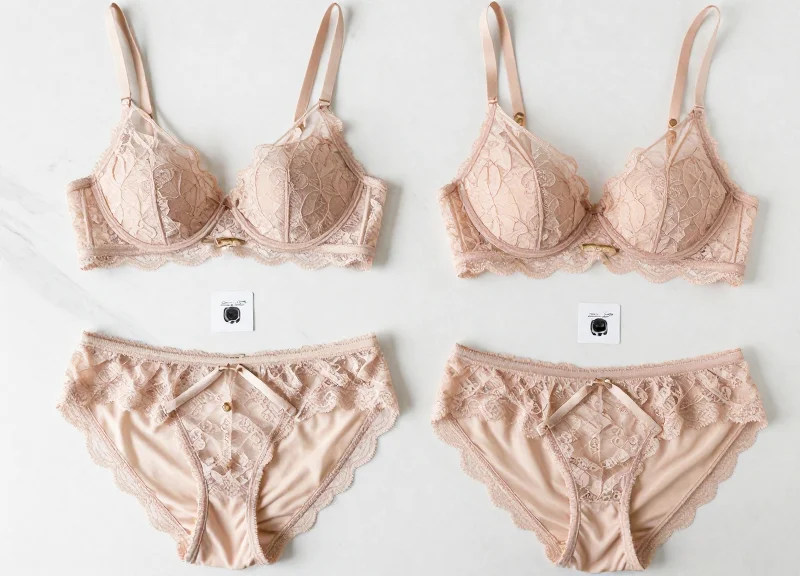
In 2026, 'Fitting Intelligence' is redefining inventory management by transforming the fitting room from a data black hole into a real-time supply chain trigger. By utilizing RFID (Radio Frequency Identification) tags on every garment, lingerie retailers can achieve near-perfect inventory accuracy, ensuring that high-demand bra sizes and styles are always available on the sales floor. This technology eliminates the 'out-of-stock' frustration that accounts for nearly 43% of lost sales in the intimate apparel sector, where a missing size 34C in a specific color can end a transaction immediately.
| Metric | Manual/Legacy Tracking | RFID-Powered Optimization |
|---|---|---|
| Inventory Accuracy | 65% - 75% | 99.5% - 99.9% |
| Restock Lead Time | 4 - 24 Hours | Real-Time Alerts |
| Size Availability | Estimated based on sales | Based on real-time fitting demand |
| Labor Efficiency | High (Weekly cycle counts) | Low (Automated floor-replenishment) |
Expert Insight: The 'Phantom Stock' phenomenon is particularly lethal in lingerie. A bra left in a fitting room or misplaced behind a different size rack is effectively invisible to the salesperson and the customer, yet the system thinks it's 'in stock.' RFID 'Fitting Intelligence' solves this by locating 'lost' items within a 15-centimeter margin of error, allowing staff to return high-conversion sizes to the floor before the next customer arrives.
- Automated Floor Replenishment: As soon as a unique SKU is taken into the fitting room, the system flags the backroom to prepare a replacement for the sales floor, maintaining a perfect visual merchandising display.
- Dynamic Size Curve Analysis: Retailers can analyze which sizes are frequently tried on together (e.g., 32D and 34C) to optimize the inventory mix for specific demographic pockets.
- Shrinkage Identification: Real-time tracking identifies exactly when and where an item leaves the sensor zone, differentiating between a 'try-on' and a potential security event.
Can RFID tell if a size is missing from the floor but in the backroom?
Yes. RFID handhelds or fixed overhead readers provide a live map of inventory locations, instantly alerting staff if the 'last one' of a specific size is stuck in the stockroom while a customer is looking for it.
How does this prevent 'Size Substitution' errors?
When a customer can't find their size, they often try a sister size and then leave without buying because the fit isn't perfect. RFID data flags these 'settle-for' behaviors, allowing managers to adjust order volumes for the sizes customers actually want.
Is the ROI immediate for lingerie retailers?
Most retailers see a 10-15% revenue lift within the first six months due to increased 'on-floor availability' and reduced labor costs associated with manual counting.
Enhancing the Customer Experience: Personalized Service

In the 2026 lingerie retail landscape, personalized service is redefined by 'Fitting Intelligence'—a system where RFID-enabled fitting rooms automatically recognize items and allow customers to request sizes, colors, or stylist advice via a touch interface. This technology instantly alerts staff on wearable devices, eliminating the 'abandonment gap' where customers leave empty-handed because they were unwilling to re-dress just to find a different size. By moving from a reactive to a predictive service model, retailers can provide high-touch assistance that feels supportive rather than intrusive.
| Service Attribute | Traditional Retail Approach | RFID-Enabled Fitting Intelligence |
|---|---|---|
| Assistance Request | Customer must peak out of door or wait for staff to pass. | Digital 'one-tap' request via smart mirror or tablet. |
| Size/Style Swapping | High friction; requires customer to re-dress or staff to guess. | Staff receive exact SKU and location data for instant retrieval. |
| Staff Awareness | Staff check rooms blindly, often interrupting customers. | Staff know exactly who is in which room and what they are trying on. |
| Privacy Level | Low; frequent 'check-ins' can feel invasive in lingerie. | High; service is provided only when requested or data-triggered. |
The 'Silent Service' Workflow: From Detection to Delivery
- Automatic SKU Recognition: As the customer enters the fitting room, RFID antennas detect the specific bra or lingerie sets, immediately displaying product details and matching 'complete the look' suggestions on a screen.
- The Digital Call-to-Action: If the fit isn't perfect, the customer selects 'Request Different Size' on the interface. They are never left vulnerable or frustrated in a half-dressed state.
- Precision Associate Dispatch: The request is routed to the nearest associate's smartwatch or mobile device, specifying the current room number and the exact location of the replacement item in the stockroom.
- Seamless Handoff: The associate delivers the item to a 'service pass-through' or knocks only when the item is ready, maintaining the customer’s dignity and the premium boutique feel.
### Expert Insight: The 180-Second Conversion Window Data from top-tier Silicon Valley retail labs shows that in intimate apparel, there is a critical '180-second abandonment threshold.' If a customer cannot obtain a different size or style within three minutes of realizing the current one doesn't fit, the probability of a walk-out increases by 65%. Fitting Intelligence reduces this cycle to under 60 seconds. Beyond speed, this creates 'Dignity-First Data'—the ability to serve a customer's most private needs without making them feel exposed or pressured.
Does this technology feel too 'big brother' for lingerie?
Actually, it’s the opposite. Because the sensors are embedded in the tags and not cameras, it offers more privacy than traditional retail where associates must frequently knock and ask personal questions to gauge fit.
How does this impact staff KPIs?
Staff are no longer measured by 'doors opened,' but by 'requests fulfilled' and 'cross-sell accuracy,' leading to higher job satisfaction and better commission rates.
Can it suggest items based on body type?
Yes. When integrated with a customer profile, the system can suggest specific silhouettes—like a balconette vs. a plunge—based on the customer's purchase history and what they currently have in the room.
Data Privacy and Discreet Analytics in Intimate Apparel
In the context of intimate apparel retail, 'discreet analytics' refers to the methodology of gathering high-fidelity behavioral data—such as item dwell time, size correlations, and abandonment rates—without the use of cameras, facial recognition, or biometric sensors. By utilizing RFID (Radio Frequency Identification) rather than optical tracking, Fitting Intelligence systems create a 'privacy-first' data layer. This allows retailers to understand exactly which products are being tried on and rejected, while remaining technically incapable of capturing any visual information or personal identifiers of the shopper in the dressing room.
| Feature | RFID Fitting Intelligence | Traditional Visual/AI Sensors |
|---|---|---|
| Data Source | Digital SKU Tag (Object-level) | Visual Feed (Person-level) |
| Privacy Compliance | Inherently GDPR/CCPA Compliant | High Risk / Requires Heavy Masking |
| Environment Suitability | High (Ideal for Fitting Rooms) | Zero (Forbidden in Private Zones) |
| Behavioral Insight | Specific SKU & Size Performance | General Traffic & Heatmaps |
A unique insight for the 2026 retail landscape is the shift toward 'Hardware-Level Anonymization.' Unlike software-based blurring used in camera systems—which still requires a video feed to exist—RFID readers are fundamentally 'blind' to human anatomy. For a lingerie brand, this isn't just a legal safeguard; it is a brand-equity strategy. By removing the 'creepy factor' associated with smart mirrors or optical sensors, brands can encourage shoppers to interact more freely with the technology, knowing that the system is tracking the bra, not the body.
How does RFID ensure a customer isn't personally identified?
The system monitors the movement of the unique Electronic Product Code (EPC) attached to the garment. Unless the retailer specifically links a loyalty card at the point of entry—which is an optional opt-in—the data remains entirely aggregated and anonymous.
What happens if a customer brings personal items into the room?
Fitting Intelligence only detects tags registered to the store's inventory. Personal items, mobile phones, and non-store apparel are invisible to the system, ensuring the customer's personal space remains private.
Is data stored locally or in the cloud?
Modern 2026 systems utilize 'Edge Processing,' where the raw signal is converted into SKU insights locally before being sent to the cloud. This means no raw signal data that could potentially be reconstructed is ever stored long-term.
- Policy Transparency: Clearly display signage explaining that the fitting room uses object-tracking technology to improve size availability, not cameras.
- Data Decentralization: Ensure that Fitting Intelligence data is siloed from CRM data unless the customer explicitly requests a personalized fitting profile.
- Annual Privacy Audits: Conduct third-party 'Dark Room' audits to certify that no visual or biometric data is being leaked or captured by the sensor array.
Measuring ROI: Comparing Traditional Systems vs. RFID Solutions
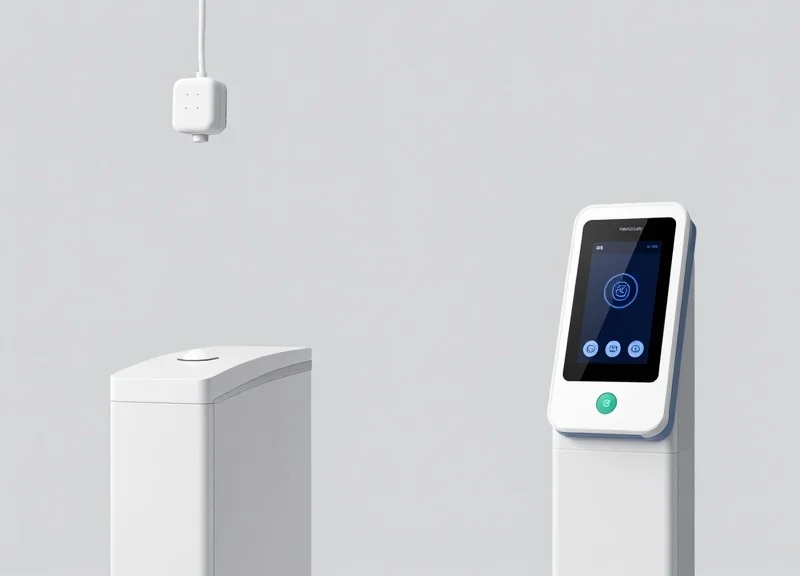
Return on Investment (ROI) for lingerie retail in 2026 is no longer defined by simple traffic volume; it is defined by 'conversion depth.' While traditional footfall counters provide a flat metric of how many people entered a space, RFID-powered Fitting Intelligence offers a multi-dimensional view of how many people engaged with specific products. The transition from legacy systems to RFID represents a shift from a 'Cost-Saving' mindset (labor scheduling) to a 'Revenue-Generating' strategy (minimizing abandoned carts in the dressing room). On average, retailers implementing SKU-level fitting intelligence see a 15-25% uplift in conversion rates, far outweighing the initial CAPEX of the hardware.
| Feature/Metric | Traditional Footfall Counters | RFID Fitting Intelligence |
|---|---|---|
| Primary Data Point | Entry/Exit Volume | SKU-Level Engagement |
| Accuracy Level | ~85-92% (Affected by groups) | 99.9% (Unique ID tracking) |
| Operational Insight | Staffing levels based on traffic | Merchandise performance & fit issues |
| ROI Driver | Labor Optimization | Sales Growth + Inventory Accuracy |
| Consumer Privacy | High (Anonymous) | High (Discreet SKU tracking) |
The Veteran Perspective: The 1:100 Data Density Rule. In 20 years of retail tech, I have observed that footfall counters produce 'low-density data.' For every 100 people who walk through your door, you get one data point: someone entered. However, with RFID Fitting Intelligence, the 10 people who actually enter the fitting room generate 'high-density data.' You learn which specific bra styles are being rejected, which sizes are missing from your floor set, and which colorways are 'eye-candy' but never make it to the register. One high-density data point is worth 100 low-density entries because it tells you why a sale failed, not just that it didn't happen.
- Identify 'Dead Inventory' Early: Use RFID data to see which items are frequently taken to fitting rooms but never purchased. This allows for faster markdowns or design adjustments before the season ends.
- Reduce Abandonment via Staff Alerts: Quantify ROI through 'Saved Sales.' When a customer needs a different size, real-time RFID alerts ensure the sale is closed in the room rather than abandoned due to friction.
- Automate Inventory Replenishment: Traditional systems require manual cycle counts. RFID systems pay for themselves by reducing labor hours spent on inventory by up to 80%.
Is the initial cost of RFID tags a barrier to ROI?
By 2026, the cost per tag has reached a parity where the reduction in shrinkage and the 99% inventory accuracy provide a break-even point within 6 to 9 months for mid-to-high-end lingerie brands.
Can footfall counters and RFID work together?
Yes. Many retailers use footfall counters for the 'front of house' and RFID for the 'fitting zone.' However, the ROI from the fitting zone data is consistently 3x higher due to its direct link to purchase intent.
Does RFID replace the need for sales associates?
No, it empowers them. ROI is boosted because associates spend less time searching for sizes and more time providing the high-touch consultation that lingerie customers demand.
Preparing for 2026: Steps to Implement Fitting Intelligence
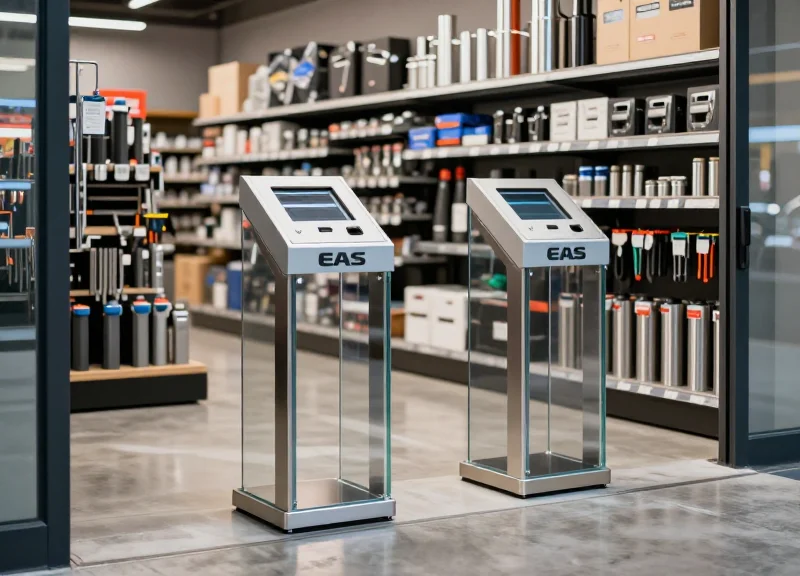
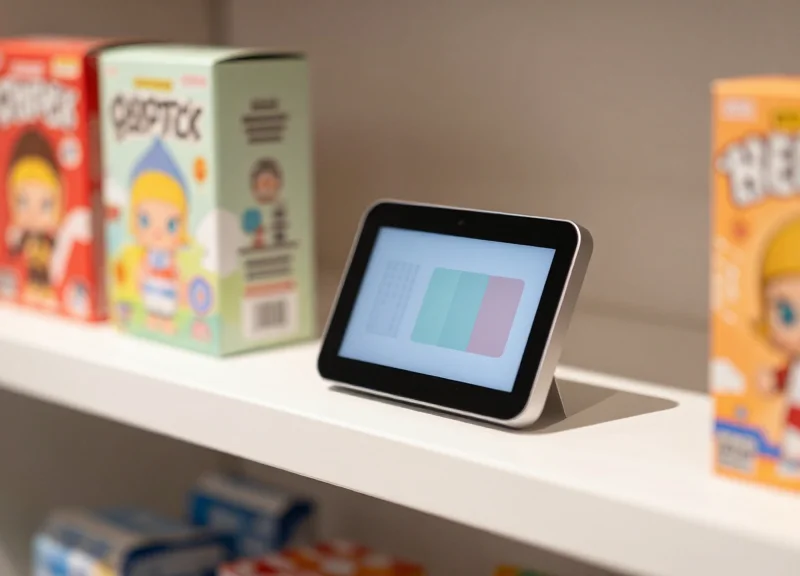
Implementing 'Fitting Intelligence' requires a shift from counting traffic at the entrance to tracking the 'item-level journey' within the fitting room. By 2026, the standard for elite lingerie retail will be a unified ecosystem where Electronic Article Surveillance (EAS), Radio Frequency Identification (RFID), and Electronic Shelf Labels (ESL) converge. This integration allows brands to see not just that a customer entered, but exactly which sizes and styles are failing the 'fit test' in real-time. Successful deployment involves upgrading to RFID-embedded hangtags, installing overhead sensor grids for spatial tracking, and synchronizing this data with staff wearables to create a proactive rather than reactive service model.
- Source Tagging & Inventory Audit: Transition from manual tagging to RFID-embedded labels at the manufacturing stage. This ensures 99% inventory accuracy and enables the garment to be 'discoverable' by fitting room sensors the moment it enters the cabin.
- Sensor Overlay Installation: Replace traditional IR beam counters with overhead RFID ceiling sensors. Unlike door counters, these sensors track the movement of specific SKUs into fitting zones, providing a 'Conversion-by-Product' metric.
- ESL & Smart Mirror Synchronization: Deploy Electronic Shelf Labels (ESL) that display live inventory levels and 'Suggested Pairings.' Link these to fitting room mirrors so customers can request a different size via a touchscreen without leaving the booth.
- Staff Empowerment & Mobile Integration: Equip floor associates with mobile devices or smartwatches that receive 'Fitting Intelligence' alerts, such as 'Customer in Room 3 has tried 3 sizes of the same bra with no success—intervention recommended.'
| Component | Legacy Function | 2026 Intelligent Function |
|---|---|---|
| EAS Gates | Shrinkage prevention only | Dual-purpose RFID/EAS inventory tracking |
| Price Tags | Static pricing information | ESL Dynamic Pricing & Fit-Guide QR Sync |
| Footfall Counters | Bulk traffic volume stats | Anonymized SKU-to-Human path analytics |
Expert Insight: The 'Ghost-Return' Metric. A unique advantage of the 2026 tech stack is the ability to track 'Ghost Returns'—items taken into the fitting room but never purchased. By analyzing the common denominator in these items (e.g., a specific underwire design that 80% of customers reject), lingerie brands can identify design flaws or sizing inconsistencies months before traditional sales data would flag them. This moves the retailer from 'selling what they have' to 'fixing what they sell' in real-time.
Can we repurpose our existing security pedestals?
Most modern EAS pedestals can be retrofitted with RFID inserts, but for true Fitting Intelligence, overhead 'rain' sensors are preferred to capture movement throughout the store floor and fitting zones.
What is the typical ROI timeline for this transition?
Retailers typically see a full ROI within 12-18 months, driven primarily by a 15-20% reduction in 'out-of-stock' walkouts and a significant increase in upsell opportunities through smart-mirror recommendations.
How does this affect customer privacy in sensitive areas?
RFID-powered intelligence is inherently more private than cameras; it tracks the 'tag,' not the 'person.' Data is anonymized, focusing on product movement patterns rather than visual recording.