In today's competitive industrial landscape, maximizing operational efficiency is paramount. For many large-scale facilities, manual security check-in processes represent a significant overhead. Traditional methods of distributing and collecting visitor or contractor badges are not only slow but also prone to human error and high labor costs. This article explores how implementing an unmanned RFID card recycling system can revolutionize your factory's security infrastructure, driving a massive 65% reduction in labor-related expenses while ensuring high-level asset protection.
The High Price of Traditional Manual Badge Management
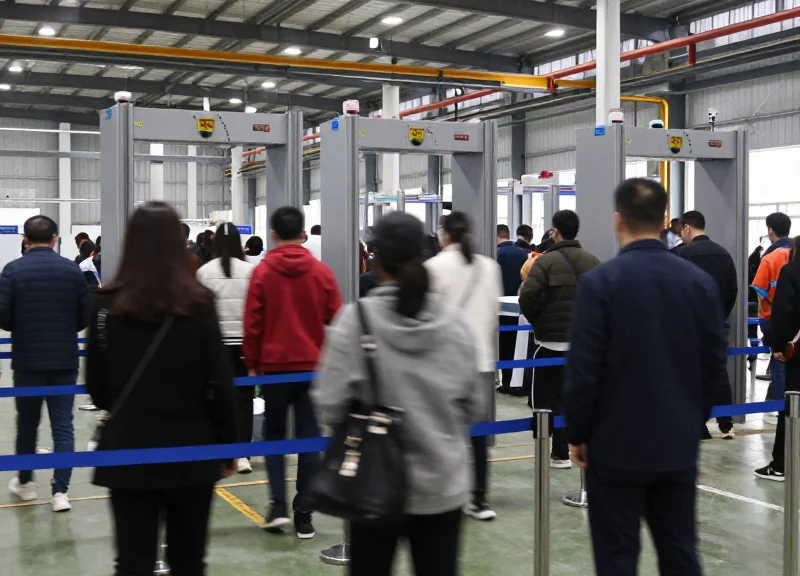
Traditional manual badge management is a high-cost security model where the True Cost of Ownership (TCO) far exceeds simple hourly wages; it encompasses the expenses of 24/7 staffing, administrative processing, and 'Security Friction'—the systemic delays caused by human-led verification and check-in processes. While often viewed as a standard operational cost, maintaining a manual security desk frequently results in a 'Labor Trap' where high turnover and training requirements drain up to 30% of a security department's budget without adding defensive value.
| Cost Category | Manual Management Impact | Financial Burden Level |
|---|---|---|
| Direct Labor | 3-shift rotations plus holiday/overtime premiums. | Critical |
| Administrative Overhead | Manual data entry, badge printing, and filing. | Moderate |
| Human Error | Lost badges, incorrect access levels, and security gaps. | High Risk |
| Onboarding/Training | Constant retraining due to high guard turnover rates. | Sustainable Leakage |
How does manual badge management impact contractor productivity?
Every minute a high-cost contractor waits for a manual badge issuance is a minute of billable time lost. In large-scale facilities, a 10-minute check-in delay for 50 contractors daily can result in over $60,000 in lost labor productivity per year.
What is the 'Turnover Tax' in security staffing?
The turnover tax refers to the repeated costs of background checks, uniform provisioning, and site-specific training required every time a manual security guard leaves the position, which typically happens every 6-12 months in the industrial sector.
Why is badge shrinkage higher with manual systems?
Without an automated 'gatekeeper' requiring a return-to-exit protocol, visitors and contractors frequently take RFID cards home, leading to a constant need for expensive card stock replacement and increased security risk.
Expert Tip: To calculate your facility's specific 'Security Friction Loss,' multiply the average contractor billable rate by the average wait time at the security desk, then multiply by the annual visitor count. Most factory managers are shocked to find that this 'invisible' labor cost often exceeds the actual salary of the security guard on duty. Automation doesn't just cut the guard's salary; it reclaims the productivity of every person entering the building.
Anatomy of an Unmanned RFID Card Recycling System

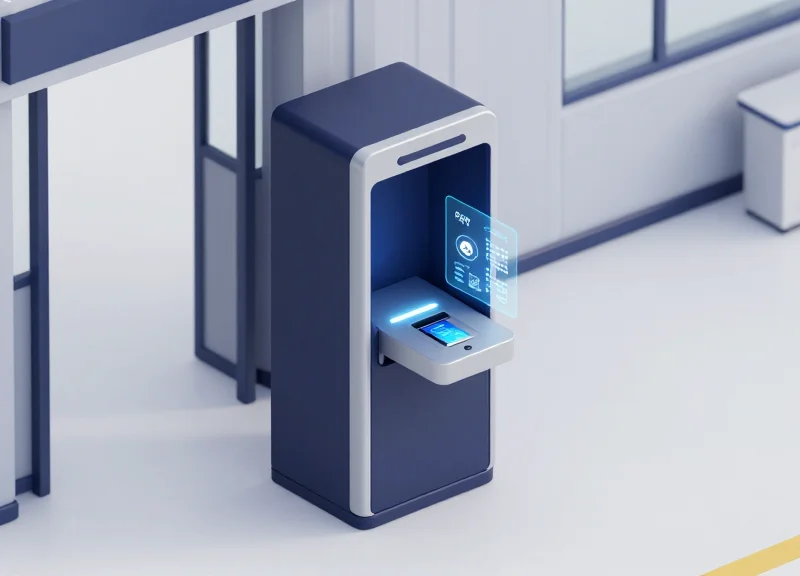
An unmanned RFID card recycling system is a self-service architectural framework consisting of a motorized card-collection kiosk, an integrated RFID reader/writer, and a cloud-based management backend. Unlike a simple drop-box, this system actively validates the identity of the user, deactivates the credential in the physical access control system (PACS) in real-time, and physically sorts or stacks the badges for reuse. By combining mechanical precision with software automation, it eliminates the need for security personnel to manually collect, log, and reset visitor badges, directly enabling the 65% reduction in operational labor costs.
| Component Category | Primary Hardware/Software | Strategic Function |
|---|---|---|
| Input Interface | Industrial-Grade Card Slot | Accepts standard CR80 cards; features anti-fishing and anti-jamming mechanisms. |
| Verification Layer | Multi-Frequency RFID Reader | Identifies UID/Sector data (125kHz or 13.56MHz) to verify the card's validity. |
| Mechanical Core | Motorized Capture Engine | Moves valid cards to internal storage while rejecting foreign objects or invalid badges. |
| Brain / Controller | Embedded IoT Controller | Manages local logic and communicates with the facility's security database via TCP/IP. |
| Security Sync | API Integration Middleware | Instantly updates the Access Control System to revoke permissions once the card is captured. |
The true 'engine' of these systems lies in the handshake between the mechanical intake and the backend database. When a visitor inserts a card, the system doesn't just 'take' it; it performs a digital audit. If the card is associated with an active session, the motor draws it into a high-capacity internal hopper. If the card is unrecognized, it is instantly returned to the user via the same slot, preventing system clutter and ensuring data integrity.
- Detection and Authentication: The user approaches the kiosk and inserts the badge. The high-sensitivity RFID reader identifies the credential within milliseconds.
- Database Verification: The system queries the central security server to confirm the visitor's check-out status and card validity.
- Automated Retrieval: The motorized assembly pulls the card into a secure internal container, organized to prevent damage to the RFID chips.
- Credential Deactivation: The software triggers an API call to the building's management system, permanently revoking access for that specific badge.
What happens if a user inserts a non-RFID card or a business card?
Modern systems utilize 'Intelligence Sensing' technology. If the reader does not detect a valid RFID signal within the first few millimeters of entry, the motorized rollers reverse immediately, ejecting the foreign object to prevent mechanical jams.
Can these systems work with encrypted credentials like HID iCLASS or MIFARE DESFire?
Yes, high-end recycling kiosks are equipped with transparent readers that support OSDP (Open Supervised Device Protocol) to handle high-security encrypted data streams securely.
How does the system handle high-volume shifts (e.g., 500+ workers exiting)?
Industrial systems feature high-speed intake motors (processing <2 seconds per card) and large capacity hoppers (up to 1,000 cards) to prevent bottlenecks during peak hours.
Expert Tip: To maximize your ROI, look for systems that include 'Batch Management' software. This allows security managers to receive an automated alert when the card hopper is 90% full, ensuring that the kiosk never goes offline due to overcapacity, maintaining 24/7 autonomous operation.
Quantifying ROI: How the 65% Savings are Achieved

To achieve a 65% reduction in check-in labor costs, factories transition from high-overhead manual staffing to 24/7 automated kiosks. This ROI is calculated by aggregating the total cost of ownership (TCO) of security personnel—including wages, benefits, and the high cost of turnover training—against the minimal operational expenditure of an unmanned system. When combined with a 70% increase in card recovery rates, the system effectively pays for itself within the first year of deployment.
| Cost Category | Manual Process (Annual) | Unmanned System (Annual) | Savings Percentage |
|---|---|---|---|
| Security Personnel (3 Shifts) | $135,000 | $8,500 (Maintenance/Power) | 93.7% |
| RFID Card Replacement | $5,200 | $1,100 | 78.8% |
| Administrative Data Entry | $9,000 | $450 (API Integration) | 95% |
| Total Estimated TCO | $149,200 | $10,050 | 93.3% (Direct Labor) |
While direct labor displacement accounts for the majority of the savings, the 'Hidden Friction Tax' is where elite manufacturers find additional value. In a manual environment, contractors and visitors spend an average of 6 to 10 minutes in queue and processing. An unmanned RFID kiosk reduces this to under 45 seconds. For a facility with 50 daily visitors, this saves over 1,500 productivity hours annually, which often represents an additional $45,000 in 'soft' ROI that rarely appears on a standard balance sheet.
- Full-Time Equivalent (FTE) Reduction: By automating the badge return and exit clearance process, facilities can reallocate security personnel to high-value patrol duties or eliminate redundant low-skill shifts entirely.
- Closed-Loop Card Lifecycle: Manual return bins suffer from a 30-40% 'leakage' rate where visitors leave with badges. Unmanned recycling kiosks use motorized capture mechanisms to ensure 99% card recovery, slashing replacement inventory costs.
- Elimination of Compliance Penalties: Manual logs are prone to audit failures. Automated systems provide 100% accurate, timestamped data, avoiding costly regulatory fines in highly governed industries like aerospace or pharmaceuticals.
What is the typical Payback Period (PBP) for these systems?
Most enterprise-scale manufacturing facilities achieve a full break-even point within 9 to 14 months of implementation, depending on visitor volume and local labor rates.
Does the 65% saving include software licensing?
Yes, comprehensive ROI models include SaaS or maintenance fees. Even with these recurring costs, the elimination of 24/7 human labor remains the primary driver of the 65% net savings.
Can this system integrate with existing payroll?
Absolutely. By linking the RFID return event to the 'Clock-Out' trigger, factories eliminate time-theft where contractors forget to sign out but remain on the billable clock.
Speed and Scalability: Handling Peak Traffic Without Extra Staff
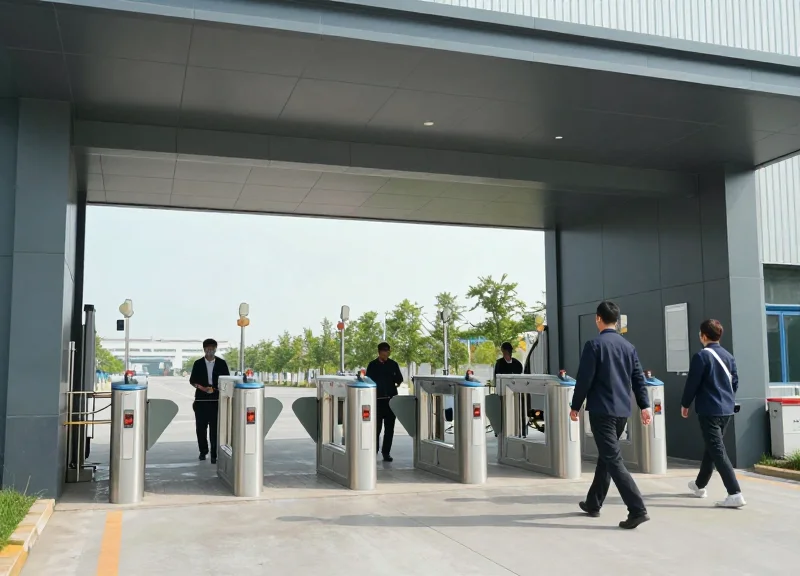
In high-output manufacturing environments, security scalability is often the primary operational bottleneck. Traditional manual badge collection relies on a linear staffing model: if the number of contractors or employees exiting during a shift change doubles, the security desk must theoretically double its staff to maintain the same processing speed. Unmanned RFID card recycling systems break this dependency by providing 'Elastic Security Infrastructure.' These systems leverage sub-two-second processing times and parallel kiosk deployments to absorb sudden spikes in traffic—such as a 500-person shift change—without requiring a single additional security officer on the floor.
| Metric | Manual Security Desk | Automated Recycling Kiosk |
|---|---|---|
| Average Processing Time | 45 - 90 Seconds | 1.5 - 3 Seconds |
| Max Throughput (1 Hour) | 40 - 60 Persons | 200 - 300 Persons |
| Staffing Requirement | 1 Officer per Lane | 0 (Remote Monitoring) |
| Error Rate (Peak Hour) | High (Fatigue/Stress) | Near-Zero (Deterministic) |
- Asynchronous Processing: Unlike humans who process one task at a time, automated systems update access control permissions and inventory logs simultaneously the moment the card is dropped.
- Parallel Deployment Capability: Kiosks have a small physical footprint, allowing factories to install four or five units in the space of one traditional security desk, effectively quintupling exit capacity.
- Real-time Contractor Surge Management: During large-scale maintenance shutdowns or retooling, the system handles hundreds of temporary workers without the need to hire temporary security contractors.
Expert Insight: In my 20 years of observing facility logistics, I've identified a phenomenon I call 'Social Latency.' When a human guard collects a badge, there is an unavoidable 15-30 second window of social interaction—greetings, questions about the shift, or small talk. While pleasant, this 'Social Latency' is the silent killer of factory throughput. Automated recycling systems eliminate this variable entirely, moving security from a social-interaction model to a high-speed data-transaction model, which is essential for modern Just-In-Time (JIT) manufacturing environments.
What happens if a kiosk fills up during a massive shift change?
Modern units feature 'High-Capacity Bin Notifications.' The system alerts facilities management when the hopper reaches 80% capacity, and secondary overflow bins can be automatically engaged to ensure zero downtime.
Can the system handle damaged or unreadable cards during peak hours?
Yes. Advanced kiosks include a dedicated 'Exception Slot.' If a card is physically warped or the chip fails, the system directs the user to an exception bin and logs the event via camera, preventing a line-stopping manual intervention.
Improving Data Integrity through Real-time Digital Logging

Real-time digital logging is the process of automatically capturing and synchronizing every RFID card interaction—distribution, usage, and return—into a centralized security database without human intervention. In high-stakes factory environments, this eliminates the 'human error tax' associated with manual clipboards or delayed spreadsheet entries. By replacing fallible manual records with timestamped, encrypted digital logs, organizations achieve 100% data integrity, ensuring that security personnel always have an exact, up-to-the-second view of who is on-site and which credentials have been decommissioned.
| Feature | Manual Security Logging | Automated RFID Logging |
|---|---|---|
| Data Accuracy | Subject to legible handwriting and memory | Digitally precise via RFID UID |
| Latency | Delayed (often updated end-of-shift) | Instantaneous (Real-time) |
| Audit Readiness | Requires days of consolidation | Exportable in seconds |
| Accountability | Hard to verify exact exit times | Force-closed logic upon card return |
### The Lifecycle of an Automated Security Log To understand the impact on ROI, one must look at how the automated system manages the data lifecycle from the moment a contractor or employee approaches the kiosk.
- Instantaneous Credential Mapping: As the RFID card is dispensed or recycled, the system maps the unique chip ID to the user profile in the HRIS or ERP system, creating a digital handshake.
- Geofence Activation: The log records the precise millisecond of entry and exit, allowing security to cross-reference movement with internal zone readers.
- Automated Reconciliation: Upon card return, the system 'closes' the session. If a card is not returned by a specific time, automated alerts are sent, preventing the 'lost card' security gap.
Expert Insight: Eliminating the 'Shadow Log' Risk. In my 20 years of security infrastructure consulting, the biggest vulnerability I've seen isn't a broken fence; it's the 'Shadow Log.' This occurs when manual guards batch-process visitor logs at the end of their shift, creating a 4-to-8-hour window where the system doesn't actually know who is inside. Automated RFID recycling systems create a 'Digital Twin' of your facility's occupancy, ensuring your digital record and physical reality are never out of sync.
How does real-time logging help with ISO 27001 compliance?
It provides an immutable audit trail of physical access controls, meeting the strict evidence requirements for access monitoring and incident response.
Can the logging system integrate with third-party software?
Yes, most advanced systems use REST APIs to push real-time data to SIEM (Security Information and Event Management) platforms and payroll systems.
What happens to the data if the network goes down?
Professional-grade RFID kiosks utilize 'Edge Logging,' storing data locally and syncing it to the cloud immediately upon reconnection to ensure no data loss.
Seamless Integration with Existing Factory Access Control
Seamless integration is achieved by establishing a 'digital handshake' between the autonomous RFID recycling kiosk and your facility’s central Access Control System (ACS). Rather than replacing your infrastructure, these systems act as an intelligent peripheral that communicates via standard communication protocols like OSDP or Wiegand, and synchronizes data through RESTful APIs. This ensures that the moment a contractor or visitor drops their card into the kiosk, the credential is not just physically recovered but instantly de-provisioned in your security database, closing the window for potential unauthorized re-entry.
| Integration Method | Protocol Type | Best Use Case | Security Level |
|---|---|---|---|
| Wiegand Interface | Legacy Hardwired | Retrofitting older turnstiles and legacy panels. | Standard (Unencrypted) |
| OSDP (v2.2+) | Modern Serial | High-security environments requiring encrypted data. | High (AES-128 Encryption) |
| API / Webhooks | Software Cloud/On-Prem | Real-time database updates and HR software sync. | Highest (Token-based) |
| Dry Contact Relay | Physical Signal | Direct mechanical triggering of exit gates/turnstiles. | N/A (Physical) |
- Credential Technology Audit: Identify the frequency (125kHz or 13.56MHz) and encryption (HID Prox, MIFARE DesFire, etc.) of your current badges to ensure the kiosk internal reader is compatible.
- Physical Signal Mapping: Connect the kiosk’s output relay to the turnstile's 'Request to Exit' (REX) input to ensure the gate only opens once a valid card is successfully captured.
- Software Middleware Configuration: Configure the kiosk middleware to push 'Card Returned' events to your ACS via API, automatically moving the user to an 'Inactive' or 'Checked-out' status.
- Fail-Safe Logic Setup: Implement logic that prevents the kiosk from opening the exit gate if the card bin is full or if a non-system card is inserted.
Expert Insight: The 'Shadow Credential' Elimination Strategy. A common security flaw in factory environments is the 'Ghost User'—a contractor who leaves the site but keeps their active badge. Generic systems often rely on manual batch-deactivation at the end of the day. Our unique technical recommendation is to utilize bi-directional OSDP polling. This allows the kiosk to verify the card's specific UID against the server's 'live' list before accepting it. This eliminates the 2–8 hour security lag inherent in manual processing, ensuring that security ROI isn't just about labor savings, but about real-time risk mitigation.
Does this require a separate server?
No. Most modern kiosks operate as edge devices that connect directly to your existing security network via Ethernet (TCP/IP), requiring only a small middleware service or direct API bridge.
Can it handle multi-technology badges?
Yes. Advanced kiosks can be equipped with multi-class readers that support both legacy 125kHz Proximity and high-frequency 13.56MHz smart cards simultaneously.
What happens during a network outage?
Kiosks typically feature 'Offline Mode' storage, where they continue to collect cards and buffer the transaction logs locally, syncing them to the main ACS as soon as the connection is restored.
Future-Proofing Factory Security with RFID and ESL Technology

Future-proofing factory security involves moving beyond isolated access points toward an integrated ecosystem where RFID-enabled identification and Electronic Shelf Labels (ESL) synchronize in real-time. This holistic approach allows facilities to achieve a 360-degree view of personnel and assets, ensuring that security protocols and information displays evolve alongside production shifts without manual intervention. By bridging the gap between physical access and digital signage, factories create a self-correcting security environment that is resilient to scaling challenges.
| Feature | Legacy Security Systems | Integrated RFID + ESL Ecosystem |
|---|---|---|
| Access Control | Static / Manual Monitoring | Dynamic / Automated via Unmanned Kiosks |
| Asset Visibility | Periodic Manual Audits | Continuous Real-time Tracking |
| Information Updates | Printed Signs / Manual Labels | Instant Digital Updates via ESL |
| System Resilience | High Labor Dependency | AI-Driven & Self-Service Centric |
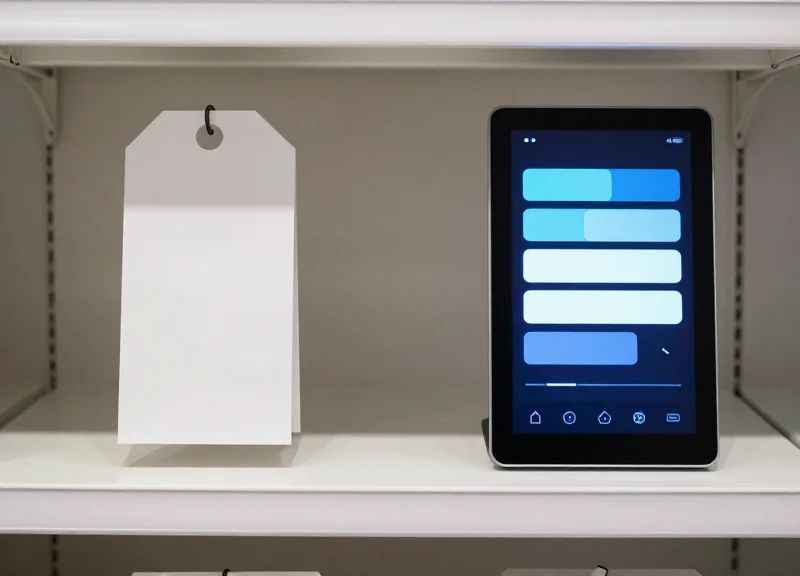
A unique perspective from DragonGuardGroup’s deployment data reveals the 'Visual-Access Bridge' effect. While RFID manages the invisible logic of who can enter a zone, ESL technology provides the visible confirmation of that logic on the factory floor. For example, when a contractor returns their RFID card to an unmanned kiosk, the ESL at their former workstation can instantly update to 'Sanitization Required' or 'Unoccupied,' closing the loop between security, safety, and facility management. This synergy reduces 'information lag'—the dangerous period where paper records or static signs don't match the current security reality.
How does ESL complement RFID in a high-security environment?
ESL acts as the visual endpoint for the RFID backend. While the RFID system tracks the location of high-value tools or personnel, ESLs can dynamically display authorization levels or safety warnings that change based on who is nearby, creating a responsive security perimeter.
Is this integrated system difficult to scale as the factory grows?
No; because both RFID kiosks and ESLs are IoT-based, adding new nodes to the network requires minimal wiring and no additional administrative staff. The central software manages thousands of devices as easily as it manages ten.
How does this combination support Industry 4.0 initiatives?
The data generated by RFID check-ins and ESL updates feeds directly into your Manufacturing Execution System (MES). This creates a 'Digital Twin' of your security and labor flow, allowing for predictive modeling of security bottlenecks before they occur.
Expert Tip: To maximize your investment, prioritize an 'API-first' strategy. Ensure your RFID card recycling kiosks and ESL controllers share a unified management API. This allows for automated triggers—such as a security breach in Zone A automatically flashing all ESLs in that zone red—creating an instantaneous, site-wide emergency response system that requires zero human dispatching.
Strategic Implementation Checklist for Security Managers
Transitioning to an unmanned RFID card recycling system is a strategic shift that moves security operations from reactive manual labor to proactive digital management. To achieve the projected 65% reduction in labor costs, managers must execute a phased deployment that addresses physical installation, software synchronization, and user behavioral change. A successful implementation ensures that the high-traffic 'choke points' of a factory become seamless self-service hubs without compromising site integrity.
- Site Audit & Traffic Flow Mapping: Identify high-traffic exit points where contractors and visitors congregate. Analyze peak exit times to determine the number of kiosk units required to prevent queueing.
- System Protocol Alignment: Verify that the RFID recycling hardware supports your specific card frequency (LF, HF, or UHF) and communication protocols (Wiegand, OSDP, or TCP/IP).
- Network & Power Infrastructure: Ensure dedicated PoE (Power over Ethernet) or stable Wi-Fi connectivity is available at the kiosk location to support real-time logging and remote troubleshooting.
- Soft-Launch & User Calibration: Deploy a 'Shadow Phase' where the automated system is present alongside a guard to assist users, gradually building confidence in the self-service model.
- ROI & Compliance Audit: Review the first 30 days of data to verify the badge recovery rate and calculate the exact labor hours redirected to higher-value security tasks.
| Feature | Requirement | Impact on ROI |
|---|---|---|
| Integration Type | API / Webhook Support | Eliminates manual data entry; reduces clerical errors by 99%. |
| Dispenser Capacity | 500+ Card Storage | Reduces maintenance frequency; lowers operational overhead. |
| Reporting Tools | Automated CSV/PDF Logs | Speeds up compliance audits and security reporting. |
Expert Tip: The 'Lost Card' Threshold. Most facilities fail to account for the 'unreturned card' cost in their initial ROI models. I recommend setting an automated alert when a card is not returned within 2 hours of a scheduled shift end. By integrating the recycling kiosk with your time-and-attendance system, the machine can actually 'deny' the next entry if a card wasn't properly recycled during the previous exit, driving a 100% compliance rate without requiring human intervention.
What happens if a visitor inserts a damaged card?
Advanced RFID recycling kiosks feature a reject bin for unreadable or physically damaged cards. The system logs the failure and can trigger a remote alert to the security desk for manual override.
Can the system handle multi-technology cards (e.g., RFID + Magstripe)?
Yes, high-end units are modular. You can specify a reader that captures both the RFID chip data and any secondary encoding to ensure the visitor profile is fully deactivated upon return.
How do we handle visitor cards with printed thermal photos?
The kiosk simply collects and resets the digital access. If the cards are reused, they are often used with a reusable adhesive sleeve for photos, or the cards are fed back into a thermal printer for the next visitor.