In the high-stakes world of biological research and pharmaceutical logistics, the integrity of a single sample can represent millions of dollars and years of scientific progress. As we approach 2026, the industry is witnessing a seismic shift in how these assets are managed. Traditional barcodes, which have served as the standard for decades, are increasingly viewed as the weak link in the cold chain. This article explores the technological evolution toward 'Smart RFID'—a transition driven by the need for automated, real-time data collection in extreme environments as low as -196°C, where manual scanning is no longer viable.
The Evolution of Bio-Tracking: From Labels to Intelligence
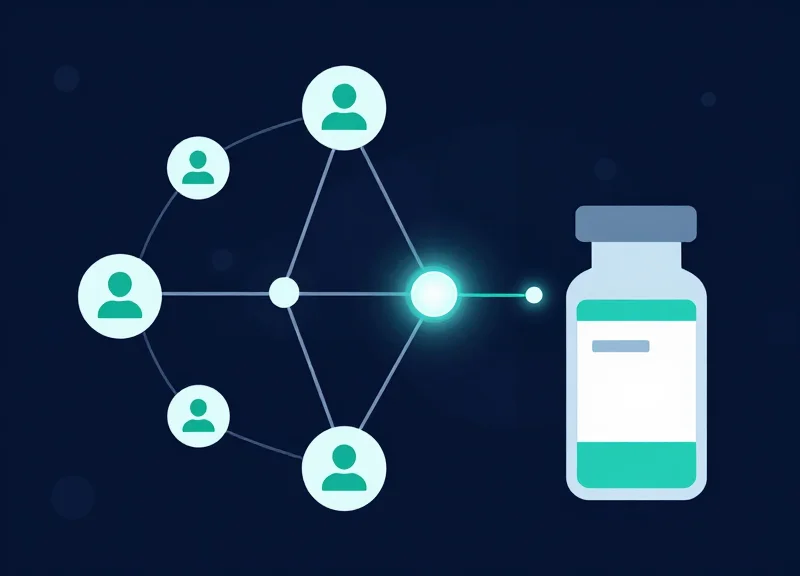
The evolution of bio-tracking represents a paradigm shift from passive identification to active, autonomous data intelligence. Historically reliant on manual handwritten logs and adhesive 1D barcodes, the biological logistics industry is rapidly transitioning toward Smart RFID (Radio Frequency Identification) systems. By 2026, the standard for cryogenic logistics will no longer be mere 'labeling' but 'ambient intelligence'—systems that function reliably at -196°C to enable real-time chain-of-custody, inventory automation, and environmental monitoring without line-of-sight requirements or human intervention.
- The Manual Era (Pre-1990s): Foundational bio-banking relied on handwritten labels and paper ledgers. This era was characterized by high human error rates, illegible ink in sub-zero conditions, and zero scalability.
- The Barcode Revolution (1990s - 2010s): The introduction of 1D and later 2D Data Matrix codes brought standardization. While an improvement, these systems required manual scanning of every vial, often requiring samples to be removed from the cold chain, risking 'transient warming' events.
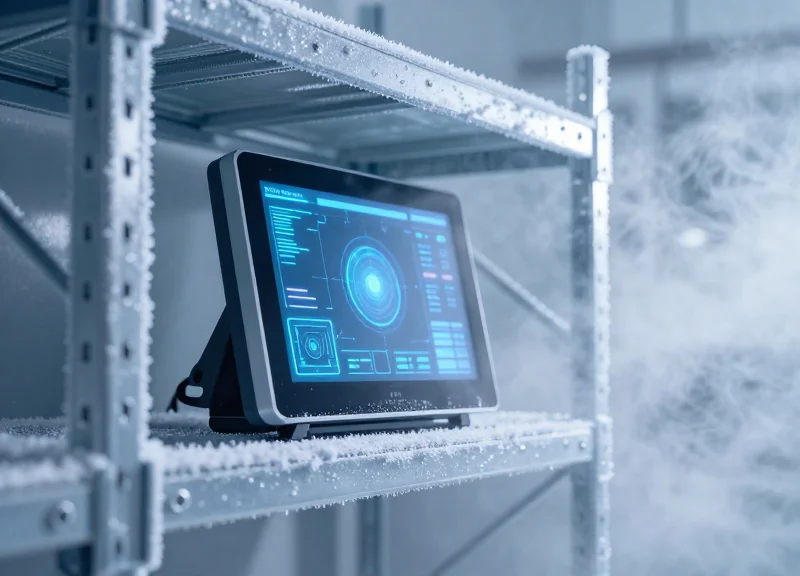
- The Smart RFID Transition (2020 - 2025): Current systems utilize specialized cryogenic RFID tags that can be read through frost and ice. This allows for 'bulk scanning' of entire racks without opening the freezer door, preserving sample integrity.
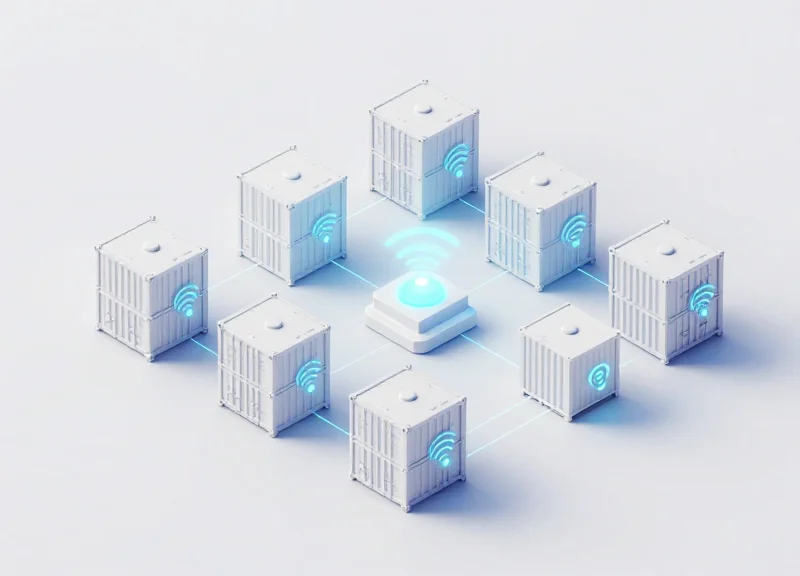
- Intelligence-as-a-Service (2026 and Beyond): The future lies in tags that do more than identify; they sense. Integrated sensors will monitor temperature fluctuations at the individual vial level, communicating via IoT gateways to predictive AI models.
| Feature | Traditional 2D Barcodes | Smart RFID (2026 Standard) |
|---|---|---|
| Read Method | Line-of-Sight (Manual) | Non-Line-of-Sight (Automated) |
| Bulk Throughput | 1 vial at a time | Up to 1,000 vials per second |
| Frost Tolerance | Zero (Requires wiping ice) | High (Reads through ice/frost) |
| Data Capacity | Limited to ID string | Rewritable memory for history |
| Cold Chain Risk | High (Manual handling) | Near-Zero (Hands-free) |
Expert Insight: The 'Latent Data Tax' in Cryogenics. In my two decades of logistics optimization, the most overlooked cost is the 'Latent Data Tax.' When using barcodes, a lab technician spends an average of 15 seconds per vial for retrieval and verification. In a facility managing 100,000 samples, transitioning to Smart RFID recovers over 400 hours of high-value scientist labor annually while simultaneously eliminating the 3% sample loss rate typically caused by micro-thawing during manual scans.
Why is 'Intelligence' more important than 'Identification' in 2026?
Identification only tells you what a sample is. Intelligence tells you where it has been, the exact thermal history it has experienced, and predicts its viability based on real-time sensor data.
Can RFID tags survive liquid nitrogen (LN2) exposure?
Yes. Modern 2026-spec tags utilize specialized epoxy encapsulation and antenna designs that prevent delamination and brittle fracture at -196°C.
What is the primary driver for replacing barcodes now?
The explosion of Cell and Gene Therapy (CGT). These high-value personalized medicines require absolute chain-of-identity (COI) and chain-of-custody (COC) that manual barcode systems simply cannot guarantee at scale.
Why Barcodes Fail in Cryogenic Logistics
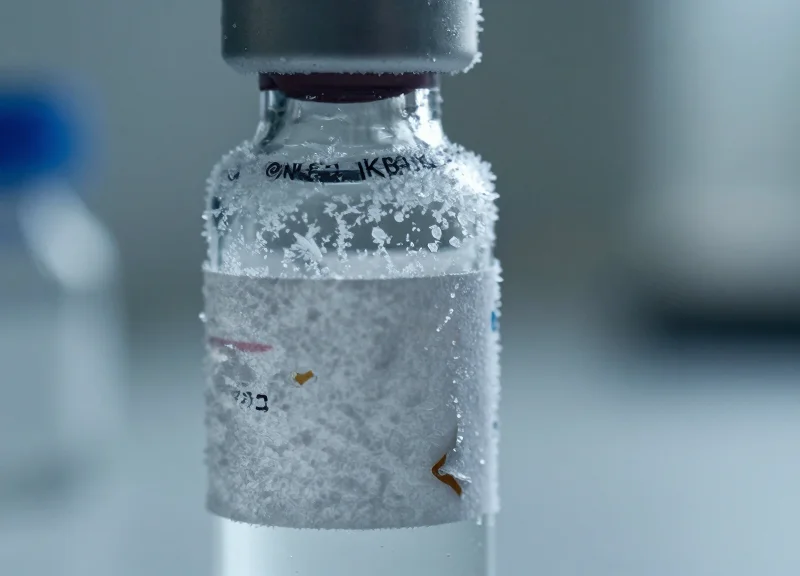
Barcodes fail in cryogenic logistics because they rely on optical visibility and surface adhesion, both of which are critically compromised at temperatures ranging from -80°C to -196°C. Unlike electronic tracking, barcodes are passive optical sensors; if the visual path is obscured by frost or the label surface is physically distorted by thermal stress, the data becomes inaccessible. In an era where biological samples are valued at millions of dollars, the 1-3% failure rate common in legacy barcode systems represents an unacceptable risk to research integrity and global supply chain security.
| Failure Mechanism | Technical Root Cause | Operational Impact |
|---|---|---|
| Adhesive Crystallization | Polymer brittleness at sub-zero temperatures. | Labels fall off vials, leading to 'orphan samples'. |
| Frost Occlusion | Condensation freezes over the code during retrieval. | Requires manual wiping, risking sample thawing (PIT). |
| Ink Micro-Fracturing | Differential thermal expansion of ink vs. substrate. | Scanners cannot resolve the data matrix geometry. |
| Line-of-Sight Bottleneck | Manual scanning of individual items. | Exponentially increases labor costs and 'door-open' time. |
The Ink-Shatter Phenomenon: An Overlooked Failure Point. While most logistics experts focus on label adhesion, the most insidious failure in 2026 is 'Ink-Shatter.' At liquid nitrogen temperatures, the contrast-rich ink used in 2D barcodes becomes brittle. When vials undergo even minor mechanical shock during transport, the ink can develop micro-fractures. To the human eye, the barcode looks intact; to a high-resolution scanner, the edges are too jagged to decode, leading to 'No-Reads' that halt automated sorting lines.
Why is 'Line-of-Sight' a liability in cryo-storage?
Line-of-sight requires a human or robotic arm to orient every single vial perfectly toward a lens. In cryogenic environments, every second the freezer door is open or a sample is out of the nitrogen dewars, the 'Transient Warming Event' (TWE) risk increases. Barcodes force a slow, one-by-one process that compromises sample viability.
Can high-performance labels solve the barcode problem?
Only partially. While specialized adhesives can prevent labels from falling off, they cannot solve the frost problem. Ice is opaque to the visible light spectrum used by barcode scanners. Even the best label is useless if it is buried under 0.5mm of rime ice, a common occurrence in high-humidity clinical settings.
What is the 'Human Error Tax' in manual barcode scanning?
In large-scale bio-banking, manual scanning results in a 'Human Error Tax'—a measurable loss in productivity where 5-10% of a technician's time is spent re-scanning, manual logging, or searching for vials that failed to register on the first pass.
The Rise of Smart RFID: Real-Time Data Without Line-of-Sight
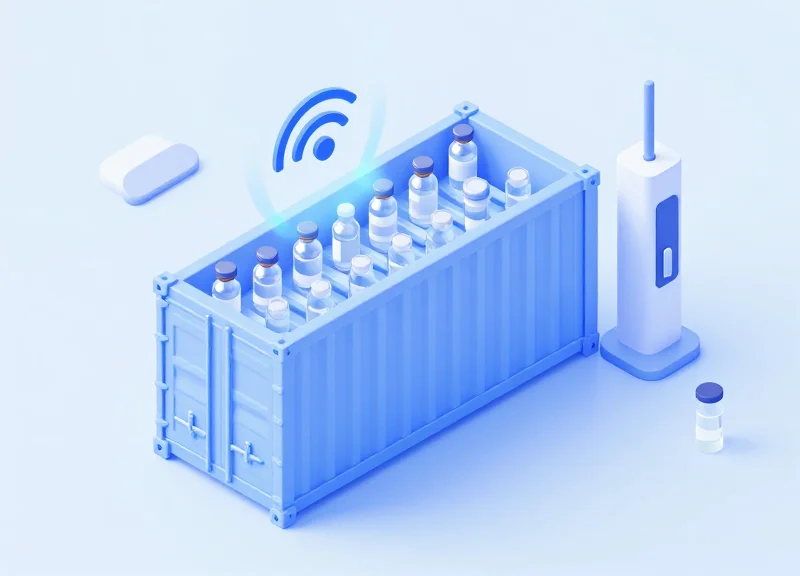
Smart RFID (Radio Frequency Identification) in 2026 represents a paradigm shift in bio-logistics, defined by its ability to transmit data wirelessly through physical barriers such as frost, plastic, and heavy insulation. Unlike barcodes that require a direct optical path, Smart RFID uses electromagnetic fields to automatically identify and track tags attached to biological samples. This 'no line-of-sight' capability allows laboratory technicians to inventory an entire cryogenic dewar or a 96-well plate in seconds, even while the samples remain at -196°C inside their secondary packaging.
| Feature | Legacy Barcoding | 2026 Smart RFID |
|---|---|---|
| Data Capture Method | Optical Line-of-Sight | Radio Frequency (Omnidirectional) |
| Read Throughput | 1 sample at a time | Up to 1,000 samples per second |
| Physical Obstructions | Blocked by frost/moisture | Unaffected by frost or ice |
| Data Capacity | Static ID only | Read/Write + Sensor Data |
| Automation Potential | Low (Requires manual aim) | High (Gateways/Continuous Monitoring) |
How does Smart RFID read through thick cryogenic frost?
Unlike light-based scanners, radio waves in the UHF and HF bands penetrate non-metallic materials like ice and polycarbonate. Modern 2026 tags use specialized antenna designs that compensate for the dielectric constant of frozen liquids, ensuring a clean signal even when encased in millimeters of frost.
Can RFID handle the high-density storage common in biobanks?
Yes. Advanced anti-collision algorithms allow readers to distinguish between hundreds of unique tag IDs simultaneously. This 'bulk reading' means a technician can pull a transport box past a reader and instantly verify the entire contents without opening the lid.
What makes the RFID 'Smart' in 2026?
Beyond simple identification, Smart RFID tags now integrate micro-sensors that monitor temperature excursions in real-time. The tag doesn't just say 'who' the sample is; it reports the 'health' of the sample throughout its transit history.
A critical, often overlooked advantage in 2026 is the 'Digital Chain of Custody' enabled by read/write capabilities. Veteran logistics experts point out that while a barcode is a dead-end link to a database, a Smart RFID tag acts as a portable ledger. Every time a sample passes a checkpoint, the tag can be updated with its current location and status. This decentralization of data provides a 'black box' for biological samples, ensuring that even if the central server is unreachable, the sample itself carries its history. This is particularly vital for the skyrocketing growth of personalized cell and gene therapies where 'the product is the process' and any loss of data constitutes a total product failure.
Sensor-Integrated RFID: Beyond Identification to Monitoring
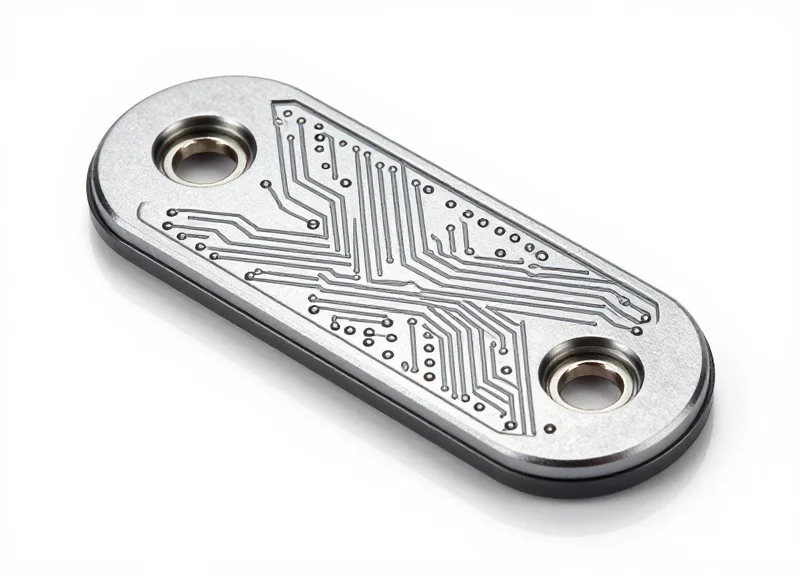
In the context of 2026 bio-logistics, sensor-integrated RFID (also known as 'Smart Tags') refers to the convergence of unique digital identification with real-time environmental telemetry. Unlike traditional RFID which only confirms presence, these advanced tags incorporate miniaturized sensors—often printed directly onto the substrate—to monitor temperature, humidity, and pressure at the individual vial level. This enables a 'digital twin' for every biological asset, ensuring that the thermal history of a sample is logged continuously from the moment of cryopreservation to the point of clinical use, even during transit through manual handling 'blind spots'.
| Feature | Standard Passive RFID | Sensor-Integrated Smart RFID (2026) |
|---|---|---|
| Primary Function | Static Identification | Dynamic Telemetry & Monitoring |
| Data Capture | ID Number Only | ID + Temp/Humidity Time-Series |
| Audit Trail | Checkpoint-based | Continuous / Gapless |
| Energy Source | Reader-powered | Energy Harvesting or Thin-Film Battery |
| Regulatory Status | Logistics Standard | Required for High-Value Cell Therapies |
Expert Insight: The 'Micro-Climate Gap' and Why Sample-Level Sensing Matters. In my two decades in Silicon Valley tech, the most common failure point I've seen in cold chain logistics isn't the freezer—it's the 'transfer window.' Traditional systems monitor the freezer or the shipping container (ambient temperature), but they miss the micro-climate fluctuations that occur when a rack is pulled out for just 60 seconds. By 2026, we are seeing a shift where the 'Ambient Proxy' is no longer sufficient for regulatory compliance. Smart RFID solves this by measuring the sample itself, exposing the 'Shadow Temperature Fallacy'—the dangerous assumption that if the room is cold, the sample must be too.
How do these sensors survive liquid nitrogen temperatures?
Modern 2026 Smart Tags utilize specialized CMOS circuitry and flexible, low-temperature co-fired ceramic (LTCC) packaging designed to prevent thermal cracking and battery electrolyte freezing down to -196°C.
Can sensor data be integrated into existing LIMS?
Yes. The 2026 standard for RFID middleware uses unified APIs (GraphQL/REST) to push environmental alerts directly into Laboratory Information Management Systems, triggering automatic 'non-conformance' flags if a threshold is breached.
Is the data secure from tampering?
Advanced Smart Tags now utilize hardware-level encryption (ECC) and often write sensor peaks to a blockchain-backed ledger, ensuring that the thermal history cannot be edited or erased by third-party handlers.
The move toward monitoring-centric RFID is driven largely by the skyrocketing value of personalized medicines, such as CAR-T cell therapies. When a single dose costs $400,000, 'identifying' the package isn't enough; the logistics provider must prove, with granular data, that the biological integrity was never compromised. This transition from reactive scanning to proactive monitoring is the hallmark of the next generation of cryogenic intelligence.
Ensuring Regulatory Compliance and Data Integrity
By 2026, regulatory compliance in cryogenic logistics is shifting from reactive reporting to proactive, automated data integrity. Smart RFID technology ensures compliance by creating a 'digital twin' for every biological asset, automatically documenting every temperature fluctuation and movement without human intervention. This shift directly addresses the ALCOA+ principles (Attributable, Legible, Contemporaneous, Original, and Accurate), moving organizations away from error-prone manual logs to a system where the data is captured at the point of origin, effectively notarizing the sample's journey from the moment it enters the cryo-vault.
| Compliance Pillar | Barcode/Manual Method | Smart RFID (2026 Standard) |
|---|---|---|
| Data Entry | Manual scanning; prone to human error and 'skipped' samples. | Automated; simultaneous bulk-capture of 500+ items. |
| Audit Trail | Discrete snapshots; gaps between check-points. | Continuous log; integrated sensor data provides a 'movie' of the sample life. |
| FDA 21 CFR Part 11 | Difficult to prove timestamps and user ID for every scan. | Encryption and unique UID ensure absolute data attribution. |
| Chain of Custody | Paper-based or batch-scanned; high latency. | Real-time visibility; instant alerts for unauthorized access. |
The transition to Smart RFID is largely driven by the tightening of FDA 21 CFR Part 11 and EMA Annex 11 requirements, which demand higher levels of electronic record security. In a cryogenic environment, barcodes often become unreadable due to frost or physical degradation, leading to 'missing' data points that can invalidate a clinical trial. RFID chips embedded in vials or boxes operate on a non-line-of-sight basis, meaning compliance data is retrieved through secondary packaging or even freezer doors. This allows for 'In-Situ Verification,' where the integrity of thousands of samples can be validated in seconds during an audit, rather than days of manual checking.
How does RFID support 'Quality by Design' (QbD)?
RFID allows for automated guardrails where the system can prevent a sample from being used if its digital audit trail shows a temperature excursion, ensuring only compliant materials reach the patient.
Is RFID data secure enough for HIPAA and GDPR?
Modern RFID tags use AES-128 or higher encryption and decentralized identifiers (DIDs), ensuring that while the logistics data is tracked, sensitive patient metadata remains decoupled and secure.
How does this reduce the risk of 'Data Spoofing'?
Unlike barcodes which can be easily duplicated or photocopied, high-frequency RFID tags use cryptographic 'handshakes' that make them nearly impossible to clone, ensuring the physical sample is what the data says it is.
Expert Insight: The Rise of Digital Bio-Notarization. As we move into 2026, the industry is moving beyond 'Chain of Custody' to 'Chain of Identity.' My prediction is that regulatory bodies will soon mandate 'Digital Bio-Notarization'—a process where the RFID tag uses blockchain-integrated timestamps to prove a sample's history was never tampered with. This eliminates the 'Human Trust' element, replacing it with 'Systemic Trust,' which is the gold standard for high-stakes cell and gene therapy (CGT) logistics.
The ROI of RFID: Balancing Upfront Costs with Long-Term Gains

In 2026, the Return on Investment (ROI) for RFID in cryogenic logistics is no longer calculated solely by the unit price of a tag versus a barcode. Instead, forward-thinking bio-banks and pharmaceutical giants measure success through the 'Total Cost of Ownership' (TCO) and 'Risk Mitigation Value.' While an RFID tag can cost 10 to 20 times more than a standard cryogenic barcode, the automation of inventory audits and the elimination of manual 'line-of-sight' scanning typically result in a 60-80% reduction in labor costs. When one considers that a single lost immunotherapy sample or rare stem cell line can represent hundreds of thousands of dollars in R&D, the 'insurance' provided by RFID's 99.9% accuracy rate makes the upfront CAPEX a strategic necessity rather than an optional expense.
| Metric | Traditional Barcode System | Smart RFID System (2026) |
|---|---|---|
| Average Audit Time (10k Samples) | 40+ Man-Hours | Less than 15 Minutes |
| Data Accuracy | ~92% (Human error/Frost) | 99.9% (Automated) |
| Labor Cost per Scan | High (Manual handling required) | Negligible (Bulk scanning) |
| Sample Integrity Risk | High (Frequent freezer door openings) | Low (External scanning capability) |
| Direct Hardware Cost | $0.02 - $0.05 per label | $0.40 - $1.10 per tag (Smart sensors) |
The most significant driver of ROI in 2026 is the 'Integrity Dividend.' Because RFID allows for inventory counts to be performed through the walls of storage containers or through freezer glass, the samples are never exposed to transient warming events (TWE). Traditional barcode scanning requires samples to be pulled out of ultra-low temperature environments to be wiped of frost and scanned, a process that degrades biological viability over time. By maintaining a closed-loop cold chain, organizations extend the shelf-life and efficacy of their biological assets, which represents a massive, often overlooked financial gain.
How long does it take to see a positive ROI after switching to RFID?
Most cryogenic facilities report a breakeven point between 12 and 22 months. This timeline is accelerated in high-throughput environments where labor costs are the primary operational bottleneck.
Does RFID reduce insurance premiums for bio-storage?
Yes, several major clinical insurers have begun offering 'Digital Integrity Discounts' for facilities that utilize automated RFID tracking, as it significantly lowers the risk of claim payouts due to sample loss or temperature excursions.
Are the infrastructure costs (readers/antennas) decreasing?
By 2026, the cost of fixed RFID readers has dropped by approximately 30% compared to 2022 levels, thanks to the standardization of RAIN RFID protocols and increased manufacturing scale.
Expert Insight: The 'Ghost Sample' Recovery. A unique financial advantage of RFID is the elimination of 'Ghost Samples'—inventory that is physically present in the freezer but 'lost' because a barcode was misread or the label fell off. In large-scale bio-banks, 2-3% of inventory often becomes unusable due to identification failure. RFID tags, often embedded into the vial structure itself, recover this 'lost' value entirely, adding immediate bottom-line revenue that was previously written off as waste.
Overcoming Implementation Challenges in Cryo-Environments
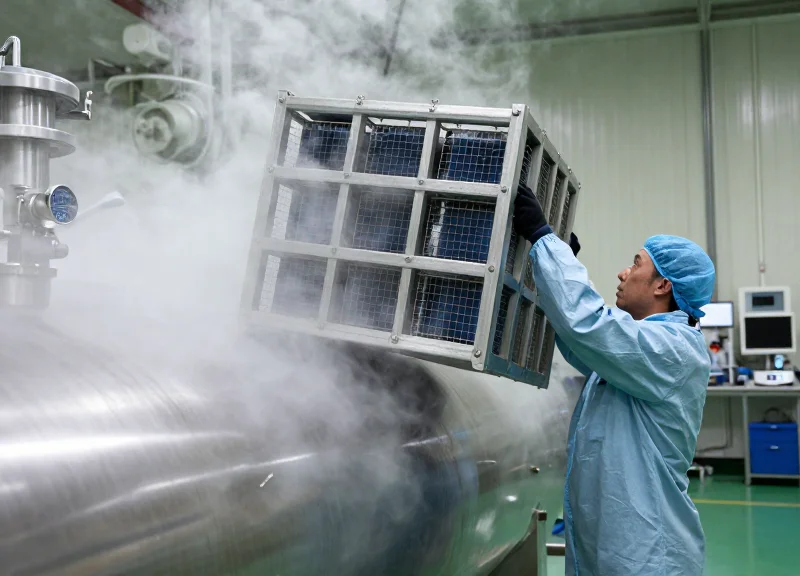
The primary barrier to RFID adoption in cryogenic logistics is not the silicon chip itself, but the physical failure of the tag's bonding agents and substrates at temperatures reaching -196°C. At these extremes, standard adhesives reach their glass transition point and become brittle, causing tags to 'pop off' during the transition from room temperature to liquid nitrogen (LN2). To ensure 100% data continuity, organizations must move beyond generic labels toward expansion-matched materials that can handle the mechanical stress of rapid thermal cycling.
| Component | Standard Material | Cryo-Grade Material (2026 Standard) | Critical Benefit |
|---|---|---|---|
| Adhesive | Rubber or standard acrylic | High-tack Modified Acrylic | Maintains bond strength below -150°C without becoming brittle. |
| Substrate | Polyester (PET) or Paper | Polypropylene or Polyimide | Matches the contraction rate of plastic vials to prevent delamination. |
| Inlay Cover | Laminate film | Cryo-encapsulation | Protects the antenna from moisture ingress and ice crystal damage. |
A critical, often overlooked factor in 2026 bio-tracking is the Differential Thermal Expansion (DTE). When an RFID tag consisting of a copper antenna, a plastic substrate, and a glass vial is plunged into LN2, each material contracts at a different rate. This creates massive shear stress. Our expert tip for 2026: Always specify 'stress-relieved' antenna designs which utilize a serpentine pattern to allow the metal to contract without snapping the connection to the IC (Integrated Circuit).
- Surface Preparation: Vials must be dry and free of frost before application. Even microscopic condensation trapped under a tag will expand when frozen, lifting the adhesive.
- The 'Wrap-Around' Technique: For small diameter vials, utilize tags that overlap themselves. This creates a secondary mechanical bond (adhesive-to-substrate) that supports the primary bond (adhesive-to-vial).
- Dwell Time Validation: Allow tags to 'cure' at room temperature for at least 24 hours before the first freeze cycle to ensure the adhesive achieves maximum wet-out.
Can I apply RFID tags to already frozen samples?
Generally, no. Standard adhesives will fail instantly. However, 2026-gen 'Cryo-Grip' adhesives are entering the market that can penetrate thin frost layers, though room-temperature application remains the gold standard for reliability.
Will the RFID signal be blocked by liquid nitrogen?
Liquid nitrogen is RF-transparent, meaning signals pass through it easily. However, high-density storage racks made of stainless steel can cause signal reflection, requiring specialized 'on-metal' tag tuning.
How long do these tags last in long-term storage?
Cryo-validated RFID tags are now rated for 10+ years of continuous immersion in LN2 vapor without data degradation or physical detachment.
Future Outlook: AI and Blockchain Integration by 2026
By 2026, the integration of Artificial Intelligence (AI) and Blockchain with RFID technology will create a 'Self-Healing Cold Chain,' where biological samples move through an autonomous, decentralized network. AI provides the predictive intelligence to anticipate equipment failures before they happen, while Blockchain ensures a cryptographically secure, immutable record of every temperature fluctuation and hand-off. This dual-tech layer eliminates the 'black holes' of traditional logistics, offering a single source of truth for high-value assets like stem cells and gene therapies.
| Feature | Standard RFID (2024) | AI + Blockchain RFID (2026) |
|---|---|---|
| Data Handling | Manual review of logs | Real-time predictive modeling |
| Verification | Database audit trails | Immutable Smart Contracts |
| Failure Detection | Reactive (Alarm after event) | Proactive (Risk score alerts) |
| Privacy | Centralized data access | Zero-Knowledge Proof (ZKP) encryption |
A unique perspective emerging in 2026 is the application of Zero-Knowledge Proofs (ZKP) in bio-tracking. This allows a logistics provider to prove a sample remained within the -196°C window to a regulator or pharmaceutical client without ever exposing the proprietary genetic data or patient identifiers stored on the tag. This solves the long-standing conflict between data transparency and IP protection in the biotech industry.
- Predictive Stability Modeling: AI algorithms analyze historical temperature data from smart RFID tags to calculate the 'remaining shelf-life' of a sample based on micro-fluctuations, rather than just binary pass/fail markers.
- Automated Smart Contract Execution: Blockchain-based smart contracts trigger automatic payments or insurance claims the moment an RFID tag detects a breach of storage conditions, removing legal friction.
- Decentralized Bio-Bank Governance: Global research consortia use blockchain to share sample availability data securely, ensuring that the provenance of every vial is verifiable across international borders.
Will AI integration increase the energy consumption of RFID readers?
No, the heavy lifting is done in the cloud or at the edge gateway. The RFID tags remain low-power, while the backend infrastructure processes the data efficiently using optimized machine learning models.
How does blockchain handle the massive volume of RFID data?
By 2026, 'Layer 2' scaling solutions and sidechains will allow for high-throughput tracking, only recording critical state changes (like hand-offs or excursions) to the main ledger to keep costs low.
Is this setup compatible with existing cryo-freezers?
Yes, AI-integrated gateways act as a bridge, pulling data from existing RFID-enabled storage units and pushing it to blockchain nodes without requiring a total hardware overhaul.