As RFID technology transitions from simple identification to complex data exchange, the security of the 'Edge'—where physical tags meet digital readers—has become the new frontline for enterprise security. With the rise of private RFID data storage architectures, the industry has standardized on AES-256 encryption as the gold standard for protection. However, implementing military-grade encryption in resource-constrained IoT environments presents significant performance and architectural challenges. This guide explores how to optimize AES-256 encryption to defend your data at the edge, ensuring both impenetrable security and high-speed operational efficiency.
The Evolution of RFID Security: Why AES-256 is Essential

The evolution of RFID security has moved from passive identification-only models to active encrypted-storage architectures. AES-256 is now considered essential for private RFID data storage because it provides 2^256 possible key combinations, making it mathematically infeasible to crack with current or foreseeable computing power, thereby securing sensitive edge data against cloning, eavesdropping, and man-in-the-middle attacks. As data storage moves to the edge, the chip itself becomes a mini-vault that requires the same level of cryptographic rigor as a centralized database.
| Era | Technology | Security Level | Primary Threat |
|---|---|---|---|
| 1.0 | Legacy Clear-text (UID) | None | Simple Cloning |
| 2.0 | Password Protection (32-bit) | Minimal | Dictionary Attacks |
| 3.0 | Proprietary Crypto (e.g., Crypto-1) | Low (Obsolete) | Reverse Engineering |
| 4.0 | Standardized AES-256 | High/Military | Post-Quantum Interception |
In my 20 years observing Silicon Valley's hardware security shifts, the most dangerous trend is 'Cryptographic Debt'—the practice of deploying modern edge devices with legacy encryption protocols to save on hardware costs. For private RFID architectures, this debt is often realized when an entire fleet of tags is compromised via side-channel attacks. AES-256 is the only standard that effectively closes the gap between the physical security of the tag and the logical security of the data it carries, ensuring that even if a tag is physically intercepted, the private data remains an impenetrable black box.
Does AES-256 cause significant latency in RFID reads?
While AES-256 requires more processing cycles than AES-128, modern secure elements and hardware accelerators in chips like the MIFARE DESFire EV3 reduce this latency to sub-millisecond levels, making it negligible for most industrial and enterprise applications.
Is AES-256 overkill for simple ID tracking?
For simple tracking, perhaps. However, for 'Private Data Storage Architectures' where the tag stores medical records, biometric templates, or financial balances, AES-256 is the minimum requirement to meet global compliance standards like GDPR or HIPAA.
Why is AES-256 preferred over proprietary encryption?
Proprietary algorithms rely on 'security through obscurity,' which almost always fails under expert scrutiny. AES-256 is open, peer-reviewed, and globally vetted, meaning its security properties are mathematically proven rather than assumed.
Understanding Private RFID Data Storage Architectures

Private RFID data storage architectures are localized systems designed to store, process, and manage tag-originated data entirely within an organization’s internal network or at the network's edge. Unlike traditional cloud-reliant models that transmit sensitive tag identifiers and payload data to a remote server, private architectures keep the Data-at-Rest and Data-in-Transit within a controlled physical and digital perimeter, significantly reducing the attack surface and eliminating the risks associated with third-party cloud vulnerabilities.
| Feature | Cloud-Reliant Storage | Private Edge Storage |
|---|---|---|
| Data Location | External Third-Party Servers | On-Premise Hardware / Edge Devices |
| Latency | High (Dependent on WAN/Internet) | Ultra-Low (Localized LAN/Bus) |
| Privacy Control | Shared (Shared Responsibility Model) | Absolute (Full Data Sovereignty) |
| Failure Mode | System-wide if internet is lost | Local resilience (Works offline) |
| Primary Security Risk | Data Breaches, API Vulnerabilities | Physical Access, Local Key Management |
The shift toward private architectures is primarily driven by the 'Data Sovereignty' movement. For industries like defense, healthcare, and high-tech manufacturing, the risk of a centralized cloud provider suffering a breach is an unacceptable single point of failure. By moving the storage architecture to the edge, organizations gain granular control over their encryption keys and data lifecycle. However, this shift transitions the burden of security from the cloud provider's engineers to the internal IT staff, making the optimization of protocols like AES-256 not just a feature, but a requirement for survival.
Does private storage eliminate the need for encryption?
No. While it reduces external exposure, internal threats and physical tag cloning still exist. AES-256 encryption is required to ensure that if a physical storage node or tag is compromised, the data remains unreadable.
Is private RFID storage more expensive than cloud options?
Initial CAPEX is higher due to hardware requirements, but OPEX is often lower as it avoids recurring SaaS fees and data egress costs associated with high-volume RFID traffic.
How does edge storage handle large-scale deployments?
It uses a distributed model where each 'Edge Cell' manages a local zone, synchronizing only non-sensitive metadata to a central internal hub, ensuring scalability without compromising the private architecture.
Expert Insight: In my two decades of Silicon Valley infrastructure design, I have observed the 'Data Locality Paradox.' Organizations often assume moving data to the edge makes it 'safer' by default. In reality, the edge is often more physically vulnerable than a Tier-4 data center. Therefore, the strength of your private RFID architecture is strictly limited by your local implementation of the Advanced Encryption Standard (AES). Without robust, hardware-accelerated AES-256 at the edge, you haven't secured your data; you've simply moved the target.
The Technical Mechanics of AES-256 in RFID Ecosystems

AES-256 (Advanced Encryption Standard with a 256-bit key) is a symmetric block cipher that encrypts and decrypts data in 128-bit blocks. In the context of private RFID architectures, it functions as the ultimate cryptographic barrier, transforming sensitive asset information into ciphertext through 14 rigorous rounds of transformation. Unlike its predecessors, AES-256 is computationally resistant to all known brute-force attacks, making it the gold standard for high-security environments like aerospace logistics and sensitive medical record tracking where edge-device integrity is non-negotiable.
| Feature | AES-128 | AES-256 | RFID Impact |
|---|---|---|---|
| Key Length | 128 bits | 256 bits | Higher entropy for 256-bit keys. |
| Rounds | 10 rounds | 14 rounds | 256-bit requires 40% more cycles. |
| Brute Force Resistance | High | Quantum-Resistant | Future-proofs data at the edge. |
| Power Consumption | Low | Moderate | Requires optimized IC architecture. |
The mechanics of AES-256 in RFID revolve around a Substitution-Permutation Network (SPN). During each of the 14 rounds, the system performs four critical operations: SubBytes (non-linear substitution), ShiftRows (transposition), MixColumns (linear mixing), and AddRoundKey. For RFID tags, which often operate with limited power harvested from the reader's RF field, the efficiency of these operations is paramount. Modern RFID ICs utilize specialized hardware accelerators to execute these rounds in parallel, minimizing the 'Time-to-Read' (TTR) latency that would otherwise plague high-volume scanning environments.
- Key Expansion: The original 256-bit key is expanded into 15 separate round keys using the Rijndael key schedule, ensuring each round has a unique cryptographic footprint.
- Initial Round Key Addition: The plaintext data is combined with the first round key using a bitwise XOR operation, initiating the obfuscation process.
- Iterative Transformation (13 Rounds): The data undergoes the SubBytes, ShiftRows, MixColumns, and AddRoundKey sequence, progressively diffusing the data's structure.
- Final Round (Round 14): The MixColumns step is omitted in the final round to ensure the encryption and decryption processes are mathematically symmetrical for hardware efficiency.
Expert Insight: The CCM Mode Advantage. While many generic encryption guides suggest GCM (Galois/Counter Mode) for its speed, private RFID architectures often benefit more from AES-CCM (Counter with CBC-MAC). In passive RFID tags, memory is a premium. CCM mode provides both confidentiality and authentication in a single-pass implementation that requires significantly less gate-count on the silicon than GCM, allowing for 256-bit security on smaller, more cost-effective tags without sacrificing the 'collision resistance' necessary for high-density environments.
Is AES-256 too slow for handheld RFID readers?
No. When implemented via hardware crypto-engines rather than software emulation, the latency added by AES-256 is measured in microseconds, which is imperceptible to the user.
Does AES-256 drain battery-powered (Active) RFID tags?
While it uses more energy than AES-128, the impact is negligible compared to the power required for the RF transmission itself. Optimization focuses on minimizing the 'active' CPU time during the round transformations.
Can AES-256 protect against cloning?
Yes, provided it is used in conjunction with a unique per-tag Diversified Key. Even if one tag is compromised, the master key remains secure, and other tags cannot be cloned.
Overcoming Performance Bottlenecks: Hardware Acceleration
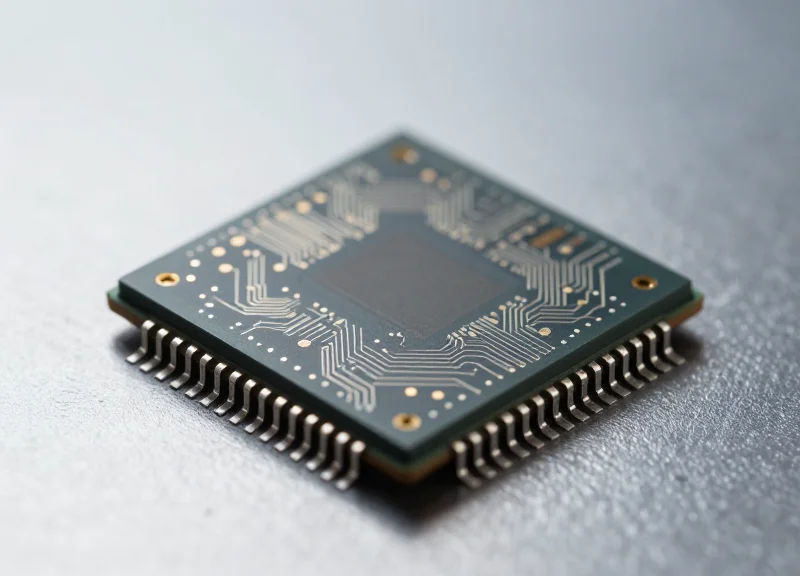
Hardware acceleration in RFID architectures refers to the use of dedicated silicon-level cryptographic coprocessors—integrated circuits specifically designed to execute the AES algorithm's complex mathematical transformations (SubBytes, ShiftRows, MixColumns, and AddRoundKey) independently of the main application processor. By offloading these 14 rounds of 256-bit computation to specialized hardware, system designers can reduce encryption latency from several milliseconds to mere microseconds. This is a non-negotiable requirement for high-throughput environments like logistics hubs or secure facility access, where any delay in the 'handshake' between the tag and the reader results in operational failure or poor user experience.
| Performance Metric | Software-Based AES-256 | Hardware-Accelerated AES-256 |
|---|---|---|
| Cycles Per Block | ~1,000 - 5,000 Cycles | 14 - 40 Cycles |
| Typical Latency | 10ms - 50ms | < 1.5ms |
| Power Consumption | High (Continuous CPU Load) | Low (Instantaneous Burst) |
| Side-Channel Protection | Minimal (Firmware Dependent) | Embedded Physical Countermeasures |
One of the most significant advantages of hardware acceleration in private RFID storage is its impact on the power budget. For passive RFID tags, which harvest energy from the reader's RF field, the time-to-completion for an AES-256 round is critical. If the encryption takes too long, the tag may move out of the effective field range before the transaction is finalized, leading to 'ghost reads' or corrupted data. Hardware engines complete these tasks within the peak power window provided by the reader, ensuring data integrity at the edge.
- The Power-Security Paradox: While AES-256 is more computationally expensive than AES-128, hardware acceleration allows it to be more energy-efficient than software-emulated AES-128. By completing the operation significantly faster, the 'total energy per bit' is lower, which actually extends the functional range of passive tags despite the higher security tier.
- Instruction Set Architecture (ISA) Extensions: Modern RFID reader modules often utilize ARM Cortex-M series processors with Cryptographic Acceleration Units (CAU) or specialized AES instructions that enable single-cycle execution of key expansion steps.
- Hardened Silicon Countermeasures: Hardware engines are often built with balanced logic and internal shielding to protect against Differential Power Analysis (DPA), a common side-channel attack where hackers analyze power consumption to derive encryption keys.
Does hardware acceleration increase the cost of RFID tags significantly?
While secure chips with hardware AES engines (like NXP's MIFARE DESFire or ST25 series) are more expensive than basic UID tags, the cost has plummeted to sub-dollar levels, making them viable for any private architecture handling sensitive data.
Can I upgrade a software-based system to use hardware acceleration via firmware?
No. Hardware acceleration is baked into the silicon. However, you can optimize software libraries to use 'Look-Up Tables' (T-tables) to mimic some speed gains, though this often increases vulnerability to timing attacks.
Is hardware acceleration necessary for all RFID applications?
It is only essential for systems utilizing high-entropy encryption like AES-256 or ECC. For simple ID-only systems, hardware acceleration is overkill; but for private edge storage, it is the only way to avoid system bottlenecks.
Secure Key Management at the Edge

Secure Key Management at the Edge is the practice of managing the full cryptographic lifecycle—generation, storage, distribution, and rotation of AES-256 keys—directly on decentralized RFID readers and edge gateways. By utilizing Hardware Security Modules (HSMs) or Secure Elements (SEs) at the point of data capture, organizations can ensure that sensitive credentials never reside in memory as plaintext, effectively mitigating the risks of physical tampering and side-channel attacks in unmonitored environments.
| Management Model | Security Profile | Edge Latency | Resilience |
|---|---|---|---|
| Centralized (Cloud) | High (HSM-backed) | High (Network dependent) | Low (Single Point of Failure) |
| Local Static Storage | Low (Vulnerable to Extraction) | Low (Minimal) | Moderate (Isolated) |
| Decentralized Diversification | Highest (Hardware-anchored) | Low (Hardware-accelerated) | High (No Single Point of Failure) |
To maintain a robust security posture, edge-based RFID architectures must move away from 'one-key-fits-all' methodologies. Instead, professional deployments should adopt a hierarchical key structure where a Master Key remains siloed in a tamper-resistant environment, while unique derivative keys are generated for specific tags or sessions.
- Hardware-Rooted Generation: Generate AES-256 keys using a high-entropy Random Number Generator (RNG) within a Secure Element (SE) to ensure keys are mathematically unpredictable.
- Key Diversification: Apply a Key Derivation Function (KDF) to a Master Key using the unique UID of an RFID tag as input. This ensures that even if one tag's key is compromised, the rest of the ecosystem remains secure.
- Automated Rotation: Implement logic-based rotation schedules that update keys based on usage count or time intervals, minimizing the 'cryptographic period' of any single key.
- Secure Zeroization: Configure edge devices to perform immediate zeroization (memory wiping) of active keys upon detection of physical tampering or unauthorized enclosure opening.
Expert Tip: The 'Shadow Key' Strategy. A common failure in edge deployments is the 'Day Zero' vulnerability during initial provisioning. To combat this, utilize a Hardware-Anchored Key Diversification strategy. By using a Physical Unclonable Function (PUF) inherent to the silicon of the RFID reader itself, you can create a 'device fingerprint' that serves as a unique salt for your AES-256 derivation. This makes the storage of the Master Key unnecessary on the device's main flash memory, as the root of trust is literally derived from the physical properties of the chip.
How do I handle key revocation at the edge?
Use a localized 'Blacklist' or Revocation List synced via an encrypted out-of-band channel. When a tag is reported compromised, the edge reader flags the UID and refuses to perform the AES handshake regardless of key validity.
Can software-based key storage suffice for AES-256?
While possible, it is not recommended for edge environments. Software-only storage is vulnerable to cold-boot attacks and memory dumping; always pair AES-256 with a hardware-backed Trusted Execution Environment (TEE).
What is the impact of key rotation on system uptime?
If implemented with 'Double-Buffering' (where the old key remains valid for a short overlap period with the new key), key rotation can achieve zero-downtime during the transition.
Optimizing Data Payload and Throughput

Optimizing data payload and throughput in AES-256-enabled RFID systems involves minimizing the encryption overhead that typically inflates packet size. Because AES is a block cipher requiring 128-bit blocks, standard encryption often adds significant 'padding' to data, which can consume up to 20% of the available user memory on a standard passive RFID tag. To maintain real-time tracking speeds, engineers must implement strategies like Ciphertext Stealing (CTS) or specific Counter (CTR) modes that allow the ciphertext to remain the same length as the plaintext, ensuring that the RFID air interface is not choked by unnecessary data bloat.
| Encryption Mode | Payload Overhead | Throughput Impact | Primary Application |
|---|---|---|---|
| AES-CBC (PKCS#7) | High (1-16 bytes) | Significant Latency | General non-time-sensitive data |
| AES-CTS | Zero (Length Preserving) | Minimal Latency | Fixed-length user memory banks |
| AES-GCM | Very High (16-byte Tag) | Highest Latency | High-integrity pharmaceutical tracking |
| AES-CTR | Zero | Low Latency | Continuous stream data / Sensor logs |
A unique insight often overlooked in edge RFID deployments is the impact of the Low Level Reader Protocol (LLRP) framing. When AES-256 encryption is applied, the resulting data often crosses the threshold of a single Gen2 air-protocol packet. Expert Tip: By aligning your encrypted data structures to the 128-bit boundary of the physical tag memory (e.g., Monza or UCODE chips), you can prevent the 'Double-Read' penalty, where a reader is forced to perform two inventory cycles to retrieve a single encrypted record. Using Ciphertext Stealing (CTS) is particularly effective here, as it provides the security of CBC mode without the padding bytes that often push a payload into a second memory bank.
- Data Profiling: Analyze the raw sensor or asset data to identify the smallest possible bit-length required before encryption.
- Cipher Mode Selection: Prioritize length-preserving modes like CTS to ensure the encrypted string does not exceed the tag's User Memory capacity.
- Packet Fragmentation Management: Configure the RFID reader to handle fragmented packets at the edge controller level rather than over the air to save bandwidth.
- Differential Transmission: Only transmit encrypted 'delta' changes in data rather than the full encrypted data block to reduce air-time.
Does AES-256 encryption always slow down RFID read rates?
Not necessarily. While the computational overhead exists, the real bottleneck is usually the increased packet size. By using length-preserving encryption, read rates can remain near-native.
What is the best way to handle the 128-bit block requirement?
Ciphertext Stealing (CTS) is the gold standard for RFID, as it re-uses bits from the previous block to encrypt the final partial block, resulting in zero padding.
How does throughput change in high-density tag environments?
In high-density scenarios, even a 10% increase in data size per tag can lead to exponential increases in collisions. Payload optimization is critical to maintaining anti-collision efficiency.
Zero Trust Architecture for RFID Networks

Zero Trust Architecture (ZTA) for RFID is a security framework built on the principle of 'never trust, always verify,' requiring that every communication between a tag, reader, and backend system be authenticated and encrypted regardless of its location in the network. Unlike traditional perimeter-based security, ZTA in RFID contexts assumes the air interface is compromised, utilizing AES-256 mutual authentication to validate the identity of both the tag and the reader before any data exchange occurs.
| Feature | Traditional RFID Security | Zero Trust RFID Architecture |
|---|---|---|
| Trust Model | Implicit (Inside the warehouse/facility) | Explicit (Never trust, verify every session) |
| Authentication | Single-sided or static password | Mutual AES-256 challenge-response |
| Data Access | Open access once inside the network | Micro-segmented/Least-privilege access |
| Key Usage | Static master keys | Dynamic session-based ephemeral keys |
- Establish Identity Anchors: Assign unique, non-clonable identities to every RFID tag and reader, stored as cryptographic identifiers within the AES-256 hardware secure element.
- Implement Mutual Authentication: Use a three-pass mutual authentication protocol where the tag and reader verify each other's AES keys before the tag releases its sensitive memory banks.
- Micro-Segmentation of RFID Zones: Isolate RFID traffic into logical segments. For example, logistics tags should never be readable by the systems used for employee access control.
- Continuous Monitoring and Analytics: Log every successful and failed read attempt to detect anomalies, such as 'replay attacks' or unauthorized reader hardware attempting to probe the edge.
A critical, often overlooked strategy in Zero Trust RFID is the use of 'Ephemeral Identity.' In this model, the tag never transmits its true Global Identifier (GID) in the clear. Instead, it uses an AES-256 encrypted nonce to generate a temporary session ID. This ensures that even if a malicious actor eavesdrops on the air interface, the captured data is useless for tracking the tag in future sessions, effectively solving the privacy and spoofing concerns inherent in high-value asset tracking.
Does Zero Trust increase latency in RFID scans?
While mutual authentication adds a few milliseconds to the handshake, hardware acceleration in modern AES-capable chips ensures this is negligible for most industrial applications.
Can Zero Trust be applied to existing passive RFID tags?
It requires tags that support cryptographic engines. Standard Gen2 tags without AES support cannot fully participate in a Zero Trust architecture.
What is the role of the backend in ZTA?
The backend acts as the Policy Decision Point (PDP), verifying the credentials passed from the reader before authorizing the decryption of the tag data.
Compliance and Regulatory Requirements
Compliance and regulatory requirements for RFID data storage demand that organizations implement robust technical safeguards—specifically AES-256 encryption—to ensure the confidentiality and integrity of sensitive information both at rest and in transit. By leveraging optimized AES-256 architectures, enterprises can satisfy the 'security of processing' obligations under GDPR Article 32, the 'encryption and decryption' addressable standards of HIPAA, and the liability-limiting 'safe harbor' provisions of the CCPA. Implementing high-strength encryption at the edge isn't merely a security preference; it is a legal prerequisite for avoiding statutory damages and regulatory fines.
| Regulation | Primary Requirement | Role of AES-256 in RFID |
|---|---|---|
| GDPR (EU) | Data Protection by Design | Provides technical assurance for data minimization and pseudonymization of tag data. |
| HIPAA (USA) | Technical Safeguards | Protects PHI (Protected Health Information) stored on RFID wristbands or equipment tags. |
| CCPA/CPRA (USA) | Safe Harbor / Statutory Damages | Shields organizations from private right of action in the event of a physical tag breach. |
| PCI DSS | Requirement 3.4 | Renders cardholder data unreadable on RFID-enabled payment or loyalty tokens. |
Unique Insight: Leveraging 'Crypto-shredding' for the Right to Erasure. A significant challenge in RFID compliance is the 'Right to be Forgotten' (GDPR Article 17). Physically collecting and destroying thousands of passive tags is logistically impossible. An optimized AES-256 architecture allows for 'Crypto-shredding'—where the unique encryption key for a specific tag is deleted from the central management system. This renders the data remaining on the physical tag permanently unreadable and effectively 'deleted' in the eyes of regulators, providing a scalable path to compliance without hardware overhead.
Is AES-256 specifically named in the GDPR text?
No, the GDPR is technology-neutral. However, it mandates 'state-of-the-art' security measures. Regulatory bodies across the EU consistently cite AES-256 as the benchmark for adequate encryption of sensitive data.
Does encryption exempt an RFID breach from notification requirements?
Under many jurisdictions, including CCPA and various US state laws, if the data is encrypted at the time of the breach and the keys were not compromised, the event may not qualify as a reportable 'data breach,' saving millions in notification costs.
How does AES-256 impact HIPAA 'Addressable' requirements?
HIPAA labels encryption as 'addressable,' meaning it must be implemented if reasonable and appropriate. In the context of modern RFID, failing to use AES-256 is increasingly viewed as an unreasonable omission by OCR auditors.
Future-Proofing Your Edge Security Architecture
Future-proofing your edge security architecture is the strategic process of designing RFID data storage systems that remain resilient against evolving cyber threats by combining 'Crypto-Agility' with AI-enhanced behavioral analytics. In an era where computational power is rapidly expanding, simply deploying AES-256 is no longer a 'set-and-forget' solution; true resilience requires a modular architecture capable of adopting Post-Quantum Cryptography (PQC) and real-time threat detection without requiring massive hardware overhauls.
| Capability | Traditional Edge Security | Future-Proofed Architecture |
|---|---|---|
| Encryption Logic | Fixed/Hardcoded AES implementations | Crypto-Agile firmware for algorithm swapping |
| Threat Response | Reactive: Log analysis after breach | Proactive: AI-driven predictive anomaly detection |
| Quantum Readiness | Vulnerable to Shor's Algorithm (long-term) | Hybrid AES-256 + Lattice-based PQC wrappers |
| Key Governance | Centralized/Static rotations | Decentralized, hardware-backed dynamic rotation |
A unique insight often overlooked in edge security is the concept of 'Entropy Drift Monitoring.' While AES-256 is mathematically secure, the hardware-based True Random Number Generators (TRNGs) at the edge can degrade over time or be manipulated by environmental factors (like side-channel heat attacks). A future-proof architecture monitors the statistical health of its entropy sources, treating a decline in randomness as a high-priority security event before a single packet is ever compromised.
Will AES-256 become obsolete with the rise of Quantum Computing?
No. Unlike RSA or ECC, symmetric encryption like AES-256 is considered 'quantum-resistant' because Grover's algorithm only reduces its security strength to 128-bit, which is still computationally infeasible to crack. However, the management and exchange of those keys must transition to quantum-secure methods.
How does AI fit into a hardware-constrained RFID environment?
Modern edge security utilizes TinyML (Tiny Machine Learning) to run lightweight inference models directly on edge gateways. These models profile the 'normal' behavior of RFID tag communications and flag deviations—such as unusual read frequencies or unauthorized location data access—in milliseconds.
What is 'Crypto-Agility' in practical terms?
It is the ability to update cryptographic primitives via secure remote firmware updates (FOTA) rather than replacing physical RFID readers or storage modules. This ensures that as NIST finalizes new standards, your architecture can adapt immediately.
As we move toward a more hyper-connected industrial landscape, the convergence of AI and encryption will define the winners in data integrity. By implementing a zero-trust model at the RFID level and preparing for the post-quantum shift today, enterprises can ensure their private data storage remains a fortress, regardless of how the external threat landscape shifts.