As we approach 2026, the retail landscape is undergoing a tectonic shift. For decades, legacy Electronic Article Surveillance (EAS) has been the silent sentinel of the storefront. However, in an era of sophisticated organized retail crime (ORC) and omnichannel complexity, traditional beep-at-the-door systems are no longer sufficient. Today's retailers are demanding more than just an alarm; they require integrated, data-driven cloud defenses that provide total visibility and actionable intelligence. This article explores why the transition to next-gen digital systems is not just a technology upgrade, but a strategic survival necessity for the modern merchant.
The Sunset of Analog: Why Legacy EAS is Falling Short
The transition away from legacy Electronic Article Surveillance (EAS) is driven by a fundamental 'intelligence gap': traditional analog systems act as simple 'beepers' that notify staff of a breach without providing any context. In the 2026 retail landscape, an alarm that doesn't tell you what was taken, how it was taken, or where it is moving is effectively noise. Legacy EAS is falling short because it was designed for a 1990s theft model—individual opportunistic shoplifting—rather than the sophisticated, high-velocity Organized Retail Crime (ORC) syndicates that dominate current loss prevention challenges.
| Feature | Legacy Analog EAS | Next-Gen Digital Cloud Defenses |
|---|---|---|
| Connectivity | Standalone / Offline | Cloud-Integrated (IoT) |
| Data Granularity | Binary (Alarm/No Alarm) | Item-Level (SKU, Color, Size) |
| Maintenance | Reactive / On-site | Proactive / Remote Diagnostics |
| ORC Detection | Non-existent | Pattern Recognition & AI Alerts |
- The False Alarm Fatigue: Analog systems are notorious for 'phantom alarms' caused by interference or non-deactivated tags. This creates desensitized staff who eventually ignore alerts, providing a perfect cover for actual theft.
- Lack of Actionable Analytics: Legacy systems operate in silos. They cannot correlate alarm data with POS transactions or video surveillance, making it impossible to calculate true 'Missed Opportunity' metrics.
- Vulnerability to Booster Bags: Simple foil-lined bags easily defeat most legacy RF systems. Without integrated metal or magnet detection found in digital cloud systems, analog pedestals remain a passive deterrent at best.
Expert Insight: The 'Silent Loss' Paradox. A critical failure of legacy EAS is what I call 'Silent Loss.' In my two decades in the industry, I have observed that legacy systems actually incentivize sophisticated thieves to move toward 'shielding' and 'decoupling' tactics. Because legacy pedestals cannot detect shielded bags or provide real-time alerts to mobile devices, retailers often see a 0% alarm rate while inventory shrinkage continues to climb. Digital systems solve this by monitoring the health and environmental noise of the store, flagging interference patterns that indicate a thief is attempting to jam or shield the signal before they even enter the aisle.
Why can't I just upgrade my existing analog sensors?
Analog sensors lack the processing power and network interfaces required to transmit data packets to the cloud. A 'digital wrapper' can sometimes be added, but it rarely matches the efficacy of native digital architectures.
What is the biggest ROI driver for moving to Digital EAS?
Labor optimization. By reducing false alarms and providing remote troubleshooting, retailers can redirect hundreds of hours of associate time back to customer service rather than 'alarm chasing.'
How does Digital EAS help with Item-Level visibility?
Modern systems often integrate RFID or advanced AM-Digital tech that identifies the specific SKU leaving the store, allowing for immediate inventory reconciliation and automated re-ordering.
Defining the 2026 Digital Integrated Cloud Defense
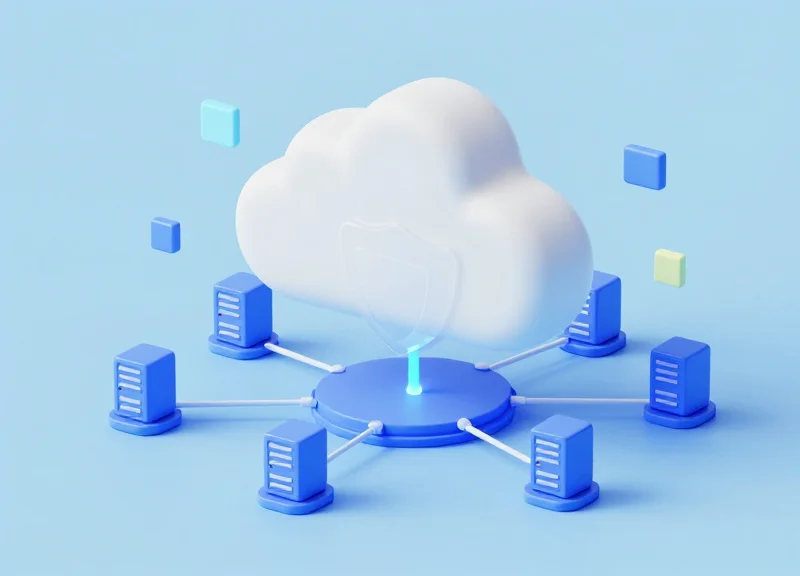
A Digital Integrated Cloud Defense (DICD) is a unified retail security architecture that converges Electronic Article Surveillance (EAS), Radio Frequency Identification (RFID), and Internet of Things (IoT) sensors into a single, cloud-native intelligence layer. Unlike legacy standalone alarms that merely react to unauthorized movement, DICD transforms security hardware into data-rich nodes. These nodes provide real-time item-level visibility, predictive shrink analytics, and automated inventory reconciliation across an entire global enterprise, moving retail security from a 'cost of doing business' to a core driver of operational profitability.
| Feature | Legacy EAS (Analog/Standalone) | 2026 Digital Integrated Cloud Defense |
|---|---|---|
| Data Granularity | Binary (Alarm/No Alarm) | Item-Level (What, When, and How) |
| Connectivity | Isolated Hardware | Cloud-Native / API-Driven |
| Response Model | Reactive (Post-Event) | Predictive (AI-Driven Anomalies) |
| Inventory Impact | None (Security Only) | Real-time Stock Accuracy |
The evolution toward 2026 standards is defined by the 'Neural Store' concept. In this model, the security gate is no longer a gate; it is a sophisticated IoT gateway. By 2026, the industry standard mandates that every security event is timestamped, localized to a specific SKU, and correlated with Point of Sale (POS) data in the cloud. This allows retailers to distinguish between a legitimate theft, a staff training error, or a missed deactivation at the self-checkout kiosk, significantly reducing friction for honest customers.
- Edge AI Integration: Processing data at the 'edge' of the store perimeter to identify suspicious behavior patterns (like 'sweeping' or shielding) before the alarm even sounds.
- Unified Data Lakes: Aggregating security alerts with heatmapping and inventory data to identify 'shrink blind spots' in specific store layouts.
- Zero-Trust Physical Perimeter: A security posture where every item's exit must be validated against a digital 'sold' certificate in the cloud registry.
Expert Insight: The 'Ghost Stock' Eradication. The hidden value of 2026 Cloud Defense isn't just stopping theft; it's the elimination of 'Phantom Inventory.' By integrating RFID with cloud security, the system automatically updates the inventory count the moment an item leaves the store—legally or otherwise. This ensures that your e-commerce platform doesn't promise a product to a customer that is no longer on the shelf, effectively solving the $1.1 trillion global problem of out-of-stocks.
Does 2026 Cloud Defense require replacing all existing hardware?
Not necessarily. Modern DICD platforms utilize 'Cloud-Wrappers' or bridge controllers that can digitize the output of existing acousto-magnetic (AM) or radio-frequency (RF) pedestals, though item-level tracking requires RFID-enabled sensors.
How does this impact customer privacy?
DICD focuses on product data rather than personal data. It tracks the 'digital twin' of the merchandise, ensuring security without the need for intrusive facial recognition or biometric tracking.
Is the cloud connection a single point of failure?
No. The 2026 architecture uses an 'Edge-First, Cloud-Always' approach. The hardware operates autonomously for immediate threats, syncing data to the cloud whenever connectivity is available to ensure 100% uptime.
The Power of RFID Integration in Loss Prevention
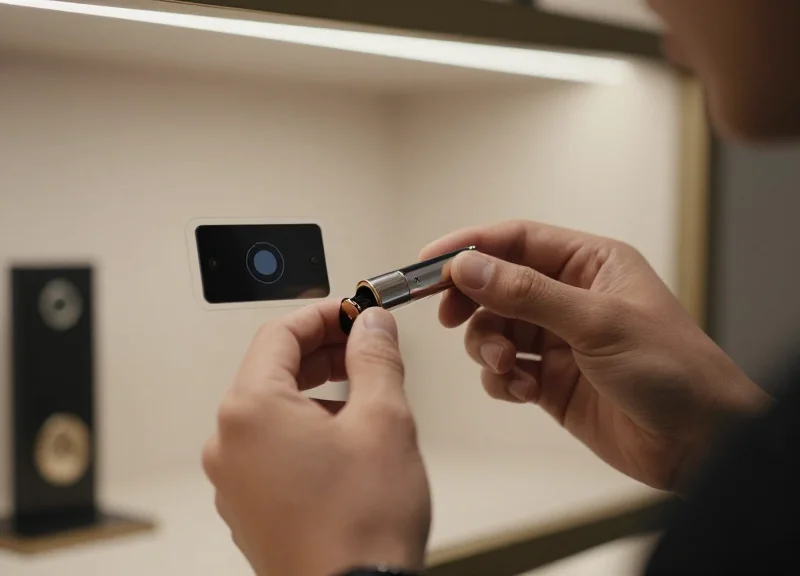
RFID integration in loss prevention represents a fundamental shift from legacy EAS 'detection' to modern 'identification.' While traditional systems simply alert staff that an item has passed a sensor, integrated RFID (Radio Frequency Identification) provides granular, item-level data. By 2026, this technology will allow retailers to pinpoint the exact SKU, size, and color of a stolen item, transforming the security pedestal from a loud gatekeeper into a silent, high-speed data collector that synchronizes with cloud-based inventory management in milliseconds.
| Feature | Legacy EAS (Acousto-Magnetic/RF) | Next-Gen RFID Integration |
|---|---|---|
| Detection Level | Binary (Tag present/not present) | Unique (Specific Item ID/Serial Number) |
| Data Output | Alarm only | SKU, Time of Exit, Sales Status, Origin |
| Inventory Impact | High 'Phantom Inventory' risk | Real-time automated replenishment |
| Forensic Utility | Low (Needs manual CCTV review) | High (Links specific item to video timestamp) |
The true 'power' of this transition lies in solving the 'Phantom Inventory' crisis. When a legacy EAS system goes off and an item is stolen, the inventory system still believes the product is on the shelf. This leads to lost sales when customers (or online pickers) cannot find the item. Integrated RFID automatically updates the stock count to reflect the loss, triggering an immediate replenishment order. This ensures that a single theft doesn't result in a 'double loss'—the cost of the stolen goods plus the lost revenue from a missed sale.
- Item-Level Tagging: Each product receives a unique digital identity (EPC) at the source or in-store, allowing the system to track its specific lifecycle.
- Cloud Synchronization: The RFID reader at the exit cross-references the tag ID against the Point-of-Sale (POS) database to verify if the item was paid for.
- Automated Event Logging: If an unpaid item exits, the system logs the exact SKU and time, often triggering a localized alert to staff mobile devices rather than a disruptive floor-wide siren.
- Forensic Linkage: The data is pushed to a unified dashboard, where it can be automatically paired with CCTV footage of the exact moment that specific item left the building.
Expert Tip: To maximize ROI by 2026, retailers should adopt 'Dual-Technology' tags that combine EAS for immediate deterrence and RFID for data intelligence. This hybrid approach provides a bridge for legacy infrastructure while immediately unlocking the forensic benefits of item-level tracking.
Does RFID replace the need for security guards?
No, it empowers them. Instead of guards stopping every person when an alarm sounds, RFID tells them exactly what to look for, reducing friction with legitimate customers and focusing efforts on high-value organized retail crime (ORC) events.
Can RFID track items outside the store?
Standard passive RFID tags have a limited range (usually up to 10 meters) and do not contain GPS. They are designed for localized inventory and exit tracking, not for long-range tracking once the item has left the immediate vicinity of the store readers.
Is RFID tagging more expensive than traditional EAS?
While the initial cost per tag is higher, the ROI is significantly greater because the same tag is used for inventory counting, omnichannel fulfillment, and loss prevention, effectively consolidating three separate costs into one.
Cloud Connectivity: From Local Alarms to Global Intelligence

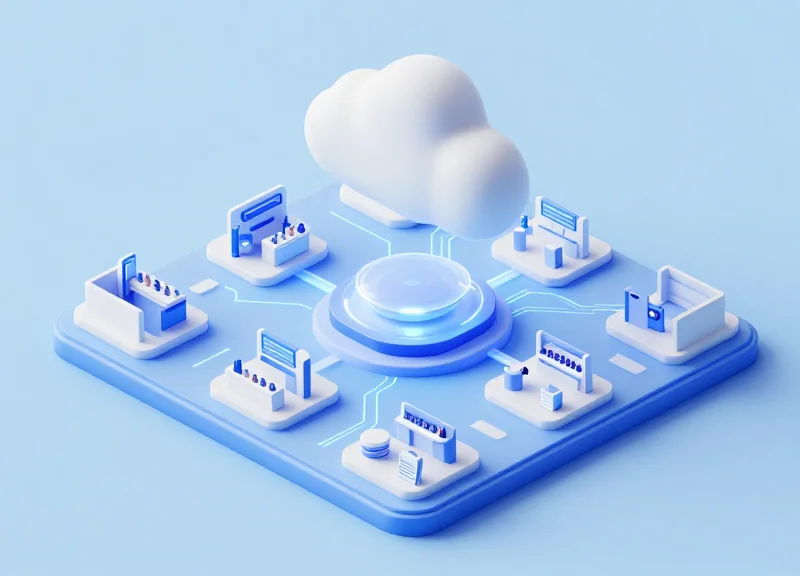
Cloud connectivity in the 2026 retail landscape represents the shift from standalone Electronic Article Surveillance (EAS) pedestals that merely emit an audio alarm, to integrated IoT-enabled sensors that stream real-time telemetry to a centralized management platform. By decoupling the alarm from the physical store and moving the logic to the cloud, retailers transition from reactive 'beep-and-look' security to a proactive Global Intelligence model. This allows stakeholders to monitor shrinkage trends, hardware health, and security compliance across a global fleet of stores from a single pane of glass.
| Feature | Legacy EAS (Local Alarms) | Next-Gen Cloud EAS (Global Intelligence) |
|---|---|---|
| Alert Delivery | Audible buzzer at the exit only | Real-time push alerts to mobile, CCTV, and SOC |
| Maintenance | Physical truck rolls for every calibration | Remote diagnostics and OTA firmware updates |
| Data Analysis | Manual logs or siloed local storage | Automated cross-regional benchmarking |
| Connectivity | Disconnected / Offline | MQTT-based low-latency cloud streaming |
The most significant advantage of cloud-integrated defense is the ability to perform Cross-Regional Data Benchmarking. In a legacy environment, a sudden spike in 'tags-not-deactivated' at a specific store might go unnoticed for weeks. With cloud connectivity, the system automatically flags outliers where a specific store's alarm rate deviates from the regional mean, allowing Loss Prevention teams to identify training gaps or organized retail crime (ORC) patterns as they emerge, rather than months later during a physical inventory count.
- Automated Health Monitoring: The cloud system heartbeat-checks every pedestal globally. If a system is unplugged or a receiver is blocked, a ticket is automatically generated, ensuring the store is never left vulnerable.
- Remote Sensitivity Tuning: Environmental noise from nearby mall electronics can cause false alarms. Cloud-connected systems allow engineers to recalibrate frequency sensitivity remotely, eliminating expensive technician site visits.
- Unified Policy Deployment: Update alarm protocols or RFID filtering rules across 500 stores simultaneously with one click, ensuring consistent security standards regardless of location.
Expert Insight: The 'Silent Failure' Prevention. In my two decades in Silicon Valley retail tech, the biggest ROI from cloud EAS isn't actually catching more shoplifters—it's the elimination of 'Dead Zones.' In legacy setups, roughly 15% of EAS systems are malfunctioning or turned down by staff at any given time. Cloud connectivity provides a 'Truth Layer,' notifying headquarters the moment a system is tampered with, effectively ending the era of security systems that act as expensive, non-functional door decorations.
Does cloud EAS require significant bandwidth?
No. Modern systems use lightweight MQTT protocols that transmit small packets of data, consuming less bandwidth than a single standard web search.
Is the security data encrypted?
Yes. Leading 2026 platforms utilize end-to-end TLS 1.3 encryption and are SOC 2 Type II compliant to ensure that store telemetry remains private.
Can it integrate with my existing CCTV?
Absolutely. Cloud EAS uses APIs to trigger 'Event Bookmarking' in your Video Management System (VMS), automatically tagging footage when an alarm occurs.
Combating Organized Retail Crime (ORC) with Predictive Analytics
Predictive analytics in retail loss prevention refers to the use of machine learning algorithms and real-time data—integrated via cloud-based digital EAS and RFID systems—to identify patterns indicative of Organized Retail Crime (ORC) before a loss occurs. By analyzing variables such as the velocity of item removal from shelves, dwell times in high-value zones, and historical 'theft signatures,' these systems shift the security paradigm from reactive alarms to proactive intervention. This intelligence allows retailers to deploy staff strategically, effectively neutralizing professional 'boosters' who rely on the anonymity and speed of traditional retail environments.
| Feature | Legacy EAS Systems | Next-Gen Predictive Analytics |
|---|---|---|
| Detection Logic | Reactive: Triggers when a tag passes a sensor. | Proactive: Triggers based on suspicious movement patterns. |
| Data Context | Binary: Alarm or No Alarm. | Contextual: Identifies specific items, quantities, and intent. |
| Response Time | Post-Event: After the suspect has reached the exit. | Pre-Event: Alerts staff while the suspect is still on the floor. |
| ORC Effectiveness | Low: Easily bypassed by foil-lined 'booster bags'. | High: Detects the 'sweep' of products regardless of tag shielding. |
| False Alarm Rate | High: Due to tag pollution and system interference. | Low: Filters out non-threatening behavior using AI validation. |
The power of predictive analytics lies in its ability to see what the human eye often misses. For example, while a standard shoplifter might take one or two items, ORC groups execute 'clearing' or 'sweeping' maneuvers. Next-gen digital systems monitor the 'shelf-to-exit' velocity. If twenty high-value units are moved from a shelf and immediately head toward a non-traditional exit point, the cloud defense platform calculates a high 'risk score' and sends a silent alert to security mobile devices instantly.
- Data Ingestion and Aggregation: The system pulls real-time streams from RFID-enabled shelves, IoT door sensors, and video analytics to create a holistic view of the store environment.
- Behavioral Pattern Matching: Machine learning models compare current store activity against known ORC behaviors, such as 'staging' (moving items to a hidden location for later retrieval).
- Real-Time Risk Scoring: Every interaction is assigned a risk value; once a specific threshold is crossed, the system escalates the event from 'monitoring' to 'active threat.'
- Automated Tactical Response: The cloud platform pushes actionable intelligence to staff, including the suspect's location and a list of the high-value items currently in their possession.
Unique Expert Insight: The 'Micro-Burst' Detection Strategy. In my experience auditing high-shrink environments, the most sophisticated ORC rings utilize 'micro-bursts'—small, rapid probes of a store's security response times before a major hit. Next-gen digital cloud defenses are unique because they track these micro-events across multiple store locations in real-time. If a specific behavior pattern is flagged in Store A, the system automatically 'hardens' Store B and C in the same region, effectively creating a geo-fenced shield that legacy, standalone systems simply cannot replicate.
How does the system distinguish between a bulk buyer and a thief?
Predictive analytics use multi-point validation; a bulk buyer typically follows a standard path to a Point of Sale (POS), whereas ORC actors bypass checkout zones and demonstrate erratic dwell times.
Does this require a constant internet connection?
While the 'intelligence' is refined in the cloud, most next-gen systems feature 'edge processing' capabilities that allow the system to detect and alert locally even if the primary cloud connection is momentarily interrupted.
Is this technology compliant with privacy regulations?
Yes. Predictive analytics focuses on 'item-level' data and 'behavioral trajectories' rather than biometric or personal identification, making it easier to align with GDPR and CCPA standards.
Enhancing the Customer Experience through Invisible Security

Invisible security represents a paradigm shift in retail design, moving away from obtrusive Electronic Article Surveillance (EAS) pedestals toward concealed, cloud-integrated sensors embedded in ceilings, doorframes, or flooring. By removing physical and psychological barriers at the entrance, retailers can foster a 'frictionless' environment that prioritizes brand aesthetics and customer flow while maintaining high-fidelity loss prevention through real-time digital tracking. This transition allows the retail entrance to function as a welcoming 'Data Portal' rather than a restrictive 'Security Gate.'
For decades, the 'pedestal' has been a necessary evil, cluttering store layouts and creating a psychological barrier that can deter premium shoppers. In the 2026 retail landscape, the 'walk of shame' caused by false alarms is being phased out. Next-gen digital defenses utilize highly localized fields and AI-filtering to distinguish between an actual theft event and a tagged item simply sitting too close to the door. This reduction in 'alarm fatigue' ensures that when an alarm does trigger, it is meaningful, allowing staff to intervene with confidence and courtesy rather than suspicion.
| Feature | Legacy EAS Pedestals | Next-Gen Invisible Security |
|---|---|---|
| Physical Footprint | Large, floor-mounted barriers | Zero-footprint (Ceiling/Floor hidden) |
| Store Aesthetics | Industrial/Restrictive feel | Clean, open, and modern |
| Customer Psychology | Assumed suspicion | Inherent trust and freedom |
| False Alarm Rate | High (Interference/Tag proximity) | Low (AI-filtered/Directional sensing) |
| Data Utilization | Simple alarm counts | Conversion rates & Heat-mapping |
Expert Insight: The 'Conversion Correlator' - Data from early adopters of invisible systems suggests that removing entrance pedestals can increase 'walk-in' rates by up to 12% in high-end boutique environments. Customers perceive a store without visible gates as more premium and less 'guarded,' which lowers the barrier to entry and increases dwell time. In 2026, the most successful retailers will recognize that security should be like a high-end operating system: powerful, omnipresent, but entirely out of sight.
Does invisible security still act as a deterrent?
Yes. While physical pedestals provide a visual warning, next-gen systems use 'active deterrence' through subtle lighting or audio cues that only engage when a high-risk behavior is detected, maintaining a clean look for honest shoppers while signaling to bad actors that the store is monitored.
How does this improve the checkout experience?
Integrated cloud systems allow for 'Mobile POS' and 'Scan-and-Go' models to flourish. Because the security is digital and cloud-based, it can automatically de-activate or white-list items at the moment of a digital transaction, eliminating the need for customers to wait in a secondary line just to have a hard tag removed.
Is it harder to maintain concealed systems?
Actually, it is easier. Because these systems are integrated into the cloud, diagnostics are performed remotely. There are no physical pedestals for carts or shoppers to bump into, which is the leading cause of calibration drift and hardware failure in legacy systems.
The ROI Calculation: Efficiency Beyond Shrinkage Reduction
Transitioning to next-gen digital integrated cloud defenses shifts the ROI model from a defensive 'tax' on operations to a proactive 'revenue generator.' The calculation includes direct shrinkage reduction plus indirect gains from labor automation, significantly higher inventory accuracy—often rising from a retail average of 65% to over 98%—and the elimination of 'phantom inventory,' where goods appear in the system but are missing from the shelf. By 2026, the primary driver for adoption isn't just stopping theft, but the 'Operational Alpha' gained from having a real-time, digital twin of every high-value asset in the store.
| Financial Metric | Legacy EAS (Analog/Acoustic) | Next-Gen Digital (Cloud/RFID) |
|---|---|---|
| Maintenance Cost | High (On-site technician required) | Low (Remote diagnostics & cloud updates) |
| Inventory Accuracy | Static (Manual cycle counts) | Dynamic (Real-time tracking) |
| Labor Allocation | Security-focused only | Omnichannel & replenishment support |
| Sales Lift | Negligible (Deterrence only) | 3-5% (Via improved stock availability) |
- Labor Cost Compression: Automated cloud-based systems eliminate the need for manual tag testing and physical audits. Store associates can be redeployed from 'gatekeeping' tasks to customer-facing roles, improving the conversion rate.
- OOS (Out-of-Stock) Recovery: Digital systems alert staff the moment a shelf is emptied (whether by sale or theft). This ensures faster replenishment, directly capturing sales that would have been lost in a legacy environment.
- Reduced False Alarm Fines: Legacy systems are prone to 'tag pollution' and false alarms that disrupt the shopping experience. Cloud systems use signal filtering to reduce false triggers by up to 90%, preventing brand erosion and potential local ordinance fines.
Expert Tip: The 'Hidden' Maintenance ROI. A unique insight often overlooked by CFOs is the 'Truck Roll' cost. Legacy EAS systems require a physical technician visit (averaging $300-$500 per call) for every tuning adjustment or system failure. Next-gen cloud systems allow for 85% of technical issues to be resolved via remote firmware pushes, essentially turning a recurring variable expense into a fixed, manageable software cost.
What is the typical payback period for a digital EAS upgrade?
Most Tier-1 retailers report a full ROI within 14 to 18 months, driven primarily by the combination of shrinkage reduction and labor efficiency gains.
Does digital EAS help with omnichannel fulfillment?
Yes. Because digital systems integrate with inventory software, they ensure 'BOPIS' (Buy Online, Pick Up In Store) orders are filled accurately, reducing canceled orders due to missing stock.
Can these systems reduce insurance premiums?
Many insurers are beginning to offer lower premiums or credits for retailers who implement cloud-monitored, data-validated security systems that provide a clear audit trail of loss events.
Strategic Roadmap: Transitioning to Next-Gen Systems
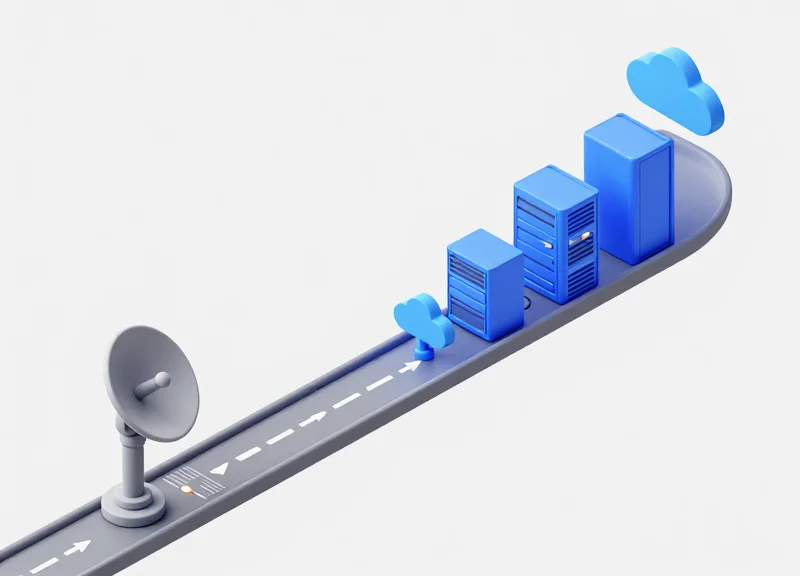
A strategic roadmap for transitioning to next-gen retail security is a phased execution plan that bridges the gap between disconnected legacy Electronic Article Surveillance (EAS) and cloud-native, AI-driven defense layers. Unlike traditional rip-and-replace methods, this roadmap prioritizes operational continuity, utilizing hybrid-cloud bridges to ingest legacy sensor data into modern analytics platforms while systematically upgrading hardware at the edge to support real-time telemetry and predictive loss prevention.
| Phase | Focus Area | Key Deliverable | Operational Impact |
|---|---|---|---|
| Phase 1: Audit | Tech Debt Assessment | Digital Readiness Scorecard | Zero (Back-end focus) |
| Phase 2: Pilot | Hybrid Integration | IoT Gateway Installation | Low (Test-lane validation) |
| Phase 3: Scale | Edge-Cloud Sync | Full Store Cloud Connectivity | Moderate (Staff Training) |
| Phase 4: Sunset | Legacy Decommissioning | Autonomous Cloud Defense | High (Optimized UX) |
- Inventory of Edge Assets: Catalog every existing pedestal, deactivator, and handheld scanner. Identify which units are 'cloud-ready' via simple firmware updates and which require total replacement.
- Establish the Data Foundation: Deploy an IoT gateway that aggregates signals from legacy AM/RF pedestals. This allows you to start collecting shrink data in the cloud before the hardware is even swapped.
- Implement the 'Shadow EAS' Protocol: Run new digital sensors alongside legacy hardware in high-shrink zones to calibrate AI models against real-world store traffic without risking a security gap.
- Software-Defined Security Rollout: Activate remote monitoring and predictive alerts. Shift from reactive 'alarm-chasing' to proactive intervention based on cloud-identified behavior patterns.
- Legacy Hardware Sunset: Systematically decommission old pedestals as new, 'invisible' ceiling-mounted or floor-integrated digital sensors achieve 99.9% detection accuracy.
Expert Insight: The 20% Rule. In my two decades of Silicon Valley tech migrations, I’ve found that 80% of transition failures occur because of a 'Big Bang' deployment strategy. For 2026 readiness, I recommend the '20% Bridge' approach: Allocate 20% of your transition budget to upgrading your network backbone first. Legacy EAS fails in the digital era not because the hardware is bad, but because the store's internal Wi-Fi/LTE throughput cannot handle the 24/7 telemetry streams required for cloud-based AI. Fix the pipe before you change the sensor.
Can we use our existing EAS tags with cloud systems?
Yes, most next-gen systems are backward compatible with standard AM and RF frequencies, though transitioning to RFID or dual-technology tags is required to unlock full item-level inventory intelligence.
How long does a typical multi-store transition take?
For a mid-sized retailer (50-100 locations), a phased rollout typically spans 12 to 18 months, ensuring each phase is validated against ROI metrics before moving to the next.
Is cloud-integrated security more vulnerable to hacking?
No. Modern cloud defenses use enterprise-grade AES-256 encryption and dedicated VPN tunnels, which are significantly more secure than the unencrypted local circuits used by legacy hardware.
DragonGuard's Vision for the Future of Retail Security
DragonGuard's vision for the 2026 retail landscape is centered on the concept of Cognitive Retail Security. Unlike traditional methods that rely on reactive alarms, DragonGuard integrates Electronic Article Surveillance (EAS), Radio Frequency Identification (RFID), and Electronic Shelf Labeling (ESL) into a single, cloud-managed intelligence layer. This unified approach eliminates data silos, allowing retailers to transition from 'detecting theft' to 'predicting and preventing loss' while simultaneously enhancing inventory accuracy and the customer shopping journey.
A unique insight into DragonGuard’s strategy is the shift toward Identity-Aware Loss Prevention. While legacy systems treat every alarm as a generic event, our next-gen digital defenses use edge computing to correlate sensor data. This means the system can distinguish between a high-value item being moved for restock and a suspicious movement pattern characteristic of organized retail crime (ORC). By 2026, we anticipate the 'Security Perimeter' will become invisible, replaced by floor-to-ceiling sensing that facilitates frictionless commerce without sacrificing asset protection.
| Feature | Legacy EAS Approach | DragonGuard 2026 Digital Vision |
|---|---|---|
| Primary Goal | Shrinkage Reduction (Reactive) | Total Retail Intelligence (Proactive) |
| Data Connectivity | Isolated Pedestals/Silos | Unified Cloud-Native Ecosystem |
| Hardware Synergy | EAS only | EAS + RFID + ESL Integration |
| Maintenance | On-site manual repairs | Predictive AI & Remote OTA Updates |
| Customer Impact | Intrusive barriers/bottlenecks | Seamless 'Invisible' Security |
How does DragonGuard integrate RFID with ESL?
DragonGuard’s platform syncs RFID inventory data with Electronic Shelf Labels in real-time. If an item is removed from a shelf but not scanned at POS, the system alerts the cloud. This ensures that pricing, stock levels, and security status are always in perfect alignment.
Is the DragonGuard ecosystem future-proof against new theft tactics?
Yes. Our systems are built on an extensible cloud architecture. This allows us to deploy Over-the-Air (OTA) firmware updates that introduce new AI detection algorithms as theft patterns evolve, ensuring your hardware doesn't become obsolete.
Can these systems be integrated into existing store designs?
Our vision emphasizes 'Aesthetic Security.' We offer concealed floor sensors and overhead RFID readers that provide 360-degree coverage without requiring the bulky, intrusive plastic pedestals that disrupt modern store aesthetics.
Ultimately, DragonGuard is not just selling hardware; we are building the foundation for the Autonomous Store. By providing a security layer that communicates directly with inventory management and customer analytics, we empower retailers to scale operations with confidence. In the 2026 market, the most successful retailers will be those who view security as a strategic data asset rather than a necessary evil.