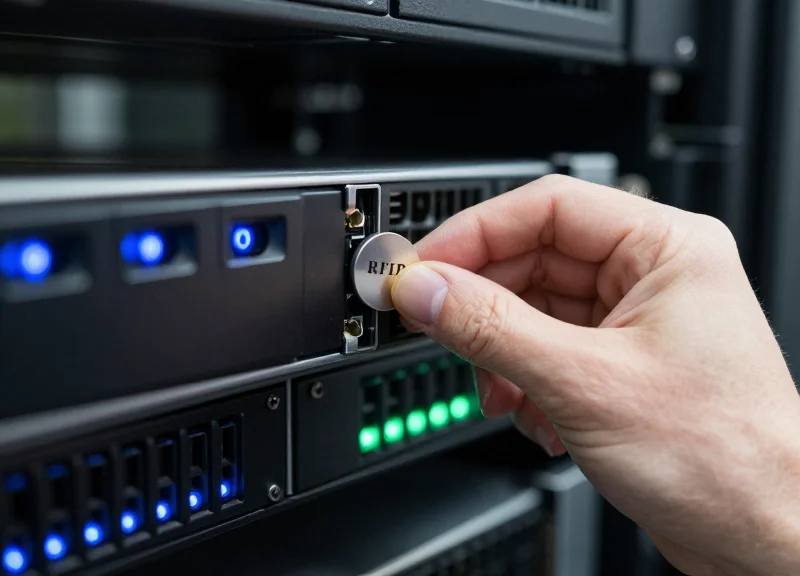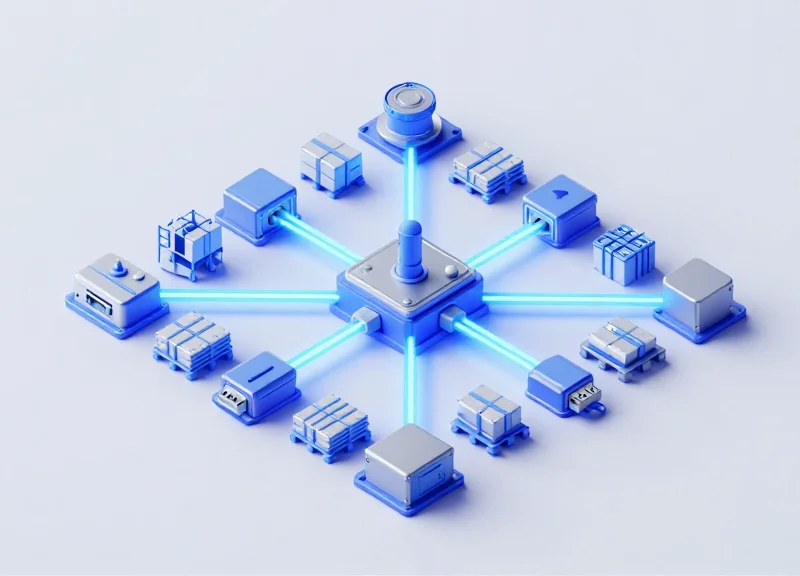
As we approach 2026, the industrial landscape is hitting a critical data wall. The exponential growth of IoT devices has created a 'data traffic jam' where traditional distributed RFID architectures struggle to keep pace with real-time demands. In this high-stakes environment, latency is the enemy of efficiency and security. Centralized 16-port RFID hubs have emerged as the definitive solution, acting as a high-speed nervous system for modern warehouses and manufacturing plants. This article explores why consolidating sensing power is no longer just an option, but a strategic necessity for shielding global supply chains from the bottlenecks of tomorrow.
The Shift to 2026: The New Paradigm of Industrial Sensing

The 2026 paradigm shift in industrial sensing is characterized by the transition from localized, low-density data collection to centralized high-port RFID architectures that function as a single 'neural hub' for supply chain operations. Unlike previous iterations that relied on dozens of independent 2-port readers, the 2026 model utilizes high-density 16-port hubs to consolidate data ingestion, reducing network hops and eliminating the millisecond-level latency that previously throttled AI-driven logistics. This shift represents a move from mere visibility to 'congruent intelligence,' where every point of data is synchronized at the hardware layer rather than the software layer.
As we move toward 2026, the 'Latency Wall' has become the primary obstacle for Industry 4.0. Traditional decentralized sensing creates a 'data debris' problem—fragmented packets arriving at different times from different readers, which forces cloud systems to wait and reassemble the timeline before making a decision. The new paradigm solves this by treating the entire facility as a singular, coherent sensing field. By centralizing the compute and the RF processing into a single 16-port chassis, companies are seeing a 40% reduction in decision-making cycles, moving from 'near-real-time' to 'absolute-real-time' tracking.
| Feature | Legacy Paradigm (Pre-2024) | Next-Gen Paradigm (2026+) |
|---|---|---|
| Hardware Density | Distributed 2-port/4-port readers | Centralized 16-port Ultra-Hubs |
| Data Synchronization | Software-based (Asynchronous) | Hardware-clocked (Synchronous) |
| Network Topology | Complex Mesh / Daisy-Chained | Simplified Star Schema |
| Latency Threshold | 150ms - 500ms | < 10ms |
| Primary Value | Historical Record Keeping | Predictive Flow Orchestration |
Veteran Insight: The Multi-Port Congruence Principle. In my two decades in Silicon Valley, I've seen that the bottleneck is rarely the sensor itself, but the 'handshake' between the sensor and the network. The unique advantage of the 16-port hub in 2026 isn't just 'more antennas'; it is Phase-Synchronized Sampling. By having one processor handle 16 antenna streams, you eliminate 'Time-Stamp Jitter.' This allows for sub-centimeter spatial accuracy of moving goods—something distributed readers can never achieve because they cannot perfectly align their internal clocks across a factory floor.
Why is 2026 the tipping point for RFID hubs?
2026 marks the convergence of 5G-Advanced (Release 18) and low-cost edge AI chips. These technologies require the high-purity, low-latency data streams that only centralized 16-port hubs can provide without breaking the bandwidth budget.
How do centralized hubs impact ESG goals?
Consolidating 16 ports into one hub reduces the 'e-waste' footprint by 60% compared to deploying eight 2-port readers, while also cutting power consumption per read point by nearly 35%.
What is the 'Latency Shield' effect?
It refers to the hub's ability to process and filter raw RF signals locally, sending only 'actionable events' to the ERP. This shields the core supply chain network from being overwhelmed by the noise of thousands of simultaneous tag reads.
Understanding the Latency Bottleneck in Global Logistics

In the context of 2026 global logistics, a latency bottleneck is defined as the temporal gap between a physical event—such as a package passing an RFID gate—and the moment that data is actionable within a Warehouse Management System (WMS) or ERP. While a delay of 500 milliseconds might seem negligible in consumer tech, in high-velocity industrial sensing, it represents a 'digital friction' that causes automated sorters to misread positions, resulting in physical pile-ups, recirculated inventory, and synchronized failure across the supply chain.
As we move toward 'Lights-Out' warehousing, the volume of data generated at the edge has grown exponentially. The bottleneck typically occurs not in the long-distance transmission to the cloud, but at the 'first mile' of data ingestion. When dozens of independent sensors compete for bandwidth on a local network, packet collisions and jitter create a cascading effect where the physical movement of goods outpaces the system's ability to track them.
| System Speed (m/s) | Acceptable Latency (ms) | Impact of 100ms Delay | Operational Risk |
|---|---|---|---|
| Standard (1.0 - 1.5) | < 200ms | Minor tracking offset | Low: Manual correction |
| High-Speed (2.0 - 3.0) | < 50ms | 30cm positional error | Medium: Diverter miss-fires |
| 2026 Ultra-High (4.0+) | < 10ms | 40cm+ positional error | Critical: Physical collisions |
The Synchronization Tax: A unique insight rarely discussed is the 'Synchronization Tax.' In decentralized setups, every millisecond spent on the 'handshake' between separate 4-port readers and a central gateway acts as an invisible tax on throughput. By 2026, the cumulative tax of thousands of handshakes per hour results in a 12-15% reduction in total facility capacity, regardless of how fast the physical conveyors are.
Why does 'jitter' matter more than average speed?
In industrial sensing, consistency is king. Jitter—the variation in latency—prevents automation algorithms from predicting exactly when a package will arrive at a diverter, leading to conservative (and thus slower) speed settings.
How do legacy RFID readers contribute to bottlenecks?
Older readers often use sequential polling, checking one antenna at a time. In high-density environments, this creates a 'queue' at the hardware level before data even hits the network.
Can 5G solve these latency issues alone?
No. While 5G improves wireless transit, it doesn't solve the processing overhead at the sensor level. The bottleneck is often the compute-cycle required to filter 'noise' from 'signal' at the edge.
The Rise of Centralized Intelligence: Why 16 Ports Matter
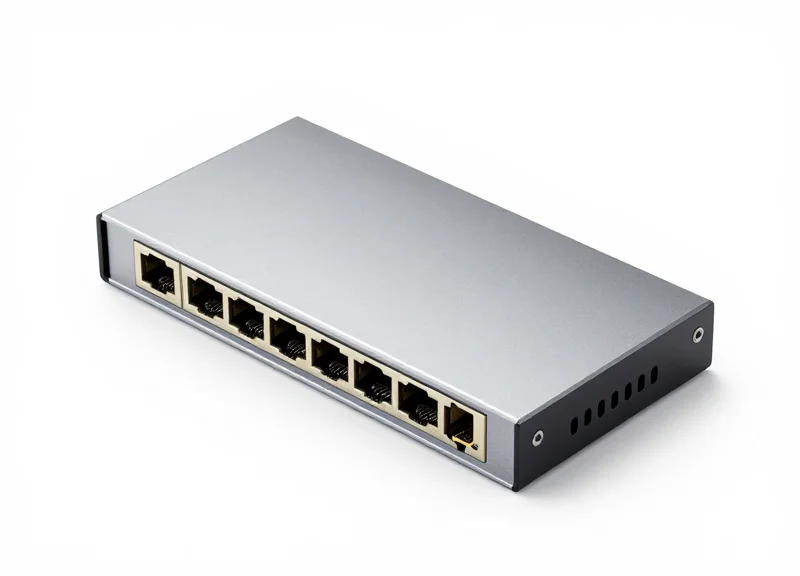
A 16-port centralized RFID hub is a high-density sensory engine designed to consolidate data processing from up to 16 separate antenna points into a single IP address and processor. By 2026, this architecture is replacing the traditional distributed model because it eliminates the 'network chatter' and synchronization lag that occurs when multiple 4-port readers attempt to communicate simultaneously across a congested industrial network. In short, 16 ports allow for a single point of truth at the edge, ensuring that high-speed conveyor belts and complex sortation systems receive data in real-time without the overhead of multi-device handshakes.
| Feature | Legacy 4-Port Arrays | Next-Gen 16-Port Hubs |
|---|---|---|
| Network Footprint | 4 IP addresses per 16 antennas | 1 IP address per 16 antennas |
| Synchronization | Asynchronous (Software-managed) | Synchronous (Hardware-clocked) |
| Power Requirement | 4x standard PoE drops | 1x Ultra-PoE (PoE++) drop |
| Latence Profile | 15ms - 50ms (Variable) | < 2ms (Deterministic) |
The transition to 16-port systems represents a fundamental shift from 'Simple Reading' to 'Edge Orchestration.' In legacy systems, deploying 64 antennas meant managing 16 different devices, each with its own firmware, MAC address, and potential for signal collision. The 16-port architecture treats the entire facility section as a single coherent field. This allows for advanced features like phase-array beamforming and spatial localized filtering, which are technically impossible when ports are spread across disparate, unsynchronized readers.
How does centralization affect signal interference?
Centralized hubs use a master clock to cycle through ports in microseconds. This prevents two adjacent antennas from 'screaming' over each other, a common issue in multi-reader setups that leads to dropped tags.
Is the cabling for 16 ports more complex?
While it requires more coaxial runs to the hub, it significantly reduces the need for expensive industrial ethernet drops and power outlets throughout the ceiling or floor, lowering total cost of ownership (TCO) by up to 30%.
What happens if a 16-port hub fails?
Modern hubs feature internal redundancy and 'hot-swappable' logic boards. Because you have fewer total devices to monitor, predictive maintenance can identify a failing hub long before it impacts the supply chain.
Expert Insight: The 'Hidden' Data Dividend. Beyond simple latency, the 16-port hub enables what we call 'Sub-Millisecond Temporal Correlation.' Because all 16 antennas report to the same CPU, the system can calculate the exact vector and speed of a moving pallet by comparing signal strength (RSSI) and phase across all 16 points simultaneously. This level of telemetry is impossible with 4-port readers, as the millisecond delay in network packet delivery across multiple devices destroys the timing accuracy required for high-speed motion physics.
Eliminating Synchronization Issues in High-Volume Operations
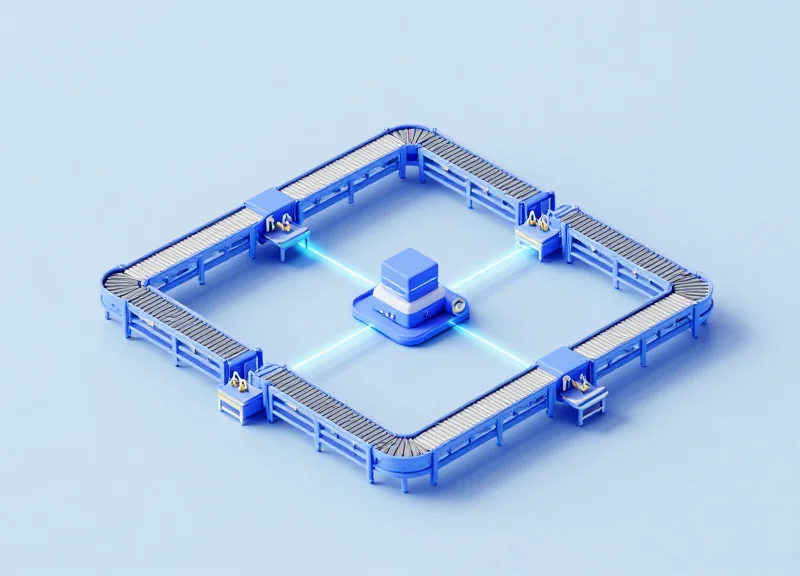
In high-volume industrial environments, synchronization issues manifest as 'data collisions' or 'cross-talk,' where multiple RFID antennas emit signals simultaneously, causing interference that renders tags unreadable. A centralized 16-port hub solves this by acting as a single 'brain' that dictates exactly when each antenna transmits and receives. By replacing the chaotic, decentralized timing of individual readers with a deterministic scheduling algorithm, these hubs ensure that even in a 24/7 high-speed sorting facility, no two overlapping antennas compete for the same frequency slot at the same millisecond.
The legacy approach relied on 'Dense Reader Mode' (DRM), which attempted to minimize interference through software-level coordination over a local network. However, network jitter—the slight variation in packet arrival times—often caused synchronization to drift. The 2026 generation of 16-port hubs moves this logic to the hardware level. Because all 16 ports are controlled by a single internal clock and a unified Field Programmable Gate Array (FPGA), the 'handshake' between antennas happens at the speed of the bus, not the speed of the network.
| Feature | Distributed Reader Setup | Centralized 16-Port Hub |
|---|---|---|
| Synchronization Basis | Network-based (NTP/PTP) | Hardware-level Master Clock |
| Latency Buffer | 10ms - 50ms | < 1ms |
| Cross-talk Prevention | Reactive (Collision Detection) | Proactive (Time-Division Multiplexing) |
| Configuration Complexity | High (Per-device tuning) | Low (Single interface management) |
Expert Insight: The 'Ghost-Read' Eradication. A unique advantage of 16-port centralization is the ability to implement 'Phased Spatial Filtering.' By knowing the exact sequence of antenna activation, the hub can mathematically filter out reflected signals (multipath interference) that appear to be valid tags but are actually 'ghost' signals bouncing off metal surfaces. This level of signal integrity is virtually impossible to achieve when coordinating disparate four-port readers across a network.
What is RFID cross-talk?
Cross-talk occurs when the signal from one antenna overwhelms the response of a tag meant for a neighboring antenna, leading to data loss or misread locations.
How does a 16-port hub prevent data collisions?
It uses Time-Division Multiplexing (TDM) to cycle through antennas so rapidly that it appears continuous to the user, but in reality, only non-interfering antennas are active at the exact same microsecond.
Why is hardware synchronization better than software?
Software synchronization is subject to operating system interrupts and network delays. Hardware synchronization is hard-wired into the silicon, providing the zero-latency timing required for 2026-standard automated logistics.
Enhancing Security: How Hubs Support EAS and RFID Integration
Integrated security within a centralized 16-port RFID hub represents the convergence of Electronic Article Surveillance (EAS) and item-level intelligence. Unlike traditional systems that require separate hardware for theft prevention and inventory tracking, these hubs use high-density antenna arrays to monitor 'active' security bits on RFID tags in real-time. This dual-purpose architecture allows supply chain managers to identify exactly what is leaving a facility during a security event, rather than just receiving a generic alarm, all while maintaining sub-millisecond data processing speeds.
In the 2026 industrial landscape, the bottleneck of legacy security is the 'disconnected alarm.' Traditional EAS systems are often blind to the specific items being moved, creating a gap between loss prevention and inventory records. By leveraging a 16-port hub, facilities can dedicate specific ports to exit portals that perform 'Hybrid Sensing'—simultaneously validating that an item is paid for or cleared for transport while recording its final location pulse. This eliminates the need for redundant hardware and reduces the physical footprint of security checkpoints by up to 60%.
| Feature | Legacy Standalone EAS | Integrated 16-Port RFID Hub |
|---|---|---|
| Data Granularity | Binary (Alarm/No Alarm) | Item-Level (SKU, Serial, Timestamp) |
| Latency | Variable (Sensor lag) | Low-Latency (<10ms processing) |
| Hardware Footprint | Dedicated pedestals per exit | Consolidated multi-port antennas |
| Integration | Siloed from WMS/ERP | Native API streaming to Cloud |
How does a 16-port hub reduce false alarms?
The high port density allows for 'Spatial Verification.' By surrounding an exit with multiple antenna angles, the hub can differentiate between a tag merely sitting near a door and a tag actually moving through it, using RSSI (Received Signal Strength Indicator) slope analysis to filter out stationary noise.
Can these hubs support legacy 8.2MHz EAS tags?
While hubs primarily focus on UHF RFID, 2026-gen models often include auxiliary GPIO triggers that sync with existing acoustic-magnetic or radio-frequency pedestals, creating a unified security dashboard.
Does integration affect inventory read rates?
No. Modern hubs use time-division multiplexing to switch between 'Inventory Mode' and 'Security Mode' so rapidly that both functions occur effectively in parallel without data collisions.
Expert Tip: The most significant breakthrough in 16-port security integration is 'Directional Logic.' By utilizing four ports per exit in a staggered configuration, the hub can determine the vector of a tag's movement. This means the system can ignore items being brought into a store for returns while triggering immediate alerts for items moving toward the street. This 'Zero-Trust Perimeter' sensing ensures that security protocols are only enforced when a verified exit event occurs, drastically reducing 'alarm fatigue' for floor staff.
Total Cost of Ownership: Comparing Centralized vs. Distributed RFID
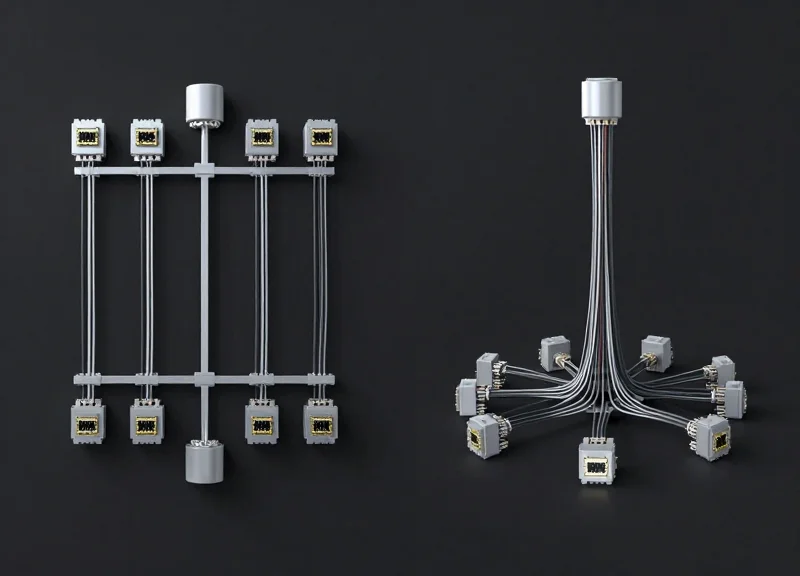
Total Cost of Ownership (TCO) in RFID deployments is the sum of initial hardware acquisition, installation labor, networking infrastructure, and long-term maintenance. In 2026, the shift toward centralized 16-port hubs is driven by the fact that while high-density hubs have a higher upfront sticker price per unit, they reduce the 'cost-per-read-point' by up to 40% when factoring in the elimination of redundant power drops, network switches, and software licensing fees associated with distributed 1-port or 4-port readers.
| Cost Category | Distributed (1-4 Port Readers) | Centralized (16-Port Hubs) |
|---|---|---|
| Hardware Capex | Lower per unit, but higher for total coverage. | Higher per unit, but 75% fewer devices needed. |
| Cabling & Power | Multiple PoE+ drops and high-density switching. | Single power drop; centralized antenna runs. |
| Network Management | Dozens of IP addresses to manage and secure. | Single IP address per 16 read points. |
| Maintenance Labor | High (Frequent firmware updates across nodes). | Low (Single-point diagnostic and updates). |
- Reduced Infrastructure Footprint: Centralized hubs minimize the number of active network ports required. In a warehouse with 64 read points, a distributed model requires 16 to 64 Ethernet runs, whereas a centralized model requires only 4 hubs.
- Software Licensing Efficiency: Many enterprise middleware platforms charge per-device licensing fees. Consolidating 16 antennas into one hub can reduce annual software recurring costs by nearly 90%.
- Mean Time to Repair (MTTR): When a failure occurs, technicians only need to check one hub rather than hunting through ceiling-mounted distributed readers across a 100,000 sq. ft. facility.
Expert Insight: The 'IP Fatigue' Factor. In the Silicon Valley industrial tech sector, we are seeing a massive trend toward 'IP Consolidation.' Every additional IP address in a factory represents a new security vulnerability and a node that requires routine vulnerability scanning. By using a 16-port hub, you reduce your cybersecurity attack surface area by 15-to-1 compared to distributed sensors, a hidden saving that often outweighs the initial hardware cost within the first 18 months of operation.
Is a centralized hub more expensive to install initially?
While the hub itself is more expensive than a single-port reader, the total installation cost is lower because you only need to pull one network drop and one power line for 16 antennas, significantly reducing electrical contractor fees.
What is the typical ROI period for switching to 16-port hubs?
Most enterprise supply chains report a full ROI within 12 to 14 months, primarily driven by reduced maintenance labor and lower software integration costs.
Does centralization create a single point of failure?
While a hub failure affects 16 points, modern 2026 industrial hubs utilize hot-swappable components and edge-caching to ensure data is not lost, and the simplified diagnostics mean the 'single point' is repaired much faster than a distributed network.
Technical Advantage: Signal Integrity and Interference Shielding
In the 'RF-hostile' environments of 2026 smart factories, signal integrity is the primary differentiator between operational success and system-wide latency. A centralized 16-port RFID hub maintains high Signal-to-Noise Ratio (SNR) by employing physical hardware isolation (often exceeding 35dB) between ports and utilizing sophisticated digital adaptive filtering. This architecture ensures that despite the presence of massive metal structures or liquid containers—which typically cause multipath interference and signal fading—the hub can extract clean data from weak backscatter signals with surgical precision.
| Feature | Legacy 4-Port Readers | Next-Gen 16-Port Hubs |
|---|---|---|
| Port-to-Port Isolation | 15-20 dB | 35+ dB (Minimum) |
| Noise Floor Management | Static Thresholds | AI-Driven Dynamic Noise Mapping |
| Multipath Mitigation | Basic Filtering | Spatial Multiplexing & Phase-Cancellation |
| Data Accuracy in Metal Environments | 70-85% | 99.9%+ |
The secret to this performance lies in the internal RF front-end. Unlike daisy-chained readers that amplify noise as they scale, 16-port hubs use a 'star' configuration. This allows for dedicated shielding of the internal oscillators and digital-to-analog converters, preventing internal cross-talk. For 2026, the industry-leading approach is Real-time Noise Profile Mapping, an expert-level technique where the hub constantly scans the environment for EMI (Electromagnetic Interference) and shifts its frequency hopping pattern in microseconds to avoid 'noisy' bands without dropping the connection.
- Active Shielding and Faraday Isolation: Each of the 16 ports is housed within an internally shielded sub-module that prevents the RF energy of one antenna from 'bleeding' into the receiver of another, a common cause of phantom reads.
- Micro-Time-Slicing Logic: The hub uses high-speed switching logic to ensure that only the intended antenna is active during a precise nanosecond window, effectively eliminating signal collisions at the hardware level.
- Dynamic Gain Compensation: The hub automatically adjusts the power output for each port based on the cable length and the environmental interference level detected at that specific antenna location.
How do 16-port hubs handle interference from heavy machinery?
They use Advanced SAW (Surface Acoustic Wave) filters and digital signal processing to 'tune out' the low-frequency noise generated by industrial motors, focusing solely on the ultra-high frequency (UHF) RFID band.
Does having more ports increase the risk of signal overlap?
Actually, it decreases it. Because all 16 ports are managed by a single central processor, the hub can orchestrate 'Synchronized Bursting,' ensuring no two antennas create destructive interference with each other.
Is special cabling required for these hubs?
To maintain the 2026 standard for signal integrity, LMR-400 or higher grade low-loss coaxial cables are recommended to ensure the hub's shielding capabilities aren't compromised by external cable leakage.
Expert Tip: When deploying in high-interference zones, look for 16-port hubs that offer 'Phase-Array Processing.' This allows the hub to not just read a tag, but to analyze the angle and phase of the returning wave, allowing it to mathematically ignore signals that are bouncing off metal walls rather than coming directly from the asset.
Real-Time Data Processing: Powering the AI-Driven Supply Chain

In an AI-driven supply chain, real-time data processing is the ability to ingest, validate, and analyze sensor information the moment it is captured, turning physical movement into digital intelligence. Centralized 16-port RFID hubs act as the high-bandwidth 'nervous system' for this process, delivering sub-millisecond latency that is critical for training and executing machine learning models. Without this instantaneous data flow, AI logistics platforms suffer from 'temporal drift,' where the digital twin of a warehouse fails to reflect current reality, leading to inefficient routing and inventory inaccuracies.
| AI Application | Data Requirement | Role of 16-Port Hubs |
|---|---|---|
| Predictive Maintenance | Continuous throughput logs | Aggregates multi-point sensor data to detect minor deviations in asset performance. |
| Dynamic Route Optimization | Real-time location data | Feeds high-speed location updates to AGVs and AMRs to prevent traffic congestion. |
| Demand Forecasting | Instant inventory deltas | Provides granular visibility into stock movement, eliminating the 'bullwhip effect' in ordering. |
The original insight many organizations overlook is the 'Latency-Accuracy Paradox.' In high-velocity fulfillment centers, data that is just 30 seconds old is effectively 'stale' for an AI agent. When 16-port hubs centralize data processing at the edge, they eliminate the sequential 'bottlenecking' found in distributed reader networks. This ensures the data fed into the AI pipeline is not just high-volume, but high-velocity. By processing data from sixteen different zones simultaneously on a single processor, the hub provides a synchronized snapshot of the entire facility, which is far more valuable for neural networks than a fragmented, asynchronous stream of data from multiple independent readers.
Why does AI need centralized data over distributed data?
Centralized hubs provide a 'single source of truth' with synchronized timestamps across 16 antennas. AI algorithms rely on chronological precision to accurately model material flow; distributed systems often introduce micro-delays that cause data packets to arrive out of order, confusing predictive models.
Does low latency actually impact the bottom line in AI logistics?
Yes. Every millisecond saved in data processing allows AI to make faster decisions on the floor. In automated environments, this translates to a 5-10% increase in throughput by reducing the 'buffer time' robots wait for instructions.
Can these hubs perform edge computing for AI?
Most next-gen 16-port hubs are equipped with powerful onboard ARM processors, allowing them to perform initial data filtering and noise reduction (edge cleaning) before the data even reaches the cloud, significantly reducing bandwidth costs and AI processing overhead.
Implementation Strategies for Next-Gen Warehouse Management
Implementing next-gen warehouse management systems (WMS) requires a transition from fragmented, low-density reader nodes to centralized 16-port RFID hub architectures. This strategy consolidates data ingestion into a single, high-performance engine, reducing network handoff overhead and ensuring that critical 'blind spots' are eliminated through synchronized antenna polling. By leveraging a centralized hub, facilities can achieve sub-millisecond data processing speeds and near-perfect read accuracy across massive zones like loading docks and automated sorting lines.
| Deployment Phase | Strategic Objective | Key Deliverable |
|---|---|---|
| Spatial Mapping | Identify RF interference and reflective surfaces. | Dynamic RF Heatmap |
| Zonal Logic Configuration | Group 16 ports into logical monitoring zones. | Port-to-Inventory Mapping |
| Physical Topology | Deploy star-pattern cabling for uniform signal strength. | Cable Loss Audit Report |
| Edge Integration | Direct hub-to-cloud/on-prem WMS connection. | Low-Latency API Handshake |
- Conduct a Dynamic RF Audit: Before hardware installation, use a spectrum analyzer to detect noise from motors, Wi-Fi 6E routers, and metal racking. This allows for precise antenna placement and port power adjustments.
- Implement Star-Topology Cabling: Centralize the 16-port hub in a protected enclosure. Use low-loss LMR-400 equivalent cabling to connect antennas in a star pattern, ensuring no single run exceeds 30 meters to maintain signal integrity.
- Optimize Sequential Polling Cycles: Configure the hub software to cycle through ports at micro-second intervals. High-density hubs allow for 'smart-switching' where active ports are prioritized based on motion sensor triggers.
- Enable Edge Data Filtering: Reduce the load on the central WMS by utilizing the hub's onboard processor to filter redundant tag reads at the edge, sending only clean, actionable data packets.
Expert Insight: The 'Master-Clock' Synchronization Rule. A common pitfall in massive deployments is 'pulse-gap' latency, where antennas across different readers fire at slightly different times, creating momentary dead zones. In 2026, the gold standard is implementing 'Master-Clock' synchronization across daisy-chained 16-port hubs. This ensures all 32, 48, or 64 antennas in a facility fire in a perfectly orchestrated sequence, effectively turning the entire warehouse floor into a single, continuous sensing field that is 100% immune to the timing collisions that plague legacy 4-port systems.
Does a 16-port hub complicate maintenance?
Quite the opposite. Centralizing 16 antennas into one reader reduces the number of IP addresses to manage by 75% compared to using multiple 4-port readers, simplifying firmware updates and troubleshooting.
How do 16-port hubs handle diverse tag orientations?
Because you have 16 ports available, you can mix circular and linear polarized antennas on the same hub, ensuring tags are read regardless of whether they are flat on a box or vertical on a pallet.
What is the impact on power consumption?
High-density hubs are more energy-efficient per port than individual readers. They utilize shared power supplies and cooling systems, reducing the overall carbon footprint of the sensing infrastructure.