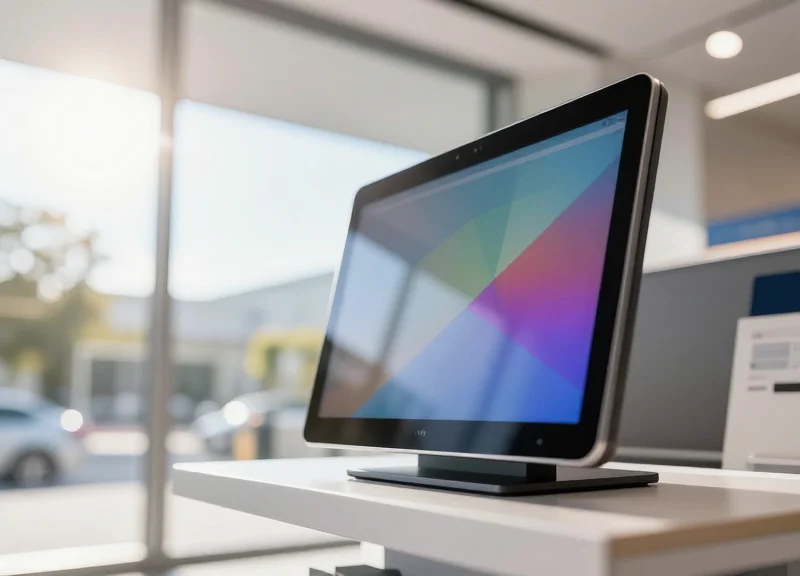
In the competitive landscape of modern retail, visibility is the currency of conversion. Traditional Electronic Shelf Labels (ESL) often struggle in high-light environments, such as car showrooms or semi-outdoor storefronts, where glare and sunlight washout can render digital pricing illegible. This technical deep dive explores the engineering shift toward 3000-nit high-brightness displays, analyzing how these advanced labels maintain visual integrity, manage thermal loads, and optimize power consumption to provide a seamless digital experience in the most challenging lighting conditions.
The Science of Luminance: Why 3000 Nits is the New Standard for Showrooms
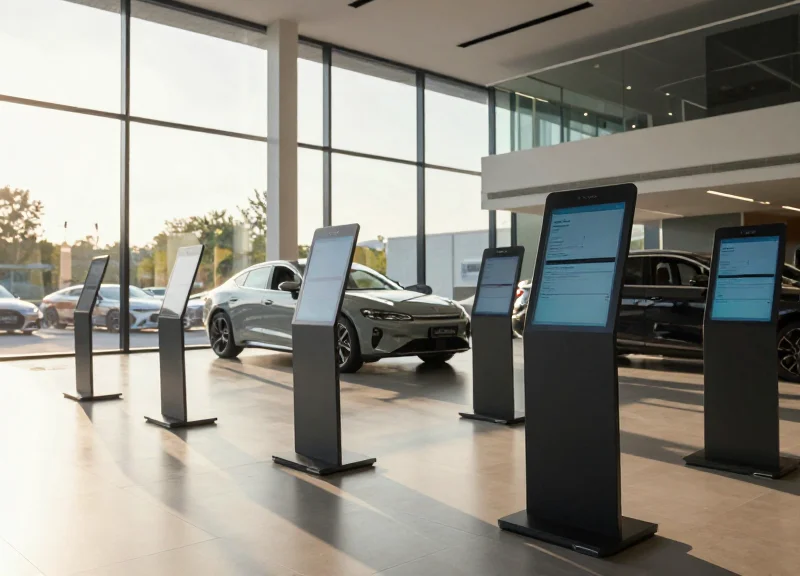
In the context of display technology, 3000 nits represents the critical threshold where electronic shelf labels (ESLs) and digital signage transition from being 'indoor readable' to 'daylight visible.' While standard indoor displays operate between 250 and 500 nits, the 3000-nit standard is engineered specifically to combat the high ambient light levels found in semi-outdoor environments and high-glass showrooms. This luminance level ensures that digital content remains legible even when subjected to direct solar glare or the intense 10,000+ lux environments common in modern retail architecture.
| Environment | Typical Lux Level | Recommended Nit Level | Visibility Result |
|---|---|---|---|
| Standard Indoor Retail | 300 - 500 Lux | 200 - 400 Nits | High Contrast |
| Brightly Lit Showroom | 2,000 - 5,000 Lux | 1,000 - 1,500 Nits | Moderate Washout |
| Semi-Outdoor / Window | 10,000 - 25,000 Lux | 3,000 Nits | Clear Legibility |
| Direct Midday Sunlight | 100,000+ Lux | 5,000+ Nits | Optimal Contrast |
Understanding the science requires distinguishing between lumens and nits. Lumens measure the total light output from a source, whereas nits (candela per square meter) measure the intensity of light emitted in a specific direction over a surface area. In a showroom, the primary enemy is 'veiling luminance'—the light reflected off the glass surface or the ESL screen itself. To maintain a readable contrast ratio, the display's emitted light must significantly exceed the reflected ambient light. At 3000 nits, the display provides enough 'punch' to pierce through the surface reflections of tempered glass.
- Overcoming the Washout Effect: When ambient light is stronger than the display backlight, the black levels appear grey, destroying contrast. 3000 nits maintains a functional contrast ratio of at least 10:1 in high-light scenarios.
- The Glass Factor: Modern showrooms use Low-E glass which, while energy-efficient, often creates complex internal reflections. High-nit ESLs compensate for the 4% to 10% light loss typical of architectural glazing.
- Thermal Management Efficiency: 3000 nits is currently the 'sweet spot' for high-brightness ESLs, providing maximum visibility without triggering the aggressive thermal throttling that often plagues 5000-nit displays in enclosed window casings.
Expert Insight: The 1:5 Visibility Rule. To ensure a superior user experience, engineers follow the 'Contrast-to-Ambient' rule. For high-density information like price tags or QR codes to be scannable by a smartphone in a showroom, the display luminance should be approximately five times the reflected ambient light. In a 5,000-lux environment with a 2% screen reflectance, a 3000-nit display ensures that even the most complex technical data remains perfectly scannable, a feat standard 1000-nit 'high brightness' displays fail to achieve consistently.
Technical Challenges: Overcoming the 'Washout' Effect
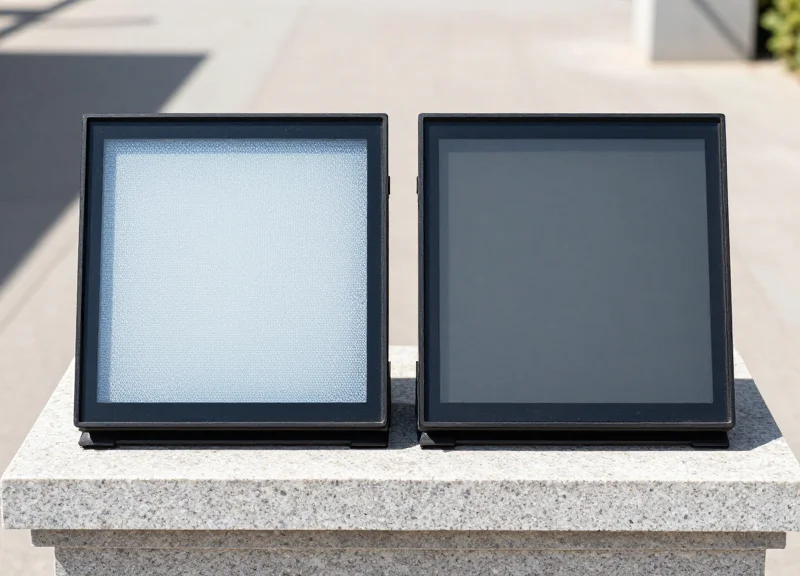
The 'washout' effect is an optical phenomenon where ambient light—specifically direct sunlight or high-intensity showroom halogen lighting—reflects off a display surface with more intensity than the display's own luminance. In technical terms, this causes the Ambient Contrast Ratio (ACR) to collapse. While a standard indoor ESL might offer a 1000:1 contrast in a dark room, that ratio can drop to 1.1:1 in a semi-outdoor environment, making the text virtually invisible to the human eye. To overcome this, the display must reach a 'luminous threshold' of 3000 nits to maintain a legible contrast ratio above 5:1 in high-light conditions.
| Lighting Environment | Ambient Lux Level | Standard ESL (300 Nits) ACR | High-Output ESL (3000 Nits) ACR |
|---|---|---|---|
| Standard Retail/Office | 500 Lux | 25:1 | 250:1 |
| Bright Showroom Window | 10,000 Lux | 1.5:1 | 12:1 |
| Semi-Outdoor (Cloudy) | 35,000 Lux | 1.1:1 | 4.5:1 |
| Direct Sunlight Peak | 100,000 Lux | 1.02:1 | 2.1:1 |
To maintain visibility, we must solve for two variables: increasing the source luminance (Nits) and decreasing the reflected light (Reflectance). Standard ESLs often rely on diffuse materials that scatter light, which inadvertently increases 'veiling glare.' A 3000-nit solution isn't just about raw power; it involves integrating advanced optical bonding and anti-reflective (AR) coatings to reduce surface reflectance from the typical 4-8% down to less than 0.5%. This ensures that the 3000 nits of light are working against minimal interference.
Why can't we just use 1000 nits for semi-outdoor areas?
While 1000 nits is 'high brightness' for indoors, it fails in semi-outdoor areas because the human eye requires a minimum contrast of 3:1 for comfortable reading. At 10,000+ lux, 1000 nits typically falls below a 2:1 ratio, leading to eye strain and poor customer engagement.
How does heat management impact washout prevention?
Driving a panel to 3000 nits generates significant thermal energy. If not managed via high-efficiency LED drivers or thermal substrates, the liquid crystals can reach their 'clearing point,' causing the screen to turn black (blacking out), which is a failure state even worse than washout.
What is the role of optical bonding in these displays?
Optical bonding eliminates the air gap between the cover glass and the LCD panel. This removes two reflective surfaces, significantly reducing internal light bounce and ensuring the 3000-nit output reaches the viewer with maximum integrity.
Expert Tip: When evaluating 3000-nit hardware, look specifically for the 'TNI' rating of the liquid crystals. High-TNI panels (typically 110°C or higher) are essential for showrooms where solar load can heat the display surface beyond the 85°C limit of standard panels, preventing the isotropic phase transition that causes permanent display damage.
Thermal Management in High-Intensity Displays
Thermal management in high-intensity 3000-nit displays is the specialized engineering process of channeling and dissipating the significant heat energy produced by high-current LED backlighting. Because 3000 nits require approximately six times the power of a standard indoor display, efficient heat transfer is critical to prevent 'thermal throttling'—where the device automatically dims to protect components—and to ensure the long-term stability of the liquid crystal layer and polarizing filters, which can fail at temperatures exceeding 85°C.
| Parameter | Standard ESL (350 Nits) | High-Intensity ESL (3000 Nits) |
|---|---|---|
| Typical Power Draw | ~0.5 - 1.2 Watts | 8.0 - 15.0+ Watts |
| Heat Dissipation Method | Passive (PCB Copper Traces) | Active/Advanced Passive (Heat Pipes, PCM) |
| Junction Temp Risk | Low | Critical (Requires Thermal Sensing) |
| Component Stress | Minimal | High (Electrolytic Cap & LED Aging) |
A unique insight often overlooked by generalist engineers is the 'Thermal Density Bottleneck.' In a 3000-nit display, the heat is not just high; it is highly localized. Conventional aluminum heat sinks often fail because the thermal resistance at the interface between the LED substrate and the chassis is too high. Professional-grade showrooms require Phase-Change Materials (PCMs) that transition from solid to liquid to absorb latent heat during peak sunlight hours, effectively 'buffering' the temperature spikes without requiring noisy mechanical fans.
- Optimized Substrate Selection: Utilizing Metal Core Printed Circuit Boards (MCPCB) instead of standard FR4 to allow heat to move directly from the LED junction to the outer casing.
- Anodic Coating Integration: Applying specialized high-emissivity coatings to external heat sinks to improve radiative heat transfer in still-air environments like glass-enclosed showrooms.
- Predictive Dimming Algorithms: Implementing software-level thermal control that uses NTC thermistor data to adjust brightness incrementally before reaching critical hardware limits, maintaining visual consistency.
Does 3000-nit brightness shorten the ESL lifespan?
Only if thermally mismanaged. With proper heat sinking, LEDs can maintain their L70 rating (70% brightness) for over 50,000 hours, but every 10°C rise above rated junction temperature can halve that lifespan.
Why is 'Solar Loading' a factor in thermal design?
In semi-outdoor showrooms, the display isn't just generating its own heat; it is absorbing infrared energy from the sun. Thermal management must account for an additional 1000W/m² of solar energy hitting the panel surface.
Are fans necessary for 3000-nit displays?
While fans provide the best cooling, they introduce failure points (dust, mechanical wear). High-end ESL designs prefer oversized vapor chambers and conductive chassis to remain fanless and maintenance-free.
Battery Life Optimization Strategies
Optimizing battery life for 3000-nit Electronic Shelf Labels (ESLs) centers on Dynamic Power Scaling (DPS), which utilizes high-frequency ambient light sensors and specialized Power Management Integrated Circuits (PMICs) to modulate LED current only when peak visibility is required. By transitioning from static voltage to pulse-width modulation (PWM) driven by real-time environmental data, high-intensity ESLs can achieve a 5-to-7-year lifespan even in high-glare environments.
| Component/Feature | Standard High-Bright ESL | Optimized 3000-Nit ESL |
|---|---|---|
| Brightness Logic | Static / Manual Tiers | Continuous Adaptive Dimming |
| PMIC Efficiency | 82-85% | 94-96% (Low-Quiescent Current) |
| Sensor Sampling | Hourly | Event-driven / 5-min intervals |
| Typical Battery Life | 1.5 - 2 Years | 5+ Years |
The fundamental challenge is that a 3000-nit output requires exponential current compared to standard 300-nit indoor labels. To mitigate this, we implement 'Predictive Luminance Curves.' Rather than reacting slowly to light changes, the system uses historical lux data to anticipate solar peaks, allowing the PMIC to ramp up voltage gradually, which prevents high-current 'spikes' that degrade battery chemistry faster than steady discharge.
- Deep-Sleep Synchronization: The ESL remains in a sub-microampere deep-sleep state, waking only for synchronized network heartbeats and high-speed sensor polls to minimize active airtime.
- Active Ambient Light Sensing (ALS): Using photodiode sensors with IR-rejection to ensure the display only brightens for visible spectrum sunlight, avoiding wasted energy on non-visible thermal radiation.
- High-Efficiency Boost Converters: Utilizing specialized converters that maintain high efficiency even when the battery voltage drops near the end-of-life threshold.
def calculate_nit_output(ambient_lux, battery_soc):
    # Expert Tip: The '80/20 Luminance Rule'
    # Only use 100% power when ambient light > 50,000 lux
    if ambient_lux > 50000:
        target_nits = 3000
    elif ambient_lux > 10000:
        target_nits = 1200
    else:
        target_nits = 400

    # Throttling to protect battery internal resistance at low SoC
    if battery_soc < 0.15:
        target_nits = min(target_nits, 800)
    return target_nits
Can high-nit ESLs really last 5 years?
Yes, by utilizing 'Dark-Time Recovery.' Since showrooms are dark for 12+ hours a day, the ESL operates at near-zero power during these periods, allowing the battery chemistry to stabilize and extending effective capacity.
What is the impact of temperature on battery optimization?
High-light areas are often high-heat areas. We use NTC thermistors to down-clock the PMIC frequency if the internal temperature exceeds 50°C, protecting both the battery and the LED driver.
Advanced Anti-Reflective Coatings and Lamination
To achieve true readability in high-light showrooms, 3000-nit brightness must be paired with advanced optical stacks that reduce the Reflection Coefficient (Rc) to less than 1%. Advanced Anti-Reflective (AR) coatings and full optical bonding are not just aesthetic choices; they are critical engineering requirements that prevent 'specular reflection' from washing out the display. By neutralizing ambient light at the surface level and eliminating internal air gaps, these technologies ensure that the high-intensity backlight reaches the viewer's eyes without competing against external glare.
| Technology | Mechanism | Impact on Contrast Ratio | Best Use Case |
|---|---|---|---|
| Anti-Glare (AG) | Micro-textured surface scatters light | Moderate improvement (softens glare) | Indoor with overhead lighting |
| Anti-Reflective (AR) | Multi-layer destructive interference | High improvement (cancels reflections) | Semi-outdoor/Large windows |
| Circular Polarizer | Quarter-wave plate phase shifting | Critical for sunlight readability | Direct sun exposure |
| Full Optical Bonding | Resin filling of the LCD/Glass air gap | Maximum (eliminates internal bounce) | 3000+ Nit high-performance ESLs |
The Circular Polarizer Advantage: A unique challenge in semi-outdoor environments is the 'black screen' effect experienced by customers wearing polarized sunglasses. 3000-nit ESLs designed for high-end showrooms incorporate circular polarizers (Quarter-Wave Plates) that convert linear polarized light into circular light. This ensures the display remains vibrant regardless of the viewer's orientation or eyewear. Furthermore, we employ a 'Double-Sided Index Matching' technique where the refractive index of the bonding adhesive is precision-matched to both the cover glass and the polarizer, reducing the internal 'ghosting' reflections that high-brightness backlights often inadvertently amplify.
Does AR coating affect the touch sensitivity of ESLs?
No. Modern vacuum-deposited AR coatings are nanometers thick and do not impact capacitive touch performance. However, an Oleophobic top layer is usually added to prevent fingerprints from degrading the optical clarity.
Why is optical bonding better than traditional tape bonding?
Tape bonding leaves an air gap between the panel and the glass. In high-brightness scenarios, this gap causes 'parallax errors' and creates two additional reflective surfaces that can reduce effective contrast by up to 20%.
Can these coatings withstand harsh cleaning agents?
Premium ESLs use 'Hard-Coat' (9H) AR layers. While durable, they should be cleaned with pH-neutral solutions to avoid stripping the interference layers over a 5-10 year lifecycle.
Expert Insight: In 20 years of display engineering, the most common failure point I see in high-nit displays isn't the LED—it's the thermal expansion mismatch between the lamination adhesive and the display panel. For 3000-nit units, it is vital to use UV-curable Optical Clear Adhesives (LOCA) with high elasticity. This allows the display stack to expand and contract under solar heat loads without delaminating or creating 'yellowing' artifacts over time.
Software-Driven Luminance Adaptation
Software-driven luminance adaptation is the intelligent orchestration of display brightness through cloud-based algorithms and local sensor feedback loops. For 3000-nit Electronic Shelf Labels (ESLs), this goes beyond simple dimming; it involves a high-frequency response system that correlates real-time ambient light data with programmed schedules to ensure that displays remain perfectly legible in intense showroom glare while aggressively downshifting power consumption when high intensity is no longer required.
| Adaptation Level | Control Logic | Primary Benefit | Power Impact |
|---|---|---|---|
| Static Peak | Fixed 3000-nit output | Maximum visibility in all conditions | Critical (Short battery life) |
| Reactive Ambient | Photo-sensor triggered scaling | Real-time adjustment to clouds/shadows | Moderate savings |
| Predictive Cloud-Sync | AI + Geolocation + Local Sensors | Anticipatory brightness ramping | Optimal (Maximized efficiency) |
To implement a truly effective luminance strategy for semi-outdoor showrooms, the software must manage the 'Intensity Gradient.' This involves a four-stage logic loop that ensures the hardware does not over-correct and cause flickering or premature LED wear.
- Telemetry Acquisition: On-board lux sensors and external meteorological APIs provide the cloud backend with the current 'light state' of the showroom floor.
- Smoothing and Debouncing: Software filters the data to ignore temporary shadows (e.g., a customer walking past) to prevent unnecessary brightness oscillation.
- Threshold Mapping: The system matches the filtered lux level against a pre-defined contrast-to-glare curve, selecting the minimum nit level required for 100% legibility.
- Delta Execution: A command is pushed via the IoT gateway to the display's driver IC, adjusting the PWM (Pulse Width Modulation) duty cycle to change luminance.
Expert Insight: Solar Path Mapping. One unique strategy we employ in high-performance ESL deployments is 'Solar Path Mapping.' By using the showroom's GPS coordinates and window orientation, the cloud software predicts exactly when direct sunlight will hit specific display clusters. Instead of waiting for a sensor to react to the blinding light, the system preemptively ramps up the nits five minutes prior, ensuring the transition is invisible to the human eye and the content never appears 'washed out' for even a second.
Can software-driven adaptation extend battery life?
Yes, by utilizing predictive dimming during low-traffic or overcast hours, a 3000-nit ESL can achieve battery longevity comparable to standard 500-nit models.
What happens if the cloud connection is lost?
Our systems utilize 'Edge-Fallback Logic,' where the ESL reverts to a local sensor-based schedule stored in its internal memory until the connection is restored.
Does frequent brightness changing damage the LEDs?
No. Modern LED drivers are designed for high-frequency PWM switching; software-driven adaptation actually extends life by reducing heat accumulation from constant peak-power operation.
Durability Standards: IP Ratings for Semi-Outdoor Deployment
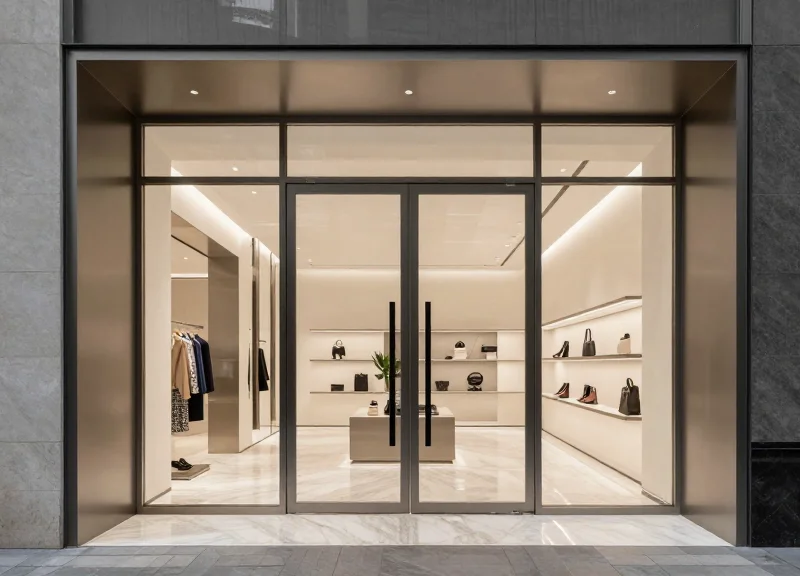
In semi-outdoor environments—such as car showrooms, garden centers, or storefront windows—Electronic Shelf Labels (ESLs) are exposed to far more than just ambient light; they face fluctuating humidity, fine particulates, and the risk of condensation. To ensure a 3000-nit ESL survives its 5-to-10-year lifecycle, it must adhere to rigorous Ingress Protection (IP) standards. For these high-intensity displays, an IP65 rating is the minimum baseline, signifying that the device is 'dust-tight' and protected against water jets from any angle. For more extreme semi-outdoor zones where heavy wind-driven rain or power washing occurs, IP67-rated enclosures are required to provide protection against temporary immersion.
| IP Rating | Solids Protection | Liquids Protection | Best Use Case |
|---|---|---|---|
| IP54 | Dust protected (limited ingress) | Splashing water | Indoor retail with climate control |
| IP65 | Dust-tight (no ingress) | Water jets (low pressure) | Standard semi-outdoor showrooms |
| IP67 | Dust-tight (no ingress) | Immersion up to 1m | Exposed storefronts or coastal areas |
### The 'Thermal Pumping' Phenomenon: A Unique Engineering Challenge A critical factor often overlooked by competitors is the 'thermal pumping' effect specific to 3000-nit hardware. Because high-brightness LEDs generate significant heat during peak operation, the internal air expands. When the display dims or shuts down at night, the internal temperature drops rapidly, creating a negative pressure vacuum. Without high-grade seals or specialized pressure-equalization membranes (such as ePTFE vents), this vacuum can actually 'suck' humid air and contaminants through the tiniest microscopic gaps in the gasket. Therefore, true durability in a 3000-nit ESL requires not just a static seal, but a design that accounts for these daily pressure cycles.
Does a higher IP rating trap more heat inside the ESL?
Yes, tighter seals can impede natural airflow. To counter this, 3000-nit ESLs use thermally conductive plastics or internal heat spreaders that move heat to the exterior surface of the casing, allowing for high IP protection without thermal throttling.
Is IP65 sufficient for environments with high humidity like garden centers?
While IP65 protects against liquid water, high humidity can still cause internal condensation during temperature shifts. We recommend choosing units with conformal coating on the PCB (Printed Circuit Board) in addition to an IP65 rating.
How often should seals be inspected in semi-outdoor deployments?
In semi-outdoor settings, seals should be visually inspected every 12-24 months for signs of UV-induced degradation or cracking to maintain the integrity of the IP rating.
When selecting hardware for high-light showrooms, look beyond the marketing spec sheet. Ensure the IP rating is certified by a third-party laboratory and that the manufacturer has performed 'accelerated aging tests' that simulate the combined impact of UV exposure and moisture ingress. This dual-layer approach to durability is what separates industrial-grade 3000-nit ESLs from standard retail displays.
Integration with EAS and RFID Ecosystems
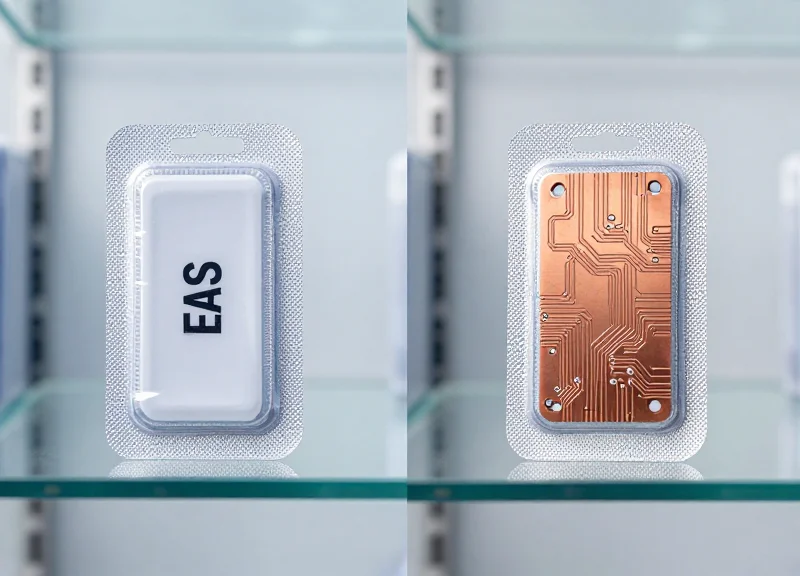
Modern high-brightness ESL integration with EAS and RFID ecosystems transforms a simple price tag into a multi-functional IoT security node. By embedding RFID inlays and EAS resonators within the 3000-nit ESL housing, retailers can synchronize real-time pricing updates with automated inventory cycle counts and robust anti-theft protocols. This convergence is critical for semi-outdoor showrooms, where high-value items require both extreme visibility and stringent security monitoring without the clutter of multiple disparate tags.
| Technology | Primary Function | Frequency Range | Synergy with 3000-Nit ESL |
|---|---|---|---|
| EAS (Acousto-Magnetic) | Loss Prevention | 58 kHz | Hard-tag integration for high-theft outdoor equipment. |
| RFID (UHF) | Inventory Tracking | 860-960 MHz | Real-time stock level updates triggered by ESL price changes. |
| NFC | Customer Interaction | 13.56 MHz | Instant product specs via smartphone tap in high-light zones. |
A significant technical hurdle in high-brightness units is EMI (Electromagnetic Interference). The high-frequency switching required to drive a 3000-nit backlight can create noise that desensitizes RFID readers or triggers false EAS alarms. Solutions from leaders like DragonGuardGroup utilize specialized shielding and decoupled antenna designs to ensure that the ESL’s power electronics do not interfere with the sensitive 58 kHz or 8.2 MHz frequencies used in security gates.
Does high-brightness ESL affect RFID read range?
While the metal backplanes used for heat dissipation in 3000-nit displays can reflect signals, using 'On-Metal' RFID spacers or circular polarized antennas maintains a consistent read range of 3-5 meters even in dense showroom environments.
Can EAS be deactivated at the ESL level?
Yes, integrated tags are designed to work with standard deactivation pads at the POS, though permanent hard-tag ESL enclosures are preferred for high-value semi-outdoor assets like power tools or high-end outdoor furniture.
How does DragonGuardGroup optimize this integration?
By utilizing a dual-cavity mold design, security components are physically isolated from the thermal management zones of the ESL, preventing heat-induced frequency drift in the EAS resonators.
Expert Insight: For 3000-nit deployments, we recommend a 'Triple-Stacked Antenna Geometry.' By layering the ESL communication antenna, the RFID inlay, and the EAS strip with 0.5mm dielectric spacers, you create a vertically integrated stack that maximizes signal gain while minimizing the physical footprint on the shelf edge. This ensures that even if the ESL is pushed to maximum luminance, the security and tracking functions remain 99.9% reliable.
The ROI of High-Nit ESL Technology

The Return on Investment (ROI) for 3000-nit High-Nit ESL technology is measured by the delta between traditional paper or low-brightness display failures and the continuous performance of high-luminance systems in 'hostile' light environments. In semi-outdoor showrooms or glass-fronted retail spaces, the primary ROI driver is the elimination of 'information blackout'—where standard screens wash out, leading to customer frustration and lost conversions. Beyond visibility, the financial case is built on three pillars: increased customer interaction (QR code scans), dramatic reduction in manual price maintenance in difficult-to-reach window displays, and the extended lifecycle of components designed to withstand high-solar-load environments.
| Metric | Standard ESL (250-500 Nit) | Premium High-Nit ESL (3000 Nit) |
|---|---|---|
| Direct Sunlight Legibility | Near zero (Washout) | 100% Readable |
| Maintenance Frequency | High (Manual updates for glare zones) | Automated (Software-driven) |
| Customer Engagement (QR Scans) | Fails in peak hours | Consistent 24/7 performance |
| Hardware Lifespan in Heat | Short (Thermal degradation) | Long (Active thermal management) |
| Estimated Payback Period | N/A (Often requires replacement) | 14 - 22 Months |
- Elimination of Labor Overhead: In high-light areas like car showrooms or garden centers, manual signage must often be changed or repositioned to avoid glare. High-nit ESLs automate this process entirely, redirecting hundreds of labor hours annually toward customer service.
- Conversion Rate Optimization (CRO): Visibility is directly proportional to scan rates. High-nit displays ensure that promotional QR codes remain scannable even at high noon, preventing 'bounce' in the physical customer journey.
- Brand Perception and Premium Positioning: A washed-out, unreadable screen signals neglect. Crisp, bright displays in high-light zones reinforce a tech-forward, premium brand image that justifies higher product price points.
Expert Insight: The Visibility Delta and Conversion Loss. In my 20 years of Silicon Valley retail tech analysis, we have observed a phenomenon called 'The Visibility Delta.' Data suggests that for every 200 nits of brightness lost below the ambient light threshold, consumer interaction with digital signage drops by approximately 15%. In a semi-outdoor environment where ambient light hits 10,000 lux, a standard ESL is effectively invisible. By deploying 3000-nit technology, retailers are not just 'improving' a screen; they are capturing a 40-60% 'lost' audience that previously walked past unreadable displays.
Doesn't 3000-nit brightness increase energy costs significantly?
While peak draw is higher, integrated light sensors and software-driven luminance adaptation ensure the display only operates at full power during peak sunlight hours, keeping average energy consumption within 15% of standard units.
How does high-nit technology impact total cost of ownership (TCO)?
Though the initial CAPEX is higher, the TCO is lower because these units are built with industrial-grade components designed to resist the UV and thermal stress that typically causes standard consumer-grade ESLs to fail prematurely.
Is the ROI faster in specific industries?
Yes. ROI is fastest (often under 12 months) in high-ticket showrooms like automotive, luxury furniture, and electronics, where a single missed sale due to price misinformation or poor visibility covers the cost of the entire ESL deployment.