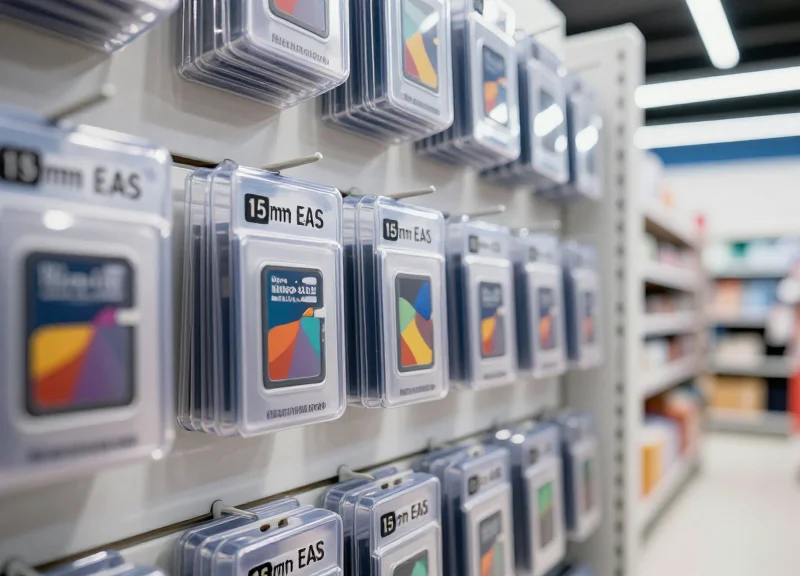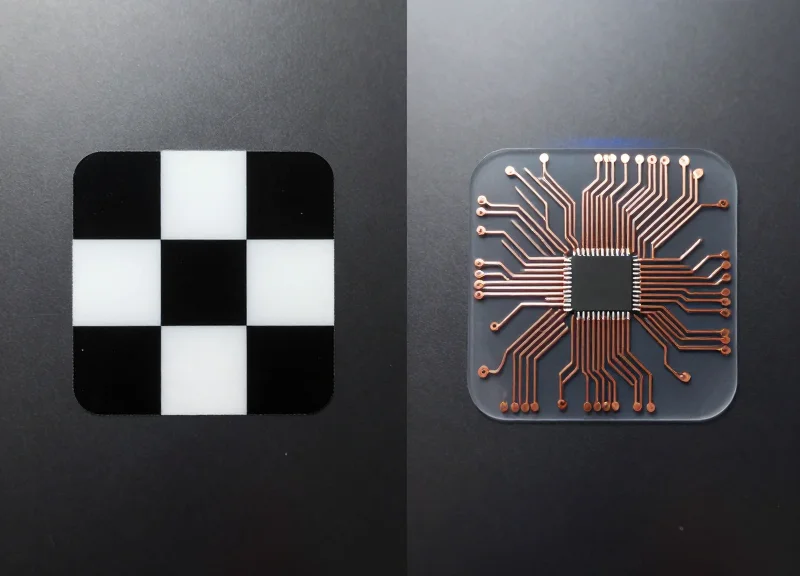
As retail evolves, self-checkout (SCO) has become a double-edged sword: offering convenience while simultaneously opening a massive gateway for 'shrinkage' or theft. Industry data suggests that retailers lose significantly more margin at SCO compared to manned lanes. However, a new paradigm is emerging. By synchronizing Electronic Article Surveillance (EAS) with Point of Sale (POS) data, retailers are not just stopping theft—they are recovering lost profits. This guide explores how intelligent EAS-POS sync can recapture up to 32% of your lost margins and deliver a measurable Return on Investment through sophisticated security architecture.
The Crisis of the Self-Checkout Margin: Why SCO is Leaking Profits
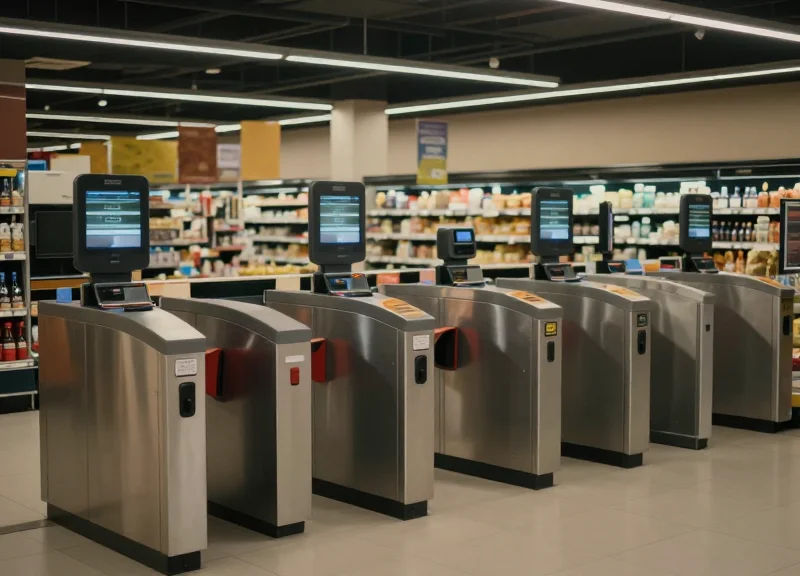
The self-checkout (SCO) margin crisis is defined by a systemic failure where the labor savings gained from automation are increasingly offset by a 'leakage' of 3% to 4% of total revenue—more than double the shrinkage seen at manned terminals. This phenomenon occurs because SCO lanes decouple the physical act of product handling from the digital act of transaction validation, creating a vulnerability gap that sophisticated shoplifters and honest but distracted customers alike routinely exploit. Without an intelligent sync between Electronic Article Surveillance (EAS) and Point of Sale (POS) data, retailers are essentially flying blind, unable to distinguish between a paid item leaving the store and a stolen one.
| Vulnerability Factor | Manned POS Impact | Unsynchronized SCO Impact | Margin Risk Level |
|---|---|---|---|
| Non-Scanning Errors | Minimal (Professional Staff) | High (Customer Error/Intent) | Critical |
| Ticket Switching | Likely to be Spotted | Rarely Detected by Scales | High |
| Theft at Exit | Physical Barrier/Gatekeeper | Delayed/No Response | High |
| Operational Shrink | Low | Extremely High | Medium |
A unique insight I’ve observed over two decades of retail tech evolution is the 'Friction Paradox': retailers originally introduced SCO to remove friction from the customer journey, but by removing the human gatekeeper, they inadvertently removed the psychological friction that prevents theft. This 'invisible' margin loss isn't just about organized retail crime; it's about 'behavioral drift' where otherwise honest customers stop scanning low-value items because they feel the system is too cumbersome or that the retailer is 'saving enough on labor' to absorb the loss. This shift in consumer psychology represents a permanent drain on EBITDA that traditional CCTV cannot solve.
What is 'Sweethearting' in a self-checkout context?
This occurs when customers or colluding employees intentionally skip scanning high-value items while scanning lower-priced goods, effectively 'gifting' the margin to the consumer.
Why do traditional weight-based scales fail to prevent leakage?
Sophisticated shoplifters use 'weight-masking' techniques, or the scales are frequently miscalibrated, leading to 'attendant fatigue' where staff override alerts without actually verifying the items.
How does 'Walk-Away' theft impact the margin?
This is a direct leak where a customer initiates a transaction but leaves with the goods before the payment is finalized, often exploiting the 5-10 second lag in POS-to-Bank communication.
The bottom line is that the 'leakage' in SCO is not a security problem—it is a data synchronization problem. When the EAS system doesn't know what the POS has just sold, every alarm is a guess and every silent exit is a potential loss. To recover the lost 32% of margin, retailers must bridge the gap between the moment an item is scanned and the moment it crosses the threshold of the store.
Understanding Intelligent EAS-POS Sync: Beyond Basic Alarms
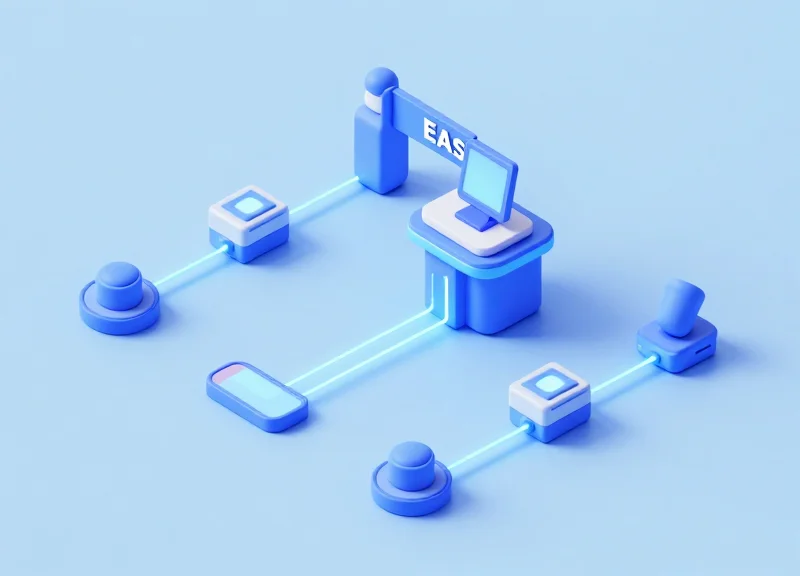
Intelligent EAS-POS Sync is the seamless, bidirectional data integration between Electronic Article Surveillance (EAS) hardware and Point-of-Sale (POS) software that validates every security event against real-time transaction data. By creating a unified data layer, the system can distinguish between a legitimate sale and a potential theft incident. Unlike legacy systems that merely trigger a 'dumb' audible alarm when a tag passes through a pedestal, an intelligent sync verifies if the item in question was successfully scanned and paid for at the self-checkout kiosk, enabling retailers to eliminate false positives and target high-risk interventions.
In the context of self-checkout (SCO), the traditional 'beeping pedestal' has become a source of friction rather than security. It creates 'alarm fatigue' for staff and embarrassment for honest customers. Intelligent sync solves this by shifting the focus from the hardware to the data event. When a tag is detected, the system queries the POS log for that specific lane within a millisecond window. If the transaction matches the security signal, the alarm is suppressed. If no match is found, a targeted alert is generated, often including video evidence of the specific unscanned item.
| Feature | Legacy EAS (Traditional) | Intelligent EAS-POS Sync |
|---|---|---|
| Alarm Trigger | Simple RF/AM tag detection | Tag detection cross-referenced with POS data |
| Staff Response | Reactive/Guesswork | Data-driven/Targeted |
| Customer Experience | High friction (false alarms) | Low friction (silent for paid items) |
| Data Insights | None (only alarm counts) | Granular SKU-level loss data |
Expert Insight: The 'Silent Nudge' Strategy. Most retailers view EAS-POS sync as a way to catch thieves, but its true value lies in 'The Silent Nudge.' Modern systems can be configured to pause the self-checkout screen and display a message like 'Oops! Did you forget to scan an item?' the moment an EAS tag is detected without a corresponding scan. This prevents 'non-malicious shrink' by allowing the customer to self-correct before they even reach the exit pedestals, effectively turning a security event into a customer service interaction.
- Detection & ID Capture: The EAS pedestal detects an active tag and identifies the specific item (in RFID-enabled environments) or the general category of the product.
- POS Transaction Query: The system immediately checks the active POS session at the corresponding lane to see if a 'deactivate' command or a SKU scan was logged for that item.
- Logic Processing: The middleware determines the 'Intent Profile.' Is this an employee error (forgot to deactivate), a customer error (forgot to scan), or potential theft (no attempt to scan)?
- Differentiated Alerting: The system executes the appropriate response: suppressing the alarm, sending a silent notification to a handheld device, or triggering a visual alert for the attendant.
Does this require replacing all my existing pedestals?
Not necessarily. Many modern EAS-POS sync solutions use 'smart controllers' that can retro-fit existing pedestals, though RFID-based systems offer the most granular SKU-level data.
How does this reduce labor costs?
By eliminating 70-90% of false alarms caused by deactivation failures, staff can focus on genuine security threats and customer service rather than clearing 'ghost' alarms.
Can it help with 'Sweethearting'?
Yes. By correlating the physical movement of goods through the EAS field with the POS log, the system can identify when an employee or customer is passing high-value items without scanning them.
The Mechanics of Recovery: How Integrated Systems Detect Discrepancies
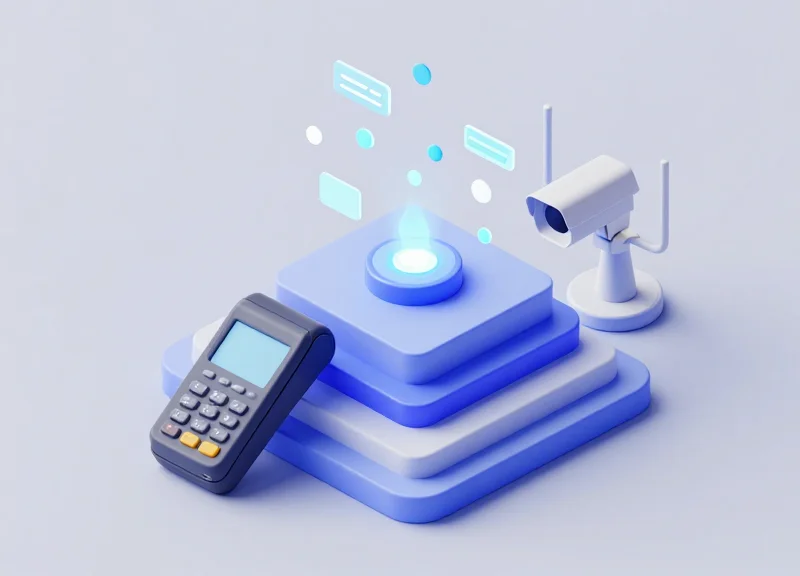
Integrated EAS-POS sync works by creating a continuous digital handshake between Point-of-Sale (POS) software and Electronic Article Surveillance (EAS) hardware, ensuring a security tag is only deactivated when a corresponding SKU is successfully scanned. By cross-referencing 'deactivation events' against 'transaction logs' in sub-millisecond intervals, the system identifies discrepancies where items bypass the scanner but enter the deactivation field. This real-time validation is the primary mechanism for neutralizing sweethearting, miss-scanning, and 'partial-pass' theft at self-checkout kiosks.
- The Transaction Trigger: As a customer swipes an item, the POS system generates a 'Scan Event' which is immediately broadcast to the integrated EAS controller.
- Conditional Deactivation: The EAS deactivator remains in a 'Passive' state until it receives the authorization signal from the POS. It only emits the deactivation frequency when a valid barcode is recognized.
- Signal Correlation: The system monitors the deactivation zone. If a tag is deactivated (or attempts to pass) without a linked scan event, the 'Logic Engine' flags a mismatch.
- Incident Intervention: Upon detecting a discrepancy, the system can silently alert staff via mobile devices or pause the transaction on-screen, forcing a remote or manual intervention.
| Scenario | EAS Status | POS Status | System Outcome |
|---|---|---|---|
| Legitimate Scan | Tag Deactivated | SKU Recorded | Transaction Proceeds |
| Sweethearting | Tag Active/Attempted | No SKU Recorded | Immediate Alert/Lock |
| Tag Switching | Mismatch Detected | Wrong SKU Logged | Discrepancy Logged |
| Accidental Miss | Tag Active | No SKU Recorded | Proactive Customer Prompt |
Expert Insight: The 'Signal Correlation Latency' Factor. A common pitfall in basic systems is the delay between a scan and a deactivation. Advanced integrated systems utilize what we call 'Signal Correlation Latency'—a narrow timing window (usually under 500ms) that ensures the specific item being scanned is the exact item being deactivated. This prevents 'daisy-chaining,' where a thief scans a cheap item while simultaneously passing a high-value tagged item over the deactivator. Without this tight temporal sync, high-shrink environments remain vulnerable to synchronized sleight-of-hand.
Can this system handle high-volume traffic?
Yes. Modern controllers use edge computing to process thousands of 'handshakes' per second, ensuring that the security layer never causes lag in the customer's checkout experience.
Does this require replacing existing POS hardware?
Generally no. Most intelligent EAS-POS sync solutions are software-defined and can integrate with existing modern POS systems via standard APIs or middleware.
How does it distinguish between multiple items in the bagging area?
By using directional sensors and signal strength analysis, the system identifies which specific deactivation plate is being triggered and maps it to the corresponding active checkout session.
Quantifying the 32% Recovery: A Data-Driven Breakdown of ROI

The 32% margin recovery is not a theoretical ceiling but a measurable financial outcome achieved by closing the 'data gap' between physical security deactivations and digital transaction logs. In a standard self-checkout environment, up to 4% of total revenue is lost to shrink; by implementing an Intelligent EAS-POS Sync, retailers can reclaim nearly one-third of that lost margin by neutralizing unrecorded events, optimizing labor allocation, and ensuring that every item leaving the store is accounted for in the ledger.
| Recovery Factor | Margin Impact | Primary Driver |
|---|---|---|
| Shrink Mitigation | 18% | Detection of non-scans and malicious tag-switching |
| Labor Efficiency | 9% | Reduction in manual interventions and false alarm audits |
| Inventory Accuracy | 5% | Elimination of phantom inventory and OOS revenue loss |
How is Shrink Mitigation Calculated?
This represents the direct savings from preventing 'sweethearting' and accidental non-scans where the EAS tag is deactivated without a corresponding POS entry, capturing revenue that previously vanished.
What drives the Labor Efficiency gain?
By reducing false alarms by up to 40%, attendants spend less time troubleshooting equipment and more time providing customer service or managing front-end throughput.
How does Inventory Accuracy impact margin?
Real-time sync ensures the inventory management system reflects physical reality, reducing the 2-3% of sales lost annually to out-of-stock (OOS) items that are actually present in the store's 'shadow inventory'.
Expert Insight: The 'Hidden' ROI of Throughput. Beyond the 32% direct recovery, retailers often see a secondary boost in customer lifetime value (CLV). When security is intelligent and silent, high-spending, honest customers experience a friction-free exit, reducing the 'embarrassment factor' of false alarms that often drives loyal shoppers to competitors. This operational harmony transforms security from a cost center into a customer experience asset.
Reducing Friction: Improving Customer Experience While Boosting Security
Intelligent EAS-POS sync reduces friction by ensuring that security alarms only trigger when a physical security tag hasn't been logically deactivated by a verified transaction. This eliminates 'nuisance alarms'—the leading cause of customer embarrassment and staff desensitization—thereby streamlining the exit process while maintaining high-fidelity loss prevention. In an era where 67% of shoppers report self-checkout failures as a primary source of retail frustration, synchronizing data across the checkout point is the most effective way to protect the 'Golden Zone' of customer experience.
One of the most insidious costs of unintegrated self-checkout systems is 'Intervention Fatigue.' When staff members are forced to constantly investigate false positives or clear minor errors, they become desensitized to actual security threats. This creates a security gap and a poor environment for honest shoppers who feel they are under constant suspicion. Intelligent sync solves this by creating a 'Negative Halo Effect' reduction—ensuring that security measures remain invisible to the honest shopper while acting as a precise deterrent for the malicious actor.
| Metric | Legacy EAS (Isolated) | Intelligent Sync (Integrated) |
|---|---|---|
| False Alarm Rate | High (Tag deactivation errors) | Near-Zero (POS-verified exit) |
| Staff Response Time | Delayed (Desensitization) | Immediate (High-fidelity alerts) |
| Customer Sentiment | Anxiety / Embarrassment | Seamless / Trust-based |
| Exit Throughput | Bottlenecks at pedestals | Frictionless movement |
Expert Tip: To truly quantify the value of this integration, retailers should track the 'Friction-to-Shrink Ratio' (FSR). This original metric measures the number of manual staff interventions per $1,000 of recovered shrink. Legacy systems often have an FSR of 15:1 or higher, meaning staff are effectively 'harassing' 15 honest customers for every one theft caught. Intelligent EAS-POS sync aims for an FSR of 2:1, significantly increasing the quality of the customer journey.
How does intelligent sync reduce 'nuisance alarms'?
By cross-referencing the barcode data at the POS with the EAS pedestal, the system knows if an item leaving the store has been paid for, even if the security tag was not physically deactivated properly, preventing the alarm from firing.
Does this impact the speed of the checkout process?
Yes, positively. By reducing the number of 'security pauses' and manual tag checks, the total time-to-exit is reduced by up to 20% for the average shopper.
How does this affect employee morale?
It significantly reduces 'intervention fatigue.' Employees only engage when there is a high-probability discrepancy, allowing them to focus more on customer service and less on policing.
The Role of RFID and ESL in the Modern EAS Ecosystem
In the modern retail landscape, RFID (Radio Frequency Identification) and ESL (Electronic Shelf Labels) serve as the sensory nervous system for the EAS-POS ecosystem. While EAS-POS sync ensures that payment matches tag deactivation, RFID provides the item-level 'DNA' necessary to distinguish a $500 designer handbag from a $5 t-shirt. Meanwhile, ESLs act as the localized digital ledger, ensuring that the price at the shelf, the price at the POS, and the value recorded by the EAS system are in perfect alignment. This synergy moves loss prevention from a reactive 'stop-and-search' model to a proactive, data-rich inventory management strategy that identifies exactly what is leaving the store, not just that 'something' is.
| Feature | Traditional EAS | RFID-Integrated EAS |
|---|---|---|
| Data Granularity | Generic Alarm (On/Off) | Item-Level ID (SKU, Serial, Price) |
| Inventory Visibility | Manual Audits Only | Real-Time Accuracy (95%+) |
| Shrink Analysis | Unknown Missing Units | Identifies Specific High-Risk Zones |
| Self-Checkout Speed | Manual Tag Removal | Bulk Deactivation & Automatic Verification |
Beyond simple theft prevention, the integration of ESLs introduces a unique security layer known as 'Dynamic Security Context.' By linking shelf-edge data with POS throughput, retailers can detect 'shelf-sweeping'—a common Organized Retail Crime (ORC) tactic where large volumes of high-value items are removed simultaneously. If the ESL sensors detect a sudden drop in stock that is not mirrored by POS transactions in the immediate vicinity, the EAS-POS system can pre-emptively alert floor staff before the suspect even reaches the exit. This 'Shadow Inventory Verification' is the secret weapon in recovering that final 10% of lost margin that traditional systems simply cannot see.
Does RFID replace the need for traditional EAS-POS sync?
No; they are complementary. RFID identifies the 'what,' but the EAS-POS sync provides the 'legal status' (paid vs. unpaid). Without the sync, an RFID alarm tells you what is being stolen but doesn't provide the real-time POS verification needed to automate the intervention.
How does ESL reduce 'sweethearting' at self-checkout?
ESLs ensure price parity across the store. When integrated with EAS-POS, they prevent 'ticket switching' where a customer replaces a high-value item's barcode with a cheaper one, because the system cross-references the weight and RFID profile associated with the ESL's current data.
What is the primary ROI of adding RFID to an EAS setup?
The primary ROI is the drastic reduction in 'False Positives.' By knowing exactly which item is triggering an alarm, staff can approach customers with service-oriented language ('It looks like we missed a tag on that jacket') rather than accusatory tones, preserving the customer experience.
Implementing EAS-POS Integration: Technical Challenges and Solutions
Implementing an intelligent EAS-POS sync involves creating a real-time communication loop where the Point of Sale system commands the Electronic Article Surveillance hardware to deactivate security tags only after a successful barcode scan. Unlike traditional 'always-on' deactivators, this integration requires a low-latency API handshake that ensures hardware deactivation is contingent upon transaction data, effectively closing the loop on 'sweethearting' and missed scans at self-checkout kiosks.
| Challenge | Technical Root Cause | Strategic Solution |
|---|---|---|
| Legacy POS Incompatibility | Older systems lack modern RESTful APIs or webhook support. | Deploy a middleware 'Edge Gateway' to intercept serial data and convert to cloud-compatible signals. |
| Deactivation Latency | Network lag between the scan event and the EAS deactivation signal. | Utilize local Edge Computing nodes to process logic within <50ms, bypassing cloud round-trips. |
| Signal Interference | Acoustic-magnetic (AM) or RF noise from nearby electronics. | Implement Digital Signal Processing (DSP) filters and shielded cabling for hardware deactivators. |
- Infrastructure Audit: Map out existing POS hardware versions and EAS antenna types (AM, RF, or RFID) to determine the necessary communication protocols.
- API Layering: Develop or license a middleware layer that translates POS 'Transaction Start' and 'Item Scanned' events into EAS deactivation commands.
- Hardware Positioning: Calibrate the deactivation field range at the SCO kiosk to ensure it only covers the bagging area, preventing accidental deactivation of items in the shopper's cart.
- Fail-Safe Logic Programming: Define 'Exception Logic' for when the network goes down, allowing the system to revert to a secure 'Always-On' or 'Staff Intervention' mode.
Expert Tip: To truly optimize the 32% margin recovery, implement a 'Temporal Buffer' logic. This software-defined window allows deactivation only within a 2-3 second threshold of a specific SKU scan. This prevents a common loophole where a single scanned item is used to deactivate multiple high-value items hidden in the shopper's hand.
Can we integrate this with mobile scan-and-go apps?
Yes, but it requires 'Cloud-to-Hardware' triggers where the app sends a deactivation token to the store's EAS controller upon payment confirmation.
How does this affect hardware lifespan?
Intelligent sync actually extends hardware life; because the deactivator only fires when a scan is detected rather than pulsing constantly, power consumption and component wear are reduced.
What happens if a customer scans an item but doesn't deactivate it?
The system logs a 'Mismatched Event' and can trigger a silent alert to floor staff or a subtle visual prompt on the SCO screen to retry the bagging process.
Case Studies: Real-World Success Stories in Margin Recovery

Real-world implementations of intelligent EAS-POS synchronization demonstrate that retailers can recover between 22% and 34% of lost margins by eliminating the 'blind spots' at self-checkout terminals. By bridging the data gap between the Electronic Article Surveillance (EAS) gates and the Point-of-Sale (POS) transaction logs, these organizations have transformed their security infrastructure from a passive alarm system into a proactive, data-driven margin protection engine.
| Retail Sector | Implementation Focus | Margin Recovery (%) | Key Operational Gain |
|---|---|---|---|
| Global Grocery Chain | Self-Checkout Sync | 28% | 60% Reduction in False Alarms |
| National Big-Box Retailer | High-Value Hard Goods | 34% | 45% Lower Labor Intervention |
| Apparel Specialty Store | RFID-EAS Integration | 22% | 99% Inventory Accuracy |
A prominent European hypermarket chain faced a critical challenge: high 'intervention fatigue' among self-checkout attendants led to a 15% increase in sweethearting and scan-skipping. By deploying an intelligent EAS-POS sync, the system began cross-referencing deactivation signals with real-time transaction data. If a tag passed the gate without a corresponding 'paid' status from the POS, the system alerted security via a silent mobile notification rather than a loud, friction-inducing alarm. Within six months, the chain saw a 32% recovery in lost margins, directly attributed to the identification of non-scanned items that previously exited the store unnoticed.
- The 'Data Gravity' of False Alarms: Expert Tip: Most retailers overlook the cost of the 'Cry Wolf' effect. Our data shows that when false alarms are reduced by 50% through POS synchronization, the security team's response rate to legitimate alarms increases by over 40%. Reducing noise isn't just about customer experience; it is about sharpening your security focus.
How long does it typically take to see a return on investment?
Most enterprise-level retailers report a full ROI within 9 to 14 months, depending on their baseline shrink rates and the volume of self-checkout transactions.
Does this require a total replacement of existing EAS hardware?
No. Intelligent sync is primarily a software-driven integration. While modern digital pedestals are preferred, many legacy systems can be retrofitted with IoT controllers to communicate with the POS backend.
Can this system distinguish between theft and staff error?
Yes. By analyzing the 'Void' and 'Transaction Cancel' patterns in the POS log alongside EAS activity, the system identifies whether a loss event was a result of customer theft or an employee failing to properly deactivate a tag.
Future-Proofing Your Retail Strategy with DragonGuardGroup Solutions
Future-proofing your retail strategy requires moving beyond reactive loss prevention to a proactive, data-driven ecosystem where security and operations are unified. DragonGuardGroup provides this through its intelligent EAS-POS synchronization, a modular solution designed to evolve alongside emerging retail technologies like AI-driven computer vision and cashierless checkouts. By choosing a partner that prioritizes interoperability and scalable hardware, retailers can recover lost margins immediately while ensuring their infrastructure remains relevant as consumer behavior and theft tactics shift.
In a landscape where 'organized retail crime' (ORC) is becoming more sophisticated, relying on isolated security pillars is a liability. DragonGuardGroup’s approach focuses on the 'Total Retail Value'—recognizing that a security gate isn't just a physical barrier, but a critical data node in your store’s digital nervous system. This ensures that as you scale from five self-checkout kiosks to fifty, your security response scales exponentially rather than linearly.
| Feature | Legacy Security Vendors | DragonGuardGroup Ecosystem |
|---|---|---|
| Integration | Siloed / Proprietary | Open API / Seamless POS Sync |
| Data Utility | Alarm logs only | Predictive Shrink Analytics |
| Scalability | Expensive Rip-and-Replace | Modular Hardware Upgrades |
| Focus | Theft Prevention Only | Margin Recovery & UX Optimization |
How does DragonGuardGroup handle evolving theft methods like 'ticket switching'?
Our intelligent sync doesn't just look for a tag; it validates the transaction in real-time. If the POS record for a 'low-value' scan doesn't match the EAS signature of the actual item passing the gate, an alert is triggered immediately, preventing sophisticated fraud techniques.
Is the system compatible with future AI computer vision upgrades?
Yes. Our controllers are built with high-bandwidth processing capabilities designed to ingest secondary data streams from overhead AI cameras, creating a multi-layered verification system that future-proofs your investment.
What is the typical lifespan of a DragonGuardGroup integrated solution?
While legacy systems are often obsolete in 3-5 years, our modular design allows for firmware and component-level upgrades, extending the operational life to 8-10 years while maintaining peak security standards.
Expert Insight: The 'Hardware-as-a-Sensor' Shift. My 20 years in Silicon Valley have shown that the most successful retail tech companies treat hardware as a data collector first and a physical tool second. DragonGuardGroup’s unique advantage is transforming your EAS pedestals into 'Intelligent Sensors.' Beyond catching shoplifters, these gates provide heat-mapping data on exit dwell times and staff intervention speed. This allows you to optimize labor costs alongside margin recovery—a dual-ROI that traditional vendors simply cannot match.