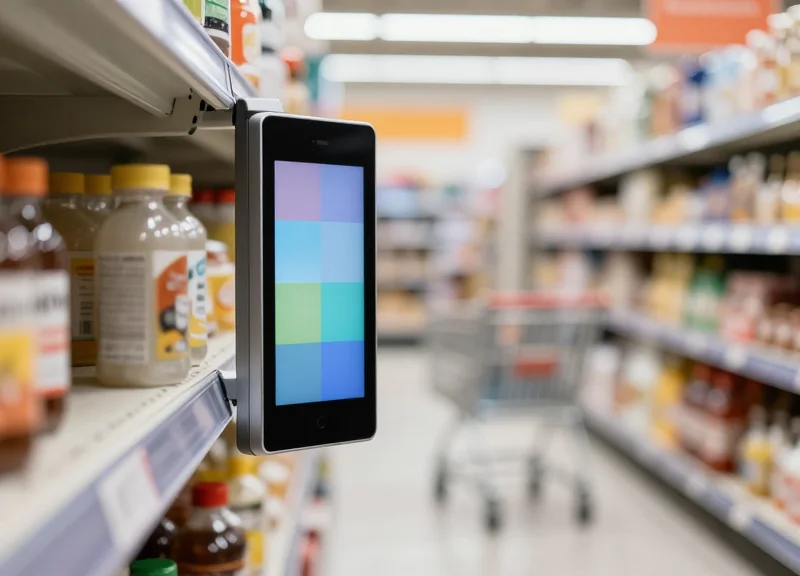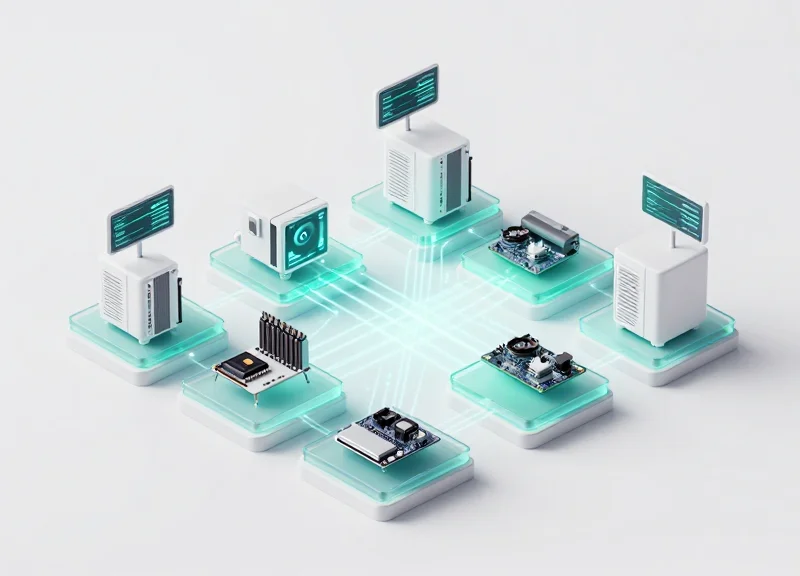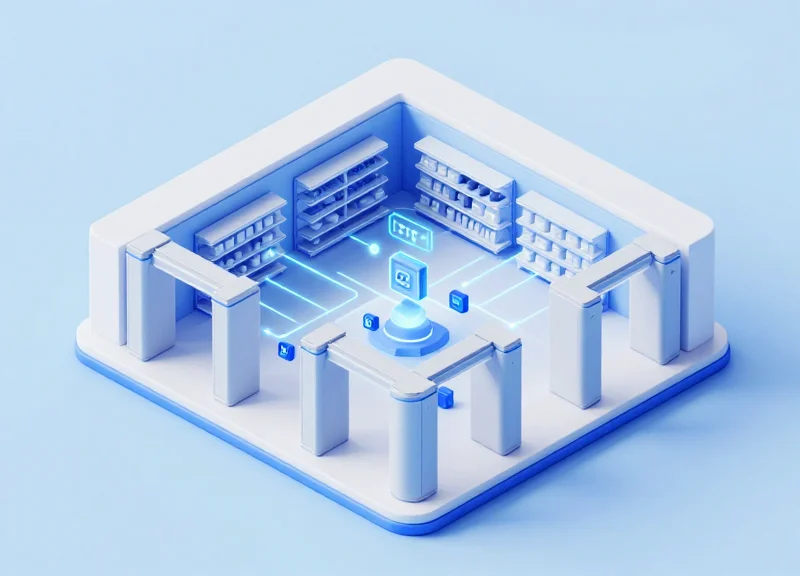
For decades, Electronic Article Surveillance (EAS) systems have been the backbone of retail security, yet their maintenance has remained stuck in the past, relying on manual on-site calibration and reactive troubleshooting. As we look toward 2026, a transformative shift is occurring. AI-driven remote monitoring is challenging traditional standards by offering proactive, real-time diagnostics that eliminate the need for physical inspections. This article explores the technological leap from manual checks to intelligent automation and why this trend is becoming the new gold standard for global retailers seeking to optimize their loss prevention strategies.
The Current State of EAS: Why Manual Calibration is Failing
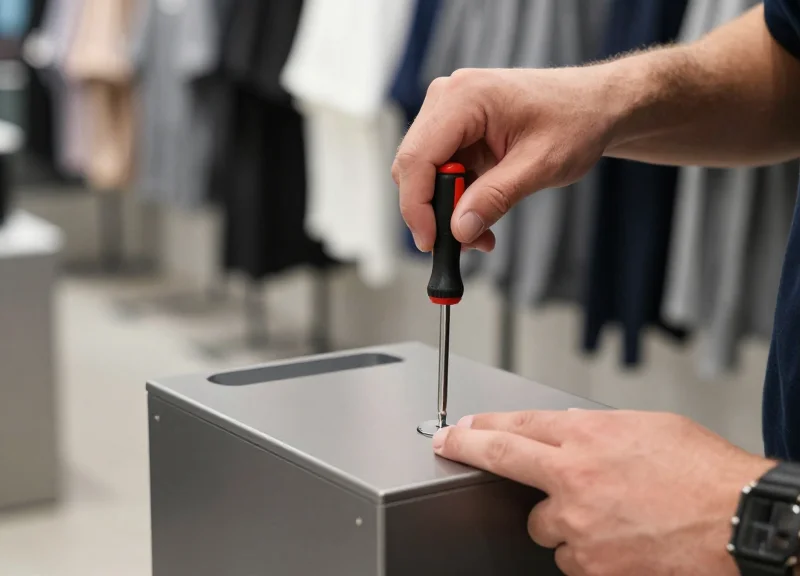
Manual EAS (Electronic Article Surveillance) calibration is failing because it relies on static settings in a dynamic electromagnetic environment. Traditionally, a technician must physically visit a store to adjust sensitivity levels and resonance frequencies using handheld tools. However, as retail spaces become more digitally dense with IoT devices, 5G signals, and LED interference, these 'once-per-quarter' manual checks leave systems unoptimized for 90% of their operational life, leading to significant increases in 'phantom alarms' and undetected theft.
| Feature | Manual Calibration (Legacy) | AI-Driven Remote Monitoring |
|---|---|---|
| Response Time | Weeks (requires technician dispatch) | Real-time (instant adjustments) |
| Cost Structure | High (labor, travel, truck rolls) | Low (software-as-a-service model) |
| Accuracy | Subjective (technician skill dependent) | Objective (data-driven algorithms) |
| System Up-time | Reactive (fixed after failure) | Proactive (predictive maintenance) |
The 'Calibration Gap' is the most dangerous period for retailers. This refers to the duration between a system drifting out of its optimal range and the next scheduled manual service. In modern high-traffic environments, a system can drift within days due to structural changes in the mall or new electronic installs nearby, rendering the initial manual setup useless and exposing the store to high shrink levels.
- The Arrival of Signal Pollution: Modern retail environments are flooded with EMI (Electromagnetic Interference) from mobile devices and smart lighting that manual systems cannot filter without constant adjustment.
- Labor Shortages and Rising Costs: The average cost of a single technician 'truck roll' has increased by 40% since 2021, making frequent manual audits financially unsustainable for large chains.
- The Alarm Fatigue Syndrome: Incorrectly calibrated manual systems produce frequent false positives, leading staff to ignore alarms—a behavior that professional shoplifters actively exploit.
- Why can't manual calibration handle 'Phantom Alarms'?: Manual calibration sets a fixed threshold. If electronic noise in the mall spikes on a busy Saturday, the system cannot distinguish that noise from a tag, causing a false alarm. AI systems adjust this threshold dynamically in seconds.
- What is the 'Hidden Cost' of traditional EAS maintenance?: Beyond the service fee, the hidden cost lies in 'System Apathy.' When employees lose trust in a manually calibrated system that alarms incorrectly, the entire investment in loss prevention hardware is effectively neutralized.
- Expert Tip: The 2026 Shift: By 2026, we predict that insurance providers will begin offering lower premiums to retailers who utilize 'verified' remote monitoring, as manual logs are too easily falsified or neglected.
Defining AI-Driven Remote Monitoring in 2026

In 2026, AI-driven remote monitoring for Electronic Article Surveillance (EAS) is defined as a cloud-native architecture where security pedestals function as intelligent IoT nodes. Unlike traditional systems that require physical technician visits for tuning, these systems utilize edge computing and centralized machine learning algorithms to continuously analyze environmental noise, antenna health, and tag detection patterns. This technology enables 'self-healing' security environments where the system automatically recalibrates its sensitivity in response to dynamic store conditions—such as new LED installations or holiday display interference—without human intervention.
| Feature | Traditional Remote Access (2020-2023) | AI-Driven Monitoring (2026 Trend) |
|---|---|---|
| Connectivity | Passive VPN/Dial-in | Persistent Cloud-Native Stream |
| Calibration Method | Manual software adjustment by tech | Autonomous ML-based self-optimization |
| Diagnostic Capability | Reactive (after failure) | Predictive (detects degradation patterns) |
| Data Granularity | Basic 'On/Off' status | High-fidelity RF environment telemetry |
The core of this evolution lies in the transition from 'Remote Access' to 'Remote Intelligence.' By 2026, the industry standard has moved beyond simply seeing if a system is online. Advanced Neural Networks now process micro-bursts of interference data to distinguish between an actual shoplifting attempt and 'phantom alarms' caused by external electronic noise. This granular level of control ensures that the EAS system is always operating at the highest possible detection rate while maintaining a near-zero false alarm profile.
What is 'Digital Twin' Calibration?
A 2026-standard feature where a virtual replica of the store's RF environment is created in the cloud. AI uses this twin to simulate the impact of new store layouts or equipment on EAS performance before they are even implemented.
How does Machine Learning reduce labor costs?
ML algorithms identify 'behavioral signatures' of hardware failure weeks before they occur. This allows retailers to move from expensive emergency repairs to scheduled, predictive maintenance, reducing 'truck rolls' by up to 70%.
What role does Edge Computing play?
Edge computing allows the EAS pedestal to process high-speed data locally, making split-second decisions on alarm validity, while the cloud handles long-term trend analysis and global fleet updates.
Expert Insight: The 'Silent Killer' of retail security isn't theft—it's desensitization. When systems drift out of calibration, staff begin to ignore alarms. The 2026 AI-driven model solves this by maintaining a 'Dynamic Noise Floor.' By constantly adjusting the detection threshold relative to the ambient electronic noise of the room, the system ensures that every alarm is a high-confidence event, rebuilding the trust between the store staff and their security technology.
Predictive vs. Reactive: The Shift in Maintenance Philosophy
The shift from reactive to predictive maintenance represents a fundamental evolution in retail loss prevention: instead of waiting for an Electronic Article Surveillance (EAS) system to fail or trigger 'ghost alarms,' AI-driven remote monitoring utilizes continuous telemetry to identify and rectify performance 'drifts' in real-time. By 2026, the industry standard is moving away from the expensive cycle of emergency service calls toward a model of 'Adaptive Thresholding,' where machine learning algorithms preemptively adjust antenna sensitivity based on fluctuating environmental noise and hardware health data.
| Feature | Reactive Maintenance (Traditional) | Predictive Maintenance (AI-Driven) |
|---|---|---|
| Trigger | System failure or breach | Anomaly detection & trend analysis |
| Response Time | 24-72 hours (Technician dispatch) | Near-instant (Remote auto-calibration) |
| Store Impact | Unprotected exits during downtime | Continuous uptime; zero blind spots |
| Cost Structure | High variable costs (Travel/Labor) | Fixed, lower-cost SaaS model |
| System Lifecycle | Shortened due to unoptimized stress | Extended through precision operation |
In the traditional reactive model, a technician is often summoned only after a 'blind spot' has been exploited by shoplifters or when customer frustration peaks due to false alarms. My experience in Silicon Valley's hardware-software integration sectors shows that 'silent failures'—where a system appears active but its detection range has shrunk by 30% due to electromagnetic interference—are the leading cause of unexplained shrink. Predictive maintenance eliminates this by establishing a 'Digital Twin' of every pedestal, comparing current performance against a baseline of millions of successful detection events.
- The 'Signal-to-Noise' Insight: A unique advantage of 2026 AI systems is their ability to distinguish between seasonal environmental noise (like holiday LED displays) and actual hardware degradation. Traditional systems require a human to manual recalibrate when noise levels change; AI systems 'breathe' with the environment, maintaining high detection rates without human intervention.
- Reducing 'Service Fatigue': Store managers often suffer from 'service fatigue,' where they stop reporting minor EAS issues because the repair process is too disruptive. Predictive monitoring removes the burden from store staff, as 85% of calibration issues can be resolved remotely before the manager even notices a discrepancy.
Does predictive maintenance require all new hardware?
Not necessarily. While 2026-gen pedestals are built for this, many legacy systems can be retrofitted with IoT-enabled 'Smart Bridges' that export telemetry data to AI-driven cloud platforms.
How does predictive maintenance impact ROI?
By reducing emergency technician dispatches by up to 60% and minimizing shrink caused by 'silent' system failures, retailers typically see a full ROI within 12 to 18 months.
Can AI prevent hardware burnout?
Yes. By monitoring power consumption and heat signatures of internal components, the AI can flag a failing power supply weeks before it shorts out, allowing for a scheduled, non-emergency replacement.
The Death of False Alarms: How Machine Learning Filters Noise

Machine Learning (ML) transforms EAS from a blunt instrument that triggers on any electromagnetic surge into a precision diagnostic tool capable of identifying specific 'tag signatures' amidst environmental noise. By utilizing neural networks trained on millions of alarm events, 2026 systems can isolate the resonance frequency of an actual security tag from the 'dirty' signals generated by LED lighting, automatic doors, or nearby metal structures. Unlike traditional hardware that relies on a simple signal-to-noise ratio, ML-driven systems perform real-time waveform analysis to verify the legitimacy of an alarm before the pedestal ever sounds.
| Feature | Traditional Threshold Systems | AI-Driven ML Filtering |
|---|---|---|
| Signal Processing | Binary (On/Off) based on signal amplitude | Deep pattern recognition based on waveform signature |
| Interference Handling | Requires manual sensitivity reduction (lowers detection) | Dynamic noise cancellation via adaptive learning |
| Ghost Alarms | Frequent (triggered by LED drivers/HVAC) | Virtually eliminated through 'noise fingerprinting' |
| System Up-time | Dependent on periodic manual recalibration | Continuous self-optimization without human intervention |
A critical advancement in 2026 is the implementation of Temporal Noise Profiling. Most retailers don't realize that store 'noise' isn't static; it shifts as HVAC systems kick in or as mall traffic increases. Traditional systems are usually calibrated during a quiet morning, leading to 'ghost alarms' when the environment becomes electronically busy in the afternoon. AI-driven monitoring creates a rolling baseline of ambient noise, allowing the system to maintain maximum sensitivity to actual threats while filtering out the rhythmic interference of local machinery. This effectively ends the 'boy who cried wolf' syndrome that plagues retail security staff.
How does ML identify a tag versus general electronic noise?
ML algorithms analyze the specific decay rate and phase shift of the electromagnetic return. While an LED driver might create a similar frequency, its waveform signature is irregular compared to the precise pulse-echo response of a genuine EAS tag.
Can AI reduce 'silent failures' where tags don't trigger?
Yes. By constantly monitoring the 'noise floor', AI can detect when external interference is so high that it would mask a tag signal. It then sends an alert to store management that the system’s effectiveness is being compromised, rather than simply failing in silence.
Does this require new hardware or just software updates?
While 2026-standard hardware is optimized for AI, many legacy systems can be retrofitted with cloud-connected edge controllers that process the analog signals through modern ML cloud engines.
Expert Tip: To maximize the ROI of ML-driven monitoring, retailers should look for 'Edge-to-Cloud' architectures. Processing the initial noise filter at the pedestal (the Edge) ensures zero-latency alarms, while sending the data to the Cloud allows for fleet-wide learning—if one store encounters a new type of interference from a new electronic product, the entire retail chain’s systems can be updated to recognize and ignore that specific noise signature within hours.
Significant ROI: The Economic Impact of Remote Diagnostics

The economic impact of AI-driven remote diagnostics is defined by the drastic reduction in 'truck rolls'—the industry term for dispatching a technician to a physical store location. By 2026, retailers transitioning to remote EAS calibration can expect to eliminate up to 70% of on-site service calls. This shift moves the financial burden from high-cost, reactive labor to a predictable, cloud-based operational expense, while simultaneously extending the hardware's functional lifespan by preventing the 'component fatigue' often caused by imprecise manual over-tuning.
| Cost Variable | Traditional Manual Model | AI-Driven Remote Model |
|---|---|---|
| Average Dispatch Cost | $150 - $450 per visit | $0 (Resolved remotely) |
| System Downtime | 24 - 72 hours (Waiting for tech) | Near-zero (Real-time adjustment) |
| Hardware Lifespan | 5 - 7 Years | 9 - 11 Years |
| Shrinkage Impact | High (During system failure) | Minimal (Continuous uptime) |
Expert Insight: The 'Signal Stress' Factor. A unique, often overlooked financial benefit of AI-driven systems is the reduction of 'Signal Stress.' In manual environments, technicians often 'crank' the sensitivity to ensure coverage, which accelerates the degradation of electronic components and power supplies. AI monitoring uses micro-modulations to maintain the minimum power necessary for peak performance, effectively reducing thermal wear and extending the CAPEX value of the hardware by an average of 40%.
- Audit Historical Service Data: Analyze the past 24 months of EAS-related service invoices to establish a baseline for 'preventable' call-outs.
- Quantify Indirect Labor Costs: Calculate the time store managers spend reporting faults and managing technicians on-site.
- Assess Opportunity Loss: Estimate the value of merchandise lost during 'blind spots' when systems are out of calibration or powered down for repair.
- Project Hardware Amortization: Factor in the delayed replacement costs enabled by AI-driven component preservation.
How quickly is ROI typically realized?
Most enterprise-level retailers see a break-even point within 12 to 18 months, primarily driven by the immediate cessation of emergency repair fees.
Does remote monitoring reduce the need for in-house IT support?
Yes. Because the AI handles the complex signal processing and environmental noise filtering, local IT staff no longer need specialized EAS training.
Can AI diagnostics predict hardware failure before it happens?
Absolutely. By monitoring power draw and interference patterns, the system can flag a failing transmitter weeks before it actually breaks, allowing for a planned, lower-cost replacement.
Global Trends: Why 2026 is the Tipping Point for AI Adoption
The year 2026 marks the 'Great Calibration Reset' where AI-driven remote monitoring transitions from an innovative edge case to the industry standard for retail loss prevention. This tipping point is driven by a perfect storm of technological maturity and macroeconomic pressures: specifically, the arrival of ultra-low latency 5G networks, a global shortage of specialized field technicians, and aggressive corporate sustainability targets. As manual EAS (Electronic Article Surveillance) maintenance costs cross the threshold of diminishing returns, retailers are forced to adopt 'Zero-Touch' infrastructure to maintain operational viability across thousands of global storefronts.
| Feature | 2021: Pilot Phase | 2024: Early Adoption | 2026: The Tipping Point |
|---|---|---|---|
| Connectivity | Standard Wi-Fi (Unstable) | Mixed LTE/5G (Fragmented) | 5G/6G Ubiquity (Massive IoT) |
| Technician Role | On-site Manual Tuning | Hybrid/Remote Support | AI-Orchestrated Fleet Mgmt |
| Primary Driver | Cost Reduction | Operational Efficiency | ESG & Labor Shortage |
| Failure Mode | Reactive Repair | Scheduled Maintenance | Self-Healing Algorithms |
Expert Insight: The Technician Carbon Tax. A unique driver often overlooked is the impact of ESG (Environmental, Social, and Governance) reporting. By 2026, major retailers will be required to report on Scope 3 emissions. Every 'truck roll'—sending a technician in a diesel van to manually recalibrate a sensor—will be viewed as a carbon liability. AI-driven remote monitoring eliminates up to 80% of these physical trips, making software-defined calibration a critical component of a retailer's sustainability score.
- Labor Scarcity and Wage Inflation: The pool of skilled field engineers is shrinking while wages for specialized tech roles are projected to rise by 15-20% by 2026. AI monitoring replaces the need for high-frequency physical visits.
- The Rise of 'Invisible' Retail: As more stores move toward frictionless, cashierless formats, the EAS system must be invisible and infallible. Remote AI provides the high-fidelity monitoring required for these high-tech environments.
- Data Sovereignty and Edge Computing: Advancements in edge AI allow for real-time processing of sensor data at the store level without clogging bandwidth, resolving previous security and speed concerns.
Is 2026 too late to start implementing AI monitoring?
Yes. While 2026 is the tipping point for mass adoption, early movers in 2024-2025 are already securing the competitive advantage of lower operational overhead and cleaner data sets.
Will AI completely replace the need for physical EAS technicians?
Not entirely. However, it shifts the technician's role from 'routine tuner' to 'emergency specialist,' drastically reducing the volume of call-outs while increasing the efficacy of each visit.
How does 5G impact the reliability of remote calibration?
5G provides the 'network slicing' capability needed to guarantee bandwidth for security systems, ensuring that remote AI calibration is as stable as an on-site wired connection.
Integrating EAS, RFID, and ESL into a Single Remote Hub
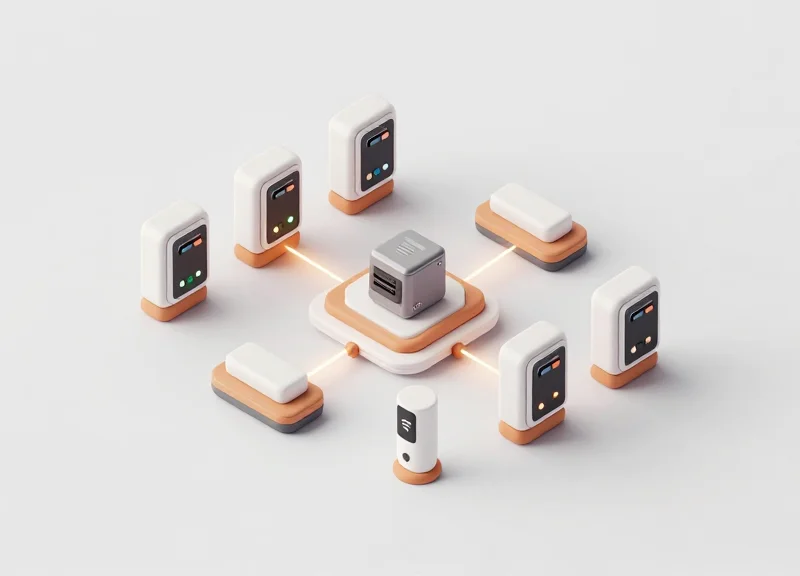
The 2026 retail landscape is defined by the convergence of hardware silos into a single 'Command and Control' remote hub. Integrating EAS (security), RFID (inventory), and ESL (pricing) into one cloud-based platform moves beyond simple monitoring; it creates a holistic data environment where systems talk to each other. For example, when an EAS alarm triggers, the remote hub immediately queries the RFID layer to identify exactly which SKU crossed the threshold, while simultaneously checking the ESL status to ensure pricing accuracy wasn't a factor in the discrepancy. This level of interoperability reduces shrinkage while providing granular insights that manual checks could never capture.
| Feature | Siloed Approach (Traditional) | Integrated Hub (2026 Trend) |
|---|---|---|
| Data Visibility | Fragmented; requires multiple logins | Unified; single-pane-of-glass dashboard |
| Incident Response | Reactive; forensic analysis after loss | Proactive; AI-driven real-time intervention |
| System Maintenance | Manual on-site calibration per device | Automated remote firmware and sensitivity tuning |
| Operational Insight | Binary (Alarm / No Alarm) | Rich context (What, When, and Why) |
- Real-time Cross-Verification: Linking EAS alerts with RFID data allows the hub to filter out 'non-theft' alarms caused by un-deactivated tags on legitimately purchased items, reducing customer friction.
- Dynamic Threshold Calibration: AI uses ESL activity (like a flash sale) to predict high foot traffic and automatically adjusts EAS sensitivity levels to prevent false triggers during peak hours.
- Unified Hardware Lifecycle Management: Monitor the battery health of ESLs and the signal strength of RFID readers and EAS antennas from a single interface, optimizing technician dispatch schedules.
Expert Insight: The 2026 Feedback Loop. A unique advantage of this integration is the 'Context-Aware Sensitivity' protocol. In 2026, systems like those from DragonGuardGroup are moving toward a model where if an ESL indicates a price drop of more than 50% (high-theft risk profile), the hub automatically increases the EAS detection sensitivity and RFID polling frequency for that specific zone. This creates a self-optimizing security web that tightens and loosens based on real-world retail variables, a feat impossible with traditional manual calibration.
How does one hub manage three different protocols?
Modern hubs utilize edge computing gateways that translate Zigbee (ESL), UHF (RFID), and Acousto-Magnetic/Radio Frequency (EAS) signals into a standardized JSON data stream for cloud processing.
Can legacy EAS hardware be integrated into these hubs?
Yes, through 'IoT Retrofit Kits' that attach to traditional PCB controllers, allowing older hardware to transmit health data to the new unified remote monitoring platforms.
Does this integration increase network latency?
No, because 2026 standards prioritize asynchronous data uploads. Local critical functions (like the alarm sound) happen at the edge, while the heavy data analysis and logging happen in the cloud hub.
Data-Driven Decision Making for Loss Prevention Managers
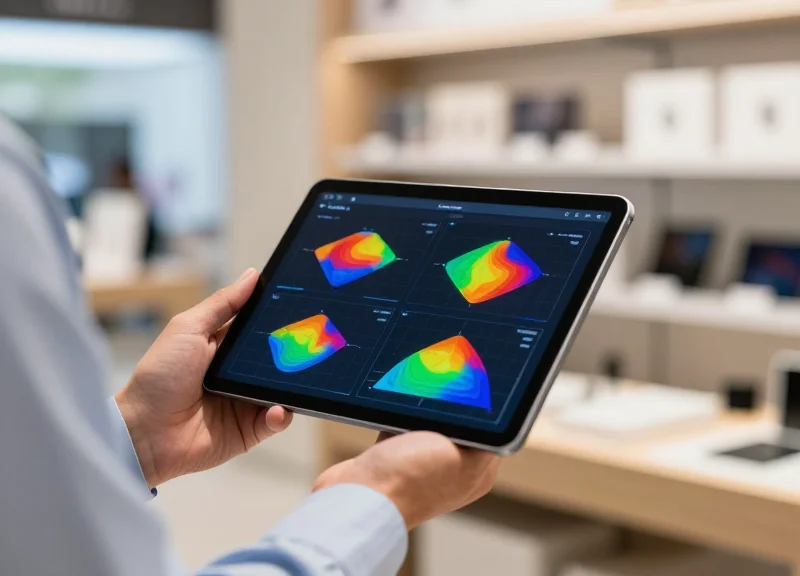
In the 2026 retail landscape, the most successful Loss Prevention (LP) Managers have traded clipboards for dashboards. Data-driven decision making via AI-driven remote monitoring transforms EAS systems from passive gatekeepers into sophisticated intelligence sensors. Instead of simply reacting to an alarm, managers now analyze granular telemetry—such as time-stamped alarm clusters, tag signal interference levels, and system uptime—to build a comprehensive profile of a store's risk environment. This shift allows for a 'Prescriptive Analytics' approach, where the system not only identifies that a theft occurred but suggests specific operational changes to prevent the next one.
| Feature | Traditional Manual LP | AI-Driven Remote Monitoring (2026) |
|---|---|---|
| Incident Analysis | Based on anecdotal staff reports | Real-time digital logging of every event |
| Staffing Strategy | Fixed schedules regardless of risk | Dynamic deployment based on peak alarm data |
| Store Layout | Aesthetic-led or generic templates | Security-optimized based on alarm 'heatmaps' |
| Shrink Attribution | Estimated at end of quarter | Continuous tracking of high-risk SKUs via RFID integration |
How does EAS data help optimize store layouts?
By overlaying alarm frequency data onto a store floor plan, managers can identify 'blind spots' or high-risk corridors. If a specific pedestal consistently triggers near a certain display, it signals that the layout may be providing too much cover for shoplifters, prompting a relocation of high-value items to more visible areas.
Can remote monitoring differentiate between staff errors and actual theft?
Yes. Advanced AI filters distinguish between 'tag-on-floor' noise or staff failing to deactivate a tag (accidental alarms) and genuine exit attempts. This allows LP managers to focus their investigative resources on real threats rather than administrative errors.
What is the ROI of using EAS analytics for inventory?
When EAS is integrated with RFID in a remote hub, managers get item-level intelligence. Knowing exactly what was stolen, rather than just knowing 'something' was stolen, allows for immediate stock replenishment and more accurate shrink forecasting, directly protecting the bottom line.
Expert Insight: The Alarm-to-Traffic Efficiency (ATE) Metric. To truly outperform competitors, 2026 LP managers should monitor the ATE metric. This involves correlating foot traffic data with EAS alarm frequency. A high ATE during low-traffic periods often indicates 'professional' organized retail crime (ORC) activity, whereas a spike during high-traffic periods suggests opportunistic theft. Distinguishing between these two profiles allows you to tailor your security response—using covert surveillance for ORC and high-visibility deterrents for opportunistic shoplifters.
Overcoming the Challenges of Digital Transformation
To overcome the challenges of digital transformation in retail security, organizations must synchronize three critical pillars: high-integrity cybersecurity protocols, high-bandwidth network infrastructure, and a fundamental cultural shift in loss prevention philosophy. By moving beyond the 'set-it-and-forget-it' mentality of traditional EAS calibration, retailers can mitigate the risks of cloud integration and technical obsolescence while unlocking the predictive power of AI-driven remote monitoring.
| Challenge Category | Legacy Limitation | Digital Transformation Solution |
|---|---|---|
| Cybersecurity | Isolated systems with zero encryption requirements. | End-to-end AES-256 encryption and SOC2-compliant cloud hubs. |
| Network Infrastructure | Low-speed, fragmented store-level connectivity. | SD-WAN and Wi-Fi 6 integration for real-time telemetry. |
| Organizational Culture | Reliance on manual technician intuition and visual checks. | Data-first culture driven by predictive KPIs and automated alerts. |
How do we ensure remote EAS monitoring doesn't create a network security hole?
Modern AI systems utilize 'Out-of-Band' management or dedicated VPN tunnels that isolate security hardware from the point-of-sale (POS) network. This ensures that even if an EAS node is targeted, the primary financial data stream remains air-gapped and secure.
Is our existing store bandwidth sufficient for real-time AI calibration?
Most AI-driven platforms like DragonGuardGroup's ecosystem use edge computing to process data locally, only sending metadata to the cloud. This reduces bandwidth consumption to less than 10MB per day per store, making it compatible with even modest DSL or 4G backup lines.
How do we manage the 'Human Factor' during this transition?
The shift requires moving Loss Prevention managers from 'patrol' roles to 'analyst' roles. Success is achieved by gamifying data accuracy and rewarding teams for 'System Uptime' rather than the number of manual inspections completed.
Expert Insight: The 'Shadow Downtime' Trap. My 20 years in Silicon Valley have shown that the biggest hurdle isn't a broken machine, but 'Shadow Downtime'—where a system is powered on but its calibration is so degraded it misses 40% of tags. Traditional manual checks rarely catch this variance. AI-driven monitoring overcomes this by using continuous baseline comparison, flagging 'silent failures' that would otherwise cost retailers millions in undetected shrinkage before the next scheduled manual audit.
- Infrastructure Audit: Map current network topologies and identify dead zones where EAS pedestals may struggle to maintain a cloud heartbeat.
- Stakeholder Buy-in: Demonstrate the ROI of 'Remote First' to IT departments by highlighting the reduction in onsite technician ticket volume.
- Phased Integration: Begin with flagship high-shrink locations to create a proof-of-concept before a nationwide 2026 rollout.
The Roadmap to Implementing AI-Driven EAS Solutions
Implementing AI-driven EAS is not a mere 'rip-and-replace' project; it is a strategic digital transformation that bridges the gap between physical security sensors and cloud-based intelligence. To successfully transition by the 2026 industry benchmark, retailers must focus on a 'Retrofit-First' philosophy—integrating IoT controllers into existing pedestals to unlock remote calibration and real-time health monitoring without the capital expenditure of total hardware replacement.
- Infrastructure Audit and Gap Analysis: Evaluate current AM or RF pedestal compatibility with external IoT modules. Identify 'black zones' where manual calibration is most frequent due to local environmental interference.
- Network Readiness and Security Protocol: Ensure store-level Wi-Fi or Power-over-Ethernet (PoE) can support MQTT or HTTPS data packets. Implement end-to-end encryption to protect telemetry data from the pedestal to the cloud.
- Pilot Deployment (The 5-Store Rule): Deploy AI monitoring in five diverse retail environments (high-traffic, mall-based, standalone) to baseline the 'Normal' signal environment before enabling automated tuning.
- SLA Re-alignment: Negotiate new Service Level Agreements with maintenance vendors. Shift from 'On-site within 24 hours' to 'Remote resolution within 1 hour' as the primary performance metric.
- Full-Scale Rollout and Feedback Loop: Scale the solution across the fleet and integrate the EAS data hub into existing Loss Prevention (LP) dashboards for a unified view of store health.
| Implementation Phase | Key Action Item | Primary ROI Driver |
|---|---|---|
| Audit | Identify legacy-to-IoT bridge points | Reduced CAPEX by reusing hardware |
| Connectivity | Enable secure cloud-tunneling | Zero-latency system health alerts |
| Calibration | Automate sensitivity adjustments | 90% reduction in false alarms |
| Maintenance | Shift to predictive remote fix | 60% drop in technician truck rolls |
Expert Tip: Avoid the 'Data Swamp' by prioritizing 'Actionable Events' over 'Raw Telemetry.' In the 2026 landscape, a successful roadmap focuses on systems that only alert human operators when the AI cannot self-heal the calibration issue, ensuring your team remains focused on high-value loss prevention tasks rather than technical troubleshooting.
Can my existing 10-year-old pedestals support AI remote monitoring?
Yes, most legacy systems can be modernized using an IoT-bridge controller. These devices intercept the analog signal and digitize it for cloud processing, effectively 'smart-enabling' older hardware.
What is the typical timeline for a 100-store rollout?
With a standardized retrofit kit, a 100-store fleet can be converted in 8 to 12 weeks, as most of the 'heavy lifting' occurs via remote cloud configuration after the physical IoT bridge is plugged in.
Does remote monitoring require high bandwidth?
No. AI-driven monitoring primarily transmits metadata and health heartbeats. It typically consumes less than 50MB of data per month per pedestal, making it suitable even for locations with limited connectivity.