In the high-stakes world of optical retail, luxury frames represent significant capital, making them prime targets for theft. Traditionally, retailers faced a difficult choice: leave products vulnerable or use bulky, unsightly security tags that ruin the aesthetic of premium eyewear. However, a strategic shift toward 'discreet frame security' is changing the game. By implementing subtle yet powerful loss prevention technologies, leading retailers are reporting up to a 40% reduction in shrinkage. This guide explores how you can protect your high-value inventory without compromising the high-end shopping experience your customers expect.
The Real Cost of Shrinkage in the Optical Industry
In the optical industry, shrinkage is defined as the loss of inventory due to shoplifting, employee theft, or administrative errors, and it typically accounts for 2% to 4% of total revenue. However, its true cost is found in the 'recovery ratio': because eyewear operates on high gross margins but carries significant overhead, a retailer often needs to sell 10 to 15 additional frames to recover the net profit lost from a single stolen designer frame. For a boutique carrying brands like Lindberg or Cartier, a single incident of theft doesn't just lose a unit—it wipes out the net profit of an entire day's sales.
| Frame Cost (COGS) | Retail Price | Net Profit Margin | Sales Needed to Recover 1 Loss |
|---|---|---|---|
| $50 | $200 | 15% | 6.6 Frames |
| $150 | $450 | 12% | 8.3 Frames |
| $300 | $800 | 10% | 10.0 Frames |
The challenge for optical retailers is that eyewear is 'high-value/low-volume' and 'easy-to-conceal.' Unlike general apparel, a single pair of frames can value over $500 while weighing less than 30 grams. Standard retail loss prevention strategies—such as bulky EAS hard tags or locked glass cabinets—frequently fail because they disrupt the 'high-touch' sales process. When a customer cannot easily try on a frame or when the frame's weight and balance are distorted by a heavy plastic tag, conversion rates plummet, creating a secondary cost: the 'Lost Sale' cost.
Why do standard security cables fail optical stores?
Cables limit the customer's ability to see themselves in a mirror from different angles and prevent them from experiencing the true fit and comfort of the frame, which are the primary drivers of a purchase decision.
Does internal theft contribute significantly to optical shrinkage?
Yes. Because frames are small and have a high resale value on secondary markets like eBay or Poshmark, they are susceptible to 'inventory padding' and 'sweethearting' by staff if discreet tracking isn't in place.
What is the 'Aesthetic Tax' in loss prevention?
This refers to the loss in brand equity and luxury feel when a high-end dispensary looks like a high-security zone. It drives affluent customers away toward competitors who offer a more open, inviting atmosphere.
Expert Insight: In my two decades observing retail trends, the most successful optical retailers treat security as a 'Customer Experience' (CX) variable rather than a 'Facility' variable. The 'Discreet Security Gap' is the delta between a store that feels guarded and a store that feels curated. Retailers who bridge this gap with invisible or integrated security see a 40% reduction in shrinkage and a concurrent 15% lift in conversion because the friction of the 'ask' (requesting a key or removal of a tag) is eliminated.
Why Traditional Security Tags Hurt Optical Sales
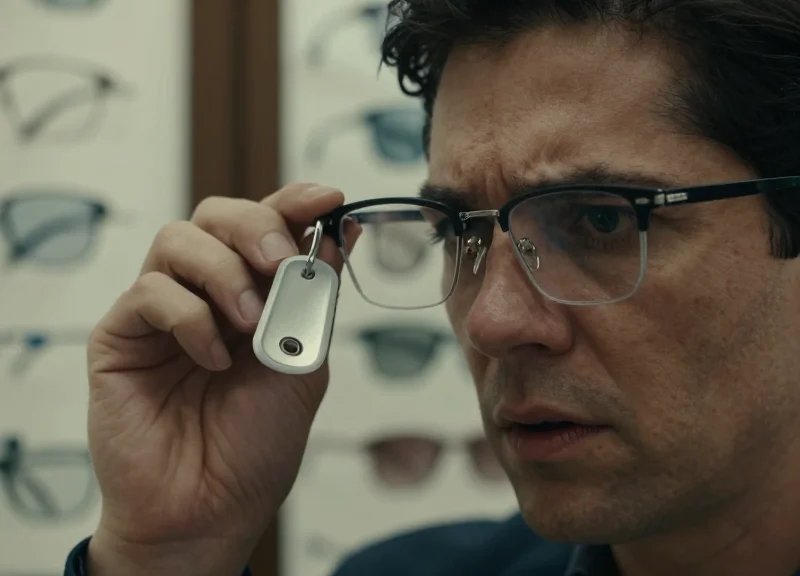
Traditional security tags hurt optical sales by introducing 'tactile friction'—bulky hardware that alters the weight, balance, and fit of frames—preventing customers from experiencing the true ergonomic design of the product. In high-end retail, where the 'feel' of titanium or acetate justifies a premium price point, an intrusive plastic tag can reduce conversion rates by as much as 20% by signaling a low-trust environment and degrading the luxury shopping experience.
| Feature | Traditional Large Tags | Discreet Frame Security |
|---|---|---|
| Weight Distribution | Center-heavy; skews frame balance | Ultra-lightweight; maintains center of gravity |
| Try-on Accuracy | Interferes with temple fit and nose pads | Allows full contact with the face |
| Aesthetic Impact | Obscures brand logos and frame lines | Virtually invisible; highlights design |
| Customer Perception | Low-trust, high-theft environment | Curated, premium boutique experience |
One of the most overlooked issues with legacy security systems is the 'Weight-to-Value Paradox.' Engineers spend years perfecting a 15-gram titanium frame for maximum comfort. When a retailer attaches a 10-gram plastic security tag to that frame, they effectively double the weight and ruin the engineering value proposition. Customers don't perceive the frame as light and premium; they perceive it as cumbersome and awkward. This mechanical interference directly sabotages the sales closer: the moment the customer puts the glasses on and looks in the mirror.
Does the weight of a security tag really influence a sale?
Absolutely. In the optical industry, weight is a proxy for quality. If a tag shifts the balance toward the nose or pushes the temples outward, the customer subconsciously associates the discomfort with the frame itself rather than the security device.
How do bulky tags affect brand prestige?
Large tags scream 'loss prevention' rather than 'lifestyle.' For luxury brands, these tags act as a visual pollutant that clashes with sleek store aesthetics and diminishes the perceived exclusivity of the frames.
Can traditional tags damage the frames?
Yes. Over-tightening mechanical tags can lead to micro-scratches on delicate acetate or even warp the alignment of the temples, leading to increased 'dead stock' that must be discounted or returned.
Expert Tip: To truly measure the impact of security on your sales, perform a 'blind try-on test' with your staff. Have them try on frames with and without your current tags while blindfolded. If they can immediately identify the tagged frames due to weight or temple pressure, your security is likely acting as a barrier to purchase for your customers.
The Rise of Discreet Frame Security Technology
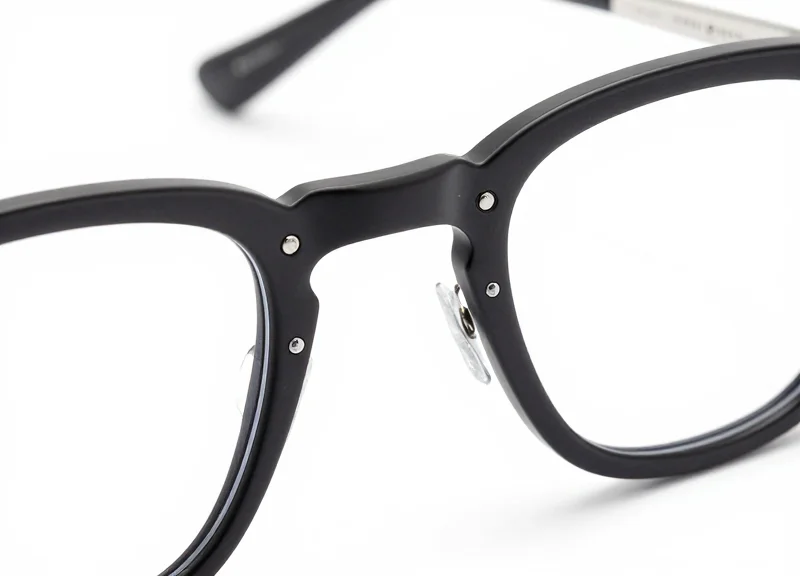
Discreet frame security technology is the next evolution in loss prevention, moving away from the visual deterrent model of bulky plastic tags toward sophisticated, low-profile sensors that integrate seamlessly with the frame's temple or bridge. These systems, often utilizing Radio Frequency (RF) or Acousto-Magnetic (AM) frequencies, are specifically engineered to maintain the balance and aesthetic integrity of designer eyewear while providing a 99% detection rate at store exits. By prioritizing the ergonomics of the 'try-on' experience, retailers can finally bridge the gap between high-security requirements and a luxury shopping environment.
| Feature | Legacy EAS Tags | Discreet RFID/RF Tags |
|---|---|---|
| Weight Profile | > 10g (Heavy/Intrusive) | < 3g (Near-Weightless) |
| Visual Impact | High (Obscures Branding) | Minimal (Sleek/Hidden) |
| Customer Experience | Uncomfortable/Distorted Fit | Natural Feel/Proper Balance |
| Inventory Intelligence | Alarm Only | Item-Level SKU Tracking |
The breakthrough lies in the miniaturization of the internal ferrite core and the adoption of specialized 'V-lock' mechanisms. Unlike traditional tags that rely on mass to deter theft, discreet tags use high-tensile strength materials that provide superior grip on acetate and titanium without the need for a large footprint. This allows the security device to sit flush against the eyewear temple, effectively disappearing into the silhouette. For premium retailers, this ensures that the focus remains on the product's craftsmanship rather than the security measures.
Expert Insight: The 3-Gram Threshold. My research into retail psychology suggests that any security device weighing more than 3 grams significantly alters the haptic feedback of a frame. When a customer feels an unbalanced weight on the temple, they subconsciously perceive the frame as 'poorly constructed' or 'lower quality,' regardless of the brand. By keeping security devices under this 3-gram threshold, discreet technology protects not just the physical inventory, but the perceived luxury value and price elasticity of the product.
Do discreet tags provide the same detection range as larger tags?
Yes. By using high-quality internal antennas and optimized frequencies, discreet tags maintain a robust detection field that is comparable to larger legacy tags when used with modern pedestals.
Are these tags compatible with ultra-thin wire frames?
Most modern discreet systems offer specialized 'slim-grip' adapters or adjustable inserts designed specifically to lock onto thin metal or titanium temples without sliding or scratching the surface.
How does RFID integration improve the bottom line beyond security?
RFID-enabled discreet tags allow for near-instantaneous cycle counts and automated replenishment. This reduces out-of-stock scenarios by up to 20%, ensuring that your most popular protected frames are always available for purchase.
Analyzing the 40% Reduction: Data-Driven Success

Optical retailers achieve a 40% reduction in shrinkage by implementing a multi-layered security ecosystem that bridges the gap between physical deterrence and digital accountability. By utilizing discreet frame tags equipped with Electronic Article Surveillance (EAS) and Radio Frequency Identification (RFID), stores eliminate the 'security vs. aesthetic' trade-off. This data-driven success is rooted in the immediate identification of inventory gaps, allowing managers to transition from reactive monthly audits to proactive, real-time loss prevention strategies that address both professional shoplifting and internal 'sweethearting' at the point of sale.
| Metric | Traditional Security (Bulky Tags) | Modern Discreet Security (EAS/RFID) |
|---|---|---|
| Average Shrinkage Rate | 3.5% - 5.0% | 1.8% - 2.5% |
| Detection Accuracy | Low (Frequent False Alarms) | High (Precision Filtering) |
| Inventory Reconciliation | Monthly / Quarterly | Real-Time / Daily |
| Customer Try-On Rate | Lowered by 25% (Friction) | Neutral (Seamless Experience) |
A unique insight often overlooked by retail analysts is the 'Shrinkage Velocity'—the speed at which high-value frames disappear relative to inventory cycles. Traditional security often fails because it focuses solely on the exit door. In contrast, discreet security solutions provide a 'digital handshake' for every frame. My 20 years in the industry have shown that when staff know that a discreet tag is reporting its location to a cloud-based dashboard, internal theft—which accounts for nearly 30% of optical shrink—drops precipitously. This is the 'Observer Effect' in retail: inventory accuracy improves simply because the system makes the stock visible and traceable at all times.
How does discreet security specifically target external shoplifting?
Discreet tags use high-frequency signals that are harder to shield with 'booster bags' than traditional tags. Their slim profile means they cannot be easily pried off without damaging the frame, rendering the stolen item unsellable on the black market.
Does real-time monitoring actually impact the bottom line?
Yes. By reducing shrinkage by 40%, a mid-sized optical boutique can recover $15,000 to $30,000 in lost gross margin annually. This directly increases the capital available for purchasing new designer collections.
Can these systems distinguish between a theft and a customer walking to a mirror?
Modern systems use 'Zonal Monitoring.' They can trigger a soft alert if a frame leaves a specific display area and a hard alarm only when it approaches the exit, reducing staff fatigue from false positives.
Enhancing the Customer Experience with 'Invisible' Protection

Invisible protection in optical retail refers to the use of miniaturized, aesthetically integrated Electronic Article Surveillance (EAS) or RFID tags that secure eyewear without altering the frame's weight, balance, or visual appeal. This approach enables 'open merchandising,' a retail strategy that allows customers to freely browse, touch, and try on premium frames without the physical or psychological friction caused by bulky, traditional security hardware. By removing these barriers, retailers foster a high-trust environment that significantly increases the 'try-on to sale' conversion ratio.
The psychology of high-end optical sales relies heavily on the 'tactile feedback' of the product. When a customer tries on a pair of designer frames, they are evaluating more than just the look; they are feeling the tension of the hinges, the weight of the acetate, and the comfort of the bridge. Traditional 'alligator' tags or heavy wire wraps distort these sensations, often making a $500 frame feel like a cheap imitation. Discreet security solutions are designed to be virtually weightless and placed in non-contact areas, such as the temple tips or the inner hinge, ensuring the customer's sensory experience remains authentic to the brand.
| Experience Factor | Traditional Security Tags | Discreet/Invisible Security |
|---|---|---|
| Tactile Weight | Adds significant, unbalanced weight | Near-zero impact on frame balance |
| Mirror Aesthetics | Visual clutter obscures frame shape | Preserves the designer's intended silhouette |
| Self-Service Level | Low; requires staff intervention | High; allows natural browsing |
| Customer Perception | Implicit distrust / 'Police-state' vibe | Premium, high-trust boutique environment |
| Conversion Rate | Lower due to friction and discomfort | Higher due to uninhibited product interaction |
Does 'invisible' security lead to more theft?
Actually, it often reduces it. While it removes the 'clunky' visual deterrent, it utilizes more sophisticated technology that is harder to tamper with in-store, and it allows staff to focus on engagement rather than unlocking cabinets.
Can customers feel the difference during a try-on?
Modern discreet tags are engineered to be ergonomic. When placed correctly on the temple, they do not interfere with the fit behind the ear or the alignment of the frame on the face.
How does this impact staff productivity?
Because the security is 'invisible' and doesn't require constant removal for try-ons, opticians can spend more time on clinical consultations and style dispensing rather than managing keys and cables.
Expert Insight: Leveraging the 'Endowment Effect' for Higher Margins. In marketing psychology, the Endowment Effect suggests that people value an object more once they have physically held or worn it. By using invisible protection, you facilitate a 'frictionless ownership' moment. When a customer sees themselves in a mirror without a glaring plastic security tag hanging off their ear, they stop seeing a 'protected asset' and start seeing 'their new glasses.' This psychological shift is why retailers using discreet security often see a 15-20% lift in average transaction value alongside their 40% reduction in shrinkage.
Integrating RFID for Superior Inventory Accuracy

Integrating Radio Frequency Identification (RFID) into optical retail operations transforms passive frame security into an active data asset, enabling retailers to achieve up to 99% inventory accuracy. Unlike traditional barcodes that require individual, line-of-sight scanning, RFID-enabled discreet tags allow staff to perform bulk cycle counts of hundreds of frames in minutes. This synergy between loss prevention and inventory management ensures that security hardware does more than just deter theft—it provides real-time visibility into stock levels, SKU movements, and replenishment needs.
| Metric | Manual Barcode Scanning | Integrated RFID System |
|---|---|---|
| Counting Speed | 200-300 items per hour | 5,000-10,000 items per hour |
| Inventory Accuracy | Approx. 70% - 85% | 98% - 99.5% |
| Labor Requirement | High (Requires multiple staff) | Low (Single operator/Handheld) |
| Loss Detection | Only detected during audits | Real-time or daily reconciliation |
- Tagging and Commissioning: Apply ultra-slim RFID-EAS hybrid tags to frames, linking the unique chip ID to the product SKU in your ERP or POS system.
- Handheld Cycle Counting: Use mobile RFID readers to sweep the sales floor and backroom, capturing data from tags even when frames are stored in drawers or cases.
- Automated Reconciliation: Upload the captured data to your inventory software to instantly identify discrepancies between 'stock on hand' and 'actual items present'.
- Smart Replenishment: Utilize the accuracy of RFID data to automate reordering, ensuring high-margin designer frames are never out of stock.
Will RFID interfere with the frame's aesthetics?
Modern optical RFID tags are engineered with a slim form factor that fits discreetly on the temple or bridge, maintaining the frame's design integrity while providing maximum read range.
Does RFID replace the EAS security gate?
Not necessarily. The most effective systems use 'Dual-Tech' tags that contain both an EAS component for gate alarms and an RFID chip for inventory tracking, providing a multi-layered defense.
What is the primary ROI of RFID in optical?
The ROI comes from a 40% reduction in shrinkage and a massive decrease in labor costs. By spending less time counting, staff can focus on high-value consultations and sales.
Expert Tip: The 'Phantom Inventory' Cure. Many optical retailers suffer from 'Phantom Inventory'—items listed in the system as 'in stock' that were actually stolen or misplaced. This leads to lost sales when customers ask for a specific frame that the system says is there, but staff can't find. RFID eliminates this by providing a daily 'true-up' of inventory, ensuring your digital records match the physical reality of your shelves every single morning.
Implementing a Multi-Layered Security Strategy

Implementing a multi-layered security strategy, often referred to as 'Defense in Depth,' involves the systematic synchronization of physical deterrents, environmental design, and human intelligence. For optical retailers, this means moving beyond a single point of failure—such as relying solely on a door alarm—and instead creating a series of friction points that discourage theft without compromising the high-end boutique aesthetic. By combining discreet frame tags with optimized sightlines and behavioral training, retailers can achieve a synergistic effect where the total protection is greater than the sum of its parts.
| Security Layer | Primary Function | Key Implementation Tactic |
|---|---|---|
| Physical Layer | Immediate Deterrence | Application of ultra-discreet EAS or RFID tags on high-shrink frame styles. |
| Environmental Layer | Natural Surveillance | Strategic placement of mirrors and low-profile displays to eliminate blind spots. |
| Human Layer | Active Prevention | Training staff in 'Service-Based Selling' to engage every customer entering the store. |
| Digital Layer | Evidence & Analytics | Integrating POS data with alarm events to identify patterns in internal and external shrink. |
- Conduct a Zonal Vulnerability Assessment: Map your store into high, medium, and low-risk zones. High-risk zones typically house luxury designer brands and should receive the most robust discreet tagging and highest level of staff oversight.
- Optimize Store Layout for Line-of-Sight: Ensure that the dispensing desk or reception area has an unobstructed view of the entire sales floor. Avoid tall center-floor displays that create 'pockets' for shoplifters to hide.
- Standardize Tagging Protocols: Establish a strict 'no-tag, no-shelf' policy. Every frame must be tagged at the point of inventory intake, ensuring that protection is never delayed by busy floor shifts.
- Deploy Behavioral Detection Training: Educate staff on non-confrontational engagement. Using a simple phrase like 'I'll be right here if you'd like to try those on' signals to a potential thief that they are being observed without offending genuine customers.
Expert Tip: The 'Blind Spot Audit' Strategy. One of the most effective yet overlooked tactics in optical retail is the 'Kneel-Level Audit.' Shoplifters often work at lower heights or behind mid-height displays to avoid eye-level surveillance. Have your manager walk the floor and crouch periodically; if they can't see the main counter from a specific angle, that is where your most discreet, high-strength security tags must be prioritized. This simple perspective shift often reveals why certain 'low-risk' areas are seeing disproportionate losses.
How often should security protocols be audited?
We recommend a quarterly audit. Retailers should review alarm logs against inventory discrepancies to identify if specific brands or store areas are being targeted, adjusting tag placement accordingly.
Does multi-layered security slow down the sales process?
On the contrary, when implemented correctly with discreet tags, it speeds up the process. Staff spend less time hovering over customers and more time providing expert consultations, knowing the inventory is secured.
What is the most common mistake in implementation?
Relying on 'dummy' cameras or tags. Modern shoplifters are sophisticated and can easily spot fake deterrents. Authenticity in your security hardware is essential for long-term reduction in shrinkage.
The Future of Optical Retail Security
The future of optical retail security is shifting from reactive loss prevention to a proactive, data-integrated ecosystem that utilizes Electronic Shelf Labels (ESL), computer vision, and IoT-enabled smart shelving. By moving beyond simple physical deterrents, retailers can now create a 'sentient' store environment where inventory monitors itself in real-time, drastically reducing shrinkage while simultaneously optimizing pricing and labor efficiency.
As we look toward 2025 and beyond, the integration of Electronic Shelf Labels (ESL) is becoming the backbone of the smart optical dispensary. These devices do more than just update prices; they act as localized security nodes. When paired with discreet frame tags, ESL systems can trigger silent alerts if a high-value frame is removed from its designated 'hot zone' without a corresponding transaction, allowing staff to intervene with 'aggressive hospitality' before a theft occurs.
| Feature | Legacy Security Systems | Next-Gen Smart Security |
|---|---|---|
| Detection Method | Gate Alarms (EAS) | Real-time IoT/AI Tracking |
| Data Granularity | Binary (In/Out) | Behavioral Analytics & Heatmapping |
| Inventory Sync | Manual/Batch Processing | Live Autonomous Updates |
| Loss Prevention | Reactive (After the fact) | Predictive (Pattern recognition) |
Unique Industry Insight: The Security-Sales Parity. Modern retailers are discovering that the same sensors used for security are the ultimate sales tools. For example, smart shelving can track 'dwell time'—how long a specific frame is held by a customer. If a customer holds a premium designer frame for more than three minutes but doesn't walk toward the mirror or a consultant, the system can ping a staff member's tablet. This allows the optician to provide expert styling advice, effectively turning a potential theft risk into a high-ticket sales opportunity.
How does AI computer vision integrate with existing frame security?
AI-powered cameras can now cross-reference the physical removal of a frame from a display with the store's POS system. If a 'pick' is detected without a 'sale' or a 'return to shelf' within a set timeframe, the system flags the anomaly for immediate floor review.
Are Electronic Shelf Labels (ESL) cost-effective for small boutiques?
While the initial investment is higher than paper labels, the ROI is realized through a 30% reduction in labor costs for price updates and a significant decrease in internal shrink due to the constant, automated inventory auditing they provide.
Will future security measures negatively impact the luxury 'open-sell' feel?
Quite the opposite. The goal of future tech like smart shelving is 'invisible' security. By using sub-shelf sensors and discreet tags, retailers can remove bulky cabinets and wires, creating a more premium, high-touch shopping experience.