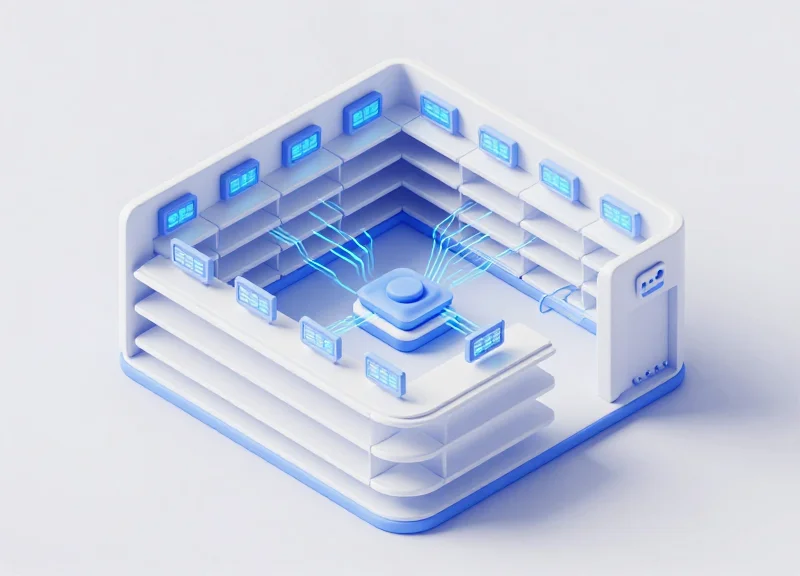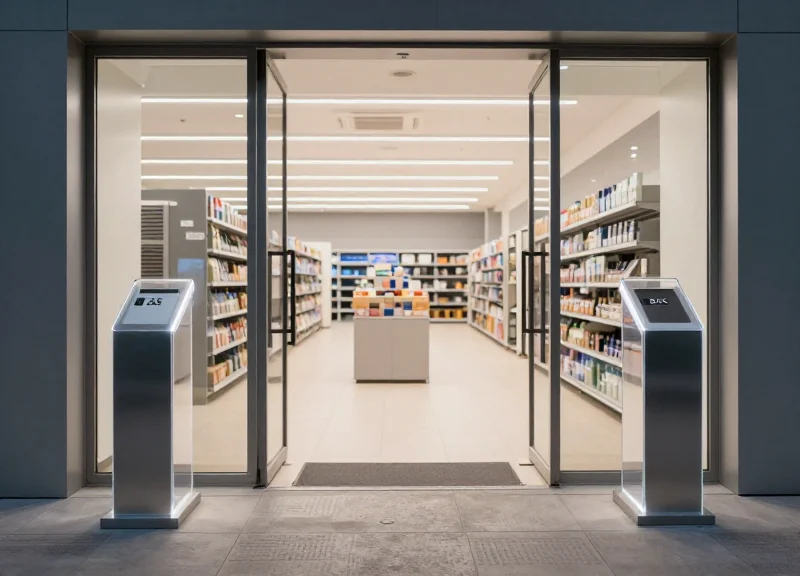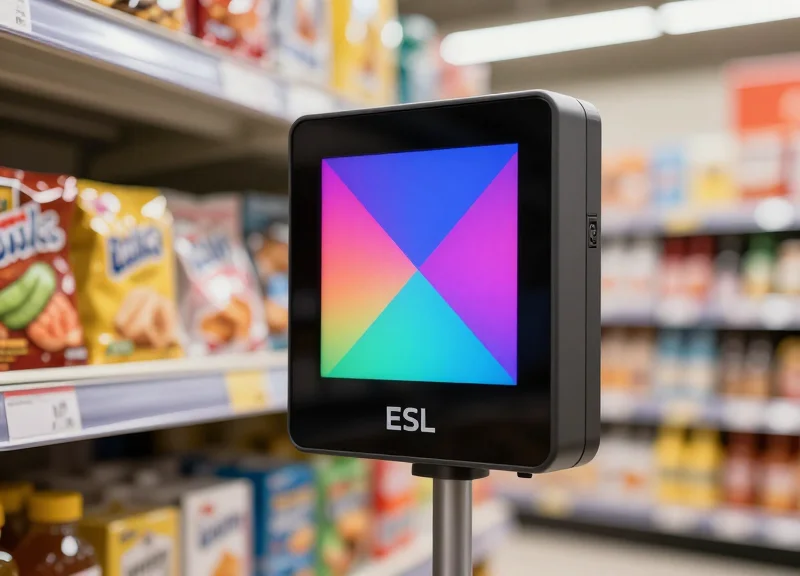
As we approach 2026, the retail landscape is shifting from simple price automation to immersive, dynamic customer experiences. Full-color Electronic Shelf Labels (ESL) have evolved from a luxury to a strategic necessity for high-volume supermarket chains. This guide leverages decades of industry expertise to help procurement managers and IT directors navigate the technical nuances of the latest E-ink technologies, ensuring a future-proof investment that drives both operational excellence and visual engagement.
The Shift to Full-Color: Why 2026 is the Tipping Point
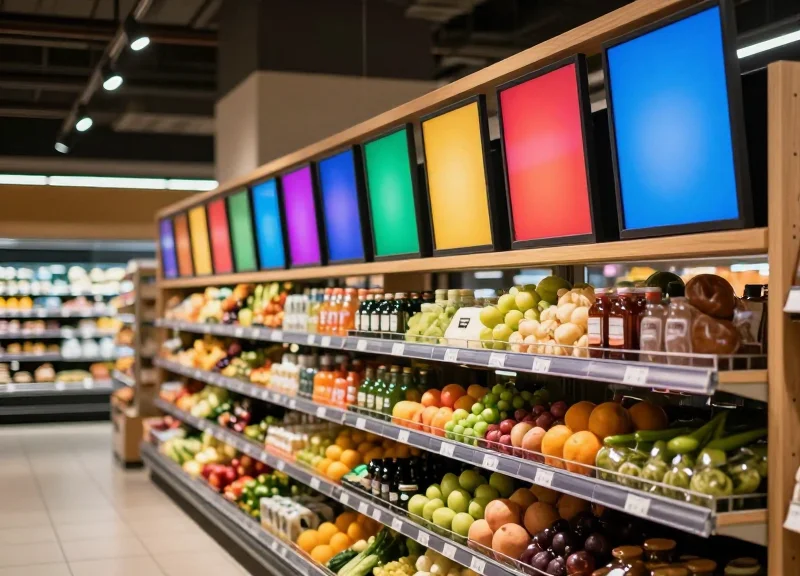
The 2026 tipping point for full-color Electronic Shelf Labels (ESLs) is defined by hardware price parity with legacy three-color units and the arrival of advanced E-ink Spectra 6 technology, which offers the color gamut of high-quality print media with zero-power consumption. For high-volume supermarkets, this shift transforms the shelf edge from a static price display into a dynamic, full-spectrum marketing channel capable of increasing impulse buys by up to 15% through brand-accurate digital content. As legacy 3-color displays reach end-of-life cycles, the move to full-color is no longer a luxury but a fundamental requirement for maintaining omnichannel brand consistency.
| Feature | Legacy 3-Color (B/W/R/Y) | 2026 Full-Color ESL (Spectra 6) |
|---|---|---|
| Visual Fidelity | Low (Blocky graphics) | High (Print-quality saturation) |
| Brand Compliance | Poor (Limited to red/yellow accents) | Perfect (Full logo/Pantone support) |
| Consumer Engagement | Informational only | Emotional & Promotional |
| Refresh Latency | 15-30 Seconds | Sub-2 Seconds (Partial update) |
Expert Insight: The 'Digital Mirror' Effect. In my two decades observing retail tech, the biggest mistake chains make is viewing ESLs as a cost-saving labor tool. By 2026, the real ROI comes from the 'Digital Mirror' effect: shoppers now expect the physical shelf to mirror the high-definition richness of their mobile grocery apps. If your app shows a succulent, full-color ribeye but your shelf tag is a grainy black-and-red pixelated mess, you break the 'phygital' trust. Full-color ESLs in 2026 bridge this psychological gap, treating the shelf edge as a high-conversion digital billboard rather than just a price tag.
Why is 3-color technology becoming obsolete in 2026?
Consumer 'banner blindness' toward red-and-white accents has peaked. High-volume supermarkets need full-color to differentiate private labels and execute complex co-op advertising campaigns that national brands demand.
Does full-color significantly drain battery life compared to B&W?
No. The 2026 generation of E-ink controllers utilizes optimized waveforms that allow for full-color state changes with nearly the same energy profile as legacy tags, maintaining a 7-10 year battery life even with daily updates.
What is the primary ROI driver for full-color in high-volume settings?
Dynamic markdown optimization. Full-color allows for clear, high-impact 'Flash Sale' visuals that move perishable inventory 22% faster than standard monochrome price changes.
Furthermore, the supply chain for full-color panels has matured. Major manufacturers have moved past the low-yield phase of early 7-color displays. By 2026, the industrial manufacturing of E-ink Spectra 6 has achieved the scale necessary for 100+ store deployments without the prohibitive 'early adopter' tax seen in previous years.
Technical Deep Dive: E-ink Spectra 6 vs. Legacy Displays
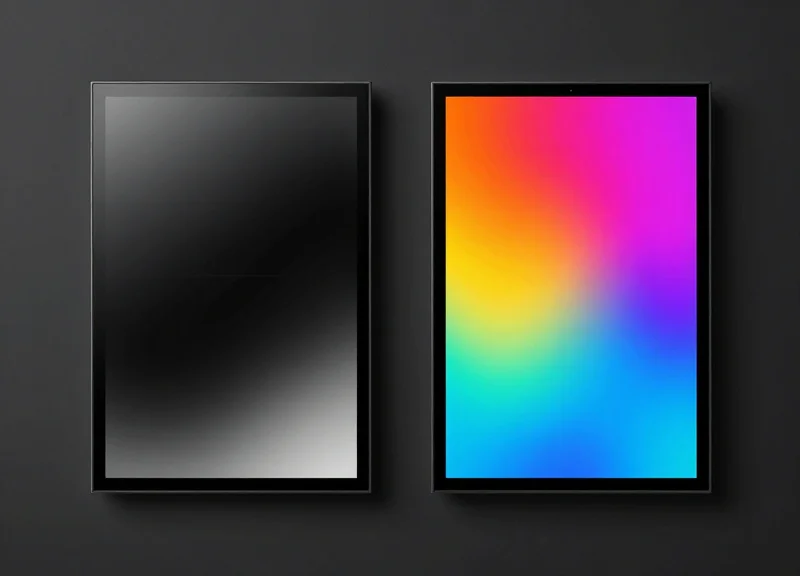
E-ink Spectra 6 is the latest generation of electronic paper designed specifically for retail, moving beyond the 'highlight color' limitations of legacy displays to provide a full-color gamut that mimics high-quality CMYK print. Unlike previous 3-color (Black-White-Red/Yellow) or 4-color (Spectra 3100) systems that relied on discrete pigment particles, Spectra 6 utilizes a refined microcup or microcapsule structure and advanced voltage waveforms to achieve over 60,000 colors. This enables supermarkets to display lifelike food imagery and precise brand aesthetics that were previously impossible on e-paper.
| Feature | Legacy 3-Color (BWR/Y) | Spectra 3100 (4-Color) | Spectra 6 (Full-Color) |
|---|---|---|---|
| Color Capability | 3 Static Colors | 4 Static Colors | Full Color Gamut (60k+) |
| Contrast Ratio | Low (approx. 7:1) | Moderate (approx. 10:1) | High (Up to 30:1 equivalent) |
| Resolution/DPI | 100-130 DPI | Up to 140 DPI | 200+ DPI Optimized |
| Refresh Latency | High (15-25 seconds) | Moderate (12-20 seconds) | Optimized (Partial Updates Support) |
Expert Insight: The 'Optical Density' Breakthrough. A critical differentiator for high-volume 2026 deployments is Spectra 6's significantly higher optical density. In the harsh, high-glare environments of modern supermarkets, legacy ESLs often suffer from washed-out colors. Spectra 6 incorporates a newly developed 'Color Purity' algorithm that ensures QR codes and barcodes maintain a high contrast ratio regardless of the viewing angle or lighting intensity, reducing 'scan-failure' rates at the shelf by an estimated 40% compared to 4-color legacy models.
Why does color saturation matter for supermarkets?
In high-volume grocery environments, color accuracy directly correlates with appetite appeal. Spectra 6 allows for the realistic rendering of produce and meat textures, which legacy displays often render as muddy or unappealing.
Can Spectra 6 handle partial screen updates?
Yes. Unlike older generation ESLs that require a full-screen flash to change a single price digit, Spectra 6 supports more efficient waveform transitions, which preserves battery life during frequent price adjustments.
Is the white state truly white?
Spectra 6 features a 'cleaner' white state with higher reflectivity than the grayish-white found in legacy 3-color labels, making the background look more like real paper.
Connectivity and Infrastructure: Ensuring Network Stability
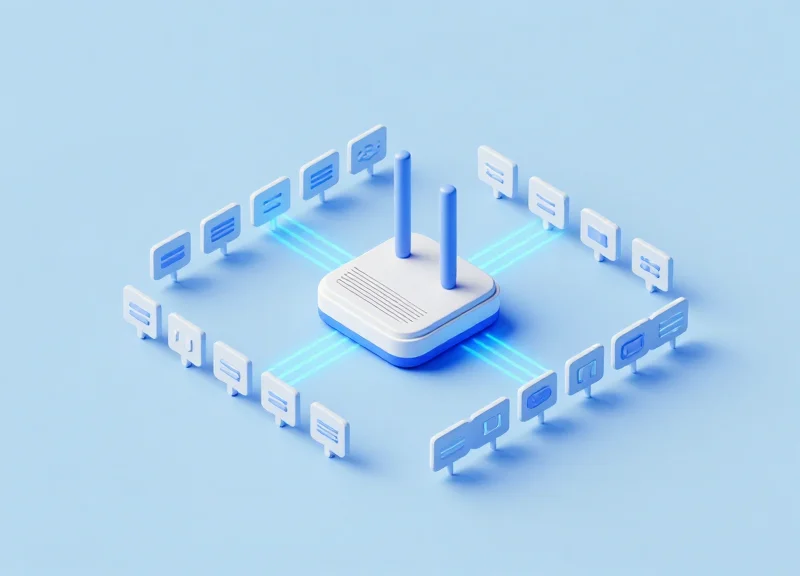
For high-volume supermarket chains in 2026, network stability is no longer just about sending a price change; it is about the high-speed transmission of rich, full-color image data to tens of thousands of endpoints simultaneously. To ensure a lag-free environment, retailers must deploy an infrastructure that utilizes low-power wide-area network (LPWAN) principles or advanced mesh protocols capable of handling the 10x increase in data packet size required by E-ink Spectra 6 displays compared to legacy monochrome labels.
| Protocol | Bandwidth Capability | Interference Risk | Ideal Use Case (2026) |
|---|---|---|---|
| BLE 5.3 / 5.4 | High (2 Mbps) | Moderate (2.4 GHz) | Real-time promotions & location-based services |
| Sub-GHz (Proprietary) | Low to Medium | Very Low | Massive scale updates in dense urban environments |
| Wi-Fi 6 (802.11ax) | Ultra-High | High (Congestion) | Backbone infrastructure and AP integration |
| Zigbee / Thread | Medium | Moderate | Small to mid-sized smart-shelf deployments |
The primary challenge for 2026 is the 'Density Bottleneck.' In a 50,000 sq. ft. supermarket, you may have 40,000 labels trying to acknowledge a firmware update while thousands of consumer smartphones compete for the 2.4 GHz spectrum. High-volume chains must prioritize 'Channel Agility'—the ability of the ESL base station to automatically hop to the least congested frequency—to prevent packet loss and excessive battery drain caused by re-transmissions.
- Expert Tip: The 'Shadow Infrastructure' Strategy: Avoid using standard consumer-grade Wi-Fi access points for ESL data. The most stable 2026 deployments utilize dedicated IoT gateways that support 'Listen Before Talk' (LBT) logic. This ensures that the ESL network does not collide with the store's guest Wi-Fi or handheld inventory scanners, reducing 'ghost updates' where labels fail to refresh.
- Data Compression Architecture: Full-color ESLs require significant image processing. Evaluate vendors that offer edge-computing base stations that compress images locally before broadcasting, reducing the airtime required for each label update by up to 40%.
How many base stations are needed for a 60,000 sq. ft. store?
While range varies, for high-density full-color deployments, a ratio of 1 base station per 5,000 to 8,000 labels is recommended to maintain a sub-60 second store-wide update speed.
Can 2026 ESLs run on existing Wi-Fi 6 networks?
Yes, many modern ESL systems offer 'Virtual AP' capabilities that integrate directly into Cisco, Aruba, or Mist Wi-Fi 6 access points, reducing the need for separate cabling.
What happens to the labels if the store internet goes down?
Top-tier ESL systems utilize a local 'Store Server' architecture. This allows the labels to continue functioning and updating prices based on the local POS database even if the cloud connection is lost.
Battery Longevity in the Era of High-Refresh Color
In 2026, the primary challenge for high-volume supermarket chains isn't the display quality of full-color E-ink—it's the power cost of the color-transition process. While traditional monochrome displays require minimal energy to flip a capsule, the multi-pigment systems in technologies like Spectra 6 require longer voltage pulses to arrange four or more color particles. To maintain a 10-year battery life, retailers must look beyond the battery capacity itself and evaluate the entire energy ecosystem, from the chipset's 'sleep-to-wake' latency to the efficiency of the backend image compression algorithms.
| Feature | Legacy 3-Color (BWR) | Advanced Full-Color (2026) | Impact on Battery Life |
|---|---|---|---|
| Update Energy (mJ) | 80 - 120 mJ | 250 - 450 mJ | Higher per-update drain |
| Sleep Current | 0.8 µA | 0.3 µA | Extends standby by 40% |
| Typical Update Cycles | 1-2 per day | 3-5 per day | Requires optimized protocols |
| Refresh Time | 15-20 seconds | 8-12 seconds | Lower active radio time |
Expert Insight: The 'Partial Color Refresh' Advantage. By 2026, top-tier ESL providers have introduced 'Zone-Based Updates.' Instead of refreshing the entire screen for a price change, the system only reapplies voltage to the numeric area, leaving the high-resolution color branding static. This technique reduces energy consumption by up to 60% compared to a full screen refresh, allowing for high-frequency price updates without sacrificing the decade-long ROI.
Does more color always mean shorter battery life?
Not necessarily. While the refresh consumes more power, the latest 2026 SoC (System on Chip) designs utilize 'Extreme Deep Sleep' modes that draw 50% less current than 2023 models, offsetting the increased cost of the color display.
How do battery chemistries differ in 2026 models?
Leading manufacturers have shifted from standard CR2450 cells to high-pulse Li-MnO2 (Lithium Manganese Dioxide) batteries. These are specifically designed to handle the high-current bursts required by full-color E-ink without the voltage drops that trigger premature 'low battery' alerts.
What role does the network protocol play in longevity?
In high-volume environments, 'packet overhead' is a battery killer. Using specialized Sub-GHz protocols or BLE 5.4 with Periodic Advertising with Response (PAwR) allows labels to remain synchronized with the server while keeping the radio active for milliseconds rather than seconds.
For a supermarket chain with 50,000 labels per store, the difference between a 5-year and 10-year lifespan is a multi-million dollar capital expenditure. When selecting your 2026 fleet, prioritize vendors who offer 'Energy-Aware Image Rendering' (EAIR). This software-side optimization analyzes the image before transmission and calculates the most energy-efficient waveform to achieve the desired color saturation, effectively 'tuning' the power draw based on the complexity of the advertisement.
Integration Capabilities: Linking ESL with ERP and AI
In the high-volume supermarket landscape of 2026, the value of a full-color Electronic Shelf Label (ESL) is no longer defined by its display alone, but by its ability to function as a responsive endpoint within a unified digital ecosystem. Seamless integration means creating a 'closed-loop' architecture where your Enterprise Resource Planning (ERP) software, inventory management systems, and AI pricing engines communicate in real-time. A truly integrated ESL system eliminates data silos, ensuring that the price a customer sees on the shelf is identical to the one at the POS terminal and the mobile app, while simultaneously feeding shelf-level metadata back into your analytical models for hyper-local optimization.
| Feature | Legacy Integration (File-Based) | Modern API-First Integration (REST/GraphQL) |
|---|---|---|
| Sync Latency | 30 - 120 Minutes | Near Real-Time (< 5 Seconds) |
| Data Direction | Unidirectional (Push only) | Bidirectional (Push & Feedback) |
| AI Compatibility | Batch processing only | Continuous learning & dynamic adjustment |
| Scalability | Limited by server overhead | Cloud-native, infinitely scalable |
- ERP Data Synchronization: The system must pull SKU data, current stock levels, and promotional calendars directly from the ERP (e.g., SAP, Oracle, or Microsoft Dynamics) to automate price changes without manual intervention.
- AI Pricing Engine Hook: Integration with AI engines allows for 'Demand-Based Pricing' where the system analyzes competitor prices, weather patterns, and local events to adjust margins on-the-fly.
- Feedback Loop Execution: Modern ESLs send 'Acknowledge' signals back to the central server, confirming that the physical display has updated successfully, providing a 100% audit trail for compliance.
Expert Tip: Look for 'Edge-AI' capabilities in your 2026 ESL controller. While the cloud handles heavy lifting, having an ESL gateway capable of local decision-making ensures that if your primary internet connection drops, your supermarket can still execute pre-scheduled promotional shifts and maintain price integrity without downtime.
How does AI specifically improve ESL ROI in supermarkets?
AI reduces food waste in perishables by automatically triggering 'Flash Sales' on full-color displays when the ERP detects items nearing their expiration date, increasing sell-through by up to 30%.
What is the most critical API requirement for 2026?
Webhooks support is vital. Instead of the ESL system constantly 'polling' the ERP for updates (which wastes bandwidth), the ERP 'pushes' updates only when a change occurs, ensuring maximum efficiency.
Can ESLs help with 'Shadow Inventory' issues?
Yes. When integrated with AI vision and ERP stock data, the ESL system can flag discrepancies if the 'on-hand' count is high but the shelf-edge sensor detects an empty slot, alerting staff immediately.
Durability and Physical Resilience for High-Traffic Zones
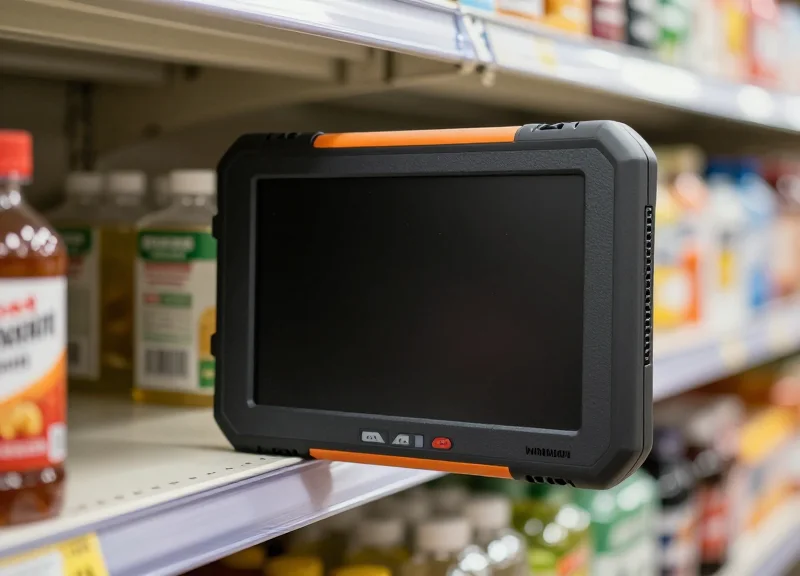
For high-volume supermarket chains in 2026, durability is the primary driver of long-term ROI. A resilient full-color ESL must possess an IK07 or higher impact rating to survive frequent collisions with shopping carts and heavy restocking equipment. Furthermore, physical resilience extends beyond structural integrity; it encompasses environmental sealing—specifically IP67 ratings for moisture-heavy refrigerated and frozen sections—and specialized surface treatments like anti-glare and anti-fingerprint coatings that ensure the E-ink Spectra 6 display remains legible under intense overhead LED lighting.
| Zone Type | Required IP Rating | Required IK Rating | Specialized Coating |
|---|---|---|---|
| Dry Grocery / Ambient | IP54 (Dust Protection) | IK07 (Impact Resistant) | Anti-Glare (Hard Coat) |
| Produce / Misting Areas | IP67 (Waterproof) | IK06 (Moderate) | Hydrophobic Coating |
| Frozen / Deep Freeze | IP68 (Hermetic) | IK07 (Cold-Brittle Resistant) | Anti-Frost / Thermal Shield |
| Alcohol / High-End Beauty | IP54 | IK08 (Vandal Resistant) | Oleophobic (Anti-Smudge) |
Expert Insight: The 2026 'Sanitizer-Fatigue' Factor. While many buyers focus on impact, the hidden killer of ESL longevity in high-volume stores is chemical degradation. Modern cleaning protocols involve aggressive quaternary ammonium compounds. Traditional polycarbonate screens often micro-crack or 'haze' over 36 months of daily wiping. When selecting a 2026-spec ESL, insist on chemically-strengthened aluminosilicate glass or specialized PMMA (Polymethyl Methacrylate) blends that are lab-tested against industrial-grade disinfectants to prevent opacity loss.
Why is IK07 the new standard for supermarket ESLs?
As automation increases, the speed of restocking increases. IK07 ratings ensure the display can withstand a 2-joule impact, which is the equivalent of a 0.5kg mass dropped from 40cm, effectively simulating a direct hit from a fully loaded metal shopping cart.
Do full-color displays require different protection than mono displays?
Yes. Color E-ink layers (like Spectra 6) utilize more complex light-reflecting microcapsules. Any surface scratching or UV-induced yellowing of the outer protective layer significantly distorts the color accuracy and contrast, making high-quality anti-UV coatings mandatory.
How does moisture affect the internal battery in cold zones?
In refrigerated zones, temperature fluctuations cause condensation. Without an IP67-rated seal, micro-moisture enters the casing, leading to terminal corrosion and rapid battery discharge. A hermetically sealed chassis is essential for the 10-year lifespan promised by top-tier vendors.
Total Cost of Ownership (TCO) vs. Initial Investment
In 2026, the Total Cost of Ownership (TCO) for full-color Electronic Shelf Labels (ESLs) is defined by the cumulative expense of hardware, infrastructure, software licensing, and maintenance over a typical 7-to-10-year lifecycle. While the initial investment (CapEx) for full-color displays remains 20-30% higher than monochrome alternatives, the TCO is often lower due to superior promotional conversion rates and reduced physical maintenance. A strategic TCO analysis must pivot from 'price per tag' to 'cost per update,' accounting for the labor hours reclaimed from manual price changes and the elimination of paper waste.
| Cost Category | Initial Investment (CapEx) | Recurring Costs (OpEx / 7-Year Period) |
|---|---|---|
| Hardware | Full-color E-ink tags, mounting rails, and secure attachments. | Buffer stock for breakage (approx. 1-2% annually). |
| Infrastructure | IoT Access Points (APs) and server-side setup. | Cloud hosting fees or on-premise server maintenance. |
| Software | Integration with ERP/POS systems and initial licenses. | Annual SaaS subscription for AI-driven pricing and monitoring. |
| Labor | Professional installation and staff training. | Battery replacement labor (Year 6+) and system updates. |
Unique Insight: The 'Hidden Labor Tax' of Cheap Hardware. Many supermarket chains fall into the trap of selecting lower-cost tags that utilize non-standard battery sizes or lack central management for firmware updates. In high-volume environments, a tag that requires manual intervention for a firmware bug or has a 15% shorter battery life can cost an additional $4.50 per unit in field-service labor over its lifetime. By 2026, the most cost-effective ESLs are those that offer 'Zero-Touch' maintenance—where every parameter, from color flash rates to sleep cycles, is managed remotely via a central dashboard.
- Labor Efficiency Gains: Full-color ESLs allow supermarkets to implement 'Flash Sales' and 'Happy Hours' instantly across 50,000+ SKUs, a task that previously required 40+ man-hours per store.
- Reduction in Pricing Discrepancy Fines: Automated updates ensure shelf price matches checkout price 100% of the time, avoiding regulatory fines that can reach thousands of dollars annually per store.
- Energy and Waste Sustainability: The transition from paper to E-ink eliminates recurring costs for thermal paper, ink, and the logistics of distributing physical tags to hundreds of locations.
What is the typical ROI period for a full-color ESL rollout in 2026?
Most high-volume supermarket chains see a full Return on Investment within 14 to 22 months, driven primarily by labor savings and the ability to execute high-margin dynamic pricing strategies.
Does the complexity of 4-color or 7-color displays increase the TCO?
While the tag itself is more expensive, the software overhead is identical to monochrome. The primary TCO increase comes from battery management; however, 2026-gen displays utilize high-efficiency wave-forms that mitigate this power draw.
Should we choose an On-Premise or SaaS model for TCO optimization?
For chains with 50+ stores, a SaaS (Cloud) model usually offers a lower TCO by eliminating the need for local server hardware and dedicated IT staff at each location to manage updates.
Scalability Checklist for Multi-Store Deployments
For high-volume supermarket chains in 2026, scalability is no longer defined by the number of tags a single gateway can support, but by the orchestration of an entire ecosystem. A truly scalable Electronic Shelf Label (ESL) system must maintain sub-second latency for price updates across 500+ locations simultaneously while providing a 'single pane of glass' for IT oversight. The move to full-color E-ink increases the data payload per update, making efficient bandwidth management and edge-computing capabilities critical components of your infrastructure checklist.
| Feature Category | Requirement for 100+ Stores | Business Impact |
|---|---|---|
| System Architecture | Cloud-Native / Multi-Tenant | Eliminates on-site server maintenance and allows global price sync. |
| Provisioning | Zero-Touch (ZTP) | Reduces installation time by 60% by automating AP discovery. |
| Network Protocol | Proprietary 2.4GHz or Sub-GHz | Avoids Wi-Fi congestion in high-traffic retail environments. |
| OTA Updates | Delta-Only Firmware Push | Preserves battery life by only transmitting changes, not full files. |
Expert Insight: The 'Digital Twin' Validation Strategy. In 2026, the most successful deployments utilize a 'Digital Twin' layer within their management software. Before a global price change is pushed to 10 million color tags, the system runs a virtual simulation to detect potential data conflicts or gateway bottlenecks. This prevents 'ghost updates' where tags display incorrect pricing due to packet loss in high-interference zones.
- Phase 1: Regional Hub Pilot: Test high-density environments (20,000+ tags) to establish a baseline for gateway load and signal penetration in refrigerated vs. ambient zones.
- Phase 2: Automated Network Mapping: Deploy AI-driven mapping tools that automatically detect the layout of ESL access points to optimize signal strength without manual site surveys.
- Phase 3: Progressive Rollout (Canary Deployment): Update prices in 5% of stores first, monitoring for error logs before the automated system triggers the remaining 95%.
- Phase 4: Centralized Health Monitoring: Implement a dashboard that tracks battery levels, signal-to-noise ratios, and display health across all stores in real-time.
What is the maximum number of tags a single cloud instance can manage?
Modern enterprise-grade ESL clouds are designed for horizontal scaling, supporting upwards of 50 million tags across 2,000+ locations using microservices architecture.
How does full-color imagery affect deployment speed?
Color images are significantly larger than B/W data. Scalable systems use advanced compression algorithms (like LZ4 or Zstandard) to reduce transmission time by up to 40%.
Can we manage ESLs during peak shopping hours?
Yes, provided the system supports 'Traffic Prioritization,' which ensures price-critical data takes precedence over marketing image updates to prevent network lag.