As we approach 2026, the landscape of asset protection and crowd management is undergoing a seismic shift. For decades, Electronic Article Surveillance (EAS) was the gold standard for preventing unauthorized removal of items. However, in the high-stakes environments of modern museums and large-scale event management, 'security' is no longer a standalone requirement. Today's curators and organizers demand real-time visibility, visitor insights, and seamless operational flow. This article explores why Radio Frequency Identification (RFID) is rapidly eclipsing traditional EAS, transforming from a simple theft deterrent into the backbone of next-generation smart infrastructure.
The Limitations of EAS in a Digital-First World
Traditional Electronic Article Surveillance (EAS) is fundamentally a binary security solution—designed to trigger an alarm or remain silent based on the proximity of a physical tag to a gate. While effective for basic loss prevention in the 20th century, EAS lacks the granular data capabilities required for the 'Digital-First' museum and event landscapes of 2026. Because EAS systems cannot identify what is being moved, only that something is moving, they create a data vacuum that prevents managers from integrating security with inventory management, visitor analytics, or automated asset tracking.
| Feature | EAS Capability | 2026 Smart Venue Requirement |
|---|---|---|
| Data Resolution | Binary (Alarm/No Alarm) | Unique Item ID (Serialization) |
| Visibility | Point-of-Exit Only | Real-time Spatial Awareness |
| False Alarms | High (Interference/Leaky Tags) | Low (Digital Filtering/Logic) |
| Integration | Isolated Hardware | Cloud-Native/API-Driven |
| User Experience | Friction-Based Security | Invisible, Seamless Protection |
- The Identity Crisis: EAS cannot distinguish between a high-value loaned artifact and a 20-dollar gift shop t-shirt. This lack of item-level intelligence leads to 'blind' security responses where staff treat every alarm with equal urgency, wasting resources and potentially embarrassing VIP visitors.
- Interference and 'Phantom' Alarms: As venues become more digitally dense with 5G, Wi-Fi 7, and IoT sensors, the analog nature of many EAS systems leads to increased electromagnetic interference. This results in frequent false positives that desensitize staff and frustrate visitors.
- Zero Analytical Value: EAS provides no data on visitor dwell time, exhibit popularity, or inventory flow. In a world where 'data is the new oil,' EAS is an unproductive asset that only consumes power and space without contributing to the venue's business intelligence.
Unique Expert Insight: The Cost of 'Friction-Induced Brand Erosion'. In my 20 years of Silicon Valley consulting, I’ve observed a shift where the 'friction' of an alarm gate is now more costly than the theft it prevents. For a 2026 museum, an accidental alarm triggered by an EAS system on a high-net-worth donor or a social media influencer can lead to immediate reputation damage. RFID provides 'silent security' where the system knows exactly who and what is moving, allowing for 'soft' interventions via mobile alerts to staff rather than a public, loud, and outdated alarm siren.
RFID vs. EAS: A Technical and Operational Comparison
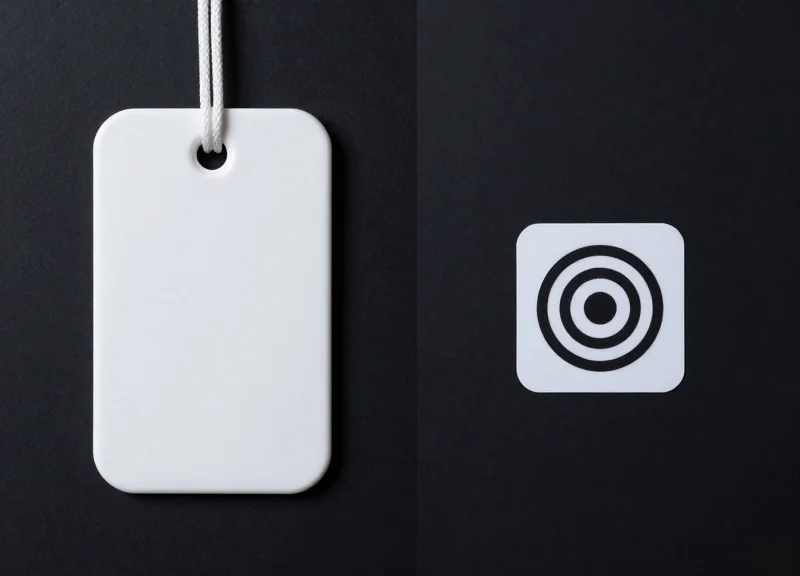
The fundamental difference between Electronic Article Surveillance (EAS) and Radio Frequency Identification (RFID) lies in the depth of data transmitted: EAS is a 'dumb' binary system designed solely to trigger an alarm, while RFID is a 'smart' digital infrastructure capable of identifying unique items, tracking locations, and storing history. While EAS only answers the question 'Is something being stolen?', RFID answers 'What exactly is moving, where is it going, and how has it been used?' For 2026 smart museums and events, this shift from 1-bit detection to multi-bit intelligence is the catalyst for operational transformation.
| Feature | Traditional EAS (Acousto-Magnetic/RF) | Next-Gen RFID (UHF/RAIN) |
|---|---|---|
| Data Capacity | 1-Bit (On/Off state only) | 96 to 512+ Bits (Unique ID, SKU, History) |
| Read Capability | Single tag detection (collision issues) | Bulk reading (1,000+ tags per second) |
| Line of Sight | Not required (but range is limited) | Not required (Long range up to 15+ meters) |
| Primary Function | Theft deterrence and loss prevention | Inventory, analytics, and security |
| Integration | Standalone analog system | Cloud-native, API-first digital ecosystem |
The Silicon Valley Perspective: The 1-Bit vs. 96-Bit Paradigm Shift. From a systems architecture standpoint, relying on EAS in 2026 is like using a pager in the age of the smartphone. EAS operates on a 'presence-sensing' logic that provides zero context. RFID introduces 'Item-Level Intelligence' via the Electronic Product Code (EPC). This allows museum curators to distinguish between a low-value gift shop item and a priceless artifact triggered at the same exit, or event planners to track the exact flow of VIP guests through specific zones in real-time. The ROI of RFID isn't just in stopping theft; it is in the massive data harvest that informs every operational decision.
Does RFID replace the need for security gates?
Yes and no. While RFID can trigger traditional alarms, it often evolves 'gates' into 'invisible zones.' By using overhead antennas, 2026 venues can eliminate bulky pedestals, creating an open, frictionless aesthetic while maintaining superior security.
Is the cost difference between EAS and RFID still a barrier?
The unit cost of RFID tags has plummeted to near-parity with high-end EAS tags. However, when you factor in the labor savings from automated inventory and the revenue boost from better visitor analytics, RFID typically achieves a higher Net Present Value (NPV) within 18 months.
Can RFID handle the high-traffic density of a major exhibition?
Unlike EAS, which can become 'blinded' by multiple simultaneous signals, RFID utilizes anti-collision protocols. This allows it to accurately read hundreds of individual visitor badges or tagged assets passing through a portal at once without signal interference.
Securing Priceless Assets: Real-Time Tracking for Museums

Unlike traditional Electronic Article Surveillance (EAS) which only triggers an alarm at specific checkpoints, RFID-based real-time tracking provides a continuous 'digital heartbeat' for every artifact. By utilizing a network of overhead readers and low-profile tags, museum curators can monitor the exact coordinates of an asset 24/7, enabling instant alerts the moment an item is touched, tilted, or moved outside its designated 'safe zone.' This shift from reactive gate-security to proactive spatial-awareness is the foundation of the 2026 smart museum model.
| Feature | Traditional EAS | Next-Gen RFID Tracking |
|---|---|---|
| Monitoring Frequency | Point-of-exit only | Continuous 24/7 visibility |
| Alert Trigger | Crossing a physical pedestal | Unauthorized movement or 'micro-zoning' breach |
| Asset Data | Binary (Tag present/not present) | Identity, history, and environmental status |
| Forensic Capability | None (Alarm sounds after the fact) | Full movement history and path breadcrumbs |
The true power of RFID lies in its ability to generate a 'Breadcrumb Trail.' For high-value collections, knowing that an item was stolen is insufficient; security teams need to know exactly when it was moved and what path it took through the facility. This forensic data allows for immediate lockdown of specific zones and provides law enforcement with precise timelines that traditional CCTV—which often has blind spots—cannot match alone.
Can RFID track items through walls or storage crates?
Yes, high-sensitivity UHF RFID readers can penetrate standard wooden crates and interior walls, allowing staff to verify the presence of crated artifacts without opening them, which is critical for maintaining climate-controlled environments.
How does RFID prevent 'Internal Shrinkage'?
By logging every authorized movement via staff handhelds or fixed portals, the system creates an immutable audit trail. Any movement not tied to a digital work order triggers an immediate notification to the head of security.
Does the technology interfere with delicate artifacts?
Modern passive RFID tags are inert and require no internal power source, making them safe for long-term attachment to a wide variety of materials including canvas, stone, and metal when applied with conservation-grade adhesives.
Expert Insight: The 'Micro-Zoning' Advantage. As we move toward 2026, the most sophisticated installations are moving beyond room-level tracking to 'Micro-Zoning.' By calibrating the signal strength (RSSI) of RFID readers, curators can create a virtual 10-centimeter 'digital tether' around an object. If a visitor reaches over a barrier and moves a sculpture even slightly, the system can trigger a localized voice warning or adjust overhead lighting to highlight the breach, effectively de-escalating incidents before a theft even occurs.
Revolutionizing Event Logistics: From Access Control to Interaction

By 2026, the benchmark for event success will shift from mere attendance to 'frictionless engagement.' RFID (Radio Frequency Identification) revolutionizes event logistics by replacing static, line-of-sight security protocols with a dynamic digital handshake. Unlike traditional EAS, which only sounds an alarm, RFID enables simultaneous identification and authorization of thousands of attendees per hour. This allows event managers to eliminate queue bottlenecks, automate VIP tier access, and collect granular behavioral data that was previously impossible to capture at scale.
| Feature | Traditional EAS/Barcode | Next-Gen RFID (2026) |
|---|---|---|
| Entry Speed | 3-5 seconds per manual scan | Sub-1 second (passive walk-through) |
| Queue Management | Linear queues with high labor cost | Free-flow movement with automated gates |
| Data Capture | Entry/Exit only | Real-time dwell time and booth interaction |
| Engagement | None (Security only) | Triggers personalized content & networking |
Beyond simple entry, the true power of RFID lies in the 'Interaction Layer.' In the modern museum or event space, an RFID wristband or badge acts as a unique digital identity. This enables 'The Invisible Concierge' effect: as an attendee approaches an exhibit or a booth, the system can trigger personalized digital displays, send relevant whitepapers to their mobile device, or log their interest for post-event follow-up—all without the user ever taking their phone out of their pocket.
- Automated Check-in: Attendees pass through RFID gantries that validate credentials instantly, reducing staff overhead and eliminating long registration lines.
- Zonal Access Control: Software-defined perimeters allow organizers to grant or revoke access to VIP lounges or breakout rooms in real-time based on ticket tiers.
- Heatmapping & Flow Optimization: Real-time location data identifies 'dead zones' or overcrowding, allowing organizers to deploy staff or adjust signage dynamically.
Expert Insight for 2026: We are seeing a shift toward 'Predictive Crowd Re-routing.' By integrating RFID flow data with AI, organizers can predict a bottleneck 15 minutes before it happens and push notifications to attendee apps, offering a discount at a nearby coffee stand to divert traffic and maintain safety standards.
Can RFID handle thousands of people entering at once?
Yes. High-frequency (HF) and Ultra-high-frequency (UHF) systems are designed for high-density environments, capable of reading hundreds of tags per second within a specific zone.
Is RFID data secure for event attendees?
Modern 2026-standard RFID chips use AES-128 bit encryption and unique UID locking to prevent cloning and ensure that personal data remains linked only within the secure event database.
Does RFID replace the need for security staff?
It reallocates them. Instead of scanning badges, staff can focus on hospitality and high-level security monitoring, improving the overall guest experience.
The 2026 Vision: Integrating ESL and RFID for Smart Galleries

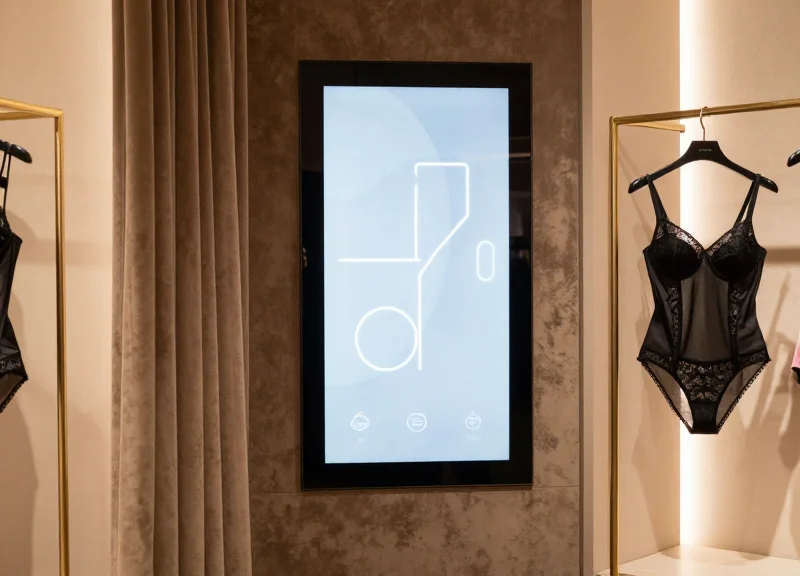
The 2026 vision for smart galleries is defined by the seamless convergence of Electronic Shelf Labels (ESL) and RFID technology, creating a self-correcting ecosystem where digital displays automatically sync with an exhibit's physical location and security status. Unlike static paper labels, this integrated approach allows for 'Zero-Touch Curation'—a system where the moment an RFID-tagged artifact is placed on a pedestal, the associated ESL instantly pulls the correct metadata, provenance, and insurance value from a centralized database. This eliminates manual errors and ensures that the narrative presented to the visitor is always perfectly aligned with the asset on display.
| Capability | Legacy EAS + Paper Labels | 2026 ESL + RFID Integration |
|---|---|---|
| Information Accuracy | Manual updates; high risk of outdated info. | Real-time synchronization with CMS via RFID trigger. |
| Security Response | Binary alarm; no data on what triggered it. | Context-aware alerts; identifies specific item and status. |
| Visitor Interaction | Passive; reading only. | Dynamic; triggers personalized ESL content via NFC/RFID. |
| Operational Cost | High labor for re-labeling and inventory. | Low; automated inventory and remote label updates. |
A unique insight for the 2026 landscape is the 'Shadow Content Effect.' This involves using the RFID tag within an artifact to trigger 'Hidden' ESL modes. For instance, when a curator or an authorized researcher—wearing a high-frequency (HF) RFID badge—approaches a display, the ESL can automatically switch from public descriptions to detailed conservation data or internal asset IDs. This dual-purpose utility maximizes the value of the hardware, turning every label into a dynamic portal for both the public and staff, a feat impossible with traditional EAS or paper-based systems.
- Asset Tagging and Database Linking: Every artifact is fitted with a discreet, high-memory RFID tag that stores its unique ID and encryption keys for secure communication.
- ESL Network Deployment: Electronic Paper Displays (EPD) are installed at each display point, connected via a low-power wireless mesh network (e.g., Sub-G or Bluetooth LE).
- Proximity-Based Syncing: As the RFID-tagged asset enters the display zone, fixed RFID readers confirm its position and signal the ESL to update its content relative to that specific object.
- Dynamic Security Profiling: The system monitors the signal strength; if the RFID tag leaves the ESL's range without authorization, the ESL can change its display to a warning or alert security immediately.
How does the ESL battery life hold up in a high-update museum environment?
By 2026, ESLs utilizing e-paper technology consume power only during refreshes. Even with multiple updates per day, these devices typically offer 5 to 10 years of battery life, making them nearly maintenance-free.
Can RFID/ESL systems be integrated with existing Museum Management Systems (MMS)?
Yes. Modern implementations use RESTful APIs to bridge the gap between the RFID middleware and existing collections management software, ensuring a single source of truth for all data.
Is the system cost-effective for smaller galleries?
While the initial capital expenditure is higher than traditional EAS, the reduction in labor costs for inventory and label printing, combined with the reduction in insurance premiums due to better asset tracking, typically results in a full ROI within 18-24 months.
Data as the New Currency: Leveraging Visitor Analytics

In the 2026 smart museum and event landscape, RFID visitor analytics represent a paradigm shift from simple asset protection to high-resolution behavioral intelligence. By leveraging passive RFID tags (often embedded in visitor badges or tickets) and strategic reader arrays, venues can capture 'dwell time'—the precise duration a visitor spends in front of a specific exhibit—and 'pathing'—the chronological route taken through a space. This data allows curators and organizers to quantify engagement, identify 'dead zones' in a layout, and treat visitor attention as a measurable, monetizable asset similar to digital web traffic.
| Analytical Capability | Traditional EAS Systems | Next-Gen RFID Solutions |
|---|---|---|
| Entry/Exit Counting | Yes (Basic infrared sensors) | Yes (Precise ID-based tracking) |
| Dwell Time Measurement | No | Yes (Down to the second) |
| Cross-Room Pathing | No | Yes (Visualizes visitor flow) |
| Behavioral Segmentation | No | Yes (Categorizes VIP vs. General) |
| A/B Testing Layouts | Manual Observation only | Real-time Data-driven |
One of the most powerful applications of this 'data currency' is the ability to calculate the 'Physical Bounce Rate.' In web design, a bounce occurs when a user leaves immediately; in a museum, an RFID system identifies which exhibits fail to hold attention for more than 10 seconds. This allows for rapid iteration of signage, lighting, or placement. Furthermore, by integrating this data with back-end CRM systems, event managers can see which professional backgrounds correlate with specific booth visits, enabling a level of lead qualification that was previously impossible.
How does RFID ensure visitor privacy while collecting data?
Modern 2026 systems utilize 'anonymized ID mapping.' The system tracks a unique tag number rather than a name, allowing for flow analysis without storing Personally Identifiable Information (PII) on the local tracking server, ensuring GDPR and CCPA compliance.
What is the 'Heatmap 2.0' concept in smart museums?
Unlike static heatmaps that show where people stood, Heatmap 2.0 uses RFID to show 'interaction density'—distinguishing between someone just passing through a corridor and someone actively engaging with an exhibit for several minutes.
Can RFID analytics predict future crowd bottlenecks?
Yes. By feeding historical RFID flow data into AI models, venues can predict when a specific gallery will reach capacity, allowing staff to divert traffic via digital signage before a bottleneck occurs.
Expert Tip: To maximize ROI, don't just track the high-traffic areas. Use RFID to investigate your 'cold spots.' Often, a simple change in the directional flow—revealed by analyzing the points where visitors consistently turn back—can increase the total exhibition exposure by up to 30%. In the 2026 economy, the museum that understands its visitor's journey better than the visitor themselves is the one that secures the most funding and engagement.
Cost-Efficiency and ROI: The Long-Term Case for RFID Migration
The Return on Investment (ROI) for RFID migration in museums and events is realized through the transition from a passive 'loss prevention' model to an active 'operational intelligence' ecosystem. While traditional Electronic Article Surveillance (EAS) acts as a sunk cost focused solely on perimeter security, RFID provides a multifaceted financial return by automating high-frequency tasks such as inventory audits, location tracking, and visitor flow analysis, typically yielding a full return on initial capital expenditure within 18 to 24 months.
| Financial Metric | Traditional EAS (Cost Center) | RFID Ecosystem (Value Driver) |
|---|---|---|
| Inventory Labor | High: Manual barcode scanning | Low: 99% automated bulk scanning |
| Asset Visibility | None: Only triggers at exits | Real-time: Sub-meter precision |
| Data Monetization | Zero: No visitor insights | High: Analytics-driven sponsorship |
| Equipment Lifespan | Static: 5-7 years | Dynamic: 10+ years with OTA updates |
| Long-term TCO | Higher: Continuous manual labor | Lower: Efficiency-driven savings |
A critical, often overlooked financial benefit is the 'Predictive Maintenance ROI.' In a museum setting, RFID tags can be integrated with sensors to monitor the cumulative environmental exposure of sensitive artifacts. By tracking how long a specific piece has been under high-intensity gallery lighting or in fluctuating humidity, curators can automate rotation schedules. This prevents irreversible degradation, potentially saving hundreds of thousands of dollars in professional restoration fees—a capability traditional EAS simply cannot offer.
How does RFID reduce labor costs specifically in event management?
RFID eliminates manual check-in bottlenecks and the need for staff to manually count attendees at various breakout sessions. Automated 'tap-and-go' or walk-through portals reduce the required onsite staffing by up to 40% while providing more accurate attendance data.
Is the initial hardware cost of RFID significantly higher than EAS?
While the initial hardware (readers and tags) is generally 15-20% more expensive than basic EAS, the operational savings from reduced inventory time and lower loss rates typically offset this difference within the first two years of deployment.
Can RFID help in recovering stolen assets better than EAS?
Yes. EAS only alerts you that something has left the building. RFID provides a digital breadcrumb trail, showing exactly when and through which exit an item moved, significantly increasing the probability of recovery through forensic data.
Expert Insight: For 2026, the real 'hidden' ROI lies in data-driven space optimization. By analyzing RFID-generated heatmaps, event organizers can justify higher sponsorship rates for high-traffic 'hot zones' and museums can redesign gallery layouts to minimize congestion, effectively increasing the 'revenue per square foot' of the venue.
Overcoming Implementation Challenges in Heritage Sites
Successfully deploying RFID technology in heritage sites requires solving the 'material paradox': the need for 2026-grade data precision within structures designed centuries before the advent of radio frequencies. Unlike modern 'white box' galleries, heritage sites feature thick masonry, lead-based paints, and historical plaster that act as Faraday cages or signal reflectors. The key to overcoming these hurdles lies in 'Invisible Infrastructure'—a methodology that prioritizes non-destructive mounting, frequency-hopping to penetrate dense materials, and custom-tuned antennas that integrate seamlessly into the existing architectural aesthetic.
| Heritage Challenge | Traditional EAS Limitation | RFID 2026 Solution |
|---|---|---|
| Thick Stone/Brick Walls | Signal blockage and dead zones | Distributed Antenna Systems (DAS) with UHF frequency hopping |
| Preservation Restrictions | Requires invasive drilling/wiring | Self-adhesive thin-film antennas and Power-over-Ethernet (PoE) via existing tracks |
| Metallic/Lead Paint Artifacts | False alarms and shielding | On-metal tag spacers and circular polarization to minimize interference |
| Aesthetic Integrity | Bulky, unsightly pedestals | Hidden floor-loop antennas and 'Chameleon' 3D-printed sensor covers |
- Phase 1: RF Propagation Mapping: Utilize LiDAR scanning and RF heat-mapping to identify how signal waves interact with specific historical materials like limestone or timber before any hardware is installed.
- Phase 2: Non-Invasive Cable Management: Leverage existing lighting tracks or floor expansion joints to run ultra-thin fiber-optic cables, avoiding the need to disturb lath-and-plaster ceilings.
- Phase 3: Custom Camouflage: Utilize 3D-printed enclosures finished with site-specific textures (faux marble, wood grain, or stone) to render RFID readers invisible to the casual visitor.
- Phase 4: Signal Optimization: Implement 'Material-Responsive Tuning,' where the reader software is calibrated to account for the unique dielectric constants of the heritage building's specific stone density.
Will RFID signals damage sensitive organic artifacts?
No. Passive RFID tags operate at extremely low power levels and are electronically inert unless being read, making them safer for long-term placement on delicate parchment or textiles compared to active sensors.
How do we handle the lack of modern power outlets in 18th-century wings?
By 2026, the standard for heritage sites is the use of long-range PoE (Power over Ethernet) or localized energy harvesting, which allows sensors to run for years on a single micro-battery or ambient light.
Can RFID be installed without any drilling into protected surfaces?
Yes. Museum-grade archival adhesives and tension-based mounting brackets allow for 'zero-footprint' installations that can be removed without leaving residue or structural damage.
Expert Insight: A breakthrough for 2026 heritage management is 'Conductive Ink Integration.' In scenarios where even a thin-film antenna is too visible, curators are now using conductive, pigment-matched inks to print RFID antennas directly onto display plinths or wallpaper. This transforms the building's own skin into a security sensor, effectively turning the heritage site into a living, smart environment without a single visible wire or plastic box.
Future-Proofing Your Venue with DragonGuardGroup Solutions
DragonGuardGroup future-proofs modern venues by shifting the paradigm from reactive security to 'Unified Asset Intelligence.' For 2026, future-proofing means deploying an end-to-end RFID ecosystem where ultra-thin tags, high-performance readers, and cloud-native software work in harmony. Our solutions go beyond simple theft prevention; they provide the granular visibility required to manage high-value exhibits and high-traffic events simultaneously. By bridging the gap between physical security and digital analytics, DragonGuardGroup ensures your infrastructure is ready for the next decade of technological evolution, moving away from the 'dumb' signals of legacy EAS to the 'smart' data of integrated RFID.
| Feature | DragonGuardGroup 2026 RFID Solution | Legacy EAS Systems |
|---|---|---|
| Primary Function | Security + Real-time Asset Tracking + Analytics | Basic Theft Deterrence |
| Data Capacity | 96-bit to 512-bit User Memory (EPC Class 1 Gen 2) | 1-bit (Alarm On/Off) |
| Reader Capability | Bulk scanning (hundreds of items per second) | Single-item detection at gates |
| Aesthetic Integration | Invisible mounting & architectural blending | Bulky, visible pedestals |
| Connectivity | Open API & IoT Cloud Integration | Standalone analog operation |
Can DragonGuardGroup hardware integrate with our existing Collection Management System (CMS)?
Absolutely. Our solutions are built on an API-first architecture, allowing seamless data synchronization with major museum databases and event registration platforms, ensuring that every tag read updates your central records in real-time.
How does DragonGuardGroup handle signal interference in crowded event halls?
We utilize proprietary 'Adaptive Power Tuning' technology. Our readers automatically adjust signal strength and frequency hopping to maintain 99.9% read accuracy, even in high-density environments where water (human bodies) typically causes RF interference.
Is the transition from legacy EAS to DragonGuard RFID complex?
No. We offer 'Hybrid Transition Modules' that allow you to maintain legacy security gates while layering in RFID capabilities, enabling a phased rollout that fits your budget and timeline.
Expert Insight: The 'Invisible Infrastructure' Edge. One original perspective we provide at DragonGuardGroup is the concept of 'Architectural RF.' As we move toward 2026, the demand for security without the 'police-state' aesthetic is paramount. We have engineered flat-panel, high-gain antennas that can be embedded directly behind drywall, under floorboards, or within exhibition pedestals. This creates a secure zone that is entirely invisible to the visitor, preserving the curated atmosphere of luxury galleries and high-end events while providing more data points than traditional gate-based systems ever could.
- Assessment & Mapping: We conduct a site-wide RF mapping to identify dead zones and optimal reader placements.
- Tag Customization: Selection of application-specific tags, from archival-safe adhesive tags for artifacts to wearable NFC/RFID wristbands for event guests.
- Middleware Sync: Installation of DragonGuard middleware to translate raw hardware signals into actionable business intelligence.
- Staff Training & Optimization: On-site training for security and curatorial teams to leverage real-time dashboards for inventory and flow management.