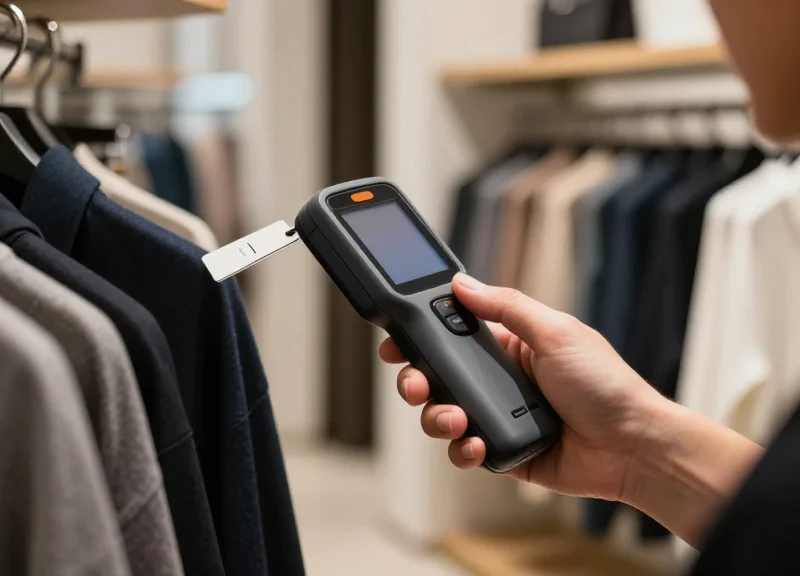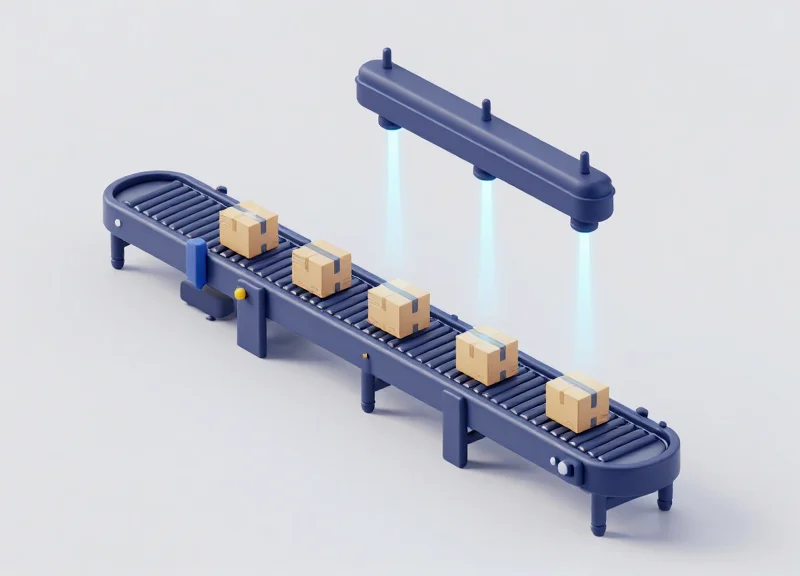
For years, the 'signal spill' phenomenon has been the Achilles' heel of high-density RFID deployments. When tags from adjacent aisles or backrooms are accidentally read, data integrity suffers, leading to costly inventory errors. As we look toward 2026, a paradigm shift is occurring. Next-generation narrow-beam technology is moving beyond incremental improvements to fundamentally redefine how radio frequency energy is focused. This article explores the death of signal spill and how these advancements provide the surgical precision required for the next era of smart retail and automated logistics.
The Anatomy of 'Signal Spill' in Legacy Systems

In the context of Radio Frequency Identification (RFID), signal spill—also known as stray reads or bleed-through—is the phenomenon where an antenna’s electromagnetic field extends beyond its intended coverage area, inadvertently activating and reading tags in adjacent aisles, loading docks, or storage bins. This lack of spatial containment results in 'ghost reads,' where system data reflects inventory that isn't physically present in the workflow, leading to a breakdown in real-time visibility and inventory integrity.
Legacy RFID systems predominantly rely on patch antennas with broad beamwidths, typically ranging from 60 to 90 degrees. While effective for general area monitoring, these antennas act like floodlights rather than spotlights. In the high-density warehousing environments of the 2020s, where items are packed within centimeters of each other, this 'floodlight' approach creates a massive overlap in signal zones, making it mathematically impossible for software to distinguish between a tag on a moving forklift and a tag sitting on a nearby shelf.
| Antenna Metric | Legacy Wide-Beam (Pre-2024) | Modern High-Density Requirement |
|---|---|---|
| Typical Beamwidth | 65° - 110° | 15° - 30° |
| Read Zone Precision | Low (3m+ variance) | High (<0.5m variance) |
| Multipath Vulnerability | Severe | Highly Mitigated |
| Primary Use Case | Open Portals | Precision Picking & Sorting |
What are the direct costs of 'Ghost Reads'?
Ghost reads trigger false inventory counts, leading to 'phantom stock' that prevents reorders or causes labor waste as workers search for items that aren't actually at the specified location.
Why can't software alone fix signal spill?
While RSSI (Received Signal Strength Indicator) filtering attempts to ignore weaker signals, RF reflections off metal surfaces can make a distant 'spilled' tag appear stronger than a local one, rendering software-only fixes unreliable.
How does signal spill affect automated sorting?
In high-speed conveyor systems, spill can cause a sorter to misidentify a package, leading to misrouting and expensive manual intervention.
The Expert Perspective: The 'Reflection Trap'. A common misconception is that reducing power (attenuation) solves signal spill. However, our field data shows that lowering power often just creates 'dead zones' without eliminating the spill caused by multipath interference. Legacy antennas suffer from side lobes—smaller bursts of energy that exit the antenna at odd angles. In a modern facility filled with steel racks, these side lobes bounce and create 'hot spots' several meters away. The real solution isn't less power; it's the surgical precision of phase-locked narrow beams that we are seeing emerge in the 2026 tech cycle.
The Science of Narrow-Beam: Focused Energy vs. Flooding

The science of narrow-beam RFID in 2026 marks a shift from 'passive illumination' to 'active energy steering.' While legacy antennas flood an entire area with radio frequency (RF) energy—often at a 60 to 90-degree beamwidth—next-gen narrow-beam systems utilize phased-array technology to concentrate that same power into a tight, high-gain 'pencil beam' of 15 degrees or less. This allows for pinpoint accuracy in high-density environments where legacy systems would trigger 'ghost reads' by accidentally activating tags in adjacent aisles or loading docks.
| Metric | Legacy 'Flood' Systems (Pre-2024) | 2026 Narrow-Beam Systems |
|---|---|---|
| Standard Beamwidth | 60° - 110° Wide Angle | 5° - 15° Ultra-Narrow |
| Energy Density | Low (Dispersed) | High (Concentrated) |
| Side-Lobe Interference | Significant (-10dB to -15dB) | Negligible (-30dB or better) |
| Control Method | Fixed Position / Static | Software-Defined / Phased Steering |
| Accuracy Rate | 85-92% in dense areas | 99.9%+ Zone Fidelity |
The 2026 hardware breakthrough lies in the adoption of Gallium Nitride (GaN) based amplifiers coupled with AI-driven phase shifters. By precisely adjusting the timing of the signal across dozens of micro-elements in the antenna array, the system creates constructive interference in the desired direction and destructive interference (nulls) elsewhere. This 'RF Slicing' effectively builds a virtual wall where no signal exists outside the targeted read zone, ensuring that a tag six inches outside the boundary remains completely silent.
How does narrow-beam tech handle signal diffraction?
Modern 2026 systems use dynamic wave-shaping to minimize multipath interference. By narrowing the beam, the system reduces the number of surfaces the RF can bounce off, preventing the 'hall of mirrors' effect common in metal-heavy warehouses.
Does higher focus mean more energy consumption?
No. Because the energy is concentrated rather than scattered, these systems often operate at lower total power levels while achieving higher read-range 'depth' than legacy wide-angle antennas.
What is the 'Fresnel Zone' advantage in 2026 hardware?
Next-gen antennas are designed to optimize the first Fresnel zone by keeping it clear of physical obstructions via narrow-steering, which significantly reduces the signal-to-noise ratio (SNR) and increases read speeds.
Expert Insight: In the silicon-level architecture of 2026 arrays, we are seeing the rise of 'Null-Steering.' Unlike traditional beamforming that only looks at where the signal should go, these systems actively calculate where the signal must not go (such as a nearby conveyor belt) and mathematically project a 'radio shadow' over that area. This dual-action of focused energy and intentional silence is what finally kills signal spill.
Phased Array Breakthroughs Driving 2026 Standards

Phased array breakthroughs in 2026 represent a shift from static antenna patterns to dynamic, software-defined radio (SDR) environments where RFID readers utilize electronically steerable antenna elements. By varying the phase of the signal at each element, these systems can steer a 'pencil beam' across a 120-degree arc in microseconds without any moving parts. This allows for the first-ever implementation of spatial filtering in RFID, where the reader can 'ignore' signals coming from outside a specific three-dimensional coordinate, effectively setting a new global standard for localized accuracy in retail and logistics.
For decades, phased array technology was the exclusive domain of aerospace and defense due to the extreme cost of Gallium Nitride (GaN) components. However, the 2026 breakthrough is driven by the maturation of Silicon-Germanium (SiGe) BiCMOS processes. This has allowed manufacturers to integrate hundreds of phase shifters and amplifiers directly onto a single, low-cost CMOS chip, bringing the price point of a phased array RFID reader down from five figures to under one thousand dollars.
| Feature | Legacy Fixed-Beam (Pre-2025) | 2026 Phased Array Standards |
|---|---|---|
| Beam Steering | Fixed (Mechanical Adjustments) | Dynamic (Electronic Steering) |
| Spatial Resolution | Wide (30-60 degrees) | Ultra-Narrow (1-5 degrees) |
| Interference Handling | Passive Shielding Required | Active Null-Steering |
| Tracking Capability | Binary (In/Out of Range) | Vector-Based (Location & Velocity) |
One of the most significant 2026 standards involves 'Spatial Multiplexing' for RFID. Unlike traditional systems that read every tag in their field of view simultaneously (leading to collisions and spill), new standards mandate that readers can isolate specific 'zones' of just a few inches. This is achieved through active nulling—a technique where the reader creates a 'blind spot' in the RF field to intentionally ignore nearby tags that are not the target of the current inventory cycle. This level of control is what finally allows RFID to work reliably in high-density hanging garment scenarios or ultra-tight pharmaceutical storage.
Does phased array tech require special RFID tags?
No, the breakthrough is entirely on the reader/antenna side. 2026 phased array systems are fully backward compatible with standard RAIN RFID (Gen2) tags, though they extract much higher quality telemetry data from them.
How does beam-steering improve read rates in crowded areas?
By concentrating energy into a tiny focal point, the reader increases the 'power on tag' without exceeding regulatory ERP limits. This allows the system to energize and read tags that were previously shielded or too far away for wide-angle antennas.
Is the 2026 technology compliant with current FCC/ETSI regulations?
Yes, new standards have been developed specifically to allow for rapid beam hopping, ensuring that while the beam is intense, it never stays on a single coordinate long enough to violate thermal or interference limits.
Expert Insight: The 'Holy Grail' of 2026 RFID is not just the narrow beam, but 'Synthetic Aperture' processing. By combining the data from a moving beam with AI-driven algorithms, readers can now create a 3D heat map of every tag in a room. This effectively turns a single RFID reader into a real-time 'indoor GPS' for inventory, moving the industry from simple identification to true spatial intelligence.
Achieving 99.9% Accuracy in High-Density Retail
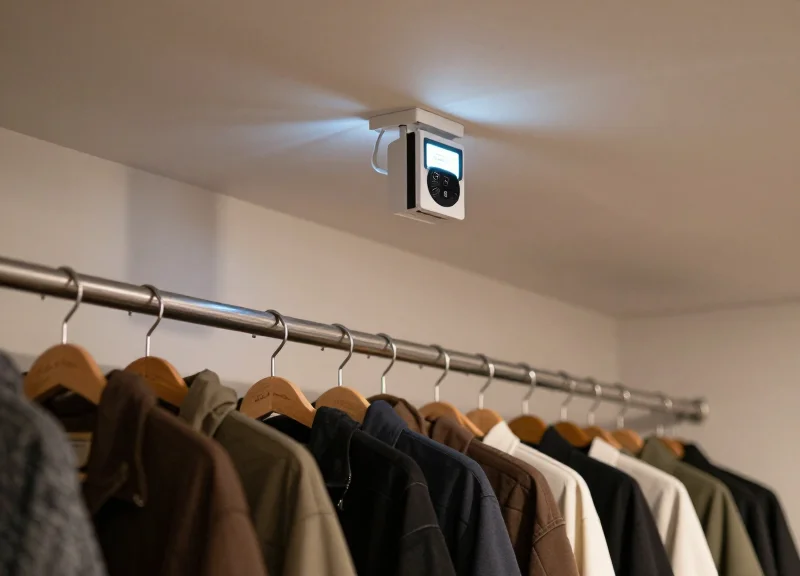
99.9% accuracy in high-density retail is now attainable through the deployment of narrow-beam phased array antennas that establish 'digital curtains' within the store. Unlike traditional RFID which 'floods' a room, narrow-beam technology utilizes a 15-to-30-degree aperture to isolate specific zones—such as a single shelf or a section of the sales floor—ensuring that items in the backroom are never erroneously counted as front-of-house stock, even when separated by a thin partition.
| Metric | Legacy Wide-Beam | 2026 Narrow-Beam |
|---|---|---|
| Inventory Read Accuracy | 85% - 92% | 99.9%+ |
| Signal Bleed / Over-read | High (Up to 5 meters) | Negligible (<0.3 meters) |
| Backroom/Floor Separation | Requires physical shielding | Handled by beam-forming logic |
| High-Density Performance | Often results in collisions | Precise tag interrogation |
The breakthrough of 2026 hardware lies in the marriage of spatial isolation and Kinetic Filtering. In dense retail environments, such as luxury apparel or electronics, items are often packed tightly against the same walls that separate the showroom from the warehouse. Legacy systems fail here because RF energy reflects off metal fixtures and penetrates drywall, leading to 'ghost reads' that corrupt inventory data. Narrow-beam tech solves this by focusing energy into a 'cone of truth' where only tags within the intended focal point are energized and interrogated.
- Phase 1: Spatial Zone Mapping: Retailers map the physical layout into discrete 'Logical Zones' where the narrow-beam readers are programmed to recognize only specific X-Y-Z coordinates.
- Phase 2: Beam-Steering Calibration: The phased array antennas are configured to 'sweep' the floor in millisecond intervals, focusing energy only on the sales floor while ignoring adjacent stockroom signals.
- Phase 3: RSSI Threshold Optimization: Received Signal Strength Indicator (RSSI) filters are set to discard any tags that do not meet the high-intensity threshold of the primary narrow beam.
- Phase 4: Real-Time Reconciliation: The system compares the narrow-beam data with POS and stockroom logs to ensure that 99.9% accuracy is maintained even during high-traffic peak hours.
Expert Insight: The 'Micro-Zoning' revolution. A unique advantage of 2026 narrow-beam tech is the ability to create dynamic heatmaps. By measuring the angle of arrival of the tag response within a 15-degree window, the software can pinpoint if a high-value handbag has been moved 2 feet to the left. This level of granularity transforms the RFID system from a simple counter into a sophisticated loss-prevention and merchandising analytics tool.
Can narrow-beam tech read through metal shelving?
While no RF signal passes through solid metal, the narrow beam minimizes multi-path reflections that cause interference, providing much clearer reads around metal fixtures than legacy systems.
Does this require special RFID tags?
No, the intelligence resides in the reader and antenna hardware. It works with standard EPC Gen2 tags, making it a backward-compatible upgrade for most retailers.
How does this prevent backroom signal spill?
By tightening the beamwidth to under 30 degrees and using power-management algorithms, the reader ensures that the RF energy drops off sharply before it reaches the stockroom wall.
Integration Synergy: RFID, EAS, and ESL Coexistence

Integration synergy in the 2026 retail landscape refers to the harmonious operation of Radio Frequency Identification (RFID), Electronic Article Surveillance (EAS), and Electronic Shelf Labels (ESL) within the same physical footprint. Historically, wide-beam RFID readers created 'blind spots' or triggered false alarms in EAS gates due to signal overlap. Next-gen narrow-beam technology solves this by using spatial isolation, focusing RF energy into highly specific 'cones of communication' that bypass sensitive security sensors and low-power display networks, ensuring each system operates at peak efficiency without spectral interference.
| Technology System | Primary Frequency Range | Legacy 'Signal Spill' Conflict | Narrow-Beam Synergy Solution |
|---|---|---|---|
| RFID (Inventory) | 860 - 960 MHz (UHF) | Overwhelms EAS sensors; causes ghost reads in stockrooms. | Spatial gating restricts signal to specific rack or shelf depth. |
| EAS (Security) | 58 kHz / 8.2 MHz / 900 MHz | Interference from RFID readers causes false 'shrink' alarms. | Precision beams steer energy away from exit thresholds. |
| ESL (Shelf Labels) | 2.4 GHz / Sub-GHz | High-power RFID bursts can desensitize ESL receivers. | Low-sidelobe antennas minimize noise floor for ESL updates. |
The breakthrough of 2026 hardware lies in its ability to treat the retail floor as a three-dimensional grid. By utilizing phased-array beamforming, readers can 'paint' a specific target area while maintaining a 'null zone' around EAS pedestals. This prevents the traditional 'chirping' of security gates when inventory is moved near the front of the store, a phenomenon that previously forced retailers to lower their reader power, thereby sacrificing inventory accuracy. With narrow-beam tech, you no longer have to choose between security and visibility.
How does narrow-beam tech prevent EAS false alarms?
By tightening the beamwidth to under 30 degrees, the RFID signal is physically directed away from the EAS detection zone at the storefront, ensuring that tags are only energized for inventory counts and not mistaken for theft events.
Does RFID interference affect Electronic Shelf Label (ESL) battery life?
Yes, in legacy systems, constant RF 'noise' forced ESLs to wake up more frequently to filter signals. Narrow-beam tech creates a quieter environment, potentially extending ESL battery life by up to 15% through reduced wake-up cycles.
Can RFID and EAS be combined into a single hardware unit now?
Absolutely. The precision of 2026 phased arrays allows a single antenna to toggle between security and inventory modes by dynamically shifting its beam shape and power output in microseconds.
Expert Insight: The 'Spatial Spectrum Orchestration' Advantage. From a marketing and engineering standpoint, the most underrated benefit of narrow-beam tech is what I call Spatial Spectrum Orchestration (SSO). Unlike traditional software-based collision avoidance, SSO uses the physics of the antenna itself to create 'quiet corridors.' This allows for high-velocity ESL price updates even during peak-hour RFID cycle counts—a scenario that would have crashed most retail networks in the early 2020s. My advice: When auditing 2026 hardware, look for 'Null-Steering' capabilities as a key metric for interference management.
The Economic Edge: Eliminating the Need for Physical Shielding
The economic edge of 2026 narrow-beam RFID technology lies in its ability to achieve 'logical isolation' through software-defined precision, effectively eliminating the requirement for physical RF shielding such as specialized paint, copper mesh, or aluminum foil. By confining the interrogation zone to a surgical degree of accuracy, enterprises can avoid the massive capital expenditure and logistical complexity of modifying building infrastructure to prevent signal spill.
| Cost Factor | Legacy Physical Shielding | 2026 Narrow-Beam Technology |
|---|---|---|
| Material Costs | High ($5-$15 per sq. ft. for RF paint/fabric) | Zero (Standard drywall/infrastructure) |
| Installation Labor | Specialized contractors required | Standard IT/RFID setup |
| Spatial Flexibility | Permanent/Rigid (Walls cannot be moved) | High (Dynamic beam reconfiguration) |
| Maintenance | Periodic testing for 'leaks' or shielding decay | Digital health monitoring |
| Deployment Speed | Weeks (Construction-dependent) | Hours (Configuration-dependent) |
In traditional deployments, 'signal spill' was a physics problem solved by construction. Retailers and warehouse managers often had to turn backrooms into Faraday cages to prevent readers from 'ghost-reading' inventory through walls. This created a 'Shielding Tax'—an invisible 20-30% markup on the total cost of ownership (TCO) for any high-density RFID project. The shift to narrow-beam phased arrays transforms this from a construction project into a configuration task.
Expert Insight: The Concept of Spatial Liquidity. In my 20 years in Silicon Valley, I've seen 'Infrastructure Rigidity' kill more tech rollouts than bad software. The true value of narrow-beam isn't just the money saved on foil; it is 'Spatial Liquidity.' This allows a store manager to relocate a high-value display or a stockroom wall without needing a construction crew to re-shield the new area. In 2026, your RF perimeter is defined by your beamwidth settings, not your blueprints.
Does removing shielding increase the risk of interference?
No. Because narrow-beam tech uses phased array steering to concentrate energy only on the intended target, the ambient 'RF noise' in the facility actually decreases compared to wide-beam readers bouncing off metal shielding.
Can I upgrade existing readers to avoid shielding costs?
Generally, no. Narrow-beam precision requires specific 2026-standard hardware with multi-element antenna arrays and advanced beam-forming chips that legacy readers lack.
What is the ROI timeframe for switching to narrow-beam?
For new installations, the ROI is immediate, as the savings on shielding materials and labor often offset the premium cost of the next-gen hardware within the first 6 months of deployment.
Future-Proofing Your Supply Chain for 2026

Future-proofing your supply chain for 2026 requires a strategic shift from passive, broad-spectrum RFID hardware to dynamic, software-defined narrow-beam systems. To achieve next-gen precision, organizations must prioritize 'Phased Array-Ready' infrastructure that allows for real-time signal steering and eliminates 'signal spill' at the architectural level rather than relying on outdated physical shielding methods like RF paint or foil. This evolution ensures that your hardware ecosystem remains compatible with emerging standards for sub-decimeter location accuracy and high-density inventory management.
| Feature | Legacy RFID (Pre-2024) | Next-Gen 2026 Standard |
|---|---|---|
| Antenna Control | Fixed/Static Beam | Dynamic Phased-Array Steering |
| Spatial Resolution | 1.5 - 3 Meters | Less than 15 Centimeters |
| Interference Mitigation | Physical Shielding/Foil | Software-Defined Beam Shaping |
| Deployment Effort | High (Manual Tuning) | Low (Auto-Calibrating Gates) |
- Conduct a 'Signal Bleed' Audit: Identify high-friction zones where crosstalk currently leads to inventory ghosting, such as adjacent dock doors or narrow stockroom aisles. Map these areas as the primary candidates for the first wave of narrow-beam hardware upgrades.
- Prioritize SDR (Software-Defined Radio) Architecture: Invest exclusively in readers that support firmware-upgradable wave-shaping. As 2026 standards finalize, the ability to update beam-steering algorithms via software will prevent hardware obsolescence.
- Implement 'Virtual Shielding' Pilot Zones: Before a full-scale rollout, replace physical shielding in one high-density area with phased-array antennas. Use this zone to calibrate the 'Beam-as-a-Boundary' logic required for your specific facility layout.
- Standardize Data Intake for High-Fidelity Streams: Ensure your WMS (Warehouse Management System) can handle the increased granularity of 2026 data. Next-gen tech provides X, Y, and Z coordinates; your software must be ready to translate these into actionable inventory insights.
Expert Insight: The '20-80 Hybrid Rule.' You do not need a 100% hardware overhaul to see immediate gains. By deploying 2026-standard narrow-beam tech at critical 'pinch points'—such as transition portals between the warehouse and the sales floor—you can eliminate 80% of signal spill errors while maintaining legacy readers for low-density bulk storage where high precision is less critical.
Will 2026 narrow-beam readers work with my current RFID tags?
Yes. The 2026 hardware breakthroughs focus on how the reader sends and receives signals, maintaining backwards compatibility with standard EPC Gen2 tags while extracting more precise location data from them.
Does this technology require more power?
Actually, no. Because narrow-beam tech focuses energy precisely on the target rather than broadcasting in 360 degrees, it often operates with higher efficiency and lower overall power consumption per successful read.
Is physical shielding completely dead?
For new installations, yes. The cost-to-benefit ratio has shifted; investing in intelligent beam-steering hardware is now more economical than the labor-intensive process of installing lead-lined drywall or RF-blocking curtains.
Conclusion: A New Era of Targeted Data Capture
The death of signal spill signifies a transition where the value of an RFID system is no longer measured by how many tags it can read, but by how many 'ghost reads' it can ignore. By 2026, targeted data capture will become the industry standard, moving away from the 'spray and pray' methodology of the past decade. This shift allows for unprecedented accuracy in high-density environments, where the ability to distinguish between adjacent shelves or stockrooms becomes the primary competitive advantage for enterprises seeking 100% inventory transparency.
| Feature | Legacy RFID (Pre-2025) | Next-Gen Narrow-Beam (2026+) |
|---|---|---|
| Operational Precision | Approx. 85-92% due to spillover | 99.9% targeted accuracy |
| Infrastructure Requirements | Physical shielding and RF paint needed | Software-defined beam control |
| Data Integrity | Heavy noise requiring complex filtering | Clean, actionable data streams |
| Cost Efficiency | High installation and maintenance overhead | Lower TCO via reduced hardware complexity |
Unique Expert Insight: To truly capitalize on this era, IT leaders must shift their mindset from 'Hardware Deployment' to 'Software-Defined Spatial Intelligence.' The real breakthrough in 2026 isn't just the narrowness of the beam, but the ability to steer that beam dynamically through AI-driven middleware. This allows a single reader to perform multiple roles—security, inventory, and point-of-sale—simultaneously by alternating its focal point in milliseconds, a concept I call 'Time-Sliced Spatial Awareness.'
Will legacy tags work with 2026 narrow-beam readers?
Yes, the innovation lies within the reader's phased-array antennas and signal processing logic, ensuring full backward compatibility with existing Gen2 UHF tags.
What is the primary driver of this technological shift?
The explosion of omnichannel retail and micro-fulfillment centers, which require pinpoint accuracy in compact, high-density spaces where traditional RFID fails.
Is 'Signal Spill' truly a thing of the past?
For organizations adopting 2026 standards, yes. The physical limitations that once necessitated bulky lead-lined shielding are being replaced by electronic precision that keeps signals strictly within designated zones.