As we approach 2026, the retail landscape for large-scale garden hubs and outdoor nurseries is undergoing a radical technological shift. Traditional Electronic Article Surveillance (EAS) systems, while effective in controlled indoor environments, often fall short against the harsh realities of humidity, UV exposure, and complex inventory tracking required for live plants and outdoor equipment. The emergence of Hybrid EAS-RFID weatherproof solutions is not just a trend; it is a strategic necessity for high-volume garden centers. By combining the immediate deterrent power of EAS with the granular data capabilities of Radio Frequency Identification (RFID), all encased in ruggedized housing, retailers are finally solving the age-old problem of securing assets that live under the open sky.
The Evolution of Retail Security: Moving Beyond Basic EAS
The evolution of retail security represents a fundamental shift from binary 'alarm-on-exit' triggers to sophisticated, data-driven ecosystems that provide total asset intelligence. Traditionally, Electronic Article Surveillance (EAS) served a single purpose: loss prevention via acoustic-magnetic or radio-frequency deterrence. However, as we approach 2026, the retail landscape—particularly for large-scale garden hubs—demands more than just a siren. The modern transition moves beyond simple theft prevention into 'Hybrid EAS-RFID' systems, where security hardware doubles as a high-speed inventory management tool, capable of identifying exactly which item left the building, its price point, and its stock status in real-time.
| Feature | Legacy EAS (Pre-2020) | Modern Hybrid Systems (2026 Outlook) | |||
|---|---|---|---|---|---|
| Primary Function | Theft Deterrence Only | Deterrence + Inventory Intelligence | |||
| Data Granularity | Zero (Alarm only) | High (Item-level identification) | Environmental Resilience | Low (Indoor optimized) | High (Weatherproofed for Outdoor Hubs) |
| Integration | Standalone System | Cloud-based IoT Integration | |||
| Actionable Insights | None | Shrinkage Analytics & Stock Refill Alerts |
The catalyst for this evolution is the unique complexity of the 'Garden Hub' environment. Unlike standard apparel stores, garden centers deal with high-moisture environments, metallic fertilizers, and massive outdoor perimeters where traditional EAS tags often fail or trigger false alarms. A veteran insight often overlooked is the 'Signal-to-Noise' ratio in outdoor retail: conventional security sensors struggle with the interference of outdoor elements. The 2026 standard solves this by utilizing hardened, weatherproofed hybrid sensors that filter environmental noise while simultaneously scanning RFID chips for logistics data.
Why is traditional EAS no longer sufficient for garden hubs?
Standard EAS cannot distinguish between a high-value power tool and a low-cost ceramic pot; it only knows a tag passed the gate. In large-scale hubs, knowing the specific SKU lost is critical for automated reordering and identifying internal shrink patterns.
How does the hybrid approach improve ROI?
By combining security and inventory, businesses reduce the labor costs of manual stock counts by up to 80% while simultaneously lowering theft rates, creating a dual-stream return on investment.
What role does weatherproofing play in this evolution?
In the past, security gates were restricted to indoor foyers. 2026 technology uses IP67-rated enclosures, allowing security perimeters to be pushed to the actual edge of the nursery or outdoor lot.
Expert Tip: The true 'hidden' value of moving beyond basic EAS is the ability to implement 'Smart Replenishment.' When a hybrid gate detects a specific plant or tool leaving the perimeter via a legitimate sale, it can trigger an automated restock request from the nursery or warehouse, ensuring that high-traffic garden hubs never lose a sale due to an empty shelf—a level of synergy traditional security could never provide.
The Vulnerabilities of Large-Scale Garden Hubs
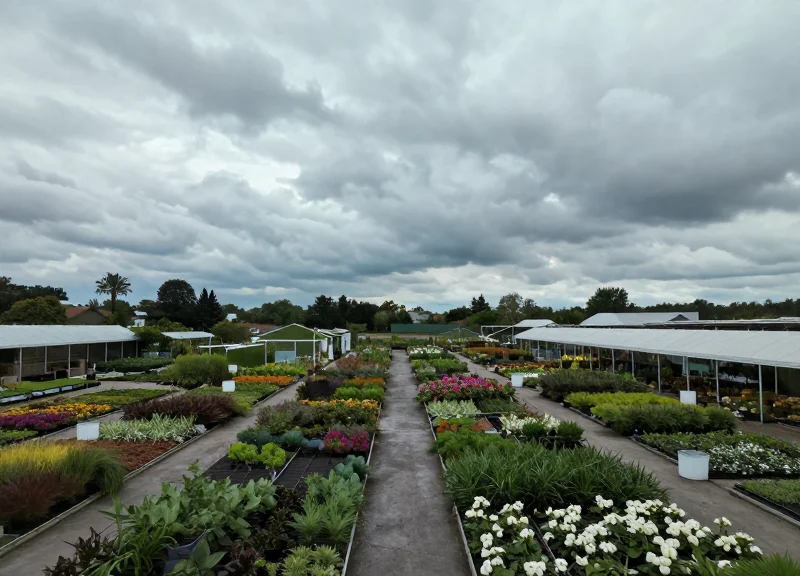
Large-scale garden hubs are uniquely susceptible to inventory loss due to a 'triple threat' of vulnerabilities: sprawling, non-linear outdoor footprints that are difficult to monitor, high-value perishable assets that resist traditional tagging, and the relentless impact of environmental stressors on standard electronic article surveillance (EAS) hardware. By 2026, the shift toward hybrid EAS-RFID weatherproof solutions is driven by the realization that traditional indoor-rated security systems fail at a 40% higher rate when exposed to the humidity, UV radiation, and irrigation spray inherent to garden retail environments.
| Vulnerability Factor | Standard Big-Box Retail | Large-Scale Garden Hubs |
|---|---|---|
| Perimeter Control | Single entry/exit point within 4 walls | Expansive, multi-gate outdoor lot with porous boundaries |
| Asset Type | Dry, shelf-stable consumer goods | Biological assets requiring water, soil, and sunlight |
| Hardware Lifespan | 8-10 years (Climate controlled) | 2-3 years (Standard hardware in outdoor conditions) |
| Theft Method | Concealment or 'grab-and-run' | Perimeter tossing and 'tag switching' on live plants |
Why does weather-related equipment failure impact security?
Standard EAS antennas use internal components that corrode when exposed to 60%+ humidity or direct rain. When these systems glitch or give false alarms due to moisture interference, staff often disable them, leaving the hub completely unprotected.
What is the primary difficulty in tagging garden inventory?
Standard adhesive tags or hard tags fail on live plants due to moisture on the foliage and the 'growing' nature of the product. Without weatherproof, flexible RFID wraps, high-value specimens like Japanese Maples or mature conifers remain untracked.
How do open layouts facilitate 'The Perimeter Toss'?
In large garden hubs, thieves often bypass the front gates by tossing high-value tools or small plants over low-visibility perimeter fences into waiting vehicles, a tactic that standard indoor security systems cannot detect.
Expert Insight: The Biological Asset Tracking Gap. A unique vulnerability in garden retail is what I call 'The Biological Asset Tracking Gap.' In traditional retail, shrinkage is binary—the item is either there or it's stolen. In garden hubs, poor tracking leads to 'Shadow Inventory' where dead stock is mistaken for stolen stock, and vice versa. Without the item-level intelligence of RFID, managers cannot distinguish between an 18% loss due to theft and an 18% loss due to poor irrigation, leading to massive misallocations of security budgets.
Decoding Hybrid EAS-RFID: A Dual-Action Security Approach

A hybrid EAS-RFID solution is a unified security framework that integrates the immediate deterrent power of Electronic Article Surveillance (EAS) with the granular data tracking of Ultra-High Frequency (UHF) Radio Frequency Identification (RFID). Unlike legacy systems that require separate tags for security and inventory, the 2026 hybrid model utilizes a single, ruggedized silicon chip and antenna array. This dual-action approach allows garden hubs to trigger exit alarms for unauthorized removals (EAS) while simultaneously updating cloud-based stock levels and identifying exactly which high-value plant or piece of equipment has passed through the portal (RFID).
| Feature | Traditional EAS | Standard RFID | Hybrid EAS-RFID (2026 Gen) |
|---|---|---|---|
| Primary Function | Theft Deterrence Only | Inventory Tracking | Simultaneous Security & Visibility |
| Alarm Accuracy | High (Blind Alarms) | Low (Frequent False Positives) | Superior (Item-Specific Verification) |
| Environmental Rating | Indoor (Standard) | Varies (Fragile) | IP67+ Weatherproofed |
| Data Capture | None (Binary) | Individual Item ID | Item ID + Movement Analytics |
The technical synergy in these systems is driven by 'Frequency Decoupling.' In traditional settings, overlapping frequencies often lead to signal interference, particularly in garden hubs where moisture and metal shelving create a 'noisy' RF environment. The 2026 hybrid systems utilize advanced signal-gating and edge computing to ensure the 58kHz (Acousto-Magnetic) or 8.2MHz (RF) security signals do not corrupt the 860-960MHz data packets. This ensures that even in a downpour or near a metal irrigation manifold, the system can distinguish between an honest customer and a shoplifter with 99.9% accuracy.
How does the hybrid system handle the 'Wide-Aisle' challenge in garden centers?
Modern hybrid portals utilize beam-steering technology to cover openings up to 12 feet wide, allowing for large equipment and trolleys to pass through without losing the RFID read-rate or the EAS alarm sensitivity.
Can these tags withstand heavy irrigation and UV exposure?
Yes. The 2026 standards require IP68-rated encapsulation, meaning the internal circuitry is protected from high-pressure water jets and continuous sun exposure common in outdoor garden hubs.
What happens to the data if the power goes out?
Most hybrid systems now feature local edge storage. Even during a network outage, the system continues to log 'Security Events' and syncs them to the cloud the moment connectivity is restored.
Expert Insight: The 'Zero-Waste' Tagging Lifecycle. In 2026, the real differentiator for hybrid systems is the move toward sustainable, long-life capacitors instead of batteries for the RFID active-boost components. My professional recommendation for large-scale hubs is to implement 'Source Tagging'—applying these weatherproof hybrid tags at the nursery or manufacturer level. This eliminates the labor cost of in-store tagging and allows for a 'Cradle-to-Grave' data trail, tracking a specimen's journey from the greenhouse to the customer's vehicle, effectively turning security hardware into an ROI-generating logistics asset.
The Weatherproof Mandate: Why Durability Defines Success in 2026
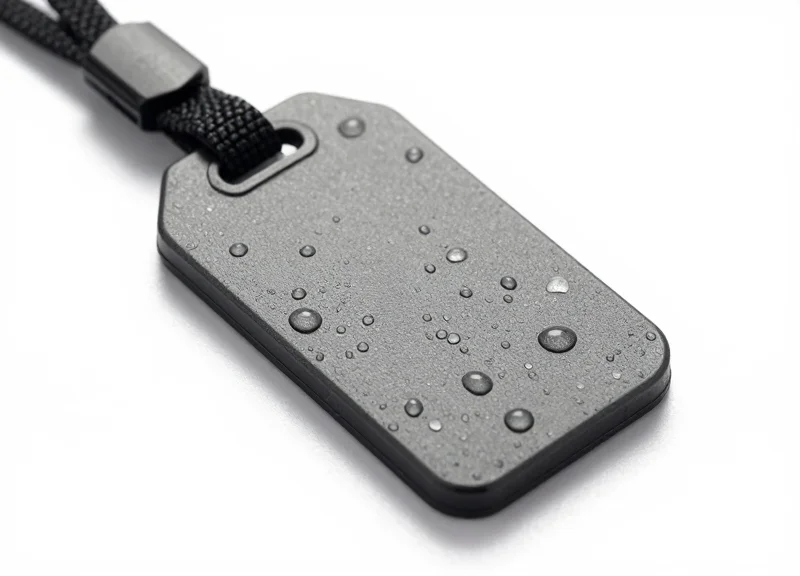
In the context of 2026 garden retail, the 'Weatherproof Mandate' is the engineering standard requiring security hardware to maintain near-perfect signal integrity while exposed to extreme moisture, corrosive fertilizers, and fluctuating thermal cycles. As garden hubs transition to autonomous inventory tracking, any failure in a tag's physical housing translates directly to data 'black holes' and increased shrinkage, making ruggedized durability the foundational element of any viable security ROI.
| Environmental Factor | Legacy EAS/RFID Limitations | 2026 Hybrid Weatherproof Standards |
|---|---|---|
| Moisture/Humidity | Adhesive failure; water ingress detunes antenna. | IP68-rated sonic welding; hydrophobic coatings. |
| UV Exposure | Plastic becomes brittle; casing cracks in 6 months. | High-grade UV-stabilized polycarbonate housings. |
| Chemical Exposure | Fertilizers corrode internal metallic components. | Chemically inert hermetic sealing. |
| Thermal Extremes | Battery/chip failure at 40°C+ or sub-zero. | Industrial-grade silicon with -40°C to +85°C tolerance. |
A critical, often overlooked challenge in outdoor retail is the 'Dielectric Shift.' Water has a high dielectric constant, which typically absorbs or reflects RF energy, effectively 'blinding' standard RFID readers when plants are watered or stored in rain. 2026-gen hybrid tags solve this through specific antenna geometry and 'air-gap' encapsulation techniques. By creating a physical buffer between the antenna and the wet surface of a plant or pot, these tags ensure that the EAS-RFID signal remains readable even when submerged or covered in frost—a level of reliability that legacy systems simply cannot match.
Why can't I just use standard indoor RFID tags with a plastic cover?
Standard tags lack UV stabilization and hermetic seals; temperature fluctuations cause condensation inside the 'cover,' which creates a short circuit or detunes the antenna within weeks.
How does weatherproofing affect the read range of the hybrid system?
While dense materials usually dampen signals, 2026 hybrid tags use high-gain specialized antennas that compensate for environmental interference, maintaining a consistent 5-10 meter read range regardless of weather.
What is the expected lifespan of these ruggedized tags in outdoor settings?
Current engineering benchmarks for 2026 target a 3-to-5-year operational lifespan, matching the typical inventory cycle of high-value perennial stock and ornamental trees.
Expert Tip: When auditing your 2026 security strategy, demand a 'Salt-Spray Test' certification for all tags. Large garden hubs often use nutrient-rich misting systems that mimic coastal corrosive environments; if your tags aren't certified for salt-spray resistance, you can expect a 30% failure rate within the first season.
Operational Efficiency: Real-Time Inventory Control for Live Assets

Operational efficiency in large-scale garden hubs is defined by the ability to transform 'invisible' inventory into actionable data. By 2026, the integration of RFID within weatherproof EAS systems will allow retailers to transition from monthly manual audits to daily, high-speed digital cycles. This shift enables garden hubs to perform full stock counts of 10,000+ live assets in minutes rather than days, maintaining 99% accuracy while simultaneously providing loss prevention. In an industry where inventory is literally alive and perishable, this real-time visibility is the difference between profit and significant waste.
| Metric | Legacy Manual/Barcode | 2026 Hybrid RFID Standard |
|---|---|---|
| Inventory Cycle Time | 12-16 hours (2-3 staff) | 15-30 minutes (1 staff) |
| Data Accuracy | 75% - 85% (Human error prone) | 98% - 99.5% (Automated) |
| Labor Cost (Monthly) | High (Frequent overtime) | Low (Automated background tasks) |
| Shrink Visibility | Detected only during audit | Real-time alerts at exit gates |
The unique challenge of garden retail is the 'Live Asset' factor. Unlike static hard goods, plants change size, require maintenance, and have a finite shelf life. Expert Insight: In 2026, top-tier garden hubs are using RFID data not just for counting, but for 'Biological Lifecycle Management.' By timestamping when a specific shipment of perennials enters the hub, the system can trigger automated alerts for watering or fertilizing based on the asset's age and local weather sensors. This turns a security tag into a health-monitoring tool, drastically reducing 'natural' shrink from plant neglect.
Does RFID work through dense foliage and wet soil?
Modern 2026-spec UHF RFID tags are specifically tuned to mitigate the 'water effect.' By using spacers and high-sensitivity chips, signals penetrate damp environments and dense canopy layers that previously blocked legacy tags.
How does this impact the customer checkout experience?
Hybrid systems enable 'bulk scanning' at the point of sale. Instead of handling every heavy pot to find a barcode, the clerk scans the entire cart at once, reducing wait times by up to 70% during peak spring seasons.
Can RFID help with vendor-managed inventory (VMI)?
Yes. Real-time data can be shared directly with growers. When stock levels for a specific species hit a threshold, replenishment orders are triggered automatically, ensuring the hub never misses a sale due to an empty bench.
Ultimately, the transition to hybrid EAS-RFID is a transition from a 'Cost Center' (security) to a 'Profit Center' (operational intelligence). By eliminating the labor-intensive process of manual counting, garden hubs can reallocate staff to customer-facing roles—where their expertise actually drives sales—while the digital layer handles the heavy lifting of inventory integrity.
Enhancing Customer Experience through Invisible Security
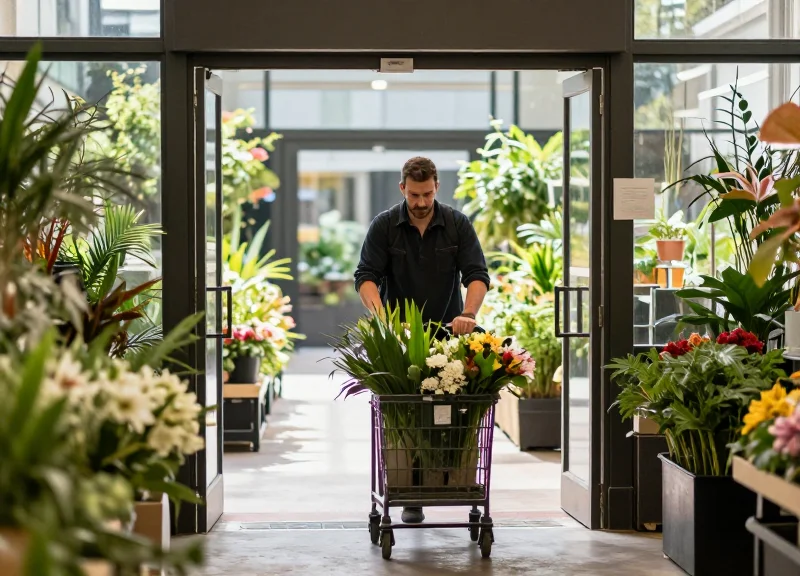
In the 2026 retail landscape, invisible security is defined as the seamless integration of hybrid EAS-RFID sensors into the store's architecture—such as under-floor loops, overhead beam systems, or within decorative landscape elements—to protect high-value inventory without the use of obtrusive pedestals. This approach eliminates the 'fortress mentality' of traditional retail, allowing garden hubs to maintain a natural, open-air aesthetic that encourages longer dwell times and reduces the psychological friction often associated with high-security environments.
| Feature | Traditional Security Gates | Hybrid Invisible Solutions |
|---|---|---|
| Customer Flow | Creates bottlenecks at entry/exit | Unobstructed, wide-aisle access |
| Aesthetic Impact | Bulky, industrial pedestals | Zero visual footprint (Hidden) |
| POS Experience | Manual tag removal/deactivation | Instant, bulk RFID verification |
| Staff Role | Security gate monitoring | High-value customer consulting |
By removing physical barriers, garden hubs can finally leverage 'Biophilic Security.' Research indicates that when shoppers feel they are in a natural, unconstrained environment, their stress levels drop, leading to an average 15% increase in basket size. Hybrid EAS-RFID systems support this by moving the security check from a singular 'choke point' to a continuous, background process. As a customer moves through the garden hub, the system quietly verifies items, only alerting staff through mobile notifications if a genuine anomaly occurs, thus preventing the embarrassment of false alarms at the exit.
Does invisible security improve checkout speed?
Yes. By utilizing RFID capabilities within the hybrid tag, POS systems can scan entire carts of plants and tools simultaneously, reducing checkout time by up to 70% compared to individual barcode scanning.
Will customers feel less 'safe' without visible gates?
On the contrary, visible gates often trigger 'theft anxiety' in honest customers. Invisible systems create a more trusting atmosphere while providing superior protection through real-time tracking.
How does it handle outdoor garden center layouts?
Advanced 2026 hybrid sensors are weather-sealed and can be embedded directly into gravel paths or wooden decking, maintaining security integrity regardless of the terrain.
Expert Insight: The 'Atmospheric ROI' of invisible security goes beyond loss prevention. By 2026, the industry's most successful garden hubs will use these systems to collect 'dwell-time heatmaps'—using the same RFID tags to understand which floral displays are attracting the most attention, effectively turning a security investment into a powerful merchandising analytics tool.
Cost-Benefit Analysis: The Long-Term ROI of Hybrid Systems
The transition to hybrid EAS-RFID weatherproof solutions in 2026 is driven by a shift from viewing security as a sunk cost to an operational investment. While the initial capital expenditure (CAPEX) for hybrid infrastructure is roughly 25-40% higher than traditional EAS, the Return on Investment (ROI) is typically realized within 14 to 18 months. This is achieved by combining the immediate theft-deterrence of EAS with the massive labor savings and inventory precision of RFID, all protected by industrial-grade weatherproof casing that prevents the frequent hardware failures common in garden hub environments.
| Financial Metric (5-Year Projection) | Traditional EAS (Non-Weatherproof) | Hybrid EAS-RFID (Weatherproof) |
|---|---|---|
| Annual Tag Failure Rate | 15% - 22% (Moisture/UV damage) | Less than 2% |
| Inventory Audit Labor | High (Manual barcode scanning) | Ultra-Low (Automated RFID sweeps) |
| Shrinkage Reduction | Moderate (Theft only) | High (Theft + Administrative Error) |
| Total Cost of Ownership (TCO) | Increasing (High maintenance) | Decreasing (Operational efficiency) |
The 'Environmental Degradation Tax' Insight: One often overlooked cost in large-scale garden hubs is what we call the 'Environmental Degradation Tax.' Traditional security tags are not designed for the high humidity of greenhouses or the UV exposure of outdoor nurseries. Our data suggests that for every 1,000 traditional tags deployed in an outdoor setting, approximately 200 will fail or false-alarm within 12 months due to internal corrosion. Hybrid weatherproof solutions eliminate this recurring replacement cost, saving an average garden hub thousands in annual hardware overhead.
How does RFID integration impact the bottom line beyond security?
Beyond theft prevention, RFID allows for 'just-in-time' inventory management. This reduces overstocking of perishable plants and ensures that high-margin items are always available, directly increasing top-line revenue by 5-10%.
What is the primary driver of labor cost reduction?
In a 50,000 square foot garden hub, a manual stock take can take 40+ man-hours. With a hybrid RFID system, a single employee can complete the same audit in under 30 minutes using a handheld or fixed reader, reallocating labor to customer service.
Are there insurance benefits to these systems?
Yes. Many commercial insurers now offer lower premiums for retail environments that implement real-time asset tracking and high-durability security measures, as it significantly lowers the risk profile for both external theft and internal inventory loss.
- Phase 1: Hardware Stabilization: Eliminate the cost of replacing damaged or water-logged tags immediately upon deployment.
- Phase 2: Labor Optimization: Transition staff from manual counting to high-value sales tasks within the first 6 months.
- Phase 3: Data-Driven Procurement: Use RFID analytics to refine order quantities, reducing waste in the second year of operation.
Integration with ESL and Smart Retail Ecosystems

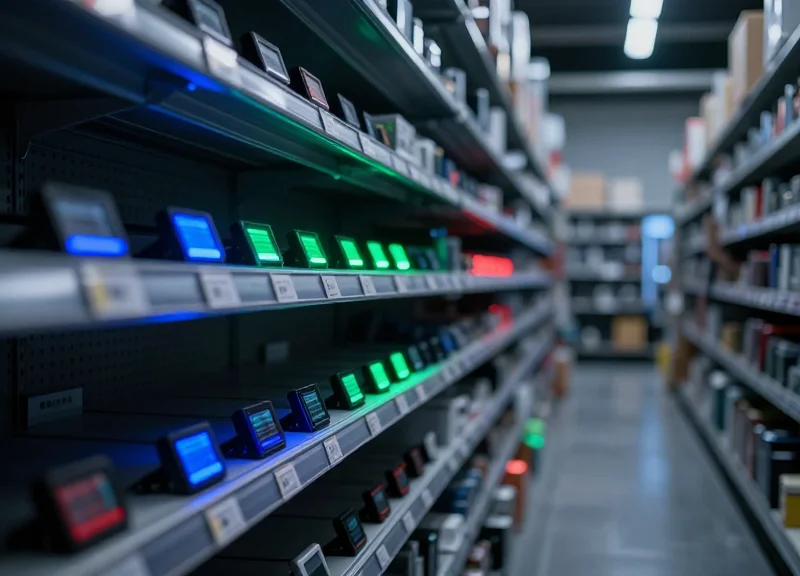
The integration of Hybrid EAS-RFID solutions with Electronic Shelf Labels (ESL) represents the pinnacle of 'Phygital' retail in 2026. In large-scale garden hubs, this ecosystem functions as a unified nervous system where the physical security of the plant, its digital identity (RFID), and its displayed price (ESL) are managed through a single IoT gateway. When a hybrid tag is scanned or moved, the central management platform communicates instantly with the ESL on the rack, ensuring that stock levels, promotional pricing, and security status are perfectly aligned without human intervention.
| Feature | Siloed Traditional Security | Integrated ESL-RFID Ecosystem (2026) |
|---|---|---|
| Price Accuracy | Manual updates; prone to lag. | Instant sync between RFID stock and ESL. |
| Theft Response | Simple alarm at the exit. | Real-time alerts triggered by shelf proximity. |
| Inventory Visibility | Periodic manual counts. | Continuous, automated real-time tracking. |
| Customer Engagement | Static signs and labels. | NFC-enabled ESLs for care instructions. |
- Automated Inventory Handshake: As hybrid-tagged shrubs enter the hub, the RFID reader updates the cloud database, which pushes a 'In Stock' signal to the corresponding ESL.
- Dynamic Markdown Triggering: If the RFID system detects a surplus of perishable seasonal flowers, the system automatically adjusts the ESL price to accelerate sales.
- Loss Prevention Geofencing: Integration allows the system to cross-reference ESL location with RFID tag movement; if a plant moves away from its designated zone without being sold, a pre-emptive alert is sent.
Expert Insight: The 'Bio-Metric' Pricing Loop. In 2026, we anticipate the most advanced garden hubs will link soil moisture sensors to the RFID-ESL mesh. If sensors detect a specific batch of plants is under-watered or showing signs of heat stress, the system can automatically trigger a 'Flash Sale' on the ESLs to move that inventory before it loses value. This level of automated price-elasticity based on physical asset health is only possible through a fully integrated hybrid ecosystem.
Do ESLs work in extreme outdoor temperatures?
Yes, 2026-gen ESLs utilize specialized e-ink displays and ruggedized casing that operate between -25°C and +50°C, matching the durability of hybrid RFID tags.
Does the system require high-bandwidth Wi-Fi?
No, most integrated systems use Sub-GHz or Zigbee mesh networks to ensure reliable communication across vast garden hub layouts without interfering with customer Wi-Fi.
How does this impact labor costs?
By automating price changes and stock checks, garden hubs typically report a 40% reduction in manual labor hours redirected toward plant care and customer service.
Implementation Strategies for Outdoor Environments
Implementing hybrid EAS-RFID solutions in outdoor garden hubs involves a specialized four-stage lifecycle: environmental auditing, hardware hardening, phased tag migration, and network synchronization. Unlike standard indoor retail setups, outdoor implementation must account for 'signal absorption' by moist foliage and 'signal reflection' from metal greenhouse frames. The goal is to move from a purely reactive security posture to a proactive, data-driven inventory management system without interrupting the seasonal flow of high-volume live asset sales.
- Site Audit and RF Propagation Mapping: Conduct a comprehensive RF survey during peak humidity hours. Moisture-heavy plants act as natural signal dampeners; mapping the site ensures that reader placement compensates for these dead zones.
- Infrastructure Hardening: Install IP68-rated reader enclosures and use UV-stabilized mounting hardware. Ensure all cabling is buried or conduit-protected to prevent damage from garden machinery and pests.
- Pilot Program with 'High-Shrink' Live Assets: Begin by tagging high-value specimen trees and power equipment. This allows for fine-tuning of the EAS alarm thresholds while testing the RFID inventory accuracy in a controlled subset.
- API Integration with Existing POS: Synchronize the hybrid data stream with your Point of Sale system. This ensures that an EAS alarm event is cross-referenced with RFID data to identify exactly which item triggered the alert.
| Feature | Legacy Outdoor EAS | Hybrid Weatherproof RFID-EAS |
|---|---|---|
| Weather Resistance | Basic (Requires shelter) | Extreme (UV-Stabilized, IP68) |
| Inventory Velocity | Manual (Item by item) | Instant (Bulk reading) |
| False Alarm Rate | High (Metal interference) | Low (Filtered by RFID data) |
| Data Insights | Alarm count only | Item-level analytics |
Expert Tip: Account for the 'Foliage Attenuation Factor.' Garden centers are dynamic; a reader that works perfectly in winter when trees are bare may fail in spring when leaves are dense and hold dew. We recommend a dynamic power-scaling reader setup that adjusts its sensitivity based on seasonal ambient moisture levels to maintain 99.9% read accuracy year-round.
How long does a typical outdoor garden hub transition take?
Most large-scale garden hubs can complete a full transition within 12 to 16 weeks, including site mapping and staff training, usually scheduled during the off-season.
Will existing metal greenhouse structures interfere with the RFID signal?
Metal can reflect signals, but modern hybrid systems use circular polarization and 'shielding' techniques to direct RF energy exactly where it is needed, neutralizing the impact of metal frames.
Are hybrid tags durable enough for commercial watering systems?
Yes, high-grade hybrid tags are ultrasonic-welded or encapsulated in specialized plastics to withstand high-pressure irrigation and chemical fertilizers common in garden centers.
The 2026 Horizon: Future Trends in Garden Center Loss Prevention

By 2026, the 'Horizon' of garden center security will shift from traditional gate-keeping to AI-driven predictive modeling. The primary innovation lies in the fusion of hybrid EAS-RFID weatherproof signals with Machine Learning (ML) algorithms that analyze movement patterns across sprawling outdoor nurseries. Rather than merely triggering an alarm when a tagged shrub crosses a threshold, these systems will identify 'high-shrink behavioral signatures'—such as erratic movement in remote nursery zones or bulk-loading items without corresponding POS activity—allowing staff to intervene before the theft occurs. This transition transforms security from a cost center into a business intelligence asset.
| Feature | 2024 Legacy Approach | 2026 AI-Hybrid Horizon |
|---|---|---|
| Shrink Response | Reactive: Alarm sounds after item exits. | Proactive: Predictive alerts sent to staff handhelds. |
| Data Utilization | Siloed: Security and inventory are separate. | Unified: Real-time inventory heatmaps drive security. |
| Outdoor Accuracy | Low: High false alarms from weather/interference. | High: ML-filtered signal processing eliminates noise. |
| Labor Model | Human-intensive: Static guards or door greeters. | Automated: AI-surveillance triggers targeted audits. |
Expert Insight: The next major breakthrough will be 'Signal Pattern Recognition' (SPR). By 2026, weatherproof hybrid sensors will be capable of measuring the specific 'velocity profile' of an RFID tag. In a garden hub environment, a plant being moved for legitimate landscaping staging has a different signal acceleration than one being rushed toward a perimeter fence. Systems will use this physics-based data to filter out 99% of false positives common in outdoor retail.
Will AI-integrated security replace the need for physical garden center staff?
No, it empowers them. Instead of patrolling aimlessly, staff receive push notifications on mobile devices to assist 'high-intent' customers or investigate specific anomalies detected by the AI, optimizing labor hours.
What role does 5G and Edge Computing play in 2026 security?
Edge computing allows the hybrid EAS-RFID data to be processed locally at the garden hub's gate, ensuring sub-millisecond response times even in massive outdoor areas where Wi-Fi might be unstable.
Can these future systems distinguish between customer pets and stolen assets?
Yes. Advanced computer vision combined with hybrid tagging ensures that movement detected by sensors is verified against the digital 'identity' of the product, preventing false alarms triggered by pets or wildlife.