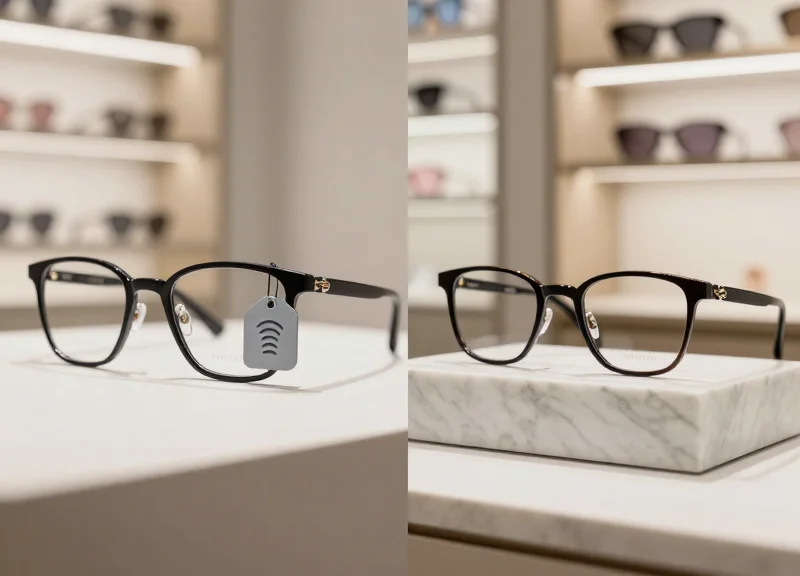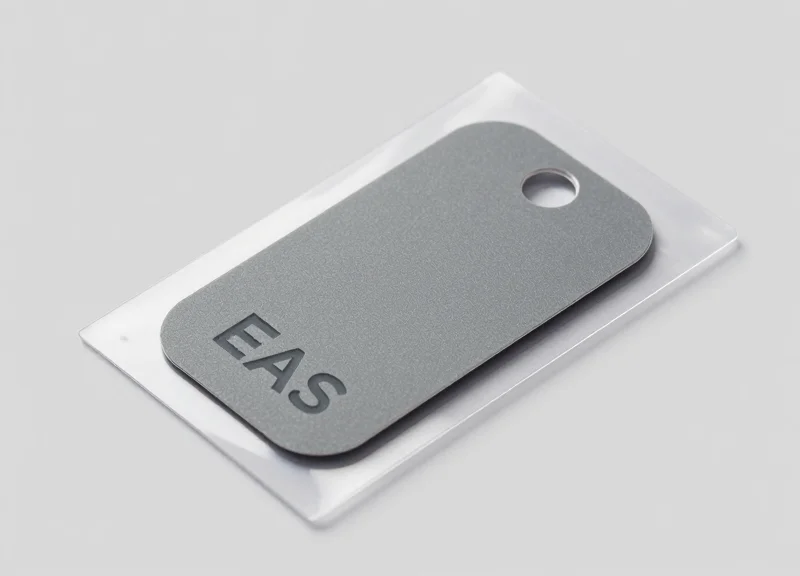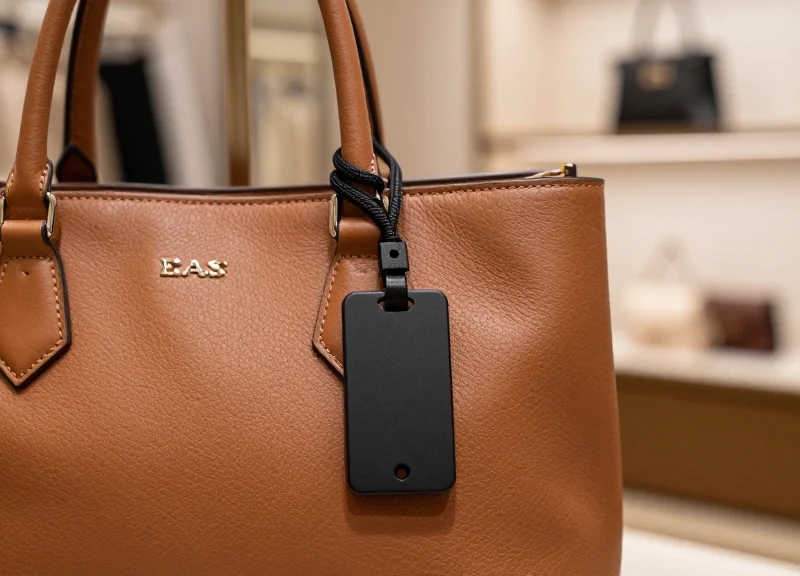
In the fast-evolving world of retail, the barrier between the store and the street is disappearing. Modern storefronts are wider and more inviting than ever, with 10-meter open entrances becoming the new standard for luxury and flagship locations. However, this architectural trend poses a significant challenge: how do you protect inventory without cluttering the entrance with bulky security pedestals? This is where invisible security comes in. As we look toward 2026, overhead EAS (Electronic Article Surveillance) systems have matured into sophisticated, AI-driven solutions capable of covering massive spans while remaining completely hidden. This guide explores how to select, install, and optimize overhead security for the most demanding retail environments.
The Evolution of Retail Aesthetics: Why Invisible Security Matters

Invisible security is the strategic integration of Electronic Article Surveillance (EAS) technology into a store's architecture—typically through overhead sensors or under-floor loops—to eliminate the physical and visual barriers of traditional pedestals. In the 2026 retail landscape, where 10-meter open storefronts are the gold standard for high-end flagship stores, invisible security allows brands to maintain a seamless transition between the mall concourse and the retail interior. By moving sensors from the floor to the ceiling, retailers can maximize their 'Threshold Real Estate,' fostering an inviting atmosphere that encourages foot traffic while maintaining high-performance loss prevention.
| Feature | Traditional Pedestals | Overhead (Invisible) EAS |
|---|---|---|
| Visual Impact | High; creates a 'cage' effect | Zero; completely concealed or recessed |
| Customer Flow | Restricted to narrow lanes | Unobstructed 10-meter wide entry |
| Brand Perception | Utilitarian/Defensive | Premium/Experiential |
| Detection Width | Limited (usually 1.2m - 2m) | Scalable (up to 10m+ with multi-array) |
The shift toward invisible systems is driven by the 'Frictionless Threshold Theory.' My twenty years in Silicon Valley retail tech have shown that physical barriers at the entrance act as a subconscious deterrent to high-value customers. Traditional EAS antennas create a 'psychological bottleneck,' signaling a lack of trust before a customer even touches a product. In contrast, 10-meter open storefronts equipped with overhead systems provide an unencumbered view of the brand story, which is essential for conversion in an era where brick-and-mortar must compete with the ease of digital shopping.
How does invisible security affect brand equity?
Invisible security enhances brand equity by removing the 'theft-focused' atmosphere. It allows the architecture and the merchandise to be the focal points, signaling that the brand values customer experience and aesthetic integrity as much as security.
Is overhead EAS as effective as floor-mounted pedestals?
Yes. Modern 2026-gen overhead systems utilize advanced beam-forming technology and AI-driven signal processing to provide 3D detection zones that are often more accurate than older pedestal models, especially in wide 10-meter openings.
Why is the 10-meter storefront the benchmark?
The 10-meter opening is the architectural standard for modern 'boundaryless' retail. It maximizes visibility and allows for large-scale digital signage and window displays that flow directly into the store interior.
Expert Insight: The 3% Conversion Rule. Data from top-tier luxury retailers suggests that removing physical EAS pedestals from wide storefronts can increase organic walk-in traffic by up to 3%. In high-traffic locations, this 'invisible' upgrade pays for itself within months through increased top-line revenue alone, independent of its primary function as a loss prevention tool.
Understanding Overhead EAS Technology: AM vs. RF in 2026

In 2026, the choice between Acousto-Magnetic (AM) and Radio Frequency (RF) for overhead applications hinges on vertical signal propagation and interference management. While traditional pedestals stand 1.5 meters apart, overhead systems must project a detection field from 3.5 to 4.5 meters high across a wide 10-meter aperture. AM technology operates at 58kHz, creating a robust magnetic field that is less susceptible to liquid or metal interference, making it the gold standard for high-ceiling environments. RF technology, typically at 8.2MHz, has evolved with Digital Signal Processing (DSP) to compete, but it remains more sensitive to the 'noise' generated by modern smart-store electronics.
| Feature | Acousto-Magnetic (AM) 58kHz | Radio Frequency (RF) 8.2MHz |
|---|---|---|
| Effective Detection Height | Up to 4.5 Meters | Up to 3.2 Meters |
| Interference Resistance | High (Metal/Liquid Friendly) | Moderate (Sensitive to LED/Metal) |
| Tag Deactivation Speed | Ultra-Fast (Non-contact) | Rapid (Standard) |
| Best Use Case | High-end Fashion, DIY, Electronics | Grocery, Soft Goods, Apparel |
| Scalability for 10m Spans | Excellent (Master/Slave Arrays) | Good (Requires more nodes) |
One critical 'Silicon Valley' insight for 2026 is the impact of the Environmental Noise Floor. As retail spaces become saturated with 6G nodes, IoT sensors, and high-density LED arrays, the low-frequency 58kHz pulse of AM systems provides a distinct physics-based advantage. Because it operates at a much lower frequency than consumer electronics, it maintains a higher signal-to-noise ratio in 'noisy' open storefronts. For a 10-meter span, an AM system typically requires fewer overhead sensors to maintain a consistent 'security curtain' than an RF equivalent.
Can RF systems handle a 10-meter wide storefront?
Yes, but they often require a high-density 'honeycomb' array of sensors. While RF tags are cheaper, the infrastructure cost to cover a 10m wide, 4m high opening reliably often exceeds AM costs due to the number of nodes required to prevent 'dead zones'.
Is AM better for 'Invisible' installations?
Generally, yes. AM’s ability to penetrate building materials and its longer detection range allows for sensors to be fully recessed into high ceilings without losing the 'pick rate' on small labels.
How does 2026 AI integration change this?
Modern AM systems now use AI-driven beam-steering. This allows the overhead sensor to 'ignore' tags moving deep inside the store and only trigger when a tag enters the specific 3D coordinate of the exit threshold, drastically reducing false alarms.
- Step 1: Ceiling Height Audit: Measure the floor-to-joist height. If your ceiling exceeds 3.5 meters, AM is non-negotiable for reliable detection.
- Step 2: Interference Mapping: Identify nearby LED screens or escalator motors. These 'noise' sources can cripple RF systems but are usually filtered out by AM's lower frequency.
- Step 3: Tag Ecosystem Alignment: Ensure your product mix (liquids, foils, small hard tags) is compatible with your chosen technology's strengths.
The 10-Meter Challenge: Engineering Success for Wide Open Storefronts
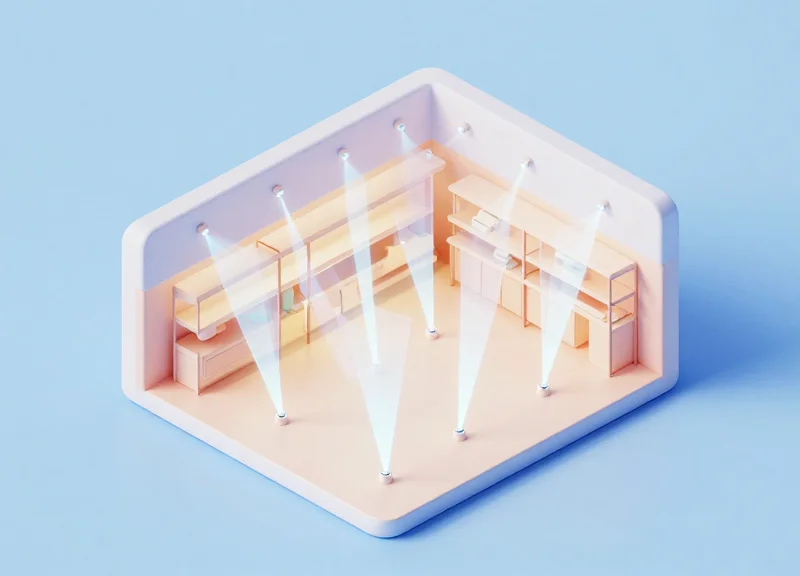
The 10-meter challenge represents the 'Gold Standard' of retail security engineering, where a single or networked overhead system must maintain a consistent electromagnetic field across a 33-foot aperture. To succeed, the system must overcome the Inverse Square Law, which dictates that signal strength drops exponentially as distance from the sensor increases. In 2026, engineering success for these wide storefronts is defined by maintaining a High Signal-to-Noise Ratio (SNR) that can distinguish a 58kHz or 8.2MHz tag from the ambient electronic noise of a busy mall environment.
| Feature | Standard Overhead (3-5m) | Wide-Span Engineering (10m+) |
|---|---|---|
| Antenna Configuration | Single Element | Multi-Element Phased Array |
| Signal Processing | Basic Thresholding | AI-Driven Adaptive Beamforming |
| Mounting Height Max | 3.0 Meters | 4.5 - 5.0 Meters |
| Detection Accuracy | 85% at periphery | 98%+ Uniform Coverage |
To bridge a 10-meter gap without dead zones, engineers utilize Phased Array Antenna technology. By manipulating the phase of the radio signals across multiple antenna elements, the system can 'steer' the detection beam and concentrate energy where it is needed most. This prevents the 'dip' in detection that typically occurs at the center-point between two sensors or at the extreme edges of a wide entrance.
- Active Noise Mapping: Before installation, a spectrum analysis identifies local interference from LED drivers and HVAC systems that could mask tag signals across the 10-meter span.
- Synchronized Pulse Modulation: For 10-meter spans, multiple overhead units must be hard-wired for sub-millisecond synchronization to ensure their fields do not cancel each other out.
- Dynamic Gain Control: The system automatically boosts sensitivity during high-traffic periods to maintain a 'dense' detection curtain even when multiple bodies are attenuating the signal.
Expert Insight: The 30cm Floor-Zone Paradox. Most failures in wide-span overhead systems occur not at the ceiling, but within 30cm of the floor. Because the signal must travel 4+ meters down and back, the return signal from a tag near the floor is incredibly faint. 2026-spec systems solve this by using 'Floor-Level Focused Beamforming,' which specifically optimizes the bottom segment of the detection curtain—a feature often missing in budget-tier overhead sensors.
Can one single sensor cover a full 10 meters?
While some high-gain sensors claim 10-meter coverage, engineering best practice for 2026 involves a 'Master-Satellite' configuration to ensure the center-point of the entrance remains secure.
Does ceiling height affect the 10-meter width?
Yes. Every additional 0.5m of ceiling height significantly reduces the effective horizontal width. For a 10m span, a ceiling height of 3.5m to 4m is the sweet spot for optimal physics.
Is special cabling required for these distances?
Absolutely. High-grade shielded twisted pair (STP) cabling is mandatory to prevent signal degradation and EMI (Electromagnetic Interference) over the long runs required for wide storefronts.
Key Hardware Features to Look for in 2026
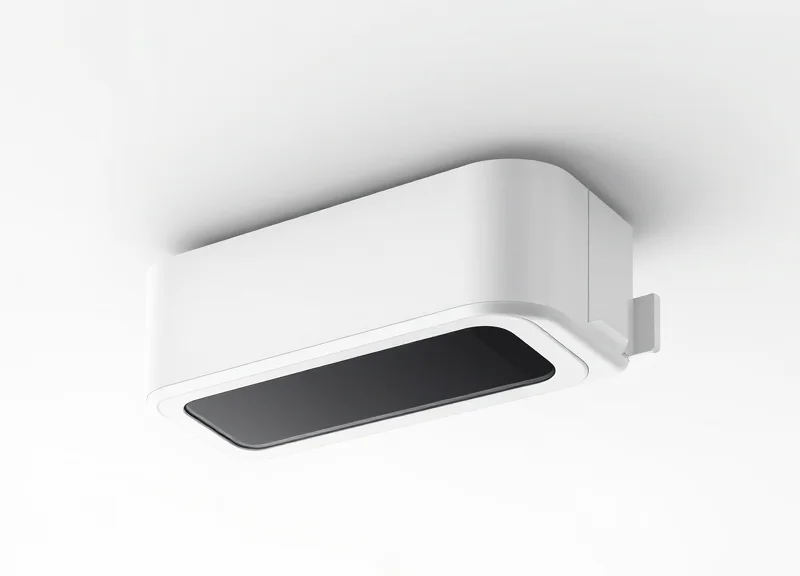
In 2026, the benchmark for overhead EAS hardware is defined by its ability to distinguish between a shoplifting event and environmental interference without human intervention. The most critical hardware features for a 10-meter storefront include Edge-AI processing for sub-millisecond signal analysis, ultra-wide-angle multi-path sensing, and Dynamic Noise Reduction (DNR) 4.0, which allows systems to operate flawlessly amidst the electromagnetic noise of modern smart-malls and 6G-enabled retail environments.
- Edge-AI False Alarm Filtering: Unlike legacy systems that rely on simple threshold triggers, 2026 hardware utilizes dedicated neural processing units (NPUs) built directly into the overhead sensor. These units analyze the 'signature' of a signal to differentiate between an actual security tag and common interference sources like high-frequency LED drivers or mobile payment terminals.
- Multi-Directional Beamforming Antennas: To cover a 10-meter span from a ceiling height of 4-5 meters, hardware must employ beamforming technology. This allows the system to electronically 'steer' its sensitivity, focusing on specific zones of the entrance to ensure that tags are caught regardless of their orientation (flat, vertical, or angled) as the customer walks through.
- Hyper-Spectral Dynamic Noise Reduction: Modern storefronts are saturated with wireless noise. 2026 systems must feature hardware-level spectral analysis to identify and 'notch out' specific interference frequencies in real-time without reducing the overall sensitivity of the detection field.
| Feature | Legacy Systems (Pre-2024) | 2026 Enterprise Standards |
|---|---|---|
| Detection Span | 3 - 5 Meters | 8 - 12 Meters |
| Signal Processing | Cloud-based or Analog | Edge-AI (On-device NPU) |
| Tag Orientation | Limited (Dead zones) | 360-degree Spherical Detection |
| Power Efficiency | High Consumption (60W+) | Ultra-Low Power (PoE++ Compatible) |
Expert Insight: The 'Ghost-Tag' Mitigation Protocol. One of the most significant 2026 hardware advancements is the integration of Time-of-Flight (ToF) sensors with EAS receivers. By syncing the detection of a tag with the physical movement of a body via optical sensors, the hardware can virtually eliminate 'ghost alarms' caused by tags sitting too close to the lease line inside the store. If the system detects a signal but the ToF sensor sees no movement toward the exit, the alarm is suppressed automatically.
Can these systems handle 10-meter openings with a single sensor?
No. For a 10-meter storefront, 2026 best practices require a 'Master-Satellite' hardware configuration where three synchronized overhead units work in a phased-array to maintain signal density across the entire width.
Does 5G/6G interference affect 2026 EAS hardware?
Leading 2026 hardware is built with shielded GaAs (Gallium Arsenide) receivers specifically designed to filter out the high-frequency harmonics of 5G and early 6G cellular deployments.
Is PoE (Power over Ethernet) sufficient for these wide-span systems?
Yes. Most 2026 overhead systems are now PoE++ (Type 4) compatible, allowing for both data and high-wattage power to be delivered via a single Cat6a cable, significantly reducing installation costs for open-concept ceilings.
Installation Strategy: Ensuring Zero Blind Spots

To ensure zero blind spots in a wide-span overhead EAS installation, engineers must calculate the optimal mounting height—typically between 2.8 and 4.5 meters—and implement a 'Cross-Phase Overlap' strategy. This involves positioning sensors so their detection lobes intersect at the 'weakest signal point' (usually 1.2 meters above the floor), effectively eliminating the signal troughs that naturally occur in the center of 10-meter wide store entrances.
| Mounting Height (M) | Max Detection Width (M) | Optimal Overlap Required (%) | Primary Use Case |
|---|---|---|---|
| 2.8 - 3.2 | 2.5 - 3.0 | 15% | Standard boutiques with lower ceilings |
| 3.3 - 3.8 | 3.5 - 4.5 | 20% | High-traffic flagship stores / Luxury malls |
| 3.9 - 4.5 | Up to 6.0 | 25%+ | Grand-scale 10m+ open-concept entrances |
- Site Survey & Electromagnetic Mapping: Before drilling, use an oscilloscope or a dedicated EAS field strength meter to map existing ambient noise from nearby escalators, LED displays, and HVAC systems.
- The 'Lobe Intersection' Placement: Install sensors in a grid or linear array where the 3D detection cones overlap by at least 20% at the waist level (tag height) of a walking customer.
- Phase Synchronization: Connect all overhead units to a master controller to ensure they pulse in perfect synchronicity, preventing sensors from 'jamming' each other.
- Dynamic Noise Tuning: Adjust the digital signal processing (DSP) thresholds to filter out static environmental metal (like door frames) while maintaining sensitivity for moving tags.
### Expert Insight: The 'EMI Fingerprinting' Technique In 2026, the most successful installations move beyond simple sensitivity adjustments. We recommend 'EMI Fingerprinting,' a process where the system records the specific noise signature of your storefront's electronics (like high-frequency LED drivers) during a 24-hour cycle. By teaching the EAS AI what your 'empty store' sounds like, the system can dynamically adjust its filters to detect a tiny 58kHz AM tag signal even amidst heavy electromagnetic clutter, reducing false alarms by up to 95% compared to static 2020-era systems.
How does ceiling height affect detection accuracy?
As height increases, the signal density decreases. Every 0.5m increase in height generally requires a 10% increase in the system's power output or tighter sensor spacing to maintain a zero-blind-spot environment.
Can large metal structures in the floor interfere with overhead systems?
Yes. Rebar or floor-integrated metal tracks can create 'dead zones' by absorbing the magnetic field. Professional installers use 'Floor-Compensated Calibration' to boost gain specifically in the lower half of the detection zone.
Why is 'tag orientation' a factor in installation?
Overhead systems must detect tags whether they are horizontal or vertical. We utilize multi-axial antennas that create a circular polarized field, ensuring the tag is picked up regardless of how the customer is holding the item.
Integration with RFID and ESL: Building a Unified Ecosystem
In the 2026 retail landscape, 'invisible security' is defined by its ability to communicate across the tech stack. A unified ecosystem integrates overhead Electronic Article Surveillance (EAS) with Radio Frequency Identification (RFID) and Electronic Shelf Labels (ESL) to move beyond simple alarm triggers. By bridging these technologies, a 10-meter open storefront becomes a smart zone where every item is tracked from the shelf to the exit, allowing retailers to distinguish between a paying customer and a high-speed 'grab-and-go' event through real-time data synchronization.
- Item-Level Loss Intelligence: Unlike traditional EAS that only detects an active tag, RFID-integrated overhead systems identify exactly which SKU is exiting the store. This allows for automated inventory reconciliation and immediate 'restock' alerts for high-value items.
- Dynamic ESL Alerts: When an overhead sensor detects a high-value item approaching the exit without a 'sold' status, it can trigger nearby ESLs to flash or display a service prompt, subtly signaling to potential shoplifters that the system is aware of the item's movement.
- Frictionless Returns Management: Integrated systems verify that the specific RFID tag on a returned item matches the purchase history, virtually eliminating the 'return fraud' that plagues wide-open storefronts.
| Feature | Legacy Standalone EAS | 2026 Unified Ecosystem |
|---|---|---|
| Detection Detail | Binary (Alarm / No Alarm) | Item-Specific (SKU, Color, Size) |
| Inventory Impact | Manual Stock Counts Required | Real-time Auto-Deduction |
| Response Type | Audible Siren Only | Silent Staff Alerts + ESL Flashing |
| Data Synergy | None (Siloed) | Full API Integration with ERP/POS |
Expert Tip: The 'Velocity-to-Shrink' Metric. A unique advantage of 2026 overhead systems is the ability to measure the physical speed at which a tag moves through the detection zone. By combining EAS signal strength with RFID trajectory, the system can differentiate between a browsing shopper (slow movement) and an Organized Retail Crime (ORC) event (high-velocity exit). In a 10-meter storefront, this data allows security teams to prioritize intercepts, focusing only on high-probability theft events while ignoring accidental tag resets at the POS.
Can I upgrade my existing overhead EAS to support RFID later?
Yes, most 2026-grade overhead sensors are 'RFID-Ready.' This means the housing is pre-wired for RFID reader modules, allowing you to activate item-level tracking via a software license or a simple hardware plug-in when your inventory system is ready.
Do ESLs interfere with overhead EAS signals?
No. Modern ESLs operate on high-frequency Zigbee or proprietary infra-red protocols that do not overlap with the AM (58kHz) or RF (8.2MHz) frequencies used by overhead EAS systems, ensuring zero signal interference.
Cost-Benefit Analysis: Calculating the ROI of Concealed Security
In 2026, the ROI of concealed security systems is measured by the formula of total shrinkage reduction plus the 'Sales Lift' generated by an unobstructed 10-meter storefront, divided by the Total Cost of Ownership (TCO). While overhead EAS hardware and installation can command a 30-40% premium over traditional pedestals, most high-volume retailers reach a break-even point within 14 to 18 months. This rapid recovery is driven by the elimination of physical pedestal damage, a 2.5% average increase in foot traffic conversion due to more inviting entrances, and significantly lower technical maintenance overhead.
| Expense/Value Metric | Traditional Pedestal System | Overhead Concealed EAS (10m) |
|---|---|---|
| Initial Hardware & Installation | Lower ($3,000 - $6,000) | Higher ($8,000 - $15,000) |
| Storefront Aesthetics | Obstructed / Visual Clutter | Seamless / Invisible |
| Physical Damage Risk | High (Carts, Children, Cleaning) | Near Zero (Ceiling Mounted) |
| Average Annual Maintenance | $800 - $1,200 (Recalibration) | $200 - $400 (Remote AI Updates) |
| Sales Conversion Impact | Baseline | +1.5% to +3.0% Lift |
Expert Insight: The 'Invisible Dividend'. Beyond simple theft prevention, 2026 market data suggests that high-end retailers using 10-meter open storefronts see a significant reduction in 'False Alarm Fatigue.' Because overhead systems use AI-filtered directional sensing, they ignore tags moving inside the store and only trigger on genuine exits. This saves thousands of dollars in lost labor hours previously spent by staff conducting manual bag checks for false triggers caused by 'tag-back' interference near traditional pedestals.
Does the wider 10-meter span increase the risk of undetected theft?
No. Modern overhead systems utilize phased-array antenna technology that creates a dense 'detection curtain.' When calibrated correctly, these systems offer higher pick rates than pedestals because they are not subject to the 'dead zones' often found at the very top or bottom of floor-mounted antennas.
How does concealed security affect insurance premiums?
Many commercial insurers now recognize AI-integrated overhead EAS as a 'Proactive Loss Prevention' measure. Retailers often see a 5-10% reduction in annual premiums compared to stores with no EAS or outdated, easily-shielded pedestal technology.
Is the installation disruptive to store operations?
While more complex than bolting pedestals to the floor, overhead installation in 2026 is typically handled during off-hours within a 48-hour window. Since the hardware is integrated into the ceiling grid, it does not require floor trenching, which can often be more expensive and disruptive in existing malls.
- Audit Current Shrinkage: Document your current loss rates and identify how many incidents occur near the entrance versus high-theft zones.
- Measure Traffic Conversion: Use your existing people counters to determine if physical pedestals are creating a 'bottleneck' effect that discourages entry.
- Calculate Maintenance TCO: Factor in the cost of repairing damaged floor pedestals over a 5-year period—a cost often overlooked in initial budget phases.
Future-Proofing Your Store: Emerging Trends in Loss Prevention
Future-proofing your store's loss prevention strategy for 2026 requires a shift from isolated hardware to integrated digital ecosystems. In the context of 10-meter open storefronts, this means selecting overhead EAS systems that do more than just alarm at the door; they must act as sophisticated data sensors capable of cloud-based management, biometric integration, and predictive behavioral analysis. By investing in scalable, software-defined security now, retailers can adapt to evolving theft tactics and privacy regulations without needing to replace expensive physical infrastructure every few years.
| Feature | Standard (2024) Approach | Future-Proof (2026) Trend |
|---|---|---|
| Data Management | Local, on-site server storage | Centralized Cloud-based Dashboard |
| Identification | Post-event CCTV review | Real-time Facial Recognition Integration |
| Alarm Response | Audible beeps (Reactive) | Silent alerts to mobile/wearables (Proactive) |
| Maintenance | Scheduled manual inspections | AI-driven predictive health monitoring |
One of the most significant shifts is the integration of Computer Vision (CV) with overhead EAS. While the EAS system detects the 'what' (a tagged item leaving), CV identifies the 'who' and 'how.' For 10-meter spans, where visual clutter is high, the synchronization of these two technologies allows for 'Positive Identification'—instantly matching an alarm event to a specific individual’s face or clothing description, which is then pushed to security personnel’s smartwatches in seconds.
Is cloud-based alarm management secure?
Yes, 2026-grade systems use end-to-end encryption and decentralized data nodes. This allows regional managers to monitor shrinkage trends across hundreds of stores in real-time while ensuring that local network outages don't disable the security sensors.
How does facial recognition comply with privacy laws?
Modern systems use 'Privacy-by-Design' principles, often converting faces into anonymized mathematical vectors rather than storing actual images. This allows for 'known offender' matching while remaining compliant with GDPR and CCPA standards.
Can these systems integrate with my existing POS?
Future-proof systems utilize open APIs (Application Programming Interfaces). This allows the overhead EAS to communicate with the Point of Sale to verify if a detected tag was actually paid for, virtually eliminating false alarms from 'non-deactivated' items.
Expert Insight: The Rise of 'Dynamic Deterrence' A unique trend emerging for 2026 is 'Dynamic Deterrence.' Rather than a loud, embarrassing alarm that disrupts the customer experience, overhead sensors are being programmed to trigger subtle environmental changes. For example, if a high-risk individual is detected by facial recognition or a tag is moved toward the exit suspiciously, the overhead system can trigger a localized change in lighting or a targeted audio greeting (e.g., 'Welcome, how can we help you?') via directional speakers. This 'Edge-to-Action' protocol notifies the suspect they are being monitored, often preventing the theft before the storefront perimeter is even reached.
Common Pitfalls to Avoid When Selecting Overhead Sensors
Selecting overhead EAS sensors for a 10-meter open storefront requires more than just picking a high-end model; the primary pitfall is failing to account for 'environmental noise' and architectural interference. Many retailers overlook how ceiling-mounted HVAC systems, high-density LED arrays, and structural metalwork can degrade the RF (Radio Frequency) or AM (Acousto-Magnetic) field. To ensure seamless 2026-grade security, you must avoid the 'one-size-fits-all' installation mindset and prioritize systems with adaptive power scaling and dynamic signal filtering.
| Common Pitfall | Operational Impact | Prevention Strategy |
|---|---|---|
| Underestimating Power Drop-off | Detection 'dead zones' at the 5-7 meter mark of a 10m span. | Select sensors with high-gain antennas and active signal boosting. |
| Ignoring Metal Interference | Constant false alarms or complete signal blocking from ductwork. | Conduct a pre-install electromagnetic interference (EMI) site survey. |
| Static Sensitivity Settings | Inability to distinguish between a thief and a tag inside the store. | Opt for AI-based 'Target Tracking' that filters inward-facing tags. |
| Proprietary Lock-in | Inability to integrate with future RFID or cloud analytics. | Choose 'Open Architecture' hardware with software-defined radio (SDR). |
Does ceiling height affect the 10-meter width coverage?
Absolutely. A common mistake is using standard-range sensors on 4-meter high ceilings. As the sensor height increases, the effective 'footprint' on the floor narrows. For a 10-meter span, you must use wide-angle phased array sensors or increase the density of the sensor cluster.
Can I use existing LED lighting power lines for my sensors?
Avoid this. Modern LED drivers often emit high-frequency noise that mimics EAS tag signals. Sharing a power phase with high-output lighting is a leading cause of 'phantom' alarms. Always use a dedicated, filtered power circuit for overhead EAS.
Why do some systems fail during peak shopping hours?
This is often due to 'Signal Floor Saturation.' When many shoppers enter with their own RFID/EAS-tagged items (from other stores), the ambient noise rises. Cheaper sensors can't distinguish the signal from the noise; you need systems with Digital Signal Processing (DSP) that auto-adjusts thresholds in real-time.
Expert Tip: Beware of the 'Ghost Tag' trap. In 2026, many storefronts use high-output digital signage. These screens emit a specific electromagnetic pulse that can synchronize perfectly with older AM systems, creating a permanent dead zone or a constant alarm loop. Always insist on a 'Burn-in Test' where the security system is monitored for 24 hours with all store electronics running at 100% capacity before final handover.