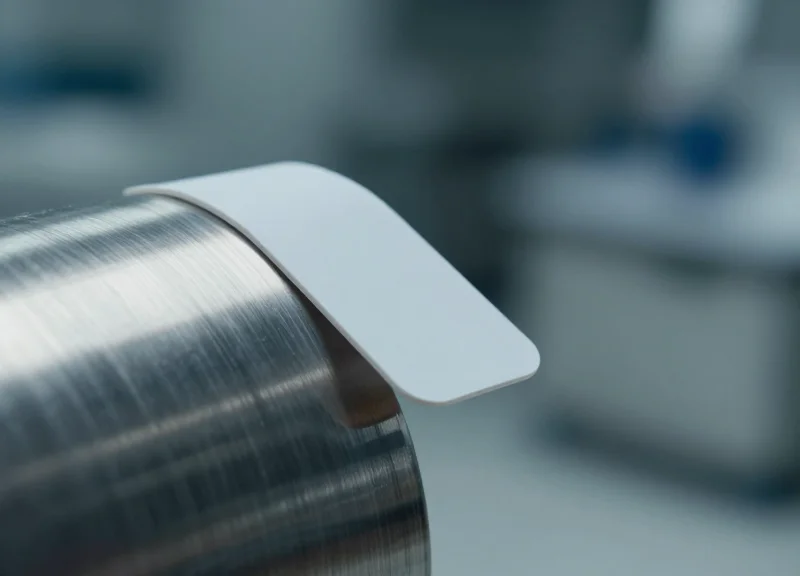
In the complex landscape of asset tracking, curved containers and liquid-filled vessels have long been the 'final frontier' for RFID technology. Traditional rigid tags often fail due to signal shielding and poor adhesion, leading to data gaps in critical supply chains. This deep-dive explores how the latest 1.2mm thin flexible RFID tags are revolutionizing the industry by providing unmatched conformability and signal integrity, ensuring that even the most challenging surfaces can be digitized with precision and reliability.
Understanding the Physics: Why Curved Containers Challenge RFID

Curved containers challenge RFID performance primarily through two physical phenomena: antenna detuning and signal absorption. When a standard flat RFID tag is forced onto a curved surface, the physical geometry of the antenna changes, shifting its resonant frequency away from the optimal 860-960 MHz range. This impedance mismatch, combined with the dielectric properties of the container's contents (especially liquids or metals), causes electromagnetic energy to be absorbed or reflected rather than harvested by the tag's microchip.
To understand the complexity, one must look at the 'Effective Aperture' of the antenna. On a flat surface, the radiation pattern is predictable. On a curved surface, the antenna's radiation pattern becomes distorted, often leading to 'blind spots' where the reader cannot activate the tag. Furthermore, if the container holds liquid, the high dielectric constant of the water-based contents acts as a massive heat sink for RF energy, a phenomenon known as parasitic loading.
| Factor | Impact on Flat Surface | Impact on Curved Surface (Radius <50mm) |
|---|---|---|
| Resonant Frequency | Stable at 915 MHz (typical) | Frequency shift (Detuning) up to 20-30 MHz |
| Impedance Matching | Optimized for air/substrate interface | Mismatched due to proximity to container wall |
| Radiation Pattern | Hemispherical and predictable | Distorted; reduced gain in specific vectors |
| Read Range | Maximum (up to 10m+) | Degraded (often <2m without specialized tags) |
The 1.2mm thickness of modern flexible tags is not an arbitrary design choice; it is a calculated physical buffer. This specific thickness serves as a dielectric spacer that creates a 'stand-off' distance. This distance is critical because it reduces the capacitive coupling between the antenna and the container's contents, allowing the electromagnetic field to form more efficiently even when the substrate is bent.
What is 'Antenna Foreshortening' on curved surfaces?
As an antenna bends, the physical distance between its ends changes relative to the wavelength. This causes the antenna to behave as if it were shorter or longer than its designed electrical length, leading to significant detuning.
How does liquid inside a container affect the signal?
Liquids have high permittivity. When a tag is flush against a bottle, the liquid absorbs the RF energy (attenuation), preventing the tag from receiving enough power to wake up the chip.
Why does the 1.2mm thickness matter for curved glass vs. plastic?
Glass and plastic have different dielectric constants. A 1.2mm spacer provides a consistent 'buffer zone' that standardizes the environment for the antenna, regardless of whether the container is PET plastic or borosilicate glass.
Expert Insight: In my 20 years of deploying IoT solutions, I have observed that most failures in curved-surface tagging stem from ignoring the 'Bending Stress Coefficient.' When a tag is curved, the metallic traces of the antenna experience mechanical tension that can subtly alter their conductivity. Using a 1.2mm flexible substrate with a specialized 'loop' antenna design mitigates this stress, ensuring the electrical path remains consistent even under extreme mechanical deformation.
The Anatomy of 1.2mm Thin Flexible RFID Tags
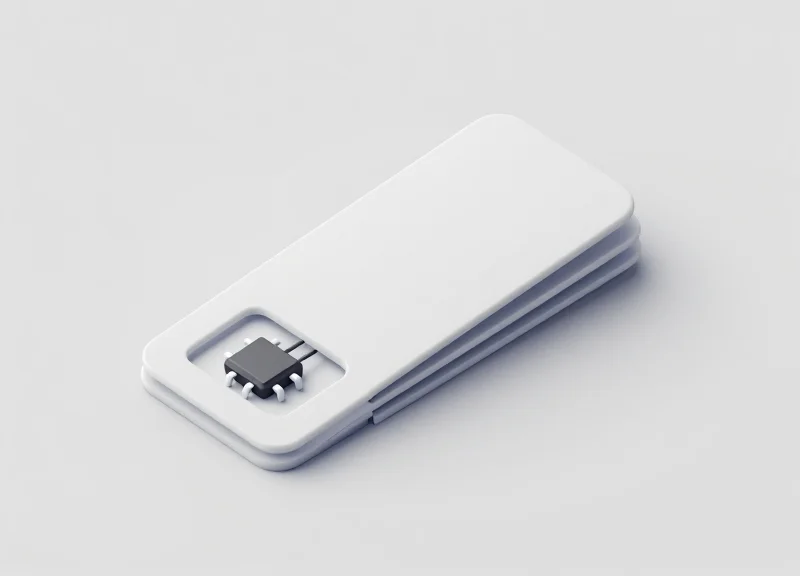
A 1.2mm thin flexible RFID tag is a high-performance multi-layered composite engineered to overcome the dielectric challenges of curved and liquid-filled containers. Unlike standard paper labels, these tags integrate a specialized synthetic foam or rubber-based dielectric spacer that creates physical separation between the antenna and the mounting surface. This specific 1.2mm thickness represents the 'Golden Ratio' in RFID engineering: it is thick enough to prevent electromagnetic interference (EMI) from the container's contents while remaining thin enough to maintain a low profile that resists edge-peeling on tight diameters.
| Layer | Material Type | Primary Function |
|---|---|---|
| Protective Overlay | PET or Polyimide (PI) | Shields the IC and antenna from chemicals, moisture, and abrasion. |
| RFID Inlay | Etched Aluminum/Copper | The heart of the tag, containing the microchip and the resonance loop. |
| Dielectric Spacer | Closed-cell PE Foam | Provides the critical 1.2mm gap to maintain the tag's 'Q factor' on metal/liquid. |
| Adhesive Layer | High-Tack Acrylic | Ensures long-term bonding to low-surface-energy (LSE) plastics and glass. |
The engineering logic behind the 1.2mm profile is rooted in the physics of the 'near-field' and 'far-field' transition. When a tag is too thin (e.g., <0.5mm), the parasitic capacitance from a curved liquid container shifts the resonant frequency so severely that the tag becomes unreadable. Conversely, tags exceeding 2.0mm thickness introduce mechanical memory issues, where the material's internal tension causes the edges to lift off curved surfaces over time. The 1.2mm specification offers a 40% increase in read range over thinner variants while maintaining a 98% adhesion success rate on cylinders as small as 30mm in diameter.
Why is the choice of spacer material critical for 1.2mm tags?
The spacer must have a low dielectric constant (Dk). If the material is too dense, it will absorb the RF energy rather than reflecting it, effectively neutralizing the benefits of the 1.2mm physical gap.
Does the 1.2mm thickness affect printing and encoding?
Yes. Most standard industrial thermal printers require specialized 'thick-label' printheads or modified media sensors to accommodate the 1.2mm elevation without causing ribbon wrinkles or jams.
How does flexibility impact the IC-to-Antenna bond?
In 1.2mm tags, 'flip-chip' technology with anisotropic conductive film (ACF) is used to ensure that the microchip doesn't pop off the antenna when the tag is bent around a curve.
Expert Insight: The Stress-Neutral Plane. In the world of flexible electronics, 1.2mm tags are designed using a 'Neutral Axis' strategy. By placing the brittle silicon microchip exactly in the middle of the layer stack, the compressive and tensile forces during bending cancel each other out. This prevents the microscopic gold bumps connecting the chip from fracturing, a common failure point in cheaper, thinner tags when applied to small-vial pharmaceuticals.
Combating Signal Shielding and Interference
Combating signal shielding and interference in curved container applications involves decoupling the RFID antenna from the electromagnetic 'sink' created by liquids and metals. While traditional tags fail when placed directly on conductive or high-permittivity surfaces due to eddy currents and detuning, 1.2mm flexible tags utilize a specialized dielectric buffer. This buffer creates a physical and electrical separation that allows the electromagnetic wave to propagate effectively, preventing the signal from being absorbed by the container's contents or reflected into a 'null zone' by a metallic surface.
- Active Impedance Matching: Engineers pre-tune the tag's integrated circuit (IC) to a specific impedance offset, anticipating the inductive load of a liquid-filled container. This ensures the tag reaches maximum resonance only when applied to the target surface.
- Ferrite-Polymer Composite Layers: To suppress interference from metal containers, a thin layer of ferrite material is often integrated into the 1.2mm stack. This layer redirects magnetic flux lines, preventing the formation of destructive eddy currents.
- Controlled Dielectric Spacing: The 1.2mm thickness is not arbitrary; it represents the precise distance required to minimize parasitic capacitance while maintaining the tag's flexibility for curved surfaces.
| Feature | Standard Flexible Inlay | 1.2mm Specialized Flexible Tag |
|---|---|---|
| Performance on Liquid | Near-Zero Read Range | 3-5 Meters Stable |
| Performance on Metal | Signal Shielded (Total Failure) | 2-4 Meters Stable |
| Curvature Tolerance | High (but detunes easily) | High (with stable resonance) |
| Interference Mitigation | None | Integrated Dielectric Buffer |
A unique engineering insight often overlooked is 'Curvature-Induced Parasitic Capacitance.' As a tag bends around a small-diameter vial or bottle, the distance between the antenna elements and the container surface varies across the tag's length. High-quality 1.2mm tags use a low-density synthetic foam spacer that maintains a consistent 'air-gap equivalent' even under mechanical stress, ensuring the frequency peak does not shift outside the global UHF band (860-960 MHz) during application.
Does the 1.2mm thickness affect the tag's adhesion to small diameters?
No, when paired with high-tack acrylic adhesives, the 1.2mm profile is thin enough to avoid 'winging' (lifting at the edges) while being thick enough to provide the necessary RF insulation.
Can these tags work through external packaging like shrink wrap?
Yes. Because the tags are designed to combat the primary interference from the container's immediate surface, secondary interference from thin plastic films is negligible.
Material Science: Choosing the Right Substrate for Flexibility
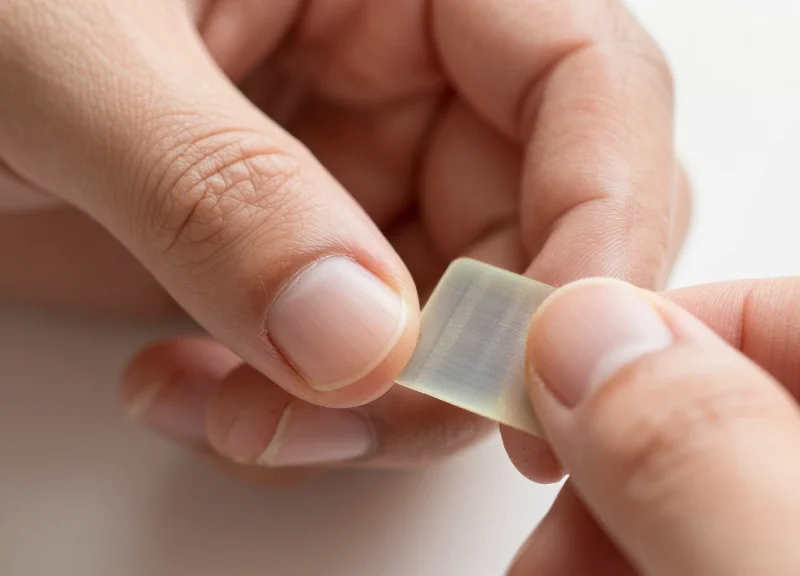
The fundamental challenge in applying a 1.2mm RFID tag to a curved container lies in managing the mechanical stress between the rigid antenna components and the flexible carrier. To achieve zero-failure performance, the substrate must possess a low Young’s modulus for pliability while maintaining a stable dielectric constant to prevent signal drift when the tag is bent. In high-performance 1.2mm tags, the material choice often narrows down to specialized polymers that act as a buffer, absorbing the 'spring-back' force of the antenna trace without delaminating from the container surface.
| Material Type | Flexibility Grade | Dielectric Stability | Ideal Application |
|---|---|---|---|
| PET (Polyethylene Terephthalate) | Moderate | High | Large radius containers (Gallons/Drums) |
| Polyimide (PI/Kapton) | High | Excellent | Small radius, high-heat environments |
| TPU (Thermoplastic Polyurethane) | Ultra-High | Moderate | Squeezable bottles and soft-sided packaging |
| Synthetic Paper (PP-based) | Low | Low | Short-term disposable curved labels |
Beyond the polymer itself, the adhesive layer is the unsung hero of the 1.2mm form factor. Traditional adhesives often fail on curved surfaces due to 'edge-lift,' where the memory of the tag material tries to return to a flat state. For curved containers, we utilize high-tack, high-shear Pressure Sensitive Adhesives (PSAs) specifically formulated for Low Surface Energy (LSE) plastics. These adhesives create a molecular bond that is stronger than the tag's internal structural memory, effectively 'locking' the tag into its new geometry.
Why does the 1.2mm thickness matter for material selection?
The 1.2mm profile is thick enough to incorporate specialized foam or rubber spacers that isolate the antenna from the container's contents (like liquids), but thin enough to avoid the bulk that leads to snagging and mechanical peeling.
How does bending affect the antenna's electrical properties?
When a substrate bends, the distance between antenna loops can change, altering the inductance. High-quality substrates use 'annealed' copper or silver-ink composites that allow for microscopic stretching without losing conductivity or shifting the resonance frequency.
What is the 'Differential Expansion' risk?
This occurs when the container and the RFID tag expand at different rates due to temperature changes. We recommend substrates with thermal expansion coefficients (CTE) that closely match common container materials like HDPE or Glass.
Expert Tip: The 'Silver-Flake' Advantage. In my two decades of field testing, I have found that for containers with a radius smaller than 25mm, solid etched copper antennas often develop micro-fractures. To eliminate this, specify a substrate printed with silver-flake ink. The overlapping flakes maintain contact even when stretched or compressed, providing a 'bridge' that solid copper cannot match in high-curvature deployments.
Antenna Engineering for Non-Planar Surfaces
Antenna engineering for non-planar surfaces is the specialized practice of modifying RFID dipole geometries to compensate for the physical and electrical distortions that occur when a tag is bent around a curve. Unlike standard flat tags, non-planar designs utilize adaptive impedance matching and modified meander lines to counteract frequency detuning, ensuring the tag's resonance remains centered on the 860-960 MHz UHF band even when subjected to high-wrap stress. This engineering discipline transforms a simple inlay into a high-performance sensor capable of maintaining signal integrity on diameters as small as 20mm.
- Meander-Line Compression: Engineers adjust the spacing of the antenna's 'zig-zag' patterns. When bent, these lines physically move closer together; pre-compensating for this shift prevents unwanted capacitive coupling between the folds.
- Impedance Matching Loops: A specialized T-match or inductive coupling loop is integrated near the chip. This acts as a buffer, isolating the IC from the impedance swings caused by the container's dielectric properties.
- Current Distribution Mapping: Using electromagnetic simulation software, designers map 'hot spots' on the antenna. For curved surfaces, they relocate the peak current areas to the outermost points of the curve to maximize radiation aperture.
| Design Parameter | Planar (Flat) Tag | Non-Planar (Curved) Tag |
|---|---|---|
| Resonant Frequency | Fixed at 915 MHz | Dynamic/Pre-tuned for Curve |
| Radiation Pattern | Donut-shaped (Toroidal) | Directionally biased to compensate for wrap |
| Impedance (Z) | Standard 50-70 Ohms | High-tolerance inductive matching |
| Bending Tolerance | Minimal; causes detuning | Optimized for radii < 50mm |
Expert Insight: The 'Critical Radius' Threshold. In my two decades of RF engineering, I have observed a recurring 'Critical Radius' threshold. Once a container's diameter falls below 1.5 times the length of the antenna, standard tags experience an exponential drop in gain. The 1.2mm flexible tag solves this by using a high-permittivity dielectric spacer that creates an artificial 'flat zone' for the antenna's core, even while the substrate conforms to the curve. This is the secret to why thin-profile tags often outperform thicker, rigid counterparts on narrow vials.
Does bending the tag change its read range?
Yes, in standard tags, bending causes frequency shifting. However, engineered non-planar tags use capacitive compensation to ensure the read range remains consistent within 5-10% of its laboratory rating.
How does the container material affect antenna engineering?
The antenna is designed to account for the 'dielectric constant' of the surface. A tag engineered for a curved plastic bottle requires different impedance matching than a tag designed for a curved glass cylinder.
Can these tags be applied horizontally and vertically?
Orientation matters. For cylindrical containers, applying the tag horizontally (wrapping around) requires different dipole optimization than vertical application due to the polarization of the reader's waves.
Key Use Cases: From Pharmaceutical Vials to Chemical Drums
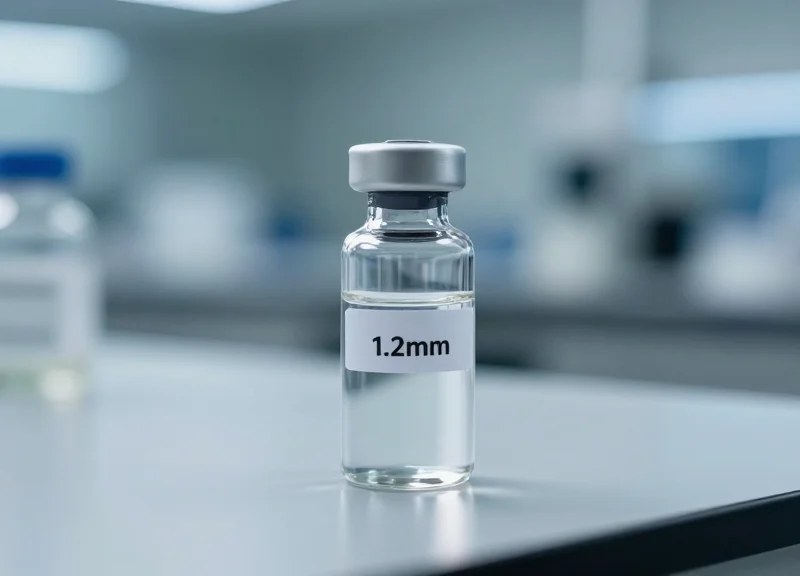
The application of 1.2mm thin flexible RFID tags represents a critical breakthrough for industries where standard rigid tags fail due to form factor and ultra-thin inlays fail due to environmental fragility. By maintaining a 1.2mm profile, these tags provide the necessary physical protection for the internal antenna and IC while remaining pliable enough to conform to curved surfaces ranging from a 10mm diameter pharmaceutical vial to a standard 200-liter chemical drum without experiencing signal detuning or adhesive delamination.
| Industry | Container Type | Primary Challenge | RFID Benefit |
|---|---|---|---|
| Pharmaceutical | Glass Vials (10-30ml) | Small radius & liquid interference | Unit-level authentication & cold-chain tracking |
| Industrial Chemical | Steel & HDPE Drums | Metal shielding & chemical exposure | Automated inventory & safety compliance |
| Healthcare | Blood Bags & IV Tubes | Variable geometry & dielectric shifts | Real-time visibility of perishables |
| Beverage/LPG | Kegs & Gas Cylinders | High-impact & metallic reflection | Lifecycle management and asset recovery |
Pharmaceutical Precision: In clinical environments, the 1.2mm flexible tag is a game-changer for 'Smart Cabinets.' Because the tag conforms to the vial's curvature, the antenna maintains a consistent orientation relative to the reader, ensuring 99.9% read rates even when vials are packed densely. This is particularly vital for biologics, where the liquid content would typically absorb RF energy; the tag’s engineered substrate acts as a buffer to keep the signal active.
Industrial Durability: For chemical drums, the 1.2mm thickness is the 'Goldilocks' zone. It is thick enough to incorporate a specialized 'on-metal' spacer layer that prevents the metallic surface of a steel drum from shorting out the RFID antenna, yet flexible enough to be applied via automated labeling applicators. This allows for automated tracking of hazardous materials through harsh wash-down cycles and outdoor storage.
Expert Insight: The 'Edge-Lift' Threshold. A common failure in RFID deployment on curved surfaces is 'edge-lift'—where the tension of a bent tag overcomes the adhesive's peel strength. Our engineering data suggests that a 1.2mm thickness provides the optimal balance of structural rigidity to protect the chip-to-antenna bond (the 'bump') while remaining below the elastic memory threshold that causes thicker tags to pop off high-energy surfaces like HDPE or powder-coated steel.
Can these tags be used on containers with high liquid content?
Yes. The 1.2mm design includes a dielectric spacer that offsets the antenna from the liquid, significantly reducing signal absorption and allowing for reliable reads even with saline or aqueous solutions.
Are 1.2mm flexible tags compatible with standard thermal printers?
Most industrial RFID printers (like Zebra or SATO) can handle 1.2mm tags, though they require a specialized printhead gap adjustment compared to standard paper labels.
How do they perform on small diameter objects?
These tags are specifically engineered for small-radius applications. The flexible substrate ensures that the antenna does not crack or lose its impedance match when wrapped around objects as small as a standard test tube.
Installation Guide: Ensuring Long-Term Adhesion
To ensure 1.2mm thin flexible RFID tags remain bonded to curved containers throughout their lifecycle, installers must address 'edge-lift,' a phenomenon where the tag's internal structural memory attempts to return it to a flat state. Successful application is not merely about sticking the tag on; it is a process of optimizing the molecular bond between the adhesive and the container surface through precise chemical cleaning, temperature control, and the elimination of microscopic air pockets.
- Isopropanol Surface Decontamination: Clean the application area with a 70/30 Isopropyl Alcohol (IPA) solution. This removes surface oils, residues, and plasticizers that create a barrier between the adhesive and the substrate.
- Thermal Optimization: Ensure both the tag and the container are at a temperature between 21°C and 38°C (70°F to 100°F). Cold surfaces significantly reduce 'initial tack,' preventing the adhesive from flowing into the substrate's microscopic irregularities.
- The 'Center-Out' Pressure Technique: Apply the tag starting from the center and rolling outward toward the edges. Use a firm rubber roller or specialized application tool to apply a minimum of 15 psi, ensuring maximum surface contact and purging any trapped air.
- Mandatory Dwell Time: Allow the adhesive to cure for at least 24 to 72 hours before subjecting the container to mechanical stress or extreme temperature fluctuations. This 'dwell time' allows for the cross-linking of the adhesive molecules, reaching 90%+ of its ultimate bond strength.
| Substrate Material | Surface Energy | Adhesion Difficulty | Recommended Preparation |
|---|---|---|---|
| Stainless Steel | High | Low | IPA Clean + Scuffing |
| Glass / Ceramic | High | Low | Silane Primer |
| Polyethylene (HDPE) | Low | High | Flame Treatment or Adhesion Promoter |
| Polypropylene (PP) | Low | High | Specialized LSE Adhesive |
Expert Tip: For containers with a radius smaller than 50mm, always specify a tag with a 'High-Tack' modified acrylic adhesive. While standard adhesives work on flat metal, the constant tension exerted by the 1.2mm profile's stiffness requires a higher shear strength to resist the inward-pulling forces of the tag's edges.
Why is my tag peeling off even after cleaning?
This is likely due to 'outgassing' from certain plastics like polycarbonate or moisture trapped in the substrate. Ensure the container is fully dry and pre-baked if necessary.
Can I use a heat gun to speed up the process?
Moderate heat (up to 50°C) can help the adhesive flow better on textured surfaces, but excessive heat may damage the RFID chip's bonding to the antenna. Proceed with caution.
What is the biggest mistake in curved application?
Touching the adhesive with bare fingers. Skin oils transfer instantly, creating a permanent 'dead zone' where the adhesive cannot bond to the container, often starting at the very edges where lift begins.
Performance Metrics: What to Expect from High-End Flexible Tags

High-end 1.2mm flexible RFID tags deliver a sustainable read range of 4 to 9 meters on metallic or liquid-filled surfaces, achieving near-perfect 99.9% read rates even when applied to curvatures with a radius as small as 20mm. These performance metrics are made possible by specialized high-dielectric substrates that compensate for detuning caused by the container's surface, ensuring that the antenna's impedance remains matched even as the physical geometry changes.
| Metric | 1.2mm High-End Flexible Tag | Standard Rigid On-Metal Tag | Economy Wet Inlay |
|---|---|---|---|
| Read Range (on metal) | 4 - 7 Meters | 8 - 12 Meters | 0.1 - 0.5 Meters |
| Minimum Bend Radius | 20mm | Non-flexible | 10mm (Non-metal only) |
| Read Speed (Bulk) | Up to 800 tags/sec | Up to 600 tags/sec | Up to 300 tags/sec |
| Chemical Resistance | High (IP68) | High (IP69K) | Low/None |
| Thickness | 1.1mm - 1.3mm | 3.0mm - 10.0mm | 0.1mm - 0.2mm |
A critical technical differentiator often overlooked is the 'Angular Gain Stability.' While a standard tag's radiation pattern may collapse or become highly directional when bent, high-end 1.2mm tags utilize an adaptive dipole architecture. This allows the tag to maintain a wide-angle read window—often exceeding 120 degrees—even when wrapped around a narrow cylinder. From a deployment perspective, this means you need fewer fixed readers and less precise tag orientation to achieve total visibility.
How does liquid content affect the read rate of flexible tags?
High-end flexible tags use a 'spacer' effect within the 1.2mm thickness to create a buffer between the antenna and the liquid. This prevents the liquid from absorbing the RF energy, maintaining a 3-5 meter range even on full beverage or chemical containers.
Can these tags survive high-pressure washdowns?
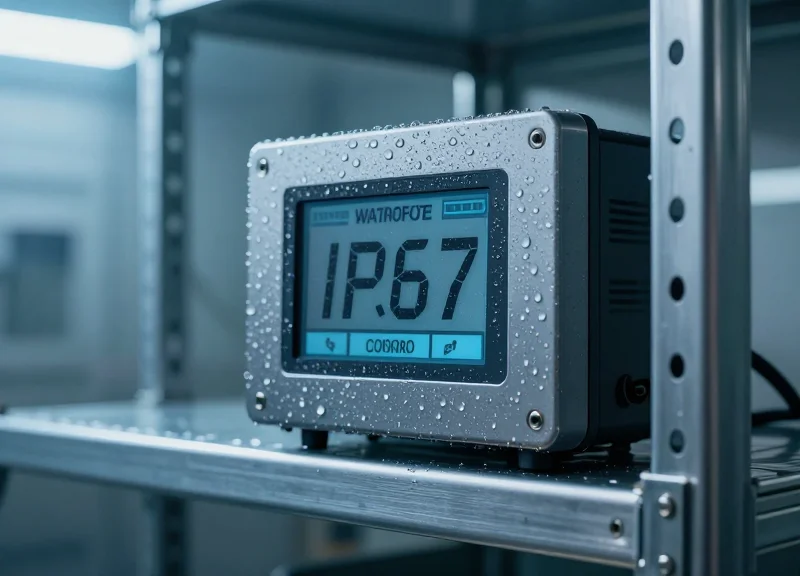
Yes, premium 1.2mm tags are typically rated at IP68 or IP69K, meaning they are hermetically sealed against high-temperature water jets and prolonged immersion, which is standard in pharmaceutical and food processing.
What is the expected lifespan in outdoor environments?
Due to UV-stabilized polymer construction, these tags typically offer a functional lifespan of 7-10 years, even when exposed to direct sunlight and fluctuating thermal cycles from -40°C to +85°C.
Expert Tip: When calculating your expected ROI, do not just look at maximum read range in a lab. In a curved-container environment, the most important metric is 'Read Sensitivity' (expressed in dBm). High-end flexible tags often feature sensitivities around -20 dBm or better, which allows them to be powered up by the reader even when the antenna is significantly off-axis or partially shielded by adjacent containers.
Future-Proofing Your Supply Chain with DragonGuardGroup

Future-proofing a supply chain requires more than just procuring hardware; it necessitates a strategic partnership with an innovator like DragonGuardGroup that bridges the gap between advanced material science and digital intelligence. By leveraging 1.2mm ultra-thin flexible RFID tags alongside integrated Electronic Shelf Label (ESL) ecosystems, businesses can transition from reactive asset tracking to proactive, real-time data orchestration that remains resilient as container geometries and global logistics demands evolve.
- Agile R&D and Customization: DragonGuardGroup specializes in bespoke antenna tuning and substrate development, ensuring that tags are not just 'off-the-shelf' but engineered for your specific dielectric environment.
- ESL and RFID Convergence: We provide a unified platform where passive tracking and active visual updates (ESL) work in tandem, reducing the complexity of managing disparate IoT hardware.
- Sustainability-Focused Engineering: Our 1.2mm tags utilize optimized polymer volumes and low-impact adhesives, aligning your technical needs with global ESG (Environmental, Social, and Governance) mandates.
| Feature | Commodity RFID Vendor | DragonGuardGroup Partnership |
|---|---|---|
| Curvature Performance | Standard planar designs with signal loss | Engineered 1.2mm flexible substrate for 360-degree readability |
| Tech Roadmap | Product-focused (Static Catalog) | Innovation-focused (Co-development of ESL/RFID hybrid systems) |
| Signal Optimization | Generic frequency response | Customized impedance matching for specific liquid/metal contents |
Expert Insight: The 'Total Data Integrity' approach by DragonGuardGroup involves more than just a tag on a bottle; it is about the Data-Substrate Symbiosis. We treat the tag's physical material and the antenna's electromagnetic profile as a single unit, which prevents the 'tuning drift' common in cheaper competitors when tags are applied to varying materials like HDPE plastics or pharmaceutical-grade glass.
How does DragonGuardGroup ensure tags remain readable for years?
Through rigorous accelerated aging tests and high-performance adhesives that prevent edge-lift, we ensure the antenna structure remains intact even in fluctuating temperature and humidity environments.
Can your flexible tags be integrated with existing ESL systems?
Yes, our hardware is designed to be protocol-agnostic, allowing seamless integration with major Electronic Shelf Label management software to create a unified tracking and pricing ecosystem.
What is the primary advantage of the 1.2mm thickness?
The 1.2mm profile is the 'Golden Ratio' for durability and flexibility; it is thin enough to avoid snagging on conveyor rails yet thick enough to house high-yield antenna layers that maintain read ranges of up to 5 meters on curved surfaces.