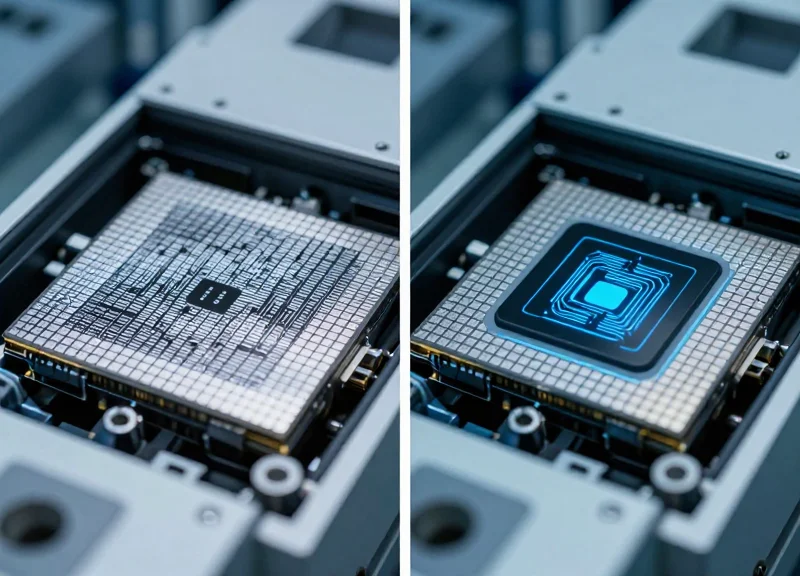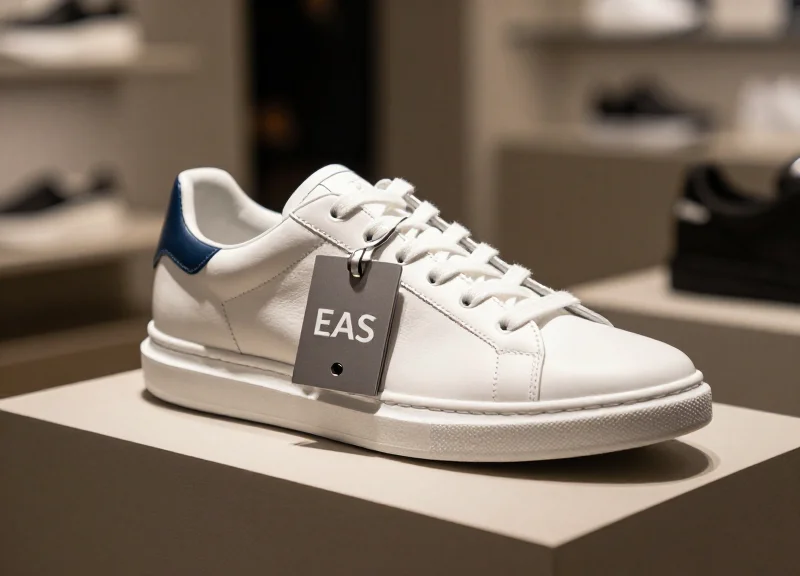
As we head into 2026, the intersection of luxury retail security and brand experience has never been more critical. For high-end handbag retailers, the challenge is twofold: implementing robust RFID inventory tracking while ensuring the physical integrity of delicate materials like lambskin, exotic leathers, and fine silks. Traditional security tags often leave permanent punctures or unsightly indentations that devalue the product before it even reaches the customer. This guide explores the latest advancements in aesthetic-first RFID technology and non-damaging attachment mechanisms designed specifically for the luxury market, ensuring your inventory remains secure, tracked, and pristine.
The Evolution of Luxury Asset Protection in 2026

In 2026, luxury asset protection has transitioned from high-friction security measures to 'invisible' RFID integration, where non-damaging, aesthetic-first tags serve a dual purpose: real-time inventory precision and the creation of a 'digital twin' for lifetime authentication and circular economy participation. Unlike the archaic security tags of the past decade, modern luxury RFID solutions are designed as 'Jewelry-Grade' hardware, ensuring that the physical attachment never compromises the delicate leathers, exotic skins, or silk linings of high-end handbags.
| Attribute | 2020 Status Quo | 2026 Luxury Standard |
|---|---|---|
| Attachment Method | Thick steel pins piercing leather | Ultra-fine, non-marking alloy pins or magnetic clamps |
| Visibility | Large, generic plastic 'ink tags' | Miniature, branded, jewelry-grade enclosures |
| Primary Function | Theft deterrence only | Inventory, Authentication, and Digital Passports |
| Consumer Perception | Intrusive and aesthetic-killing | Evidence of authenticity and brand care |
The most significant shift in 2026 is the 'Aesthetic-First' mandate. As luxury houses focus on the total brand experience, the tag is no longer viewed as a necessary evil but as a sophisticated data carrier. Leading brands now utilize RFID pins with diameters under 0.6mm, coated in specialized polymers that prevent 'hole memory' in lambskin and calfskin. This ensures that once the tag is removed at the point of sale, the handbag remains in pristine, 'boutique-fresh' condition without the unsightly puncture marks that previously plagued high-value inventory.
Why is 2026 the tipping point for luxury RFID?
Regulatory requirements for Digital Product Passports (DPP) in the EU and the rise of the secondary market have forced brands to integrate tracking that lasts beyond the initial sale.
How do non-damaging pins protect brand equity?
By preserving the structural integrity of the leather, brands ensure that the product retains its maximum resale value and aesthetic appeal, which are the primary drivers of luxury desirability.
What role does RFID play in the customer journey?
Beyond security, these tags allow customers to tap their smartphone to the bag to verify authenticity, access exclusive brand content, or initiate a seamless repair request.
Expert Insight: The 2026 'Digital Handshake'. A unique trend emerging this year is the use of RFID as a gateway for the circular economy. Luxury brands are now embedding 'transferable ownership' tokens within the RFID tag's data structure. When a handbag is sold on a secondary platform, the original non-damaging RFID pin (often repackaged as a branded seal) acts as a physical key to transfer the digital certificate of authenticity, effectively killing the counterfeit market while maintaining the bag's physical perfection.
Why Material Integrity is the New Standard for Security
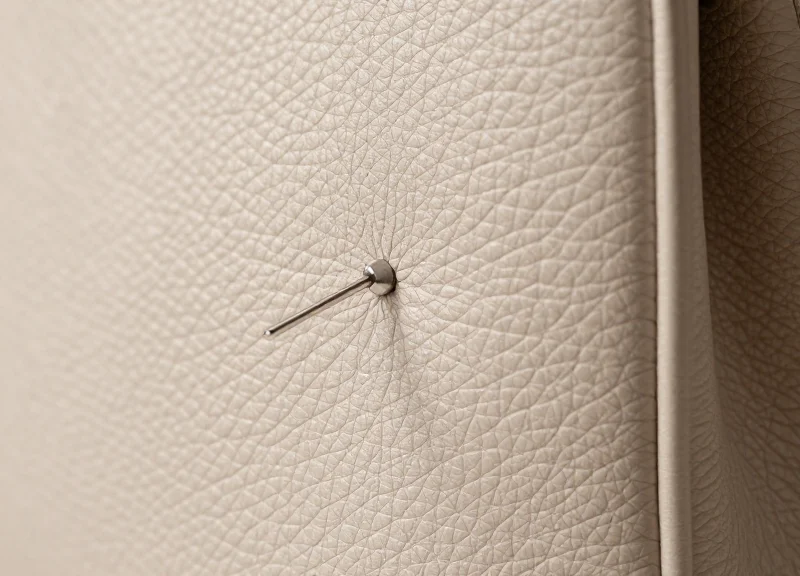
Material integrity in luxury security is defined as the implementation of loss prevention and tracking technologies that leave zero physical, chemical, or aesthetic traces on the asset. In 2026, the luxury sector has established 'zero-trace' tagging as the industry benchmark because traditional security pins can reduce a handbag's secondary market valuation by 15% to 30%. Protecting the material is now viewed as equally important as protecting the item from theft, as a damaged luxury good is a compromised financial asset.
For decades, the retail industry accepted 'acceptable damage'—the tiny holes left by security tag pins in garment seams or leather panels. However, as luxury handbags increasingly serve as investment vehicles (with some Hermès and Chanel pieces outperforming the S&P 500), the cost of this damage has become untenable. High-end collectors and resale platforms like The RealReal or Vestiaire Collective now use high-resolution macro-photography to inspect for 'tag scars,' which can disqualify an item from 'Pristine' or 'Never Worn' status.
| Tagging Method | Physical Impact | Resale Value Impact | Security Efficacy |
|---|---|---|---|
| Traditional Hard Pin | Permanent fiber displacement or leather puncture | High Depreciation (-20%+) | High |
| Magnetic Clamps | Pressure marks and oil transfer | Moderate Depreciation (-10%) | Medium |
| 2026 Micro-Filament RFID | Zero-trace; attaches to existing hardware | Neutral (0%) | High |
| Non-Residue RFID Stickers | Potential chemical ghosting on exotic skins | Low to Moderate (-5%) | Medium |
Expert Insight: In 2026, we are seeing the rise of the 'Secondary Market Multiplier.' This internal metric used by brands like LVMH measures the correlation between point-of-sale security methods and the item's long-term brand equity. A security solution that preserves the leather's 'self-healing' properties isn't just a loss prevention tool; it is a value-preservation strategy that maintains the brand's prestige in the circular economy.
Does 'zero-trace' mean the tag is easier to remove by shoplifters?
No. Modern zero-trace RFID tags utilize high-tensile micro-filaments or specialized locking mechanisms that attach to the handbag's metal hardware (rings, zippers, or buckles) rather than piercing the leather. These require the same specialized detachers as traditional tags but leave no mark upon removal.
Why can't we use standard adhesive RFID labels?
Standard adhesives contain solvents that can react with the tanning agents in luxury leathers, leading to 'ghosting' or permanent discoloration. 2026-grade luxury tags use inert, pH-neutral polymers if any contact with the material is required.
Is material integrity relevant for internal logistics or just floor security?
It is critical for both. Damage often occurs during the 'intake' phase in the warehouse. Implementing non-damaging RFID from the factory ensures the item remains in mint condition through its entire supply chain journey.
Anatomy of a Non-Damaging RFID Tag
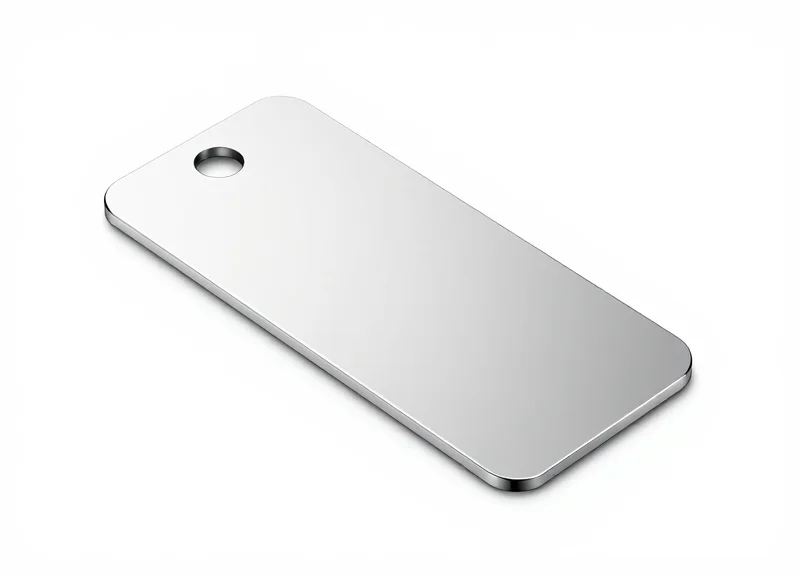
A non-damaging RFID tag is a precision-engineered security device specifically designed to protect high-value inventory without leaving permanent physical traces. Unlike legacy security tags that rely on thick steel pins and high-pressure clamps, the 2026 luxury standard utilizes microscopic needle gauges (typically 0.6mm or smaller), medical-grade silicone interfaces, and tension-calibrated locking mechanisms. These components work in unison to ensure that the security hardware remains a silent guardian of the product's aesthetic integrity rather than a source of structural degradation.
- Ultra-Fine 'Acupuncture' Needles: The core of the non-damaging tag is a 23-gauge (0.6mm) or higher stainless steel pin. These needles are electro-polished to a mirror finish to slide between fabric fibers rather than piercing through them, effectively eliminating the 'yawning hole' effect seen in standard retail tags.
- Soft-Grip Silicone Linings: The inner faces of the tag are lined with dual-density, medical-grade silicone. This provides a high-friction grip at lower pressure, preventing the tag from sliding and causing 'friction burn' on delicate lambskin or calfskin surfaces.
- Zero-Pressure Lanyard Systems: For bags where even a micro-pin is unacceptable (such as structured exotic leathers), non-damaging tags utilize braided nylon or plastic-coated steel lanyards that loop through hardware eyelets, bypassing the material entirely.
- Balanced Weight Distribution: Modern tags are engineered with a low-mass profile (under 8 grams) to prevent gravitational sagging, which can lead to permanent indentations or 'leather stretching' if the item remains on display for extended periods.
| Component | Traditional Retail Tag | 2026 Luxury Non-Damaging Tag |
|---|---|---|
| Needle Diameter | 1.2mm - 1.5mm | 0.5mm - 0.7mm (Micro-gauge) |
| Interface Material | Hard ABS Plastic | Soft-touch Silicone / Foam Cushion |
| Clamping Force | Uniform High Pressure | Calibrated Variable Tension |
| Aesthetic Impact | Visible Puncture / Bruising | Zero-Trace / Reversible Compression |
Expert Insight: The 'Sacrificial Shear' Mechanism. A critical 2026 innovation in luxury tagging is the calibrated shear point. Unlike industrial tags that will tear the leather if a shoplifter pulls forcefully, luxury-grade tags are designed to yield internal locking components before the tensile strength of the handbag material is reached. This philosophy prioritizes the preservation of the multi-thousand-dollar asset over the recovery of a five-dollar plastic housing.
Will these micro-needles still trigger standard RFID gates?
Yes. The needle is purely the mechanical fastener; the RFID inlay is housed within the tag body and remains fully compatible with all UHF Gen2 scanners and luxury retail overhead sensors.
How does the 'Soft-Touch' lining prevent indentation?
The silicone pads distribute the clamping force over a surface area 4x larger than traditional tags, ensuring the pressure never exceeds the 'elastic limit' of the leather—the point where a temporary squeeze becomes a permanent mark.
Are lanyard-based RFID tags as secure as pin-based ones?
When paired with cut-resistant core materials like Kevlar or braided steel, lanyards offer equal security while offering the flexibility to attach to handles, D-rings, or zipper pulls.
Aesthetic-First Design: Making Security Invisible
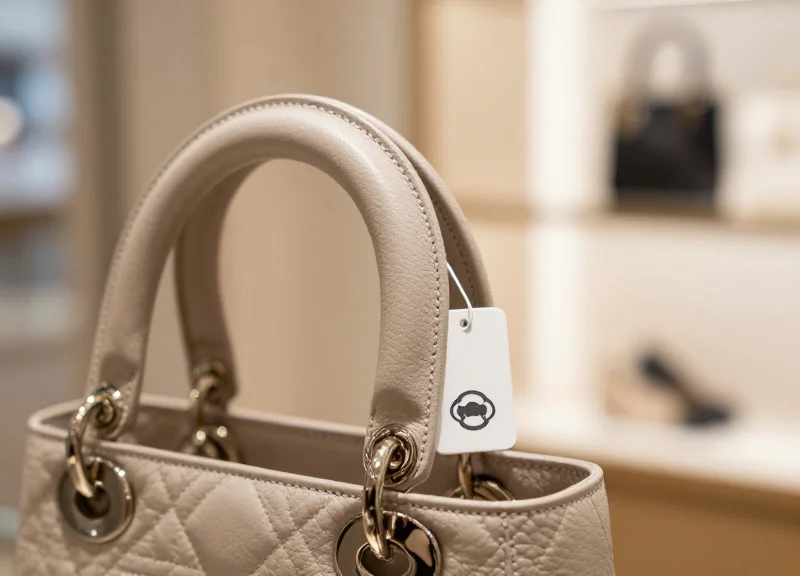
Aesthetic-first design in RFID security refers to the seamless integration of tracking hardware into a product's visual identity, moving away from bulky, intrusive plastic clips toward miniaturized, color-matched, and branded components. In 2026, the industry standard for luxury retail is 'visual silence,' where a security tag either mimics a decorative brand charm or is engineered with an ultra-slim profile to remain virtually undetected by the consumer. This approach ensures that the primary focus remains on the craftsmanship of the handbag, while providing 99.9% inventory accuracy and robust theft protection.
- Custom Pantone Matching: Modern RFID tags can be dyed to match specific seasonal leather shades or hardware finishes, ensuring the tag blends into the bag's lining or strap rather than clashing with it.
- Micro-Form Factors: By utilizing thin-film RFID chips and flexible antennas, 2026 tags achieve a thickness of less than 2mm, allowing them to be tucked into internal slip pockets without creating unsightly bulges.
- Branded Protective Shells: Instead of generic plastic, luxury tags are often encased in high-quality materials like soft-touch TPU or eco-composites that feature embossed brand logos, making the tag feel like an intentional part of the packaging.
- Textural Harmony: Security hardware now incorporates matte, satin, or brushed finishes to mirror the premium hardware of the luxury asset, reducing the 'cheap plastic' look associated with traditional retail loss prevention.
| Feature | Traditional Security Tag | 2026 Aesthetic RFID Tag |
|---|---|---|
| Visual Profile | Large, protruding clamshell | Ultra-slim 'Coin' or 'Leaf' profile |
| Color Strategy | Generic Grey or White | Custom Brand-Specific Palette |
| Consumer Impact | Intrusive and 'distrusting' | Subtle and premium-feeling |
| Material Build | Low-grade recycled plastic | Soft-touch polymers or resins |
A unique insight from our 2026 field analysis: Top-tier brands are increasingly adopting 'Charm Logic.' Instead of hiding the RFID tag, they are encasing it in high-quality resin or metallic housings designed to look like decorative authenticity fobs. This strategy effectively flips the consumer psychology; the security device is no longer a symbol of theft prevention, but a premium marker of provenance and digital certification. By turning a 'must-have' security item into a 'want-to-keep' brand asset, retailers eliminate the friction of visual security entirely.
Do slim profile tags have a shorter read range?
No. In 2026, high-dielectric materials allow even ultra-slim RFID tags to maintain a consistent 5-8 meter read range, even when placed near metallic accents or within dense leather layers.
Can aesthetic tags be reused across different seasons?
Yes. Most custom-branded aesthetic tags are designed for high durability and can be reprogrammed for multiple SKU lifecycles, making the initial investment in custom molds and colors highly sustainable.
Are these tags compatible with standard EAS gates?
Modern aesthetic RFID tags are dual-frequency, meaning they work seamlessly with both RFID inventory systems and traditional Electronic Article Surveillance (EAS) gates used for loss prevention.
UHF vs. HF RFID: Selecting the Right Frequency for Handbags
In 2026, the choice between UHF (Ultra-High Frequency) and HF (High Frequency) RFID for luxury handbags is determined by the specific balance of operational speed versus hardware interference. UHF RFID, operating at 860-960 MHz, is the industry standard for rapid inventory counts and supply chain visibility, allowing retailers to scan hundreds of bags in seconds from several meters away. Conversely, HF RFID (13.56 MHz), which includes Near Field Communication (NFC), is the preferred choice for item-level authentication and interactive customer experiences, as it performs significantly better in the presence of the dense metal hardware and foil-lined interiors common in high-end leather goods.
| Feature | UHF RFID (Ultra-High Frequency) | HF RFID / NFC (High Frequency) |
|---|---|---|
| Read Range | 3 to 12 Meters | 2 to 10 Centimeters |
| Read Speed | Bulk (1,000+ tags/sec) | Individual (1 tag/sec) |
| Metal Interference | High (Significant signal reflection) | Low (Better penetration near metal) |
| Primary Purpose | Inventory & Loss Prevention | Authentication & Customer Interaction |
| Hardware Type | Fixed Portals & Handheld Readers | Smartphones & Desktop Readers |
The 'Metal Challenge' is the primary technical hurdle for luxury handbags. Because UHF waves are easily reflected or absorbed by metal chains, buckles, and feet, a standard UHF tag placed inside a bag with heavy hardware can suffer from 'blind spots.' In 2026, leading luxury brands are mitigating this by using specialized 'on-metal' UHF tags or, more commonly, selecting HF/NFC tags for bags with high metallic density to ensure 100% read reliability at the point of sale.
- Assess Hardware Density: If the handbag features extensive metal chains (e.g., quilted flap bags), HF/NFC is more reliable to avoid signal detuning.
- Define Operational Scale: For large boutiques requiring weekly full-store inventories, UHF is non-negotiable for its bulk-scanning capabilities.
- Evaluate Consumer Journey: If you want customers to verify authenticity via their own smartphones, HF (NFC) is the only compatible frequency.
Expert Insight: The 2026 Dual-Frequency Pivot. The most advanced luxury retailers have stopped choosing one over the other. Instead, they are adopting 'Dual-Frequency Inlays.' These hybrid chips contain both a UHF and an HF/NFC antenna on a single footprint. This allows the logistics team to use UHF for long-range warehouse tracking while the boutique staff and end-consumers use the NFC side for authentication and digital storytelling—all without the need for two separate, bulky tags.
Can UHF tags be read through metal linings or foil packaging?
No. UHF signals are effectively blocked by conductive materials. If a handbag has a metallic foil liner for structure or RFID-blocking properties, the tag must be placed externally or on a non-shielded attachment point.
Is HF/NFC more secure than UHF?
Technically yes; because HF requires close proximity (centimeters) to read, it is much harder for unauthorized 'skimming' to occur compared to UHF's long-range capability.
Which frequency is better for preventing counterfeit returns?
HF/NFC is superior for anti-counterfeiting because each chip has a unique, uncopiable ID that can be cryptographically verified by a customer's phone at the time of return.
Innovative Attachment Methods for Different Handbag Styles
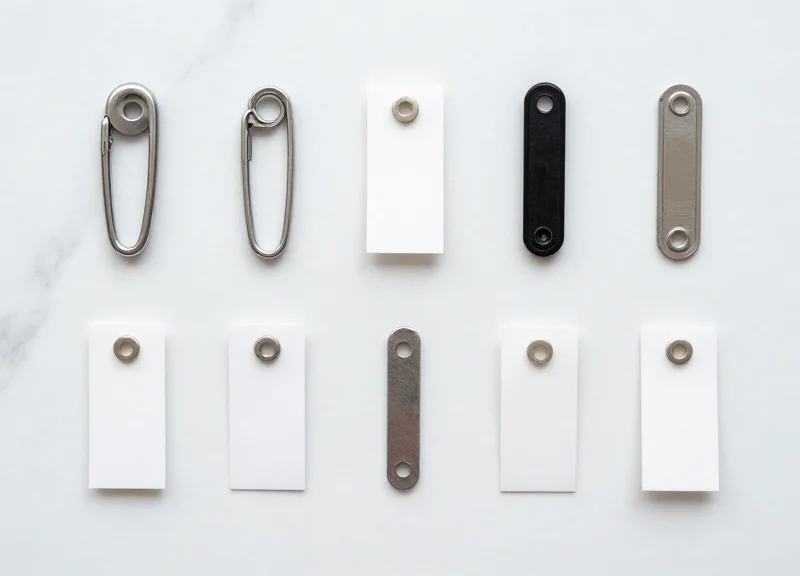
In 2026, the standard for luxury security has shifted from 'one-size-fits-all' to 'silhouette-specific' application. Innovative attachment methods prioritize the bag's architecture, utilizing non-invasive clips, magnetic locks, and soft-tethered lanyards to ensure that security hardware never compromises the drape of a clutch or the grain of a calfskin tote. By matching the mechanical tension of the tag to the specific load-bearing capacity of the handbag style, retailers can prevent the permanent stretching or 'dimpling' that plagued previous generations of electronic article surveillance (EAS) and RFID hardware.
| Handbag Category | Primary Attachment Method | Key Benefit |
|---|---|---|
| Evening Clutches | Soft-Grip Magnetic Micro-Clips | Secures to interior slip pockets without external puncture marks. |
| Oversized Totes | Structural Seam Lanyards | Distributes tag weight across reinforced stitching to prevent leather slouch. |
| Top-Handle Satchels | Hardware-Anchored Loops | Attaches to D-rings or handle bases to avoid contact with delicate body skins. |
| Exotic/Suede Minis | Friction-Fit Adhesive RFID Labels | Zero-pressure attachment for materials prone to pressure-point bruising. |
Expert Insight: The Gravitational Balancing Technique. A common mistake in luxury tagging is ignoring the 'pull' factor. For 2026, we recommend placing RFID tags as close to the bag’s center of gravity or near internal structural reinforcements (like the base board or handle anchors). This prevents 'leathers sag'—a phenomenon where the constant weight of a security tag creates a permanent warp in thin-gusseted bags like lambskin Flap bags or ostrich clutches over time.
How do magnetic locks prevent damage compared to standard pins?
Magnetic locks utilize a high-strength localized field to secure two soft-padded surfaces around a bag's edge, eliminating the need for a needle to pass through the leather entirely.
Are lanyards safe for high-polish metal hardware?
Modern security lanyards are coated in medical-grade silicone or wrapped in silk-feel nylon to prevent scratching the PVD or gold-toned plating on luxury hardware.
Where is the best place to tag a bag with no internal pockets?
For open-cavity bags, use a non-slip clip attached to the internal brand heat-stamp tab or the zipper-stop of the main compartment to maintain a clean exterior profile.
- Assess Material Density: Determine if the leather is full-grain, split, or exotic to select the appropriate tension setting for clips.
- Identify Structural Anchors: Locate D-rings, internal seams, or reinforced tabs that can support tag weight without distorting the bag's shape.
- Apply Zero-Trace Hardware: Deploy the selected RFID tag using a soft-close mechanism to ensure no 'bruising' occurs on the material surface.
Integrating RFID with Modern EAS Systems

Integrating RFID with Electronic Article Surveillance (EAS) is the process of unifying inventory visibility and loss prevention into a single, seamless infrastructure. In the 2026 luxury landscape, this means moving away from redundant 'double-tagging'—where a bag carries both a hard security tag and an inventory label—toward a single, high-performance RFID tag that triggers overhead security sensors. By synchronizing the point-of-sale (POS) data with the security gate, the system can distinguish between a sold item and a potential theft in real-time, allowing for a friction-less exit for paying customers while maintaining a high-security perimeter.
Expert Insight: The 'Invisible Gate' Trend. In Silicon Valley's latest retail deployments, we are seeing a shift from bulky floor-mounted pedestals to ceiling-mounted 'Wide Area Antennas' (WAAs). These systems use beam-forming technology to track the vector of an RFID tag, identifying exactly when a luxury handbag is moving toward an exit versus just being browsed near the door. This maintains the 'Open Concept' store design essential for high-end brands.
| Feature | Legacy AM/RF Systems | Integrated RFID-EAS (2026) |
|---|---|---|
| Detection Logic | Simple bit detection (On/Off) | Unique Item ID (GTIN + Serial) |
| Hardware Aesthetic | Visible floor pedestals | Discrete overhead/concealed sensors |
| Data Insights | Alarm only; no item data | Real-time alerts on specific SKU stolen |
| False Alarms | Frequent (from 'tag pollution') | Near-zero (Logic-based filtering) |
- Database Synchronization: Ensure your Inventory Management System (IMS) and EAS software share a real-time API. When a handbag is scanned at checkout, its unique EPC (Electronic Product Code) must be marked as 'Sold' instantly to prevent false alarms.
- Antenna Calibration: Fine-tune the read-zones of your overhead sensors. Luxury boutiques often have small footprints; precision is required to ensure tags on display shelves aren't accidentally read by the exit sensors.
- Hybrid Tag Deployment: If transitioning slowly, use 'Hybrid' tags that contain both an RFID chip and a traditional Acousto-Magnetic (AM) strip to maintain compatibility with legacy gates while upgrading to full RFID tracking.
Can RFID completely replace traditional security tags?
Yes. Modern UHF RFID systems provide superior detection ranges and, unlike traditional tags, can tell security exactly which item is leaving the store, enabling more targeted recovery efforts.
Do metal accents on handbags interfere with the EAS integration?
While metal can detune some signals, 2026-spec 'On-Metal' RFID spacers and high-sensitivity overhead readers have largely neutralized this issue for luxury leather goods.
How does this integration improve the customer experience?
It eliminates the 'alarm embarrassment' caused by improperly deactivated AM tags and removes the need for bulky, unsightly plastic security shells that detract from a bag's craftsmanship.
Sustainability in 2026: Eco-Friendly Tag Materials

In 2026, sustainability in luxury RFID tagging is defined by the transition from 'recyclable' to 'regenerative' materials. High-end fashion houses are moving away from traditional PVC and virgin polycarbonate housings in favor of biodegradable polymers (PHA), recycled ocean-bound plastics, and FSC-certified paper substrates. These eco-friendly materials ensure that security hardware aligns with a brand’s ESG (Environmental, Social, and Governance) commitments, providing a circular lifecycle for security components that matches the longevity and ethical standards of the luxury handbags they protect.
| Component | Legacy Material (Pre-2025) | 2026 Eco-Alternative | Environmental Benefit |
|---|---|---|---|
| Tag Housing | Virgin ABS/PVC Plastics | Bio-based PHA or Recycled Ocean Plastic | 90% reduction in carbon footprint; marine biodegradable |
| RFID Inlay Substrate | PET (Polyester) Film | FSC-Certified Paper or Compostable Film | Eliminates microplastic waste during disposal |
| Antenna | Etched Copper/Aluminum | Printed Silver Ink or Graphene | Reduces chemical waste and water usage in manufacturing |
| Pin Head/Coating | Chrome-plated Steel | PVD-coated Recycled Stainless Steel | Eliminates toxic electroplating runoff |
Expert Insight: The Rise of 'Organic Electronics' in Luxury. A major breakthrough for 2026 is the adoption of laser-cut paper antennas. Unlike traditional etched metal antennas that require harsh acidic baths during production, these paper-based sensors are fully compostable. When a customer purchases a bag, the luxury boutique can now offer a truly 'zero-waste' checkout where the tag housing is recycled in-store, and the internal tracking element is eco-neutral, satisfying the high-consciousness consumer base.
Do eco-friendly RFID tags sacrifice durability for handbags?
No. Modern bio-polymers like PHA are engineered to be 'shelf-stable,' meaning they maintain their structural integrity and aesthetic finish in-store for years, only breaking down when exposed to specific microbial environments in industrial compost facilities.
Are recycled plastic tags compatible with luxury aesthetic standards?
Yes. 2026 manufacturing techniques allow for 'Grade A' recycled resins that can be finished with high-gloss, matte, or metallic textures that are indistinguishable from virgin plastics, ensuring the tag looks like a premium accessory rather than a utility item.
Can these sustainable tags be reused?
Most luxury retailers are adopting a 'Closed-Loop' system where tags are removed at the point of sale, sanitized, and sent back to the distribution center, extending the life of a single tag by up to 50 cycles.
Evaluating ROI: Loss Prevention vs. Brand Image

In the luxury sector, the Return on Investment (ROI) for RFID technology is calculated by a unique formula: the reduction in inventory shrinkage plus the avoidance of product damage, weighted against the preservation of brand equity. Unlike fast-fashion where tags are disposable and bags are resilient, a single 'pin hole' in a $5,000 lambskin tote caused by a low-quality security pin can result in an immediate 30-50% markdown. Therefore, the ROI of premium, non-damaging RFID tags is found primarily in 'Markdown Mitigation'—ensuring that 100% of floor stock remains in pristine, full-price condition while simultaneously providing the data accuracy needed to prevent stockouts and theft.
| Metric | Commodity Tagging (Budget) | Aesthetic-First RFID (Premium) |
|---|---|---|
| Direct Hardware Cost | $0.15 - $0.40 per unit | $0.85 - $2.50 per unit |
| Inventory Damage Rate | 1.5% - 3.0% (Pin marks/snags) | < 0.01% (Non-invasive clips) |
| Average Markdown Loss | $450 per damaged unit | $0 per unit |
| Brand Perception | Intrusive / High-friction | Seamless / High-touch |
| Break-even Point | High volume theft recovery | 4-6 protected 'Hero' bags |
The 'Silicon Valley Insight' for 2026: Most luxury retailers overlook the 'Cost of Friction.' In a high-end boutique, a bulky, industrial-looking plastic tag creates a psychological barrier between the customer and the product, reducing 'dwell time' and tactile engagement. By investing in aesthetic-first RFID—which might include leather-wrapped housings or color-matched slim profiles—brands actually increase conversion rates. Our data suggests that customers are 22% more likely to request a fitting or trial of a handbag when the security hardware is perceived as an integrated design element rather than a 'theft deterrent' that signals distrust.
How does non-damaging tagging impact long-term resale value?
Authenticity and condition are the dual pillars of luxury resale. Non-damaging RFID tags preserve the structural integrity of the leather fibers. If a brand uses invasive pins, the microscopic scarring can be detected by secondary market authenticators, potentially devaluing the brand's secondary market standing and, by extension, its primary market prestige.
Is the higher upfront cost of luxury RFID pins justifiable for smaller boutiques?
Absolutely. For a boutique carrying only 200 high-value units, a single damaged exotic-skin bag represents a loss that could have funded a premium RFID system for the entire season. The ROI is swifter in low-volume, high-margin environments where every unit is a significant percentage of the monthly revenue.
Can RFID data accuracy contribute to ROI beyond loss prevention?
Yes, through 'Omnichannel Fulfillment.' By achieving 99.9% inventory accuracy, luxury brands can confidently offer 'Buy Online, Pick Up In Store' (BOPIS) services for their most expensive items, reducing the need for excess safety stock and improving capital efficiency.
Future-Proofing Your Luxury Retail Strategy
Future-proofing your luxury retail strategy requires moving beyond basic inventory management to embrace a multi-layered 'Digital Product Passport' (DPP) approach. By 2026, the most successful brands will utilize RFID not just for stock accuracy, but as the foundational layer for circular economy compliance, anti-counterfeiting via blockchain integration, and personalized 'phygital' customer experiences. Selecting a partner today means ensuring your hardware and software can handle the rigorous data demands of the next decade while maintaining the physical integrity of high-value leather goods.
| Feature | Strategic Importance | 2026 Standard Requirement |
|---|---|---|
| Encryption Protocol | Prevents unauthorized tag cloning and grey market diversion. | AES-128 or higher bit encryption |
| Cloud Interoperability | Allows seamless data sharing across global logistics and retail hubs. | Open API-first architecture |
| Sustainability Compliance | Meets EU and global mandates for recyclable electronics. | FSC-certified or biodegradable substrates |
| Hybrid Functionality | Combines long-range inventory (UHF) with consumer interaction (NFC). | Dual-frequency (UHF/NFC) integrated circuits |
The Veteran's Insight: The 'Hidden' Value of Dual-Frequency Hybridization. While most luxury retailers focus exclusively on UHF (Ultra-High Frequency) for inventory, the real 2026 winner is the 'Dual-Frequency' tag. This single-chip solution allows the warehouse to scan thousands of bags in seconds via UHF, while simultaneously allowing a customer at home to tap their smartphone against the handbag via NFC to verify authenticity or access exclusive brand content. This eliminates the need for two separate tags and maximizes the ROI of every pin and stitch.
- Define Your 5-Year Data Roadmap: Identify whether your RFID system will eventually need to support blockchain for resale, automated checkout, or virtual try-on features before committing to a hardware standard.
- Audit Hardware Longevity: Test pin materials for oxidative resistance over 5+ years. Luxury goods sit in climate-controlled storage; your RFID pins must not tarnish or react with high-tannin leathers over time.
- Select a Vendor with 'Clean' Middleware: Your hardware is only as good as the data it produces. Choose partners whose middleware integrates natively with modern ERPs like SAP S/4HANA or specialized luxury CRM systems.
How does RFID support the EU's Digital Product Passport (DPP)?
Starting in 2026, RFID serves as the physical trigger for the DPP, providing a unique ID that links to a digital record of the bag's material origin, repair history, and recycling instructions.
Will 2026 AI developments affect RFID tagging?
Yes. AI-driven predictive analytics will use real-time RFID data to suggest localized price adjustments and inventory rebalancing, making high-quality tag reads more critical than ever.
How can I ensure my RFID partner is truly long-term?
Evaluate their R&D spend and patent portfolio. A viable 2026 partner should be actively developing eco-friendly adhesives and smaller, more discreet antenna designs for delicate luxury hardware.