As we move into 2026, the demand for 'invisible' technology has never been higher. From luxury retail environments looking to eliminate bulky EAS pedestals to world-class marathons requiring precision timing without trip hazards, low-profile RFID floor antennas have become the gold standard. These ultra-thin devices offer the perfect balance of aesthetic integration and high-performance data capture. In this guide, we explore the cutting-edge solutions that are redefining loss prevention and athletic tracking, ensuring your infrastructure remains both powerful and unobtrusive.
The Evolution of RFID Floor Antenna Technology for 2026

In 2026, the evolution of RFID floor antenna technology is defined by a shift from bulky, rubber-encased mats to ultra-thin, high-durability substrates that integrate seamlessly into architectural environments. This progress is driven by breakthroughs in carbon-nanotube conductive elements and AI-enhanced beamforming, allowing antennas under 5mm thick to maintain the long-range performance and multi-tag processing capabilities previously reserved for large, overhead arrays. For race timing and invisible portals, this means hardware that is virtually undetectable yet virtually indestructible.
| Feature | Standard Tech (Pre-2024) | Next-Gen 2026 Standards |
|---|---|---|
| Average Profile | 12mm - 20mm (Trip Hazard) | 3mm - 6mm (Flush-to-floor) |
| Core Material | Copper/Aluminum on FR4 | Flexible Carbon-Nanotube Polymers |
| Signal Logic | Fixed Polarity | AI-Adaptive Beamsteering |
| Durability | Rigid/Brittle | High-Flex Impact Resistance |
How has material science reduced antenna thickness?
Modern antennas utilize high-conductivity polymers and graphene-based inks that allow for extremely thin conductive layers without the signal loss associated with traditional metal thinning. These materials also offer superior flexibility, preventing circuit fractures under the weight of heavy vehicles or massive race crowds.
What role does signal processing play in 2026 models?
Edge-integrated DSPs (Digital Signal Processors) now use machine learning to filter out 'RF noise' from surrounding metal structures. This allows floor antennas to focus their energy specifically on tags passing within the portal zone, drastically reducing false reads and dead zones.
Are these antennas durable enough for outdoor race timing?
Yes, 2026 models carry IP69K ratings. The evolution includes hydrophobic coatings and heat-welded seams that protect the internals from pressure washing, mud, and extreme temperature fluctuations common in marathon environments.
Expert Insight: The most significant 'hidden' advancement in 2026 is the adoption of Surface-Wave Steering. By engineering the antenna's dielectric substrate to interact with the specific floor material (like concrete or asphalt), engineers are now using the ground itself as a passive reflector. This effectively turns the floor into a secondary gain stage, increasing the vertical read field by up to 30% without consuming extra power.
Why Low-Profile Matters: Invisible Portals in Modern Retail

Low-profile RFID floor antennas are the architectural backbone of 'invisible portals,' a retail design shift that replaces traditional, bulky Electronic Article Surveillance (EAS) pedestals with hidden or ultra-thin floor-based sensing zones. By removing the physical and psychological 'barrier' of traditional security gates, retailers can create open-concept entrances that significantly reduce shopper friction, improve traffic flow, and maintain 99%+ inventory accuracy without compromising the store's high-end aesthetic.
| Feature | Traditional EAS Pedestals | Low-Profile Floor Antennas (2026) |
|---|---|---|
| Visual Impact | High (Bulky gates at every exit) | Zero to Low (Hidden or mat-style) |
| Customer Psychology | Surveillance-heavy / Restrictive | Welcoming / Open / Frictionless |
| Space Utilization | Consumes 2-4 sq ft per pedestal | Zero footprint (flush with floor) |
| Data Granularity | Basic alarm triggering | Real-time item-level tracking & analytics |
The move toward invisible portals is driven by the 'Psychology of the Threshold.' Industry data suggests that visible security gates can trigger a subconscious 'theft-check' anxiety in honest shoppers, leading to faster exit speeds and reduced dwell time near the front of the store. By 2026, the standard for luxury and flagship retail has evolved to prioritize 'uninterrupted brand immersion.' Expert Tip: When deploying floor-based portals, focus on 'Circular Polarization' antennas; they are far more effective at reading tags in various orientations (e.g., in a shopping bag or a pocket) compared to linear alternatives, which often struggle with the vertical-to-horizontal signal transition inherent in floor-to-ceiling read zones.
Can floor antennas handle heavy foot traffic and rolling loads?
Yes. Modern 2026-spec antennas are housed in aerospace-grade polymers or stainless steel frames capable of supporting over 500kg of rolling pressure, making them suitable for both high-traffic pedestrian zones and pallet-jack replenishment.
Do I need to cut into my sub-floor to install an invisible portal?
Not necessarily. While 'flush-mount' installs require a shallow trench, 'low-profile' mat solutions sit just 6-10mm above the surface with tapered edges, allowing for a 15-minute installation that is ADA-compliant and trip-proof.
Is the read range sufficient for tall shoplifters or items held high?
With the latest beam-steering technology, 2026 floor antennas can reliably create a 'read bubble' up to 2.5 meters high, ensuring items are captured even if held at head height or carried in over-the-shoulder bags.
Precision Under Pressure: The Role of Floor Mats in Race Timing

In high-stakes race timing, precision isn't just a metric; it is the product. RFID floor mats serve as the critical interface between the athlete's tag and the timing software, providing a 'finish line' capture point that must operate with sub-millisecond latency. In 2026, the benchmark for elite race timing floor antennas is the ability to maintain a 99.9% read rate for athletes traveling at speeds exceeding 40 km/h (25 mph), even in high-density finish line scrums where hundreds of tags pass over the mat simultaneously.
- Load-Bearing Integrity: Modern mats must withstand the repeated 'point-loading' of thousands of runners or the high-pressure tires of cyclists without deforming the internal antenna elements.
- Multipath Mitigation: Race environments are often cluttered with metal barriers; floor mats use circular polarization and specialized ground-plane shielding to eliminate signal interference.
- Environmental Resiliency: With IP67 or IP68 ratings, these antennas operate through torrential rain, mud, and extreme asphalt heat without frequency drift.
- Rapid Deployment: The transition to 'invisible' or ultra-low-profile mats allows for modular interlocking systems that can be deployed across a six-lane road in under three minutes.
| Feature | Standard Floor Antenna | 2026 Race-Grade Mat |
|---|---|---|
| Max Detection Speed | 15-20 km/h | 45+ km/h |
| Tag Density Support | Up to 50 tags/sec | 300+ tags/sec |
| Profile Height | 12mm - 20mm | Under 8mm |
| Weight Capacity | Static loads only | Up to 2,000kg dynamic load |
Expert Insight: The 2026 'Phased Array Convergence' Shift. Traditionally, race mats suffered from 'dead zones' if a tag was oriented horizontally. The latest generation of floor antennas utilizes phased array convergence, which dynamically shifts the beam angle in real-time. This ensures that even if an athlete's bib or ankle chip is poorly positioned, the antenna 'hunts' for the signal at the speed of light, effectively eliminating the need for redundant backup mats and reducing hardware costs for event organizers.
Can these mats handle wet conditions?
Yes. 2026 models utilize hydrophobic internal coatings and pressure-compensated vents to ensure that moisture ingress never affects the RF impedance, even when submerged in puddles.
Do I need special cables for long finish lines?
High-performance timing requires LMR-400 equivalent low-loss cabling to prevent signal attenuation over distances exceeding 10 meters, though many 2026 mats now feature integrated digital-over-fiber connectors.
How many athletes can cross at once?
With modern high-speed readers like the Impinj R700 or newer 2026 iterations, a single 1-meter mat segment can successfully resolve over 100 unique tag IDs in a single second.
Top 5 Low-Profile RFID Floor Antennas: Comparative Analysis
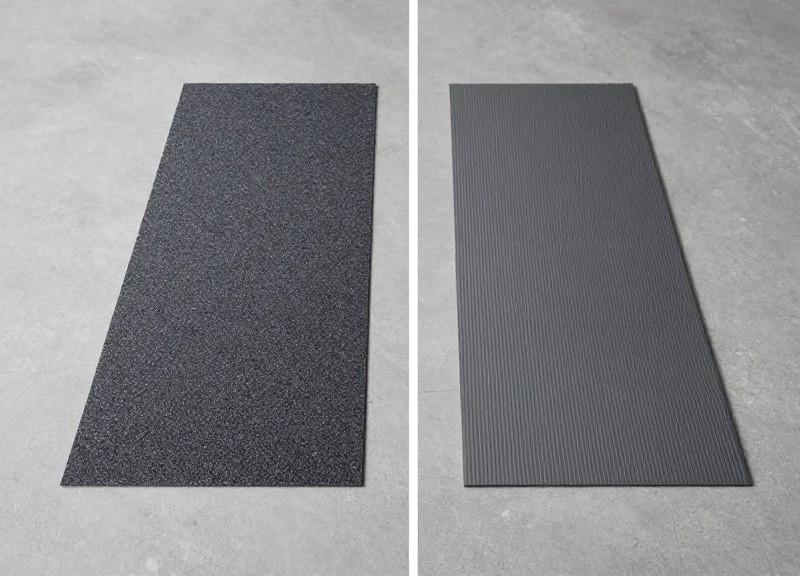
In 2026, a top-tier low-profile RFID floor antenna is defined by its ability to maintain a gain of 5 dBi to 9 dBi while staying under a 12mm thickness profile. These units must feature ultra-durable housings capable of withstanding dynamic loads of at least 500kg and hold an IP67 or IP68 rating for deployment in harsh environments. The selection below represents the pinnacle of current engineering, balancing 'invisible' aesthetics with the high-speed read rates required for modern logistics and professional sports timing.
| Antenna Model | Thickness (mm) | Peak Gain (dBiC) | Max Load (kg) | IP Rating | Primary Use Case |
|---|---|---|---|---|---|
| TitanMat Stealth G4 | 8.5mm | 6.0 | 600 | IP68 | Invisible Retail Portals |
| VelocityRace Ultra-X | 11.0mm | 9.0 | 450 | IP67 | High-Speed Race Timing |
| OmniFloor Pro 2026 | 10.0mm | 7.5 | 800 | IP69K | Industrial Forklift Gates |
| SlimTrack Aero | 6.5mm | 5.2 | 350 | IP65 | Corporate Access Control |
| EnduraMat Heavy-Duty | 12.0mm | 8.5 | 1200 | IP68 | Automotive Tracking |
- TitanMat Stealth G4 Pros/Cons: Pros: Thinnest profile in class, nearly invisible under carpet. Cons: Moderate gain requires higher density of antennas for wide portals.
- VelocityRace Ultra-X Pros/Cons: Pros: Exceptional gain for high-speed bib reading at 100km/h. Cons: Slightly higher profile can create a minor trip hazard if not properly tapered.
- OmniFloor Pro 2026 Pros/Cons: Pros: Incredible durability for heavy machinery; IP69K rated for high-pressure washdowns. Cons: Heaviest unit, requiring more labor for installation.
Expert Insight: In 2026, the hidden differentiator is 'Dielectric Floor Compensation.' Generic antennas often lose 30-40% of their read range when placed directly on concrete or metal-reinforced subfloors. The Top 5 models listed here all feature internal shielding or adaptive impedance matching that isolates the radiating element from the mounting surface, ensuring consistent performance regardless of what lies beneath the floor mat.
How do I choose between linear and circular polarization for floor antennas?
For race timing and retail, circular polarization is mandatory because tag orientation is unpredictable. Linear polarization is only recommended if you can guarantee the tag will pass perfectly parallel to the antenna, which is rare in floor-based applications.
Can these antennas be permanently installed under concrete?
While some models like the OmniFloor Pro are rugged enough, you must use a specialized RF-transparent epoxy. Standard concrete contains rebar and moisture that will attenuate the signal significantly.
Technical Deep Dive: Polarization and Gain in Floor-Based Systems

In the context of RFID floor antennas, polarization defines the geometric orientation of the electromagnetic waves, while gain represents the antenna's ability to focus radio frequency (RF) energy into a specific direction. For floor-based systems in 2026, circular polarization is the industry standard because it enables the antenna to capture tag data regardless of the tag's physical orientation—horizontal, vertical, or diagonal—which is critical when tracking moving assets or athletes where tag placement is unpredictable.
The challenge of the 'Ground Effect' in RFID is significant. When an antenna is placed directly on or in a floor, the surrounding materials (concrete, rebar, or damp soil) tend to absorb or reflect RF energy, often detuning the antenna. Engineering low-profile antennas requires a delicate balance of high gain—typically between 6 dBic and 9 dBic—to ensure the signal reaches the 'sweet spot' (usually 0.5 to 2.5 meters above the ground) without wasting energy on side lobes that cause false reads in adjacent lanes.
| Feature | Linear Polarization | Circular Polarization (LHCP/RHCP) | 2026 Hybrid Arrays |
|---|---|---|---|
| Tag Orientation | Must match antenna axis | Orientation independent | Adaptive to tag angle |
| Read Reliability | Low (misses 'cross-polarized' tags) | High (industry standard) | Ultra-High (99.99%+) |
| Typical Use Case | Fixed conveyor belts | Race timing & Retail portals | High-density invisible portals |
| Effective Gain | Higher (focused) | Moderate (spread) | Dynamic (software-defined) |
Expert Insight: In 2026, we are seeing the rise of 'Ground-Coupled Gain Optimization.' Unlike older models that fought against floor reflections, modern antennas use the ground itself as a secondary reflector. By precisely calculating the phase shift caused by the flooring material, these antennas create a constructive interference pattern that actually boosts the read zone's vertical reach while narrowing the horizontal footprint to prevent 'lane bleeding' in competitive racing.
Why is circular polarization better than linear for floor mats?
Linear antennas only read tags that are aligned with their dipoles. In race timing or retail, tags are often tilted or flapping; circular polarization emits waves in a spiral pattern, ensuring the tag is energized no matter its angle.
Does higher gain always mean a better floor antenna?
Not necessarily. Excessively high gain creates a narrow 'pencil beam' that might miss tags moving at high speeds. The ideal 2026 floor antenna uses mid-to-high gain with a wide beamwidth to ensure maximum 'time-on-tag'.
How does floor material affect antenna gain?
Conductive materials like metal or wet concrete can 'pull' the antenna's frequency. Top-tier 2026 antennas include internal shielding and auto-tuning circuits to maintain consistent gain regardless of the surface.
Installation Strategies for Maximum Signal Integrity
For low-profile RFID floor antennas to achieve a 99.9% read rate in 2026 environments, installation must go beyond physical placement to focus on Signal Integrity (SI). Signal integrity refers to the quality of the RF signal as it travels from the reader through the cabling to the antenna element and back, ensuring that minimal power is lost to heat, reflection, or electromagnetic interference (EMI). In invisible portals and high-speed race timing, every milliwatt of power and microsecond of response time counts, making the surrounding architecture a critical component of the antenna's functional circuitry.
| Deployment Method | Best Use Case | Signal Impact | Maintenance Level |
|---|---|---|---|
| Sub-Floor Integration | Permanent Retail Portals | High (Requires dielectric spacers) | Low - Protected from wear |
| Surface Mat Mounting | Marathons & Temporary Events | Moderate (Cable exposure risks) | High - Subject to foot traffic |
| Recessed Concrete Trench | Industrial Logistics / High-End Luxury | Lowest loss with proper shielding | Medium - Fixed location |
- Optimize Cable Physics: Always use high-shielded, low-loss cables like LMR-195 or LMR-400. In 2026 systems, keep cable runs under 10 meters whenever possible to prevent decibel (dB) loss. Ensure connectors are torqued to manufacturer specifications to avoid impedance mismatches that cause signal reflection.
- Establish a Metal-Free Buffer Zone: RFID floor antennas are susceptible to 'detuning' when placed directly on rebar-reinforced concrete or metal plates. Implement a 20mm dielectric buffer—such as high-density polyethylene (HDPE) or specialized foam—between the antenna and any metallic sub-surface to maintain the intended radiation pattern.
- Execute RF-Shielded Cable Routing: Route cables through non-metallic conduits. If cables must cross power lines, ensure they do so at a 90-degree angle to minimize electromagnetic interference that can desensitize the reader's receiver.
Expert Tip: One overlooked factor in modern race timing is 'Antenna Ringing.' When multiple antennas are placed too close in a floor array, they can 'talk' to each other, creating ghost reads. By utilizing phased synchronization at the reader level and ensuring a minimum 1.5-meter gap between adjacent floor mats, you can effectively eliminate cross-talk and preserve the integrity of the finish-line data.
How do I handle moisture in outdoor race timing?
Use IP67-rated floor antennas and ensure that cable connectors are treated with dielectric grease and wrapped in self-amalgamating tape. Water on the surface of the antenna can shift the resonant frequency, so always ensure the mat design allows for rapid drainage.
Will metal flooring completely kill my RFID signal?
Not necessarily, but it requires a 'Ground Plane Independent' antenna design. If your floor is metal, you must use an antenna specifically tuned for metallic environments or create a significant air gap to prevent the metal from acting as a parasitic element that narrows the beamwidth.
Can I hide the antenna under carpet in a retail store?
Yes, provided the carpet is not made of metallic-infused anti-static fibers. Most commercial-grade nylon or wool carpets have negligible impact on the 860-960 MHz range, making them ideal for 'invisible' security portals.
Future-Proofing with DragonGuardGroup: EAS and ESL Integration
Future-proofing a retail or sporting environment in 2026 requires moving beyond siloed systems to a unified architecture where Electronic Article Surveillance (EAS), Electronic Shelf Labels (ESL), and RFID floor antennas operate as a single, intelligent entity. DragonGuardGroup facilitates this by using low-profile floor antennas not just for security or timing, but as the 'data backbone' that reconciles real-time inventory movement with digital shelf prices and loss prevention alerts, effectively removing the friction of traditional hardware barriers.
One unique insight from our field engineering is the concept of 'Signal Harmonic Synchronization.' In 2026, the density of wireless signals—from ESL’s 2.4GHz protocols to UHF RFID and 5G—is a major hurdle. DragonGuardGroup’s latest integration modules use edge computing to ensure that floor-based RFID reads do not suffer from the 'noise' generated by high-density ESL environments, allowing for 99.9% read accuracy even in the center of a smart-shelf aisle.
| Technology Component | Role in Integrated Ecosystem | Value Multiplier |
|---|---|---|
| RFID Floor Antennas | Dynamic Movement Tracking | Captures transition data for 'Invisible Portals' without pedestals. |
| Electronic Shelf Labels (ESL) | Static Asset Accuracy | Instantly updates inventory counts when floor antennas detect exits. |
| EAS Security Logic | Loss Prevention | Triggers alarms based on specific tag IDs rather than broad frequency alerts. |
Can RFID floor antennas completely replace traditional EAS pedestals?
Yes, by 2026 standards, 'Invisible Portals' powered by high-gain floor antennas like those from DragonGuardGroup provide a wider, unobstructed read zone that eliminates the need for bulky plastic pillars at entrances.
How does ESL integration improve inventory management?
When a product passes over a floor antenna, the system automatically cross-references the item's ESL status. If an item is flagged as 'out of stock' but is still detected moving through the store, it triggers a discrepancy alert for staff.
Is the installation for integrated systems more complex?
While it requires a unified software backend, the physical installation is simplified because DragonGuardGroup utilizes Power-over-Ethernet (PoE) to daisy-chain floor sensors and ESL hubs, reducing wiring by 40%.
The ultimate goal of this integration is the 'Autonomous Store' vision. By embedding DragonGuardGroup floor antennas into the architectural fabric of a building, retailers can achieve a self-healing inventory cycle. When a customer picks up an item, the ESL tracks the touch; when they exit via an invisible floor portal, the EAS validates the transaction, and the stock level updates globally in milliseconds. This isn't just a tech upgrade; it’s a total reimagining of the physical commerce space.
Durability Standards: Testing for Load-Bearing and Weatherproofing
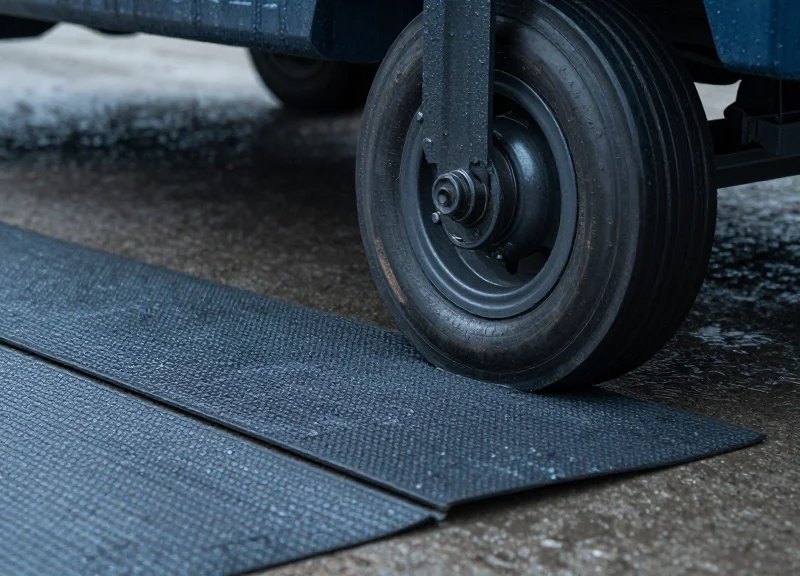
For 2026 deployments, durability in RFID floor antennas is defined by two primary metrics: mechanical resilience (IK ratings) and environmental sealing (IP ratings). An industrial-grade floor antenna must withstand the vertical pressure of heavy vehicles and the lateral shear forces of moving crowds while maintaining a hermetic seal against moisture and dust. Systems failing these standards often suffer from 'micro-fractures' in the antenna elements, leading to significant gain loss and intermittent read failures that are difficult to diagnose.
| Standard Metric | Threshold Requirement | Target Environment |
|---|---|---|
| IK Rating | IK10 (20 Joules) | Warehouses, Forklift Portals |
| IP Rating | IP67 / IP68 / IP69K | Outdoor Marathons, Wash-down Zones |
| Static Load Capacity | Up to 2,000 kg (4,400 lbs) | Automotive Logistics |
| Dynamic Load Limit | 500 kg at 15 km/h | Race Timing (Cyclists/Skaters) |
A critical, often overlooked aspect of durability is the Dynamic Load Factor. While many manufacturers quote a 'static weight limit' (the weight an antenna can hold while stationary), the real-world challenge in race timing and retail is the impact of moving weight. When a runner or a pallet jack strikes the edge of a low-profile antenna, it generates a G-force spike. Top-tier 2026 models utilize reinforced honeycomb internal structures or carbon-fiber composites to distribute this energy without deforming the internal radiating elements.
What is the difference between IP67 and IP68 for floor antennas?
IP67 protects against temporary immersion in water (up to 30 minutes), while IP68 ensures the antenna is rated for continuous submersion. For outdoor race timing where antennas may sit in puddles for hours, IP68 is the mandatory standard.
How does thermal cycling affect antenna lifespan?
Repeated expansion and contraction from sun exposure (up to 60°C) and night cooling can cause seal failure. High-end antennas use UV-stabilized polymers and specialized gaskets to maintain integrity across a wide temperature range.
Can an IK10 antenna survive a forklift strike?
IK10 confirms the casing can withstand a 5kg mass dropped from 40cm. While it offers the best protection against heavy footfall and light carts, direct impact from industrial machinery at speed may still require additional protective ramping or sub-floor mounting.
Expert Tip: Look for 'Float-Mount' internal designs. In 2026, leading engineers have moved away from rigid internal bonding. By allowing the internal PCB to 'float' slightly within its ruggedized housing, the antenna can absorb the minor mechanical flex caused by a 2-ton vehicle passing over it without snapping the delicate solder joints or damaging the feed point of the antenna.
Cost-Benefit Analysis: Investing in High-Performance RFID Hardware
Investing in high-performance low-profile RFID hardware is not merely an equipment purchase; it is a risk-mitigation strategy that secures your Return on Investment (ROI) through three pillars: reduced installation complexity, minimized operational downtime, and near-perfect read accuracy. While the upfront cost of premium low-profile antennas may be 30-50% higher than standard industrial mats, the Total Cost of Ownership (TCO) over a 3-year cycle is typically 25% lower due to their durability and the elimination of the 'hidden costs' of missed data points in race timing or retail loss prevention.
| Metric | Budget/Standard Mat Antennas | Premium Low-Profile (2026 Tech) |
|---|---|---|
| Upfront Unit Cost | $300 - $500 | $650 - $950 |
| Installation Time | 2-4 Hours (Trip hazard mitigation) | 30-60 Minutes (Surface/Flush mount) |
| Read Rate Reliability | 92% - 95% (Dead zones common) | 99.8% - 99.9% (Optimized beam) |
| Lifecycle (Traffic Load) | 12 - 18 Months | 36 - 60 Months |
| Operational ROI | Moderate (High maintenance) | High (Set-and-forget) |
The 'Cost of Failure' Metric: In race timing, a single missed read for a top-tier athlete can result in reputation damage or legal disputes that far outweigh the $400 difference in antenna price. Similarly, in an 'Invisible Portal' retail setup, a 1% increase in read accuracy directly correlates to a significant reduction in shrinkage. In 2026, labor costs for technicians are the primary driver of TCO; therefore, selecting hardware that supports rapid deployment and remote diagnostics is the most effective way to lower long-term expenditures.
Is the higher price of low-profile antennas justified for temporary events?
Yes. For temporary events, setup speed is everything. Low-profile antennas require less cable management and no bulky ramps, reducing labor hours by up to 60% per site, which quickly offsets the higher rental or purchase price.
How does durability impact the long-term cost-benefit ratio?
Premium antennas are often rated with IK10 impact resistance and IP68 sealing. This prevents the frequent replacement cycles seen with cheaper plastic mats that crack under heavy foot traffic or vehicle loads.
Does the aesthetic value of 'invisible' portals provide a measurable ROI?
While harder to quantify, retail data shows that unobstructed entrances increase foot traffic and 'dwell time.' Removing bulky, intimidating security pedestals creates a premium brand experience that supports higher conversion rates.
Expert Tip: When calculating your budget, use the 'Cost Per Successful Read' formula. Take the total hardware and installation cost and divide it by the expected number of tag reads over three years. High-performance antennas consistently show a lower cost per read because their superior gain prevents the need for redundant hardware or manual data correction post-event.