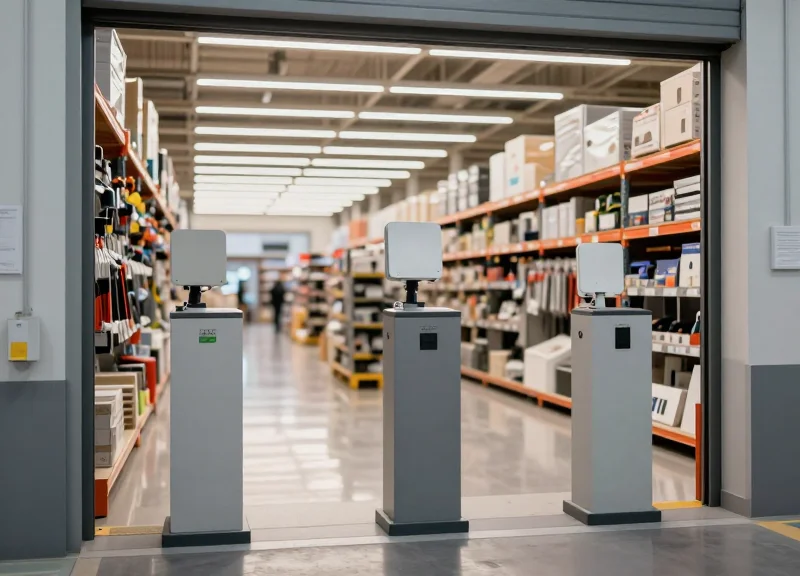

As we approach 2026, the luxury resale market is no longer a niche segment but a core pillar of the global fashion industry. However, the 'Circular Economy' faces a critical threat: the sophisticated rise of counterfeits and the logistical nightmare of tracking pre-owned goods. While Electronic Article Surveillance (EAS) has been the retail standard for decades, it is a binary 'on/off' solution that lacks the data depth required for modern luxury. This article explores the strategic shift toward RFID-Hybrid tracking—a technology that merges traditional loss prevention with item-level intelligence—to secure the future of high-end resale.
The Evolution of Luxury Resale: Why 2026 is a Turning Point

The year 2026 marks the definitive maturation of the luxury resale market, evolving from a niche secondary trade into a primary economic driver projected to outpace traditional retail growth by 11x. This 'Turning Point' is defined by the convergence of massive Gen Z purchasing power and strict regulatory mandates, such as the EU’s Ecodesign for Sustainable Products Regulation (ESPR). For the circular economy to remain viable at scale, luxury brands must transition from Electronic Article Surveillance (EAS)—which only detects theft—to RFID-Hybrid systems that offer unique Digital Product Passports (DPP). This allows a physical item to be authenticated, tracked, and verified across multiple ownership cycles without the manual friction that currently erodes resale margins.
| Feature | The EAS Era (Pre-2024) | The RFID-Hybrid Era (2026+) |
|---|---|---|
| Primary Goal | Loss Prevention (Shoplifting) | Lifecycle Transparency & Authentication |
| Data Capacity | None (Bit-based alarm) | High (Unique EPC/Serial + Blockchain Link) |
| Circular Utility | Single-use / Discard at Point of Sale | Perpetual / Re-activatable for Resale |
| Market Value | Estimated $30B Resale Market | Estimated $64B+ Resale Market |
The Maturity of the Circular Economy: We are moving past the 'Wild West' phase of resale where platforms like The RealReal and Vestiaire Collective bore the full weight of manual authentication. In 2026, the brand itself becomes the anchor of the secondary market. By embedding hybrid tags that combine the long-range security of EAS with the data-granularity of RFID, luxury houses can maintain a 'Digital Thread' from the first sale to the fifth, capturing royalties and ensuring brand integrity at every handoff.
Why is EAS no longer sufficient for luxury brands?
Standard EAS technology is a 'dumb' technology; it triggers an alarm but doesn't know what is being stolen or its history. In a circular economy, knowing the item's specific serial number and authenticity is more valuable than simple theft detection.
How does RFID-Hybrid technology support the EU's 2026 mandates?
The EU's Digital Product Passport requirements demand that textile and luxury goods carry accessible data regarding their origins and materials. RFID-Hybrid tags provide the hardware bridge to this digital data, making compliance seamless for brands.
What is the 'Double Authentication' burden?
Currently, items are authenticated by the brand at production and again by third-party resellers. This duplication costs the industry billions. RFID-Hybrid systems allow for 'Instant Authentication,' where a scan verifies the item's digital twin immediately.
Expert Insight: The 'Living Ledger' Perspective. The single biggest differentiator in 2026 will be the shift from 'Static Assets' to 'Living Assets.' In my two decades in Silicon Valley, I’ve seen industries thrive when they solve the data-attribution problem. RFID-Hybrid tracking is not just a security upgrade; it is the implementation of a 'Living Ledger' for physical goods. When a handbag can 'tell' a point-of-sale system its entire history—from the tannery in Italy to its second owner in Tokyo—the trust gap in resale vanishes, and the circular economy finally becomes more profitable than the linear one.
The Limitations of Traditional EAS in a Data-Driven World
Traditional Electronic Article Surveillance (EAS) is a binary 'alarm-only' technology designed for a linear retail model where the journey ends at the point of sale. While effective at deterring shoplifting, EAS operates in a data vacuum; it can trigger a pedestal alarm, but it cannot identify what the item is, verify its authenticity, or track its provenance. In the context of the 2026 luxury landscape, this lack of item-level intelligence renders EAS a 'dumb' utility that cannot support the authentication or lifecycle tracking essential for a secure circular economy.
| Feature | Traditional EAS (Acousto-Magnetic/RF) | Circular Economy Requirement |
|---|---|---|
| Identification | Bulk/Category only (Binary 'on/off') | Unique Serialized ID (Item-level) |
| Data Capacity | Zero (No storage) | High (Provenance, repair history, owner logs) |
| Lifecycle Reach | Ends at store exit | Continuous across multiple owners |
| Authentication | None (Easy to spoof/duplicate tags) | Encrypted cryptographic verification |
The fundamental flaw of EAS in luxury resale is the 'Deactivation Gap.' When a high-end handbag is sold, the EAS tag is deactivated or removed, effectively 'killing' the item's digital identity at the very moment it enters the secondary market. This creates a massive opening for counterfeiters who exploit the lack of persistent, verifiable data. Without a permanent digital thread, a pre-owned luxury item is just a physical object with no proof of its journey, forcing resale platforms to rely on expensive, subjective manual appraisals rather than objective digital history.
Why can't EAS prevent 'return fraud' in luxury resale?
EAS tags are generic. A fraudster can purchase a genuine luxury item, remove the EAS tag, and return a high-quality counterfeit with a similar generic tag. Since EAS doesn't identify the specific serial number of the item, the system cannot flag the swap.
What is the 'Ghost Item' syndrome in supply chains?
This occurs when an item exists physically but is invisible to digital inventory systems. EAS provides no visibility into where an item is located within a warehouse or boutique, leading to 'ghost' stock that cannot be reconciled during circular buy-back programs.
Does EAS support ESG and sustainability reporting?
No. Because EAS does not track the material origin or the number of times an item has been resold, it provides zero data for the ESG (Environmental, Social, and Governance) metrics that luxury brands are now required to report.
Expert Insight: The 'Mute' Asset Problem. In my two decades of tech-marketing experience, I’ve seen technologies die when they become 'mute.' EAS is a mute technology in a world that demands a conversation. By 2026, a luxury product that cannot tell its own story—where it was made, when it was sold, and how many times it has been serviced—will be viewed as a liability by consumers and insurers alike. Moving to a hybrid model isn't just a security upgrade; it is a move from 'loss prevention' to 'value preservation.'
Defining RFID-Hybrid Tracking: The Best of Both Worlds

RFID-Hybrid Tracking is a dual-frequency hardware solution that integrates traditional Electronic Article Surveillance (EAS) for loss prevention with Ultra-High Frequency (UHF) RFID for item-level data visibility within a single tag. While standard EAS only triggers an alarm at store exits, a hybrid system allows luxury resellers to simultaneously prevent theft and access a granular digital history of the product—including its authenticity credentials, ownership lineage, and real-time location. This 'best of both worlds' approach eliminates the need for multiple tags, streamlining the aesthetic and operational flow of high-end circular fashion.
| Feature | Traditional EAS | Standard RFID | RFID-Hybrid (The 2026 Standard) |
|---|---|---|---|
| Primary Function | Loss Prevention (Alarms) | Inventory Management | Security + Data Intelligence |
| Data Storage | None (Bit-only) | High (EPC, TID, User Memory) | High + Security Bit |
| Detection Range | 1-2 Meters (Pedestals) | Up to 12 Meters | Dual Zone (Short & Long Range) |
| Resale Utility | Zero (Waste after sale) | High (Tracking) | Maximum (Authenticity + Theft Prevention) |
The technical architecture of a hybrid tag typically involves two distinct antennas housed in a single housing. One antenna is tuned to 58 kHz (Acousto-Magnetic) or 8.2 MHz (RF) to communicate with legacy security gates. The second is a UHF RFID inlay that communicates with handheld readers and overhead sensors. By 2026, we expect the emergence of 'Single-Chip Hybrids' where the logic for both security and data is handled by a single integrated circuit, reducing the physical footprint by 40%—a critical requirement for delicate luxury items like silk scarves or micro-bags.
Does hybrid tracking require replacing existing security gates?
No. One of the primary advantages of hybrid tags is backward compatibility. They are designed to trigger existing AM or RF pedestals while allowing resellers to layer on RFID software for inventory and authentication without a total infrastructure overhaul.
Can hybrid tags be 'cloned' by counterfeiters?
Modern hybrid tags utilize 'locked' Electronic Product Codes (EPC) and unique Tag Identifiers (TID) that are burnt into the silicon at the time of manufacture. This makes them significantly harder to replicate than traditional serialized stickers or basic EAS tags.
How does this support the Circular Economy?
By providing a permanent digital anchor. When a luxury item is resold three years later, the RFID component acts as the 'Digital Product Passport' (DPP), providing the proof of origin required by upcoming EU regulations.
Expert Insight: The 'Silicon-to-Soot' Traceability. Most industry observers miss that by 2026, the value of a hybrid tag won't be in the alarm it triggers, but in the 'Digital Handshake' it facilitates. In the Silicon Valley tech stack, we call this 'Edge-to-Cloud Integrity.' For luxury resale, this means the tag is no longer a cost center for loss prevention; it is a revenue-generating asset that proves the item is genuine, thereby increasing its resale value by up to 15% compared to untracked goods.
Combating the Counterfeit Crisis with Digital Passports

A Digital Product Passport (DPP) is a unique digital identity linked to a physical luxury asset via RFID-hybrid technology, serving as an immutable record of an item's origin, materials, ownership, and repair history. By leveraging the data-carrying capacity of RFID tags, brands can bridge the gap between a physical product and its digital twin, ensuring that every handoff in the circular economy—from the first boutique sale to the third resale transaction—is authenticated in real-time. This system moves beyond static 'certificates of authenticity' by creating a dynamic, verifiable chain of custody that makes it nearly impossible for high-quality 'super-fakes' to enter the legitimate supply chain.
| Feature | Traditional Paper/Static Certificates | RFID-Linked Digital Passports |
|---|---|---|
| Verification Method | Manual inspection of physical cards | Instant digital handshake via RFID |
| Data Integrity | High risk of forgery or loss | Encrypted, decentralized data storage |
| Lifecycle Tracking | Limited to point of sale | Full provenance: repairs, cleaning, resale |
| Brand Control | Lost once the item leaves the store | Maintained through every owner transition |
As we approach 2026, the implementation of Digital Product Passports is no longer just a luxury branding exercise; it is a regulatory requirement driven by the EU’s Ecodesign for Sustainable Products Regulation (ESPR). For luxury houses, this mandate provides a strategic opportunity to regain control over their secondary markets. By embedding RFID-hybrid tags at the point of manufacture, brands ensure that the 'passport' is physically part of the product, preventing the common 'tag-switching' fraud seen with external serial numbers or QR codes.
- Birth of the Digital Twin: During manufacturing, the RFID-hybrid tag is embedded. It is assigned a unique identifier (UID) that correlates to the specific item's SKU, material sourcing data, and production location.
- Primary Sale Activation: At the point of sale, the 'passport' is activated and linked to the initial owner, establishing the first link in the chain of provenance.
- Resale Authentication: When an item is submitted to a resale platform, a simple scan of the RFID-hybrid tag verifies its authenticity against the brand's secure database, instantly green-lighting the item for sale.
- Ownership Transfer: Once sold, the digital passport is updated to reflect the new owner, maintaining a continuous and transparent history that adds significant value to the product.
Expert Tip: The true power of the 2026 RFID-hybrid shift lies in 'The Data-Gap Theory.' Historically, luxury brands suffered because they operated in an information vacuum once a product was sold. RFID-hybrid tracking eliminates this vacuum. By treating the digital passport as a 'living document,' brands can offer high-margin services like 'certified refurbishments' or 'guaranteed buy-backs,' turning a counterfeit-prevention tool into a recurring revenue engine. This isn't just about stopping fakes; it's about owning the narrative of the product forever.
Operational Excellence: Real-Time Inventory and Lifecycle Tracking

Operational excellence in luxury resale is defined by the transition from SKU-level tracking to unique item-level serialization. Unlike traditional retail, where a single barcode represents thousands of identical units, luxury resale operates on a 'one-of-one' model. RFID-Hybrid tracking provides the digital infrastructure to manage these unique assets with 99.8% accuracy, automating the transition from intake and authentication to final sale and potential re-circulation, effectively eliminating the blind spots that plague manual inventory audits.
| Feature | Traditional SKU-Based (EAS) | RFID-Hybrid (Unique-ID) |
|---|---|---|
| Inventory Accuracy | 65% - 75% on average | 99.5% - 99.9% |
| Audit Speed | Manual (Days/Weeks) | Automated (Minutes/Hours) |
| Granularity | Product category only | Specific item history & condition |
| Shrinkage Visibility | Detected only during counts | Real-time exit/entry alerts |
In the resale market, 'phantom inventory'—items listed as available but actually lost or misplaced—is a conversion killer. Because resale items are unique, they cannot be easily replaced by another unit. RFID-Hybrid systems allow for 'Geofenced Inventory,' where the system alerts staff the moment a high-value Birkin or rare watch leaves its designated zone without being processed. This level of control is the only way to scale a circular business model profitably in 2026.
- Intake & Serialization: Each item is tagged at the point of consignment, creating a unique digital twin that stores condition reports and authentication status.
- Omnichannel Synchronization: Real-time updates ensure that once an item is scanned at a physical location, it is instantly delisted from digital marketplaces to prevent overselling.
- Rapid Stock Counts: Handheld RFID readers allow staff to count an entire floor of thousands of items in under 20 minutes, ensuring the physical and digital ledger match.
- Automated Lifecycle Insights: The system tracks 'dwell time'—how long a specific unique item sits on the shelf—triggering dynamic pricing or re-marketing strategies.
Expert Tip: To maximize ROI, implement 'Circular Re-Entry' protocols. When a customer brings a previously tagged item back for trade-in, the RFID-Hybrid tag allows for an 'instant-recognition' intake. This reduces the labor cost of re-authentication by up to 80%, as the entire provenance of the item is already verified within your secure database.
Does RFID replace the need for physical security tags?
No, the hybrid model combines the active deterrent of EAS (Acousto-Magnetic) for theft prevention with the data-rich capabilities of RFID for inventory management.
Can RFID-Hybrid tags handle the 'One-of-One' nature of vintage goods?
Yes, it is the only technology that allows for unique serialization at scale, which is essential for managing individual item variations in condition and provenance.
What is the primary driver of ROI for this technology in resale?
The reduction in 'labor-per-unit.' By automating inventory and intake, luxury resellers can handle 3x the volume without increasing headcount.
Enhancing the Luxury Customer Experience
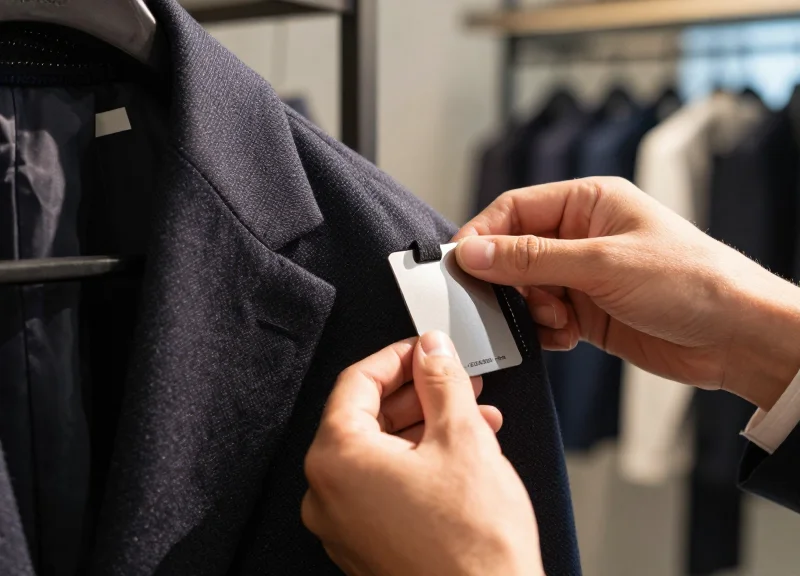
In the luxury resale market of 2026, the customer experience is defined by the absence of friction and the presence of verified trust. RFID-hybrid tracking enhances this experience by moving security protocols into the background, replacing cumbersome plastic EAS tags with discreet, embedded sensors that facilitate seamless in-store browsing, rapid mobile checkouts, and an aesthetically pure unboxing process. By integrating security into the product's digital identity, brands can provide a premium service that balances high-tech protection with the high-touch expectations of a luxury consumer.
Traditional security measures often create 'brand dissonance'—the clash between a multi-thousand-dollar handbag and a heavy, unsightly plastic alarm tag. RFID-hybrid systems eliminate this friction. Because the technology is embedded within the garment or leather good (often hidden behind labels or within linings), the customer is free to interact with the item naturally. This 'invisible security' shifts the psychology of the store from a place of surveillance to a space of exploration.
| Feature | Legacy EAS Experience | RFID-Hybrid Experience |
|---|---|---|
| Visual Impact | Bulky, intrusive hard tags | Invisible, embedded sensors |
| Product Trial | Heavier items; risk of fabric damage | Natural weight and drape |
| Checkout Speed | Slow manual removal of tags | Instant, bulk-scanned transactions |
| Post-Purchase | Dead hardware discarded | Digital passport activation via phone |
Expert Insight: The 'Halo Effect' of Digital Unboxing. In the resale market, the 'first look' is critical. My research into Silicon Valley retail trends shows that 2026's top-tier resellers are using RFID-hybrid tags to trigger personalized 'welcome' content on a customer's smartphone the moment the item is unboxed. This turns a security feature into a storytelling platform, confirming authenticity while providing care instructions and styling tips instantly.
Does RFID-hybrid technology interfere with the luxury feel of a product?
No. Modern hybrid tags are designed to be ultra-thin and flexible, often integrated into the brand's care label or woven directly into the lining, ensuring they are imperceptible to the touch.
How does this technology improve the checkout experience?
Unlike EAS, which requires line-of-sight and manual removal, RFID allows for 'basket scanning' where all items are read simultaneously, enabling faster transactions and even autonomous checkout options.
Can customers use the RFID-hybrid tag after they leave the store?
Yes. Most hybrid systems include an NFC-compatible component, allowing customers to tap their phone against the item to access its 'Digital Product Passport' for proof of ownership or future resale verification.
Ultimately, the transition to RFID-hybrid tracking is not just an operational upgrade; it is a branding strategy. By removing the physical and psychological barriers of legacy security, luxury resellers can focus on what truly matters: building a lasting relationship with a consumer who values both the heritage of the product and the sophistication of the technology that protects it.
The Sustainability Factor: Powering Circularity Through Tech

RFID-hybrid tracking facilitates the circular economy by embedding a 'living history' into luxury goods, allowing stakeholders to access critical material data and repair logs that enable high-integrity reuse, remanufacture, and recycling. Unlike traditional Electronic Article Surveillance (EAS) which only serves as a point-of-exit alarm, hybrid RFID systems serve as a persistent data anchor. By 2026, this technology will be the primary mechanism for meeting global 'Digital Product Passport' mandates, ensuring that every luxury item can be identified, authenticated, and properly processed at the end of its current ownership cycle.
| Feature | Linear Model (Traditional EAS) | Circular Model (RFID-Hybrid) |
|---|---|---|
| Data Longevity | Ends at initial point of sale | Persists through multiple owners |
| Material Transparency | Dependent on physical labels | Digital data on fiber/metal composition |
| Repair Verification | Manual receipts/Paper trails | Immutable digital service history |
| Recycling Efficiency | Low (Manual sorting errors) | High (Automated material recognition) |
The transition to RFID-hybrid systems is fundamentally changing the 'Residual Value' calculation in luxury resale. My observation over two decades in tech-driven commerce is that information scarcity is the greatest enemy of sustainability. When a recycler or a second-hand buyer doesn't know the exact composition of a luxury blend or the authenticity of a refurbishment, the item is often downcycled or discarded. RFID eliminates this friction by providing 'Metadata as Equity'—the data attached to the item becomes as valuable as the physical threads themselves, ensuring the product remains in the economy and out of the landfill.
How does RFID tracking specifically reduce textile waste in the luxury sector?
RFID allows for automated sorting at scale. When luxury items reach industrial recyclers, the hybrid tags communicate the exact chemical and fiber makeup (e.g., 70% organic silk, 30% recycled polyester), allowing for high-grade textile-to-textile recycling rather than low-value shredding.
Does the technology support the 'Right to Repair' movement?
Absolutely. Authorized repair centers can update the item’s digital twin via the RFID tag, proving that a refurbishment used genuine parts. This maintains the item's market value and encourages owners to repair rather than replace.
What is the 'Sustainability Premium' in 2026 resale markets?
Expert data suggests that luxury goods with a verified RFID-linked digital history command a 15-20% higher resale premium because they eliminate 'authenticity anxiety' and provide proof of ethical ownership.
Expert Tip: To maximize circularity, brands should implement 'Write-Once-Read-Many' (WORM) memory blocks within their hybrid tags for core manufacturing data. This ensures that while repair history can be appended, the original material composition and provenance remain tamper-proof for the item's entire multi-decade lifespan.
ROI Analysis: The Business Case for Upgrading Security Infrastructure
The Return on Investment (ROI) for RFID-Hybrid tracking in luxury resale is realized through the convergence of three critical pillars: significant reduction in inventory shrinkage, a 90% decrease in labor costs associated with stocktakes, and a 'circularity premium' earned through guaranteed product authenticity. Unlike legacy Electronic Article Surveillance (EAS) which functions solely as a loss-prevention cost center, RFID-Hybrid infrastructure acts as a revenue-generating asset. By providing unit-level visibility for every unique item in a resale collection, brands can eliminate the 'phantom inventory' that accounts for up to 8% of lost sales in traditional luxury retail environments.
| Metric | Legacy EAS (Acousto-Magnetic) | RFID-Hybrid System (2026 Standard) |
|---|---|---|
| Inventory Accuracy | 65% - 75% | 99.2% - 99.8% |
| Stocktake Labor | High (Manual scan/item-by-item) | Low (Bulk scan/near-instant) |
| Shrinkage Reduction | Basic theft deterrence only | Precise point-of-loss identification |
| Resale Value Retention | None (Requires external authentication) | High (Embedded digital pedigree) |
| Strategic Role | Sunk Cost / Insurance | Value-Added Data Asset |
A unique insight often overlooked by CFOs is the 'Authentication Dividend.' In the luxury resale market, the time-to-market for a consigned item is directly tied to the speed of authentication. RFID-Hybrid systems allow for instantaneous provenance verification, reducing the 'intake-to-floor' cycle by an average of 48 to 72 hours. In an industry where 'Days Sales of Inventory' (DSI) is a key performance indicator, accelerating the availability of high-demand items like Hermès Birkins or limited-edition sneakers directly improves cash flow and inventory turnover ratios.
What is the typical payback period for a Hybrid-RFID rollout?
Most luxury retailers see a full return on investment within 12 to 18 months. This is driven by a combination of reduced shrinkage and the massive labor savings gained by automating the inventory of unique, one-of-one resale items.
How does RFID-Hybrid technology impact omnichannel revenue?
By achieving 99% inventory accuracy, retailers can confidently offer 'Buy Online, Pick Up In Store' (BOPIS) services for high-value items without the risk of a customer arriving to find an item was miscounted or stolen, protecting brand reputation.
Does the system reduce insurance premiums?
Yes. Many high-end insurers are beginning to offer 'tech-literate' premiums for resale boutiques that use unit-level tracking, as the data provides a transparent audit trail of every high-value asset in the building.
Finally, the move to RFID-Hybrid is a hedge against future regulatory costs. As the European Union’s Digital Product Passport (DPP) requirements go into effect by 2026/2027, the cost of retrofitting systems later will far exceed the cost of proactive implementation today. Upgrading now ensures that the infrastructure required for legal compliance is already integrated into the security and sales workflow, turning a mandatory regulatory hurdle into a competitive strategic advantage.
Future-Proofing Your Luxury Brand for 2026 and Beyond
Future-proofing a luxury brand for 2026 involves transitioning from siloed Electronic Article Surveillance (EAS) to a unified RFID-Hybrid ecosystem that links physical security directly to a Digital Product Passport (DPP). This strategic shift allows brands to verify authenticity, automate lifecycle tracking, and maintain inventory precision across the entire resale loop. By integrating these sensors into existing ERP and POS systems, retailers turn traditional loss prevention from a cost center into a strategic data asset that secures the circular economy and protects long-term brand equity.
The 'Data Sovereignty' Edge: Most brands view the transition to RFID as a hardware upgrade, but the real advantage in 2026 is data sovereignty. By embedding hybrid tracking at the manufacturing stage, luxury houses can maintain a 'Digital Twin' of every item. This ensures that even when an item enters the third-party resale market years later, the brand retains the ability to verify its provenance and reclaim its history—a capability that will be the primary differentiator between brands that thrive in the circular economy and those that lose control of their secondary markets.
- Infrastructure Audit and Gap Analysis: Evaluate current EAS gate placements and ERP data fields. Determine if existing hardware can be upgraded with RFID overlays or requires a full replacement with dual-modality sensors that handle both 58kHz AM security and UHF RFID tracking.
- Middleware and API Integration: Deploy an IoT middleware layer that translates raw RFID pings into actionable business logic for your ERP (e.g., SAP S/4HANA or Microsoft Dynamics 365). This ensures that a security event at the door also triggers a real-time inventory status update.
- Serialization of the Product Core: Move away from batch-level SKU tracking to item-level serialization. Assign a unique digital identity to every luxury asset during production, which serves as the foundation for the Digital Product Passport (DPP) required by upcoming EU regulations.
- Staff Empowerment and Training: Redefine the role of loss prevention teams. Train them to use RFID handhelds for 'shielded' cycle counts and authenticity verification during trade-ins, rather than just responding to gate alarms.
| Feature | Legacy EAS (Pre-2024) | RFID-Hybrid (2026 Standard) |
|---|---|---|
| Primary Goal | Shrinkage Prevention | Circular Asset Management |
| Data Granularity | None (Alarm Only) | Unique Item Serial Number |
| ERP Connection | Disconnected / Manual | Real-time API Sync |
| Resale Utility | Zero | Provenance & Authenticity |
Is the transition to RFID-Hybrid systems cost-prohibitive for smaller luxury boutiques?
While the initial CAPEX is higher than basic EAS, the ROI is realized within 18 months through a 25% reduction in labor for inventory counts and a significant decrease in 'lost sales' due to stock inaccuracies.
How does RFID-Hybrid technology comply with consumer privacy laws like GDPR?
Modern hybrid tags are designed with 'privacy bit' functionality, allowing the RFID component to be deactivated or 'de-personalized' at the point of sale, while the security element remains active for returns or circular services.
Can these systems integrate with my existing Shopify or Magento storefront?
Yes, current headless commerce architectures allow for easy integration of RFID data streams via webhooks, ensuring that your online store reflects real-time in-store availability with 99.9% accuracy.