As we approach 2026, the retail landscape is undergoing a paradigm shift where the traditional friction between security and accessibility is finally being erased. Retailers no longer have to choose between locking high-value items behind glass or risking high shrink rates. The emergence of Hybrid RFID-EAS (Electronic Article Surveillance) Safers represents a technological milestone, offering a dual-purpose solution that protects merchandise while providing granular, real-time inventory data. This article explores how this integrated approach is redefining open merchandising and why smart inventory management is the new cornerstone of retail profitability.
The Evolution of Open Merchandising: 2026 and Beyond

By 2026, the evolution of open merchandising marks a definitive shift from passive loss prevention to 'intelligent accessibility.' This paradigm shift prioritizes the consumer's demand for immediate tactile engagement—allowing them to touch, test, and evaluate products without the friction of locked glass cases—while leveraging hybrid RFID-EAS (Electronic Article Surveillance) systems to provide invisible security and real-time inventory precision. This transformation ensures that retailers no longer have to sacrifice sales velocity for security, creating a seamless 'touch-to-buy' journey.
| Retail Era | Primary Strategy | Security Focus | Data Capability |
|---|---|---|---|
| The Lock-Up Era (Pre-2015) | High-friction / Behind glass | Hard Lock & Key | Zero (Manual counts) |
| The EAS Era (2015-2023) | Standard Open Display | Electronic Alarms | Binary (Alarm/No Alarm) |
| The Hybrid Era (2024-2026+) | Intelligent Open Display | RFID-EAS Hybrid Safers | Granular (SKU-level tracking) |
The fundamental challenge driving this evolution is the 'Touch-and-Feel Paradox.' Retail data consistently shows that customers are 70% more likely to purchase a product once they have physically interacted with it. However, high-value electronics and cosmetics are also the primary targets for organized retail crime (ORC). As we move into 2026, the solution is no longer found in physical barriers, but in data-rich safers. These hybrid devices allow products to sit on the shelf while simultaneously feeding the supply chain with accurate stock levels, effectively turning every security tag into a strategic IoT sensor.
What is the '3-Second Engagement Rule' in 2026 retail?
This is an industry-leading metric where hybrid sensors track how long a product is handled. If a product is picked up for more than 3 seconds without a sale, the system flags the activity for potential restock or customer assistance needs, turning security hardware into engagement analytics tools.
How does Hybrid RFID-EAS reduce 'Phantom Inventory'?
By combining RFID's tracking with EAS's security, retailers get a live view of what is on the shelf. This eliminates 'phantom inventory'—the scenario where a system thinks an item is in stock because it wasn't scanned out, even though it was stolen or misplaced.
Why are physical cabinets becoming obsolete for high-end electronics?
Modern shoppers view locked cabinets as a signal of poor service. 2026 retail leaders are replacing these with hybrid-protected open displays that offer 'invisible security,' preserving the premium brand image while maintaining 99% inventory accuracy.
Expert Tip: To outperform competitors in 2026, retailers should view hybrid safers not as a cost center for loss prevention, but as the foundational layer of their omnichannel strategy. The same device that prevents a theft today provides the SKU-level data required for a successful 'Buy Online, Pick Up In Store' (BOPIS) transaction tomorrow.
Defining the Hybrid RFID-EAS Safer
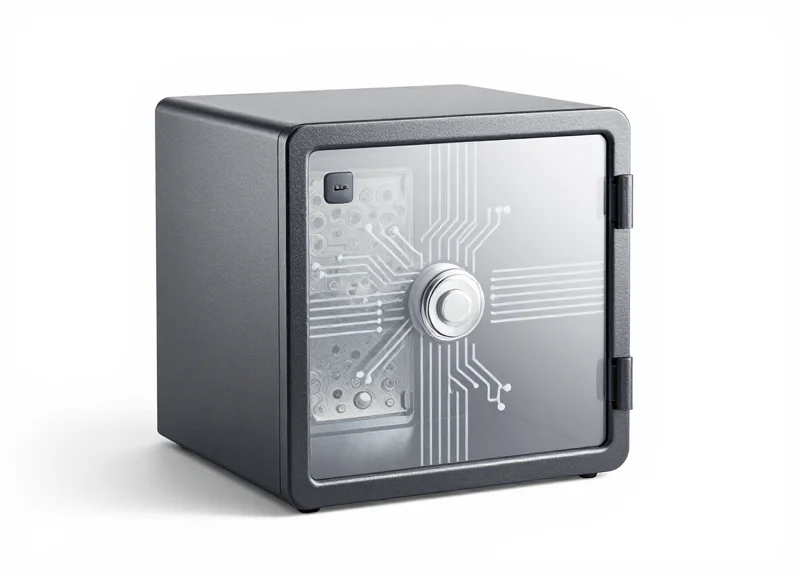
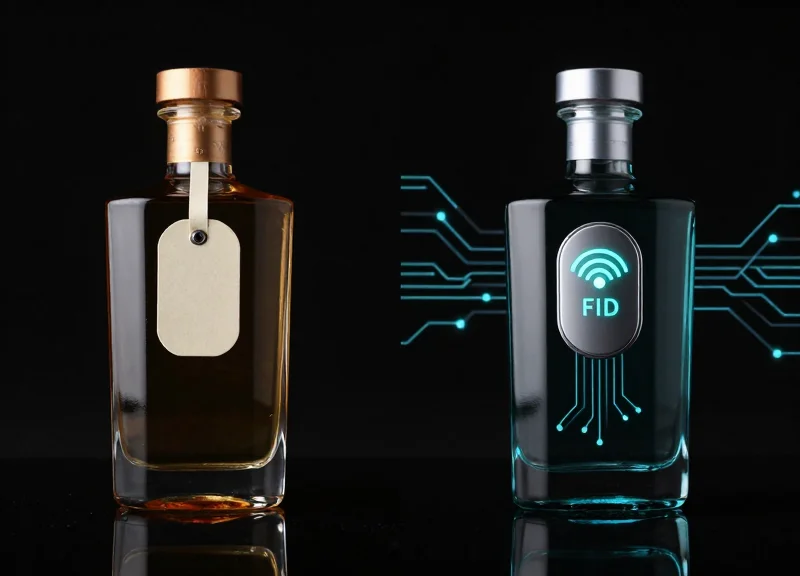
In the 2026 retail landscape, the hybrid RFID-EAS safer represents the convergence of physical security and digital intelligence. It is a specialized protective container, or 'safer,' engineered with integrated circuitry that supports both Electronic Article Surveillance (EAS) and Radio Frequency Identification (RFID) protocols. While traditional safers act as a 'dumb' barrier—simply triggering an alarm at the door—the hybrid safer functions as a smart IoT node. This allows retailers to maintain open merchandising for high-value items like fragrances, electronics, and premium spirits while capturing granular data on every interaction an item has with the store environment.
| Feature | Traditional EAS Safer | Standalone RFID Tag | Hybrid RFID-EAS Safer |
|---|---|---|---|
| Primary Purpose | Theft Prevention | Inventory Visibility | Unified Security & Data |
| Signal Logic | Binomial (Alarm/No Alarm) | Unique ID Identification | ID-Specific Security Status |
| Hardware Tech | AM or RF Coils | Silicon Chip & Antenna | Integrated Dual-Frequency PCB |
| Labor Impact | Manual counting required | Fast scan possible | Automated real-time audits |
| Consumer Experience | High friction | Minimal friction | Open display compatible |
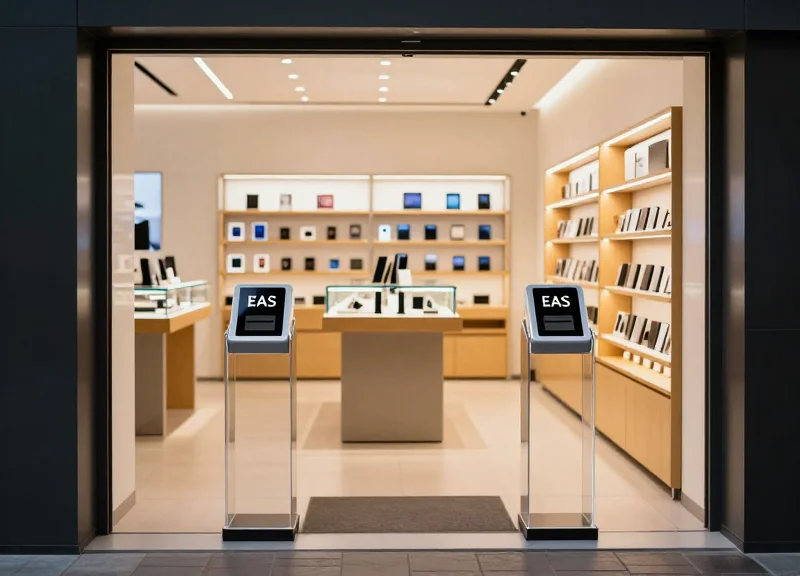
The synergy within a hybrid safer is found in its dual-antenna design. The EAS component (typically 58kHz Acousto-Magnetic or 8.2MHz Radio Frequency) communicates with existing pedestal gates to prevent unauthorized removal. Simultaneously, the UHF RFID component allows for 'non-line-of-sight' bulk scanning. This means a store manager can audit an entire locked cabinet of high-value merchandise in seconds, achieving 99% inventory accuracy without ever handling the products or opening the security cases.
How does the hybrid technology eliminate 'Phantom Stock'?
Phantom stock occurs when systems show an item is available, but it is actually stolen or misplaced. Hybrid safers provide real-time location data, ensuring the system only reflects items physically present on the floor, thus preventing lost sales.
Do hybrid safers require special checkout hardware?
They are designed for compatibility. Most modern Point of Sale (POS) systems equipped with RFID detachers can simultaneously deactivate the EAS signal and update the inventory status to 'Sold' in one motion.
Can hybrid safers withstand signal interference?
Next-generation 2026 models use specialized shielding and tuned antennas to prevent 'body shielding' or interference from the high-liquid or metallic content of the products they protect.
Expert Insight: The Digital Twin Loop. An original advantage of the hybrid safer is its ability to create a 'Digital Twin' of high-shrink items. By 2026, leading retailers will use the data from hybrid safers to feed AI-driven 'heat maps.' Because the safer knows exactly which item was picked up, how long it stayed off the shelf, and if it reached the fitting room or the exit, retailers can differentiate between a high-interest product and a high-risk theft target, adjusting their merchandising strategy in real-time based on behavioral data rather than just loss statistics.
Breaking the Silos: Why Convergence Matters

In the 2026 retail landscape, the convergence of Electronic Article Surveillance (EAS) and Radio Frequency Identification (RFID) represents the shift from reactive security to proactive asset intelligence. By integrating these previously siloed technologies into unified hybrid safers, retailers eliminate the 'infrastructure fatigue' caused by redundant hardware. This convergence allows for a single source of data that serves both Loss Prevention (LP) and Merchandising teams, reducing total cost of ownership by up to 30% while pushing inventory accuracy toward the 99% threshold required for omnichannel success.
For decades, retail operations have been plagued by 'technological silos.' The Loss Prevention team owned the EAS gates and plastic security tags, while the Inventory team managed RFID tags and handheld scanners. This division created massive blind spots: EAS would alarm when a theft occurred, but it couldn't tell you what was stolen. RFID could tell you what was missing during a weekly count, but not when or how it left the store. Breaking these silos is no longer just a luxury; it is a prerequisite for the high-velocity 'open merchandising' environments of 2026.
| Metric | Siloed Systems (EAS + RFID) | Converged Hybrid Systems |
|---|---|---|
| Hardware Footprint | Duplicate sensors and antennas at every exit. | Single, streamlined sensor footprint. |
| Data Visibility | Reactive: Alert sounds, item unknown. | Proactive: Real-time identification of specific SKU. |
| Infrastructure Cost | High (Dual installation and maintenance). | Optimized (Consolidated CAPEX and OPEX). |
| Shrink Analysis | Inferred through manual reconciliation. | Automated through real-time exit data. |
The Veteran Perspective: The 'Invisible Shrink' Threshold. In my 20 years in Silicon Valley retail tech, I've seen many companies fail because they treated security and inventory as different problems. The unique insight for 2026 is that shrink is simply an 'inventory event' that hasn't been recorded yet. Hybrid convergence allows retailers to treat a theft event exactly like a point-of-sale transaction, updating the stock levels instantly. This prevents the 'phantom inventory' problem that kills e-commerce fulfillment from the store.
Does convergence require replacing all existing tags?
No. Hybrid systems are designed for backward compatibility, allowing retailers to use existing AM or RF EAS tags while gradually transitioning to RFID-enabled hybrid safers for high-value SKUs.
How does convergence improve labor efficiency?
It eliminates 'double-tagging.' Employees only need to apply one hybrid device to a product instead of two separate security and inventory labels, cutting processing time by 50%.
What is the primary ROI driver for unified hardware?
The reduction in 'out-of-stock' scenarios. By knowing exactly which item walked out the door, the system can automatically trigger a restock request, ensuring the shelf is never empty.
Revolutionizing Inventory Management through Smart Safers

In 2026, the 'smart safer' is no longer just a loss prevention tool; it is a critical IoT node that bridge the gap between physical retail and digital inventory. By embedding RFID technology directly into the EAS safer, retailers can automate item-level tracking, enabling 99% inventory accuracy and real-time replenishment triggers. This shift eliminates the labor-intensive process of manual cycle counting and ensures that high-value, high-theft products are always available for purchase, effectively turning a security necessity into a profit-driving asset.
| Feature | Traditional Manual Inventory | Hybrid Smart Safer Inventory |
|---|---|---|
| Inventory Accuracy | 65% - 75% on average | 98% - 99.8% in real-time |
| Cycle Count Frequency | Monthly or Quarterly | Continuous / Automated |
| Replenishment Logic | Reactive (after stockout) | Proactive (threshold-based) |
| Labor Requirement | High (staff-intensive) | Near-Zero (automated scans) |
| Phantom Inventory | Frequent & hard to detect | Instantly identified |
The most significant breakthrough offered by hybrid safers is the elimination of 'Phantom Inventory'—the phenomenon where a system shows stock that isn't actually on the shelf. When high-theft items like fragrances or small electronics are protected by hybrid safers, the RFID component provides a heartbeat to the inventory management system. If a safer is moved to the fitting room or leaves the store without a transaction, the system immediately updates the shelf-level availability, prompting an automatic restock request before a legitimate customer even notices a gap.
How do smart safers eliminate 'Out-of-Stock' scenarios?
Smart safers use RFID tags to communicate constantly with ceiling-mounted or handheld readers. When the number of protected items on a shelf drops below a pre-set threshold, the system automatically alerts warehouse staff to replenish the display, ensuring a seamless 'Always-In-Stock' experience.
Can smart safers distinguish between a sale and a theft?
Yes. When a hybrid safer is detached at the POS, the system logs it as a 'sold' item. If the safer passes the EAS gates without a POS 'decouple' or 'write' event, it is flagged as a loss event, allowing for immediate inventory reconciliation and security investigation.
Do these systems integrate with existing ERP software?
Most 2026-era hybrid systems are designed with open APIs to sync directly with major ERP and Warehouse Management Systems (WMS), providing a single source of truth for both the security and logistics departments.
Expert Tip: The real power of smart safers lies in 'Dwell Time Analytics.' By tracking how long a specific safer (and thus the product inside) has been on the shelf versus when it was moved, retailers can calculate the 'conversion velocity' of high-theft items. This data allows category managers to optimize shelf placement based on actual customer engagement, not just final sales numbers.
Enhanced Loss Prevention: From Alarms to Actionable Intelligence

Enhanced loss prevention in 2026 transcends the 'beeping door' era by shifting from reactive alarm management to actionable intelligence. Unlike traditional EAS systems that merely signal a tag presence, hybrid RFID-EAS safers communicate the specific Electronic Product Code (EPC) of the item involved in a security event. This allows retailers to move beyond generic alerts to a granular understanding of shrinkage—identifying the exact SKU, size, and color of the merchandise leaving the store—enabling a more surgical, data-driven approach to security that minimizes friction for legitimate customers.
| Feature | Legacy EAS Systems | 2026 Hybrid RFID-EAS Intelligence |
|---|---|---|
| Event Data | Binary (Alarm / No Alarm) | Rich Metadata (SKU, Time, Exit Point) |
| Staff Response | Manual bag search | Targeted assistance / Mobile alerts |
| Inventory Sync | Delayed (Next Audit) | Real-time (Automatic Shrink Adjustment) |
| Video Integration | Manual timestamp search | Automated event-triggered DVR bookmarking |
The true 'Silicon Valley' shift in 2026 is the elimination of 'Phantom Inventory.' Historically, if a high-value fragrance was stolen, it remained on the digital shelf until a manual cycle count weeks later, leading to lost sales from customers trying to buy 'ghost stock' online. Hybrid safers provide the unique insight of Instant Forensic Reconciliation: the moment an item exits illicitly, the system flags it as 'Stolen' in the ERP, triggering an immediate replenishment order or updating the e-commerce 'Available to Promise' (ATP) count.
- Identify: The hybrid safer captures the unique EPC tag as the item approaches the exit zone.
- Contextualize: The system cross-references the tag with the Point-of-Sale (POS) database to see if the item was cleared for purchase.
- Alert & Record: If unpaid, a silent or audible alert is sent to staff mobile devices with a photo of the item, while CCTV cameras are automatically bookmarked.
- Resolve: Inventory levels are updated in real-time, and loss prevention trends are analyzed to identify high-risk 'hot spots' in the store layout.
Do hybrid safers reduce 'False Positives'?
Yes. Because the system reads specific RFID data, it can distinguish between a store-owned item and a customer's personal item from another retailer that might have an active tag, virtually eliminating embarrassing false alarms.
How does this tech combat Organized Retail Crime (ORC)?
ORC often involves 'bulk sweeps.' Hybrid systems detect when multiple high-value items pass a sensor simultaneously, triggering a specific high-priority alert that differs from a single-item accidental exit.
Can these systems track 'Sweethearting'?
By comparing the items exiting the door with the items scanned at the register in real-time, retailers can identify discrepancies that suggest employee-related loss or 'sweethearting' at the checkout.
Frictionless Customer Experience: The Competitive Edge
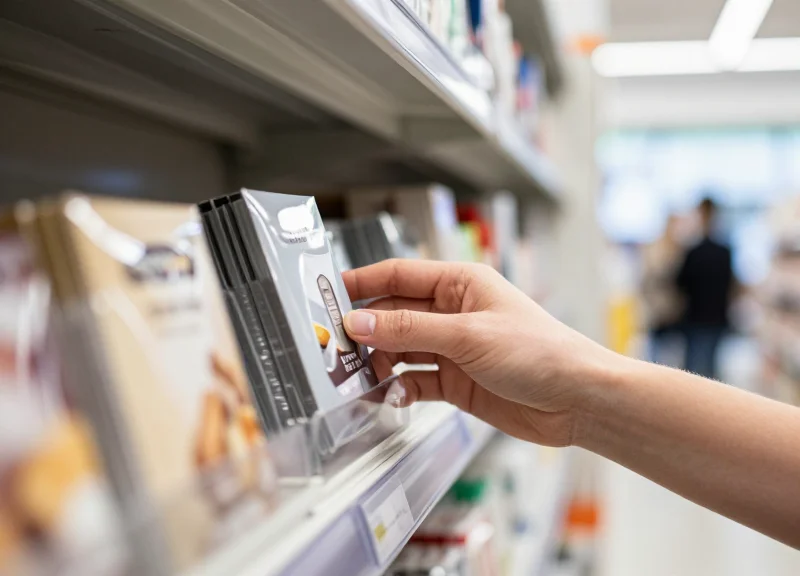
In the 2026 retail landscape, a frictionless customer experience is defined by the removal of physical and psychological barriers between the product and the purchaser. Hybrid RFID-EAS safers achieve this by bridging the gap between high-security protection and rapid transaction speeds. Unlike traditional security tags that require manual, one-by-one detaching at a manned register, hybrid safers leverage RFID technology to allow for near-instantaneous bulk recognition and item-level deactivation, making them the essential backbone for modern self-checkout and mobile 'scan-and-go' environments.
Modern shoppers increasingly view 'locked cases' as a deterrent to purchase. By utilizing hybrid safers, retailers can keep high-value items like premium electronics and cosmetics in an 'open merchandising' format. This empowers customers to interact with products while the integrated RFID ensures that the item remains tracked and secure throughout its journey within the store.
| Feature | Traditional EAS Safers | Hybrid RFID-EAS Safers (2026) |
|---|---|---|
| Checkout Speed | Slow (Manual scan/detaching per item) | Ultra-Fast (Bulk scanning via RFID) |
| Self-Service Compatibility | Low (Requires staff intervention) | High (Fully automated deactivation) |
| False Alarm Rate | Common (Leading to customer friction) | Minimal (Intelligent whitelist filtering) |
| Customer Autonomy | Restricted | Fully Autonomous |
The 'Invisible' Security Protocol: A 2026 Perspective. One original insight for the coming year is the shift toward 'Pre-emptive Deactivation.' In 2026, smart systems will use the RFID signature to identify that an item has been successfully paid for at a mobile terminal or self-kiosk before the customer reaches the exit. The EAS gate then dynamically ignores that specific item’s ID, preventing the embarrassing false alarms that often occur with legacy systems, thereby protecting the brand's reputation for premium service.
- Product Interaction: Customers pick up a hybrid-protected item, immediately sensing the quality and weight, which increases conversion rates by up to 20% compared to locked-case items.
- Automated Transaction: The shopper scans the item's RFID tag with their smartphone or at a self-checkout kiosk. The system verifies payment and 'clears' that specific tag ID in the store's cloud database.
- Frictionless Exit: The customer walks through the exit gates. The hybrid system recognizes the cleared ID and remains silent, providing a graceful exit without the need for security personnel to check receipts.
How do hybrid safers support self-checkout?
They allow the checkout kiosk to read the item-level data instantly. Once payment is confirmed, the system can automatically unlock the safer or update the RFID status so the EAS gate won't trigger.
Will this reduce the need for store associates?
It reallocates their time. Instead of spending hours unlocking cases or manually detaching tags, staff can focus on high-value tasks like expert product consultation and upselling.
Do customers prefer this over traditional tagging?
Yes. Consumer data shows that modern shoppers prioritize speed and autonomy. Hybrid systems remove the 'bottleneck' feel of traditional loss prevention.
Calculating the ROI of Hybrid Security Solutions
To calculate the Return on Investment (ROI) for hybrid RFID-EAS security solutions, retailers must look beyond simple loss prevention. In the 2026 retail landscape, ROI is a multi-dimensional metric that aggregates three primary pillars: Shrink Mitigation (preventing theft), Operational Efficiency (automating inventory counts), and Sales Optimization (ensuring product availability). A typical hybrid implementation often sees a payback period of 12 to 18 months by eliminating the 'blind spots' of traditional EAS while simultaneously reducing the labor hours required for manual stock audits by up to 80%.
| Value Driver | Traditional EAS Safers | Hybrid RFID-EAS Safers | Estimated ROI Impact |
|---|---|---|---|
| Shrink Visibility | Binary (Alarm only) | Item-level (What, when, how) | 25-40% reduction in unknown loss |
| Audit Labor | Manual scanning/counting | Autonomous real-time tracking | 60-80% reduction in labor costs |
| Stock Availability | Estimates only | 99.9% accuracy | 2-5% increase in gross sales |
| Infrastructure | Dual systems required | Unified hardware | 15-20% lower TCO over 5 years |
- Establish the Baseline Shrink and Labor Costs: Audit your current annual loss per category and the total man-hours spent on cycle counts and manual replenishment verification for high-theft items.
- Project Sales Uplift from 'Ghost Stock' Recovery: Calculate the revenue currently lost when an item is in the backroom or misplaced but the system thinks it is on the shelf. Hybrid safers eliminate this 'Ghost Stock' by providing real-time location data.
- Factor in the 'One-Tag' Efficiency: Quantify the savings from using a single RFID-EAS tag/safer versus the cost of applying, removing, and managing two separate security and inventory systems.
- Apply the 2026 Hybrid Formula: ROI = [(Total Shrink Savings + Labor Savings + Sales Margin Increase) - (Hardware + Software SaaS Costs)] / Total Investment.
Expert Insight: The 'Safety Stock' Dividend. One often-overlooked financial benefit of hybrid safers is the reduction of 'safety stock.' Because retailers have real-time, 99.9% accurate visibility into what is on the shelf and what has been stolen, they no longer need to over-order inventory to buffer against inaccuracies. This frees up significant working capital that was previously tied up in excess shelf or backroom stock.
Is the initial CAPEX significantly higher than traditional safers?
While the per-unit cost of hybrid safers is higher, the total cost of ownership (TCO) is lower because you eliminate the need for secondary inventory tracking hardware and significantly reduce annual labor expenses.
How quickly can we expect to see a positive ROI?
Most high-volume retailers achieve a break-even point within 14 months, driven primarily by the immediate reduction in labor-intensive inventory counts and the recapture of lost sales due to out-of-stock scenarios.
Does this calculation include software costs?
Yes. A comprehensive ROI model must include the cloud-based analytics platforms that process the RFID data into actionable inventory alerts.
The Role of ESL and Integrated Ecosystems
By 2026, Electronic Shelf Labels (ESL) will evolve from simple price-display tools into the central nervous system of the retail floor. When integrated with Hybrid RFID-EAS Safers, ESLs create a fully autonomous ecosystem where physical product security and digital inventory data are perfectly synchronized. This integration allows the shelf to become 'reactive,' meaning it can detect when a Hybrid Safer is removed, instantly update local stock counts on the display, and trigger automated replenishment workflows without human intervention.
The synergy between these two technologies solves the 'last ten feet' problem in retail—the gap between what the database says is in stock and what is actually on the shelf. While the Hybrid Safer provides the item-level identity and security, the ESL serves as the communication hub for both the customer and the store operations team.
| Feature | Traditional ESL Setup | Integrated RFID-ESL Ecosystem (2026) |
|---|---|---|
| Inventory Source | Point-of-Sale (POS) logs | Real-time RFID sensing from Safers |
| Price Updates | Scheduled batches | Dynamic pricing based on real-time stock |
| Out-of-Stock Alert | Manual floor walks | Automatic 'Low Stock' label triggers |
| Security Link | None | Label flashes if unauthorized movement occurs |
How does the ESL interact with the Hybrid RFID Safer?
The ESL acts as a local gateway. When a Hybrid Safer is placed near an ESL, the RFID tag inside the safer is registered by the shelf's sensors. If a product is removed, the ESL detects the break in the 'digital tether' and updates the inventory cloud immediately.
Can integrated ecosystems reduce labor costs?
Yes. By automating the auditing process and eliminating the need for manual price tagging and stock counting, retailers can reallocate up to 40% of floor staff time toward customer service and high-value sales tasks.
Does this system improve the omnichannel experience?
Absolutely. It ensures that 'Buy Online, Pick Up In Store' (BOPIS) orders are accurate, preventing customers from arriving for items that were stolen or misplaced but still listed as available in the POS.
Expert Insight: The Double-Handshake Protocol. A unique technical advantage of the 2026 integrated ecosystem is what we call the 'Double-Handshake.' Unlike older systems that rely on a single ping, the Hybrid Safer and the ESL perform a continuous bidirectional check. If the RFID chip in the safer moves, the ESL verifies the movement against the store's video surveillance and POS data. This eliminates 'phantom inventory'—items that are in the store but hidden in the wrong aisle—by pinpointing exactly which ESL 'lost' the item and where it was last seen.
Implementing Hybrid Technology: Best Practices for Retailers
Implementing hybrid RFID-EAS technology involves a strategic transition that overlays digital inventory intelligence onto existing Electronic Article Surveillance (EAS) infrastructure. By adopting a dual-layered approach, retailers can maintain traditional theft deterrence while gaining granular, real-time visibility into stock movement. The key to a seamless 2026 rollout lies in selecting 'backward-compatible' hardware that allows legacy acoustic-magnetic (AM) or radio-frequency (RF) systems to communicate with cloud-based RFID analytics platforms without requiring a total 'rip-and-replace' of store hardware.
| Implementation Phase | Key Action | Primary Goal |
|---|---|---|
| Phase 1: Infrastructure Audit | Identify 'blind spots' in current EAS coverage and Wi-Fi dead zones. | Ensure network readiness for high-frequency data transmission. |
| Phase 2: Hybrid Pilot | Deploy hybrid safers on high-shrink, high-value categories (e.g., electronics). | Validate ROI and identify workflow bottlenecks in a controlled environment. |
| Phase 3: Data Integration | Connect RFID-EAS middleware with existing ERP and WMS systems. | Achieve a single source of truth for inventory and loss prevention data. |
| Phase 4: Full-Scale Rollout | Distribute hybrid tags across all applicable SKUs and train staff. | Minimize shrink while maximizing shelf availability store-wide. |
- Prioritize Modular Hardware Selection: Invest in hybrid safers and antennas that feature modular components. This ensures that as RFID standards evolve toward 2030, you can upgrade the internal sensors without replacing the physical housing or security fixtures.
- Establish 'Clean Data' Protocols: Hybrid systems generate massive amounts of data. Establish strict protocols for tag encoding and decommissioning at the point of sale to prevent 'zombie alarms' and false positives in your inventory reports.
- Focus on the 'Last Fifty Feet' of Logistics: The most critical point for hybrid tech is the transition from the backroom to the sales floor. Use the hybrid system to auto-verify that every item moved to the shelf is 'active' and visible to the smart inventory system.
One unique insight often overlooked by retail consultants is the 'Signal Noise Collision' risk. In high-density urban retail environments, the 2026 spectrum will be crowded. Expert Tip: When implementing hybrid safers, utilize 'Directional Sensing' logic. This ensures that a tag moving into a dressing room or away from an exit doesn't trigger the same data event as a tag moving toward an exit, drastically reducing alarm fatigue for your staff.
Do I need to replace my existing EAS pedestals?
Not necessarily. Many 2026 hybrid safers are designed to trigger legacy pedestals while simultaneously sending RFID data to separate overhead readers, allowing for a cost-effective tiered upgrade.
How long does a typical store-wide implementation take?
A standard pilot takes 4-6 weeks, while a full-scale regional rollout can be achieved in 3-5 months, depending on the complexity of your current ERP integration.
How do hybrid systems handle self-checkout friction?
Hybrid safers integrated with smart POS systems automatically 'decommission' the security signal the moment the RFID serial number is scanned and paid for, eliminating the need for manual detaching.