In the fast-paced world of modern retail, the discrepancy between actual stock levels and shelf-front information is a major profit killer. While RFID technology excels at tracking item movement with precision, and Electronic Shelf Labels (ESL) provide digital agility for pricing, the true competitive advantage lies in their seamless synchronization. This article explores how veteran engineers use RESTful APIs as the critical conduit to ensure that every RFID 'in' or 'out' event is instantly reflected on digital shelf displays, creating a truly self-correcting retail environment.
The Convergence of RFID and ESL Technologies
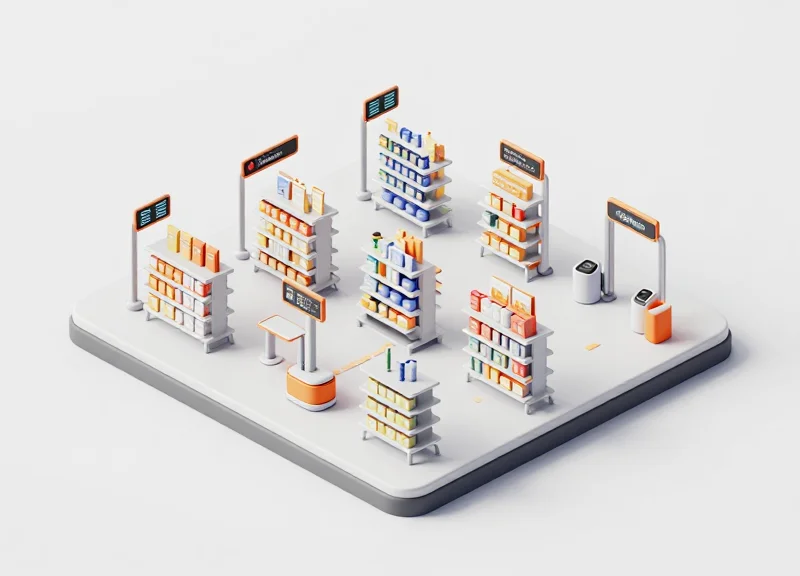
The convergence of RFID (Radio Frequency Identification) and ESL (Electronic Shelf Label) technologies represents a fundamental shift from static inventory management to a responsive, 'living' warehouse or retail environment. By integrating the automated identification capabilities of RFID with the dynamic visual communication of ESL via RESTful APIs, enterprises achieve digital-physical parity—a state where the physical movement of goods (In-and-Out events) is reflected on digital displays in near-real-time without human intervention. This synergy forms a closed-loop IoT ecosystem that eliminates the data lag typically found in legacy systems.
| Feature | RFID Technology (The Input) | ESL Technology (The Output) |
|---|---|---|
| Primary Function | Automated data capture and location tracking. | Dynamic information display and visual signaling. |
| Data Direction | Inbound: Physical movement to system. | Outbound: System data to physical shelf. |
| Role in Sync | Triggers the 'Event' (e.g., item leaving warehouse). | Executes the 'Update' (e.g., decrementing stock count). |
| Benefit | High-speed bulk scanning and accuracy. | Reduced labor costs and pricing agility. |
In a modern enterprise architecture, these two technologies no longer operate in silos. When an RFID gate detects a pallet leaving a zone, it doesn't just update a database; it triggers an API call that commands the corresponding ESL to change its display—perhaps flashing an alert if stock levels fall below a threshold or updating the 'Available to Promise' (ATP) count. This integration turns passive labels into active nodes of a business intelligence network.
What is the 'Golden Ratio' of RFID-ESL integration?
It is the balance between scan frequency and display refresh rates. Over-polling RFID tags can lead to network congestion, while delayed ESL updates create 'data drift.' A well-architected API layer ensures that only meaningful state changes trigger a display update, maintaining high battery life for ESLs while providing accurate data.
How does this convergence reduce 'Phantom Inventory'?
Phantom inventory occurs when systems show stock that isn't physically there. The RFID-ESL bridge prevents this by requiring a physical RFID 'Out' event to trigger the ESL display change, ensuring the customer or picker sees the actual truth of the shelf.
Can these technologies share the same infrastructure?
While they operate on different frequencies (typically UHF for RFID and 2.4GHz/Sub-GHz for ESL), modern IoT gateways are increasingly 'multiprotocol,' allowing a single hardware footprint to manage both RFID data ingestion and ESL command propagation.
Expert Tip: To achieve true scalability, do not treat the ESL as a simple display. Treat it as a 'State-Aware' IoT device. In high-velocity environments, use the RESTful API to implement 'Batch-Update' logic, where the RFID events are aggregated over a 2-5 second window before pushing a single refresh command to the ESL. This prevents 'display flickering' and significantly extends the hardware's operational lifespan in busy distribution centers.
Understanding the RFID Data Stream: Inbound and Outbound Events

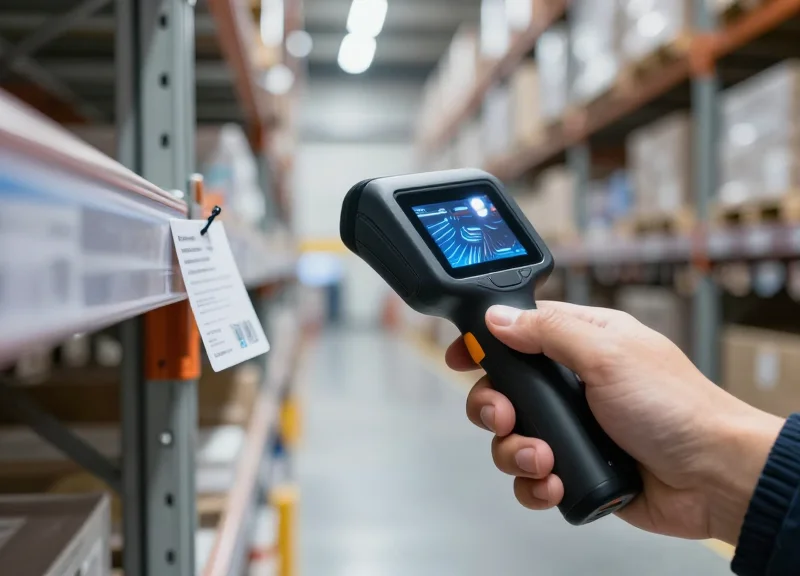
The RFID data stream is more than just a list of scanned tags; it is a high-velocity sequence of event-driven messages that signify state changes within a physical environment. When an item passes through an RFID gate or is scanned by a handheld reader, the system generates a 'read event' containing unique identifiers and directional metadata. These events are categorized as Inbound (entering a zone) or Outbound (leaving a zone), forming the digital backbone that tells the Electronic Shelf Label (ESL) system whether to increment stock, change a price status, or trigger a low-inventory alert.
| Event Type | Primary Trigger | Data Payload Attributes | ESL Impact |
|---|---|---|---|
| Inbound Event | Entry through receiving dock or backroom gate. | EPC Code, Timestamp, Antenna ID, RSSI (Signal Strength). | Increase displayed stock count; set status to 'Available'. |
| Outbound Event | Exit through POS gate or dispatch zone. | EPC Code, Destination ID, Duration in Zone. | Decrease displayed stock; trigger re-order warning if threshold met. |
| Directional Event | Sequence detection across multiple antenna arrays. | Phase angle, Read Order, Motion Vector. | Dynamic location tagging; updates 'Aisle' or 'Shelf' display. |
How does the system distinguish between an item passing through and one just sitting near a reader?
We utilize 'Read Filtering' and 'RSSI Thresholds.' If a tag is seen at a consistent signal strength without a directional vector, the Middleware identifies it as static noise. Only a change in antenna sequence or a specific RSSI delta triggers a valid In-and-Out event.
What happens if a tag is read multiple times in a single second?
Edge controllers perform 'De-duplication' or 'Smoothing.' This ensures that thousands of raw reads are collapsed into a single logical event before hitting the RESTful API, preventing system bloat.
Why is timestamp precision critical for ESL syncing?
Precision allows the system to resolve 'race conditions'—where an item might be scanned out and scanned back in rapidly. Without millisecond-accurate timestamps, the ESL might display stale or conflicting inventory data.
Expert Insight: Implementing Temporal Hysteresis. In professional-grade RFID deployments, we implement 'Temporal Hysteresis' to manage 'chatter' at the boundary. If an item lingers in the portal, the system delays the 'Outbound' status for a programmable window (e.g., 2 seconds). This prevents the ESL from flickering between statuses due to signal multipath or reflection, ensuring the consumer sees a stable, authoritative display.
{
  "event_id": "ev_987654321",
  "timestamp": "2023-10-27T14:20:00.005Z",
  "event_type": "OUTBOUND",
  "reader_id": "GATE_04",
  "epc": "urn:epc:tag:sgtin:0614141.812345.6789",
  "direction": "exit",
  "rssi_avg": -54
}
The Anatomy of a RESTful API Bridge

A RESTful API bridge is a software intermediary that utilizes Representational State Transfer (REST) principles to decouple RFID event producers from ESL display consumers, ensuring that every data exchange is stateless, uniform, and cacheable. By leveraging standard HTTP methods—such as GET, POST, and PUT—this bridge acts as a universal translator. It takes the raw, high-velocity 'In-and-Out' events from RFID readers and converts them into standardized JSON payloads that an Electronic Shelf Label (ESL) management system can consume to trigger real-time visual updates.
| Core Principle | Technical Definition | Impact on RFID-to-ESL Sync |
|---|---|---|
| Statelessness | Each request contains all information needed to process it. | Reduces server overhead as the bridge doesn't need to 'remember' previous RFID pings. |
| Uniform Interface | Standardized methods (GET, POST, PUT, DELETE) and URIs. | Allows any IoT hardware vendor to integrate with the bridge regardless of proprietary firmware. |
| Layered System | The client cannot tell if it is connected to the end server or an intermediary. | Enables the insertion of security proxies or load balancers without disrupting the data flow. |
| Cacheability | Responses must define themselves as cacheable or not. | Optimizes battery life for ESL tags by preventing redundant display refreshes for identical data. |
In this architecture, the 'Bridge' isn't just a passthrough; it is a logic layer. When an RFID gate detects a 'Product Exit' event, the bridge receives a POST request. It then validates this against the inventory database and issues a PUT request to the ESL server to decrement the stock count shown on the physical shelf label. This separation of concerns is why REST has outperformed older protocols like SOAP in the IoT space.
{
  "event_id": "RFID_9982X",
  "action": "STOCK_DECREMENT",
  "epc_code": "3034257894022",
  "target_esl_id": "ESL_A12_B4",
  "payload": {
    "current_stock": 14,
    "status": "In-Transit"
  }
}
Expert Insight: The 'Idempotency Key' Strategy. In high-traffic RFID environments, network jitter can cause the same 'Out' event to be sent twice. Silicon Valley veterans implement 'Idempotent' PUT requests in their API bridges. This ensures that if the bridge receives the same RFID signal twice within a millisecond window, the ESL display only updates once, preventing 'ghost' inventory subtractions and unnecessary screen flickering.
Why choose REST over MQTT for ESL updates?
While MQTT is great for constant heartbeats, REST is superior for 'state-change' events like pricing or stock updates because it integrates natively with existing web security (OAuth2) and enterprise cloud infrastructure.
How does statelessness help with scalability?
Because the bridge doesn't store session data, you can spin up ten identical API instances behind a load balancer to handle a sudden surge in RFID traffic during peak shopping hours without data corruption.
Is there a latency penalty when using a REST bridge?
Modern RESTful services running on Node.js or Go typically process requests in sub-10ms. When combined with 5G or Wi-Fi 6, the latency is negligible for retail and warehouse applications.
Mapping RFID Tag IDs to ESL Product Information

Mapping RFID Tag IDs to Electronic Shelf Labels (ESL) is the process of synchronizing granular, item-level tracking data with consumer-facing display information. This requires a middleware layer that translates the Electronic Product Code (EPC) or Unique Identifier (UID) from an RFID tag into a Global Trade Item Number (GTIN) or SKU, which is then linked to an ESL's hardware address (MAC or Station ID). Effectively, this creates a digital thread that allows an 'In-Event' at an RFID gate to trigger an automatic stock update or promotional price change on a specific shelf display in real-time, ensuring the physical shelf reflects the digital inventory state.
| Data Layer | Identifier | Granularity | Primary Purpose |
|---|---|---|---|
| RFID Layer | EPC/TID | Individual Item | Tracking & Traceability |
| ESL Layer | Station ID/MAC | Product Batch/SKU | Pricing & Promo Display |
| ERP/Cloud | GTIN/SKU | Product Class | Inventory Management |
- Capture RFID Event: The RFID reader detects the tag's unique EPC during an inbound or outbound movement and pushes this event to the middleware.
- Relational Lookup: The API queries the mapping database to associate the specific RFID UID with its corresponding SKU or GTIN.
- ESL Association: The system identifies which ESL hardware ID is currently bound to that specific SKU on the sales floor.
- State Update: The middleware calculates the new inventory levels or status (e.g., 'Low Stock') and prepares a display update.
- RESTful Push: A POST or PATCH request is sent to the ESL Gateway to refresh the screen with the updated metadata.
{ "mapping_event": { "rfid_uid": "E2801191200072045A1A2B3C", "product_id": "SKU-99821-X", "esl_id": "FF:EE:DD:CC:BB:AA", "event_type": "INBOUND", "new_stock_count": 42 } }Expert Tip: To maintain 100% data integrity, implement 'Associative Metadata Buffering.' Instead of a direct 1:1 hard-link, use a buffer table that tracks the lifecycle of the RFID-to-ESL relationship. This allows the system to handle 'phantom inventory'—tags that are read but not yet physically on the shelf—preventing the ESL from displaying premature stock counts before the shelf replenishment is actually finalized. This is critical for preventing customer frustration during high-velocity retail events.
What happens if one SKU has multiple RFID tags?
The middleware aggregates all unique RFID UIDs associated with a single GTIN. When an RFID 'Out-Event' occurs, the system decrements the total count for that SKU and triggers an update for every ESL linked to that product ID.
How do you handle RFID tag replacements?
In a robust RESTful architecture, updating a tag involves a PUT request to the mapping endpoint to re-assign a new RFID UID to an existing SKU. This ensures historical tracking remains intact while the physical tag is updated.
Is the mapping performed on the tag or the server?
Mapping is always performed server-side or in the cloud. The RFID tag only stores a unique ID; the intelligence resides in the database where that ID is linked to product specifications and ESL hardware addresses.
Real-Time Logic: Automating Updates via Webhooks
Webhooks are the 'push' notifications of the IoT world, serving as automated messages sent from an RFID middleware system to your Electronic Shelf Label (ESL) management platform whenever a specific event occurs. Unlike traditional polling, where the display system constantly asks the database for updates, webhooks execute a callback over HTTP the millisecond an RFID reader detects a tag movement. This event-driven architecture ensures that your shelf-edge data is never out of sync with your physical inventory, effectively closing the gap between the warehouse and the storefront.
| Feature | Traditional Polling | Webhook-Driven (Push) |
|---|---|---|
| Latency | Depends on poll interval (Seconds/Minutes) | Near Zero (Milliseconds) |
| Server Overhead | High (Constant requests) | Low (Only active on events) |
| Data Freshness | Delayed | Real-Time |
| Scalability | Resource intensive as node count grows | Highly efficient for large-scale IoT |
Implementing this logic requires a listener service on your API Gateway. When the RFID gate registers an 'Outbound' event (an item leaving the stockroom), the middleware generates a POST request to your webhook URL. This request carries a payload containing the Tag ID and the timestamp, which your backend then maps to the corresponding ESL to decrement the displayed 'In-Stock' count.
{
  "event_type": "RFID_STOCK_OUT",
  "timestamp": "2023-10-27T10:15:30Z",
  "payload": {
    "tag_id": "E28011912000000203AD45",
    "location_id": "GATE_04",
    "quantity": 1
  },
  "security_hash": "sha256=4f5e..."
}- Event Trigger: The RFID reader detects a tag passing through a designated zone (Inbound/Outbound).
- Payload Generation: Middleware packages the Tag ID and event metadata into a JSON format.
- POST Request: The system sends an asynchronous HTTP POST to the pre-configured Webhook URL of the ESL controller.
- Verification and Mapping: The receiver validates the HMAC signature for security and maps the RFID UID to the product's ESL ID.
- Display Refresh: The ESL system pushes an image update to the specific label via Sub-GHz or Bluetooth protocol.
Why should I use Webhook Debouncing?
Expert Tip: RFID readers are 'chatty' and may fire 50 pings for a single item passing through. Always implement a 500ms-1s debouncing window in your middleware to prevent your ESL gateway from being flooded with redundant update requests.
How do I secure the webhook endpoint?
Use a secret token shared between the RFID middleware and your API. Verify the X-Hub-Signature or HMAC header on every incoming request to ensure the data originated from your hardware and not a malicious actor.
What happens if the ESL update fails?
Implement a 'Retry-with-Exponential-Backoff' strategy. If the webhook fails to reach the ESL controller, the system should retry at increasing intervals to ensure eventual consistency.
Data Transformation: From Raw Hexadecimal to User-Friendly Displays

Data transformation in an IoT bridge is the architectural process of normalizing raw hexadecimal telemetry from RFID readers into structured, actionable JSON payloads for Electronic Shelf Labels (ESL). This middleware layer acts as a translator, stripping away low-level protocol overhead and mapping unique Electronic Product Codes (EPC) to product metadata such as price, SKU, and stock status. By converting '0x3034255B091914...' into a readable 'Out of Stock' or '$19.99' message, enterprises ensure that the physical shelf reflects the digital reality of the warehouse in real-time.
- Raw Data Ingestion: The middleware receives a binary or hexadecimal stream from the RFID reader containing the tag's EPC, RSSI (signal strength), and timestamp.
- Hex-to-String Parsing: The hex string is decoded to extract the manufacturer prefix and the unique item identifier, typically following GS1 standards.
- Database Cross-Referencing: The system queries the ERP or inventory database to find the GTIN (Global Trade Item Number) associated with the extracted RFID tag.
- Business Logic Execution: The bridge determines the event type (Inbound vs. Outbound) and calculates the new inventory level or triggers a pricing rule.
- ESL Image/Text Rendering: The final result is formatted into a JSON payload or a BMP image string compatible with the specific ESL hardware display.
| Data Stage | Example Value | System Responsibility |
|---|---|---|
| Raw RFID Hex | E280116060000209 | RFID Antenna / Reader |
| Decoded EPC | Item SKU: 4002-998 | Middleware Parser |
| ERP Metadata | Organic Apples - $4.50 | Database / API |
| ESL Display Output | SALE: $4.50 (In Stock) | ESL Gateway |
def transform_rfid_to_esl(hex_input):
    # Convert Hex to EPC String
    epc = bytes.fromhex(hex_input).decode('utf-8', errors='ignore')
    # Lookup product details via internal REST API
    product = db_lookup(epc)
    # Generate JSON payload for ESL update
    return {
        'label_id': product['shelf_id'],
        'content': f'{product["name"]}: {product["price"]}',
        'status': 'In Stock' if product['qty'] > 0 else 'Sold Out'
    }
Expert Tip: To prevent 'display flickering' and unnecessary battery drain on ESLs, implement a Signal Debouncing Layer. In high-traffic retail environments, RFID tags can briefly disappear and reappear due to signal interference. Instead of triggering an immediate 'Out of Stock' update, use a 3-5 second temporal window to confirm the tag has truly left the zone before pushing the update to the shelf.
Why is data often in Hexadecimal initially?
Hexadecimal is a compact way to represent binary data, reducing the payload size during high-speed air interface communication between the tag and the reader.
How do you handle 'Ghost' reads during transformation?
Middleware filters based on RSSI (Received Signal Strength Indicator) thresholds; if the signal is too weak, the data transformation process is aborted to prevent false inventory deductions.
Ensuring Scalability: Handling High-Volume Retail Traffic
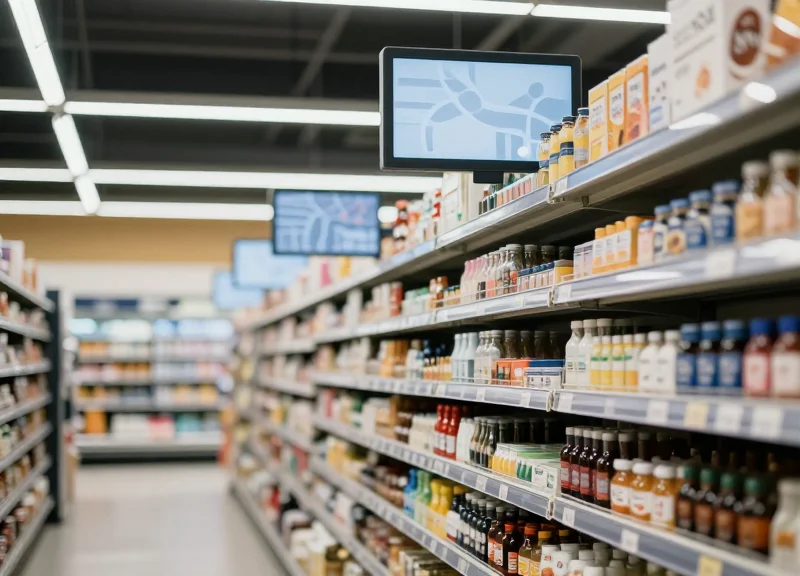
Scalability in an RFID-to-ESL ecosystem is the system's capacity to maintain sub-second latency for display updates while processing thousands of concurrent sensor events during peak retail traffic, such as Black Friday or seasonal sales. To achieve this, the API bridge must transition from simple synchronous request-response cycles to a distributed, resilient architecture that prevents bottlenecks at the middleware layer.
When a retail environment scales from a few hundred items to tens of thousands, the sheer volume of 'In-and-Out' events can overwhelm standard REST endpoints. The key is to decouple the ingestion of RFID data from the execution of the ESL update. By utilizing a message broker, you ensure that high-velocity bursts of data are queued and processed according to the capacity of the ESL infrastructure, preventing system timeouts and hardware hangs.
| Strategy | Technical Implementation | Impact on Performance |
|---|---|---|
| Horizontal Scaling | Deploying multiple API instances behind a Load Balancer. | Distributes traffic evenly, preventing single-point failures. |
| Asynchronous Processing | Implementing message queues like RabbitMQ or Kafka. | Absorbs traffic spikes without slowing down the RFID reader. |
| Database Sharding | Splitting the tag-to-product mapping database into chunks. | Reduces lookup times for product metadata during high-concurrency. |
Expert Insight: Implement 'Event Debouncing' or 'Event Collapsing' at the middleware level. In a high-traffic scenario, an RFID reader might detect the same tag ten times in a second as it moves through a gate. Instead of triggering ten API calls to the ESL server, your bridge should implement a temporary sliding window (e.g., 500ms) to aggregate these signals into a single, authoritative update. This reduces network overhead by up to 80% without sacrificing real-time accuracy.
- Step 1: Implement a Load Balancer: Use Nginx or AWS ELB to distribute incoming REST requests from various RFID gates across a cluster of API workers.
- Step 2: Transition to Redis Caching: Store frequently accessed RFID-to-Product mappings in an in-memory Redis cache to avoid hitting the primary database for every event.
- Step 3: Establish Rate Limiting: Define API rate limits to protect the ESL gateway from being flooded, which can cause display hardware to become unresponsive.
const queue = new MessageQueue('rfid_events');

// Middleware pushes event to queue immediately
app.post('/api/event', (req, res) => {
  queue.push(req.body);
  res.status(202).send({ message: 'Accepted' });
});

// Background worker processes updates at controlled rate
worker.process(async (job) => {
  await updateESLDisplay(job.data.productId, job.data.stockLevel);
});
How does network latency affect ESL updates?
High latency can cause out-of-sync pricing. Using edge computing to process RFID events locally before sending them to the cloud minimizes this risk.
Can the ESL hardware handle 1,000 updates per minute?
Most ESL base stations have a throughput limit. Your API bridge must throttle updates and prioritize high-value changes like price over inventory count.
What happens if the API bridge fails during peak traffic?
Implement a 'Fail-Open' strategy where the RFID readers buffer data locally until the API bridge recovers, ensuring no inventory movements are lost.
Data Security and Authentication in IoT Ecosystems
Securing the data bridge between RFID readers and Electronic Shelf Labels (ESL) is not just about privacy; it is about maintaining the integrity of business-critical operations. In an IoT ecosystem, every 'In-and-Out' event represents a financial state change. Without robust authentication and encryption, your retail infrastructure is vulnerable to 'Price Hijacking'—where unauthorized actors manipulate ESL displays—or 'Inventory Poisoning,' where fake RFID data disrupts supply chain logic. Implementing a Zero Trust architecture ensures that every API request is verified, regardless of whether it originates from a handheld scanner or a fixed ceiling-mounted reader.
| Security Layer | Technology Standard | Primary Function |
|---|---|---|
| Transport Security | TLS 1.3 | Encrypts data-in-transit between RFID gateways and the cloud. |
| Authorization | OAuth 2.0 (Client Credentials) | Ensures only registered IoT devices can post events to the API. |
| Message Integrity | HMAC (Hash-based Message Auth) | Verifies that the payload (e.g., price) hasn't been modified. |
| Identity Management | JWT (JSON Web Tokens) | Stateless verification of device permissions and session validity. |
Expert Insight: While TLS handles encryption, it does not guarantee that the device at the other end is who they say they are. In a high-stakes retail environment, I recommend 'Payload Signing.' By signing the JSON body of an RFID event with a private key stored in a Secure Element (SE) on the reader, you create an immutable audit trail that prevents replay attacks even if your API tokens are briefly compromised.
- Register IoT Clients: Assign unique Client IDs and Secrets to each RFID Controller and ESL Gateway within your Identity Provider (IdP).
- Implement Scopes: Define granular permissions such as `rfid:write` for readers and `esl:update` for the middleware to minimize the blast radius of a breach.
- Enforce Mutual TLS (mTLS): Require both the client and server to present certificates, ensuring that only white-listed hardware can communicate with your RESTful endpoints.
GET /api/v1/esl/update HTTP/1.1
Host: api.retail-sync.com
Authorization: Bearer eyJhbGciOiJIUzI1NiIsInR5cCI6IkpXVCJ9...
x-api-signature: 5d41402abc4b2a76b9719d911017c592
Content-Type: application/json

{
  "product_id": "SKU-9920",
  "new_price": "19.99",
  "currency": "USD"
}
Why is OAuth2 preferred over simple API keys for ESL systems?
API keys are static and long-lived, making them easy targets. OAuth2 uses short-lived access tokens and refresh tokens, significantly reducing the window of opportunity for an attacker if a credential is leaked.
Can RFID tags themselves be a security risk?
Yes, 'clone' tags can trigger false inventory updates. Using encrypted RFID tags (like MIFARE DESFire) adds a layer of hardware-level authentication before the data even reaches your API.
What happens if the ESL gateway loses its secure connection?
The system should be designed with a 'Fail-Safe' state. Most ESLs will maintain the last known valid price but flag a 'Sync Error' in the management dashboard rather than reverting to a zero or default value.
Measuring ROI: The Business Impact of Real-Time Displays
The Return on Investment (ROI) for implementing an RFID-to-ESL RESTful API bridge is measured by the delta between the total cost of ownership (TCO) and the combined value of labor reclamation, inventory accuracy, and sales lift. By automating the data flow between stock movements and shelf-edge displays, retailers typically observe a 75-90% reduction in pricing-related labor costs and a significant decrease in 'phantom inventory'—items that appear in the system but are not available on the floor. This technical synergy ensures that the physical reality of the warehouse matches the digital promise on the shelf, creating a frictionless path to purchase.
| KPI Metric | Legacy Manual Process | Automated RFID-ESL Sync | Business Impact |
|---|---|---|---|
| Price Update Speed | 2-4 Minutes per label | < 30 Seconds (Global) | Instant agility for promotions |
| Inventory Accuracy | 70% - 80% | 98% - 99.9% | Elimination of out-of-stocks |
| Labor Allocation | High (Manual Audits) | Minimal (Exception Only) | Reallocate staff to sales |
| Price Discrepancies | 3% - 5% Average | Near 0% | Mitigates legal/compliance risk |
Beyond simple labor savings, the 'Trust Dividend' is a critical, though often overlooked, component of ROI. When a customer identifies a price discrepancy between the shelf and the register, the brand damage is immediate and often permanent. By using RESTful APIs to ensure that an RFID 'out-of-door' event or 'stock-to-floor' event reflects instantly on the ESL, retailers build a reputation for reliability that directly correlates with higher customer Lifetime Value (LTV).
- Labor Cost Reclamation: Automating price changes and stock level updates frees up thousands of employee hours annually, allowing staff to focus on high-value customer service rather than manual labeling.
- Reduction in Out-of-Stock (OOS) Lost Sales: Real-time RFID events trigger low-stock alerts on ESLs or mobile apps, enabling proactive restocking before a shelf goes empty, typically yielding a 2-4% sales lift.
- Dynamic Margin Optimization: The API bridge allows for algorithmic pricing—adjusting prices in real-time based on inventory age or peak traffic—maximizing margins on high-velocity items.
How long does it take to see a positive ROI?
Most enterprise retailers reach a break-even point within 14 to 18 months, depending on store size and product turnover rates.
What is the 'Hidden ROI' of this integration?
The original expert insight is the 'Velocity of Data' value: The granular data collected by the API (exactly when an item moved vs. when the price changed) provides a secondary revenue stream through retail media networks and refined supply chain forecasting.
Does this reduce shrink?
Yes. By reconciling RFID 'in-and-out' events with point-of-sale data, the system identifies discrepancies immediately, allowing for faster intervention in theft or administrative error cases.