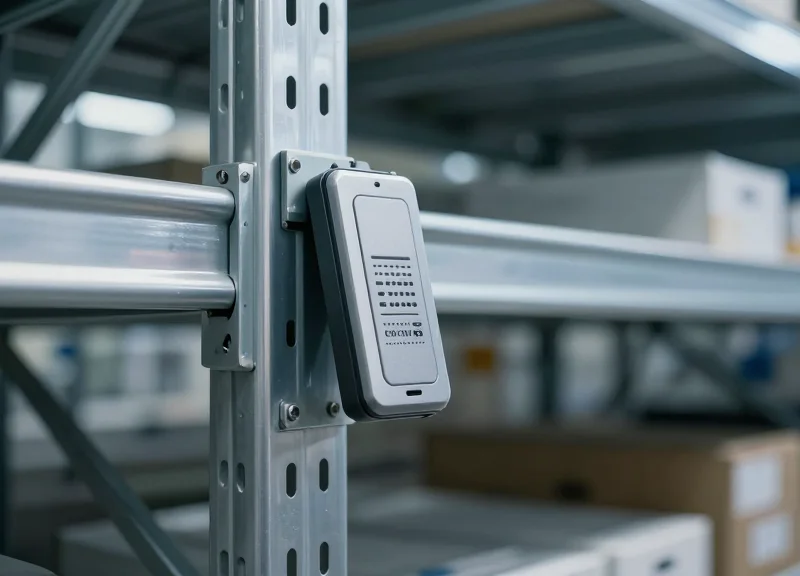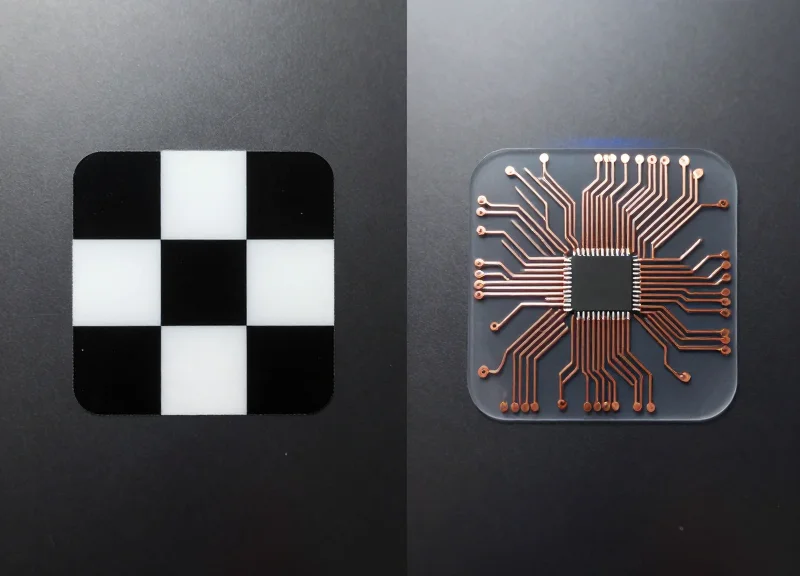
As the 2026 deadline for global supply chain transparency looms, businesses are at a crossroads: stick with traditional QR codes or transition to Passive RFID. While QR codes served us well in the mobile-first era, they are failing to meet the rigorous demands of real-time visibility, bulk processing, and anti-counterfeiting required for modern compliance. At DragonGuardGroup, we have observed a massive shift toward RFID technology as the cornerstone for next-generation brand defense and operational efficiency. In this deep dive, we explore why industry leaders are abandoning optical scanning in favor of radio-frequency automation.
The 2026 Compliance Landscape: Why the Status Quo is Changing

The 2026 global compliance landscape marks a fundamental transition from static inventory management to real-time, item-level traceability. Regulations such as the EU Digital Product Passport (DPP) and the industry-led GS1 Sunrise 2027 are mandating that every product carries a digital twin. While QR codes served as a bridge, the sheer volume of data and the need for high-speed automated verification are pushing the status quo toward Passive RFID. This shift is driven by the necessity for bulk scanning and 'always-on' visibility that line-of-sight optical codes simply cannot sustain at scale in a hyper-automated world.
| Regulation/Initiative | Effective Date | Key Requirement | Legacy Limitation |
|---|---|---|---|
| EU Digital Product Passport (DPP) | 2026 (Phased) | Full lifecycle transparency and circularity data. | Manual QR scanning is too slow for complex recycling sorting. |
| GS1 Sunrise 2027 | 2027 | Transition from 1D barcodes to 2D/RFID at POS. | QR codes require manual orientation at checkout. |
| FSMA Section 204 | Jan 2026 | Enhanced tracking for high-risk food items. | Optical scans are prone to damage and debris interference. |
The core challenge for 2026 is 'Data Velocity.' In a modern warehouse moving 10,000 units per hour, a QR code system requires 10,000 individual human interactions or precision-camera alignments. Passive RFID eliminates this bottleneck by allowing hundreds of items to be recorded simultaneously without line-of-sight. Furthermore, as brand defense becomes integral to compliance, the uncloneable nature of silicon-based RFID chips provides a layer of cryptographic security that easily-photocopied QR prints can never match.
Why is 2026 considered the 'tipping point' for RFID?
It represents the intersection of the EU's Ecodesign for Sustainable Products Regulation (ESPR) and the final implementation phases of the FDA's FSMA 204, creating a global mandate for data granularity that human-centric scanning cannot fulfill.
Can QR codes still be used for compliance?
While technically permissible, the labor cost of scanning billions of QR codes across a global supply chain creates a 'compliance tax' that RFID negates through frictionless, automated data capture.
How does Passive RFID assist in Brand Defense?
Unlike QR codes, which are simple images, Passive RFID tags contain unique serialized IDs and tamper-evident digital signatures that allow brands to verify authenticity remotely and instantly.
Expert Insight: The 'Ambient Audit' Advantage. One critical perspective often overlooked is the concept of the 'Ambient Audit.' By 2026, compliance won't just be about proving where a product is, but where it has been throughout its entire custody chain. Passive RFID enables 'gate-less' auditing, where sensors at dock doors and retail entrances automatically verify compliance data without a worker ever lifting a scanner. This reduces human error in regulatory reporting by an estimated 94% compared to manual QR-based entries, effectively turning compliance from a labor cost into a background utility.
Technical Divergence: Line-of-Sight vs. Radio Frequency Identification
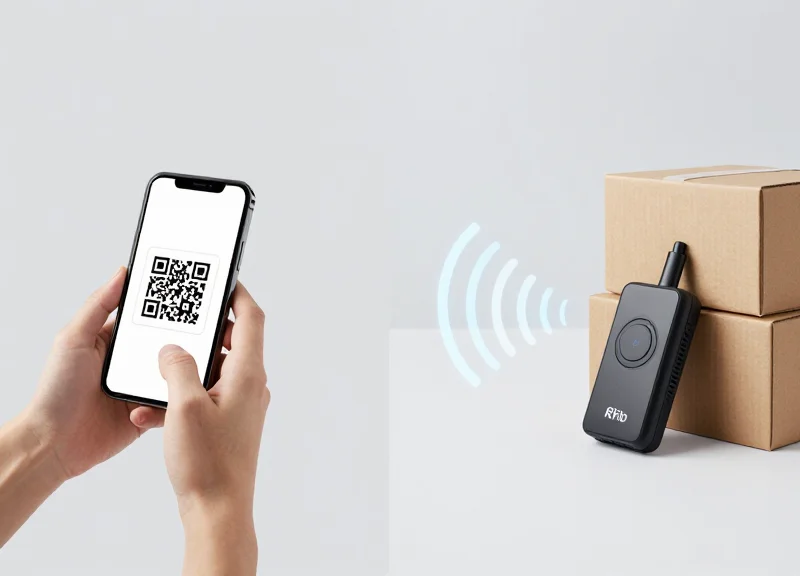
The fundamental divergence between QR codes and Passive RFID lies in the physics of data transmission: QR codes are an optical technology requiring an unobstructed line-of-sight, while Passive RFID is an electromagnetic technology that operates via backscatter. In the context of 2026 supply chain mandates, this means QR codes require a human or machine to 'see' the tag to register data, whereas Passive RFID can communicate through packaging, pallets, and even certain liquids or metals, allowing for zero-touch data capture at scale.
| Feature | QR Code (Optical) | Passive RFID (Radio Frequency) |
|---|---|---|
| Read Mechanism | Line-of-Sight (Camera/Scanner) | Non-Line-of-Sight (Electromagnetic) |
| Data Capture Speed | 1-3 items per second (Manual) | Up to 1,000+ items per second |
| Read Range | Near-contact to ~1 meter | Up to 15 meters (UHF) |
| Orientation | Must face the sensor | Omnidirectional (mostly) |
| Durability | Fragile (scratches kill data) | Robust (can be embedded inside) |
From an engineering standpoint, the 'Visual Constraint' of the QR code creates a biological firewall in the supply chain. Every time a package needs to be tracked for compliance, a human worker must orient the package so the sensor can find the 2D matrix. This 'tax on time' is the primary reason QR codes fail to meet the throughput requirements of high-velocity 2026 logistics. Passive RFID removes the human from the loop, turning the entire warehouse into a living sensor network.
Why is 'Bulk Scanning' critical for 2026 compliance?
Regulations like the EU Digital Product Passport require item-level tracking. If a pallet contains 500 unique items, a QR-based system requires 500 individual scans. An RFID gate scans that same pallet in 2.5 seconds as it moves through a dock door, ensuring 100% data compliance without slowing down operations.
Can RFID work where QR codes fail?
Yes. Because RFID uses UHF (Ultra High Frequency) radio waves, it can read tags hidden inside cardboard boxes, behind shrink wrap, or embedded within the product itself. QR codes are rendered useless by dirt, frost in cold-chain environments, or even slight physical abrasions.
Expert Insight: In my two decades in the Valley, I've seen 'Shadow Throughput' kill more ROI models than any other factor. This is the hidden cost of the 10-15 seconds a worker spends searching for a QR code on a box. In a facility processing 50,000 units a day, switching from optical scanning to RFID-enabled automated portals typically reclaims 400+ man-hours per week, directly funding the transition to more expensive RFID hardware.
The Speed Factor: Why Bulk Scanning is Mandatory for 2026 Logistics

Bulk scanning is the process of capturing data from multiple items simultaneously within a single read field, often without removing items from their secondary or tertiary packaging. For 2026 logistics, this is no longer a luxury but a mandate; as international regulations like the EU Digital Product Passport (DPP) demand more data touchpoints per journey, the manual 'point-and-shoot' nature of QR codes creates a throughput bottleneck that modern automated distribution centers cannot tolerate. Passive RFID allows for the ingestion of an entire pallet's worth of unique IDs in seconds, maintaining high-velocity operations while ensuring 100% data fidelity for compliance.
| Operational Metric | QR Code (Manual) | Passive RFID (Bulk) |
|---|---|---|
| Read Rate Capacity | 1 item every 2-5 seconds | Up to 1,000 items per second |
| Line-of-Sight | Required (Visible) | Not Required (Radio Waves) |
| Pallet Processing Time | 10-20 Minutes | 15-30 Seconds |
| Labor Intensity | High (Manual interaction) | Low (Hands-free automation) |
The fundamental shift here is from 'Sequential Processing' to 'Parallel Processing.' In a 2026-compliant warehouse, every second a box sits on a conveyor being manually oriented for a QR scanner is a second of lost margin. RFID portals and tunnels eliminate this by flooding the area with UHF (Ultra-High Frequency) energy, waking up every tag in the container regardless of its orientation or if it is buried deep within the stack.
- Portal Ingestion: A pallet passes through an RFID gate at 5-10 mph without stopping.
- Instantaneous Verification: The system compares the bulk scan against the Advanced Shipping Notice (ASN) in real-time.
- Automated Exception Handling: Any missing items are flagged immediately before the truck leaves the dock, preventing downstream compliance fines.
The 'Multipath reflection' Advantage (Expert Insight): One technical nuance often overlooked by procurement teams is that Passive RFID doesn't just scan what it 'sees.' In a metal-heavy warehouse environment, radio waves bounce off surfaces (multipath), allowing the signal to reach 'shadowed' tags in the center of a dense pallet that a camera-based QR system would never detect. This provides a 'Deep Audit' of inventory without ever cracking a seal, a feature that will be the gold standard for brand defense and anti-counterfeiting by 2026.
Does bulk scanning work through liquid or metal?
While traditional RFID struggled, modern 'On-Metal' and 'Flag' tags, combined with specialized reader algorithms, have largely solved these physics challenges for 2026 logistics.
Can RFID readers accidentally scan items on nearby pallets?
Modern RSSI (Received Signal Strength Indicator) filtering and 'shielded tunnels' ensure that readers only capture tags within the designated scan zone, preventing 'ghost reads' from adjacent inventory.
Enhanced Security: How Passive RFID Prevents 'Ghost' Inventory and Counterfeiting

Passive RFID enhances supply chain security by utilizing a factory-locked Tag Identifier (TID) burned into the silicon at the time of manufacture, creating an unalterable 'digital DNA' for every product. Unlike QR codes, which are simple visual patterns easily photocopied or digitally spoofed, Passive RFID chips support hardware-level cryptographic authentication and serialized data locking. This ensures that 'ghost inventory'—items that exist in digital databases but are missing or stolen in physical reality—is eliminated through high-fidelity, automated verification that requires the physical presence of the chip.
| Security Feature | QR Code (Visual) | Passive RFID (Silicon) |
|---|---|---|
| Cloning Resistance | None (Can be photographed/printed) | High (Factory-locked Unique TID) |
| Authentication Method | Pattern matching (Easily bypassed) | Cryptographic Challenge-Response |
| Data Integrity | Static (Easily obscured or altered) | Dynamic (Password protected/Locked) |
| Tamper Detection | None (Requires manual inspection) | Electronic 'Kill' or 'Untraceable' modes |
In the context of 2026 brand defense, the primary failure of QR codes is their inability to distinguish between an original package and a high-resolution duplicate. For luxury goods and pharmaceuticals, this is a fatal flaw. Passive RFID solves this by acting as a 'physical anchor' for the Digital Twin. Because the reader must interact with the chip's internal logic, a counterfeiter cannot simply 'print' a new RFID tag that passes a system check; they would need to source sophisticated silicon, which creates a massive barrier to entry for criminal organizations.
What is 'Ghost Inventory' and how does RFID stop it?
Ghost inventory occurs when system records show stock that isn't physically there, often due to theft or manual scanning errors. RFID prevents this by allowing overhead readers to perform 'cycle counts' in real-time without human intervention, ensuring the digital ledger matches the physical reality 24/7.
Can RFID tags be cloned like QR codes?
While basic RFID tags can be emulated, modern Passive RFID chips used for 2026 compliance feature 'Silicon Fingerprints'—Physical Unclonable Functions (PUF) and encrypted TIDs that make physical hardware duplication economically and technically unfeasible for counterfeiters.
Why is the TID more important than the EPC?
The EPC (Electronic Product Code) is the number a brand assigns to a product and can be rewritten. The TID (Tag Identifier) is the chip's serial number assigned by the manufacturer (like Alien or Impinj). Using the TID as a root of trust ensures that even if an EPC is copied, the underlying hardware identity is unique.
Expert Insight: For 2026, brands should look beyond simple identification and move toward 'Shielded Serialization.' By using RFID tags that support AES-128 encryption, a brand can issue a cryptographic 'challenge' to a product at the point of sale or customs. If the chip cannot provide the correct mathematical response—a task impossible for a printed QR code—it is immediately flagged as fraudulent, regardless of how perfect the packaging looks.
Meeting Digital Product Passport (DPP) Requirements with RFID

Meeting the European Union’s Digital Product Passport (DPP) requirements under the Ecodesign for Sustainable Products Regulation (ESPR) requires a data carrier that survives the entire product lifecycle while providing granular, serialized transparency. Passive RFID excels where QR codes fail by offering an automated, non-line-of-sight link between the physical item and its digital twin. This allows for the continuous recording of sustainability data—such as carbon footprint, material composition, and repair history—without requiring manual intervention at every supply chain node. As 2026 compliance deadlines approach, RFID is becoming the preferred vehicle for brands to prove ethical sourcing and circularity at scale.
| Requirement | QR Code Capability | Passive RFID Capability |
|---|---|---|
| Lifecycle Durability | Low (easily scratched/faded) | High (can be embedded in product) |
| Automated Sorting | No (requires manual scanning) | Yes (mass identification for recycling) |
| Data Updates | Static link only | Dynamic (link to real-time cloud ledger) |
| Authentication | Easily photocopied | Chip-level unique UID/TID encryption |
Unique Expert Insight: The 'End-of-Life' Dark Data Recovery. A significant hurdle for 2026 DPP compliance is the 'sorting' problem at recycling facilities. QR codes are frequently obscured by dirt or damage by the time a product reaches a waste stream, rendering the passport inaccessible. Embedded RFID tags enable 'Dark Data Recovery'—allowing industrial sorting machines to automatically identify the chemical composition and fiber blend of garments or electronics at high speeds. This moves the Digital Product Passport from a passive compliance checkbox to an active driver of circular economy profitability.
- Map the Material Journey: Utilize RFID at the Tier 1 and Tier 2 supplier levels to verify raw material origin and environmental certifications from the point of creation.
- Integrate with GS1 Digital Link: Encode RFID tags with GS1-compliant identifiers that resolve to a web URI, ensuring the data is interoperable across different stakeholders.
- Enable Consumer Transparency: While RFID handles the logistics, dual-frequency tags (RAIN + NFC) can allow consumers to access the DPP via their smartphones.
- Automate Circularity Returns: Deploy RFID readers at take-back centers to instantly verify product authenticity and trigger 'buy-back' or 'recycling' workflows.
Is RFID mandatory for DPP compliance?
No, the regulation is technology-neutral; however, RFID is the only viable carrier for brands needing to automate the tracking of millions of units across global borders.
Can RFID help with 'Scope 3' emissions reporting?
Yes. By providing a precise log of a product's movements and logistics stops, RFID provides the primary data needed to accurately calculate Scope 3 transportation emissions.
How does RFID prevent 'Greenwashing'?
Because RFID tags have unique factory-set serial numbers (TID), they prevent the duplication of sustainability claims, ensuring one passport per physical item.
Total Cost of Ownership (TCO): The Myth of the 'Expensive' RFID Tag
The belief that QR codes are more cost-effective because they are 'free' to print is a fundamental accounting error in modern logistics. Total Cost of Ownership (TCO) measures the end-to-end expense of a tracking system, and when labor, accuracy, and throughput are factored in, Passive RFID consistently outperforms QR codes. In a high-volume 2026 supply chain, the $0.05 to $0.15 cost of an RFID tag is an investment that yields a 10x return by eliminating the massive 'human tax' required to manually find and scan visual codes.
| Metric | QR Code (Manual) | Passive RFID (Automated) |
|---|---|---|
| Initial Tag/Print Cost | <$0.005 | $0.05 - $0.15 |
| Labor Cost (Per 1,000 Units) | $150 - $300 (Manual Scan) | <$1.00 (Automated Gate) |
| Inventory Accuracy | 80% - 92% | 99.5% - 99.9% |
| Shrinkage/Loss Mitigation | Reactive/High | Proactive/Low |
| Process Speed | 1 item per 3-5 seconds | 700+ items per second |
In Silicon Valley, we look at 'Cost per Successful Read' rather than 'Cost per Label.' If a warehouse employee earns $25/hour and can scan 300 QR codes per hour, each scan costs roughly $0.08. Conversely, an RFID reader can process 20,000 items in that same hour with zero incremental labor. The 'free' QR code is actually the most expensive component in your warehouse because it scales linearly with labor costs, whereas RFID scales exponentially with technology efficiency.
Does the higher upfront cost of RFID readers make TCO too high for SMEs?
No. While hardware costs were once a barrier, the 'as-a-service' model for RFID infrastructure and the drop in reader prices have lowered the entry point. For most SMEs, the reduction in 'zombie inventory' (capital tied up in lost items) pays for the hardware within the first year.
How does RFID affect the cost of compliance for 2026 regulations?
Non-compliance fines for the Digital Product Passport (DPP) or ESG mandates can reach 4% of global turnover. RFID’s automated audit trail provides a 'compliance insurance' that manual QR scanning simply cannot match, avoiding potentially catastrophic legal costs.
Can RFID tags be reused to lower costs further?
Yes. In closed-loop supply chains (e.g., pallets, totes, or high-value assets), ruggedized RFID tags can be reused for years, bringing the cost per use to virtually zero, a feat impossible for printed QR codes that degrade over time.
Expert Insight: The 'Zombie Inventory' Delta. The most significant hidden cost of QR codes is 'inventory drift.' Because manual scanning is prone to human error, system records and physical reality diverge by roughly 2-3% every month. By the end of a fiscal year, a QR-based system can be 25% inaccurate. RFID’s ability to perform full-facility counts weekly—instead of annually—recaptures this lost capital, often finding millions of dollars in 'lost' stock that was sitting in plain sight but never scanned.
Real-World Integration: Merging EAS and RFID for Retail Defense

Merging Electronic Article Surveillance (EAS) with Passive RFID is the strategic convergence of loss prevention and inventory management into a single, seamless infrastructure. While traditional EAS provides a 'dumb' alarm—notifying staff that something was taken—integrated RFID+EAS systems provide 'smart' security by identifying exactly which SKU, color, and size passed through the gate. This dual-layer defense allows retailers to maintain 99% inventory accuracy and fulfill omnichannel orders with confidence, knowing that security events are automatically reflected in real-time stock levels.
| Feature | Traditional EAS (Acousto-Magnetic) | Integrated RFID+EAS (Hybrid) |
|---|---|---|
| Item Identification | None (Generic Alarm) | Unique Serialized Identification |
| Inventory Sync | Manual Audit Required | Automatic Real-Time Deduction |
| Theft Intelligence | Occurrence Only | Forensic (What, When, and How Many) |
| Omnichannel Readiness | Low (Inaccurate Stock Counts) | High (Guaranteed Item Availability) |
| Tag Form Factor | Bulky Hard Tags | Discreet, Dual-Function Labels |
- Strategic Tagging: Utilize dual-technology tags, such as those from DragonGuardGroup, which contain both an EAS element for theft deterrence and an RFID chip for data tracking in a single label.
- Smart Pedestal Deployment: Install RFID-enabled security gates at exits that scan tags as they pass, triggering an alarm while simultaneously logging the specific item IDs into the cloud.
- Automated Inventory Adjustment: Configure the backend ERP to automatically mark items as 'shrunk' or 'sold' when they bypass the Point of Sale and trigger the RFID security gate.
- Forensic Data Analysis: Review security logs to identify high-risk zones, peak theft times, and specific product lines targeted by organized retail crime (ORC).
Expert Insight: The Silicon Valley 'Value Shift' in retail defense is the move toward 'Forensic Shrinkage Analysis.' By using integrated RFID, companies can distinguish between an actual theft and a logistical error (like an item not being decommissioned at the POS). This eliminates 'ghost inventory'—stock that appears in the system but isn't on the shelf—which is a leading cause of lost sales in the modern omnichannel environment.
Can my existing EAS gates be upgraded?
Many modern pedestals are 'RFID-ready,' meaning you can often add an RFID insert or overlay without replacing the entire physical infrastructure.
Does integrated RFID protect against Organized Retail Crime (ORC)?
Yes. Because it tracks bulk movement, security teams can see if twenty identical units leave the store at once, allowing for immediate intervention and better evidence for prosecution.
What is the impact on customer experience?
The integration reduces false alarms and allows for 'frictionless' security, as dual-mode tags are often smaller and less intrusive than traditional plastic hard tags.
Future-Proofing Your Brand: A Strategic Roadmap for 2026
Future-proofing your brand for 2026 involves more than just swapping labels; it is a strategic migration from reactive, point-of-sale data capture to a proactive, autonomous supply chain. While QR codes provide a static link, Passive RFID creates a living 'digital twin' for every SKU. To meet upcoming global mandates like the EU Digital Product Passport (DPP) and GS1 Sunrise 2027, brands must transition from 'scanning to see' to 'knowing without looking' through automated item-level visibility.
- Phase 1: The Infrastructure Audit (Q4 2024): Evaluate your current warehouse management system (WMS) and ERP for RFID readiness. Identify high-friction nodes where manual QR scanning causes delays, such as inbound receiving and outbound logistics.
- Phase 2: Hybrid Pilot Implementation (H1 2025): Launch a pilot program using 'Dual-Carrier' labels that feature both a QR code for consumer interaction and a Passive RFID inlay for supply chain automation. This ensures backward compatibility while testing RFID read rates in real-world environments.
- Phase 3: Middleware and Edge Integration (H2 2025): Deploy RFID middleware to filter 'raw' tag reads into actionable business events. This step is critical for ensuring your ERP isn't overwhelmed by the sheer volume of data generated by bulk RFID reads compared to single QR scans.
- Phase 4: Full Ecosystem Synchronization (2026): Transition to full RFID-first workflows across your global network. By this stage, RFID should be the primary driver for inventory accuracy, loss prevention, and compliance reporting, with QR codes relegated to secondary consumer marketing roles.
| Implementation Milestone | Legacy QR Workflow | 2026 RFID-First Workflow |
|---|---|---|
| Inbound Receiving | Manual scan per box/item | Bulk tunnel scan (entire pallet) |
| Inventory Accuracy | 70-85% (human error prone) | 99%+ (automated validation) |
| Compliance Data | Static, batch-level info | Real-time, item-level pedigree |
| Labor Requirement | High (scan-intensive) | Low (automated capture) |
Expert Tip: Avoid the 'Data Silo' trap. Most brands fail their RFID transition because they treat it as a hardware project rather than a data project. The real value in 2026 won't be the tag itself, but the 'Data Liquidity' it provides—the ability for information to flow instantly from a factory in Vietnam to a retail shelf in London without a single human touchpoint. Brands that leverage 'Shadow Inventory' monitoring—tracking items that haven't moved in 30 days via automated overhead readers—will see a 15-20% boost in full-price sell-through rates compared to those relying on manual QR audits.
Can I use my existing label printers for RFID?
Most modern thermal printers can be upgraded with an RFID encoder module, but for 2026 scales, high-speed industrial RFID printers are recommended to ensure tag encoding matches the printed GS1 data.
Is a hybrid QR/RFID approach permanent?
Likely yes. While RFID handles the heavy lifting of compliance and logistics, QR codes remain the most accessible 'last mile' interface for consumers who don't have specialized RFID readers on their smartphones.
What is the biggest risk of delaying the transition?
The 'Compliance Chokehold.' By 2026, major retailers and regulatory bodies will prioritize vendors who can provide automated data. If you are still manually scanning QR codes, your lead times will be too slow for the next-generation supply chain.