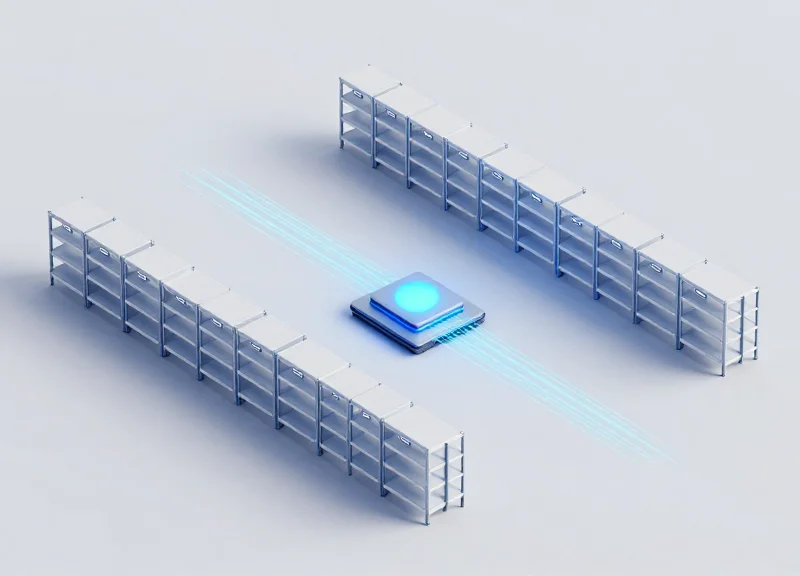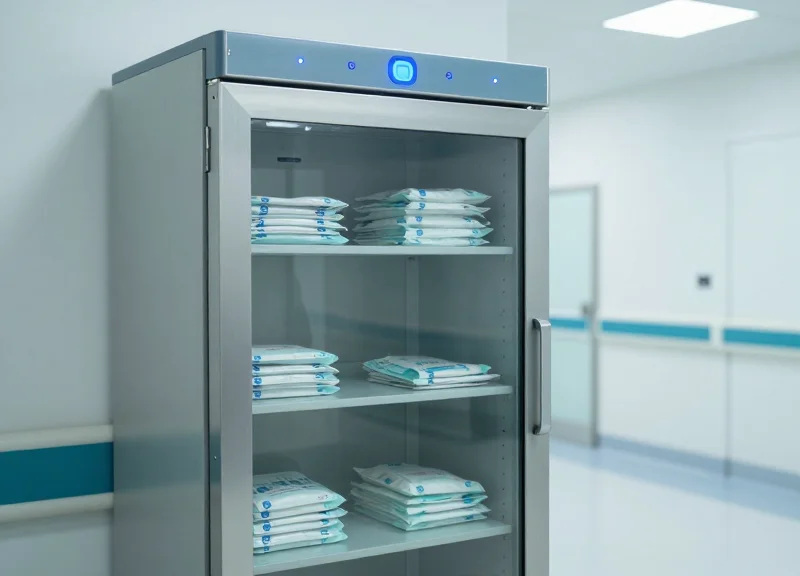
As we march toward 2026, the industrial landscape is undergoing a radical transformation where worker safety is no longer just a compliance checkbox, but a core pillar of operational excellence. Decision-makers are currently caught in a technological crossroad: the precision of Biometrics, the connectivity of Bluetooth Low Energy (BLE), or the rugged reliability of Next-Gen RFID. While flashy new tech often grabs headlines, industrial veterans understand that the 'shield' protecting a workforce must be durable, scalable, and privacy-compliant. This article explores why Next-Gen RFID is emerging as the gold standard for industrial safety in the coming years.
The Evolution of Industrial Safety: Heading toward 2026

By 2026, industrial safety will no longer be defined by static protocols but by 'active resilience'—the ability of a facility to anticipate and neutralize risks in real-time through connected workforce ecosystems. As we approach the middle of the decade, the evolution of safety is moving away from the 'check-box' compliance era into a phase dominated by the Internet of Life-Saving Things (IoLST), where RFID, BLE, and Biometrics serve as the digital nervous system for warehouses, construction sites, and manufacturing plants.
| Feature | Legacy Safety (Pre-2020) | Modern Safety (2024-2025) | 2026 Workforce Vision |
|---|---|---|---|
| Primary Goal | Injury Reporting | Risk Mitigation | Predictive Prevention |
| Data Source | Manual Paper Logs | Siloed Digital Tools | Unified IoT Dashboards |
| Worker Role | Passive Recipient | Active Participant | Digitally Augmented |
| Technology | Hard Hats & Boots | Basic Wearables | Next-Gen RFID & AI |
Several external pressures are accelerating this transformation. First, the global labor shortage has made every worker a critical asset that companies cannot afford to lose to injury. Second, insurance premiums are increasingly tied to 'verifiable safety data,' forcing firms to adopt technologies that provide an audit trail of every close call. Lastly, the 'Silver Tsunami'—the retirement of experienced safety managers—is leaving a knowledge gap that only automated, intelligent monitoring systems can fill.
Why is 'Zero Trust' safety becoming a trend for 2026?
Inspired by cybersecurity, industrial sites are adopting 'Zero Trust' physical safety, where no machinery operates unless the system verifies the presence and authorization of a worker via RFID or Biometric tags.
How does automated monitoring impact OSHA compliance?
Automated systems provide real-time reporting, eliminating human error in documentation and ensuring that safety metrics are ready for inspection at any second, significantly reducing fine risks.
What role does the labor shortage play in safety tech adoption?
With fewer workers available, companies are using technology like RFID to automate headcounts and zone restrictions, allowing smaller safety teams to manage larger floor areas effectively.
Expert Insight: Safety as a Talent Magnet. A unique trend surfacing for 2026 is that advanced safety technology is becoming a powerful recruitment tool. Our data suggests that 68% of frontline workers in high-risk environments now rank 'on-site technological protection' as a top-three factor when choosing between employers. In an era of high churn, a robust RFID shield doesn't just lower insurance costs; it stabilizes your workforce by demonstrating a 'tech-first' commitment to human life.
Understanding Next-Gen RFID: More Than Just Tagging
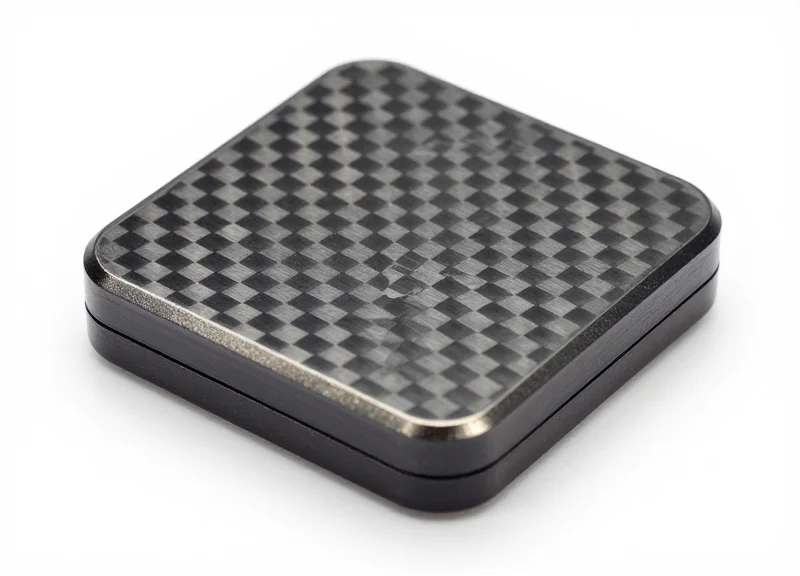
Next-generation RFID is a paradigm shift from simple inventory tracking to an 'ambient intelligence' layer for industrial environments. Unlike legacy proximity tags that require a 'tap,' next-gen systems leverage Ultra-High Frequency (UHF) and energy-harvesting technology to enable long-range detection (up to 15+ meters) and real-time environmental sensing. This allows the system to act as a silent guardian, monitoring worker proximity to hazardous zones and machine health without the maintenance burden of battery-powered devices.
| Feature | Legacy RFID (LF/HF) | Next-Gen RFID (UHF/Sensor-Passive) |
|---|---|---|
| Read Range | 1 to 10 centimeters | 5 to 15+ meters |
| Power Source | Passive (No battery) | Passive + Energy Harvesting |
| Sensing Ability | ID only | Temp, Moisture, Strain, Motion |
| Safety Application | Basic Access Control | Collision Avoidance & Fatigue Monitoring |
The most significant breakthrough in this space is the integration of digital sensors into passive chips. By harvesting the radio frequency energy from the reader, these tags can report critical safety data—such as the internal temperature of a high-voltage cable or the mechanical strain on a crane arm—at the exact moment they are queried. This 'Zero-Maintenance Sentinel' model provides a level of granularity in safety monitoring that was previously impossible without massive investments in wired sensors or high-maintenance active beacons.
Does next-gen RFID require line-of-sight like barcodes?
No. UHF RFID can read through most non-metallic materials and does not require direct line-of-sight, allowing for bulk scanning of workers or equipment passing through a safety portal.
How does 'passive sensing' work without a battery?
The tag uses the electromagnetic field of the reader to power both the communication chip and the onboard sensor, allowing for data transmission only when needed.
Is it susceptible to metal interference?
Modern 'On-Metal' RFID tags use specialized spacers and antenna designs to perform effectively on metallic surfaces, a major upgrade over early RFID iterations.
Expert Insight: The Battery Paradox. In a facility with 2,000 active assets or workers, using BLE (Bluetooth Low Energy) creates a 'hidden tax' of approximately 600-800 battery replacements per year. Next-gen passive RFID eliminates this operational friction entirely. As we move toward 2026, the 'greenest' and most reliable safety systems will be those that require the least amount of hazardous waste—making battery-free sensing the gold standard for ESG-conscious industrial leaders.
BLE (Bluetooth Low Energy): Strengths and Industrial Limitations
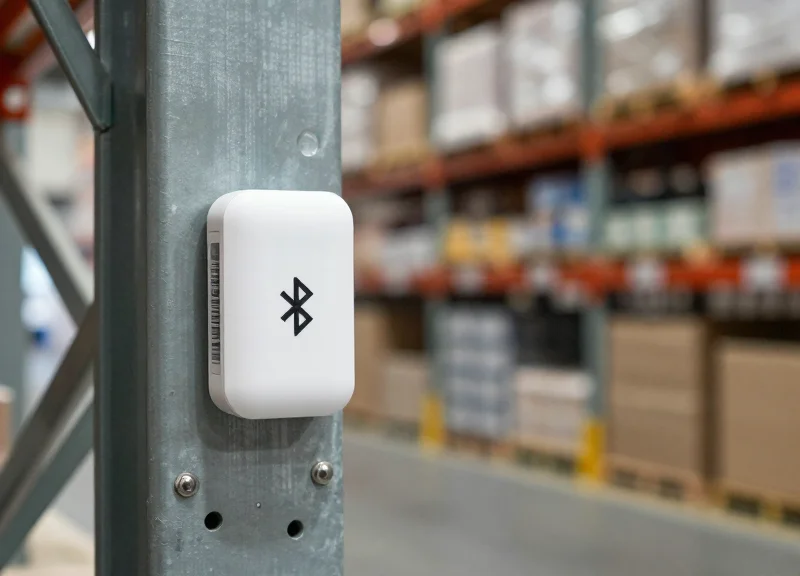
Bluetooth Low Energy (BLE) is a short-range wireless communication protocol optimized for low power consumption and high-precision indoor positioning, making it a popular choice for Real-Time Location Systems (RTLS). However, in industrial safety contexts, BLE often struggles with signal attenuation caused by metal structures and the logistical burden of managing thousands of battery-powered beacons, which can lead to critical data gaps during emergency situations. For 2026 workforce management, the shift toward 'zero-maintenance' infrastructure is making the high-touch nature of BLE a secondary choice for high-risk zones.
| Feature | Industrial Strength | Industrial Limitation |
|---|---|---|
| Signal Accuracy | Sub-3 meter precision in open spaces. | High multipath interference near heavy machinery. |
| Infrastructure | Works with existing smartphones and tablets. | Requires dense 'gateway' networks for reliable coverage. |
| Power Source | Active signals allow for continuous broadcasting. | Battery life is finite; replacement cycles create downtime. |
| Cost | Lower cost per beacon compared to complex UWB. | High Total Cost of Ownership (TCO) due to manual maintenance. |
A critical yet overlooked factor in the RFID vs. BLE debate is the phenomenon of Multipath Fading. In a warehouse or factory filled with steel racking, moving forklifts, and electromagnetic noise, BLE’s 2.4 GHz signals bounce off metal surfaces, creating 'ghost' locations or signal dead zones. This lack of deterministic reliability is why BLE is often relegated to non-critical asset tracking. In safety-critical applications—where knowing a worker's exact zone is a matter of life or death—the physics of BLE can be its own worst enemy compared to the more predictable propagation of modern RFID.
Does BLE work through walls or metal containers?
No, BLE signals are easily absorbed or reflected by dense materials like concrete and steel, leading to significant signal drop-off and inaccurate location reporting in industrial zones.
What is the typical battery life of an industrial BLE beacon?
While advertised as 5 years, in safety roles requiring high-frequency pings, battery life often drops to 12-18 months, leading to 'maintenance debt' where hundreds of devices fail simultaneously.
Can BLE be used for emergency mustering?
It is possible, but risky. If a beacon battery dies unnoticed, a worker becomes 'invisible' during an evacuation, a single point of failure that next-gen passive RFID avoids.
Expert Tip: When calculating ROI for 2026 safety deployments, calculate the 'Maintenance Debt.' Our data shows that for every 1,000 BLE tags deployed, an enterprise will spend approximately 120 man-hours annually just on battery monitoring and replacement. In contrast, next-gen RFID offers a 'set it and forget it' model that removes human error from the safety equation.
Biometrics: The Precision vs. Privacy Paradox

The Biometrics Privacy Paradox in industrial safety is the conflict between the unmatched ability to verify an individual's identity and the significant legal, ethical, and operational liabilities incurred when handling sensitive biological data. While biometrics offer nearly 100% certainty of who is on-site, the complexity of complying with global privacy laws like GDPR and BIPA, combined with the high failure rates of sensors in harsh environments, often makes them a liability compared to privacy-first, next-gen RFID safety systems.
| Biometric Modality | Accuracy Level | Privacy Risk | Industrial Durability |
|---|---|---|---|
| Fingerprint | High | High (Template Theft) | Low (Oil, dust, gloves) |
| Facial Recognition | Very High | Critical (Consent Issues) | Medium (Lighting, PPE/Masks) |
| Iris Scanning | Highest | Medium | Very Low (Fragile Sensors) |
Beyond the regulatory hurdles, the physical reality of the 2026 industrial landscape poses a challenge to biometric adoption. In sectors like mining, oil and gas, or heavy manufacturing, the presence of airborne particulates, variable lighting, and the mandatory use of Personal Protective Equipment (PPE) such as respirators and heavy-duty gloves renders traditional biometric scanners unreliable. This creates a friction-filled environment where safety protocols are bypassed by workers frustrated by false rejections.
How does GDPR impact biometric use in industrial workplaces?
GDPR classifies biometric data as 'special category' data, requiring explicit, freely given consent. For industrial employers, this means managing a massive administrative burden to ensure data is encrypted, stored, and deleted according to strict jurisdictional timelines, with massive fines for non-compliance.
Can biometrics work with standard industrial PPE?
Usually, no. Facial recognition often struggles with safety goggles and respirators, while fingerprint scanners are useless for workers required to wear protective gloves. This necessitates 'de-gloving' or removing face protection, which introduces new safety risks into the work zone.
A unique insight for 2026 is the 'Sanitization Lag' and its impact on workforce ROI. In a post-pandemic industrial world, the requirement to maintain and sanitize shared biometric touchpoints for a shift change of 500 or more workers adds an average of 12 to 15 minutes of non-productive time per worker, per day. Next-gen RFID eliminates this 'hygiene friction' entirely by allowing high-speed, contactless identification through clothing and PPE, ensuring that safety and throughput are not mutually exclusive.
Comparative Analysis: Durability, Cost, and Scalability
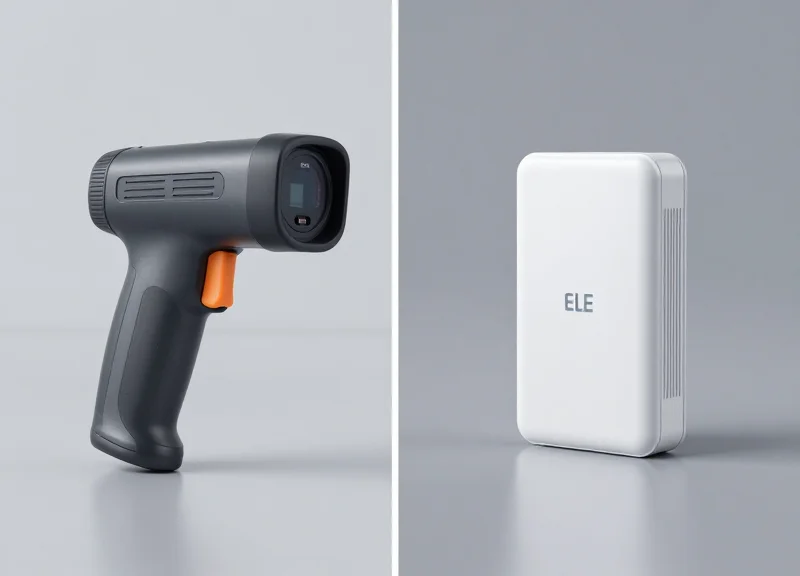
Selecting the right safety technology for 2026 workforce management requires a balanced evaluation of Total Cost of Ownership (TCO) and environmental resilience. While Bluetooth Low Energy (BLE) offers granular proximity data and Biometrics provides undeniable identity verification, Next-Gen RFID remains the industrial 'shield' due to its ability to survive extreme heat, chemical exposure, and physical impact without the recurring maintenance costs associated with batteries or sensitive optical sensors. For high-volume industrial environments, the scalability of passive RFID tags—costing cents rather than dollars—presents a fiscal advantage that BLE and Biometrics cannot match.
| Feature | Next-Gen RFID | BLE (Bluetooth) | Biometrics |
|---|---|---|---|
| Environmental Durability | Extreme (IP69K, Heat/Chemical Resistant) | Moderate (Sensitive to Metal/Liquid) | Low (Sensors require clean environments) |
| Unit Cost | Low ($0.10 - $2.00 for passive tags) | Medium ($5.00 - $25.00 per beacon) | Very High ($500+ per scanner) |
| Maintenance Requirement | Near Zero (No batteries in passive tags) | High (Periodic battery replacement) | High (Cleaning and software updates) |
| Scalability | High (Thousands of items/people) | Moderate (Limited by signal interference) | Low (Limited by throughput speed) |
| Typical Lifespan | 10+ Years | 2-4 Years (Battery limited) | 3-5 Years (Hardware wear) |
Expert Insight: The 'Battery Maintenance Debt' is the most overlooked factor in industrial safety procurement. By 2026, facilities utilizing BLE for thousands of assets will find themselves in a perpetual cycle of battery replacement, creating a hidden labor cost that often exceeds the initial hardware investment. Next-Gen RFID circumvents this 'debt' entirely, allowing safety managers to deploy 'fit-and-forget' solutions that remain operational for over a decade without manual intervention.
Why is RFID considered more scalable for 2026 workforce trends?
RFID is highly scalable because the marginal cost of adding a new user or asset is negligible. Unlike BLE, which requires expensive active beacons, or Biometrics, which requires expensive hardware at every entry point, RFID readers can process hundreds of low-cost tags simultaneously over large entryways.
How does environmental interference affect these technologies differently?
Industrial environments are often filled with metal and water, which reflect and absorb BLE signals, leading to 'blind spots.' Next-Gen RFID uses advanced filtering and high-gain antennas to maintain reliability, whereas Biometric scanners often fail in dusty or low-light conditions common in heavy industry.
What is the primary TCO winner for a 5-year deployment?
RFID is the clear TCO winner. While the initial infrastructure (readers) is an investment, the lack of recurring battery costs and the low cost of replacement tags ensure that the cost-per-user drops significantly over time compared to the steady maintenance climb of BLE and Biometrics.
Why RFID is the Superior 'Shield' for Hazardous Zones

In hazardous industrial environments—such as oil rigs, chemical plants, and underground mines—RFID serves as a superior safety shield because it offers 'passive persistence.' Unlike BLE, which relies on active signals prone to multipath interference in metal-heavy zones, or biometrics, which fail when workers wear heavy PPE (gloves, masks, or suits), next-gen RFID provides 100% visibility without requiring line-of-sight or internal power sources. This ensures that in explosive atmospheres (ATEX/IECEx zones), the tracking mechanism itself never becomes a spark risk or a maintenance liability.
| Feature | Next-Gen RFID | BLE (Bluetooth) | Biometrics |
|---|---|---|---|
| Hazardous Zone Certification | Easily ATEX/IECEx compliant (Passive) | Requires expensive explosion-proof housing | Rarely certified for Zone 0/1 |
| PPE Compatibility | Works through thick suits/gloves | Signal can be attenuated by shielding | Often impossible (masks/gloves block sensors) |
| Signal Interference | High immunity to 'Metal Canyons' | High susceptibility to reflection/dead zones | N/A (Requires physical proximity) |
| Emergency Speed | Sub-second bulk scanning | Latency in device handshake | Slow (One-by-one verification) |
- Automated Mustering & Evacuation: In a crisis, RFID readers at assembly points can scan hundreds of tags per second. While BLE requires a stable connection to a smartphone or gateway, RFID 'Zone Monitoring' provides an instant, accurate head-count even if the network is partially compromised.
- Integrated 'Man Down' & Sensor Tags: Next-gen RFID tags now include passive accelerometers. If a worker falls or remains motionless in a restricted area, the system triggers a 'Man Down' alert automatically, identifying the exact location without the worker needing to press a button.
- Dynamic Restricted Area Access: RFID acts as a digital geofence. If an unauthorized worker enters a high-voltage or chemical-exposure zone, the system can instantly trigger localized alarms or even kill-switch machinery via PLCs, a level of integration that is more reliable than software-dependent BLE.
Expert Insight: The 'Battery Maintenance Risk' Paradox. A critical but often overlooked factor for 2026 workforce planning is that every BLE beacon or biometric scanner requires a power source. In hazardous zones, the simple act of opening a device to change a battery can require a 'Hot Work Permit' and temporary facility shutdown to ensure no explosive gases are present. Passive RFID eliminates this operational friction entirely; by removing the battery, you remove the risk of maintenance-induced ignition, making it the only truly 'install and forget' safety solution for high-risk sectors.
Integration Excellence: Synergizing RFID with ESL and EAS
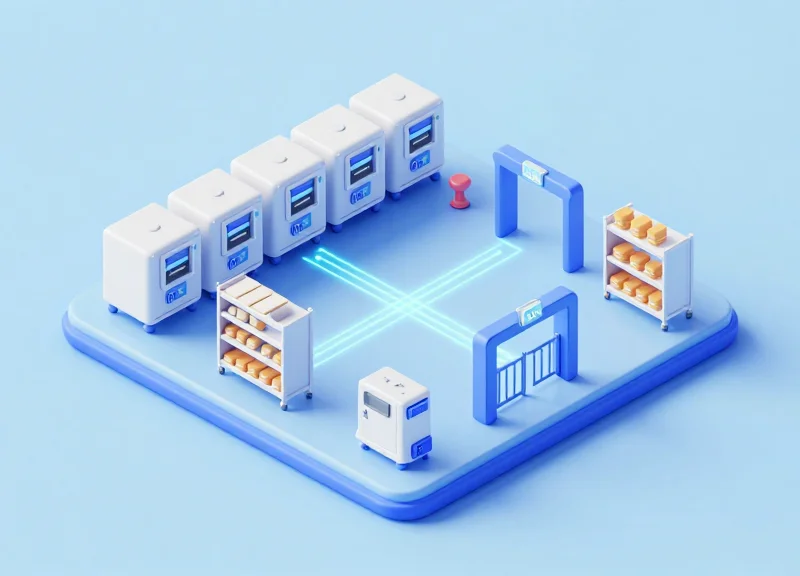
Integration excellence in the industrial sector represents the strategic convergence of Radio Frequency Identification (RFID) for tracking, Electronic Shelf Labels (ESL) for dynamic visual communication, and Electronic Article Surveillance (EAS) for perimeter security. By synergizing these three technologies, organizations move beyond siloed data, creating a 'context-aware' environment where assets not only report their location but also display their operational status and secure their own boundaries against unauthorized movement or safety violations.
| Technology | Primary Function | Industrial Safety & Workforce Role |
|---|---|---|
| Next-Gen RFID | Invisible tracking and identity verification. | Automated mustering, restricted area access control, and PPE compliance monitoring. |
| ESL (Electronic Shelf Labels) | Real-time visual data and status updates. | Dynamic hazard warnings, machinery maintenance status, and worker-specific instructions. |
| EAS (Electronic Article Surveillance) | Perimeter protection and movement alerts. | Preventing unauthorized tool removal and geofencing high-value or hazardous assets. |
Expert Insight: The 'Visual-Physical Handshake'. While many view ESL as a retail tool for price changes, the 2026 industrial trend utilizes them as 'Digital Safety Placards.' When an RFID-tagged worker approaches a piece of heavy machinery, a middleware trigger can instantly update the ESL on that machine to reflect the worker's specific certification level or the current internal temperature of the unit. This creates a fail-safe visual feedback loop that static signage cannot match, significantly reducing human error in high-stress environments.
- Establish a Unified Middleware Layer: Centralize data from RFID readers, ESL gateways, and EAS sensors into a single source of truth to ensure sub-second response times.
- Map Asset Identity to Visual Triggers: Link unique RFID EPC codes to specific ESL display templates so that movements automatically update the visual information on the floor.
- Define Geofencing and Security Rules: Set EAS perimeter alerts that trigger not just an alarm, but an automated incident log and a notification to the nearest supervisor's mobile device.
Can ESLs operate in harsh industrial temperatures?
Yes, next-gen industrial ESLs are designed with E-ink technology and ruggedized casings that operate in sub-zero freezers or high-heat manufacturing zones.
How does this integration reduce 'Total Cost of Ownership'?
By using a shared network infrastructure (often Zigbee or proprietary sub-GHz bands), facilities reduce the hardware footprint and battery maintenance costs associated with running separate systems.
Does EAS interfere with RFID signals?
Modern 'Dual-Tech' antennas integrate both AM/RF EAS and UHF RFID into a single pedestal, using frequency hopping to eliminate signal interference.
Predicting 2026: The Rise of Passive Sensing and AI-Driven Logistics

By 2026, the industrial sector will transition from simple asset tracking to 'Passive Sensing,' a paradigm where next-gen RFID tags act as battery-free, maintenance-free sensors capable of monitoring environmental variables like temperature, strain, and moisture. This shift, powered by AI-driven logistics engines, transforms the warehouse from a storage space into a 'neural environment.' In this 2026 workforce trend, AI does not just record where an item is; it analyzes the movement patterns and physical state of tagged assets to predict safety breaches, equipment failures, or logistical bottlenecks before they occur.
| Feature | 2024 Current State | 2026 Predicted State |
|---|---|---|
| Data Role | Reactive: Log where items were. | Predictive: Forecast where items should be. |
| Sensor Type | Active/Battery-powered for telemetry. | Passive/Battery-less 'Zero-Power' sensing. |
| Safety Logic | Threshold-based alerts (Man-down). | Behavioral AI (Pattern-based accident prevention). |
| Logistics Focus | Inventory Accuracy. | Autonomous Flow Optimization. |
The true catalyst for 2026 is the 'Digital Twin' evolution. Unlike previous iterations, future RFID deployments will feed real-time telemetry into a site’s digital twin. If a passive sensor on a structural beam detects micro-vibrations outside the norm, the AI logistics engine automatically reroutes robotic traffic and restricts human access to that zone. This creates a self-healing safety perimeter—the 'Shield'—that operates without human intervention or the 'sensor tax' of changing thousands of batteries annually.
What is 'Zero-Power Sensing' in the 2026 context?
It refers to RFID tags that harvest energy from the reader's RF field to power on-board sensors for heat, movement, or chemicals, eliminating the need for internal batteries while providing continuous environmental data.
How does AI mitigate 'RF Noise' in crowded industrial zones?
By 2026, AI algorithms will use 'Ghost Signal Optimization' to filter environmental interference and multipath reflections, allowing for 99.99% read accuracy even in high-metal automotive or aerospace manufacturing environments.
Will 2026 logistics be fully autonomous?
While humans remain essential, RFID-AI integration will handle 'Micro-Decisions'—such as automatically re-ordering supplies or locking safety gates—freeing the workforce for high-level oversight.
Expert Insight: The most significant 2026 breakthrough will be 'Tag-to-Tag' communication logic. While traditional RFID is hub-and-spoke, next-gen systems will allow the AI layer to interpret the proximity of one passive tag to another to infer complex behaviors, such as whether a worker is wearing their PPE correctly or if a forklift is approaching a blind corner too fast. This 'Ambient Intelligence' removes the friction of manual scanning, making safety invisible and omnipresent.
Implementation Strategy: Transitioning to an RFID-Centric Safety Model
Transitioning to an RFID-centric safety model involves a phased migration that replaces manual monitoring with a 'Zero-Friction' automated environment. By 2026, the industry standard will move toward embedding high-durability passive tags directly into standard-issue PPE (Personal Protective Equipment), enabling real-time workforce visibility and automated exclusion zone enforcement without requiring active worker participation. This strategy focuses on building a foundation of hardware resilience followed by the integration of predictive AI middleware to transform raw location data into actionable safety intelligence.
- RF Environment Audit: Conduct a comprehensive spectral analysis to identify 'Shadow Zones' and electromagnetic interference from heavy machinery. This ensures antenna placement optimizes coverage in high-risk areas.
- Hardware Hardening and PPE Integration: Select UHF (Ultra-High Frequency) tags rated for IP69K environments. Embed these into helmets, vests, or boots to ensure 100% compliance without increasing the worker's gear load.
- Edge Gateway Deployment: Install edge-computing RFID readers that process data locally. This reduces latency to sub-100ms, which is critical for triggering immediate 'Kill-Switches' on machinery if a worker enters a restricted zone.
- Middleware & ERP Synchronization: Bridge the RFID data stream with existing Warehouse Management Systems (WMS) and ERPs to create a unified 'Single Source of Truth' for both asset logistics and personnel safety.
- AI-Driven Predictive Feedback Loop: Apply machine learning to movement patterns. By 2026, systems will use this data to predict 'near-miss' fatigue-related accidents before they occur, allowing for proactive intervention.
| Implementation Phase | Primary Focus | Key Success Metric (KPI) |
|---|---|---|
| Foundational | Infrastructure & Tagging | 99.9% Tag Read Reliability |
| Operational | System Interoperability | <200ms Alert Latency |
| Optimization | Predictive Safety AI | 40% Reduction in Near-Misses |
Expert Tip: The '2026 Hybrid Approach' involves utilizing 'Cross-Functional Tagging.' Instead of separate systems for access control and safety, a single hardened RFID chip serves as a multi-layered identity anchor. Modern phased-array antennas can now achieve 10cm spatial accuracy, effectively providing GPS-level precision indoors without the battery drain or signal loss associated with older satellite or BLE technologies.
How does RFID handle data privacy (GDPR)?
Next-gen systems utilize 'Tokenized IDs.' The tag itself contains no personal data; it only transmits a unique hex code that the secure local server maps to a user profile, ensuring compliance and worker anonymity in case of a data breach.
Can we reuse existing WiFi access points for RFID?
Yes, many modern enterprise APs support USB or internal expansion for RFID modules, significantly reducing the cost of infrastructure by leveraging existing backhaul.
What is the typical ROI timeline for an RFID safety upgrade?
Enterprises typically see a full Return on Investment within 14-18 months, primarily driven by reduced insurance premiums, faster automated mustering times, and a decrease in OSHA-reportable incidents.