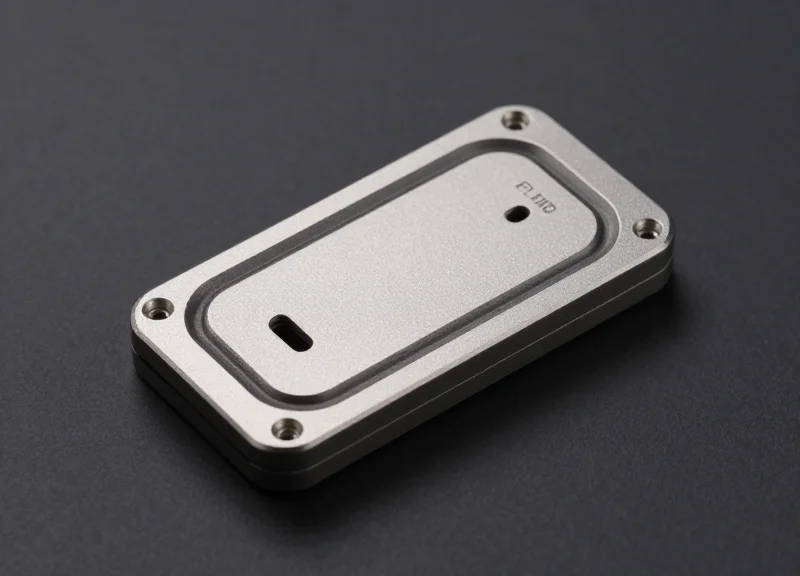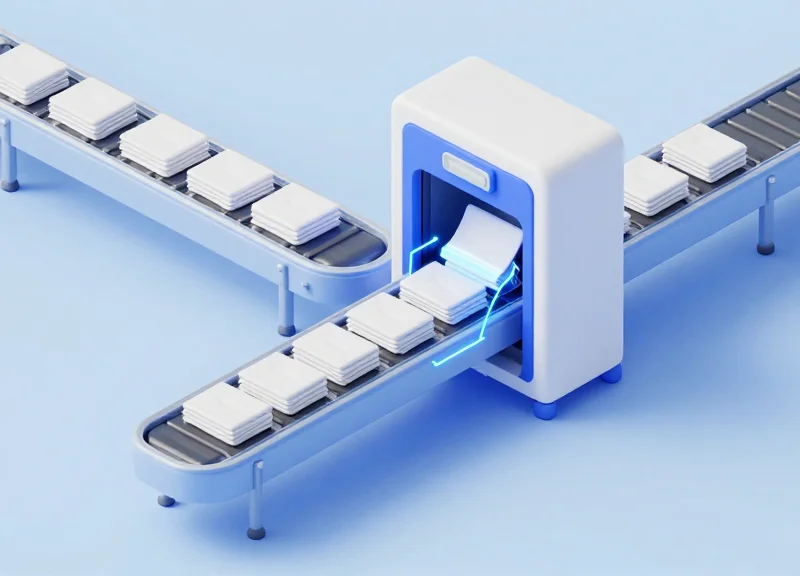
In the fast-paced world of attraction retail, where theme park guests transition from immersive experiences to gift shops, the checkout process is a critical touchpoint. Any friction in this final step can break the 'magic' of the visit. High-volume environments face the unique challenge of balancing robust loss prevention with the need for rapid throughput. This is where the optimization of high-speed AM (Acousto-Magnetic) EAS deactivators becomes essential. By fine-tuning these systems, retailers can ensure that security tags are neutralized instantly, preventing bottlenecking and enhancing the overall guest journey without compromising inventory security.
The High-Stakes Environment of Attraction Retail

Attraction retail represents a unique sector of the gift and souvenir market where the checkout process is the final touchpoint of a guest's emotional journey. In these high-stakes environments, such as theme parks, stadiums, and museums, the retail operation must balance aggressive loss prevention via Acousto-Magnetic (AM) EAS technology with the need for near-instantaneous throughput. Unlike traditional big-box stores, attraction retail experiences extreme 'pulse' traffic—massive surges of shoppers synchronized with show schedules or ride exits—where even a three-second delay in deactivating a security tag can lead to catastrophic queue blooming and a measurable decline in guest satisfaction scores.
The fundamental challenge lies in the 'Experience Economy.' For a guest who has spent hours in a curated magical environment, a clunky checkout process involving 'double-scanning' or false alarms at the exit pedestals shatters the brand immersion. Operational efficiency here isn't just about labor costs; it is about protecting the multi-billion dollar brand equity of the attraction itself.
| Metric | Standard Big-Box Retail | High-Volume Attraction Retail |
|---|---|---|
| Traffic Patterns | Steady, predictable flows | Extreme 'Pulse' surges (post-show/ride) |
| Transaction Velocity | Moderate (2-5 items per minute) | High-Velocity (10+ items per minute) |
| Buyer Mindset | Utility-driven / Routine | Emotional / Reward-driven |
| EAS Priority | Shrink reduction first | Throughput and Frictionless exit first |
- The 15-Minute Revenue Window: Expert Tip: In attraction retail, up to 80% of a gift shop's daily revenue can occur in short 15-minute windows following a major show or attraction cycle. Your AM EAS deactivators must be 'always-ready' with zero recovery time between cycles to prevent the 'lost sale' phenomenon where guests abandon carts due to visible line lengths.
- Merchandise Complexity: Souvenirs often include high-density plastics, metallic foils, and irregular shapes that challenge standard deactivation fields. High-speed AM deactivators are required to penetrate these diverse materials at varying angles without slowing down the cashier's natural movement.
- The 'Walk-Away' Risk: In a high-energy environment, guests have a lower threshold for frustration. If the EAS deactivation fails and triggers an alarm at the gate, the psychological impact is 'public embarrassment,' which correlates directly with negative social media mentions.
Why is AM technology preferred over RF in these environments?
AM (Acousto-Magnetic) technology is superior for attraction retail because it is less susceptible to interference from metallic merchandise (like souvenir magnets or foil-wrapped candy) and provides a much wider, more reliable deactivation zone for high-speed scanning.
How does deactivation speed impact labor costs?
By utilizing high-speed deactivators that integrate with POS scanners, retailers can reduce the 'per-item' scan time by 1.5 to 2 seconds. In a high-volume shop, this cumulative time saving allows for higher throughput with fewer open registers during peak pulses.
The Technical Advantage of AM (Acousto-Magnetic) Technology

Acousto-Magnetic (AM) technology is the gold standard for high-traffic attraction retail because it operates on a precise 58kHz frequency that allows for wider aisle coverage and unparalleled resistance to 'shielding.' Unlike Radio Frequency (RF) systems, which can be easily dampened by metallic foils or liquids, AM systems use a transmitter to create a magnetic field that energizes specialized resonators inside security tags. When these resonators vibrate at their natural frequency, the system detects the unique signal even through metal-heavy merchandise like collectible pins, metallic keychains, or foil-wrapped confectioneries, ensuring that high-volume sales don't result in high-volume shrink.
| Feature | AM (Acousto-Magnetic) | RF (Radio Frequency) |
|---|---|---|
| Operating Frequency | 58 kHz | 8.2 MHz |
| Detection Range | Superior (Up to 2.4m) | Standard (Up to 1.8m) |
| Metal Resistance | High (Effective near foils/metal) | Low (Easily shielded by metal) |
| False Alarm Rate | Very Low (Unique signal signature) | Moderate (Susceptible to interference) |
| Tag Size | Narrow/Slim (Ideal for small items) | Flat Square (Visual deterrent) |
Expert Insight: The SNR Advantage in High-Electromagnetic Environments. One often overlooked technical advantage of AM technology in attraction retail is its high Signal-to-Noise Ratio (SNR). Theme parks and large museums are 'electrically noisy' environments filled with LED screens, digital signage, and proximity sensors that can cause RF systems to trigger false alarms. AM technology’s lower frequency is significantly less susceptible to this high-frequency electronic noise, providing a 'quiet' operation that prevents the 'alarm fatigue' that often plagues staff in busy gift shops.
Why is deactivation height important for high-volume retail?
In fast-paced checkout environments, cashier speed is limited by the 'deactivation zone.' AM deactivators offer a vertical 'throw' of up to 15-20cm, allowing items to be deactivated with a single pass without direct contact with the pad, drastically reducing wait times.
Can AM technology handle metallic souvenirs?
Yes. Because AM relies on magnetic resonance rather than electric fields, it can detect tags placed near or inside metallic objects, such as decorative tins or luxury metal ornaments, where RF tags would likely fail.
Does AM technology work with source tagging?
AM is the preferred choice for global source tagging programs. Because the labels are small and can be deactivated from a distance, manufacturers can embed them inside packaging without impacting the guest's unboxing experience.
Critical Features of High-Speed AM Deactivators
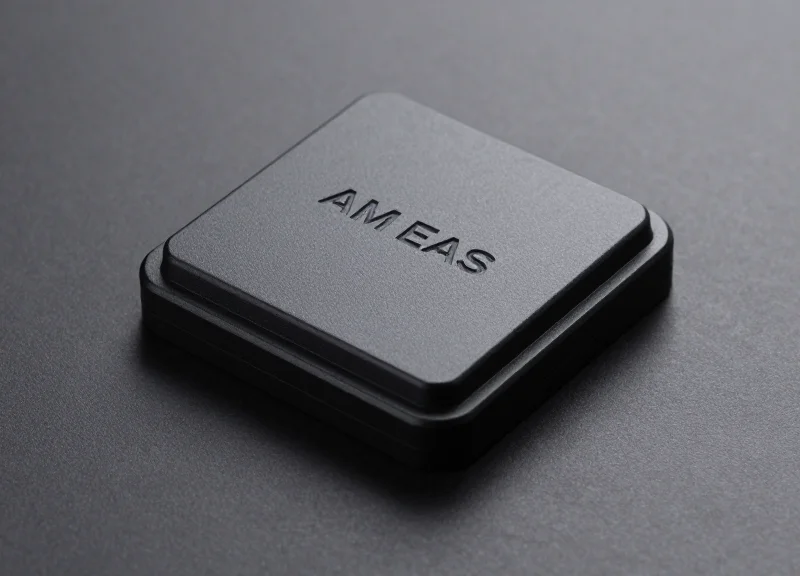
A high-speed AM (Acousto-Magnetic) deactivator is specialized hardware engineered for zero-latency retail environments. Unlike standard units, these devices are defined by their ability to achieve sub-second recharge cycles and generate a powerful magnetic field capable of deactivating security labels at heights of up to 20cm (approx. 8 inches) above the counter surface. This combination ensures that cashiers in high-volume attraction retail can maintain a natural scanning rhythm without pausing for the hardware to 'catch up' or requiring precise contact with the deactivation pad.
| Feature | Standard Deactivator | High-Speed Attraction Grade |
|---|---|---|
| Cycle Rate (Recharge) | 1.5 - 2.0 seconds | Under 0.5 seconds |
| Deactivation Height | 5cm - 10cm | 15cm - 22cm |
| Throughput Capacity | 15-20 items/min | Up to 60+ items/min |
| Duty Cycle | Medium | 24/7 Continuous Operation |
- Rapid-Fire Capacitor Recharge: The 'recovery time' is the most critical metric. High-speed units utilize advanced capacitors that recharge in milliseconds, allowing for consecutive item deactivation during rapid-fire scanning sessions common at peak theme park exit times.
- Extended Volume Deactivation Field: In attraction retail, items like plush toys or oversized boxed sets are common. A high-performance deactivator provides a 3D deactivation zone, meaning the tag is neutralized regardless of its orientation or distance from the pad, eliminating 'double-scanning' frustrations.
- Smart Cycle Synchronization: To prevent interference between closely packed registers, high-speed units feature auto-sync technology. This ensures the magnetic pulses of one deactivator do not disrupt the detection capabilities of the neighboring lane or the main EAS pedestals.
Expert Insight: The 'Ghost-Alarm' Prevention Factor. A unique challenge in high-volume retail is 'incomplete deactivation,' where a tag is partially neutralized but retains enough energy to trigger exit pedestals later. High-speed AM deactivators use a specific 'decaying' magnetic pulse that ensures the tag's internal amorphous strips are completely demagnetized on the first pass. This drastically reduces false alarms, which are the primary cause of guest friction and 'security fatigue' among staff.
How do I know if my deactivator is keeping up with my scanners?
Check for 'Ready' light latency. If your cashier has to wait even half a second for a green light between items, you are losing throughput. High-speed units stay green almost continuously.
Can these units be integrated into barcode scanners?
Yes. Most high-performance AM deactivators offer 'Scan-Enable' ports, allowing the deactivation pulse to only fire when a valid barcode is read, further extending the lifespan of the hardware and reducing energy consumption.
Do high-speed deactivators require special power outlets?
While they are more powerful, most modern high-speed units are designed to run on standard 110V/220V circuits, but they benefit significantly from being on a dedicated circuit to avoid electrical noise interference.
Seamless Integration: Deactivators and the Modern POS

Seamless integration of AM EAS deactivators into the modern Point of Sale (POS) is the process of physically embedding hardware and logically synchronizing software so that deactivation occurs simultaneously with barcode scanning. In high-volume attraction retail, this 'one-swipe' workflow eliminates the need for double-handling items, reduces checkout friction, and ensures that security measures do not interrupt the guest's transition from the immersive retail environment back to the park experience.
The goal for high-capacity souvenir shops is 'The Invisible Checkout.' By moving away from bulky, surface-mounted deactivation pads and toward flush-mounted or under-counter solutions, retailers can maintain the aesthetic integrity of their themed environments. This is not merely about aesthetics; it is about ergonomics. When the deactivation field is perfectly aligned with the scanner's 'sweet spot,' throughput increases by up to 30%, as cashiers no longer need to perform the redundant 'scan-then-deactivate' motion.
| Integration Level | Configuration | Primary Benefit | Best For |
|---|---|---|---|
| Physical Flush-Mount | Deactivator pad recessed into the counter. | Clean workspace and reduced physical wear. | High-traffic flagship stores. |
| Scanner-Integrated | Antenna built directly into the barcode scanner. | Guaranteed deactivation on every successful scan. | Apparel and multi-item transactions. |
| Software-Linked | Deactivator communicates with POS via RS232/USB. | Provides data on 'failed deactivations' vs. 'scans'. | Loss prevention and data-driven management. |
- Field Mapping: Map the 3D deactivation zone to ensure it covers the entire scanning arc of your specific POS hardware.
- Shielding and Interference Check: Install metal shielding beneath the counter to prevent the AM field from interfering with under-counter electronics or metal supports.
- Logic Synchronization: Configure the deactivator to only trigger a high-power pulse when the barcode scanner successfully reads a GTIN.
- Haptic/Visual Feedback Loop: Replace loud beeps with subtle LED indicators or haptic pulses to notify the cashier of success without breaking the shop's atmosphere.
Expert Insight: In the world of 'themed' retail, the sound of a deactivator beep is often considered 'audio pollution.' We recommend implementing 'Directional Audio Cues' or 'Smart-LED Rings' around the scanner base. This allows the associate to receive a success signal that is invisible and inaudible to the guest, maintaining the illusion of 'magic' while ensuring the security tag is neutralized.
Will metal counters interfere with integrated deactivators?
Yes, standard metal counters can cause 'detuning.' For seamless integration, use non-conductive materials like Corian or high-pressure laminates in the deactivation zone, or utilize specialized spacers to create an air gap.
Can I integrate AM deactivators with mobile POS (mPOS) tablets?
Integration is possible using Bluetooth-enabled deactivators or USB-hubs that link the mPOS dock to a hidden deactivation antenna under the counter.
What is 'Scan-Only' deactivation?
This is a security feature where the deactivator remains dormant until the POS confirms a legitimate sale, preventing internal theft via 'sweethearting' (deactivating items without scanning them).
Optimizing Signal Strength and Field Height

Optimizing signal strength and field height in AM (Acousto-Magnetic) deactivators is the process of fine-tuning the magnetic pulse intensity and the vertical reach of the deactivation zone to ensure security tags are neutralized instantly, regardless of their orientation or the product's bulk. In high-volume attraction retail, this means calibrating the 'Active Volume'—the 3D space above the counter—so that even tags hidden deep within plush toys or multi-layered packaging are deactivated on the first pass, preventing embarrassing false alarms at the exit.
| Item Category | Target Field Height | Signal Intensity Logic | Typical Retail Scenario |
|---|---|---|---|
| Small Plush/Apparel | 4-6 Inches | Standard/Low | Single-item gift shop transactions. |
| Boxed Collectibles | 8-10 Inches | Medium-High | Tags buried behind plastic/cardboard inserts. |
| Bulk Souvenir Bags | 12+ Inches | Maximum Boost | Multiple tagged items placed in a large tote at once. |
Expert Insight: The 'Sweet Spot' of Field Geometry. In 20 years of Silicon Valley retail tech deployments, we've found that 'maxing out' power is rarely the answer. Excessive signal strength can cause 're-tagging' interference or trigger nearby deactivators. The secret is focusing on the Vertical Gradient. By using a 'Shaped Field' configuration, you can project a taller magnetic field that is narrow at the base but wide at the top, specifically designed to catch tags as items are moved in a natural arc over the scanner.
- Establish the Interference Baseline: Before increasing power, use a field strength meter to check for ambient electromagnetic interference (EMI) from nearby LED displays or motorized conveyors common in theme park retail.
- The Three-Axis Stress Test: Test deactivation with tags oriented in the X, Y, and Z planes. High-speed retail requires 99.9% deactivation even when the tag is perpendicular to the coil.
- Synchronization (Sync) Pulse Calibration: Ensure the deactivator's pulse is perfectly out of phase with the detection pedestals to prevent 'phantom alarms' caused by the deactivation field itself.
- Dynamic Power Scaling: Implement deactivators that use 'Smart-Pulse' technology, which only emits a high-intensity burst when a tag is actually detected in the field, reducing heat and energy consumption.
Can high signal strength damage credit cards or electronics?
Modern AM deactivators are designed to be safe for most consumer electronics and magnetic stripe cards, though we recommend keeping high-sensitivity items like hotel room keys at least 6 inches from the center of the coil.
Why does the deactivator beep but the exit pedestal still alarms?
This is often a 'Partial Deactivation' caused by low field height. The signal was strong enough to trigger the deactivator's 'confirm' beep, but not strong enough to fully shift the tag's frequency out of the detection range.
How often should field height be recalibrated?
In high-traffic environments, we recommend a quarterly audit or whenever the store layout (specifically nearby digital signage) changes.
Minimizing False Alarms to Protect Guest Trust
Minimizing false alarms in high-volume attraction retail is the process of ensuring that Acousto-Magnetic (AM) security tags are 100% neutralized at the point of sale to prevent erroneous EAS gate triggers. In a themed environment, a false alarm is more than a technical glitch; it is an 'experience killer' that subjects guests to public scrutiny and creates 'alarm fatigue' among staff. High-speed deactivators solve this by providing a deep, consistent deactivation field that penetrates bulk packaging and multiple items simultaneously, ensuring the guest's final interaction with your brand is a seamless exit rather than a security confrontation.
| Alarm Type | Root Cause | Impact on Guest Experience |
|---|---|---|
| Failure to Deactivate | Speed of throughput exceeds deactivator's recharge rate. | High: The 'Embarrassment Tax' at the exit gate. |
| Tag Reactivation | Partial deactivation due to weak magnetic field or proximity to magnets. | Medium: Confusion and delay during re-entry or mall transit. |
| Phantom Alarms | Environmental RFI (Radio Frequency Interference) or 'tagging' of non-merchandise. | Low to Medium: Erodes trust in the security system entirely. |
- Establish a Deactivation 'Hot Zone': Ensure the deactivator field is calibrated to the exact height of your tallest merchandise to prevent 'top-layer' tags from remaining active.
- Implement Synchronized Deactivation: Link the AM deactivator directly to the barcode scanner logic so that deactivation only occurs upon a valid SKU strike, reducing accidental triggers.
- Regular 'Tag-Pollution' Audits: Check for 'dormant' tags in guest bags or strollers that may have entered the store from other retailers, a common cause of exit-gate confusion.
Why do alarms trigger even when the cashier scanned the item?
This is usually due to 'shielding' or speed. If the item is moved too quickly over a low-duty cycle deactivator, the magnetic field may not have time to fully neutralize the tag's internal resonator.
What is 'Alarm Fatigue' and why is it dangerous?
Alarm fatigue occurs when staff hear so many false alarms that they begin to ignore all alerts. This creates a massive security loophole while still annoying innocent guests.
Can souvenir magnets reactivate AM tags?
Yes. Strong magnets sold in attraction retail can sometimes 're-bias' an AM tag if they come into direct contact, causing it to become active again after the initial checkout.
Expert Tip: To truly master guest trust, implement 'Dynamic Signal Masking.' Modern AM systems can be tuned to recognize the specific signature of a deactivating tag versus an active one. By utilizing deactivators with 'Verify' features, the system provides a visual or audible confirmation to the cashier that the tag is dead before the guest even bags the item. This 'pre-emptive' check is the gold standard for high-volume environments where the cost of a false alarm is a lost return visitor.
Data-Driven Maintenance and Remote Diagnostics
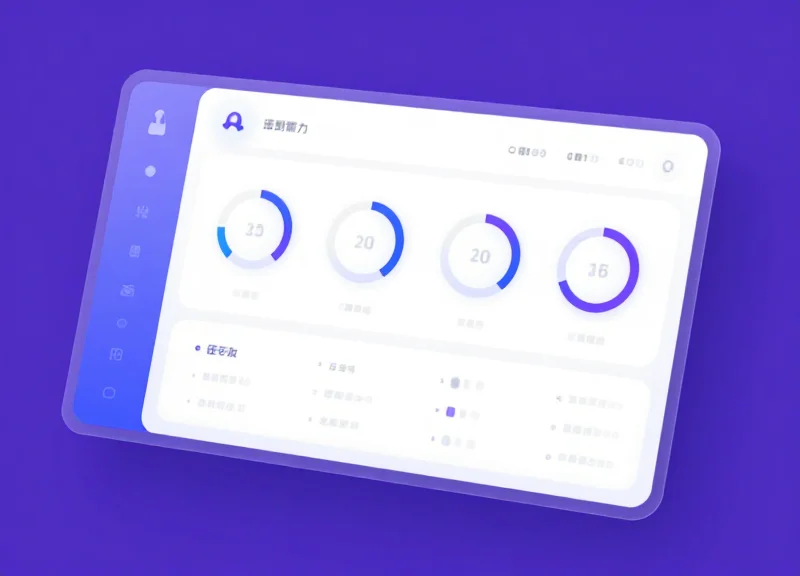
Data-driven maintenance for high-speed AM EAS deactivators utilizes IoT-connected hardware to stream real-time performance metrics to a centralized dashboard. By monitoring parameters such as capacitor recharge times, pulse strength, and power cycles, operators can shift from reactive 'break-fix' models to predictive maintenance. This ensures that deactivation hardware—the invisible backbone of the checkout process—remains fully functional during high-traffic windows, such as the period immediately following a theme park's nightly fireworks or parade when retail surges are most intense.
| Metric | Reactive Maintenance | Data-Driven/Remote Diagnostics |
|---|---|---|
| Detection of Failure | Customer alarms at the exit. | Automatic system alert via dashboard. |
| Response Time | Hours to days (technician travel). | Instant (remote software recalibration). |
| Downtime Risk | High; results in manual tag removal. | Near-zero; predictive alerts prevent failure. |
| Cost Impact | High emergency service fees. | Lowered total cost of ownership (TCO). |
One unique insight from the field is the concept of 'Ghost Deactivation' detection. Standard deactivators may appear to pulse, but if the internal magnetic field strength drops below 0.08 Gauss-meters due to hardware fatigue, the AM tag is only partially neutralized. Remote diagnostics can monitor the specific energy output of each pulse, identifying 'weak' units that are still 'pulsing' but failing to actually kill the tag, allowing for replacement before the guest experience is compromised.
- Establish a Performance Baseline: Record the 'golden state' of deactivators during installation to create a benchmark for future telemetry data.
- Implement Real-Time Alerting: Configure SMS or email triggers for critical errors, such as synchronization loss or power supply fluctuations.
- Utilize Remote Tuning: Leverage remote access to adjust signal-to-noise ratios without sending a physical technician to the site.
- Schedule Predictive Swaps: Replace deactivation pads based on 'pulse count' milestones rather than waiting for hardware failure.
Does remote monitoring compromise guest data?
No. Modern EAS diagnostics only transmit hardware health metrics (voltage, pulse rate) and do not interact with POS transaction data or personal guest information.
Can remote diagnostics fix physical hardware damage?
While it cannot fix a snapped cable, it can identify the exact failure point, ensuring the technician arrives with the correct replacement parts on the first visit.
What bandwidth is required for these smart systems?
Minimal. Most AM EAS controllers require less than 10kbps to send health telemetry, making them compatible with even congested park-wide networks.
Staff Training: The Human Element of High-Speed Checkout
Staff training for high-speed checkout involves educating retail associates on the precise ergonomic movements and sensory cues required to maximize AM EAS deactivator efficiency, ensuring that security tags are neutralized instantly as items pass through the point-of-sale. In high-volume attraction retail, the human element is the final bridge between advanced hardware and a frictionless guest experience, where even a millisecond of hesitation can lead to bottlenecking and exit-gate alarms.
Even the most sophisticated AM (Acousto-Magnetic) deactivators with large vertical fields require a specific 'muscle memory' from the operator. Training should move away from the 'stop-and-wait' mentality of legacy systems and toward a fluid, continuous motion. This approach, often called the 'Swipe and Slide,' integrates deactivation into the natural scanning rhythm, treating the deactivation zone as a gateway rather than a destination.
- Sensory Feedback Integration: Train staff to listen for the specific 'success' tone of the deactivator. In noisy attraction environments, visual LED indicators on the counter should be used as secondary confirmation.
- The 'Golden Zone' Visualization: Associates must visualize the three-dimensional deactivation field (usually 4-6 inches above the pad) to ensure bulkier items like plush toys or boxed sets are passed through the core of the signal.
- Parallel Processing Technique: Teach cashiers to scan the barcode and pass the item over the deactivation pad in one singular, sweeping motion, rather than two separate actions.
- Interference Awareness: Educate staff on 'shielding'—identifying items with high metallic content that may require a slower pass or a specific orientation to ensure the AM signal reaches the tag.
| Metric | Untrained Staff | Optimized Training |
|---|---|---|
| Average Deactivation Time | 1.8 Seconds | 0.4 Seconds |
| Exit Alarm Rate (NCR) | 5% - 8% | < 0.5% |
| Items Per Minute (IPM) | 12-15 | 25-30 |
| Guest Satisfaction Score | Baseline | +22% Improvement |
Expert Tip: Implement 'The Acoustic Anchor' technique. Research shows that when cashiers are trained to sync their physical release of an item with the audible 'beep' of the deactivator, their brain subconsciously optimizes the speed of the next reach. This Pavlovian reinforcement creates a rhythmic checkout flow that feels effortless to the guest but is actually a highly tuned mechanical process.
What should a cashier do if an item fails to deactivate on the first pass?
Avoid the 'sawing' motion (moving the item back and forth). Instead, lift the item completely out of the field and perform a deliberate, slower second pass to allow the deactivator capacitor to recycle.
How do we train for multi-tag scenarios?
Staff should be trained to identify 'high-risk' items that may have dual-tagging and ensure the item is rotated to expose all surfaces to the deactivation field.
How often is refresher training needed?
In high-turnover attraction retail, a 5-minute 'huddle' training every quarter, focusing on recent alarm data and throughput speeds, is more effective than annual long-form sessions.
Comparing AM EAS with Future-Ready RFID Solutions
While AM EAS (Acousto-Magnetic) remains the gold standard for high-speed, reliable security deactivation in high-volume retail, RFID (Radio Frequency Identification) represents the next frontier in inventory intelligence; the most effective modern strategy is not a total migration, but a hybrid integration that leverages the robust signal of AM for loss prevention and the data-rich nature of RFID for supply chain visibility.
| Feature | AM EAS Technology | RFID Solutions |
|---|---|---|
| Primary Function | High-speed Loss Prevention | Inventory Visibility & Tracking |
| Deactivation Speed | Near-instant (Sub-100ms) | Software-dependent (Variable) |
| Bulk Handling | Excellent for dense clusters | Superior for individual ID |
| Material Interference | Low (Works through liquids/metals) | High (Sensitive to water/metal) |
| Data Capacity | Bit-level (On/Off) | EPC-level (Unique Item ID) |
In the high-pressure environment of a theme park gift shop or a major attraction, the 'magic' of the guest experience depends on speed. AM EAS is technologically superior at the point of sale because its deactivation field is less susceptible to 'shielding' from the souvenir mugs, metal keychains, and liquid-filled snow globes commonly found in these settings. However, RFID is becoming indispensable for managing the complex logistics of replenishment. Transitioning to 'Dual-Technology' tags—which house both an AM resonator and an RFID inlay—allows retailers to enjoy the reliability of AM security while gaining the stock-level precision of RFID.
Can RFID replace AM EAS for security entirely?
While possible, RFID faces challenges in high-volume exit gates due to 'false reads' from nearby stock and signal interference from metallic merchandise. AM EAS is generally more reliable for strictly preventing theft at wide exits.
How do hybrid systems improve the checkout workflow?
Hybrid systems allow an item to be scanned for inventory (RFID) and deactivated for security (AM) in a single ergonomic motion, ensuring data is updated without slowing down the line.
Is the cost of dual-tagging worth it?
For high-volume attractions, the reduction in 'out-of-stock' scenarios (via RFID) and the decrease in false alarms (via AM) typically results in a ROI within 12-18 months.
Expert Insight: The 'Liquid-Metal' Threshold. A unique challenge in attraction retail is the high concentration of aluminum water bottles and liquid-based souvenirs. RFID signals (UHF) are often absorbed by water or reflected by metal, leading to missed deactivations. My recommendation for high-volume sites is to maintain AM EAS for the physical security layer at the door, as its lower frequency is virtually immune to these environmental factors, while using RFID as a 'silent' layer for real-time shelf replenishment alerts.