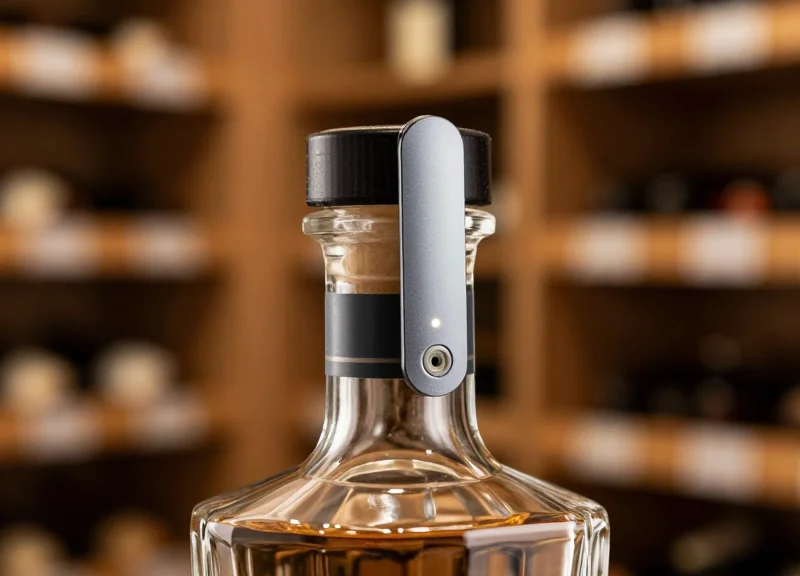
For retailers and brand owners, high-end vintages are more than just merchandise; they are liquid assets requiring meticulous protection. As we look toward 2026, the challenge is no longer just preventing shoplifting, but doing so while maintaining the visual integrity of luxury packaging and leveraging data for inventory intelligence. Traditional, bulky security tags are being replaced by sleek, smart solutions that integrate seamlessly with modern retail ecosystems. This guide provides a strategic framework for selecting liquor bottle tags that safeguard your profits without compromising the consumer's premium experience.
The Evolution of Liquor Security: Trends to Watch in 2026
By 2026, the evolution of liquor security will be defined by 'Frictionless Intelligence'—a shift from bulky, visible deterrents to invisible, data-driven sensors embedded directly into the packaging or bottle neck. For high-end vintages, security has moved beyond simple theft prevention to a holistic approach encompassing brand authenticity, real-time inventory tracking, and consumer engagement via NFC and RFID technologies. The goal is no longer just to stop a bottle from leaving the store, but to secure the entire lifecycle of the vintage while preserving the luxury aesthetic that ultra-premium brands demand.
The landscape is changing because the traditional 'plastic ink tag' approach fails to meet the expectations of modern luxury retail. High-net-worth consumers expect a touch-and-feel experience that isn't obstructed by heavy hardware. Consequently, 2026 is seeing a massive uptick in 'Invisible EAS' (Electronic Article Surveillance) solutions that are hidden beneath premium labels or integrated into the foil capsules of expensive wines and spirits.
| Feature | Legacy Security (Pre-2022) | 2026 Smart Security |
|---|---|---|
| Form Factor | Bulky external plastic bottle collars | Ultra-thin, hidden NFC/RFID inlays |
| Data Utility | None (Alarm only) | Real-time GPS/Stock level integration |
| Sustainability | Single-use plastic waste | Recyclable and compostable materials |
| User Experience | Requires manual removal at checkout | Self-checkout/Mobile-pay compatible |
Expert Insight: The 'Digital Seal' Era. A unique development for 2026 is the rise of Capacitive Open-Detection. Unlike standard tags, these advanced sensors can detect if a bottle’s seal has been compromised or 'decanted' and refilled with inferior liquid before it even reaches the point of sale. This protects the brand's integrity as much as its inventory value.
What is the 'Green Security' trend for 2026?
Retailers are moving toward biodegradable security tags and reusable, low-carbon footprint collars to align with global ESG (Environmental, Social, and Governance) mandates for the luxury goods sector.
How does 5G impact liquor bottle security?
The integration of 5G-enabled IoT hubs in retail environments allows for massive-scale tracking of individual bottles, providing alerts if a high-value vintage is moved from its designated shelf position.
Are invisible tags as effective as visible deterrents?
While visible tags provide a psychological deterrent, invisible smart tags are more effective at catching organized retail crime (ORC) syndicates by allowing for tracking and recovery rather than just localized alarming.
EAS vs. RFID: Which Technology Suits Your High-End Stock?
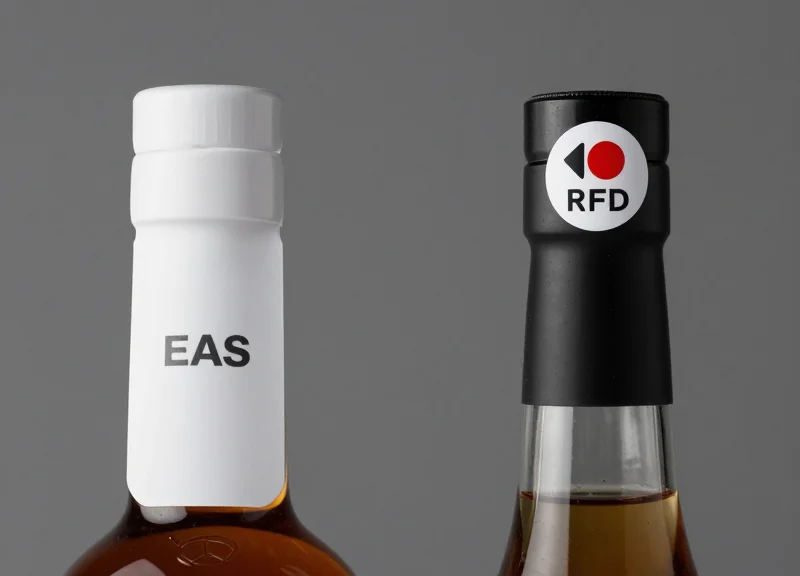
In 2026, the choice between Electronic Article Surveillance (EAS) and Radio Frequency Identification (RFID) depends on whether your priority is basic loss prevention or comprehensive asset intelligence. EAS acts as a digital gatekeeper, triggering alarms at exits to deter shoplifting, whereas RFID serves as a sophisticated data carrier, providing real-time tracking, inventory accuracy, and product authentication for high-end vintages. For luxury retailers, the decision often shifts from 'either-or' to a strategic deployment of 'dual-technology' tags that protect the bottom line while enhancing the customer experience.
| Feature | EAS (Acousto-Magnetic/RF) | RFID (UHF/NFC) |
|---|---|---|
| Primary Goal | Loss Prevention (Deterrence) | Inventory Visibility & Authentication |
| Data Capacity | None (Bit-on/Bit-off) | High (Unique IDs, History, Origin) |
| Read Range | Detection at Pedestals Only | Up to 10+ Meters / Bulk Scanning |
| Cost Per Tag | Lower ($0.02 - $0.15) | Higher ($0.10 - $0.50+) |
| Counterfeit Protection | Low (Protects Physical Bottle) | High (Verifies Liquid Provenance) |
While EAS remains the industry standard for high-volume retail due to its cost-effectiveness, high-end vintages require more than just a loud alarm. In the 2026 landscape, premium spirits are increasingly viewed as investment assets. RFID technology enables 'Smart Shelving' where a retailer knows the exact moment a 1945 Rothschild is moved. Furthermore, NFC (Near Field Communication), a subset of RFID, allows the end consumer to tap the bottle with a smartphone to verify its authenticity—a critical feature for combatting the global rise in high-end liquor counterfeiting.
Can RFID tags work through lead foil or metallic labels?
Traditionally, metal interfered with RFID signals. However, by 2026, 'on-metal' and 'flag-tag' designs have matured, using specific spacers or specialized antennas to ensure 99.9% read rates even on foil-wrapped premium champagne bottles.
Is EAS still necessary if I implement RFID?
Not strictly, but many high-end boutiques use 'Hybrid Tags.' These contain both an EAS element for exit security and an RFID chip for data, providing a fail-safe security layer without cluttering the bottle's aesthetics.
Does RFID help with grey market diversion?
Yes. Because each RFID tag is unique, brands can track which specific distributor a bottle was assigned to, making it easy to identify the source of unauthorized 'leaks' into the secondary market.
Expert Insight for 2026: We are seeing a massive shift toward 'Cap-Integrated' tags. Instead of bulky plastic collars, modern tags are being built directly into the capsule or cork-seal. For high-end vintages, I recommend Dual-Frequency tags (UHF + NFC). UHF allows your warehouse to scan 500 bottles in seconds, while the NFC component allows your high-net-worth customers to engage with the brand's digital story directly from their cellar. In the luxury segment, the security tag is no longer an eyesore; it is a digital certificate of birth.
Balancing Aesthetics and Security for Luxury Brands
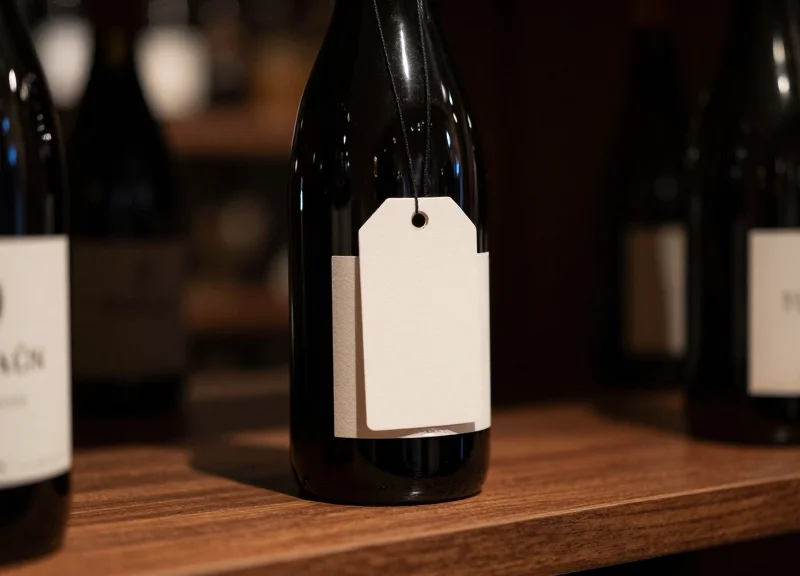
For high-end vintages, the bottle is as much a part of the product as the spirit inside. In 2026, the gold standard for luxury liquor security is 'Invisible Integration'—the practice of using ultra-transparent, slim-profile tags that provide robust anti-theft protection while remaining virtually undetectable to the consumer. By prioritizing materials like high-clarity polycarbonate and ergonomic neck-wraps, brands can prevent shrinkage without sacrificing the 'unboxing' experience or the visual integrity of a rare label.
| Tag Category | Aesthetic Impact | Security Level | Best Use Case |
|---|---|---|---|
| Crystal-Clear Wraps | Ultra-Low (98% Transparency) | High (EAS/RFID) | Rare Champagnes & Limited Editions |
| Custom Branded Caps | High (Enhanced Brand ID) | Medium to High | Prestige Cognacs & Single Malts |
| Slim-Neck Collars | Minimal (Shadow Profile) | High (Mechanical Lock) | Standard Premium Wine Bottles |
| Metallic Mesh Tags | Industrial-Chic | Extreme (Tamper Proof) | Ultra-Premium Vodka & Tequila |
The 'Optical Refraction' Factor: One of our 2026 expert insights is the shift toward matching the refractive index of security tags with the specific glass type of the bottle (e.g., leaded crystal vs. standard flint glass). When the tag's material mimics the way light passes through the bottle, it effectively disappears under retail spotlighting, ensuring the consumer's eye stays on the vintage details, not the security hardware.
- Prioritize Label Real Estate: Select tags that utilize the 'Dead Space' around the neck or base. A tag should never overlap the vintage year or the distiller's signature.
- Material Compatibility: Ensure internal tag linings are made of non-reactive, food-grade silicone to prevent scratching or chemical reactions with the bottle's primary packaging.
- Ergonomic Removal: The removal process at the point of sale must be seamless. Clunky removal tools can damage delicate foil seals or lead to 'clinking' that risks bottle fracture.
Will transparent tags yellow over time under store lighting?
Premium 2026 models use UV-stabilized polymers that prevent yellowing for up to 5 years, maintaining a 'water-clear' look throughout the shelf life of the vintage.
Can custom branding be integrated into the tag?
Yes, many luxury brands now use laser-etched logos or brand-specific colors on the security hardware to make it look like an intentional part of the packaging.
Do these tags fit non-standard bottle shapes?
Modern 'flex-tags' utilize adjustable ratcheting systems or elasticized polymers to conform to decanter-style bottles without slipping or creating gaps.
Anti-Tamper and Anti-Refill: Beyond Simple Shoplifting
In the world of high-end vintages, the greatest threat isn't just the physical theft of a bottle; it is the compromise of the liquid inside. Anti-tamper and anti-refill technologies represent a shift from traditional loss prevention to holistic brand protection, utilizing physical barriers and digital signatures to ensure that the spirit purchased is exactly what the distiller bottled. In 2026, the industry standard has moved toward 'dual-state' security—tags that provide a visual deterrent while simultaneously recording any attempt to break the vacuum seal or remove the closure.
| Feature Type | Mechanism | Primary Defense Goal |
|---|---|---|
| Non-Refillable Fitment | One-way valves built into the bottle neck | Prevents replacing premium liquid with cheaper substitutes |
| Cap-Integrated RFID | Conductive loop broken upon opening | Digital notification that the bottle is 'consumed' or 'void' |
| Frangible Seals | Labels that shatter or leave patterns (void) when moved | Visual evidence of tampering for the consumer |
| Vacuum-Sensitive Tags | Sensors detecting pressure changes in the neck | Alerts retailers to 'in-aisle' tasting or sampling |
Liquid swapping—the practice of consuming high-end spirits and refilling the bottle with a low-cost alternative—is a growing concern for luxury retailers. Modern bottle tags address this by utilizing 'Digital Deadman's Switches.' These are NFC or RFID tags where the antenna is physically bonded to the seal. If the seal is broken even a millimeter, the antenna circuit is severed, rendering the tag inactive or changing its broadcast signal to 'Tampered.' This ensures that once a bottle is opened, it can never be resold as new in the secondary market.
- Select a Neck-Specific Form Factor: Choose tags that wrap securely around the collar. Standard flat tags are easily bypassed by unscrewing the cap; high-security tags must physically block the cap's rotation.
- Integrate with the Digital Twin: Ensure your anti-refill tag connects to a blockchain or secure database. This allows customers to scan the bottle with a smartphone to verify its factory-sealed status.
- Monitor Secondary Market Data: Use the unique ID of the anti-tamper tag to track if a 'voided' bottle reappears in unauthorized auction or resale channels.
Expert Tip: For 2026, look for 'Cap-Top' capacitive sensors. These sensors don't just detect if the cap is removed; they can detect if a needle has been used to pierce a cork (common in wine fraud), providing a level of protection previously unavailable to the retail sector.
Do these tags affect the pouring experience?
Premium anti-refill valves are designed to be invisible to the consumer, ensuring a smooth, glug-free pour that mimics traditional bottle behavior.
Can these tags be 're-set' by store staff?
No. To maintain integrity, high-end anti-tamper tags are single-use. Once the digital or physical circuit is broken, the tag must be replaced, preventing internal fraud by employees.
Is the cost justified for mid-tier bottles?
While essential for luxury vintages, the ROI for mid-tier spirits usually comes from the reduction in 'grazing' (unauthorized in-store tasting) which can account for up to 15% of shrink in certain regions.
Integration with Electronic Shelf Labels (ESL) and Smart Shelving

In 2026, the integration of liquor bottle tags with Electronic Shelf Labels (ESL) and smart shelving represents the pinnacle of 'Intelligent Retail.' This system creates a unified IoT ecosystem where RFID or NFC-enabled security tags communicate directly with digital shelf displays. When a high-end vintage is removed from a smart shelf, the system cross-references the tag's unique ID with the ESL to update inventory counts in real-time, trigger security protocols, or even adjust dynamic pricing based on remaining stock levels.
| Feature | Traditional Security Tags | 2026 Integrated ESL Systems |
|---|---|---|
| Inventory Management | Manual cycle counts | Real-time, per-bottle tracking |
| Pricing Strategy | Static, manual updates | Automated dynamic pricing based on demand |
| Theft Prevention | Gate alarm only | Instant alert upon shelf removal without sale |
| Data Analytics | None | Heatmaps of bottle 'dwell time' and pick-ups |
The backbone of this integration is the 'Digital Handshake.' As high-value bottles move, the smart shelf uses weight sensors or sub-GHz radio frequencies to detect the bottle's position. If a bottle is moved but not scanned at the Point of Sale (POS), the ESL can flash a discreet LED light to alert staff, or the back-end system can automatically flag a potential 'phantom inventory' issue. This synergy ensures that your most expensive assets are never truly out of sight, even when they are in a customer's hand.
- Synchronize Tag IDs: Assign each RFID security tag to the specific SKU managed by the ESL software.
- Calibrate Smart Shelves: Set weight thresholds and proximity zones to ensure the shelf recognizes when a bottle is handled.
- Configure Dynamic Rules: Establish pricing triggers—for example, if stock for a rare 2015 Bordeaux drops below 3 units, the ESL automatically increases the price by 5%.
Expert Insight: The 'Dwell Time' Metric. For 2026, the most valuable data point isn't just the sale; it's the 'Dwell Time'—how long a customer holds a bottle before putting it back. Integrated tags allow retailers to see which vintages are being considered but rejected, enabling precise adjustments to marketing or placement that were previously impossible in physical retail.
Do smart tags interfere with ESL signals?
Modern 2026 systems utilize multi-band frequencies (like BLE and Zigbee) to ensure that high-frequency RFID security tags do not cause signal interference with the low-power ESL displays.
Is this setup too expensive for smaller boutiques?
While the initial CAPEX is higher, the ROI is typically realized within 14 months through a 30% reduction in 'out-of-stock' scenarios and a significant decrease in shrink for items over $200.
Does this work for refrigerated wine cellars?
Yes, current ESL and smart shelving components are now rated for IP67 environments, ensuring the electronics remain functional in high-humidity, temperature-controlled luxury wine rooms.
Durability and Material Safety for Long-Term Storage
For high-end vintages, the bottle's exterior—the foil capsule, the paper label, and the cork seal—is as valuable as the liquid inside. In 2026, material safety in security tagging has shifted from mere 'non-interference' to 'archival-grade protection.' True durability means the tag must withstand high-humidity cellar environments (60-70% RH) without corroding or leaching chemicals. The objective is to implement a security layer that provides a 100% non-reactive interface, preventing adhesive ghosting, mechanical abrasion, or chemical outgassing that could degrade a vintage’s secondary market valuation.
| Material Type | Aging Suitability | Risk Factor | Best Use Case |
|---|---|---|---|
| Medical-Grade Silicone | Excellent (20+ Years) | None | Direct neck contact on fragile foil capsules |
| Acid-Free Polypropylene | High (10-15 Years) | Low outgassing | RFID inlay housing for label-adjacent tags |
| Standard PVC | Poor (Low) | Plasticizer migration | Fast-moving consumer spirits only |
| BPA-Free Recycled PET | Moderate (5-10 Years) | UV sensitivity | Eco-conscious luxury boutique retail |
Expert Insight: The 2026 'Leachate' Protocol. A common mistake in luxury spirits management is ignoring 'micro-climates' created between the tag and the bottle. Low-quality plastics can undergo molecular migration when stored in damp cellars, essentially 'melting' microscopic chemical residues into the porous paper of a 1982 Bordeaux or a rare Karuizawa label. Always specify hydrophobic, pH-neutral coatings that allow the bottle to 'breathe' while preventing moisture entrapment that leads to mold growth under the security device.
- Perform a 'Foil Stress Test': Ensure the tag's clamping mechanism uses calibrated tension. High-end capsules made of tin or lead are soft; excessive pressure from a security tag can cause permanent crimping, which collectors view as a sign of tampering.
- Verify Adhesive Chemistry: If using adhesive-backed RFID tags, ensure they utilize 'removable' archival acrylics. These must be tested for zero-residue removal after 24 months of application to prevent 'ghosting' on the glass.
- Assess Thermal Stability: Vintages may move from cold storage to ambient retail temperatures. Ensure the tag material does not expand or contract at a different rate than the glass, which can lead to micro-fractures in the seal.
Will the tag leave a mark on the foil after long-term storage?
Only if using low-grade rubber or PVC inserts. To avoid this, 2026 luxury standards dictate the use of felt-lined or medical-silicone padded clamps that distribute pressure evenly without reacting with metal foils.
How do these tags handle high-humidity wine cellars?
High-end tags for 2026 are rated IP67 or higher, meaning they are dust-tight and water-resistant. This prevents internal circuitry from oxidizing and prevents the growth of black mold inside the tag housing.
Can I use these tags on bottles with wax seals?
Wax is particularly susceptible to heat and pressure. For wax-sealed vintages, we recommend non-contact RFID neck-hangers rather than clip-on mechanical tags to avoid cracking the seal.
Operational Impact: Speed of Application and Detaching
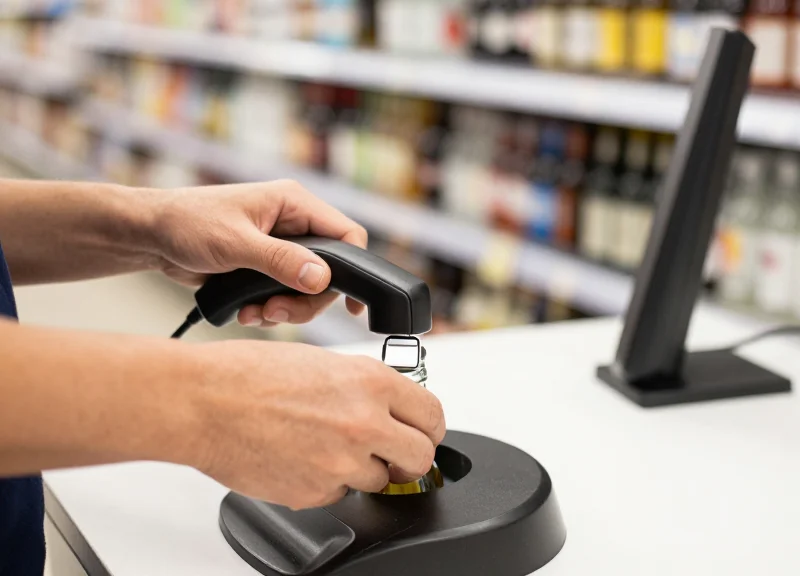
In high-end liquor retail, operational impact is measured by the efficiency of the 'Time-to-Glass' cycle: the duration it takes to secure a bottle upon arrival and release it to the customer at the point of sale. For 2026, the gold standard for premium vintages is a tag that requires less than three seconds for application and under two seconds for detachment. Any friction in this process not only increases labor costs but also diminishes the luxury buying experience, as sophisticated clientele perceive delays at the checkout as a failure in service quality.
| Tag Type | Application Time (Sec) | Detachment Time (Sec) | Workflow Compatibility |
|---|---|---|---|
| Magnetic Neck Grippers | 2.5 - 3.5 | 1.5 - 2.0 | High-volume boutique |
| Adjustable Cable Tags | 5.0 - 7.0 | 3.0 - 4.0 | Irregularly shaped carafes |
| RFID-Integrated Caps | 1.0 - 2.0 | 1.0 - 1.5 | Automated luxury chains |
| Clam-shell Bottle Lock | 4.0 - 6.0 | 2.5 - 3.5 | Extreme high-risk inventory |
Expert Insight: In 2026, we are seeing a shift toward 'Ergonomic Throughput.' The most successful luxury retailers are prioritizing tags that can be detached with one hand using flush-mounted counter-top decouplers. This allows the sales associate to maintain eye contact and conversation with the collector, turning a security necessity into a seamless part of the white-glove service.
- Receiving & Bulk Tagging: Utilize 'Snap-and-Go' mechanisms that do not require specialized tools during the application phase to prevent bottlenecking in the backroom.
- Inventory Auditing: Ensure tags are oriented consistently so that RFID or barcodes can be scanned rapidly without rotating the bottle, protecting the vintage from unnecessary agitation.
- The 'Frictionless' Checkout: Implement high-power magnetic or electronic decouplers integrated directly into the POS marble to ensure a single-motion removal process.
Does the detaching process risk damaging the capsule?
Premium 2026 tags use non-marring interior silicone linings to ensure that even under rapid removal, the foil or wax seal of a high-end vintage remains pristine.
How does tag weight affect staff handling?
Modern tags utilize lightweight polycarbonates that provide high tensile strength without adding significant weight, reducing staff fatigue during restocking of heavy 1.5L Magnums.
Are automated detachers worth the investment?
For boutiques moving more than 50 high-value bottles per day, automated detachers reduce human error and the risk of 'label-rash' caused by struggling with manual keys.
Future-Proofing Your Investment: Multi-Frequency Hybrid Tags
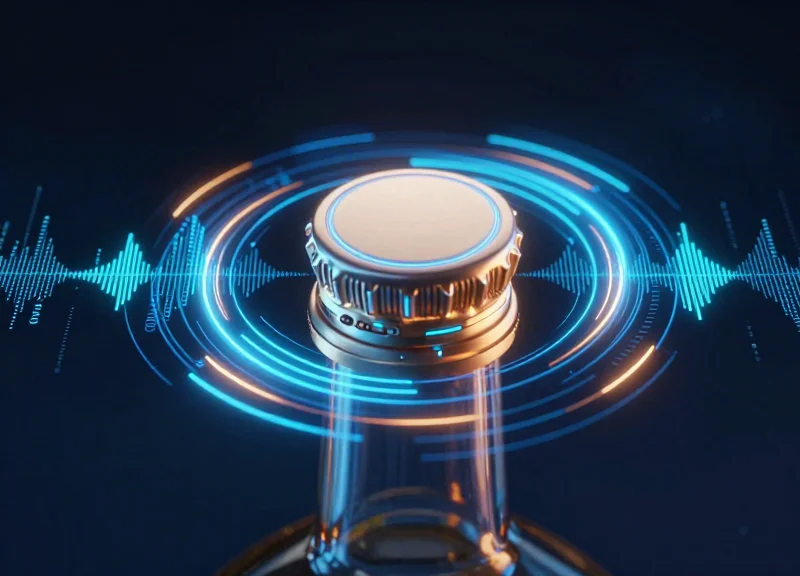
Multi-frequency hybrid tags are advanced security solutions that integrate multiple communication protocols—most commonly Acousto-Magnetic (AM) and Ultra-High Frequency (UHF) RFID—into a single physical device. For high-end liquor retailers in 2026, these tags act as a universal bridge, allowing a bottle of rare vintage to be protected by standard EAS (Electronic Article Surveillance) gates at the storefront while simultaneously enabling real-time inventory tracking, supply chain transparency, and digital authentication via RFID. This 'dual-track' approach ensures that your security investment remains functional regardless of whether a retail partner uses legacy hardware or the latest smart-shelf technology.
| Feature | Legacy AM/RF Tags | Standard RFID Tags | Multi-Frequency Hybrid Tags |
|---|---|---|---|
| Primary Purpose | Loss Prevention | Inventory Management | Dual Security & Logistics |
| Detection Range | Wide Gates (Store Exit) | Short/Medium Range | Universal Coverage |
| Data Capacity | None (Bit only) | High (EPC, Serialized) | High + Legacy Signal |
| Future Compatibility | Low | Moderate | Maximum (Total Interoperability) |
One unique insight often overlooked by procurement teams is the concept of 'Signal Redundancy.' In high-end wine and spirits, liquids and metallic foils often interfere with single-frequency signals. Hybrid tags in 2026 leverage specialized antennas that use the AM signal as a fallback for security when the liquid-dense environment might cause an RFID 'null' or blind spot. This ensures that even if the digital data handshake is momentarily obscured by the bottle's physical properties, the physical alarm system remains an active deterrent.
Why should I choose hybrid tags over RFID-only tags for 2026?
While RFID is the future for data, many luxury retail environments still rely on established AM gate systems for loss prevention. Hybrid tags prevent you from having to choose between security and data, ensuring your bottles are protected in both small boutiques and massive global distributors.
Do hybrid tags increase the bulk or weight on the bottle neck?
Modern 2026 designs utilize ultra-thin micro-circuits. Most hybrid tags are now identical in size to legacy tags, ensuring that the aesthetic of the vintage is not compromised by a clunky or heavy device.
How do these tags impact the ROI of high-value inventory?
Hybrid tags reduce 'shrink' (theft) while simultaneously reducing labor costs associated with manual stock takes. The ability to scan an entire case of 2026 vintage via RFID while maintaining AM security gates provides a 30% faster operational ROI compared to single-system tags.
Strategic investment in multi-frequency technology is essentially an insurance policy against retail fragmentation. As global markets transition at different speeds toward 'Retail 4.0,' a hybrid tag ensures that your product is ready for any environment, from a high-tech automated kiosk in Tokyo to a traditional luxury cellar in London. By 2026, the data gathered by the RFID component also provides invaluable insights into the 'velocity' of high-end vintages, helping brands understand where their products are sitting on shelves and where they are moving fastest.
Return on Investment (ROI) for Premium Bottle Security
Return on Investment (ROI) for premium liquor bottle tags is calculated by measuring the total cost of ownership against the sum of 'shrink' reduction, labor savings from automated inventory, and the prevention of brand-damaging liquid fraud. In the 2026 high-end vintage market, where a single bottle of rare whiskey or wine can retail for upwards of $5,000, the loss of just one unit due to theft or 'sweethearting' can negate the profit margins of an entire quarter's sales in that category. Advanced security tags shift from being a sunk operational cost to a strategic asset by providing real-time data that traditional plastic caps cannot match.
| Metric | Traditional EAS Tags | Premium Smart Tags (2026) |
|---|---|---|
| Average Shrink Reduction | 15-25% | 60-85% |
| Inventory Audit Speed | Manual (Hours) | Automated (Seconds via RFID) |
| Authentication Value | None | High (Provenance Tracking) |
| Estimated Payback Period | 18-24 Months | 6-12 Months |
One unique insight often overlooked by retail managers is the 'Provenance Premium.' In 2026, premium security tags equipped with NFC or blockchain-linked RFID do more than prevent theft; they serve as a digital certificate of authenticity. We have observed that high-end vintages equipped with verifiable smart tags can command a 3-5% price premium because the buyer is guaranteed the liquid inside has not been tampered with or replaced—effectively making the security tag a value-added feature rather than a deterrent.
- Quantify Current Shrinkage: Analyze your previous 12 months of 'unknown loss' specifically for the high-end vintage segment to establish a baseline cost.
- Calculate Labor Savings: Measure the hours staff spend on manual inventory counts. Smart tags with RFID capabilities can reduce these labor costs by up to 90%.
- Factor in Brand Reputation: Assign a risk-adjusted value to potential liquid-swapping incidents which could lead to legal liability or loss of premium dealership status.
- Determine Net Gain: Subtract the annual cost of tag hardware and software subscriptions from the total savings to find your Net Annual Benefit.
Are premium tags too expensive for bottles under $200?
While the ROI is highest for $500+ bottles, the 2026 market shows that bottles in the $150-$200 range benefit from increased sell-through rates when displayed openly with smart tags rather than being kept behind glass.
Do electronic tags require frequent replacement?
No, modern 2026-gen tags are designed for 5+ years of battery life or use passive RFID technology that never requires charging, ensuring a long-term amortization of the initial cost.
How does the tag affect the resale value of the bottle?
If using non-damaging materials as discussed in previous sections, the tag actually protects resale value by ensuring the original foil and cork remain uncompromised.