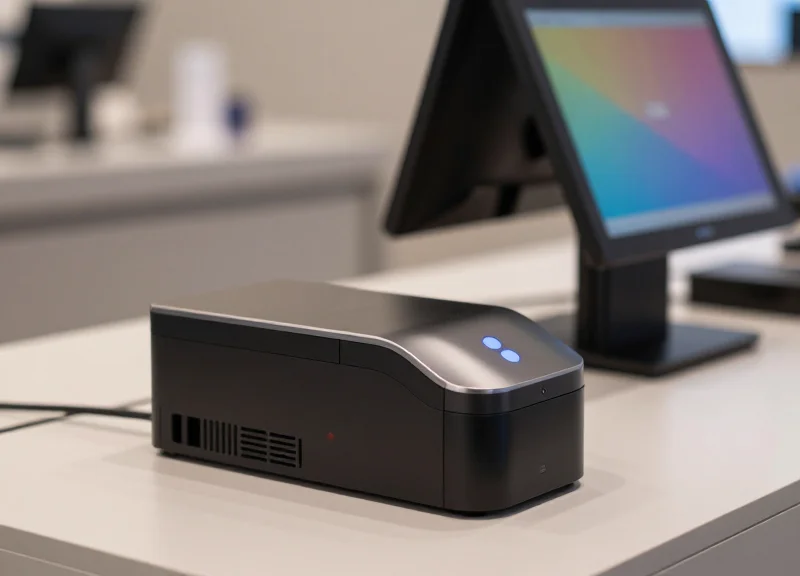
As we approach 2026, the logistics landscape is facing an unprecedented crisis of 'supply chain leakage'—a costly cocktail of sophisticated theft, administrative errors, and inventory invisibility. Traditional Electronic Article Surveillance (EAS) provides the muscle, but lacks the brains. Conversely, standalone RFID provides the data but often fails as a high-speed deterrent. The solution emerging as the industry standard is the Hybrid EAS-RFID Gate. By merging the immediate theft deterrence of EAS with the granular item-level intelligence of RFID, warehouse managers are finally gaining a 360-degree shield against losses that once seemed inevitable.
The Evolution of Warehouse Vulnerabilities in 2026

Warehouse vulnerabilities in 2026 are defined by 'High-Velocity Leakage'—the convergence of sophisticated internal fraud and systemic data inaccuracies within high-speed automated environments. As distribution centers transition to 24/7 autonomous operations, the primary threat has shifted from external perimeter breaches to 'invisible shrink' occurring at exit points. In this landscape, traditional security measures fail because they cannot distinguish between a legitimate shipment and a strategic theft in the milliseconds required by modern logistics workflows.
| Vulnerability Vector | Legacy Risk (2020) | Modern Reality (2026) |
|---|---|---|
| Theft Profile | Random opportunistic theft | AI-optimized Organized Retail Crime (ORC) |
| Inventory Loss | Physical shoplifting/misplacement | Systemic 'Ghost Stock' via data manipulation |
| Security Focus | Perimeter and entry control | Point-of-Egress item-level verification |
| Detection Speed | Post-audit (days/weeks) | Real-time at high-velocity gates |
Expert Insight: The Latency Gap. My 20 years in Silicon Valley tech-ops have shown me that speed is often the enemy of security. In 2026, the 'Security Latency Gap' is the primary vulnerability: the time it takes for a Warehouse Management System (WMS) to reconcile a physical movement against a digital manifest. If your security gate cannot perform item-level verification in under 200 milliseconds, you aren't just losing inventory; you are subsidizing a highly efficient black market for your own goods.
Why is 'Internal Leakage' harder to stop in 2026?
Internal fraud has moved beyond pocketing items; it now involves 'label swapping' and digital manifest tampering where high-value electronics are miscoded as low-value consumables.
Can traditional CCTV mitigate 2026 warehouse risks?
No. While CCTV provides visual evidence, it lacks the data-linkage to verify if the specific items inside a sealed carton match the shipping order, making it reactive rather than preventative.
How does automation increase security vulnerability?
Automated systems prioritize throughput. Without integrated RFID-EAS gates, automated sorters can inadvertently facilitate theft by moving 'misrouted' goods into unsecured zones.
Defining the Hybrid EAS-RFID Powerhouse
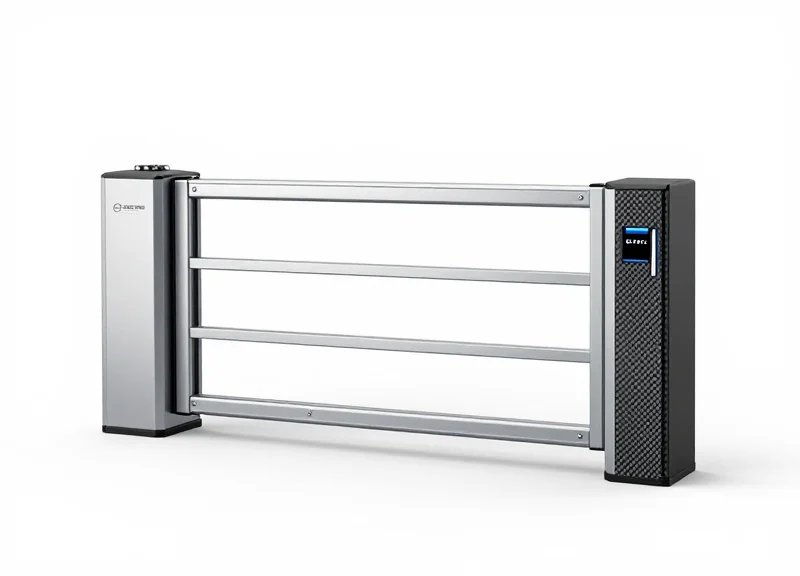
A hybrid EAS-RFID gate represents the convergence of loss prevention and inventory intelligence into a single, seamless hardware portal. While traditional Electronic Article Surveillance (EAS) acts as a binary 'sentinel'—triggering an alarm when any active tag passes through the field—Radio Frequency Identification (RFID) acts as a 'digital witness,' identifying the specific Electronic Product Code (EPC) of the item. By fusing these two technologies, the hybrid powerhouse eliminates the blind spots of legacy security, providing warehouse operators with the 'who, what, and when' of every potential leakage event in real-time.
| Feature | Legacy EAS Only | Stand-alone RFID | Hybrid EAS-RFID Powerhouse |
|---|---|---|---|
| Primary Function | Theft Deterrence | Inventory Tracking | Integrated Security & Analytics |
| Data Granularity | None (Alarm Only) | High (Item ID) | High (Item ID + Alarm Context) |
| False Alarm Mitigation | Low | Moderate | High (Cross-validation) |
| Speed of Identification | Instant | Variable | Real-time Burst Identification |
| 2026 Supply Chain Readiness | Obsolete | Partial | Optimized |
The technical synergy within these gates relies on a process I call 'Signal Fusion.' In a standard warehouse environment, noise and interference often plague RFID-only gates, leading to missed reads. In a hybrid system, the EAS component acts as a high-fidelity trigger that 'wakes up' the RFID reader's high-gain antennas the millisecond a tag enters the detection zone. This ensures a 99.9% read rate even in high-density environments, effectively turning the gate into a filter that only permits authorized movements while logging every unauthorized exit directly into the Warehouse Management System (WMS).
Does hybrid technology require two different tags?
No. Modern 2026 standards utilize 'Dual-Technology Tags' that house both an EAS resonator and an RFID chip in a single footprint, reducing tagging labor by 50%.
Can this system distinguish between a sale and a theft?
Yes. By interfacing with the WMS, the RFID component checks the 'shipped' status of an item. If a tag passes the gate without a 'cleared' status, the EAS alarm triggers; if it is cleared, the gate remains silent.
Is the hardware footprint larger than traditional gates?
Actually, it is smaller. Hybrid gates consolidate antennas and controllers into a single pedestal, saving valuable floor space at the loading dock.
Expert Insight for 2026: The most significant shift we are seeing is the move toward 'Directional Logic.' Unlike older gates that might trigger if an item is simply moved near the exit, hybrid gates use phase-array RFID antennas to determine the vector of travel. If an item is moving away from the dock, no alarm; if it crosses the threshold, the system initiates a high-priority cloud alert. This eliminates 'nuisance alarms' that desensitize staff, ensuring that when the alarm sounds, it is a 100% verified security event.
Closing the Leakage Gap: Beyond Simple Deterrence
Closing the leakage gap in 2026 requires moving beyond traditional deterrence—which only signals that a theft is occurring—to an intelligent system that identifies exactly what is leaving the facility. While standard Electronic Article Surveillance (EAS) acts as a digital tripwire, it lacks the context needed to stop sophisticated supply chain leakage. Hybrid EAS-RFID gates bridge this gap by marrying the immediate alarm of EAS with the serialized data of RFID, ensuring that every 'beep' is accompanied by a specific SKU, quantity, and timestamp.
| Feature | Traditional EAS (Deterrence) | Hybrid EAS-RFID (Intelligence) |
|---|---|---|
| Alarm Context | Blind: Indicates 'something' passed. | Specific: Identifies exact Item ID and SKU. |
| False Alarm Rate | High: Triggered by inactive tags or interference. | Low: Cross-references tag data to verify valid alarms. |
| Audit Trail | None: Requires manual bag checks. | Automated: Logs movement directly to WMS. |
| Leakage Discovery | Reactive: Found during monthly counts. | Proactive: Real-time notification of missing stock. |
Expert Insight: The 'Digital Twin' of the Exit Event. In my decades of observing supply chain security, the biggest failure point is the 'unresolved alarm.' When a gate beeps and security finds nothing, the system loses credibility. Hybrid gates create a 'Digital Twin' of the exit event; even if a guard misses a physical stop, the system has already recorded the serialized identity of the stolen goods. This allows for 'Silent Audits' where managers can track patterns of leakage by specific dock doors or shifts without alerting the perpetrators.
- Detection & Verification: The EAS component detects a security breach while the RFID reader simultaneously interrogates all tags in the zone.
- Data Reconciliation: The system checks the identified RFID tags against the current outbound manifest or 'Expected to Leave' list.
- Automated Logging: Unmapped items trigger an immediate alert in the Warehouse Management System (WMS), marking the items as 'Lost' or 'Stolen' in real-time.
- Pattern Analysis: Security teams review the aggregated data to identify if specific high-value SKUs are being targeted at specific times.
How do hybrid gates reduce internal 'sweethearting'?
Sweethearting occurs when employees intentionally don't scan items. Hybrid gates detect these unscanned items as they pass the exit, even if they are hidden inside legitimate shipments.
Can these systems integrate with existing CCTV?
Yes. Most 2026-gen hybrid gates use the RFID trigger to bookmark video timestamps, allowing security to instantly view the footage of the exact second a specific SKU left the building.
What is the impact on inventory accuracy?
By closing the leakage gap, facilities typically see a 15-20% improvement in inventory accuracy because 'ghost stock' (items listed but not physically present) is identified at the moment of exit.
Operational Efficiency: Real-Time Inventory at the Speed of Logistics

In the 2026 logistics landscape, 'speed' is the only currency that matters. Operational efficiency via hybrid EAS-RFID gates refers to the ability to perform high-fidelity inventory verification and security screening simultaneously as goods move through dock doors at full operational velocity. Unlike traditional systems that require manual intervention or 'stop-and-scan' protocols, hybrid gates utilize high-gain RFID arrays to capture hundreds of unique item identifiers in milliseconds, ensuring that the movement of goods into or out of a facility is recorded with 99.9% accuracy without a single second of downtime.
| Metric | Traditional Barcode/EAS | Hybrid EAS-RFID Gates |
|---|---|---|
| Processing Time (per pallet) | 3–5 Minutes (Manual) | < 3 Seconds (Automated) |
| Data Granularity | SKU-Level (Batch) | Serial-Level (Individual Item) |
| Labor Requirement | High (Dedicated Scanning Staff) | Zero (Passive Scanning) |
| Audit Accuracy | 85–92% | 99.8%+ |
The bottleneck of the modern warehouse has historically been the shipping and receiving lane. Traditional security involves 'blind' alarms that merely signal that something is wrong, forcing staff to manually audit a manifest against a physical shipment. Hybrid gates eliminate this friction point by performing 'invisible auditing.' As a forklift passes through the gate, the system cross-references the detected RFID tags against the digital Warehouse Management System (WMS) pick-list in real-time. If the data matches, the green light remains; if there is a discrepancy, the system identifies exactly which item is missing or extra, turning a 20-minute investigation into a 5-second correction.
- Automated Triggering: Motion sensors or photo-eyes detect approaching cargo, activating the high-power RFID reader only when movement is detected to minimize RF noise.
- Bulk Sequential Scanning: The reader interrogates all tags within the field, using anti-collision algorithms to distinguish between items on the moving pallet and stationary stock nearby.
- Instant WMS Reconciliation: Captured data is pushed via API to the ERP or WMS, instantly updating inventory levels and closing out shipping orders.
- Verification and Release: Visual indicators provide the operator with immediate 'Go/No-Go' feedback based on manifest alignment.
Expert Insight: The 'Velocity-Sync' Advantage. In 20-plus years of Silicon Valley logistics consulting, the biggest mistake I see is treating security as a 'gatekeeper' rather than an 'accelerator.' The next-gen trend for 2026 is 'Velocity-Syncing.' By using the RFID data from your security gates to trigger automated Advanced Shipping Notices (ASNs), you aren't just preventing theft—you are reducing your Order-to-Cash (OTC) cycle time by an average of 14% by removing manual data entry from the shipping dock.
Does RFID scanning slow down forklift operators?
No. Modern hybrid gates are designed to read at speeds exceeding 15 mph, which is significantly faster than standard indoor warehouse forklift limits.
Can these gates handle high-density pallets?
Yes. Advanced beam-forming technology allows the readers to penetrate deep into pallets, ensuring items in the center are accounted for without unstacking.
What happens if the WMS is offline?
Hybrid gates typically feature edge-computing capabilities, storing the scan data locally and syncing it once the connection is restored, ensuring no loss of security or data.
The ROI of Integration: Cost Savings and Shrinkage Reduction

The ROI of integrated hybrid EAS-RFID gates is measured by the convergence of significantly reduced shrinkage—typically 25% to 40% more effective than standalone systems—lower Total Cost of Ownership (TCO) through unified infrastructure, and the recovery of thousands of labor hours previously lost to manual inventory audits and false alarm investigations. By consolidating loss prevention and inventory management into a single exit-point gateway, warehouses achieve a 'digital-physical' synchronization that pays for itself within 12 to 18 months of deployment.
In 2026, managing siloed security technologies is essentially paying a 'Complexity Tax.' When EAS (Electronic Article Surveillance) and RFID (Radio Frequency Identification) operate as independent systems, facilities suffer from fragmented data, duplicate installation labor, and conflicting software licenses. Integration removes these redundancies, allowing the warehouse to leverage a single stream of high-fidelity data that serves both the security team and the logistics department simultaneously.
| Financial Metric | Standalone EAS + RFID Silos | Hybrid EAS-RFID Integrated Gate |
|---|---|---|
| Infrastructure TCO | High (Dual cabling, separate nodes) | Low (Single power/data drop) |
| False Alarm Labor Cost | Significant ($15k-$30k/yr in labor) | Negligible (Context-aware alerts) |
| Shrinkage Detection | Binary (Alarm sounds, item unknown) | Granular (Exact SKU/Quantity known) |
| Software Licensing | Multiple recurring fees | Unified SaaS dashboard |
A critical, often overlooked component of ROI is the elimination of 'Ghost Inventory.' When an item is stolen but remains in the Warehouse Management System (WMS), it triggers a cascade of financial errors: procurement orders unnecessary safety stock, and sales teams commit to orders that cannot be fulfilled. Hybrid gates provide a 'Final Audit' at the dock door, automatically updating the WMS as items exit. This level of precision virtually eliminates the $1.1 trillion global problem of out-of-stocks and overstocks caused by inaccurate data.
How does integration specifically lower insurance premiums?
Insurers now recognize hybrid RFID-EAS systems as a 'High-Confidence Deterrent.' Facilities utilizing these systems can often negotiate 5% to 10% reductions in inventory insurance premiums due to the verifiable audit trail provided for every exit event.
What is the impact on labor efficiency?
Hybrid systems automate the reconciliation process. Instead of staff manually scanning pallets to ensure the right items are leaving, the gate captures the RFID data automatically, allowing workers to focus on high-value fulfillment tasks rather than clerical verification.
Can hybrid gates reduce internal collusion?
Yes. Because the system records exactly which SKU left at what time, the 'plausible deniability' of a faulty tag or a simple mistake is removed. This high-accountability environment is proven to reduce internal theft by over 50%.
Expert Insight: The Human Deterrence Multiple. Our analysis shows that the psychological impact of hybrid gates is twice as effective as traditional EAS. When employees and third-party drivers realize that the system doesn't just 'beep' but actually logs the specific identity of the stolen item in real-time, the motivation for internal collusion evaporates. This shift from 'detection' to 'identification' is the single greatest driver of long-term shrinkage reduction in the modern supply chain.
Integration with ESL and Warehouse Management Systems (WMS)
The integration of hybrid EAS-RFID gates with Warehouse Management Systems (WMS) and Electronic Shelf Labels (ESL) represents the transition from passive security to active operational intelligence. By connecting the hardware at the dock door to the 'brain' of the warehouse, facilities can achieve a closed-loop system where every item's physical exit is automatically validated against its digital shipping status. This ecosystem eliminates manual audits and ensures that the digital inventory reflect precisely what is physically present or in transit.
- Automated Validation: As an item passes through the hybrid gate, the RFID reader captures the unique ID and queries the WMS via API to confirm the item is associated with an active outbound order.
- Real-Time ESL Updates: Once the gate confirms the exit, it triggers an update to the ESL at the picking location, instantly adjusting stock levels or changing the label to 'Restock Required' to prevent missed sales or operational delays.
- Exception Management: If the gate detects an RFID tag not marked as 'Picked' in the WMS, it triggers a high-priority alert, effectively stopping supply chain leakage before the vehicle leaves the premises.
| Feature | Siloed Security Systems | Integrated Hybrid Ecosystem (WMS/ESL) |
|---|---|---|
| Inventory Accuracy | Updated daily or weekly via manual counts. | Real-time updates triggered by gate movement. |
| Alarm Intelligence | Blind alarms; staff don't know what is missing. | Item-level identification of exactly what triggered the alert. |
| Labor Efficiency | High; requires manual checking of shipping manifests. | Low; automated verification at the point of exit. |
| Dynamic Pricing/Security | No link between security and shelf data. | ESL can change security priority based on item value. |
A unique expert insight for 2026 is the implementation of 'Dynamic Security States.' By leveraging the ESL-WMS-Gate triad, warehouses can now implement variable security protocols. For instance, if the WMS identifies a specific SKU as having a high 'shrinkage velocity' (stolen frequently), it can instruct the hybrid gates to increase sensitivity or trigger a secondary visual recording whenever that specific RFID signature is detected, while maintaining standard protocols for low-risk items.
Does integrating gates with WMS cause latency in high-volume environments?
No. Modern edge computing and low-latency APIs ensure that the handshake between the hybrid gate and the WMS occurs in milliseconds, allowing for high-speed throughput at dock doors without pausing.
Can existing ESL systems be retrofitted to work with hybrid gates?
Most ESL systems using standard protocols like Zigbee or Bluetooth Low Energy can be integrated via a central middleware that aggregates data from both the RFID gates and the labeling system.
What is the primary benefit for 3PL providers?
Third-party logistics providers gain 'provenance-of-truth' logs, which provide undeniable evidence of when a specific item left their custody, reducing liability for shipping errors.
Best Practices for Deploying Hybrid Gates in 2026

In 2026, the successful deployment of hybrid EAS-RFID gates is no longer just about hardware installation; it is about creating a seamless 'security-data' mesh. The best practices focus on achieving 99.9% read accuracy by neutralizing environmental interference, selecting the correct tag-to-asset ratio, and ensuring that the gate's edge-computing software can distinguish between an actual exit event and a high-density inventory shelf located too close to the portal.
- Phase 1: RF Environmental Mapping: Conduct a comprehensive site survey using spectral analyzers to identify 'dead zones' and electromagnetic interference (EMI) from other warehouse machinery. In 2026, this includes auditing 5G private networks and autonomous mobile robot (AMR) signals that may overlap with RFID frequencies.
- Phase 2: Material-Agnostic Tag Selection: Match your tags to your inventory. Metal and liquid-filled containers require specialized 'on-metal' or 'flag' RFID tags to prevent signal absorption. Hybrid tags should be tested for both their EAS resonance and RFID backscatter strength to ensure they trigger both security layers simultaneously.
- Phase 3: Logic-Based Gate Calibration: Configure the system's 'Directionality Logic.' Modern gates use beam-forming technology to determine if an item is moving toward the exit or simply being moved within a nearby staging area, drastically reducing the 'phantom alarms' that plagued older systems.
- Phase 4: Staff Red-Teaming & Training: Run 'leakage simulations' where employees attempt to bypass the gates using various shielding methods. This not only tests the hardware but trains security personnel on how to respond to nuanced alerts rather than just ignoring a 'beeping gate'.
| Inventory Type | Tag Recommendation | Key Deployment Challenge |
|---|---|---|
| Standard Corrugate/Apparel | Adhesive Inlay Labels | High-volume throughput collisions |
| Electronics & Metal Goods | Foam-backed On-Metal Tags | Signal reflection and detuning |
| High-Value Liquids/Chemicals | Flag Tags or Encapsulated Tags | Signal absorption by the contents |
| Returnable Transport Items | Hardened Ruggedized Tags | Durability through wash cycles/impact |
Expert Insight: The 'RSSI Buffer' Strategy. A common mistake in warehouse security is setting the Received Signal Strength Indicator (RSSI) threshold too high. In 2026, we recommend 'Dynamic RSSI Filtering.' By using AI-driven software at the gate, the system learns to ignore static inventory (tags that haven't moved in 10 minutes) and only triggers on tags showing a rapid increase in signal strength and Doppler shift. This is the 'secret sauce' for high-density warehouses where stock sits within 5 feet of the exit.
How many gates are typically needed per dock door?
Usually, one hybrid pedestal is required every 3 to 4 meters. For wide-span dock doors, overhead 'array' antennas are combined with floor-mounted pedestals to create a 360-degree read zone.
Can hybrid gates work with our existing 8.2MHz EAS tags?
Most 2026 hybrid systems are backwards compatible with legacy RF-EAS frequencies, but to get the 'data' benefits (knowing what was stolen), you must transition to RFID-enabled tags.
What is the expected lifespan of these systems?
With modular hardware, the antennas and pedestals last 7-10 years, though the edge-AI software should be updated annually to handle new security protocols and tag chipsets.
Future-Proofing Your Supply Chain with DragonGuardGroup
Future-proofing your supply chain with DragonGuardGroup involves more than just installing hardware; it is about implementing a Software-Defined Security (SDS) framework. By combining modular Hybrid EAS-RFID gates with an open-API ecosystem, DragonGuardGroup allows warehouses to transition from traditional loss prevention to 'intelligent security orchestration.' This ensures that as global logistics standards evolve toward 2026, your security infrastructure can receive over-the-air (OTA) updates to handle new RFID protocols and AI-driven threat detection without requiring expensive equipment overhauls.
| Feature | Legacy Security Vendors | DragonGuardGroup Solutions |
|---|---|---|
| System Architecture | Proprietary & Closed | Open-API / Multi-System Interoperable |
| Scalability | Hardware-Dependent | Cloud-Native & Modular |
| Data Utilization | Reactive Alarms Only | Predictive Shrinkage Analytics |
| Upgrade Path | Full Replacement Needed | Field-Upgradable Sensors & Logic |
- Bespoke Hardware Design: DragonGuardGroup offers customized gate form factors designed to fit high-traffic dock doors, conveyor belts, or mezzanine transitions, ensuring zero operational bottlenecks.
- Advanced Signal Processing: Utilizing proprietary interference-rejection algorithms to maintain 99.9% read accuracy even in environments with high metallic density or dense wireless traffic.
- Sustainability-Focused Lifecycle: Hardware components are designed for a 10-year service life with low energy consumption, aligning with 2026 ESG mandates for green supply chain operations.
Expert Insight: The Modular Hardware Upgrade Path. In my two decades in Silicon Valley, I've seen technology cycles shorten every year. DragonGuardGroup's unique advantage is their 'Modular Sensor Sled' design. Unlike competitors who force a 'rip-and-replace' strategy every 5 years, DragonGuardGroup gates allow you to swap out internal RFID modules or EAS antennas as new frequencies emerge. This reduces total cost of ownership (TCO) by approximately 40% over a decade while ensuring you never fall behind the technological curve.
How does DragonGuardGroup handle global deployment?
We offer a unified management console that allows global logistics managers to oversee security protocols across multiple continents, ensuring consistency in data reporting and loss prevention standards.
Can the system integrate with my existing WMS?
Yes. Our systems are built on a RESTful API architecture, facilitating seamless data exchange with major WMS platforms like SAP, Oracle, and Manhattan Associates.
What kind of post-deployment support is available?
We provide 24/7 remote monitoring and proactive diagnostics, identifying potential hardware issues before they lead to security vulnerabilities or downtime.