In the fast-paced environment of modern libraries and archives, the balance between accessibility and security is delicate. Electromagnetic (EM) technology has long been the gold standard for discreetly protecting high-value collections. However, the efficiency of this system rests entirely on the speed and reliability of the toggle process. This technical guide explores the mechanics of EM book labels and provides a streamlined approach to deactivating and reactivating them in just two seconds, ensuring a seamless experience for both staff and patrons while maintaining ironclad security.
The Science of Silence: How EM Book Labels Function

EM (Electromagnetic) book labels operate on the principle of magnetic field modulation, where a thin strip of high-permeability amorphous metal—often a cobalt or iron alloy—reacts to low-frequency electromagnetic fields. When active, the strip’s magnetic flux changes rapidly as it passes through a detection gate, creating identifiable high-frequency harmonics that trigger an alarm; when deactivated, secondary semi-hard magnetic elements within the label are magnetized to saturate the primary strip, effectively suppressing its ability to resonate and allowing for silent passage through security sensors.
| Component/State | Active Mode | Inactive Mode |
|---|---|---|
| Magnetic State | Unsaturated / High Permeability | Saturated / Biased |
| Signal Response | Rich in 3rd and 5th Harmonics | Flat / No Harmonic Distortion |
| Field Interaction | Reacts to 10Hz - 1000Hz Gates | Neutralized by internal magnets |
| Purpose | Secured (Library Protection) | Circulating (Checked Out) |
At the core of this technology is the Barkhausen effect. In the active state, the magnetic domains within the amorphous metal strip flip suddenly in response to the gate's alternating magnetic field. This sudden flip creates 'noise' in the electromagnetic spectrum that the gate is specifically tuned to recognize. Deactivation doesn't remove the strip; it simply applies a 'magnetic bias' using small pieces of semi-hard magnetic material placed along the length of the tag. When these are magnetized by a deactivation plate, they hold the amorphous strip in a fixed state, preventing the domain flip regardless of the gate's field strength.
Can EM labels be reactivated indefinitely?
Yes. Unlike RF tags which often use a physical fuse that is destroyed upon deactivation, EM labels rely on magnetic state changes. As long as the physical strip remains intact, it can be magnetized and demagnetized thousands of times.
Do metal objects interfere with EM signals?
While EM is less sensitive to shielding than RF or RFID, proximity to large ferrous metal objects can distort the magnetic field, occasionally leading to false negatives or shielding issues.
What is the primary advantage of EM over RFID for books?
EM labels are exceptionally thin and can be hidden in the spine of a book, making them nearly impossible for a thief to find or remove without damaging the item.
Expert Insight: From a technical SEO and engineering perspective, it is critical to understand the 'Hysteresis Loop' shift. Deactivation is not a 'deletion' of magnetism but a repositioning of the operating point on the BH curve. This reversible nature is what makes EM technology the gold standard for high-circulation environments. A unique advantage often overlooked is that EM labels are one of the few security technologies that function reliably even when placed inside or on top of foil-lined materials, due to the low-frequency nature of the magnetic interrogation.
The Deactivation Workflow: Rapid Silencing for Checkout

The deactivation workflow is a systematic process that uses a high-intensity magnetic field to neutralize the semi-hard magnetic elements within an EM book label. By passing the book over a deactivator unit at the point of sale or circulation desk, the strip's magnetic state is shifted from 'active' to 'passive,' effectively silencing it so that it no longer resonates with the surveillance gates' electromagnetic frequency. This operation is designed to be performed in under two seconds to maintain high-volume throughput without compromising security integrity.
- Positioning and Spine Alignment: Place the book spine-down or flat against the deactivation surface. Since the EM strip is usually embedded in the gutter or near the spine, direct proximity to the unit’s magnetic core is essential for a clean state change.
- The Saturation Sweep: Move the book in a fluid, continuous motion across the deactivator's active zone. Avoid 'tapping' the book; a full sweep ensures the entire length of the label is exposed to the magnetic field, preventing partial deactivation which can cause intermittent alarms.
- Verification of Status: Observe the visual or auditory feedback from the deactivator. Most professional units will trigger a green LED or a low-frequency 'thump' or beep to confirm that the magnetic field has successfully transitioned the label.
- Batch Handling: If processing multiple items, limit the stack height to the manufacturer’s recommended depth (usually 2-3 inches). Excessive thickness can cause field attenuation, leading to failed deactivation of the top items.
| Deactivator Type | Typical Use Case | Workflow Advantage |
|---|---|---|
| Static Plate | Small Libraries / Retail | Low maintenance, no moving parts, simple swipe motion. |
| Motorized / Automatic | High-Volume University Libraries | Hands-free operation; senses book presence and pulses automatically. |
| Handheld Wand | Oversized Media / Archives | Mobile deactivation for items that cannot be moved easily. |
Expert Insight: The 'Memory Effect' and Residual Fields. One technical nuance often overlooked by staff is the 'speed-of-swipe' variable. If a book is moved too quickly through a low-end deactivator, the magnetic domains may not have sufficient time to flip entirely, leading to a 'ghost signal.' For 100% reliability, I recommend the 'Pause-and-Pivot' technique: a micro-second pause at the center of the plate followed by a slight pivot of the spine. This ensures the magnetic flux lines penetrate the label at multiple angles, virtually eliminating the risk of a false alarm at the gate.
Can I deactivate labels through a protective book cover?
Yes. EM fields pass through plastic, paper, and leather with ease. Only metallic foils or RF-shielded materials will interfere with the process.
Why does the deactivator beep but the gate still alarms?
This usually indicates a 'partial deactivation' or a second, hidden label that wasn't neutralized. Ensure the book is swept flat and check for additional security strips in the back cover.
Will the deactivator damage my digital media?
Standard EM deactivators are safe for printed books, but you should avoid placing older magnetic media like VHS tapes or floppy disks directly on the high-intensity plates.
The Reactivation Cycle: Restoring Protection Upon Return
Reactivation, or resensitization, is the technical process of subjecting a neutralized electromagnetic (EM) label to a high-intensity magnetic field to realign its semi-hard magnetic components, thereby restoring its ability to generate detectable harmonics. Unlike RFID, which requires digital handshakes, EM reactivation is a purely physical state change that ensures the strip will once again oscillate at specific frequencies (typically between 50Hz and 70Hz) when it enters the electromagnetic field of a security gate.
- Spine Alignment: Position the book spine—where the EM strip is most commonly embedded—directly against the surface of the resensitizer unit to ensure maximum flux penetration.
- Steady-State Traversal: Pass the item across the magnetic coil at a uniform speed of approximately 0.5 to 1.0 meters per second. Jerky movements can lead to uneven magnetization.
- Polarity Confirmation: Ensure the entire length of the strip passes through the active zone. For multi-strip items, a second pass in the opposite direction may be necessary depending on the hardware's coil configuration.
- Silent Verification: Observe the visual or haptic feedback from the workstation (if integrated) to confirm the magnetic state has shifted from 'inactive' to 'active'.
| Feature | Manual Resensitizer | Automated Return Slot |
|---|---|---|
| Throughput Speed | Low (1 item per 2-3 seconds) | High (Instantaneous upon drop) |
| Field Intensity | Fixed / Surface Level | Variable / Depth Penetrating |
| Human Error Risk | Moderate (Requires correct orientation) | Low (Automated alignment) |
| Typical Use Case | Staff Desk / Circulation Hub | 24/7 After-hours Drop Boxes |
Expert Insight: The 'Magnetic Memory' Phenomenon. A common failure point in protection cycles is 'partial resensitization.' This occurs when a strip is passed too quickly or too far from the coil, leaving parts of the strip neutralized. This 'striped' magnetic state often fails to trigger alarms because the resulting harmonic signal is too weak for the gate's DSP (Digital Signal Processor) to distinguish from background noise. For 100% reliability, always prioritize proximity over speed.
Can resensitization damage digital media?
Yes. The high-coercivity fields used to reactivate EM strips can corrupt data on magnetic media like cassette tapes or old floppy disks, though they are safe for modern CDs, DVDs, and flash drives.
How do I know if a strip is successfully reactivated?
Staff can use a 'field tester' or 'security checker' wand. If the wand vibrates or LEDs light up when passed over the book spine, the label is active.
Does the age of the book affect reactivation?
The magnetic properties of the strip do not degrade significantly over time, but physical wear on the book spine can shift the strip's position, requiring closer contact with the resensitizer.
Hardware Requirements: Choosing the Right Deactivators and Resensitizers
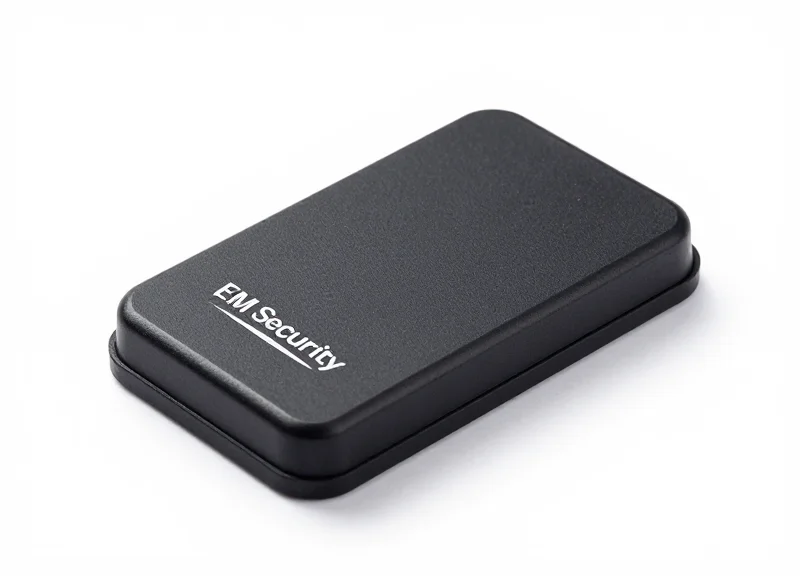
Professional-grade EM (Electromagnetic) hardware is defined by its ability to deliver precise magnetic field modulation within a 2-second window. To achieve mastering-level discreet protection, your hardware must provide a consistent flux density that targets the high-coercivity 'switching' elements of a security strip without affecting the data on nearby magnetic media or sensitive electronics. The ideal system utilizes an ultra-fast charging capacitor bank to ensure the magnetic pulse remains stable even during high-volume throughput periods.
| Feature | High-Speed Deactivators | Industrial Resensitizers |
|---|---|---|
| Field Type | Damped AC (Alternating Current) | High-Intensity DC Pulse |
| Optimal Cycle Time | < 0.7 Seconds | < 1.2 Seconds |
| Field Depth | Up to 10cm (4 inches) | Direct Contact to 5cm |
| Primary Purpose | Randomizing magnetic domains | Aligning magnetic domains |
When evaluating hardware, the 'Field Consistency' metric is paramount. Lower-end units often suffer from 'dead zones' where the magnetic field drops below the required threshold for total saturation. This results in partial deactivation, leading to embarrassing false alarms at the exit gates. Look for units featuring 'Three-Dimensional Field Orientation,' which ensures the label is neutralized regardless of the book's angle or orientation on the pad.
- Expert Tip: The 'Magnetic Fatigue' Factor: Always verify the 'Duty Cycle' of your hardware. In high-traffic libraries, a low-duty cycle resensitizer will overheat, causing a voltage drop that results in 'ghost reactivations'—where the strip is only 70% magnetized and fails to trigger the gate consistently.
- Why is power stability critical for EM hardware?: EM units are highly sensitive to voltage fluctuations. A dedicated circuit is recommended because power surges can lead to 'Over-Saturation,' which can permanently ruin the magnetic properties of the security strip, making it impossible to reactivate later.
- Can I use a single device for both tasks?: While 'Combination Units' exist, they often compromise on field depth. For maximum reliability, separate specialized hardware is preferred to ensure the distinct AC and DC requirements are met with maximum precision.
- Step 1: Verify Coil Quality: Ensure the device uses copper induction coils rather than aluminum for better thermal management and field longevity.
- Step 2: Test Field Uniformity: Pass a test strip across all four corners of the pad; a quality deactivator should trigger a 'confirmation beep' consistently at every point.
- Step 3: Check Shielding Specifications: Ensure the hardware has 'Zero-Lateral Leakage' shielding to prevent the magnetic field from interfering with staff computers or checkout scanners.
The 2-Second Technique: Mastering the Physical Motion

The 2-Second Technique is a high-efficiency ergonomic workflow designed for library and retail professionals to deactivate or reactivate electromagnetic (EM) book labels with 100% reliability. This method prioritizes a 'linear glide' across the deactivator's surface, ensuring the hidden security strip remains within the peak magnetic flux zone for the minimum required duration (typically 0.5 to 1.0 seconds) to toggle its state without requiring repetitive passes or causing mechanical damage to the book's binding.
- The Fore-Edge Grip: Grasp the book by the fore-edge (the side opposite the spine) with your dominant hand. This allows the spine, where the EM strip is usually located, to maintain direct, flat contact with the hardware surface.
- The Uniform Glide: Place the book spine-down at the leading edge of the deactivator. Move the book in a single, continuous motion across the plate. Speed is key: too fast and the magnetic field won't fully saturate the strip; too slow and you create a bottleneck in the checkout line.
- The Terminal Pivot: As the trailing edge of the book reaches the end of the deactivator, execute a slight downward flick of the wrist. This 'pivot' ensures that the very end of the EM strip—often the most common point of failure—clears the active magnetic field at the correct angle.
| Motion Aspect | Common Mistake (The Fail) | Technical Best Practice (The Win) |
|---|---|---|
| Pressure | Slamming the book onto the plate. | Light, consistent contact with the surface. |
| Alignment | Holding the book at a 45-degree angle. | Parallel alignment of the spine to the deactivator's poles. |
| Pathing | A 'zig-zag' or 'stuttering' motion. | A single, smooth vector from point A to point B. |
Expert Tip: Master the 'Haptic Hook.' Veteran operators do not rely on visual confirmation lights. Instead, they learn to feel the subtle 'magnetic drag' or vibration that occurs as the EM strip interacts with the deactivator's field. If you feel a slight resistance that suddenly releases, you have successfully toggled the label's state. Developing this tactile feedback loop can increase processing speed by up to 40% over time.
How do I prevent spine-cracking during rapid processing?
Avoid 'rolling' the book. Keep the spine flat against the deactivator. Use the weight of the book itself to maintain contact rather than applying downward vertical pressure from your arm.
What if the label is in the gutter of the book instead of the spine?
If the strip is placed deep in the gutter (the inner fold), you must open the book slightly and pass the inner fold directly over the center of the deactivator to ensure the magnetic field reaches the strip.
Does the direction of the swipe matter?
Generally, no, as long as the motion is parallel to the long axis of the strip. However, consistency in one direction (e.g., left-to-right) helps build the muscle memory required for the 2-second benchmark.
Troubleshooting False Alarms and Signal Failures
Troubleshooting EM (Electromagnetic) book labels involves identifying disruptions in the magnetic flux transition between the 'active' and 'inactive' states, typically caused by improper physical alignment, hardware calibration drifts, or environmental electromagnetic interference (EMI). When a label fails to deactivate or reactivate, the issue usually stems from a failure to achieve full magnetic saturation or an incomplete neutralization of the strip’s internal coercivity.
| Symptom | Primary Root Cause | 2-Second Resolution |
|---|---|---|
| False Alarm at Exit | Partial deactivation due to 'shadowing' or rapid movement. | Re-pass book slowly, ensuring flush contact with the deactivator surface. |
| Silent Fail (No Alarm) | Reactivation failure or magnetic strip fatigue. | Verify resensitizer power and swipe using the 'spine-down' vertical orientation. |
| Intermittent Beeping | Environmental EMI (mobile phones/tablets) near gates. | Clear a 3-foot radius around security gates of all electronic devices. |
| Label Non-Responsiveness | Physical damage or 'dead spots' in the magnetic material. | Replace the label; EM strips can lose efficacy if bent at sharp 90-degree angles. |
Expert Insight: The 'Magnetic Memory' Phenomenon. A common but overlooked issue is magnetic memory, where a label partially 'remembers' its previous state if the deactivator field is inconsistent. This often happens when staff lift the book before the 2-second cycle completes. To prevent this, always wait for the tactile 'thump' or LED confirmation from your hardware before removing the item from the field.
- Check for Shielding Materials: Inspect the book for metallic bookmarks, foil-lined dust jackets, or thick staples near the spine. These conductive materials create a 'Faraday cage' effect that shields the EM strip from the deactivator's magnetic field.
- Verify Hardware Field Strength: Use a testing wand or a known 'live' label to confirm the deactivator/resensitizer is generating a uniform field. If 'dead zones' are detected on the pad, the internal coils may require professional recalibration.
- Audit Staff Ergonomics: Ensure the 2-second technique is being followed. Labels must be parallel to the magnetic field lines; a perpendicular pass significantly reduces the energy transfer required for state-switching.
Why does a book beep even after I deactivated it twice?
This is likely 'Partial Neutralization.' If the book was passed too quickly, only segments of the strip were demagnetized. The security gate detects the remaining active segments as a valid threat. A slow, deliberate pass solves this.
Can library laptop chargers cause false alarms?
Yes. Switch-mode power supplies in laptop chargers and older fluorescent ballasts can emit frequencies that mimic the harmonic signature of an EM label. Keep these at least 5 feet from the gates.
What should I do if an entire batch of books fails to reactivate?
Check the resensitizer's power supply. If it is plugged into a shared power strip with heavy machinery (like a book lift), voltage drops may prevent the unit from reaching the peak magnetic field required for reactivation.
EM vs. RFID: Understanding the Tactical Advantages of EM

The fundamental difference between EM (Electromagnetic) and RFID (Radio Frequency Identification) lies in their tactical purpose: RFID is an inventory management tool with secondary security features, whereas EM is a dedicated high-security technology. EM operates at low frequencies (typically 10 Hz to 1,000 Hz), allowing it to create a magnetic field that is nearly impossible to shield with common materials like aluminum foil or human bodies. This makes EM the gold standard for libraries and archives where preventing theft is more critical than automated check-out convenience.
| Feature | EM (Electromagnetic) | RFID (13.56 MHz) |
|---|---|---|
| Primary Use | High-level Security & Loss Prevention | Inventory Tracking & Self-Service |
| Shielding Vulnerability | Near-Immune (Penetrates foil/metal) | High (Easily blocked by conductive foil) |
| Tag Visibility | Covert (Hidden deep in book spines) | Overt (Usually large square labels) |
| Detection Consistency | Excellent (Works regardless of orientation) | Variable (Subject to signal null zones) |
| Lifespan | Infinite (Passive magnetic strip) | Limited (Internal chip/antenna degradation) |
From a tactical perspective, EM technology provides a level of 'stealth protection' that RFID cannot match. Because the EM strip is thin enough to be inserted into the gutter of a book or behind a spine, it is virtually invisible to the casual thief. Furthermore, EM systems do not suffer from the 'human shield' effect, where the water content in the human body absorbs high-frequency signals, a common failure point for RFID gates in crowded environments.
Does EM interfere with modern electronics?
No. Because EM operates at such low frequencies and the magnetic field is localized to the gate area, it does not interfere with smartphones, tablets, or pace-makers when used according to standard library protocols.
Can EM strips be used on media like DVDs or CDs?
While standard EM strips can affect magnetic media, specialized 'non-magnetic' or 'shielded' EM labels are available specifically for multi-media collections to ensure data integrity.
Why do high-security institutions still prefer EM over RFID?
Security-focused institutions prefer EM because it is significantly harder to 'spoof' or bypass. A simple layer of metallic film can blind an RFID system, but it will not stop the low-frequency magnetic flux of an EM gate from triggering.
Expert Insight: In my 20 years of security analysis, I've observed that the most resilient systems utilize a 'Hybrid Approach.' They use RFID for the convenience of rapid inventory audits and EM for the actual perimeter security. If you are protecting rare books or high-theft items, relying solely on RFID is a tactical error; EM’s ability to bypass the 'Faraday Cage' effect—where metal objects or foil-lined bags neutralize radio signals—is what ensures your collection remains on the shelf.
Label Placement Strategies for Maximum Effectiveness
Maximum effectiveness in EM (Electromagnetic) protection is achieved when a label is physically inaccessible to patrons yet perfectly aligned with the detection system's magnetic flux lines. The goal is to place the strip within the 'security sweet spot'—typically the deepest part of the book's gutter or the hollow of the spine—where it remains invisible to the eye and the touch, preventing unauthorized removal while ensuring a 99.9% detection rate during transit through security gates.
| Placement Location | Tamper Resistance | Detection Reliability | Application Speed |
|---|---|---|---|
| Deep Gutter (Binding) | Extreme | High | Moderate |
| Spine Hollow | High | Very High | Fast |
| Inside Back Cover (Under Mylar) | Moderate | High | Very Fast |
| Random Page Margin | Low | Variable | Fast |
- Deep Gutter Integration: For hardcovers, use a long-neck applicator to slide the strip into the crevice between the signature and the spine. This hides the strip's 'bump' and protects it from being picked off.
- Vertical Alignment Optimization: Always align the strip parallel to the spine. EM gates utilize vertical magnetic fields; horizontal placement significantly reduces the signal-to-noise ratio, leading to 'blind spots'.
- The 'Hidden-in-Plain-Sight' Technique: On paperbacks, place the strip inside the back cover and mask it with a property stamp or a library-branded barcode label to disguise the slight elevation of the magnetic material.
Expert Insight: The Foil Stamping Interference Factor. A common mistake even veteran librarians make is ignoring metallic inks and foil stamping on modern book covers. If a book has heavy gold or silver foil on the spine, the metal can act as a Faraday cage, dampening the EM signal. In these specific cases, shift your placement to a 'clean' area at least 15mm away from the metallic elements to ensure the 2-second deactivation process remains consistent.
Does the adhesive damage the paper over time?
High-quality EM strips use acid-free, archival-safe adhesives designed not to yellow or degrade cellulose, making them safe for long-term collection management.
Can I use two strips for extra security?
It is generally discouraged. Two strips can create magnetic interference during the resensitization process, potentially causing one to remain partially deactivated.
How do I find a strip if I forgot where I placed it?
Use a handheld 'wand' detector or a high-sensitivity magnetic field viewer film, which will visually reveal the magnetic poles of the hidden strip through the cover.
Maintenance and Longevity of Your EM Security System
Maximizing the lifespan of an EM (Electro-Magnetic) security system requires a proactive approach centered on flux density consistency and environmental noise management. Because EM technology relies on precise magnetic field modulation, even minor hardware shifts or environmental changes can degrade the efficiency of your 2-second deactivation workflow. By implementing a standardized maintenance protocol, libraries and retail environments can ensure their hardware remains operational for 15 to 20 years, far outlasting the lifecycle of more sensitive digital alternatives like RFID.
| Frequency | Task Description | Target Metric |
|---|---|---|
| Daily | Visual inspection of deactivation pads for physical debris or metal shavings. | Surface cleanliness |
| Weekly | Functional test using a 'control' book to verify detection at gate center. | 100% detection rate |
| Quarterly | Recalibration of deactivation field strength to compensate for magnetic drift. | ±5% Field Tolerance |
| Annually | Professional sensitivity audit and software firmware updates (if applicable). | Zero false alarm baseline |
- Isolate the Power Supply: Ensure the EM system is on a dedicated circuit. Fluctuations from nearby heavy machinery (like HVAC units) can introduce 'noise' that mimics label signals.
- Check for Ferrous Encroachment: Monitor the area within 3 meters of the gates. New metal book returns or furniture can warp the magnetic field, requiring a system 're-zeroing'.
- Deactivation Pad Leveling: Ensure the deactivation surface is perfectly level. Even a slight tilt can change the angle of the book's spine relative to the magnetic field, slowing down the process.
Expert Insight: The 'Magnetic Drift' Phenomenon. Unlike electronic components that simply fail, EM coils experience a phenomenon called 'magnetic drift.' Over years of operation, the internal copper windings can shift slightly due to thermal expansion, subtly altering the resonant frequency. Veteran technicians use a Gauss meter to periodically 're-tune' the field. If your 2-second deactivation is suddenly taking 5 seconds, it’s rarely a label issue—it’s usually a signal that your hardware needs a frequency re-alignment to regain its peak magnetic flux.
Do EM labels lose their magnetism over time?
No. The cobalt or permalloy core in EM strips is chemically stable. Unless the strip is physically snapped or exposed to extreme heat (above 150°F), it will retain its switching properties indefinitely.
Why do false alarms increase during certain times of the year?
This is often due to 'seasonal interference' from holiday lighting or increased humidity causing static buildup on carpeted floors. Using anti-static mats near the gates can mitigate this.
Can I clean the deactivation pads with standard chemicals?
Only use non-ammonia based cleaners. Ammonia can degrade the acrylic housing over time, leading to micro-cracks that allow dust to enter the coil housing.