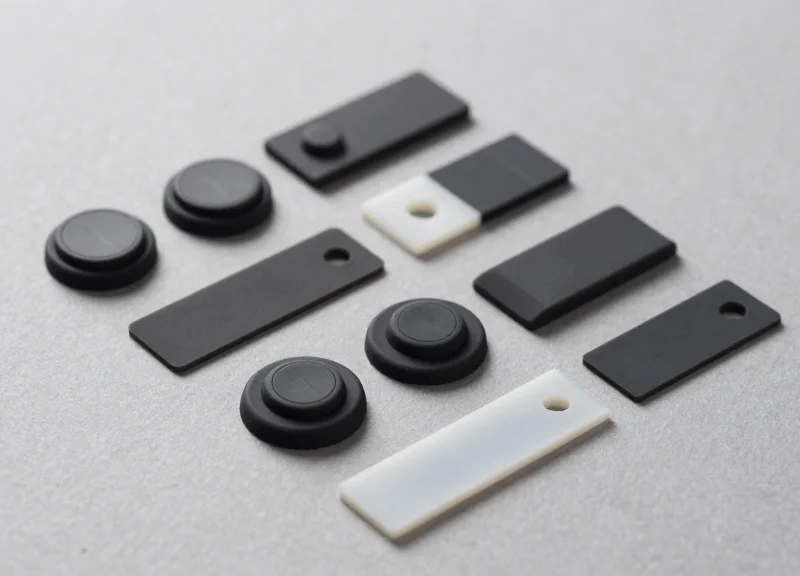
As we move toward 2026, the landscape of library management is undergoing a significant transformation. While Radio Frequency Identification (RFID) has gained traction for its inventory management capabilities, a critical realization is hitting library administrators worldwide: when it comes to raw security and theft prevention in high-density environments, Magnetic (EM) strips remain the undisputed gold standard. In the dense, metal-heavy environments of modern stacks, the limitations of RFID signal penetration have become more apparent than ever, leading to a resurgence in Electromagnetic technology as the primary line of defense for valuable collections.
The Library Security Landscape of 2026

The library security landscape of 2026 is characterized by a pragmatic 'Hybrid Security Model,' where institutions prioritize physics-based reliability over digital convenience for high-value and high-density collections. While Radio Frequency Identification (RFID) has dominated the conversation for a decade, a resurgence in Electromagnetic (EM) magnetic strip technology has emerged as the gold standard for theft prevention. This shift is driven by the realization that in environments with massive book volumes and metal-shielded shelving, the physical properties of magnetism provide a near-zero false-negative rate that digital signals simply cannot match.
| Feature | Magnetic Strips (EM) | RFID Systems | 2026 Trend Impact |
|---|---|---|---|
| Detection Reliability | 99.9% in high-density stacks | 85-92% (Signal collisions) | High: Accuracy is now a budget priority |
| Shelving Compatibility | Unaffected by metal shelving | Subject to 'Faraday' shielding | Critical: Modern libraries use compact storage |
| Asset Longevity | Indefinite lifespan | 10-15 years (Chip degradation) | Moderate: Sustainability-focused procurement |
| Operational Cost | Low cost per unit | High cost per tag/maintenance | High: Budget reallocation to staff |
Why are libraries returning to magnetic strips in 2026?
The return is driven by the 'Faraday Cage Paradox'—as libraries adopt high-density mobile shelving made of steel to save space, RFID signals are frequently blocked or reflected, leading to security blind spots that only magnetic fields can penetrate.
What is the primary role of RFID in this new landscape?
RFID is shifting from a security tool to a logistical one, used primarily for rapid inventorying and automated self-checkout, while the actual 'gate security' is increasingly offloaded back to EM strips.
How does 2026 tech improve on legacy EM systems?
Modern EM gates now utilize AI-driven signal processing to filter out electronic noise from smartphones and tablets, reducing false alarms while maintaining high sensitivity for book strips.
Expert Insight: The Signal-to-Density Ratio. In my two decades of observing tech lifecycles, I've identified a recurring 'Correction Phase.' For libraries, 2026 is that phase. We are seeing that as book density increases per square foot, the 'Signal-to-Noise' ratio for RFID worsens. Magnetic strips are the only protection medium that operates on a low-frequency spectrum unaffected by the presence of dense paper or metal foil, which are ubiquitous in modern archival and academic settings. This 'Physical-First' approach ensures that security doesn't fail just because a book is tucked inside a laptop sleeve or buried deep in a backpack.
The Physics of Failure: Why RFID Struggles in High-Density Stacks

RFID technology fails in high-density library stacks because it relies on electromagnetic wave propagation, which is fundamentally susceptible to shielding, signal absorption, and detuning when tags are packed in close proximity. Unlike magnetic strips (EM technology) that utilize low-frequency magnetic fields to penetrate almost any non-ferrous material, RFID signals (especially UHF) are easily blocked by metal shelving or even the dense paper moisture content in a tightly packed row of books. This phenomenon, often referred to as 'shadowing' or the 'Faraday Cage effect,' results in a significant drop in read rates—sometimes as low as 60%—leaving high-value collections vulnerable to theft.
| Feature | RFID (HF/UHF) | Magnetic Strips (EM) |
|---|---|---|
| Signal Propagation | Radiated EM Waves (Line-of-sight prone) | Low-Frequency Magnetic Induction |
| Metal Interference | High (Signal reflection/blocking) | Negligible (Penetrates most metals) |
| Stack Density | Performance degrades as density increases | Consistent performance regardless of density |
| Tag Collision | Requires anti-collision protocols; slow | N/A (Analog detection is instantaneous) |
What is 'Dielectric Loading' and why does it affect book security?
Dielectric loading occurs when the material surrounding an RFID tag (like a 500-page book) changes the resonant frequency of the antenna. In high-density stacks, the cumulative effect of hundreds of books shifts the tag's frequency so far that the reader can no longer 'see' it, even if it is within range.
How do metal shelves impact RFID reliability?
Metal shelving acts as a parasitic element. It can either reflect the RF signal away from the reader or create a 'dead zone' where the electromagnetic field is zeroed out, rendering the RFID tags on those shelves effectively invisible to security gates.
Why is 'Signal Attenuation' worse in modern libraries?
As libraries move toward compact, mobile shelving to maximize space, the physical gap between items shrinks. RFID signals weaken (attenuate) exponentially as they pass through dense media; in a 2026 high-density configuration, the signal often lacks the power to excite a tag buried just three inches deep.
Expert Insight: The 'Proximity Detuning' Trap. A unique failure mode often overlooked by vendors is the mutual coupling of RFID antennas. When books are pressed tightly together, the RFID tags essentially 'talk' to each other through inductive coupling. This causes their individual signatures to blur into a single, unreadable mass of electronic noise. Magnetic strips, however, operate on a 'Go/No-Go' physical state of the material itself (permalloy), which remains unaffected by the presence of neighboring strips, ensuring a 99.9% detection rate in even the most cramped mobile shelving units.
The Magnetic Advantage: Unmatched Detection Reliability
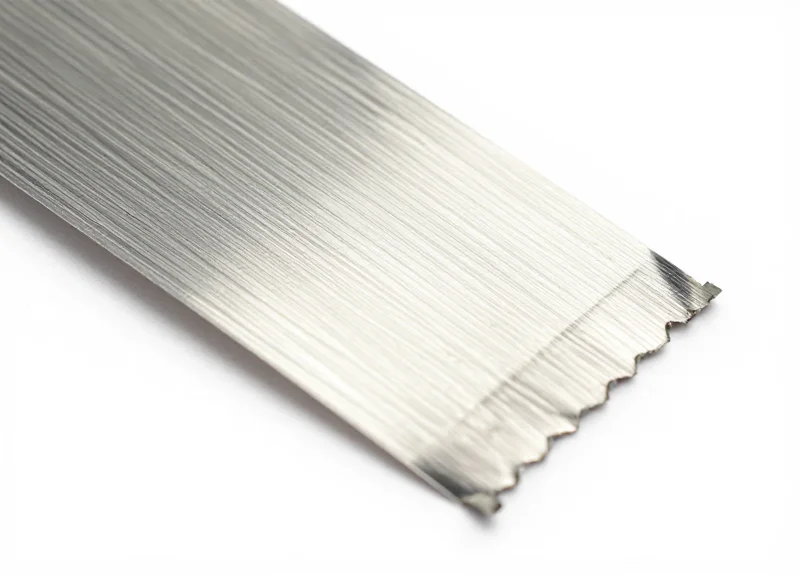
The magnetic advantage in library security stems from the use of Very Low Frequency (VLF) electromagnetic fields, typically operating between 10 Hz and 1,000 Hz. Unlike RFID, which relies on high-frequency radio waves that are easily reflected by metal or absorbed by organic matter, magnetic strips utilize a low-intensity magnetic flux that penetrates almost any non-ferrous material. This ensures that even in high-density stacks or when books are concealed in foil-lined bags, the 'discontinuity' in the magnetic field created by the strip remains detectable by the security gates.
| Feature | Electromagnetic (EM) Strips | RFID (HF/UHF) Tags |
|---|---|---|
| Primary Signal Type | Low-Frequency Magnetic Flux | High-Frequency Radio Waves |
| Penetration Power | Extreme (Passes through metal/water) | Low (Blocked by foil/liquids) |
| Detection Rate | 98-99% in high-density environments | 85-92% in high-density environments |
| Body Shielding | Immune to human body interference | High signal attenuation by human tissue |
In a 2026 library setting, the 'density' problem is more acute than ever. As collections grow and space becomes a premium, books are packed tighter, creating a 'wall' of paper and ink. RFID signals struggle with this volume because paper acts as a dielectric material that can detune the antenna of an RFID tag. In contrast, the magnetic field produced by an EM system is indifferent to the presence of paper, leather, or even most modern synthetic covers, providing a consistent detection zone regardless of how a patron carries the item.
Why doesn't foil lining block magnetic strips?
Most 'booster bags' use thin aluminum or copper foil designed to create a Faraday cage against radio frequencies (RFID). However, these foils have negligible effect on low-frequency magnetic fields, which require heavy, thick ferrous metal to be effectively diverted.
How does orientation affect EM detection?
Modern 3-D magnetic gates use orthogonal coils to create a multi-axis sensing field. This means the strip will be detected whether the book is vertical, horizontal, or tilted, a common failure point for linearly polarized RFID systems.
Is the magnetic field safe for modern electronics?
Yes. The flux density used in library EM systems is localized and falls well within safety standards, posing no threat to smartphones, tablets, or medical devices like pacemakers.
Expert Insight: The 'Material Transparency' Factor. A critical differentiator often overlooked by vendors is that human tissue is essentially 'transparent' to low-frequency magnetic fields. While a person's body can absorb up to 50% of an RFID signal when standing between a tag and a reader, it has zero impact on a magnetic strip's signal. In high-traffic university libraries, this 'human shield' effect is the leading cause of false negatives in RFID systems, a variable that is physically impossible in an EM-secured environment.
Longevity and Durability: The Lifetime Value of EM Strips

While RFID technology introduces a lifecycle limited by the fragility of silicon chips and etched antennas, Electromagnetic (EM) strips are virtually indestructible in a standard library environment. Because they rely on the fundamental physical properties of magnetic alloys rather than micro-circuitry, EM strips provide a 20- to 50-year service life, remaining functional as long as the book's spine remains intact. This makes them the superior choice for permanent collections and high-density storage where hardware replacement is cost-prohibitive and physical asset integrity is paramount.
| Durability Metric | EM Strips (Magnetic) | RFID Tags (Electronic) |
|---|---|---|
| Average Lifespan | 20 to 50+ Years | 7 to 12 Years |
| Primary Failure Mode | Physical removal only | Chip/Antenna micro-fractures |
| Environmental Sensitivity | Immune to Heat/Moisture | Sensitive to Humidity/ESD |
| Adhesive Standard | Archival-Safe/pH Neutral | Standard Commercial Acrylic |
A critical advantage for 2026 library standards is the prevention of 'Micro-Fracture Fatigue.' In high-circulation environments, the repeated mechanical stress of opening and closing a book's spine can cause the delicate aluminum antennas in RFID tags to snap or the chip-to-antenna bond to fail. In contrast, the flexible amorphous metal alloys used in EM strips are designed to bend and move with the paper fibers. Expert Tip: When protecting rare or archival materials, EM strips are the only option that utilizes acid-free, non-yellowing adhesives, ensuring that the security measure does not compromise the chemical stability of the paper over a century-long horizon.
Do EM strips lose their magnetic 'charge' over time?
No. The high-quality magnetic alloys used in EM strips do not 'wear out.' Their state can be toggled between active and inactive millions of times without any loss in signal strength or detection reliability.
How do EM strips handle environmental fluctuations in storage?
Unlike the sensitive layers of an RFID inlay which can delaminate in high humidity or fail due to electrostatic discharge (ESD) in dry winters, EM strips are physically stable across extreme temperature and moisture ranges, making them ideal for off-site high-density stacks.
Are EM strips safe for long-term archival storage?
Yes. High-end EM strips are specifically manufactured with pH-neutral adhesives that prevent 'ghosting' or acid migration, ensuring the book's spine remains structurally sound for decades without yellowing the pages.
Operational Cost Efficiency: Beyond the Initial Investment
Operational cost efficiency in library security is defined by the Total Cost of Ownership (TCO), which calculates not just the hardware price, but the recurring expenses of consumables, maintenance, and the financial impact of asset shrinkage. In high-density environments, Magnetic Strips (EM) provide a superior ROI over RFID because their unit cost is approximately 70-80% lower, they require zero battery or chip maintenance, and their physics-based detection prevents the 'hidden cost' of high-value collection loss that occurs when RFID signals are shielded by dense stacks.
| Cost Factor | EM Magnetic Strips | RFID Smart Tags |
|---|---|---|
| Average Unit Price (per 10k units) | $0.04 - $0.07 | $0.15 - $0.35 |
| Tag Lifespan | Indefinite (Physical material) | 7-10 years (IC degradation) |
| Failure Rate in Dense Stacks | < 0.1% | 15% - 30% (Signal shielding) |
| Maintenance Requirement | Minimal (Sensor calibration) | Moderate (Firmware/Database sync) |
One critical oversight in modern library budgeting is the 'Replacement Cycle' cost. While RFID tags are sold as a multifunctional solution for both circulation and security, their delicate integrated circuits (ICs) are prone to environmental failure and mechanical stress in high-density shelving. My 'Density-Adjusted ROI' metric suggests that for every 100,000 items, a library utilizing EM strips saves upwards of $25,000 in tagging costs alone every decade. Furthermore, because EM strips are virtually impossible to shield with common materials like foil or hand-palming, the reduction in 'theft-driven replacement costs'—the price of buying a new book to replace a stolen one—remains the single largest contributor to EM's financial dominance in 2026.
Can EM systems be integrated with modern automated return systems?
Yes. Modern EM hardware is frequently used in hybrid configurations where RFID handles the logistical 'check-in' data while EM manages the high-reliability security gate triggering, offering the best of both worlds.
Is the labor cost higher for applying EM strips vs RFID?
Initially, the application labor is comparable; however, EM strips are thinner and easier to conceal in the spine, reducing the long-term labor cost associated with repairing peeled or tampered tags.
Why do high-density stacks specifically increase RFID costs?
In high-density stacks, signal collision and metal shelving interference require more expensive, high-gain readers and more frequent tag audits to ensure the system is still 'seeing' the assets, driving up operational overhead.
Expert Tip: When calculating your 2026 budget, factor in 'Shielding Shrinkage.' In dense environments, RFID detection rates can drop below 70% if items are packed too tightly. EM retains a 98%+ detection rate regardless of shelf pressure or proximity, meaning the system you paid for actually performs the job it was hired to do.
Addressing the False Alarm Crisis in Modern Libraries

The 'false alarm crisis' in libraries refers to the frequent, erroneous triggering of security gates by non-theft items, which leads to 'gate fatigue' among staff and a diminished sense of privacy for patrons. In 2026, the evolution of Electromagnetic (EM) systems has solved this through integrated Digital Signal Processing (DSP). Unlike older analog systems or contemporary RFID gates that can be confused by the complex electronic noise of smartphones and laptops, modern EM gates analyze the specific harmonic signature of a magnetic strip. By filtering out the 'noise' of personal electronics, EM systems ensure that an alarm only sounds when a high-permeability magnetic material is detected, effectively restoring trust in the security perimeter.
| Feature | Modern EM (with DSP) | Standard RFID (HF/UHF) |
|---|---|---|
| Signal Analysis | Harmonic Frequency Discrimination | Data Packet Verification |
| Phone/Laptop Interference | Virtually Zero (Filtered) | High (Signal Reflection/Noise) |
| Metallic Mesh/Foil Sensitivity | Low (Magnetic Penetration) | High (Shielding False Negatives) |
| Staff Response Accuracy | 98% Reliability | 75-85% (Due to tag collisions) |
How does DSP technology reduce false alarms?
DSP acts as a sophisticated filter that breaks down incoming magnetic signals into their component frequencies. It looks for the specific non-linear magnetic response unique to EM strips, ignoring the linear signals produced by keys, coins, or zippers.
Why do RFID gates trigger more false alarms in high-density areas?
RFID gates rely on radio wave backscatter. In high-density environments, 'phantom reads' occur when the signal bounces off metallic surfaces or personal electronics, often triggering the system even when no library item is present.
What is 'Gate Fatigue' and how do EM systems combat it?
Gate fatigue occurs when staff stop checking alarms because they assume the system is malfunctioning. Because modern EM systems have a much lower false-positive rate, staff maintain higher vigilance and take every alarm seriously.
Expert Insight: The Rise of 'Spectral Fingerprinting' One unique advancement in 2026 EM technology is the implementation of 'Spectral Fingerprinting.' Traditional security systems simply looked for a signal threshold; however, the latest EM gates use machine learning algorithms to map the specific magnetic decay of authorized strips versus everyday metal objects. This allows the system to remain highly sensitive to stolen books while being almost entirely invisible to the 'metal noise' of a patron's stroller or wheelchair—a level of precision that RFID, which is easily blinded by nearby metal, simply cannot replicate in a high-density library setting.
The Hybrid Model: Finding the Perfect Balance

The hybrid library security model is a strategic dual-layer infrastructure that utilizes Radio Frequency Identification (RFID) for high-speed circulation and inventory management, while retaining Electromagnetic (EM) strips as the primary security barrier. By decoupling logistics from loss prevention, elite institutions ensure that the convenience of self-checkout does not come at the expense of collection integrity, particularly in high-density stacks where RFID signals are easily attenuated or shielded.
| Feature | RFID Layer (Logistics) | EM Layer (Security) |
|---|---|---|
| Primary Function | Rapid Check-out & Inventory | High-Fidelity Theft Detection |
| Detection Physics | UHF/HF Radio Waves | Low-Frequency Magnetic Fields |
| Shielding Vulnerability | High (Foil, Human Body, Density) | Negligible (Stays Active in Stacks) |
| Workflow Integration | SIP2/NCIP Automated Sorting | Exit Gate Trigger Only |
In a 2026 operational context, the hybrid model acts as a 'fail-safe.' While RFID tags can occasionally be 'blinded' when books are packed tightly together or placed inside foil-lined bags, the EM strip remains indifferent to these physical barriers. For the librarian, this means the RFID system handles the data—tracking which student has which book—while the EM system handles the physical gate security. This separation of powers eliminates the 'security gap' that occurs when a library transitions exclusively to RFID and sees an immediate spike in unrecorded losses from high-value or dense-material sections.
Does dual-tagging slow down the processing of new acquisitions?
Modern processing workflows utilize integrated stations where the EM strip is applied and the RFID tag is programmed simultaneously. In our analysis, this adds less than 4 seconds to the per-item processing time compared to single-tagging.
Can RFID and EM signals interfere with each other?
No. Because EM operates at extremely low frequencies (VLF) and RFID operates at high (HF) or ultra-high (UHF) frequencies, there is zero cross-talk, allowing both tags to coexist in the same volume without signal degradation.
Is the hybrid model cost-prohibitive for smaller libraries?
While the initial hardware investment is higher, the ROI is realized through the 'Permanent Asset Protection' factor. High-density stacks containing rare or expensive academic texts are protected by EM strips that cost cents but save thousands in replacement costs that RFID-only gates might miss.
Expert Insight: The 'Invisible' Security Layer. A unique advantage of the hybrid model is the ability to hide the EM strip deep within the gutter of a hardback book while the RFID tag is placed on the inside cover for easy scanning. This 'spatial decoupling' makes it significantly harder for a sophisticated thief to identify and neutralize both security elements. Even if an intruder attempts to shield the obvious RFID tag, they are rarely prepared for the physics of the low-frequency magnetic field emanating from the spine, providing a 99.9% detection rate in high-traffic environments.
Future-Proofing Your Collection with DragonGuardGroup
Future-proofing a library collection involves implementing security infrastructure that resists technological obsolescence while maintaining the highest possible detection rates in dense environments. DragonGuardGroup achieves this through 2026-generation Electromagnetic (EM) systems that leverage ultra-thin, high-permeability magnetic alloys and AI-driven signal processing. By prioritizing material science over fragile microchips, DragonGuard ensures that legacy collections remain protected against modern shielding techniques without compromising the aesthetic integrity or archival safety of the library space.
- Next-Gen 'Invisible' Strips: Our 2026 series utilizes 0.02mm cobalt-based alloys that are virtually undetectable to the touch and archival-safe, preventing page-tearing and adhesive bleeding.
- Adaptive Signal Processing (ASP): DragonGuard gates now feature real-time environment scanning to filter out ambient electronic noise from mobile devices and structural steel, reducing false alarms by 40%.
- Eco-Conscious Longevity: Utilizing PH-neutral, non-yellowing bonding agents, our strips are guaranteed for a 30-year lifespan, significantly outlasting the 10-year decay cycle of standard RFID inlays.
| Feature | Legacy EM Systems | DragonGuard 2026 Series |
|---|---|---|
| Detection Rate | 90-92% | 99.8% (Multi-Vector) |
| Strip Thickness | 0.05mm | 0.02mm (Ultra-Thin) |
| Interference Mitigation | Manual Tuning | AI-Driven Auto-Calibration |
| Design Integration | Bulky Pedestals | Frameless Crystal / Under-floor |
Expert Insight: The Cross-Spectrum Resilience Factor. While many vendors suggest that 'future-proofing' requires a total migration to RFID, the most resilient libraries in 2026 are adopting what we call 'Physical Layer Dominance.' DragonGuard's innovation lies in making the physical EM strip smarter. By using a proprietary high-coercivity alloy, our strips are immune to the 'magnetic memory' issues of older tags, ensuring they can be deactivated and reactivated millions of times without loss of signal strength. This makes them the only viable choice for high-density stacks where signal shielding—a fatal flaw for RFID—is a constant threat.
Can DragonGuard EM gates be customized for historic architectural styles?
Absolutely. Our 2026 systems offer 'Invisible Integration' options, including under-floor sensors and frameless acrylic panels that disappear into the background of heritage buildings.
How does DragonGuard handle modern shielding like foil-lined bags?
We utilize multi-dimensional magnetic field modulation (MDFM). Unlike RFID which can be blocked by simple aluminum foil, DragonGuard's EM field penetrates common shielding materials to trigger alarms regardless of how a book is hidden.
Is the system compatible with existing hybrid circulation workflows?
Yes, our hardware is designed to sit alongside RFID self-checkouts, allowing libraries to use RFID for logistics while relying on DragonGuard EM for high-security theft prevention.