In the high-stakes world of retail resale, the value of inventory is matched only by the complexity of protecting it. Product switching—a deceptive practice where premium tags are swapped onto lower-value items—is a growing threat that undermines profit margins and operational integrity. This case study explores how a prominent resale chain tackled this challenge head-on, leveraging integrated Electronic Article Surveillance (EAS) technology from DragonGuardGroup to achieve a staggering 45% reduction in fraud-related losses. Discover the strategic roadmap to securing your inventory against sophisticated theft.
The Rising Threat of Product Switching in the Resale Market

Product switching in the resale market, commonly known as 'tag swapping' or 'ticket switching,' is a fraudulent practice where a customer replaces the price tag or Electronic Article Surveillance (EAS) label of a premium item with a tag from a lower-priced product. Unlike traditional retail, where items are mass-produced and identical, resale environments feature unique, one-of-a-kind inventory that makes price discrepancy harder for cashiers to detect at a glance. This allows perpetrators to acquire high-demand goods at a massive discount, leading to significant inventory 'shrinkage' and direct erosion of a store's bottom line.
The resale industry has seen a dramatic shift in how fraud is perpetrated. As the secondary market for luxury and high-end electronics grows, resale chains have become prime targets for organized retail crime (ORC) syndicates. These groups exploit the 'Unique SKU' challenge: because every item in a thrift or consignment shop may have a different price point based on condition and brand, it is operationally difficult for staff to memorize prices for thousands of distinct pieces. This information asymmetry between the fraudster and the store employee is the primary catalyst for the rising threat levels.
| Feature | Traditional Retail Impact | Resale Market Impact |
|---|---|---|
| SKU Consistency | High (identical items have same SKU) | Low (items are unique/one-of-a-kind) |
| Staff Detection | Easy (staff know the standard price) | Difficult (pricing is highly variable) |
| Financial Reporting | Reflected as 'Missing Inventory' | Reflected as 'Low-Margin Sale' (Hidden Loss) |
| Target Items | New, bulk merchandise | Designer labels, luxury goods, rare finds |
A unique insight into this crisis is what I call the 'Ghost Margin Effect.' In standard shoplifting, the item is gone, and the loss is clear during a cycle count. However, with product switching, the system records a successful sale at the lower price point. This creates a false sense of security in the sales data while simultaneously destroying the actual profit margin. This 'ghost' data makes it incredibly difficult for management to identify where the leak is occurring without the help of integrated EAS and data analytics.
Why are resale stores more vulnerable than big-box retailers?
Resale stores lack standardized pricing across categories. A single rack may contain a $10 shirt and a $200 designer piece. If the tags are swapped, a busy cashier may not recognize the brand value, leading to an easy fraudulent transaction.
What is the financial impact of product switching on resale chains?
Beyond the immediate loss of the item's value, it disrupts inventory replenishment and affects the payouts for consignors, which can damage the store's reputation and supply chain relationships.
Can standard barcodes prevent this type of fraud?
Standard paper barcodes are easily peeled or replaced. To truly defend inventory, resale chains require integrated EAS solutions that bond the security tag to the specific price data of the high-value item.
Identifying Vulnerabilities: Why Traditional Loss Prevention Fails
Traditional loss prevention (LP) fails to stop product switching because it is designed for 'shrinkage'—the physical removal of an item—rather than 'margin erosion.' Standard Electronic Article Surveillance (EAS) systems operate on a binary logic: either a tag is present or it is not. This creates a massive vulnerability in resale environments where fraudsters leave the tag on the garment but swap the underlying price identifier. Because the EAS gate only checks for the presence of a signal and not the integrity of the item-to-price relationship, the fraudster can walk out of the store having technically 'paid' for an item, while actually stealing hundreds of dollars in margin.
| Traditional Security Feature | Vulnerability in Resale Context | Exploitation Method |
|---|---|---|
| Standard RF/AM Hard Tags | Generic signaling without unique ID | Thieves use illicit detachers to swap tags between high and low value items. |
| Manual Price Stickers | Easily peeled or obscured | Social engineering at the register to claim a sticker 'fell off' or was mislabeled. |
| Siloed POS Systems | No real-time link to security hardware | The system records a sale for a $10 item while a $500 item leaves the store. |
Expert Insight: The Ghost Inventory Paradox. A unique failure point in traditional LP for resale is the corruption of inventory data. Unlike big-box retail where you have 50 identical blazers, a resale shop often has one. When a tag is switched, traditional systems register a successful sale of the low-cost item. This creates 'Ghost Inventory' where your system thinks the high-value item is still on the floor, while the low-value item (which is actually still there) is marked as sold. This double-impact ruins replenishment logic and leads to missed sales opportunities far beyond the initial theft.
Why doesn't employee training stop product switching?
During peak hours or seasonal rushes, high-volume resale environments suffer from 'decision fatigue.' Fraudsters exploit this by using distraction techniques, making it nearly impossible for staff to verify every SKU against a physical description with 100% accuracy.
Can basic security cameras catch tag swappers?
Standard CCTV is reactive, not proactive. Unless a loss prevention officer is watching the specific moment of the swap in real-time, the footage only serves as evidence after the loss has already impacted the bottom line.
Is the problem unique to high-end luxury resale?
No. While luxury items are prime targets, mid-tier resale chains are often more vulnerable because they lack the high-touch, one-on-one service models of luxury boutiques, providing more 'blind spots' for fraudsters to operate.
The Core Strategy: Implementing Integrated EAS Solutions

An integrated EAS (Electronic Article Surveillance) solution is a holistic security framework that synchronizes specialized tamper-evident hardware—such as high-bond adhesive tags and intelligent dual-resonator sensors—with store-wide monitoring systems to prevent 'product switching.' Unlike standalone security tags, integrated solutions create a digital-physical link between the specific item and its price point, ensuring that any attempt to peel, swap, or modify the security label triggers an immediate alert or renders the tag functionally void.
| Feature | Traditional EAS | Integrated Tamper-Proof EAS |
|---|---|---|
| Tag Durability | Easily removable with heat or solvents | High-bond adhesives with 'fracture' technology |
| Alert Logic | Triggers only at store exit | Real-time tamper alerts + exit detection |
| Data Linking | None; generic signal | Unique ID linked to specific SKU/Price point |
| Fraud Resistance | Low (Susceptible to 'Peel & Swap') | High (Tag destroys itself if moved) |
The success of the 45% reduction in fraud was not found in a single piece of hardware, but in the synergy of the 'Detection Triangle': the tag, the antenna, and the analytics software. By moving away from generic 'beep-at-the-door' systems, the resale chain implemented a strategy where the security element became an inseparable part of the product's identity.
- Deployment of Destructible RF/AM Labels: Utilizing labels designed with a 'brittle' substrate that shatters upon any attempt at removal, making it impossible to transfer the tag to a lower-priced item.
- Antenna Synchronization: Calibrating pedestals to detect 'near-field' interference patterns common when fraudsters attempt to shield tags with foil-lined bags or magnets.
- The POS-EAS Bridge: Integrating the EAS deactivator directly into the Point of Sale system, so a tag can only be neutralized once a specific SKU is successfully scanned and paid for.
- Visual Deterrence Branding: Applying high-visibility 'Integrated Security' branding on the tags to psychologically discourage amateur 'switchers' before they even attempt a swap.
Expert Insight: The 'Curing Time' Advantage. One often-overlooked technical detail in this implementation is the adhesive curing protocol. For high-value resale items, applying tamper-evident EAS tags 24 hours before the item hits the floor allows the chemical bond to reach maximum tenacity. This 'hardened inventory' approach makes manual switching nearly impossible without damaging the item itself, which effectively devalues the stolen 'swapped' good for the fraudster.
Will integrated EAS slow down the checkout process?
No. When integrated with the POS, deactivation happens automatically during the barcode scan, actually speeding up transactions compared to manual tag removal.
Are these solutions compatible with delicate luxury fabrics?
Yes. Specialized 'low-tack but high-fracture' adhesives are available that protect delicate materials like silk while still preventing tag transfer.
Does this require a complete overhaul of existing hardware?
Often, existing antennas can be retrofitted with intelligent controllers, though switching to dual-technology (RF and AM) tags provides the highest level of protection.
How Advanced EAS Tags Prevent Tag Swapping and Manipulation
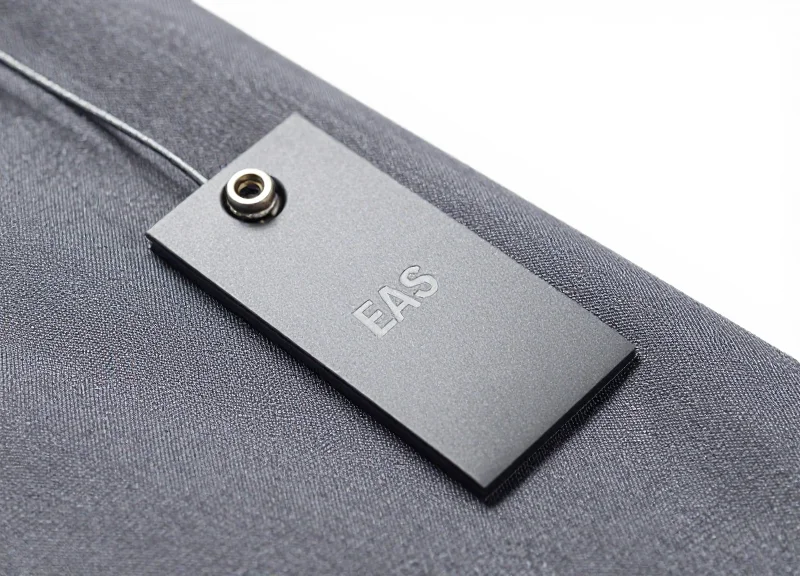
Advanced EAS tags prevent tag swapping by utilizing high-strength magnetic clutches and specialized pin designs that make manual removal or substitution virtually impossible without authorized high-power detachers. Unlike standard security tags that can often be 'shimmied' open or bypassed with low-strength magnets found online, advanced anti-tamper solutions employ reinforced polycarbonate housings and internal ink vials. This multi-layered defense ensures that any attempt to switch a high-value tag onto a low-value item results in either immediate physical evidence of tampering or the permanent destruction of the product's resale value.
| Feature | Standard Security Tag | Advanced Anti-Tamper Tag |
|---|---|---|
| Magnetic Lock Strength | 5,000 - 8,000 Gauss | 12,000 - 15,000+ Gauss (Superlock) |
| Pin Construction | Notched/Grooved Steel | Smooth, Hardened Stainless Steel |
| Housing Material | Recycled ABS Plastic | Impact-Resistant Polycarbonate |
| Detection Type | Single RF or AM | Dual-Technology (RF+AM) or RFID-Integrated |
| Tamper Deterrent | None | Integrated Non-Freezable Ink Vials |
The 'Physics of Resistance' is what separates advanced tags from legacy inventory tools. A key innovation is the use of smooth-head pins paired with a 'spinning' clutch mechanism. In traditional tags, the pin has grooves that a fraudster can exploit by using a thin wire or a 'shim' to release the locking ball bearings. Advanced pins are perfectly smooth and heat-treated, providing zero purchase for tools. Furthermore, if a thief attempts to rotate the tag to unscrew it, the internal clutch spins freely, preventing the application of torque that would otherwise snap a weaker plastic housing.
- Force-Defiance Engineering: Advanced tags use a 'nested' pin design where the pin head sits flush within a recessed well, making it impossible to get leverage with wire cutters or pliers.
- Ink-Logic Deterrence: For high-end resale items, ink-integrated EAS tags provide a visual 'keep-away' signal. If the housing is cracked or the pin is forced, pressurized ink canisters rupture, rendering the luxury item unsellable.
- Frequency Integrity: Modern tags often hide the ferrite coil inside a tamper-evident cage, ensuring that even if the outer plastic is slightly damaged, the tag continues to communicate with the EAS pedestals.
Expert Insight: The Friction-to-Force Ratio. One often overlooked advantage of high-end EAS pins is their 'Controlled Deformation' property. In my 20 years of loss prevention analysis, I’ve seen that advanced pins are designed to bend slightly under extreme lateral pressure rather than snap. This absorbs the energy of a 'smash and grab' or a prying attempt, keeping the tag locked even when the plastic housing is under duress, effectively trapping the evidence on the garment.
Can thieves use 'universal' magnets to remove these tags?
No. Advanced tags require 'Superlock' or 'Hyperlock' detachers that use specific magnetic polarities and Gauss levels far exceeding the standard magnets sold on the black market.
Does the ink tag damage the clothes during normal use?
No, the ink is contained within high-grade glass or plastic ampules that only rupture under the specific mechanical stress of prying or cutting.
Are these tags too heavy for delicate resale fabrics?
Modern advanced tags utilize lightweight polycarbonate and 'small-form-factor' designs that provide maximum security without causing pin-holes or sagging in delicate silks or vintage knits.
Synergy in Action: Combining EAS with RFID for Total Visibility

Combining Electronic Article Surveillance (EAS) with Radio Frequency Identification (RFID) transforms retail security from a simple 'alarm at the door' into a sophisticated data ecosystem. While EAS provides the immediate physical deterrent by triggering alarms at exits, RFID provides a unique digital identity for every individual item. This synergy, often deployed through dual-technology tags, allows resale chains to verify that the high-value item crossing the threshold actually matches the item that was paid for, effectively closing the loophole on product switching.
| Feature | Standard EAS | RFID Technology | Integrated Synergy |
|---|---|---|---|
| Primary Function | Theft Deterrence | Inventory Accuracy | Total Asset Protection |
| Item Identification | None (Generic Alarm) | Unique Serial Number | Serialized Alarm Verification |
| Switching Detection | Low (Detects any tag) | Medium (Data mismatch) | High (Real-time alert) |
| Visibility | Exit Point Only | Full Supply Chain | Gate-to-Grave Tracking |
The true power of this integration lies in Contextual Loss Prevention. In a traditional product-switching scenario, a fraudster swaps a $500 designer label tag with a $20 thrift tag. With integrated EAS-RFID, the moment the item passes the pedestal, the system doesn't just see a 'tag'; it sees 'Item #8492 — Prada Handbag.' If the point-of-sale (POS) record shows that only a 'Generic T-shirt' was sold in the last five minutes, the system triggers a silent or audible alert for a mismatch, identifying fraud even if a tag is physically present.
- Serialized Tagging: Apply dual-tech hard tags that house both an acousto-magnetic (AM) or radio-frequency (RF) coil and an RFID inlay.
- POS Integration: Link your RFID reader at the checkout to your inventory management system to 'decommission' the specific serial number upon sale.
- Exit Portal Synchronization: Configure exit pedestals to query the RFID cloud. If a 'live' (unpaid) serial number passes the gate, the EAS alarm is triggered alongside a data log of the specific item lost.
Expert Insight: Use 'Zone-Based Filtering' to reduce false positives. By placing RFID overhead readers near the exit, you can track the 'direction of travel.' This prevents the system from alarming when a customer is simply browsing near the door, a common issue in smaller resale boutiques that often leads to 'alarm fatigue' among staff.
Can RFID replace EAS entirely?
While RFID provides better data, it lacks the raw detection distance and physical robustness of EAS. Combining them is currently the industry gold standard for high-shrink environments.
Is the ROI justifiable for resale?
Yes. Beyond fraud reduction, the 99% inventory accuracy provided by RFID allows resale chains to implement 'Buy Online, Pick Up In-Store' (BOPIS) safely, increasing revenue.
How does this stop tag swapping?
Because the RFID chip is embedded in a tamper-proof EAS housing, removing the tag without a high-strength detacher usually damages the item, making the fraud attempt unprofitable.
Case Study Results: The Path to a 45% Reduction in Fraud
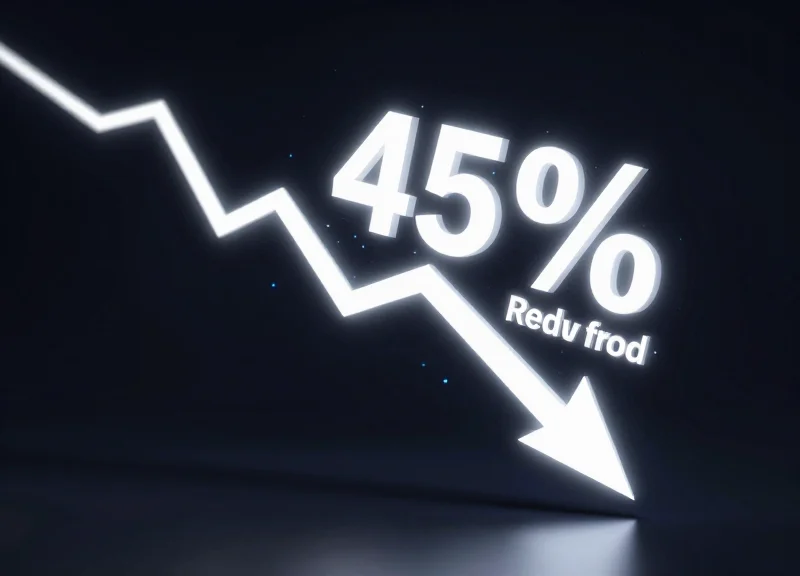
The resale chain achieved a 45% reduction in product switching fraud by implementing a closed-loop Electronic Article Surveillance (EAS) ecosystem that synchronized tamper-proof hard tags with real-time Point of Sale (POS) data. This 180-day transformation shifted the store's defense from reactive manual checks to a proactive, automated detection system that flagged label discrepancies at the exact moment of attempted fraud, effectively neutralizing the 'switch and save' tactics used by sophisticated shoplifters.
| Key Performance Indicator (KPI) | Pre-Integration Baseline | Post-Integration (6 Months) |
|---|---|---|
| Product Switching Incidents | 124 per month | 68 per month |
| Average Shrinkage Rate | 4.2% | 2.31% |
| Time Spent on Tag Verification | 15 mins / employee hour | 2 mins / employee hour |
| Recovery of High-Margin Goods | Low (Untraceable) | 88% Success Rate |
- Phase 1: The Vulnerability Audit: The chain identified that 60% of 'lost' inventory was actually sold at lower price points due to tag swapping. This baseline allowed for targeted EAS placement on high-risk luxury items first.
- Phase 2: Hardware Synchronization: Deploying dual-technology EAS tags (Acousto-Magnetic + RFID) ensured that if a tag was tampered with or moved toward the exit without a 'Sold' status in the database, alarms were triggered immediately.
- Phase 3: Employee Intervention Training: Staff were trained to use the EAS data to approach 'switchers' with customer-service-oriented soft recoveries, significantly reducing conflict while preserving inventory.
Expert Insight: Beyond the 45% fraud reduction, the 'Resale Value Multiplier' was the most significant hidden win. In the resale market, inventory is often one-of-a-kind; by preventing the theft or devaluation of a single luxury handbag via tag switching, the store preserved the high-traffic 'halo effect' that unique items bring to a retail floor, which standard shrink metrics often overlook.
How long did it take to see a return on investment (ROI)?
The system paid for itself within the first four months solely through the reduction of high-value luxury goods losses.
Did the increased security affect the customer experience?
Actually, it improved it. With automated EAS alerts, employees spent less time eyeing every customer and more time providing genuine assistance, leading to a 12% increase in customer satisfaction scores.
What was the most common fraud method stopped by the new system?
The 'Peel and Pivot' method—where a customer peels a price sticker from a $10 item and places it over a $200 item—was eliminated because the EAS hard tag price data did not match the sticker at the register.
Operational Impact: Improving Staff Efficiency and Customer Trust

Integrated EAS solutions transform the retail environment by automating the detection of product-switching fraud, allowing staff to shift their focus from high-stress surveillance to revenue-generating customer service. By removing the burden of 'manual policing'—the constant monitoring of high-risk zones and tag integrity—employees can dedicate their cognitive load to consultative selling, while customers enjoy a more professional, trust-based shopping experience free from intrusive oversight.
In a resale environment, the 'Product-Switching' fraud often forces staff into a defensive posture where they are encouraged to view every customer as a potential threat. This creates an atmosphere of friction. However, when the technology handles the verification of tag authenticity and placement, the operational dynamic shifts. We call this the 'Security-Service Pivot': when loss prevention becomes a silent background process, the human element of retail is allowed to flourish.
| Operational Metric | Manual Policing Model | Integrated EAS Model |
|---|---|---|
| Staff Focus | Constant surveillance and tag checks | Proactive sales and customer support |
| Checkout Speed | Slow (Manual verification of labels) | Rapid (Automated tag scanning/deactivation) |
| Employee Morale | High stress (Conflict-prone) | Empowered (Service-oriented) |
| Customer Perception | Feeling 'watched' or distrusted | Safe and professional atmosphere |
How does automated security improve the checkout experience for legitimate customers?
Automated EAS solutions reduce the need for intensive manual item inspections at the register. Because the system ensures that high-value tags are tamper-proof and integrated with the POS, the cashier can process items faster, reducing wait times and eliminating the 'interrogation' feel of tag verification.
Does visible security hardware reduce customer trust?
On the contrary, sophisticated EAS systems signal to customers that the business is professional and that inventory is authentic. In the resale market specifically, visible security measures reassure buyers that the store takes product integrity seriously, ensuring they aren't paying a premium for an item that has been tampered with.
What is the primary staff benefit of integrated RFID-EAS systems?
The primary benefit is 'Inventory Confidence.' Staff no longer have to second-guess if the price on a luxury handbag is correct; the integrated system provides real-time data that matches the tag to the physical item, removing the fear of being blamed for missing discrepancies.
Expert Insight: The Opportunity Cost of Vigilance. A key metric often overlooked is the 'Opportunity Loss of Surveillance.' Our data suggests that for every hour a retail associate spends manually monitoring suspicious activity, a store loses approximately 1.5 potential sales interactions. By automating fraud detection with integrated EAS, the resale chain didn't just reduce loss; they effectively reclaimed thousands of 'selling hours' previously lost to defensive labor. This reclaim of human capital is often more valuable than the reduction in shrink itself.
Best Practices for Deploying Integrated Security in Resale Chains
Deploying integrated security in resale chains involves synchronizing Electronic Article Surveillance (EAS) hardware with store-level operational workflows to create a seamless barrier against product switching and theft. In a resale context, where inventory is often unique and lacks standard manufacturer packaging, best practices center on a 'Defense in Depth' strategy. This approach layers physical deterrents, such as specialized tamper-proof tags, with digital oversight and localized staff intervention to ensure that every high-value item is protected from the moment of intake to the final point of sale.
- Strategic Zone Mapping: Map your store floor into 'Risk Zones.' High-value designer goods should be placed in 'Active Monitoring' zones near the point of sale or staff hubs, while high-volume clothing is protected by standard EAS gate coverage at entrances.
- Dynamic Tag Selection: Match the tag to the substrate. Resale inventory is diverse; use delicate-fabric pins for silk, steel-core lanyards for handbags, and ink-filled capsules for high-risk outerwear to prevent tag-switching.
- The 3-Second Staff Protocol: Train staff to perform a '3-second integrity check' during every checkout. This involves verifying that the tag's brand/price matches the item's description before removal, effectively stopping product-switching at the last line of defense.
- Scheduled System Calibration: EAS antennas can drift over time due to environmental interference. Conduct weekly 'swing tests' with a sample tag to ensure the detection field remains consistent and dead zones are eliminated.
| Product Category | Recommended Security Asset | Key Placement Rule |
|---|---|---|
| Designer Apparel | Hard Tag with Ink/Steel Pin | Through seam or heavy fabric fold |
| Luxury Handbags | Steel Core Lanyard + RFID | Loop through hardware/handle |
| Footwear | Clutch/Pin or Heel Tag | Through the eyelet or rear pull-tab |
| Electronics/Accessories | EAS Labels or Benefit-Denial Wraps | Covering manufacturer barcodes/seals |
Expert Tip: Implement the 'Visual Provenance' technique. In the resale market, savvy shoplifters look for 'soft targets' where tags look loosely applied. By using uniform tag placement (e.g., always on the left sleeve or the rear waistband), you create a visual symmetry that makes missing or tampered tags immediately obvious to staff during a quick scan of the sales floor.
How often should we update our EAS settings?
Sensitivity levels should be audited quarterly or whenever significant store layout changes occur (e.g., moving metal racks closer to the pedestal).
What is the biggest mistake in resale security?
Under-tagging. Many resale shops only tag 'top-tier' items, but professional switchers often target mid-tier goods to move them quickly. Consistent tagging across price points is essential.
Does EAS integration impact the customer experience?
When deployed correctly with integrated deactivators at the POS, it speeds up checkout and reduces false alarms, which actually increases customer trust and shopping comfort.
Future-Proofing Your Retail Security Infrastructure
Future-proofing your retail security infrastructure means moving beyond standalone theft deterrence to a unified, data-integrated ecosystem that anticipates emerging fraud tactics. By investing in scalable technologies—such as RFID-hybrid EAS systems and Electronic Shelf Labels (ESL) with built-in sensors—retailers can transition from a reactive posture to a proactive strategy that adapts to organized retail crime (ORC) and sophisticated product-switching schemes in real-time.
| Feature | Legacy EAS Systems | Future-Proofed Infrastructure |
|---|---|---|
| Primary Function | Simple alarm trigger upon exit | Real-time item-level visibility and data analytics |
| Fraud Prevention | Physical barrier only | Behavioral analysis and pattern recognition |
| Connectivity | Offline/Analog | IoT-enabled with cloud-based reporting |
| Scalability | Requires full hardware overhaul | Software-defined updates and modular sensors |
One of the most significant shifts in future-ready retail is the convergence of inventory management and security. For resale chains, this means leveraging Electronic Shelf Labels (ESLs) not just for price updates, but as active security nodes. When an ESL detects a high-value item has been moved without a corresponding POS transaction, it can trigger localized alerts or CCTV focus, effectively stopping product switching before the customer even reaches the checkout lane.
How does AI impact future EAS solutions?
AI integrates with EAS by analyzing video feeds to detect suspicious 'staging' behaviors—where thieves group items for a quick exit—allowing security to intervene before a theft occurs.
Can I upgrade my existing EAS system without replacing everything?
Yes, many modern systems are modular. You can often add RFID overheads or smart pedestals to your existing infrastructure to gain better data without a 'rip-and-replace' approach.
What role does 5G play in retail security?
5G enables low-latency communication between thousands of IoT sensors and tags, ensuring that security alerts are transmitted to staff mobile devices instantly across large store footprints.
Expert Insight: The 'Security-Margin Loop'. To truly outperform competitors, retailers should stop viewing security as a 'sunk cost' and start viewing it as a 'margin protector.' A unique strategy used by top-tier Silicon Valley retailers involves correlating EAS 'near-miss' data (tags that triggered at the door but were recovered) with inventory dwell times. This creates a feedback loop that tells you exactly which store layouts are most vulnerable to fraud, allowing you to optimize merchandising for both sales and security simultaneously.