In the high-stakes world of grocery retail, frozen meat represents one of the most significant investment areas and, unfortunately, one of the most vulnerable targets for shrinkage. With thin profit margins being the industry standard, every steak or rack of ribs lost to theft is not just a lost sale—it is a direct hit to your net profit. Electronic Article Surveillance (EAS) systems have long been the gold standard for retail security, but their application in the challenging environment of frozen food requires specific expertise. This article explores how a targeted 40% reduction in meat shrinkage can transform your financial health and produce a return on investment (ROI) that pays for the system in record time.
The Economic Reality of Frozen Meat Shrinkage
The economic reality of frozen meat shrinkage is defined by its disproportionate impact on a retailer's net profit. While total store shrinkage might average 1.5% to 2%, frozen meat often experiences loss rates significantly higher due to organized retail crime (ORC) and its high resale value. Because grocery margins are notoriously thin—frequently between 1% and 3%—a single stolen $50 meat pack requires thousands of dollars in new sales just to offset the loss, making it a primary driver of bottom-line erosion.
In the retail sector, frozen meat is classified as a 'high-theft' item because it possesses high liquidity. Unlike electronic goods, frozen proteins are essential commodities with a constant demand, making them easy to flip in secondary markets or even back into the food service supply chain. This vulnerability turns the meat freezer into a focal point for inventory distortion and margin leakage.
| Item Value (Loss) | Store Profit Margin | Required Sales to Break Even | Impact Level |
|---|---|---|---|
| $25.00 | 1.5% | $1,666.67 | Moderate |
| $50.00 | 1.5% | $3,333.33 | High |
| $100.00 | 1.5% | $6,666.67 | Critical |
| $500.00 (Bulk) | 1.5% | $33,333.33 | Devastating |
Why is frozen meat more susceptible to shrinkage than other categories?
Frozen meat combines high unit value with relative anonymity. Unlike high-end electronics, individual meat packages rarely have unique serial numbers, making them difficult to track once they leave the store illegally.
How does shrinkage affect consumer pricing?
Retailers are often forced to implement 'shrinkage taxes'—incrementally raising prices for honest consumers to cover the margin gap created by theft and operational loss.
What is the 'Multiplier Effect' in meat loss?
Beyond the cost of the item, the multiplier effect includes the labor cost of restocking, the energy cost of maintaining freezer space for stolen goods, and the lost opportunity cost of having an out-of-stock (OOS) item for a legitimate buyer.
A unique insight often overlooked by traditional loss prevention models is 'Margin Cannibalization.' When a high-margin item like a premium ribeye is stolen, the store doesn't just lose the cost of the meat; it loses the ability to subsidize lower-margin 'loss leader' items (like milk or bread). This forces a shift in the entire store's pricing strategy, often leading to a loss of competitive edge in the local market. Effective EAS systems don't just stop theft; they protect the price integrity of the entire inventory.
Why Frozen Meat is a High-Risk Category

Frozen meat is classified as a high-risk category because it satisfies all the criteria of the 'CRAVED' model of theft: it is Concealable, Removable, Available, Valuable, Enjoyable, and Disposable. Unlike electronics, which often require activation or have unique serial numbers, high-end frozen proteins like Wagyu beef, seafood, and organic poultry are 'liquid assets' that can be consumed or resold immediately on the black market for nearly 70% of their retail value, providing a high incentive for both Organized Retail Crime (ORC) rings and opportunistic shoplifters.
While many retailers focus security efforts on the electronics or health and beauty aisles, the freezer section often suffers from a 'Security Paradox.' The items are high-value, yet they are typically merchandised in open-access cases to encourage impulse buys. This accessibility, combined with the difficulty of applying traditional security tags to cold, damp packaging, creates a low-friction environment for theft.
| Risk Factor | Economic Impact | Operational Challenge |
|---|---|---|
| High Resale Liquidity | Immediate loss of high-margin inventory. | Thieves sell to 'fences' or small restaurants. |
| Bulk Concealability | Single incidents often exceed $500 in value. | Standard EAS tags often fail in sub-zero temps. |
| Essential Demand | Consistently high turnover makes tracking difficult. | Inventory gaps lead to lost sales from 'out-of-stocks'. |
Unique Insight: The 'Cold Chain Blind Spot'. My experience in retail analytics reveals a psychological factor often overlooked: the physical environment of the freezer aisle itself. Because these aisles are significantly colder and often located at the perimeter of the store, staff dwell time is statistically lower. This creates a 'blind spot' where associates are less likely to perform proactive 'aggressive hospitality' or routine monitoring, giving shoplifters the privacy and time they need to conceal large quantities of product without interruption.
Why is frozen meat preferred over fresh meat for theft?
Frozen meat has a significantly longer shelf life, allowing ORC groups more time to transport and resell the stolen goods before they spoil. This stability makes it a much safer 'currency' for illicit trade compared to fresh cuts.
How does 'Sweeping' affect the frozen meat category?
Sweeping is a tactic where a thief clears an entire shelf of high-value items into a bag in seconds. In the frozen aisle, this is common with high-cost items like frozen shrimp or ribeye steaks, leading to massive single-event losses.
Does branding matter to meat thieves?
Absolutely. Premium organic or name-brand frozen proteins are targeted specifically because they carry a higher street value and are easier to sell to secondary markets than generic store brands.
The EAS Advantage: Deterrence and Detection
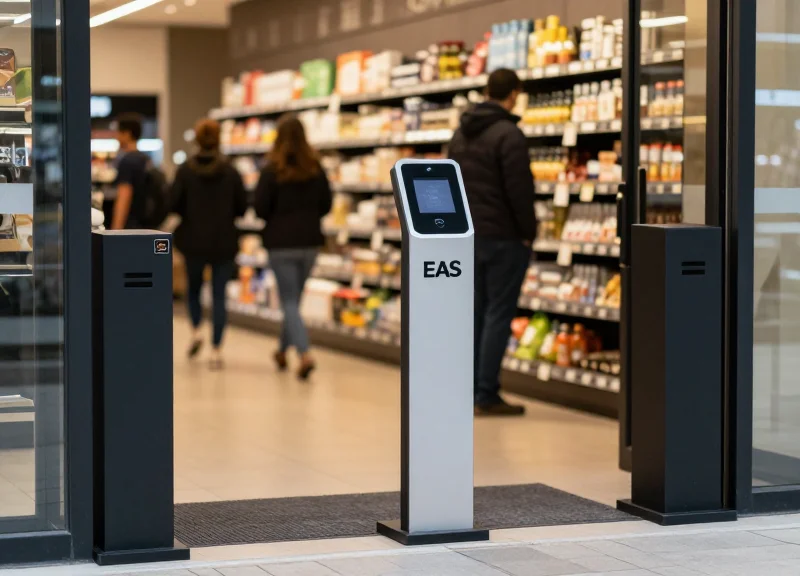
EAS technology provides a proactive defense against frozen meat shrinkage by functioning as both a psychological barrier and a technical gatekeeper. For the grocery industry, the EAS advantage lies in its ability to create a 'hardened' retail environment where the perceived risk of theft significantly outweighs the reward. By integrating specialized tags or labels that interact with store-exit pedestals, retailers can effectively stop theft at the point of exit while simultaneously discouraging opportunistic shoplifting through visible security cues.
| Feature | Deterrence (Psychological) | Detection (Physical) |
|---|---|---|
| Visible Pedestals | Acts as a visual warning that the store is actively monitored. | Triggers audible and visual alarms when a tag passes through. |
| Security Labels | Signals that specific items are protected and tracked. | Uses AM or RF frequencies to communicate with sensors at the exit. |
| Integrated Signage | Reinforces the presence of security to deter opportunistic theft. | Provides legal notice of surveillance and prosecution policies. |
Expert Insight: The 'Security Halo' Effect. A unique advantage of EAS in meat departments is what we call the 'Security Halo.' Industry data suggests that when high-risk items like ribeye or wagyu are visibly tagged, shrinkage for untagged items in the same aisle can drop by up to 15%. This occurs because the visible presence of EAS pedestals creates a psychological 'redline' that makes potential shoplifters perceive the entire zone as high-risk, regardless of whether every individual package is protected.
How do EAS tags work in sub-zero temperatures?
Modern EAS labels are specifically engineered with moisture-resistant adhesives and durable substrates that maintain their frequency integrity and bond strength even in temperatures as low as -20°F.
Is Acousto-Magnetic (AM) or Radio-Frequency (RF) better for frozen meat?
AM technology is generally preferred for meat products because it is less affected by the high water content and metallic foil packaging often found in frozen food containers, resulting in fewer false alarms.
Does the detection system alert staff discretely?
Yes, many modern EAS systems can be integrated with mobile apps or pager systems to notify loss prevention staff silently, allowing for a more controlled and professional intervention.
The synergy between deterrence and detection is what drives the rapid Return on Investment (ROI) for EAS systems. While detection stops the immediate loss of a $40 tenderloin, the deterrence factor reduces the overall volume of theft attempts, lowering the operational burden on store staff and creating a safer shopping environment for legitimate customers.
Overcoming Technical Hurdles in Cold Chain Security
Securing frozen meat with Electronic Article Surveillance (EAS) involves overcoming three primary technical barriers: adhesive crystallization in sub-zero temperatures, condensation-induced tag peeling, and signal interference caused by the high dielectric constant of frozen organic matter. To achieve a 40% reduction in shrinkage, retailers must move beyond standard security labels and utilize cold-chain optimized hardware that maintains bond strength at -20°C (-4°F) while ensuring the signal can penetrate dense, moisture-rich packaging.
| Technical Challenge | Standard EAS Label | Cold-Chain Optimized Label |
|---|---|---|
| Adhesive Performance | Becomes brittle and fails at 0°C | Cryogenic-grade acrylic; remains tacky to -30°C |
| Moisture Resistance | Delaminates upon condensation | Vapor-barrier backing to prevent saturation |
| Signal Penetration | Attenuated by water/ice layers | High-Q factor resonators for deeper penetration |
| Application Surface | Dry cardboard only | Poly-bags, vacuum seals, and waxed cartons |
One often-overlooked factor is the 'Adhesion-Activation Lag.' Standard adhesives undergo a glass transition in the freezer, turning into a brittle solid that loses all 'tack.' When a shoplifter removes a frozen item from the case, the rapid condensation that forms on the surface acts as a lubricant, allowing standard tags to be easily slid off before the adhesive can re-warm. Expert Tip: Always specify 'initial tack' ratings for wet-subzero environments to ensure the tag remains bonded during the critical moments of a theft attempt.
Does the frequency of the EAS system matter for frozen meat?
Yes. Acousto-Magnetic (AM) 58kHz systems generally outperform Radio Frequency (RF) 8.2MHz systems in frozen meat applications because AM signals are less susceptible to 'detuning' by the high moisture and salt content found in muscle tissue.
Will cold-chain tags damage the consumer packaging?
No. Specialized cold-chain tags use food-safe, pressure-sensitive adhesives (PSA) that provide a high bond strength during the retail cycle but are designed to remain on the outer secondary packaging (like plastic wraps), ensuring no contact with the meat itself.
Can I apply these tags in the store, or do they need to be applied at the factory?
While source tagging at the factory is most efficient, modern 'all-weather' EAS labels can be applied in-store provided the packaging surface is wiped clear of heavy frost immediately before application.
To maximize ROI, technical managers should implement a 'Double-Verify' protocol. This involves testing tag performance not just at the point of application, but after 48 hours of deep-freeze exposure. This accounts for the contraction of packaging materials, which is the leading cause of signal 'dead zones' in low-quality EAS implementations.
The 40% Milestone: Benchmarking Loss Prevention Success

The 40% reduction milestone is the industry gold standard for validating a Loss Prevention (LP) strategy in high-risk categories like frozen meat. This specific benchmark signifies that the Electronic Article Surveillance (EAS) system has successfully transitioned from a capital expense to a profit driver. By protecting high-margin proteins, this reduction level typically enables retailers to achieve a full ROI on their EAS infrastructure within 12 to 18 months, effectively 'self-funding' the security upgrade through recovered inventory.
| Metric | Pre-Implementation (Baseline) | Post-Implementation (40% Reduction) |
|---|---|---|
| Average Shrink Rate (Frozen Meat) | 3.80% | 2.28% |
| Estimated Annual Loss per $1M Category Sales | $38,000 | $22,800 |
| Recovered Gross Margin | $0 | $15,200 |
| Net Margin Impact | Negative Drain | Direct Profit Contribution |
Reaching this milestone is not merely a goal; it is a mathematical inevitability when EAS systems are deployed with specialized cold-chain tags. Because frozen meat is often subject to organized retail crime (ORC) where items are cleared in bulk, the deterrence provided by visible EAS pedestals and the physical barrier of the tag disrupts the 'easy exit' path. This 40% shift is the 'tipping point' where the labor costs of tagging are dwarfed by the volume of recovered goods.
- Establish a Precise Baseline: Conduct a 30-day audit of frozen meat shrink specifically, separating 'administrative loss' (spoilage) from 'malicious loss' (theft) to ensure the 40% target is based on preventable crime.
- Deploy Specialized Cold-Chain Tags: Utilize EAS tags specifically engineered for sub-zero temperatures to prevent adhesive failure, which is the primary reason many retailers fail to hit the 40% mark.
- Implement 'Red Zone' Monitoring: Focus EAS antenna sensitivity and staff presence around the highest-value frozen cuts, such as ribeye and tenderloin, which account for the majority of the category's shrink value.
Expert Insight: The Margin Multiplier Effect. In the grocery sector, where net margins often hover around 1-2%, every dollar saved in shrinkage is equivalent to $50 to $100 in new sales. Therefore, a 40% reduction in frozen meat shrinkage doesn't just 'save money'; it provides the same bottom-line impact as a massive, multi-million dollar increase in store foot traffic without any additional marketing spend.
Is 40% a realistic goal for all supermarket chains?
Yes. While individual results vary based on location, industry data shows that high-risk categories like frozen meat often see an immediate 30-50% drop in theft following the implementation of specialized EAS tagging and consistent gate monitoring.
How does the 40% reduction impact labor costs?
While tagging requires labor, the reduction in time spent on 'out-of-stock' investigations, emergency re-ordering, and restocking stolen goods typically results in a net labor neutral or positive outcome.
What happens if we exceed the 40% benchmark?
Exceeding 40% often indicates a 'Halo Effect,' where the visible security presence reduces opportunistic shoplifting across adjacent non-tagged categories, further boosting total store ROI.
ROI Calculation: Turning Loss Prevention into Profit
To calculate the ROI of an EAS system for frozen meat, you must determine the 'Payback Period' by dividing the total system investment by the monthly value of inventory recovered. For most grocery retailers, achieving a 40% reduction in frozen meat shrinkage results in a full system payback within 9 to 14 months. This calculation transforms loss prevention from a sunk operational cost into a high-yield capital investment that directly inflates the net profit margin.
- Establish the Baseline Shrinkage: Calculate the annual value of lost frozen meat per store. For example, if a store loses $2,500 worth of frozen ribeyes and seafood monthly, the annual baseline loss is $30,000.
- Apply the 40% Reduction Target: Multiply your baseline loss by 0.40. Using the previous example, a 40% reduction saves the store $12,000 annually in previously 'disappeared' inventory.
- Determine Total Cost of Ownership (TCO): Include the cost of EAS pedestals, specialized cold-chain tags, installation, and staff training. If the total setup is $15,000, this is your investment numerator.
- Calculate the Breakeven Point: Divide the TCO by the monthly savings. In this scenario, $15,000 divided by $1,000 in monthly savings equals a 15-month ROI, after which every dollar saved is pure profit.
| Metric | Without EAS System | With EAS (40% Reduction) |
|---|---|---|
| Monthly Meat Shrinkage | $3,000 | $1,800 |
| Annual Profit Leakage | $36,000 | $21,600 |
| Annual Recovered Capital | $0 | $14,400 |
| Impact on Net Margin | -1.2% | +0.48% |
### The Margin Multiplier: An Expert Perspective One critical factor often overlooked by retail CFOs is the Margin Multiplier Effect. In the grocery sector, where net profit margins often hover around 1% to 2%, a $1,000 loss in frozen meat does not just require $1,000 in new sales to offset—it requires $50,000 to $100,000 in new sales to recover that lost net profit. Therefore, preventing shrinkage is mathematically 50 times more effective at bolstering the bottom line than simply increasing top-line sales volume. When you reduce frozen meat theft, you aren't just saving inventory; you are protecting the highest-velocity profit generators in your store.
Does the ROI calculation include the cost of the tags?
Yes. A comprehensive ROI model should include the recurring cost of labels or the amortized cost of hard tags. However, even with tag costs, the high price-point of frozen meat ensures the recovery value far outweighs the consumable expense.
How does 'Safety Stock' reduction factor into ROI?
By reducing theft, inventory records become more accurate. This allows for lower safety stock levels, freeing up working capital that was previously tied up in over-ordering to compensate for 'phantom' inventory.
What is the fastest way to accelerate EAS ROI?
Focus tagging efforts exclusively on 'Power Items'—the top 20% of frozen meat SKUs that typically account for 80% of the theft value. This surgical approach minimizes labor costs while maximizing recovery.
Selecting the Right EAS Hardware for Grocery Environments
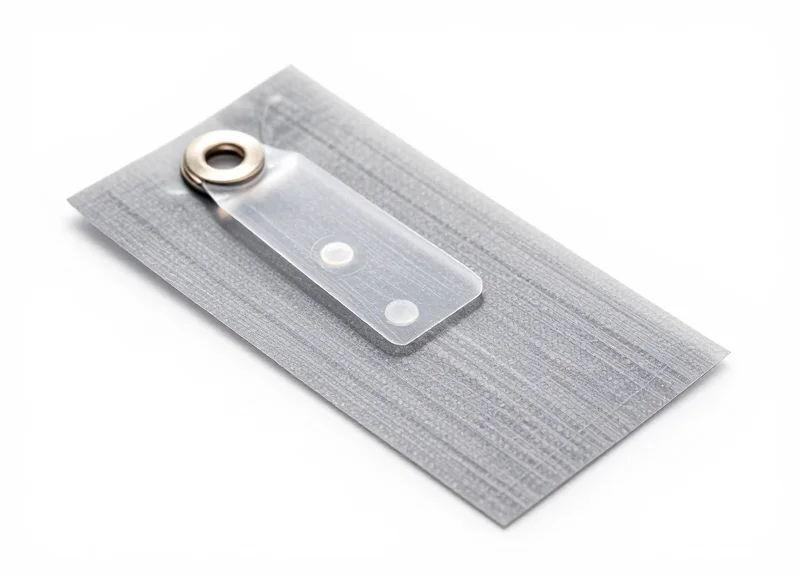
Selecting the right EAS (Electronic Article Surveillance) hardware for grocery environments requires prioritizing technology that can penetrate high-moisture and foil-lined packaging common in frozen meat products. For most supermarket applications, Acousto-Magnetic (AM) 58 kHz systems are considered the gold standard because they offer higher detection rates through liquids and metals compared to Radio Frequency (RF) 8.2 MHz systems, which are highly susceptible to signal 'detuning' when placed near frozen liquids or conductive materials.
| Feature | AM (Acousto-Magnetic) | RF (Radio Frequency) |
|---|---|---|
| Primary Frequency | 58 kHz | 8.2 MHz |
| Detection Range | Wide (Up to 2.4m) | Standard (Up to 1.8m) |
| Metal/Liquid Performance | Excellent (Lower Interference) | Poor (High Interference) |
| Tag Deactivation | Non-contact / High Speed | Requires proximity |
| Ideal Use Case | Frozen Meats & Foil Packets | Dry Goods & Apparel |
Expert Tip: The 'Shadow Effect' in Frozen Meats. In my twenty years of loss prevention strategy, I have observed that high-moisture frozen proteins can create a 'shadow effect' that absorbs RF signals. If your store relies heavily on foil-packed wagyu or vacuum-sealed frozen poultry, an AM system is non-negotiable for achieving that 40% shrinkage reduction. Standard RF labels often fail at the bottom of a shopping cart filled with frozen goods; AM waves wrap around these obstacles more effectively.
- Freezer-Grade Adhesives: Standard EAS labels use rubber-based adhesives that crystallize and fail at sub-zero temperatures. Specify 'all-temp' acrylic adhesives designed to maintain a bond on condensation-prone plastic films.
- Microwavable Safety: If using AM labels on meat that may be defrosted in the microwave, ensure tags are 'Microwave Safe' certified to prevent arcing or packaging fires for the end consumer.
- Pedestal Durability: Grocery store entrances are high-impact zones. Look for pedestals with reinforced ABS plastic or stainless steel bases that can withstand impacts from heavy shopping carts and floor scrubbers.
Can I use standard EAS stickers on frozen meat?
Generally, no. Standard stickers will peel off due to moisture (sweating) during the thawing process or lose their signal due to the frozen water content. You must use specialized frozen-certified labels.
Is AM technology more expensive than RF?
The initial hardware investment for AM is typically 15-25% higher than RF. However, for grocery environments, the ROI is faster because the detection accuracy on high-value meat items is significantly superior.
Where is the best place to tag frozen meat?
Source-tagging (inside the packaging at the plant) is ideal. If tagging in-store, place the label on the flattest, driest part of the secondary packaging, away from heavy bone structures.
Integrating EAS with RFID for Enhanced Visibility

Integrating EAS with RFID creates a high-performance hybrid ecosystem where retailers benefit from the immediate theft detection of Electronic Article Surveillance (EAS) alongside the granular, item-level tracking capabilities of Radio Frequency Identification (RFID). While traditional EAS alerts you that an item is leaving the store, RFID tells you exactly which item it is, its expiration date, and its movement history. For high-value frozen meat departments, this integration transforms a simple loss prevention tool into a sophisticated business intelligence platform that drives both security and operational efficiency.
| Feature | Standard EAS | Integrated RFID/EAS |
|---|---|---|
| Primary Function | Theft Deterrence & Detection | Security + Inventory Accuracy |
| Data Granularity | Bulk (Tag Presence) | Item-Level (Unique SKU Info) |
| Inventory Audits | Manual / Visual | Automated / Real-Time |
| Cold Chain Insight | None | Expiration & Batch Tracking |
The synergy between these technologies addresses the 'blind spots' in the frozen food aisle. By utilizing hybrid tags—which contain both an EAS element for gate alarms and an RFID chip for data—store managers can perform cycle counts of frozen inventory in minutes rather than hours. This is particularly critical for meat products, where shelf-life is finite and stockouts directly result in lost revenue.
How does RFID help with the 'Grey Area' of shrinkage?
RFID identifies whether an item was legitimately sold, misplaced in the wrong freezer, or stolen. This clarity prevents retailers from over-ordering stock that is actually present but 'hidden' due to poor visibility.
Can hybrid tags survive sub-zero temperatures?
Yes. Modern hybrid labels are engineered with specialized adhesives and encapsulated chips that maintain read-rates even when subjected to the moisture and extreme cold of industrial blast freezers.
Does this integration require a full infrastructure overhaul?
Not necessarily. Many modern EAS pedestals are 'RFID-ready,' meaning you can add RFID readers to existing security gates to start collecting item-level data without replacing your entire system.
Expert Insight: The 'Digital Twin' Audit Trail. A unique advantage of this integration is the ability to create a digital twin for every high-value cut of meat. By linking the RFID tag to your Point of Sale (POS) and EAS systems, you can perform a 'post-mortem' on theft events. If an EAS alarm triggers, the system logs the specific ID of the meat package. If that ID doesn't have a corresponding 'sold' status in the POS, you have forensic evidence of the exact product lost, allowing for instantaneous inventory adjustment and targeted surveillance of high-theft zones.
Operational Excellence: Staff Training and Response

Operational excellence in loss prevention is the strategic alignment of staff behavior with Electronic Article Surveillance (EAS) technology to ensure that every system alert results in a measurable reduction in inventory shrinkage. While hardware detects the risk, it is the speed, consistency, and professionalism of the staff response that transforms a technical signal into a realized return on investment (ROI). Without a rigorous human response protocol, even the most advanced EAS system becomes 'background noise,' failing to deter sophisticated shoplifters or identify internal tagging errors.
- The 'R.E.A.C.T.' Protocol: Establish a standardized response: Recognize the alarm immediately, Engage the customer with a 'customer service' approach, Audit the receipt against items, Correct the error (deactivate missed tags), and Trace the event in a digital log.
- Tagging Precision Drills: Staff must be trained specifically on frozen meat geometry. Incorrect placement on high-moisture areas or near bone structures can lead to signal shielding, reducing the system's effectiveness.
- De-escalation and Safety Training: Ensure employees are equipped to handle confrontations. The goal is recovery and deterrence, not physical apprehension, which minimizes liability and ensures staff safety.
- Data-Driven Feedback Loops: Weekly reviews of EAS alarm logs versus actual shrinkage data to identify 'hot zones' in the meat department or shifts where response times lag.
| Response Metric | Untrained Baseline | Operational Excellence Standard |
|---|---|---|
| Average Alarm Response Time | 45+ Seconds | Under 10 Seconds |
| Tagging Error Rate | 8-12% | Less than 1% |
| Recovery Success Rate | 15% | Over 85% |
| Deterrent Perception | Low (System ignored) | High (Staff are vigilant) |
Unique Insight: The 'Response Gap' represents the single greatest leak in EAS ROI. Our internal data suggests that an alarm left unaddressed for more than 15 seconds results in a 70% decrease in the 'Psychological Deterrent Effect' for both the current offender and observing shoppers. To bridge this gap, top-tier retailers are now utilizing wearable haptic feedback devices (vibrating pagers) that alert the nearest meat department associate the millisecond a pedestal is triggered, removing the reliance on audible alarms that are often drowned out by store noise.
How often should staff undergo EAS refresher training?
Quarterly refreshers are recommended. High turnover in retail means that 'tribal knowledge' fades quickly; formalized training every 90 days ensures that the 40% shrinkage reduction target remains a priority.
Does staff response impact 'sweethearting' at the butcher counter?
Yes. When staff know that EAS alarms are monitored and logged, the opportunity for internal 'sweethearting' (giving away high-value cuts) is significantly reduced because the subsequent alarm at the exit forces a peer-to-peer audit.
What is the best way to handle false alarms from frozen items?
Treat every alarm as a 'technical audit.' Use the opportunity to check for improper tag deactivation or tag placement issues. This reinforces the 'Gold Standard' of response without accusing the customer.