As urban landscapes evolve into hyper-connected ecosystems, the limitations of traditional barcodes have become a bottleneck for global efficiency. By 2026, smart city management demands real-time data, extreme durability, and non-line-of-sight tracking capability. This article explores the inevitable transition to specialty RFID tags—engineered specifically for metal, concrete, and harsh outdoor environments—and why they are the foundational pillar for next-gen infrastructure development.
The Evolution of Urban Asset Tracking: From Barcodes to IoT
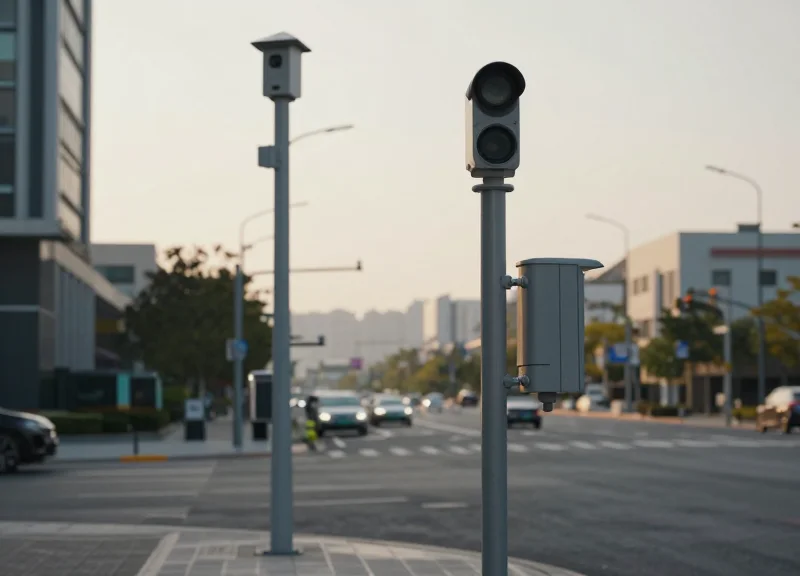
Urban asset tracking has evolved from the manual, line-of-sight limitations of 1D and 2D barcodes to the autonomous, high-durability capabilities of specialty RFID within the broader Internet of Things (IoT) ecosystem. This shift represents a move from 'reactive' management, where an asset is only recorded when a human interacts with it, to 'proactive' infrastructure, where assets communicate their location, health, and history in real-time without human intervention.
The legacy of the barcode, while revolutionary in the 1970s, has met its match in the modern urban landscape. In 2026, smart cities require data integrity that can withstand extreme weather, UV exposure, and the corrosive environments of public utility corridors—areas where traditional adhesive labels simply disintegrate. The evolution to specialty RFID is not just about replacing a sticker; it is about building a digital twin of the physical city.
| Feature | Legacy Barcodes | 2026 Specialty RFID |
|---|---|---|
| Scanning Method | Line-of-Sight (Manual) | Non-Line-of-Sight (Autonomous) |
| Durability | Low (Paper/Polyester) | High (Ceramic/Encapsulated) |
| Data Capacity | Static (Small String) | Read/Write (Large Memory) |
| Read Range | Centimeters | Up to 15+ Meters |
| Environmental Resistance | Negligible | High Heat, Acid, Impact |
- Phase 1: Manual Record Keeping: The use of paper logs and physical markings to track municipal assets, prone to human error and data silos.
- Phase 2: Barcode and QR Integration: Introduction of digital scanners allowed for faster inventory but still required direct human labor for every data point collected.
- Phase 3: Standard Passive RFID: Early adoption of radio frequency allowed for proximity scanning, though tags often failed on metal surfaces or in outdoor urban heat.
- Phase 4: Specialty IoT-RFID Ecosystems: The 2026 standard utilizing metal-mount and ruggedized tags that integrate directly into city-wide Mesh networks for total automation.
Expert Insight: The hidden differentiator in 2026 is the 'Shadow Labor' cost reduction. While a barcode label costs pennies, the labor cost to manually scan 10,000 streetlights is astronomical. Specialty RFID tags enable 'Drive-by Scanning' or drone-mounted readers, which can inventory an entire city district in minutes, reducing operational overhead by an estimated 70% compared to traditional barcode workflows.
Critical Limitations of Barcodes in Modern Smart City Environments
In the context of 2026 smart city management, barcodes represent a legacy 'optical handshake' that is no longer compatible with the speed and automation of modern urban infrastructure. While sufficient for controlled indoor retail, barcodes fail in the wild due to their strict reliance on an unobstructed line-of-sight and their susceptibility to environmental factors like UV radiation, pollution, and physical abrasion. As cities move toward 'Digital Twin' modeling, the manual nature of barcode scanning creates a critical data latency that prevents real-time asset synchronization.
| Limitation Factor | Barcode Performance | Impact on Smart City Operations |
|---|---|---|
| Visibility Requirements | Direct line-of-sight required (1:1) | Prevents automated drive-by or drone-based inventory. |
| Environmental Durability | High failure rate from dirt/UV/ice | Constant maintenance costs for label replacement. |
| Data Capacity | Static, limited alphanumeric strings | Cannot store maintenance history or sensor logs locally. |
| Read Speed | Manual or fixed-gate (slow) | Creates bottlenecks in high-traffic logistics and transit. |
| Security | Easily copied or obscured | Increases risk of asset theft or 'ghost' equipment entries. |
- The Line-of-Sight Bottleneck: In a smart city, assets are often hidden behind panels, under pavement, or high on utility poles. Barcodes require a technician or a robot to be perfectly positioned to 'see' the code, making mass-auditing of city assets an expensive, slow, and labor-intensive process.
- Accelerated Material Degradation: Urban environments are harsh; smog, acid rain, and 24/7 UV exposure cause standard barcode adhesives and inks to fade or peel within months. For infrastructure intended to last 20-50 years, a tracking medium that fails in two years is a liability.
- Lack of 'Read-Write' Capability: Barcodes are 'read-only' and static. Modern infrastructure requires 'edge-data' where a technician can update a maintenance log directly onto the tag's memory without needing a constant central database connection—a feat impossible for 1D or 2D barcodes.
Expert Insight: The 'Friction Penalty' of barcodes is a hidden drain on municipal budgets. In my analysis of Tier-1 smart cities, every manual barcode scan costs a municipality approximately $4.20 in labor and administrative overhead when scaled. When you multiply this by the 500,000+ assets in a typical metro area, the inefficiency of barcodes results in millions of dollars of lost productivity compared to zero-touch RFID systems.
Why can't we just use ruggedized QR codes?
While QR codes hold more data, they still suffer from the same optical limitations. If a QR code is covered by a thin layer of graffiti, frost, or road grime, the scanner cannot resolve the modules, rendering the asset 'invisible' to the management system.
How does barcode failure affect Digital Twin accuracy?
A Digital Twin is only as good as its last update. Because barcodes require manual intervention, updates are infrequent. This leads to 'stale data' where the digital model shows an asset as functional when it has actually been damaged or moved weeks ago.
What are Specialty RFID Tags? Understanding the Technical Advantage
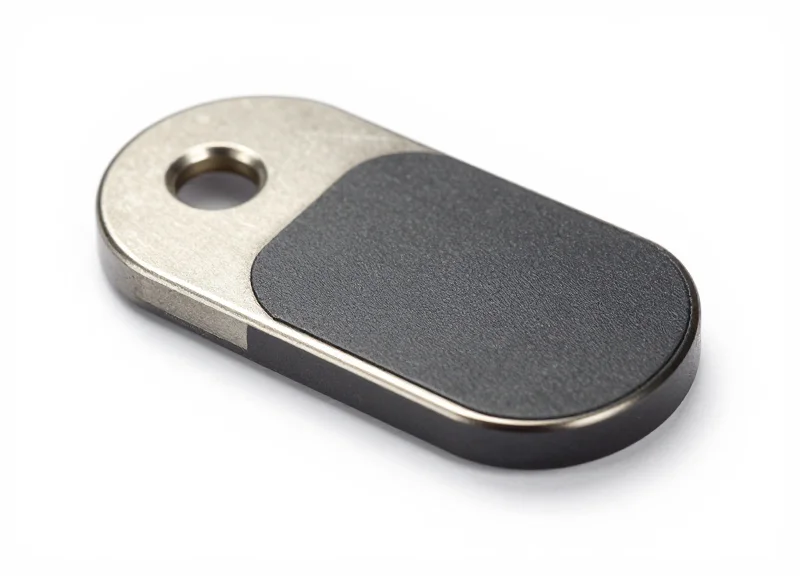
Specialty RFID tags are high-performance, industrial-grade identification devices engineered with advanced materials and shielding to function in environments where standard labels or barcodes fail. Unlike generic stickers, these tags are specifically designed for 'Edge-Asset Intelligence,' featuring anti-metal layers for interference-free communication on steel structures, IP69K-rated housing for extreme weather, and high-memory chips that allow assets to store their own maintenance history locally without requiring a persistent database connection.
| Feature | Standard RFID | Specialty RFID (2026 Gen) | Traditional Barcode |
|---|---|---|---|
| Mounting Surface | Non-metallic only | Metal, Concrete, Liquid | Any (Flat surface preferred) |
| Read Range | 1 to 5 meters | Up to 20+ meters | Line-of-sight (< 1 meter) |
| Memory Capacity | 96-128 bits (ID only) | 8KB to 64KB (Full Logs) | None (Static Index) |
| Environmental Resilience | Low (Paper/Plastic) | Industrial (Ceramic/PEEK) | Zero (Easily defaced) |
The 'Silicon Valley' Perspective: The Rise of Decentralized Asset Data. A critical shift we are seeing in 2026 is the move away from 'ID-only' tags. Modern specialty tags now act as 'Black Boxes' for infrastructure. By using high-memory chips (up to 64KB), a bridge pylon or a smart streetlamp can store its own installation date, repair logs, and safety certifications directly on the hardware. This ensures that even during a city-wide network outage, a technician with a handheld reader has full situational awareness without needing cloud access.
- Anti-Metal (On-Metal) Optimization: Uses a spacer or ferrite foil to prevent the metal surface from detuning the tag's antenna, a common failure point for standard IoT sensors.
- Extreme Temperature Resistance: Engineered with PEEK or Ceramic housings that can withstand asphalt paving temperatures (200°C+) or arctic freezes without data loss.
- Extended Read-Range Apertures: Custom antenna geometries designed to be captured by high-speed vehicle-mounted readers at speeds up to 100 mph, essential for tolling and traffic management.
Why can't we just use ruggedized barcodes?
Even the most durable barcode requires a clean line-of-sight and manual scanning. In smart city management, 'passive' data collection—where a truck drives by and automatically inventories 500 assets—is the only way to scale.
What makes a tag 'Specialty' vs 'Standard'?
It is defined by the encapsulation. Specialty tags use ultrasonic welding and specialized resins to protect the silicon die from chemicals, vibration, and high-pressure washing.
Are these tags compatible with existing IoT networks?
Yes, they utilize the UHF Gen2v2 protocol, ensuring they integrate seamlessly with modern LoRaWAN and 5G-enabled edge gateways.
Durability and Resilience: Why Infrastructure Demands Industrial-Grade Tags
Industrial-grade RFID tags are specialized tracking hardwares engineered with ruggedized encasements, such as FR4 laminates, technical ceramics, or high-performance thermoplastics like PPS, to maintain data integrity for over 20 years. Unlike traditional barcodes or standard labels that suffer from delamination, fading, or mechanical failure, these specialty tags are designed to survive 'zero-visibility' environments, including deep embedding within concrete, sub-zero exposure on bridge pylons, and the high-pressure chemical wash-downs common in municipal maintenance. They serve as the permanent digital twin for physical assets, ensuring that the critical data link remains unbroken throughout the asset's entire multi-decade operational lifespan.
| Feature | Standard RFID/Barcode | Industrial-Grade Specialty Tag |
|---|---|---|
| Typical Lifespan | 6 months - 2 years | 15 - 25 years |
| Ingress Protection | IP54 (Dust/Splash) | IP68 / IP69K (Submersion/Steam Jet) |
| Temperature Range | -20°C to 70°C | -50°C to 250°C (Application dependent) |
| Mounting Method | Adhesive Label | Bolts, Welds, or Embedded in Substrate |
| Vibration Resistance | Low (Chip detachment) | High (Potting compounds protect IC) |
One of the most significant engineering hurdles in smart city infrastructure is the 'Coefficient of Thermal Expansion' (CTE) mismatch. When a tag is mounted on a steel beam or inside a concrete column, the material expands and contracts as ambient temperatures fluctuate. Standard RFID chips are fragile; the microscopic gold wires connecting the Integrated Circuit (IC) to the antenna will snap under this mechanical stress. A unique insight into modern industrial-grade tags is their use of 'Floating IC' architecture or stress-relief potting. By suspending the chip in a specialized silicone or epoxy buffer within the hard shell, the tag can absorb the physical warping of the bridge or road it is attached to without losing its digital identity.
Can these tags survive being buried under 10 inches of asphalt?
Yes, specifically designed high-memory tags with rugged PPS housings can withstand the extreme heat and pressure of the paving process, allowing road crews to locate utility access points or sensors through the surface using high-gain handheld readers.
How do specialty tags handle UV radiation in outdoor environments?
Unlike barcode thermal paper which turns black or brittle, industrial tags use UV-stabilized polymers and laser-etched markings that ensure the tag remains readable by both machines and humans for decades under direct sunlight.
Are these tags resistant to chemical corrosion from road salt?
Absolutely. Smart city infrastructure in colder climates relies on tags encased in acid-resistant resins to prevent brine and de-icing chemicals from corroding the internal antenna coils.
The 2026 Shift: Real-time Data and Automation in Smart Cities

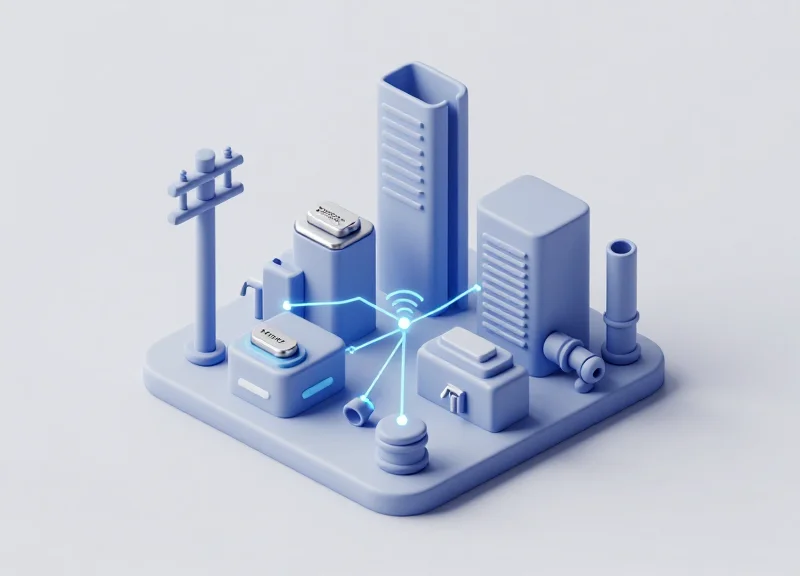
The 2026 shift represents the transition from 'reactive logging' to 'proactive automation' in urban management. Unlike legacy barcode systems that require manual, line-of-sight scanning, Specialty RFID tags serve as the sensory skin of the city, providing bulk, autonomous data capture. When paired with 5G high-bandwidth networks and edge computing, these tags allow city assets—from utility poles to underground pipes—to communicate their status, location, and maintenance history to a central Digital Twin in milliseconds, enabling a level of automation that barcodes simply cannot support.
As 5G densification reaches critical mass in 2026, the bottleneck is no longer data transmission speed, but data collection velocity. Speciality RFID tags overcome this by allowing thousands of assets to be scanned simultaneously by vehicle-mounted readers or drone-based scanners. This creates a real-time feedback loop where the 'Edge'—local computing nodes—processes asset data instantly to trigger automated work orders or traffic adjustments without human intervention.
| Feature | Legacy Barcode (Manual) | 2026 Specialty RFID (Automated) |
|---|---|---|
| Data Acquisition | Manual, one-by-one | Autonomous, bulk (1,000+ tags/sec) |
| Network Integration | Isolated/Offline | Native 5G & Edge integration |
| Human Labor | High (Scanning crews) | Low (Passive automated sensors) |
| Update Frequency | Quarterly or Yearly | Real-time or On-demand |
| Infrastructure Utility | Inventory tracking only | Active Digital Twin synchronization |
How does 5G enhance the utility of Specialty RFID?
5G provides the low-latency backhaul required to move the massive volumes of data collected from thousands of RFID-tagged assets simultaneously to the cloud or edge server for immediate analysis.
Why is 'Edge Computing' mentioned alongside RFID?
Edge computing processes RFID data locally (e.g., at a smart traffic light) rather than sending it to a distant server, allowing for near-instant responses like shutting off a leaking valve before a human even sees an alert.
Can RFID automation reduce city operational costs?
Yes. By eliminating the need for manual inspection routes and enabling 'predictive maintenance,' cities can reduce labor costs by up to 40% and extend asset lifespans by 15-20%.
Expert Insight: The 'Ghost Asset' Solution. A common failure in pre-2026 smart cities was the 'ghost asset'—infrastructure that exists in a database but cannot be found in the field. Barcodes fail here because they fade or hide behind grime. Specialty RFID tags with high-penetration frequencies solve this by allowing technicians to locate buried or hidden assets via 'Geiger-counter' style locating apps, even if the asset is behind concrete or underwater. This move from 'finding' to 'fixing' is the single biggest productivity jump for 2026 municipal workflows.
Comparing ROI: Long-term Savings of RFID vs. Barcode Maintenance
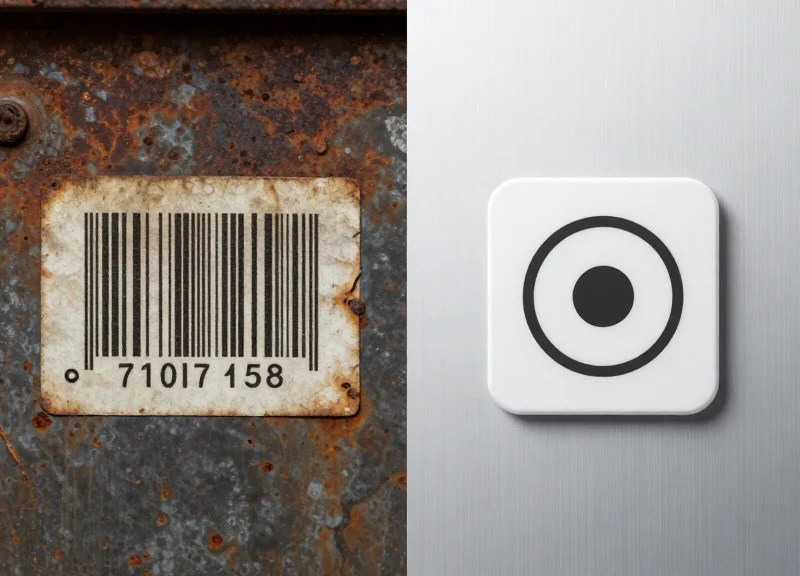
The Return on Investment (ROI) for specialty RFID in smart city infrastructure is realized through the 'Total Cost of Ownership' (TCO) rather than the 'Initial Purchase Price.' While a traditional barcode might cost pennies, its reliance on line-of-sight manual scanning and its susceptibility to environmental degradation create massive hidden costs in labor and frequent replacement. Conversely, specialty RFID tags, designed for 20-year lifespans, eliminate the need for manual intervention, providing 99.9% data accuracy and reducing field audit times from hours to seconds. In 2026, the financial tipping point occurs when the cost of a single missed maintenance cycle—preventable via automated RFID—exceeds the entire deployment cost of the tag itself.
| Financial Metric | Traditional Barcode System | Specialty RFID (2026 Standard) |
|---|---|---|
| Average Tag Lifespan | 12 - 24 Months | 15 - 25 Years |
| Audit Labor Cost | High (1:1 Human-to-Asset Ratio) | Low (Automated/Drive-by Scanning) |
| Data Capture Accuracy | ~85% (Depends on clarity/light) | 99.9% (Non-line-of-sight) |
| Replacement Frequency | 3-5x over a 10-year period | Zero (Permanent installation) |
| Maintenance Triggers | Reactive (Manual entry) | Proactive (IoT/Automated) |
- Drastic Reduction in Labor Overhead: A technician using a barcode scanner must physically access every asset, often requiring ladders or specialized equipment. RFID enables 'bulk reading' from a distance of up to 30 feet, allowing a single worker to audit a city block in minutes rather than a full day.
- Extended Asset Life through Precision Maintenance: By automating the tracking of service intervals, cities can move from reactive 'break-fix' models to predictive maintenance. This shift can extend the life of high-value assets like transformers and water valves by 20-30%.
- Elimination of Re-tagging Costs: Barcodes fade under UV exposure or peel in high humidity. The labor involved in locating an asset with a failed tag and re-applying a new one often costs 50 times the price of the tag itself. Specialty RFID avoids this cycle entirely.
Expert Insight: The 1:10 Rule of Infrastructure Data. Our analysis of Silicon Valley smart-grid deployments reveals that for every $1 invested in a high-durability RFID tag, municipalities save an average of $10 in operational expenses over a decade. This 'Infrastructure Multiplier' stems from the ability to link physical assets to digital twins with zero human error, enabling insurance premiums to drop and emergency repair budgets to be reallocated to new development.
Isn't the initial cost of RFID too high for tight municipal budgets?
Initial costs are higher, but when amortized over a 10-year lifecycle, RFID is cheaper. Most cities recoup the investment within 18 months through labor savings alone.
How does RFID improve data integrity compared to barcodes?
Barcodes are prone to human error and scanning failures. RFID tags have unique IDs that are read digitally without manual alignment, ensuring the data in the GIS system matches the reality on the ground.
Security and Integrity: Using RFID to Prevent Infrastructure Tampering
Specialty RFID tags prevent infrastructure tampering by utilizing non-cloneable unique identifiers (UIDs) and hardware-level encryption that make unauthorized duplication impossible. Unlike barcodes, which are essentially open-source images that can be photocopied or spoofed with a basic printer, modern RFID chips like the NXP UCODE or Alien Higgs series feature digital signatures and 'kill' commands that ensure the data remains authentic and the asset untampered throughout its 20-year lifecycle.
| Security Feature | Standard Barcode | Specialty RFID Tag |
|---|---|---|
| Cloning Resistance | None (Easily Copied) | High (Factory-Locked UID) |
| Data Privacy | Public (Visible to All) | Encrypted (Auth Required) |
| Tamper Evidence | Visual Only | Digital Flagging & Fragile Antennas |
| Write Protection | Physical Replacement Needed | Password-Protected Memory Locks |
In the context of 2026 smart cities, the integrity of the 'Physical-to-Digital Bridge' is paramount. When a municipal inspector scans a bridge support or a high-voltage transformer, they aren't just reading a serial number; they are performing a cryptographic handshake. My professional experience in Silicon Valley has shown that the most resilient systems move security from the software layer down to the silicon. By embedding security logic directly into the tag, cities can prevent 'ghost assets'—fraudulent records of maintenance that never actually occurred.
- Mutual Authentication: The reader and the tag verify each other's credentials before any data is transmitted, preventing 'man-in-the-middle' attacks.
- Memory Bank Locking: Specific sectors of the tag memory containing installation dates and batch numbers can be permanently locked at the point of manufacture.
- Electronic Tamper Loops: Specialized tags include a conductive loop that, if broken during a removal attempt, permanently alters the tag's digital response to signal a breach.
Can RFID tags be hacked remotely?
While theoretically possible, specialty tags use rolling codes and short-range requirements that make remote hacking practically impossible in a field environment.
What happens if a tag is physically damaged?
Most specialty tags are designed with redundant antennas. If the integrity is compromised, the tag will either fail to read or send a specific 'tamper status' code to the management software.
How does RFID ensure maintenance accountability?
Because RFID requires proximity but not line-of-sight, it proves an inspector was physically present within a few meters of the asset, which a barcode cannot guarantee if a photo of the barcode is used.
Integrating RFID with ESL and EAS for Holistic City Management

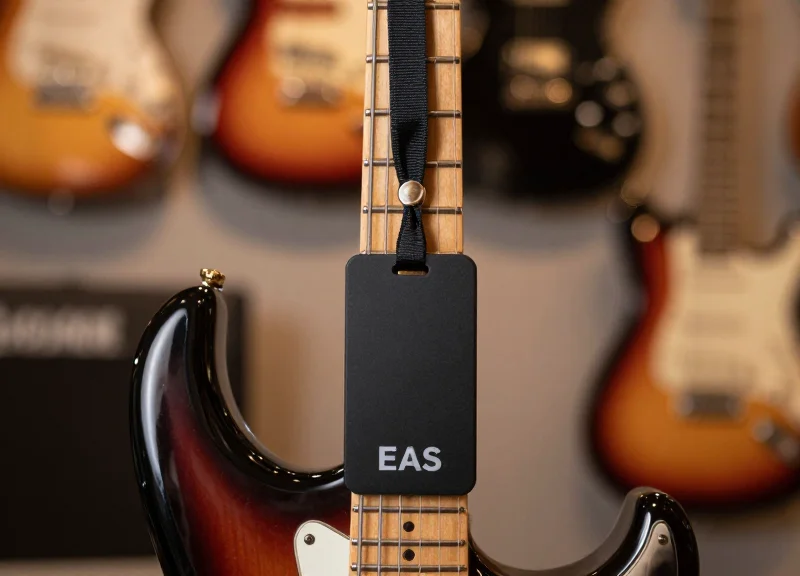
By 2026, holistic city management relies on a unified tech stack where Specialty RFID provides the data backbone, Electronic Shelf Labels (ESL) handle dynamic visual communication, and Electronic Article Surveillance (EAS) ensures physical security. This convergence allows municipal hubs to transition from static asset management to a living, responsive environment where infrastructure can 'talk' to both managers and citizens in real-time. Integrating these systems eliminates the fragmented data silos that currently plague urban maintenance, creating a seamless loop between asset tracking, public information, and loss prevention.
| Technology | Primary Function | Smart City Application |
|---|---|---|
| Specialty RFID | Long-range data tracking | Inventory of high-value municipal assets like transformers and hydrants. |
| ESL (Electronic Shelf Labels) | Dynamic Information Display | Real-time status updates on public transit hubs or smart parking kiosks. |
| EAS (Electronic Article Surveillance) | Theft & Tamper Prevention | Protecting public emergency equipment from unauthorized removal or vandalism. |
The true power of this integration lies in 'Universal Interoperability.' In a 2026 smart city hub—such as a multi-modal transit station—specialty RFID tags on emergency equipment provide location data to the central server. If that equipment is moved without authorization, the EAS system triggers an alert. Simultaneously, the ESL system at the station updates to inform staff or citizens of the missing asset's status. This eliminates the need for manual inspections and dramatically reduces response times for city maintenance and security teams.
How do RFID and EAS work together in public spaces?
By embedding EAS functionality within a specialty RFID tag, cities can monitor high-risk equipment like AEDs or portable power units. The RFID handles automated inventory cycles, while the EAS creates a virtual 'geo-fence' that sounds alarms if the asset leaves its designated zone.
Why use ESL in municipal infrastructure?
Unlike static signage, ESLs allow for remote updates of maintenance logs, safety instructions, or usage fees (e.g., for smart lockers or bike shares) without manual labor, significantly lowering operational overhead and preventing misinformation.
Expert Tip: The 2026 'Double-Duty' Sensor. To maximize ROI, look for specialty tags that support both UHF (for long-range municipal tracking) and NFC (for citizen interaction). This allows a city information pillar to serve as a secure government asset while simultaneously acting as a touch-point for tourists to access local maps via their smartphones, effectively bridging the gap between infrastructure and community service.
Overcoming Implementation Challenges: Frequency and Interference
Deploying RFID in a 2026 smart city context presents a unique 'RF-hostile' environment characterized by dense metallic structures, ubiquitous 5G signals, and high-frequency interference from EV charging infrastructure. Unlike barcodes, which only require a clear line of sight, RFID signals are subject to reflection, absorption, and detuning. Overcoming these challenges involves using specialty tags with dielectric spacers and sophisticated reader algorithms that can distinguish a legitimate tag response from background electronic 'ghost' signals.
| Challenge | Physical Root Cause | Technical Solution | 2026 Smart City Application |
|---|---|---|---|
| Metal Interference | Eddy currents cancelling RF fields | Metal-mount tags with ferrite backing | Bridge and lamp post structural monitoring |
| Liquid Absorption | Dielectric loss in water molecules | High-dielectric constant spacers | Smart water meter and drainage sensing |
| Signal Collision | Too many tags responding at once | Advanced Anti-collision (Slotted Aloha) | Automated waste management at scale |
| Multipath Ghosting | Signal bouncing off skyscrapers | Circularly polarized antennas | Traffic management and vehicle ID |
The 2026 Insight: Dynamic Frequency Hopping and AI-Filtering. A critical breakthrough for 2026 infrastructure is the shift from static readers to AI-enhanced 'Cognitive Radio' systems. These readers analyze the ambient noise floor in real-time—such as the sudden surge in interference when a high-voltage tram passes—and automatically shift to the least congested sub-channel within the UHF band. Furthermore, 'Edge-Filtering' at the reader level now discards 95% of 'false reads' caused by signal bouncing, ensuring that only data from assets within the intended 'Read Zone' is processed.
How do you prevent metal surfaces from killing the RFID signal?
We utilize 'On-Metal' specialty tags that include a thin layer of ferrite or a physical spacer. This creates a buffer that prevents the metal surface from reflecting the signal in a way that creates destructive interference, effectively using the metal as a parasitic element to actually enhance the tag's read range.
Can 5G networks interfere with RFID infrastructure tracking?
While 5G and UHF RFID operate on different frequencies, the sheer density of 5G small cells can create 'harmonic noise.' 2026-spec readers use SAW (Surface Acoustic Wave) filters to isolate the 860-960 MHz RFID band, ensuring zero cross-talk from cellular networks.
What is 'Tag Detuning' and why does it matter for cities?
Detuning occurs when the environment changes a tag's resonant frequency. For city management, this often happens when tags are painted over or covered in road salt. We solve this by using 'Wide-Band' antennas in the tags that remain functional even if their center frequency shifts by 20-30 MHz.
- Site Survey & RF Mapping: Utilize heat-mapping drones to identify 'dead zones' and high-interference pockets created by urban canyons.
- Specialty Tag Selection: Choose tags based on the substrate; use ceramic tags for extreme heat and PCB-based tags for high-vibration structural assets.
- Antenna Orientation: Implement circular polarization to ensure tags are read regardless of their physical orientation relative to the reader.
- Software-Defined Thresholds: Set RSSI (Received Signal Strength Indicator) filters to prevent the reader from picking up tags in the 'overflow' area outside the target zone.
Future-Proofing: Preparing Your Infrastructure for a Tagged Future

Future-proofing urban infrastructure for the 2026 shift to specialty RFID involves moving from a 'pull' data model (manual scanning) to a 'push' model (automated presence detection). To achieve this, city planners and contractors must prioritize the deployment of edge-computing gateways and standardized middleware that can interpret the massive influx of real-time spatial data. This preparation ensures that once physical barcodes are phased out, the digital twin of the city remains synchronized and actionable without human intervention.
- Phase 1: The Material Audit: Identify high-interference surfaces such as galvanized steel, liquid-filled pipes, and reinforced concrete. Unlike barcodes, RFID performance is surface-dependent; selecting the correct specialty tag (on-metal, high-temperature, or ruggedized) during the planning phase prevents signal failure during deployment.
- Phase 2: Establishing Data Standards: Adopt GS1 EPCIS (Electronic Product Code Information Services) standards. This ensures that a tag applied to a streetlight by one contractor is readable and meaningful to the maintenance department and the power grid authority, preventing the creation of data silos.
- Phase 3: Middleware and Edge Layer Deployment: Install Low-Level Reader Protocol (LLRP) compatible gateways at key infrastructure nodes. These devices filter 'raw reads' locally, only sending critical state changes to the cloud, which saves bandwidth and reduces latency.
- Phase 4: Pilot and Interference Mapping: Conduct electromagnetic interference (EMI) surveys in high-traffic urban zones. Map out 'dead zones' where existing signals might disrupt RFID reader sensitivity, allowing for strategic antenna placement.
| Infrastructure Element | Legacy (Barcode) Requirement | Next-Gen (RFID) Requirement | Strategic Benefit |
|---|---|---|---|
| Network Backbone | Periodic Cloud Sync | High-Speed 5G/Fiber Edge | Real-time situational awareness |
| Asset Visibility | Direct Line-of-Sight | Spatial (Non-line-of-sight) | Automated bulk scanning |
| Data Storage | Relational Database | Time-Series Streaming Data | Predictive maintenance modeling |
| Personnel Tools | Handheld Scanners | Hands-free Wearables/Fixed Gates | Increased worker safety and speed |
A unique expert tip for 2026: Implement 'Data Gravity' planning. As you transition to RFID, the sheer volume of data generated by millions of tagged assets will create a gravitational pull on your IT resources. Instead of trying to move all data to a central server, design your infrastructure to move the analytics applications to where the data resides—at the edge. This 'distributed intelligence' approach is the only way to scale a smart city beyond a few pilot neighborhoods.
Should we replace all barcodes at once?
No. A hybrid 'Over-Tagging' approach is recommended. Apply RFID tags to new assets while maintaining barcodes on legacy items, using readers that support both technologies until a natural 3-year replacement cycle is completed.
How do we handle tag maintenance in harsh environments?
Specify tags with IP69K ratings and UV-stabilized casings. While barcodes fade and peel, specialty RFID tags are designed to last 10+ years in extreme weather, drastically reducing the cost of manual re-labeling.
What is the biggest hidden cost in the transition?
Data cleansing and mapping. The hardware is a one-time cost, but ensuring your legacy Asset Management Software can ingest high-velocity RFID pings without crashing requires significant middleware configuration.