

In today's highly competitive retail landscape, inventory shrinkage remains one of the most critical threats to profitability. Retailers are constantly seeking innovative loss prevention strategies to protect their bottom line. Enter alarm-triggered video evidence capture-a game-changing approach that bridges the gap between traditional Electronic Article Surveillance (EAS) and modern video surveillance. By automatically capturing high-definition video the moment an EAS or RFID alarm is triggered, store managers and loss prevention teams gain immediate, actionable evidence. This seamless integration not only deters theft but has been proven to achieve up to a 40% reduction in retail shrink. In this comprehensive guide, we will explore how leveraging this advanced technology can transform your security operations, minimize false alarms, and ultimately bolster your profit margins.
The Impact of Retail Shrink on Profit Margins
Retail shrink is the costly discrepancy between recorded inventory and actual physical stock, driven primarily by external theft, employee fraud, and administrative errors. Because the retail sector traditionally operates on notoriously thin net profit margins, often hovering between 2 percent and 5 percent, every dollar lost to shrink is a dollar subtracted directly from the bottom line. A seemingly minor fractional increase in inventory loss can drastically diminish overall profitability, forcing companies to reallocate capital away from growth and innovation.
From a Silicon Valley data analytics perspective, the true danger of inventory loss is best understood through the 'Shrink Multiplier Effect.' When a retailer operating at a slim 5 percent net margin loses $1,000 worth of merchandise, they do not simply lose a thousand dollars. To offset that single event, the retailer must generate an additional $20,000 in top-line sales just to break even. This harsh mathematical reality highlights exactly why relying on outdated, passive security protocols is no longer a viable operational strategy.
| Net Profit Margin | Value of Stolen Merchandise | Top-Line Sales Required to Break Even |
|---|---|---|
| 10% margin | Loss of $1,000 | Requires $10,000 in new sales |
| 5% margin | Loss of $1,000 | Requires $20,000 in new sales |
| 2% margin | Loss of $1,000 | Requires $50,000 in new sales |
Historically, retailers attempted to mitigate these losses using basic electronic article surveillance tags, standalone security guards, and unmonitored closed-circuit television cameras. However, as organized retail crime rings become increasingly sophisticated, these legacy systems consistently fall short. Traditional loss prevention setups fail in today's market because they operate in silos, lacking the intelligent integration required to stop theft in progress.
- Reactive Rather Than Proactive Surveillance: Legacy camera systems merely record crimes as they occur, turning loss prevention teams into forensic historians rather than active deterrents. Reviewing hours of generic footage post-incident eliminates the chance for real-time asset recovery.
- High False Alarm Rates and Alert Fatigue: Standard door alarms or basic motion sensors frequently trigger without providing any visual context. Over time, staff inevitably ignore these repetitive alerts, creating glaring security vulnerabilities that experienced shoplifters readily exploit.
- Lack of Actionable, Prosecution-Ready Evidence: Without a modern system that instantaneously binds a specific alarm event to a high-definition video clip, proving theft or internal fraud becomes a legally cumbersome, resource-draining process that severely limits successful prosecutions.
Understanding Alarm-Triggered Video Evidence Capture
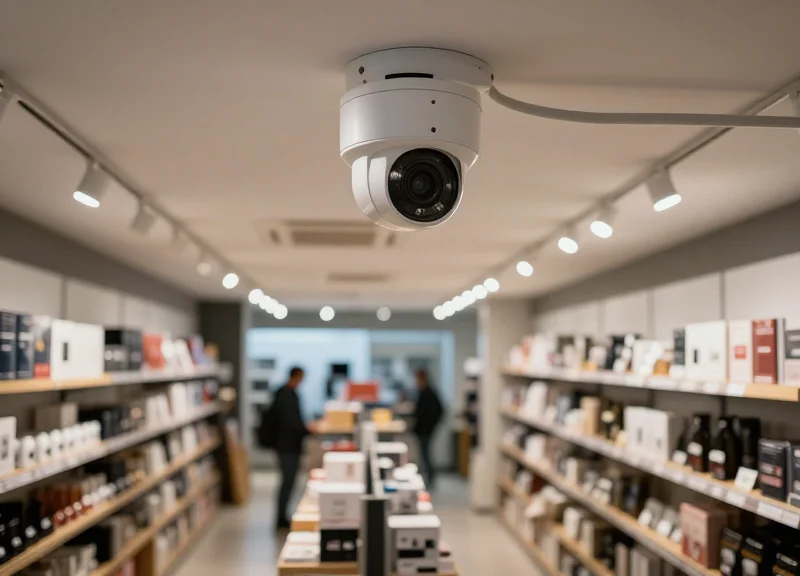
Alarm-triggered video evidence capture is an advanced loss prevention technology that seamlessly integrates Electronic Article Surveillance (EAS) or RFID sensors with IP-based video surveillance. The moment an alarm is tripped, the system autonomously directs Pan-Tilt-Zoom (PTZ) cameras to the exact location of the breach, capturing high-resolution, context-rich video of the event without requiring human intervention. This instantaneous response eliminates the blind spots, human error, and delayed response times typical of traditional, passive security recording setups.
Drawing from event-driven architecture commonly used in Silicon Valley enterprise software design, modern alarm-triggered video systems treat physical security breaches as instant data events. Instead of relying on a loss prevention officer to manually scrub through hours of mundane footage to isolate a suspect, the system generates an immediate, time-stamped video packet. This packet specifically captures the critical seconds before, during, and after the alarm, delivering an undeniable, court-ready asset that drastically improves prosecution rates and deters organized retail crime (ORC) syndicates.
- Sensor Activation: A bad actor breaches an EAS pedestal, triggers a smart shelf sensor, or forces open a restricted merchandising cabinet.
- Millisecond Signal Transmission: The tripped sensor instantly fires a digital webhook or dry contact signal to the centralized Video Management System (VMS) via the secure local network.
- Automated Camera Positioning: Linked PTZ cameras instantly snap to pre-defined presets, focusing directly on the specific alarm zone with near-zero latency.
- High-Resolution Capture and Tagging: The VMS begins recording and digitally tags the event in high resolution, ensuring facial features, accomplices, and getaway vectors are clearly visible.
- Real-Time Alerting: Security personnel receive the curated video clip directly on their mobile devices or control room dashboards instantly, empowering them to make safe, informed interception decisions.
| Security Feature | Traditional Passive CCTV | Alarm-Triggered Video System |
|---|---|---|
| Response Time | Minutes to hours of manual review | Milliseconds via automated triggering |
| Evidence Quality | Often static, poorly framed, or pixelated | High-resolution, intelligently centered on the event |
| Labor Expenditure | High (requires constant live monitor watching) | Low (operates on an efficient management-by-exception model) |
| Incident Actionability | Reactive (used mostly for post-incident analysis) | Proactive (enables immediate, real-time interception) |
Integrating EAS and RFID with Smart Video Systems

Integrating Electronic Article Surveillance (EAS) and Radio Frequency Identification (RFID) with smart video systems transforms isolated alarms into a synchronized, intelligent security ecosystem. When an EAS pedestal or RFID sensor is triggered, the smart video system automatically bookmarks the exact timestamp and relevant camera feed, delivering immediate, actionable visual evidence to loss prevention teams.
Expert Insight: From a technology implementation standpoint, the real game-changer is the transition from reactive surveillance to contextual intelligence. Traditional CCTV captures everything indiscriminately, requiring hours of manual review. By marrying item-level RFID data with video analytics, the system instantly answers the 'who,' 'what,' and 'where,' filtering out the noise of dead footage and drastically accelerating response times to bolster profit margins.
| Technology Layer | Trigger Mechanism | Data Context Provided | Primary Integration Benefit |
|---|---|---|---|
| EAS (Electronic Article Surveillance) | Tag crosses exit pedestal threshold | Binary alarm (Yes/No trigger) | Immediate visual verification of door events to prevent false stops |
| RFID (Radio Frequency Identification) | Item moves past overhead or zone reader | Specific SKU, color, size, and EPC data | High-fidelity evidence linking a specific suspect to a precise high-value item |
- 1. Sensor Activation: An EAS tag or RFID label crosses a designated threshold, instantly generating a localized alert.
- 2. API Signal Transmission: The sensor system pings the Video Management System (VMS) via an API or edge-device relay in milliseconds.
- 3. Automated Camera Articulation: Pan-Tilt-Zoom (PTZ) cameras automatically snap to predefined presets covering the alarmed zone, while fixed cameras flag the current feed.
- 4. Video Archiving and Notification: The system clips the video starting ten seconds prior to the event and sends a packaged alert to the mobile devices of loss prevention personnel.
Can legacy EAS systems be integrated with modern smart video systems?
Yes. While older EAS pedestals may lack direct API capabilities, they can be integrated using edge-based IO (Input/Output) relays that convert the analog alarm signal into a digital trigger for the Video Management System.
Does RFID integration require specialized cameras?
No specialized cameras are required. The integration happens at the software level within the Video Management System (VMS), which correlates the timestamp of the RFID reader's data log with the standard IP camera footage of that specific retail zone.
The Roadmap to a 40% Shrink Reduction

The roadmap to a 40 percent shrink reduction relies on closing the critical time gap between a security event and actionable intelligence. By deploying alarm-triggered video evidence capture, retailers fundamentally shift from reactive, manual investigations to an automated, undeniable evidence generation engine. This operational mechanics overhaul immediately deters potential offenders, accelerates law enforcement prosecution, and swiftly identifies internal compliance failures, ultimately protecting overall profit margins.
From a data analytics perspective, the most transformative metric in modern loss prevention is 'time-to-evidence.' Traditional systems often require up to 72 hours to manually cross-reference EAS alarms with CCTV feeds, leading to cold trails and dropped cases. Alarm-triggered systems compress this timeline to mere seconds. This creates what security engineers call the 'Halo Effect of Certainty.' When both employees and organized retail crime rings realize that every sensor breach instantly locks in high-definition video evidence, psychological deterrence spikes. Real-world implementations reveal this certainty alone can drop internal theft by up to 25 percent within the first thirty days of deployment.
- Automated Incident Tagging: The exact moment an EAS pedestal or RFID sensor triggers, the smart video system automatically bookmarks the precise timestamp on the nearest high-resolution camera feeds, completely eliminating the need for manual scrubbing.
- Immediate Event Verification: Loss prevention teams receive instant digital notifications with pre-rolled and post-rolled video clips securely attached. This allows personnel to instantly distinguish between harmless false alarms and genuine theft events.
- Rapid Evidence Packaging: The system software securely compiles sensor metadata, POS transaction history, and synchronized video into a single encrypted file. This comprehensive package can be immediately shared with local law enforcement to expedite prosecution.
- Operational Policy Correction: By analyzing aggregated, alarm-triggered video evidence over quarterly periods, management can easily identify systemic internal vulnerabilities. This includes spotting improper inventory tagging processes or recognizing employee sweethearting at the point of sale.
| Theft Category | Operational Mechanic | Direct Shrink Reduction Impact |
|---|---|---|
| External Theft (ORC) | Real-time video linkage to high-value item removal | Increases prosecution rates and aggressively deters repeat offenders due to undeniable visual proof. |
| Internal Theft | Integration with POS exceptions and restricted area access | Eliminates sweethearting and unauthorized stockroom access through continuous automated auditing. |
| Administrative Error | Visual verification of inventory tagging and receiving operations | Corrects poor employee training by revealing the exact moments of procedural failure and missed scans. |
Reaching that ambitious 40 percent reduction threshold is not merely about installing more cameras; it requires treating video as an intelligent, dynamic data stream rather than a passive recording. When physical security alarms automatically dictate exactly what the video system prioritizes and saves, retailers successfully bridge the gap between physical inventory loss and digital accountability. The final result is a hardened, highly responsive operational environment where shrink is systematically marginalized, allowing previously lost revenue to flow directly into bottom-line profit margins.
Streamlining Loss Prevention Operations
Streamlining loss prevention operations involves shifting from manual, reactive security monitoring to an automated, intelligence-driven workflow powered by alarm-triggered video evidence. When a point-of-sale exception, EAS pedestal breach, or restricted-area motion sensor triggers an alarm, the system instantly bookmarks the exact timestamp and pushes a high-definition video clip directly to the loss prevention team. This real-time automation eliminates the need to manually scrub through hours of DVR footage, effectively transforming a sluggish investigation process into an instant, actionable response that protects both margins and staff.
In modern retail environments, security teams are often paralyzed by alert fatigue. Hundreds of daily notifications—ranging from false alarms to actual theft events—can overwhelm personnel, leading to missed threats and delayed responses. Alarm-triggered video capture solves this operational bottleneck by providing immediate visual context. Staff can glance at a mobile device or control room monitor, instantly verify if an event requires intervention, and act with confidence.
| Operational Metric | Traditional LP Methods | Alarm-Triggered Video LP |
|---|---|---|
| Incident Verification | Manual scrubbing (minutes to hours) | Instant automated clip delivery (seconds) |
| False Alarm Handling | Requires physical dispatch to check | Visual verification from anywhere |
| Guard Safety | Blindly approaching suspects | Situational awareness before engagement |
| Resource Allocation | Static monitoring of hundreds of cameras | Targeted response to verified alerts |
- Instant Triage: Security teams instantly categorize the severity of the alert based on real-time video, dismissing false alarms without leaving their post.
- Strategic Deployment: By knowing exactly who the suspect is and what they took, guards can approach the situation strategically, minimizing the risk of violence or unnecessary confrontation.
- Flawless Evidence Hand-off: Instead of compiling fragmented data post-incident, LP teams immediately export the synchronized alarm data and video clip to law enforcement, accelerating prosecution.
Silicon Valley Expert Insight: The true ROI of alarm-triggered video extends far beyond catching shoplifters. By analyzing the metadata generated from synchronized alarm and video events, proactive retailers can identify operational friction points—such as poorly placed EAS tags or systemic POS training gaps. This macro-level visibility transforms the loss prevention department from a pure cost center into a strategic driver for broader retail operational excellence.
Mitigating False Alarms and Enhancing Customer Experience

Mitigating false alarms through video evidence capture involves using real-time camera footage to instantly verify Electronic Article Surveillance (EAS) alerts, allowing staff to distinguish between genuine theft and system malfunctions in seconds. By visually confirming an incident before intervening, retailers prevent the embarrassment and alienation of innocent shoppers, thereby protecting brand loyalty while maintaining rigorous loss prevention standards.
One of the most insidious threats to a retailer's bottom line is not just theft, it is the erosion of customer trust caused by wrongful accusations. Traditional EAS pedestals trigger an alarm based solely on the detection of an active tag. This binary alert lacks context. Was it a sophisticated shoplifter, or did a cashier simply forget to deactivate a tag on a purchased sweater? When alarm-triggered video systems are deployed, loss prevention personnel receive an immediate video clip of the threshold event sent straight to their mobile device or workstation, preventing disastrous misjudgments.
- Eliminating Confrontation: Store associates no longer need to physically approach and question every customer who triggers an alarm. Video clips provide immediate visual context, allowing staff to politely wave through shoppers who are clearly carrying purchased, bagged items.
- Reducing Operational Fatigue: Constant false alarms lead to alarm fatigue, where staff begin ignoring the pedestals entirely. Video verification ensures that when a response is initiated, it is backed by actionable, verified intelligence.
- Preserving Brand Reputation: A single viral social media post about a wrongful accusation can cost a brand millions in goodwill. Video evidence guarantees that interventions are precise, justified, and completely defensible.
| Metric | Traditional EAS Systems | Alarm-Triggered Video Capture |
|---|---|---|
| Alarm Context | Audio or visual alert only; no situational context provided. | Instant video clip showing the exact trigger event and individual. |
| Staff Response | Manual verification required; high risk of physical confrontation. | Remote visual verification; intervention occurs only when justified. |
| Shopper Experience | High anxiety; potential for public embarrassment and lost loyalty. | Seamless exit; innocent shoppers remain totally unaware of background checks. |
Expert Tip: from Silicon Valley: Leverage your false alarm video data not just for loss prevention, but as a primary operational training tool. If video analytics reveal that 60% of false alarms stem from a specific checkout lane failing to deactivate tags properly, you have identified a targeted operational bottleneck. Fixing this upstream issue reduces pedestal alarms, minimizes shopper friction, and ultimately drives repeat foot traffic.
Best Practices for Implementation and System Deployment
Deploying an alarm-triggered video evidence system requires a strategic orchestration of camera positioning, sensor integration, and strict adherence to privacy laws. The most successful implementations do not just blanket a retail store with cameras; instead, they focus on high-risk chokepoints, seamless network communication between EAS/RFID tags and Video Management Systems (VMS), and robust data encryption to protect consumer privacy while delivering actionable, court-admissible evidence.
Silicon Valley Expert Tip: Treat your deployment as an interconnected IoT ecosystem rather than a traditional security rollout. Ensure your network infrastructure has dedicated bandwidth for high-definition video bursts triggered by alarms. Latency of even a few milliseconds between an RFID read and the camera's pan-tilt-zoom (PTZ) activation can mean the difference between capturing a suspect's face and merely filming the back of their head as they exit.
- Site Survey and Strategic Mapping: Map out store layouts to identify blind spots, high-theft merchandise zones, and exit routes. Align PTZ and fixed cameras precisely with EAS pedestals to ensure uninterrupted lines of sight during an alarm event.
- Network and Bandwidth Optimization: Provision isolated VLANs for your security systems to prevent video packet loss during high-traffic retail hours and to protect point-of-sale (POS) systems from potential network congestion.
- System Integration and Latency Tuning: Sync the timestamps of the RFID/EAS sensors directly with the VMS via an NTP (Network Time Protocol) server to guarantee perfectly aligned video-to-event evidence, which is crucial for law enforcement handoffs.
- Staff Training and Protocol Design: Train loss prevention personnel on utilizing the real-time mobile alerts effectively, establishing clear protocols for observing, documenting, and reporting without escalating dangerous situations on the shop floor.
| Regulation Focus | Key Requirement | Implementation Strategy |
|---|---|---|
| GDPR / CCPA | Right to Privacy & Access | Implement AI-driven auto-blurring features for non-suspect faces in exported video files to protect innocent bystander identities. |
| Video Retention Laws | Data Minimization | Configure the VMS to automatically purge non-alarm video data after 30 days while securely archiving and encrypting flagged theft events. |
| Signage Mandates | Consumer Transparency | Place clear, highly visible decals at store entrances and high-theft aisles stating that alarm-triggered recording is actively in use. |
How many cameras do I need per EAS pedestal?
A minimum of two cameras per exit zone is highly recommended: one wide-angle camera for broader situational context and one narrow-focused PTZ camera to capture clear facial and merchandise details the moment an alarm triggers.
Will integrating these video systems slow down my POS network?
Not if architected correctly. Utilizing a separate VLAN or deploying dedicated edge-computing servers ensures that heavy video processing and event logging do not interfere with retail point-of-sale transaction speeds.
How do we handle privacy concerns near fitting room areas?
Cameras should never be placed inside or pointed directly at fitting rooms. Instead, deploy directional RFID readers to track item movement into the sensitive area and position cameras strictly on the public corridors leading in and out to track who carried the merchandise.
Calculating the ROI of Integrated Loss Prevention

Calculating the Return on Investment (ROI) of integrated loss prevention requires measuring the direct financial gains achieved by subtracting the total cost of smart video, EAS, and RFID deployment from the combined value of prevented shrink, recovered merchandise, and optimized security labor. By capturing alarm-triggered video evidence, retailers typically see a 40 percent reduction in shrink, allowing these integrated systems to transition from a capital expense to a profit-generating asset and routinely achieving break-even status within six to nine months of deployment.
Silicon Valley retail analysts often utilize a metric known as the Shrink-to-Margin Multiplier to evaluate these investments. Conventional calculations only consider the wholesale cost of stolen goods. However, if your retail net profit margin is 10 percent, preventing the theft of a 100 dollar item is the exact financial equivalent of generating 1000 dollars in new top-line sales. Because every dollar saved from shrink reduction drops directly to the bottom line, the true ROI of alarm-triggered video systems is exponentially higher than traditional legacy security camera installations.
- Calculate Your Baseline Shrink Rate: Determine the exact retail value of your total inventory shrinkage over the past twelve months before implementing integrated video and EAS systems.
- Aggregate Total Cost of Ownership: Sum up the capital expenditures for hardware, software licensing, installation, and ongoing maintenance for your new alarm-triggered video solution.
- Project the 40 Percent Reduction Yield: Apply the standard 40 percent shrink reduction benchmark achieved by integrated video evidence capture to your baseline shrink to find your gross annual savings.
- Add Operational Labor Savings: Factor in the reduced hours spent by loss prevention personnel investigating false alarms or manually reviewing hours of blank footage.
- Compute the Final ROI Percentage: Divide your net savings by your total cost of ownership, then multiply by 100 to reveal your first-year and projected multi-year return.
| Financial Metric | Legacy System (Before) | Integrated System (Year 1) |
|---|---|---|
| Annual Shrink Loss | 500,000 dollars | 300,000 dollars (40% Reduction) |
| System Investment | 0 dollars | 75,000 dollars |
| Gross Margin Saved | 0 dollars | 200,000 dollars |
| Net Financial Impact | Negative 500,000 dollars | Positive 125,000 dollars Profit Retention |
What is the average payback period for alarm-triggered video systems?
Most mid-to-large tier retailers experience a full return on their initial investment within six to nine months, driven entirely by the immediate drop in opportunistic shoplifting and internal theft.
How does RFID integration improve the financial ROI?
RFID adds item-level visibility to your video evidence. This means you do not just see a theft occurring; you know exactly which SKU was stolen, allowing for automated inventory replenishment and preventing out-of-stock lost sales.
Are legal risk reductions included in the ROI?
Yes. High-definition video evidence heavily mitigates the risk of costly wrongful accusation lawsuits and compliance fines, serving as a hidden but highly lucrative financial safeguard.