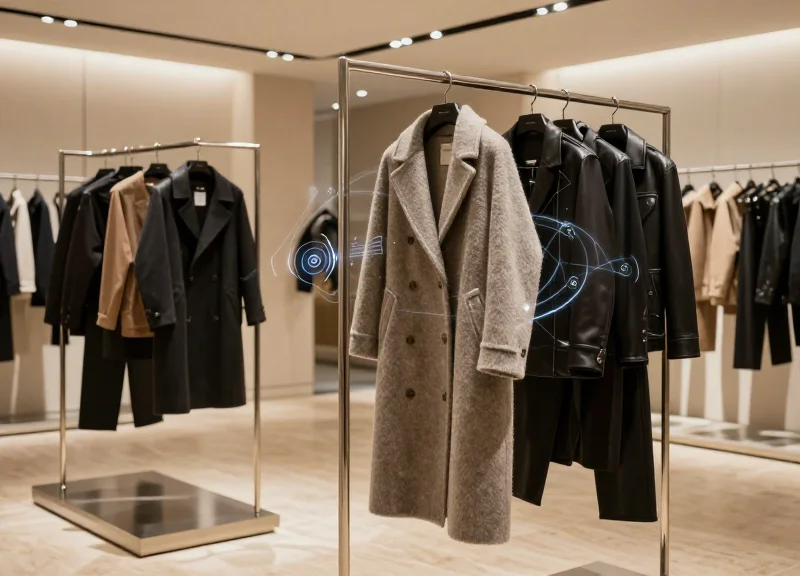
As we approach 2026, the luxury retail landscape is shifting toward a seamless integration of security and intelligence. For high-end outerwear—where a single coat can cost thousands—traditional security measures are no longer enough. Retailers are now demanding a unified approach that combines the precision of RFID inventory tracking with the robust deterrence of heavy-duty EAS systems. This guide explores the convergence of these technologies and how they protect both your bottom line and your brand's integrity in an increasingly complex global market.
The Evolution of Luxury Retail Security: Moving Toward 2026
The evolution of luxury retail security heading into 2026 is defined by the convergence of Electronic Article Surveillance (EAS) and Radio Frequency Identification (RFID) into a single, proactive intelligence layer. This shift moves brands away from reactive alarm-triggering toward a comprehensive 'asset visibility' model. For high-margin outerwear, this means security systems no longer just 'beep' at the door; they provide real-time telemetry on exactly which SKU is moving, where it is located, and its current authentication status, effectively bridging the gap between loss prevention and inventory accuracy.
Historically, luxury brands viewed security as a 'necessary evil' that often compromised the aesthetic of high-end boutiques. Clunky plastic tags and intrusive pedestals were the norm. However, as we approach 2026, the strategy has shifted toward 'Invisible Hardening.' High-value items like technical parkas and leather jackets now require security solutions that are physically formidable to deter Organized Retail Crime (ORC) but digitally integrated to support omnichannel fulfillment. The focus is now on the 'Total Retail Value'—protecting the item's physical presence while leveraging its data to maximize sales velocity.
| Feature | Traditional Security (Pre-2022) | Next-Gen Security (2026) |
|---|---|---|
| Primary Goal | Theft Deterrence | Asset Intelligence & Loss Prevention |
| Technology | Standard AM or RF EAS | Dual-Tech RFID + Heavy-Duty EAS |
| Data Output | Simple Alarm Trigger | Item-Level SKU Analytics |
| Physicality | Easily Defeated Tags | High-Magnetic Strength / Tamper-Proof |
| Inventory Link | None (Manual Counts) | Real-time Automated Synchronization |
Why is luxury outerwear the primary target for this evolution?
Outerwear carries the highest price-per-square-inch in retail. Its high resale value on secondary markets makes it a primary target for ORC, necessitating 'heavy-duty' physical security that standard apparel tags cannot provide.
How does RFID improve security beyond inventory?
RFID allows retailers to identify exactly which items are being targeted in a 'grab-and-go' event. This data helps law enforcement build cases by proving a pattern of theft across different locations.
What is 'Dual-Frequency' technology?
It is the integration of both 58kHz (Acousto-Magnetic) for superior security detection and 860-960MHz (UHF RFID) for inventory management within a single hardware tag.
Expert Insight: The 'Digital Signature' of Luxury. A unique trend for 2026 is the implementation of 'Authentication-at-the-Gate.' By using encrypted RFID chips inside heavy-duty tags, luxury brands can now verify a garment's authenticity the moment it enters or leaves a zone. This doesn't just stop theft; it prevents the fraudulent return of 'super-fakes'—a multi-billion dollar problem in the luxury outerwear space that traditional EAS could never address.
Why Outerwear Demands Specialized Security and Tracking

Luxury outerwear represents one of the highest risk-to-reward categories in modern retail because items like shearling coats, technical parkas, and high-end leather jackets combine extreme ticket prices with high portability. Unlike small accessories that can be secured in locked vitrines, outerwear must remain accessible on the floor for customers to touch and try on. However, the physical density of these garments—often featuring heavy down, metallic linings, or treated membranes—creates significant technical hurdles. Standard security tags are often too easily bypassed or cause damage to delicate fabrics, while basic RFID inlays can suffer from signal attenuation, leading to 'blind spots' in inventory management.
| Risk Factor | Standard Apparel | Luxury Outerwear |
|---|---|---|
| Average Unit Value | $40 - $150 | $1,200 - $6,000+ |
| Resale Liquidty | Low/Moderate | High (Secondary Market Gold) |
| Signal Interference | Negligible | High (Due to bulk and metallic hardware) |
| Theft Vulnerability | Impulse Shoplifting | Organized Retail Crime (ORC) |
Why can't standard EAS tags be used on luxury coats?
Standard tags often utilize pins that can leave permanent 'memory' holes in technical fabrics like Gore-Tex or delicate leathers. Luxury outerwear requires heavy-duty, non-marring clamps or reinforced cable tags that provide high-deterrence without compromising the garment's integrity.
How does garment bulk affect RFID accuracy?
Dense materials and layers in parkas can cause signal absorption. Without high-sensitivity RFID tags specifically tuned for dense environments, retailers face 'phantom inventory'—where the system shows an item is in stock, but it cannot be located on the sales floor.
What makes outerwear a primary target for ORC?
Organized Retail Crime rings target outerwear because of its high 'Density-to-Value' ratio. A single thief can carry out three jackets worth $10,000 in seconds, which are then easily liquidated at 60-70% of MSRP on global resale platforms.
Expert Insight: In my two decades observing retail shifts, the most overlooked challenge in 2026 will be 'The Shielding Effect.' As outerwear brands incorporate more 'smart' materials and RFID-blocking pockets into their designs to protect consumers' wallets, they inadvertently shield their own inventory tags. Specialized hardware is no longer just a security preference; it is a technical necessity to penetrate these new material barriers and maintain real-time visibility.
The RFID Advantage: Real-Time Visibility for High-Value Assets

In the 2026 retail landscape, Radio Frequency Identification (RFID) is the foundational layer of the 'Intelligent Store.' For luxury outerwear brands, RFID provides 99.8% inventory accuracy by enabling non-line-of-sight, bulk scanning of high-value garments. This eliminates the 'black hole' of backroom inventory, ensuring that every shearling coat or technical parka is visible across the global supply chain in real-time, which is critical for maintaining the high-touch service levels expected by luxury clientele.
| Operational Metric | Manual Barcode Scanning | Next-Gen RFID (2026) | |||
|---|---|---|---|---|---|
| Inventory Accuracy | Approx. 65-70% | 99.5% - 99.9% | |||
| Stock-Take Speed | Hours/Days (Manual) | Minutes (Autonomous) | Search Capability | Visual/Manual | Geospatial/Geofencing |
| Omnichannel Reliability | High Cancel Rates | Near-Zero Cancel Rates |
The primary challenge in luxury outerwear is SKU complexity. A single jacket model may have twenty variations across sizes, colors, and premium materials (e.g., Loro Piana wool vs. technical nylon). RFID allows for 'Item-Level Intelligence,' where each unique garment carries its own digital twin. This granularity allows retailers to implement dynamic restocking—triggering a warehouse shipment the moment a specific size is sold—preventing lost sales due to 'out-of-stock' errors that are actually just 'misplaced' inventory.
- Expert Insight: The 'Shadow Inventory' Liquidation: A unique trend for 2026 is using RFID to eliminate 'shadow inventory'—items that are in-store but not on the floor or correctly logged. By utilizing overhead RFID sensors, luxury brands can now track 'dwell time' in fitting rooms, providing data on which outerwear pieces are tried on but not purchased, signaling potential fit or style issues that traditional sales data misses.
- Signal Interference Mitigation: High-end outerwear often features metallic zippers, foil linings, or heavy moisture-retentive wools that can dampen RFID signals. 2026 hardware utilizes 'Wave-Propagation' tag designs that leverage the garment's own surfaces to boost signal strength rather than being blocked by them.
Does RFID replace EAS security tags?
While RFID provides visibility, it is most effective when integrated with EAS. In 2026, 'Dual-Technology' tags combine RFID's data tracking with Heavy-Duty EAS physical security, ensuring a single tag handles both inventory and theft prevention.
How does RFID improve the customer experience?
It enables 'Magic Mirrors' in fitting rooms that automatically recognize the outerwear a client is wearing, displaying complementary products, material origins, and styling videos without the need for manual input.
Heavy-Duty EAS: Beyond Basic Loss Prevention
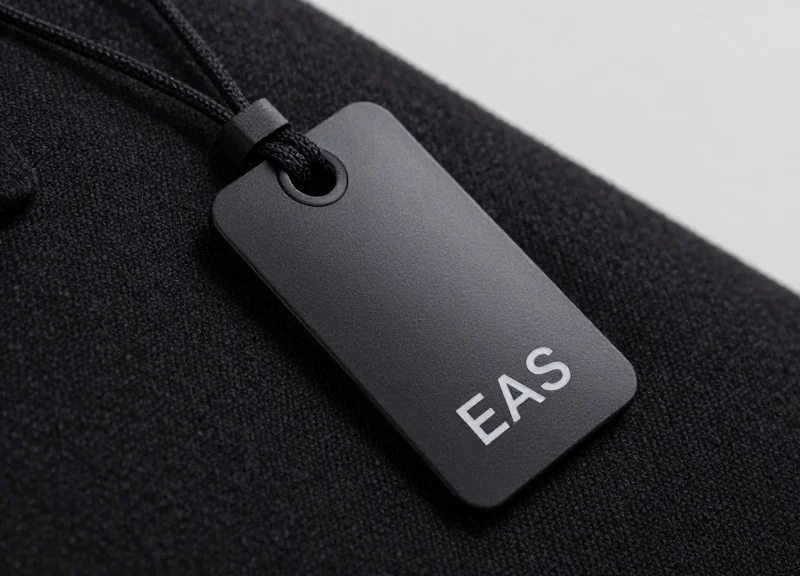
Heavy-Duty Electronic Article Surveillance (EAS) is a specialized security framework designed for high-ticket assets like luxury outerwear, utilizing high-gauss magnetic locks (typically 15,000G or higher) and reinforced housings to defeat professional-grade detachers and physical tampering. Unlike standard retail tags, heavy-duty EAS acts as a 'hardened' deterrent that combines physical resilience with advanced signal processing to minimize false alarms while providing a formidable barrier against organized retail crime (ORC) in premium environments.
In the luxury sector, the 'security aesthetic' is a delicate balance. A tag must look imposing enough to deter a thief but refined enough not to degrade the customer's experience of a $5,000 shearling coat. By 2026, the industry is shifting toward 'Visual Friction'—the strategic use of visible, high-strength security hardware that signals to professional shoplifters that the cost of an attempted theft (in time and risk) far outweighs the potential reward. This psychological deterrent is the first line of defense before the electronic alarm even triggers.
| Feature | Standard EAS (General Retail) | Heavy-Duty EAS (Luxury Outerwear) |
|---|---|---|
| Magnetic Strength | 5,000 - 8,000 Gauss | 15,000 - 20,000 Gauss (Superlock+) |
| Housing Material | Standard ABS Plastic | Polycarbonate or Metal-Reinforced Shell |
| Locking Mechanism | Single-ball clutch | Multi-clutch or Rotational Locking |
| Visual Impact | Low-profile / Minimalist | Robust / Intentional Deterrent |
One unique insight often overlooked by generalist retailers is the 'Leverage Gap.' High-value outerwear often uses thick, heavy materials like leather or layered down. Standard tags can often be pried apart because the fabric creates a gap for tools. Heavy-duty EAS tags for 2026 feature 'Zero-Gap' pin designs and larger 'Total-Surface' heads that compress the fabric, leaving no room for blades or prying tools to enter, effectively neutralizing the most common methods of illicit removal.
Will heavy-duty tags damage delicate luxury fabrics like silk-lined parkas?
No. Modern heavy-duty tags use precision-engineered, ultra-smooth pins and specialized 'clamping' tech that secures the garment through friction rather than piercing tension, ensuring the fabric integrity remains uncompromised.
Can these tags be removed by common magnets found online?
Heavy-duty systems require specialized 'Superlock' or 'Hyperlock' detachers. Standard magnets sold on the black market typically lack the specific Gauss-rating and internal orientation required to release the high-tension clutches.
How does heavy-duty EAS complement RFID technology?
While RFID tracks the item's location and data, the Heavy-Duty EAS provides the physical lockdown. By 2026, many brands are adopting dual-technology tags that house both an RFID chip for data and an AM/RF coil for EAS in a single heavy-duty shell.
The Hybrid Solution: Bridging the Gap with Dual-Technology Tags

A dual-technology tag is a converged security and inventory solution that embeds both an Electronic Article Surveillance (EAS) element—typically Acousto-Magnetic (AM) or Radio Frequency (RF)—and a specialized Ultra-High Frequency (UHF) RFID chip within a single, heavy-duty housing. By 2026, this 'Hybrid Solution' is expected to become the industry standard for luxury outerwear, as it eliminates the need for redundant tagging processes, reduces the physical footprint on delicate garments, and bridges the visibility gap between loss prevention and supply chain management.
In the traditional retail model, luxury retailers often applied two separate devices: a bulky EAS hard tag for theft deterrence and a secondary RFID hangtag for inventory tracking. This 'double-tagging' not only doubled the labor cost of application and removal but also increased the risk of 'pin-hole fatigue'—permanent damage to high-end textiles like Gore-Tex or Grade-A Cashmere. Dual-technology tags solve this by utilizing a single, precision-engineered pin that secures both the anti-theft circuit and the data-rich RFID inlay simultaneously.
| Feature | Traditional Separate Tagging | Dual-Technology Hybrid Tags |
|---|---|---|
| Labor Efficiency | High: Requires two-step application/removal | Low: Single-motion application at POS |
| Fabric Integrity | Higher risk of multiple puncture points | Minimal: One single high-precision pin |
| Data Integration | Siloed: LP and Inventory data rarely meet | Unified: Alarm events linked to specific SKUs |
| Customer Experience | Cluttered: Multiple tags distract from design | Streamlined: Minimalist aesthetic footprint |
Expert Insight: The 'Event-Linked Recovery' Advantage. The most significant leap forward for 2026 is the ability to link a door alarm event directly to a specific item’s unique ID. When a dual-tech tag passes through an EAS pedestal, it doesn't just trigger a siren; the RFID component transmits the exact SKU and serial number to the cloud. This allows luxury brands to know exactly which $5,000 parka left the store, enabling real-time inventory updates and more effective police reporting.
- Source Tagging Integration: Manufacturers apply dual-technology tags during the garment finishing stage, ensuring items arrive floor-ready and reducing backroom labor by up to 40%.
- Omnichannel Accuracy: The RFID component ensures that high-value outerwear is visible across the entire digital ecosystem, preventing 'ghost inventory' cancellations for online orders.
- Frictionless Checkout: At the POS, high-speed detachers deactivate the EAS function while the RFID reader automatically updates the stock status to 'Sold', preventing false alarms at the exit.
Do hybrid tags require batteries?
No. Modern dual-technology tags utilize passive RFID and passive AM/RF components, meaning they are powered by the energy emitted from readers and pedestals, ensuring a multi-year shelf life without maintenance.
Can these tags be used on waterproof membranes?
Yes. Luxury-grade hybrid tags often use specialized smooth-bore pins and rubberized gaskets to maintain the integrity of technical fabrics like those used in premium outerwear.
Will the RFID signal interfere with the EAS alarm?
Engineering standards for 2026 hybrid tags use frequency isolation techniques to ensure that the 8.2MHz or 58kHz EAS signals do not clash with the 860-960MHz RFID spectrum.
Mitigating Risk: Protecting Delicate Luxury Fabrics from Damage
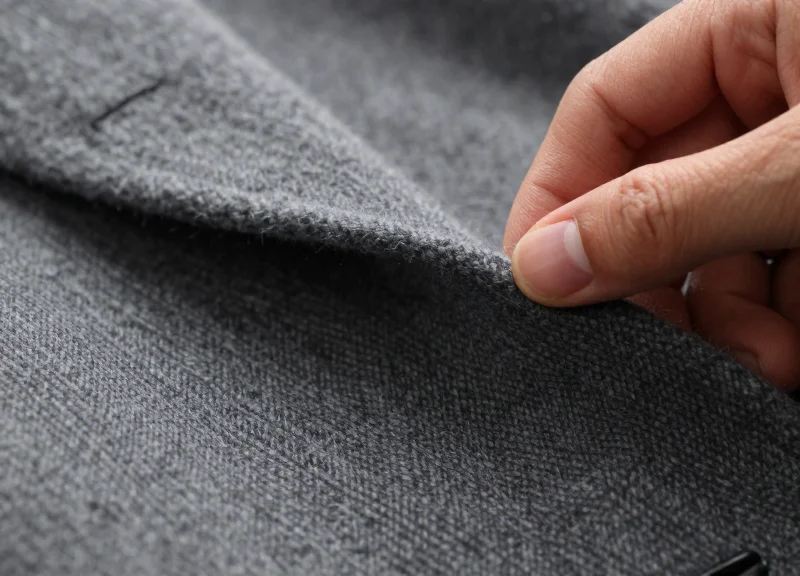
In the high-stakes world of luxury retail, the physical application of security hardware often poses as much of a financial risk as the threat of theft itself. Mitigating risk to delicate fabrics involves transitioning from generic 'one-size-fits-all' EAS tags to specialized attachment methods that respect the structural integrity of materials like Grade-A leather, ultra-fine cashmere, and advanced technical membranes. For 2026, the industry standard focuses on 'zero-trace' security—ensuring that once a tag is removed, no permanent perforation, fiber-crushing, or oil-transfer remains on the garment.
| Material Type | Risk Factor | Recommended Security Attachment |
|---|---|---|
| Full-Grain Leather/Suede | Permanent needle holes & scarring | Non-marring Magnetic Lanyards (No piercing) |
| Technical Shells (Gore-Tex) | Compromised waterproofing/delamination | Seam-allowance tagging or RFID-integrated care labels |
| Shearling & Heavy Furs | Fiber matting and weight-drag | Extended-needle pins with smooth-shaft finishes |
| Fine Cashmere & Silk Blends | Fiber snags and 'pilling' at entry point | Fine-gauge (0.6mm) stainless steel micro-pins |
- Identify the 'Structural Safe-Zone': Always attach hardware through internal seams, pocket linings, or pre-existing brand labels where the fabric is reinforced and holes are less visible or non-permanent.
- Utilize Fine-Gauge Micro-Pins: Switch from standard 0.9mm pins to 0.6mm micro-pins. These smaller diameters move between the weave of luxury knits rather than cutting through the fibers.
- Implement Gravity-Neutral Placement: Place tags near the garment's natural support points (like the armscye) to prevent 'tag-sag,' which can stretch delicate fabrics over time while on the hanger.
Expert Insight: The 24-Hour Compression Rule. To prevent the 'crushing' effect on high-pile fabrics like velvet or shearling, luxury retailers are now adopting foam-backed EAS tags. These provide a soft buffer between the hard plastic and the fabric, ensuring that even under magnetic tension, the fibers retain their 'memory' and spring back to their original state once the tag is detached.
Can RFID tags be embedded directly into luxury outerwear?
Yes, many 2026 luxury lines now weave RFID inlays directly into the brand tapestry label or the care instructions during manufacturing, eliminating the need for external pins entirely for inventory purposes.
Do magnetic lanyards trigger EAS gates effectively?
Absolutely. Modern dual-tech lanyards house both the EAS coil and the RFID chip, providing the same detection range as pinned tags without ever piercing the garment material.
How do you prevent ink-tag leaks on expensive shells?
The trend is moving away from fluid-based deterrents for luxury goods, favoring 'Active-Alarm' tags that emit a high-decibel siren if tampered with, avoiding the risk of chemical damage.
Operational Synergy: How Integrated Data Streamlines the Supply Chain
In the luxury outerwear sector, operational synergy is the elimination of data silos between loss prevention and inventory management. By integrating Heavy-Duty EAS (Electronic Article Surveillance) with RFID-enabled visibility, retailers create a 'digital thread' that follows a garment from the manufacturing floor to the final point of sale. This unified approach allows for real-time item-level tracking, ensuring that high-value assets are not only protected against theft but are also strategically positioned to meet consumer demand across all channels. When security hardware and inventory software communicate, the supply chain transforms from a reactive cost center into a proactive engine for growth.
| Operational Metric | Legacy Siloed Systems | 2026 Integrated Synergy |
|---|---|---|
| Inbound Receiving | Manual box counting & individual tag scanning. | Bulk RFID gate scanning with 100% SKU validation. |
| Inventory Accuracy | 65-75% due to human error and shrinkage. | 98-99.9% via continuous automated cycle counts. |
| Omnichannel Fulfillment | High cancellation rates due to ghost stock. | Reliable ship-from-store with real-time stock locks. |
| Shrinkage Insights | Discovered during quarterly audits. | Instant alerts upon unauthorized zone transitions. |
- Source Tagging & DC Validation: Luxury coats are tagged with dual-tech RFID/EAS sensors at the factory. Distribution Centers (DCs) use tunnel scanners to verify 500+ items in seconds, ensuring shipping manifests match physical stock perfectly.
- Automated Store In-Take: Store staff receive shipments by passing carts through RFID portals, instantly updating local inventory without opening a single box, reducing labor costs by up to 80%.
- Intelligent Floor Replenishment: As high-value parkas or leathers are sold, the system triggers an immediate alert to the backroom, ensuring the sales floor never has a 'gap' in size or style availability.
- Secure Omnichannel Picking: RFID handhelds guide staff to the exact location of a specific SKU for BOPIS (Buy Online, Pick Up In Store) orders, while the integrated EAS ensures the item is decommissioned only after a valid transaction.
Expert Insight: By 2026, the industry is moving toward 'Predictive Shrinkage Modeling.' By analyzing the movement of RFID-tagged luxury items that approach EAS exit zones without a 'sold' status, AI-driven systems can flag suspicious behavior patterns before the theft occurs. This shifts the focus from catching shoplifters to preventing the loss of $5,000 garments through pre-emptive staff intervention, a luxury-first approach that prioritizes brand experience over confrontation.
How does integrated data reduce labor costs?
It automates the most time-consuming tasks: counting inventory and manually checking security tags. Staff can focus on high-touch clienteling rather than logistics.
Can EAS data improve supply chain security?
Yes. Integrated systems track 'point of loss.' If items consistently disappear at a specific DC or transit point, the data identifies the exact location and time of the breach.
What is the impact on 'Ship-from-Store' accuracy?
Integrated data eliminates 'ghost stock' (items showing in the system but missing from the shelf), reducing order cancellations and improving customer trust.
Customer Experience: Balancing High Security with Frictionless Shopping

In 2026, the pinnacle of luxury retail customer experience is defined by 'Ambient Security.' This approach ensures that high-duty EAS and RFID systems operate invisibly to the consumer, maintaining a boutique atmosphere while providing maximum protection. By bridging the gap between security and service, brands can offer a 'frictionless' environment where high-ticket items like luxury outerwear are readily accessible for fitting, yet fully tracked and secured via dual-technology tags that enable instant mobile checkout and real-time inventory updates.
| Experience Factor | Traditional Security Model | 2026 Frictionless Model |
|---|---|---|
| Visual Impact | Bulky, industrial tags that detract from garment aesthetics. | Low-profile, brand-integrated tags that double as authenticity seals. |
| Fitting Room Process | Manual counting and 'locked' tags requiring staff intervention. | Automatic RFID-based fitting room analytics with 'Always-On' security. |
| Checkout Speed | Slow, manual barcode scanning and tag detaching at fixed counters. | Bulk RFID scanning with mobile POS, allowing 'anywhere' checkout. |
| Security Feel | Overt surveillance and physical barriers creating a 'closed' vibe. | Ambient security that relies on data perimeters and discreet hardware. |
Does high-security hardware negatively impact the 'Luxury Touch'?
In 2026, no. Next-gen tags utilize premium materials and ergonomic designs that complement heavy outerwear fabrics like leather and shearling without adding unsightly bulk.
How does RFID technology specifically enhance the luxury shopping journey?
RFID enables associates to provide 'concierge-level' service by instantly locating sizes and colors across the global supply chain using a handheld device, without leaving the customer's side.
Can heavy-duty EAS be used without creating a 'police-state' atmosphere?
Yes. Modern systems use 'invisible' pedestals or overhead sensors integrated into the architecture, paired with soft-alarm protocols that alert staff discreetly via haptic wearables.
Unique Insight: The 2026 'Security-as-Service' Shift. An original trend emerging in luxury retail is the transformation of the security tag into a digital luxury asset. By 2026, top-tier brands are embedding NFC capabilities within the RFID/EAS housing. When a customer taps their phone to the security tag, it reveals the garment's 'Digital Product Passport'—detailing its sustainable sourcing, craftsmanship history, and even providing styling videos. This turns a loss-prevention necessity into a high-value engagement tool, effectively making the customer want to interact with the security hardware.
Future-Proofing Your Store: Implementing Next-Gen Systems Today
Future-proofing luxury retail involves transitioning from reactive loss prevention to proactive 'item-level intelligence' by deploying hybrid hardware that supports both Electronic Article Surveillance (EAS) and Radio Frequency Identification (RFID). By 2026, the industry standard will shift from standalone security pedestals to integrated IoT gateways that manage inventory accuracy, theft prevention, and brand authentication in a single data stream. To implement this today, retailers must move beyond siloed systems and adopt an interoperable infrastructure where every security event is recorded as a data point for supply chain optimization.
- Infrastructure Audit and Signal Mapping: Evaluate current EAS pedestal placements and back-of-house Wi-Fi/Bluetooth density. Ensure that new RFID readers will not face interference from existing AC or heavy-duty magnetic shielding used for high-security areas.
- Middleware Integration: Adopt an API-first middleware platform that aggregates data from both EAS alarms and RFID stock counts. This allows loss prevention teams to differentiate between a technical glitch and an actual high-value theft event.
- Pilot Hybrid Tagging: Begin tagging outerwear with dual-technology 'hard tags' that offer the physical deterrent of a clutch lock while housing an Gen2 UHF RFID chip for sub-meter location accuracy.
- Staff Upskilling: Train boutique associates to use mobile RFID sleds for real-time inventory cycle counts, shifting their role from manual auditors to tech-enabled floor managers.
| Feature | Legacy Systems (2020-2024) | Next-Gen Standards (2026+) |
|---|---|---|
| Theft Detection | Buzzer only; no item data | Real-time SKU identification |
| Inventory Visibility | 65-75% accuracy | 99.5% real-time accuracy |
| Security Hardware | Visible, bulky pedestals | Invisible overhead or under-floor sensors |
| Tag Lifespan | Disposable/Single use | Circular/Recyclable digital identities |
A unique insight for the 2026 landscape is the emergence of the 'Digital Product Passport' (DPP) compliance. By implementing high-duty RFID-EAS tags now, luxury brands are not just securing an expensive parka; they are embedding the hardware necessary to track the garment's lifecycle, resale history, and material authenticity. This transition turns a security expense into a multi-departmental asset that supports sustainability and the growing luxury resale market.
Will existing AM/RF pedestals work with new RFID tags?
Generally no. While the physical tag might look similar, RFID requires 860-960 MHz readers. Retailers should look for 'Hybrid' pedestals that house both legacy AM/RF antennas and modern RFID modules to manage the transition period.
What is the expected ROI on this transition?
Luxury retailers typically see a 15-20% reduction in shrink and a 4% increase in sales through better stock availability within the first 12 months of unified deployment.
How do we handle the higher cost of dual-technology tags?
Focus on 'Closed Loop' tagging where high-duty tags are removed at the point of sale and reused within the store, minimizing the recurring cost per unit compared to disposable labels.