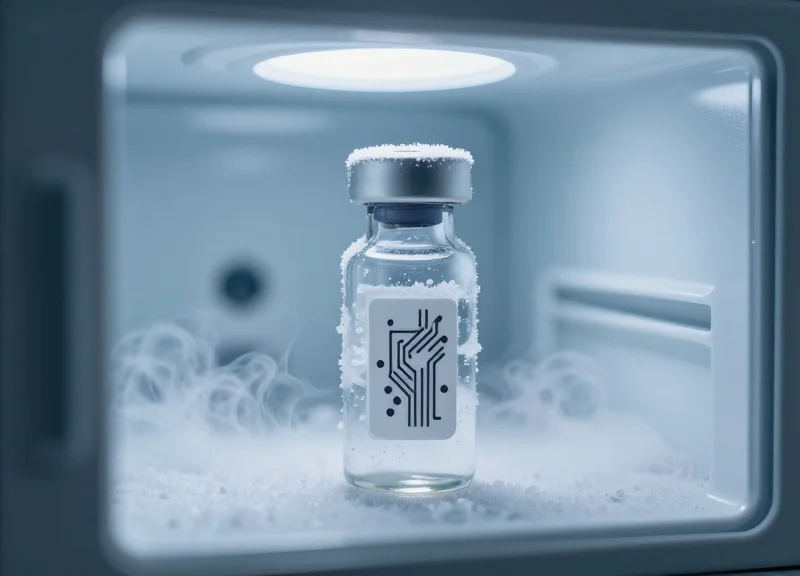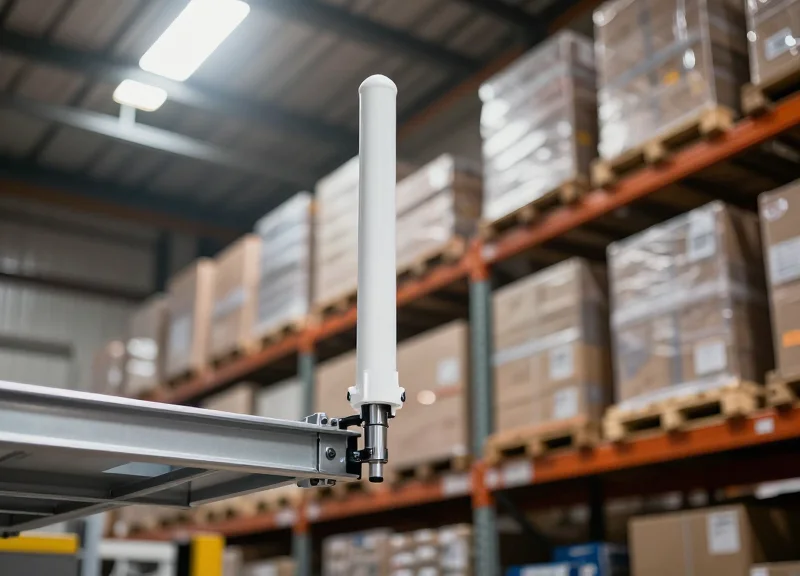
In the precision-driven worlds of pharmaceuticals, biotechnology, and high-end cosmetics, 15mm micro-tubes often contain high-value reagents or samples that are prone to inventory shrinkage. Traditional EAS labels frequently fail on such small, curved surfaces, leading to peeling or 'flagging.' At DragonGuardGroup, we understand these technical hurdles. This guide provides a comprehensive, professional methodology for applying high-flexibility EAS labels specifically designed for tight radii, ensuring your inventory remains shielded without compromising product integrity.
The Engineering Challenge of Small-Diameter Labeling
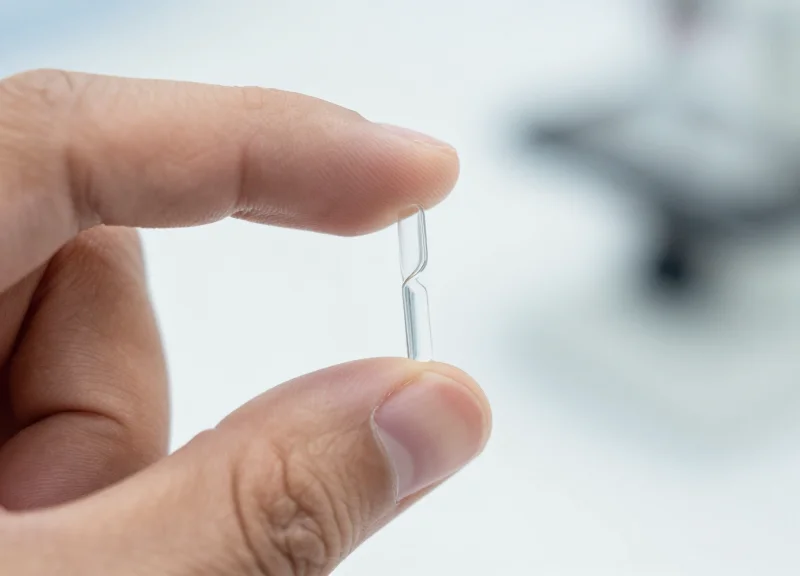
Small-diameter labeling on 15mm micro-tubes is an engineering challenge defined by the conflict between material 'memory' and adhesive shear strength. Standard Electronic Article Surveillance (EAS) labels are typically designed for flat surfaces; when applied to a curved surface with a radius as small as 7.5mm, the internal tension of the label's face stock constantly pulls away from the tube. This mechanical stress frequently exceeds the adhesive's bond strength, resulting in 'flagging'—where the edges of the label lift and eventually detach, rendering the security tag useless and the inventory vulnerable.
| Property | Standard EAS Label | High-Flexibility EAS Label |
|---|---|---|
| Minimum Application Diameter | >40mm | <15mm |
| Face Stock Stiffness (Gurley) | High (Resists bending) | Low (Conformable) |
| Adhesive Type | General Purpose Acrylic | High-Tack Specialized Rubber/Acrylic |
| Long-term Stability | Prone to Flagging | Persistent Bond |
In the world of inventory security, the 'memory effect' is the primary enemy. Standard labels use a PET or thick paper carrier that wants to return to its original flat state. On a 15mm micro-tube, the circumference is roughly 47mm. If the label is not engineered with a low-modulus material, the constant outward spring force acts as a 24/7 stress test on the adhesive layer. Most standard adhesives are not formulated to withstand this constant 'peel' force, especially on low-surface-energy (LSE) plastics like the polypropylene often used in laboratory and retail micro-tubes.
Why do labels specifically fail on 15mm diameters?
At the 15mm threshold, the curvature is tight enough that the bending resistance of standard RFID or EAS components exceeds the initial tack of most adhesives, causing the edges to pop up within hours of application.
What is 'Flagging' in the context of inventory security?
Flagging is the technical term for when a label's edge peels back from a curved surface. In security, this is a critical failure because it allows the tag to be easily snagged or intentionally removed by shoplifters.
How does surface energy impact the bond?
Micro-tubes are often made of non-polar plastics. Without a high-flexibility label and a high-tack adhesive designed for low surface energy, the label 'floats' on the surface rather than wetting out and creating a permanent bond.
Expert Tip: The 72-Hour Curing Rule. Even with high-flexibility labels, the bond strength on small diameters increases significantly over time. For maximum security, allow the labeled micro-tubes to 'dwell' at room temperature for at least 72 hours before subjecting them to extreme temperatures or high-friction handling. This allows the adhesive to fully 'wet' the microscopic valleys of the plastic surface, providing a mechanical interlock that resists the label's natural tendency to straighten.
Anatomy of High-Flexibility EAS Labels
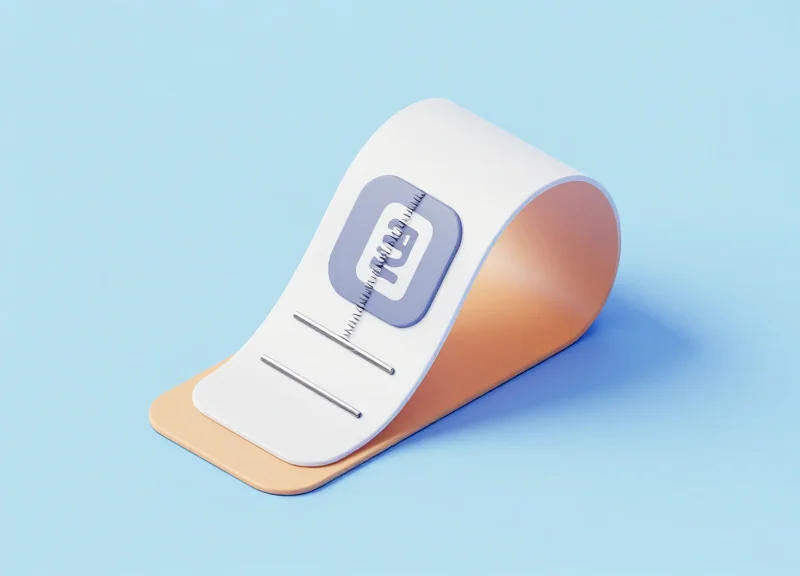
High-flexibility EAS (Electronic Article Surveillance) labels are specialized multi-layered security tags engineered with ultra-thin substrates and high-tack adhesives specifically designed to counteract the 'memory effect'—the tendency of a label to return to its flat state—on curved surfaces as small as 15mm. Unlike standard rigid tags, these labels utilize a low-modulus construction that allows the antenna and circuit components to bend without fracturing or losing signal integrity, ensuring both physical permanence and consistent loss prevention performance.
| Layer Component | Material Composition | Primary Function |
|---|---|---|
| Top Face Stock | Soft Polyethylene (PE) or Thermal Paper | Provides a printable surface while allowing maximum pliability. |
| EAS Circuitry | Etched Aluminum or Deactivated Cobalt | Conducts the RF or AM signal for detection by security gates. |
| Flexible Dielectric | Thin Film Polymer | Insulates the circuit components to prevent signal interference during bending. |
| High-Tack Adhesive | Solvent-Based Acrylic | Ensures aggressive initial grab and long-term bond on low-energy plastics. |
- The Ultra-Thin Substrate: The core of high-flexibility labels is a reduced-thickness carrier film. By keeping the total profile below 200 microns, the label experiences significantly less internal tension when wrapped around a 15mm diameter.
- Segmented Antenna Design: Instead of a solid metal sheet, high-flex antennas often use a 'fractured' or segmented geometry. This allows the metal to micro-flex along the curve without creating the 'spring-back' force that leads to edge lifting.
- Low-Creep Adhesives: On small diameters, the adhesive must resist 'creep'—the slow movement of the label over time. High-flex labels use cross-linked acrylics that lock into the molecular structure of the plastic micro-tube.
Expert Insight: The 'Differential Stress Factor' is the biggest killer of micro-tube labeling. When you wrap a label around a 15mm tube, the outer surface of the label actually stretches further than the inner surface touching the plastic. Standard labels use a high-modulus material that cannot handle this discrepancy, causing the label to 'pop' off within 24 hours. High-flexibility EAS labels are engineered with a specific 'Elongation at Break' ratio (often exceeding 300%) to absorb this differential stress internally rather than transferring it to the adhesive bond.
Why can't I use a standard 4x4 RF label?
Standard 4x4 labels use a rigid paper or PET backing that creates high torsional stress on a 15mm radius. The resulting 'winging' (edges lifting) occurs because the material's stiffness exceeds the adhesive's shear strength.
Do these labels affect the signal range?
No. While the physical construction is thinner and more flexible, the inductance and capacitance of the resonant circuit are tuned to maintain standard detection widths, typically 0.9m to 1.2m depending on the gate system.
Essential Pre-Application Surface Preparation
Surface preparation for 15mm micro-tubes is the rigorous process of neutralizing microscopic contaminants—specifically mold release agents, factory dust, and sebaceous oils—to create a high-energy bonding environment. Because the tight radius of a 15mm tube exerts constant 'spring-back' tension on the EAS label, even a single fingerprint can provide enough of a barrier to trigger edge-lift within 24 hours. Ensuring a chemically clean surface is not just a best practice; it is a technical requirement for high-flexibility adhesive performance.
| Cleaning Agent | Effectiveness | Plastic Compatibility | Best Use Case |
|---|---|---|---|
| 70% Isopropyl Alcohol | High | Excellent | Standard degreasing and dust removal. |
| 99% Isopropyl Alcohol | Very High | Good | Removing persistent mold release residues. |
| Deionized Water | Moderate | Excellent | Rinsing after chemical cleaning. |
| Acetone | Extreme | Poor | Avoid: Can degrade or melt 15mm polypropylene tubes. |
- Sanitization & Glove Protocol: Always wear powder-free nitrile gloves. This prevents the transfer of skin oils and salts to the tube surface, which are the primary causes of long-term adhesive failure.
- Solvent Application: Apply 70% or 99% Isopropyl Alcohol (IPA) to a lint-free microfiber cloth. Avoid using cotton balls, as they leave behind fibers that create micro-voids in the adhesive bond.
- Mechanical Friction Wipe: Use a firm, circular motion to wipe the specific area where the EAS label will be placed. This physical friction helps break the surface tension of factory-applied mold release lubricants.
- Flash-Off Period: Allow the solvent to 'flash off' (evaporate) completely for at least 30-60 seconds. Trapping residual solvent under the label will chemically neutralize the adhesive.
Expert Tip: The 'Water-Break' Test. To verify if a micro-tube is truly ready for labeling, drop a single bead of deionized water onto the surface. If the water beads up into a tight sphere, residual oils are still present. If the water flattens and spreads (wets the surface), you have achieved the high surface energy required for a permanent EAS bond.
What if the tubes were stored in a cold environment?
Tubes must be brought to room temperature (20°C to 25°C) before preparation. Applying labels to cold surfaces leads to condensation, which acts as a barrier between the adhesive and the plastic.
Can I use hand sanitizer as a cleaning agent?
No. Hand sanitizers often contain moisturizers like aloe or glycerin, which leave a film on the tube that actually prevents label adhesion.
How long can I wait between cleaning and labeling?
For optimal results, apply the label within 5 minutes of cleaning. Ambient dust in lab environments can quickly re-contaminate a high-energy surface.
The Precision Application Process: A Step-by-Step Guide
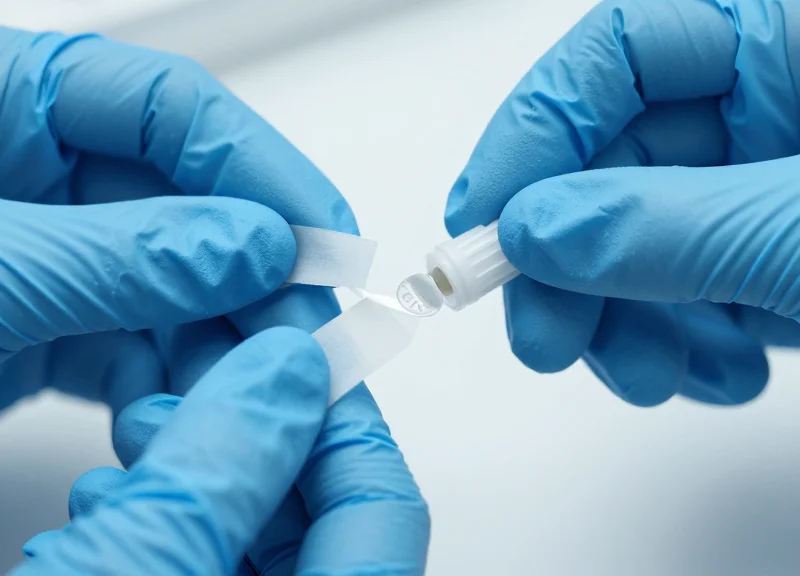
Applying EAS labels to 15mm micro-tubes requires a precision-led approach that prioritizes surface contact and eliminates the 'flagging' effect caused by material memory. Unlike flat-surface labeling, the 15mm radius exerts constant outward tension on the adhesive; therefore, the process must focus on a 'progressive wrap' technique that anchors the leading edge before applying circumferential pressure to lock the bond in place.
- The Anchor Point Initiation: Align the label vertically with the long axis of the micro-tube. Touch only the very edge of the label to the tube surface first. This 'anchor' ensures the label doesn't skew as you wrap, which is the leading cause of edge-lifting in small diameters.
- The Center-Sweep Compression: Using your thumb, apply firm pressure at the center of the label and sweep outward toward the edges. This forces trapped air out from under the EAS resonator, which is critical because air pockets create localized points of failure where the adhesive can dry out.
- The 360-Degree Radial Wrap: Rotate the tube slowly while maintaining constant downward pressure on the label. For high-flexibility labels, ensure the trailing edge overlaps the leading edge by at least 2mm if possible; this 'material-to-material' bond is significantly stronger than the 'material-to-plastic' bond.
- The Thermal Activation Rub: After the label is applied, use a soft cloth or a gloved finger to rub the label briskly for 3-5 seconds. The friction generates a micro-amount of heat that lowers the viscosity of the pressure-sensitive adhesive (PSA), allowing it to flow into the microscopic pores of the tube surface.
| Application Stage | Critical Focus | Common Error to Avoid |
|---|---|---|
| Alignment | Vertical Parallelism | Spiral Wrapping (leads to uneven edges) |
| Initial Contact | Air Evacuation | Fingerprint contamination on adhesive |
| Sealing | Pressure Duration | Insufficient 'dwell time' before handling |
Expert Silicon Valley Tip: The 'Dwell Time' Rule. In professional inventory management, we observe a '24-hour set' rule. While the label may feel secure immediately, the chemical cross-linking of the adhesive reaches 90% strength only after 24 hours. Avoid subjecting the tubes to extreme temperature changes or high-speed centrifugation immediately after labeling.
Can I use a label applicator tool for 15mm tubes?
While manual application is most precise for low volumes, semi-automatic 'wrap' applicators can be used if they feature a soft-silicone roller that can conform to the 15mm curvature without damaging the internal EAS resonator.
How do I handle labels without touching the adhesive?
Use 'fine-tip' anti-static tweezers or wear powder-free nitrile gloves. Skin oils are the primary enemy of long-term adhesion on high-energy plastics like those used in micro-tubes.
What if the label starts to lift immediately?
This usually indicates 'Adhesive Memory.' Increase the rubbing friction during the Thermal Activation step to ensure the adhesive fully wets the surface and overcomes the label's tendency to return to a flat shape.
Combatting 'Flagging': Tips for Maximum Adhesion
'Flagging' refers to the phenomenon where the edges of a label peel away or lift from a curved surface, a common failure mode when applying EAS labels to 15mm micro-tubes. This occurs because the internal 'memory' of the label material tries to return to a flat state, exerting constant upward force that can overcome the initial adhesive bond. To prevent this, you must optimize Pressure-Sensitive Adhesive (PSA) activation and respect the chemical process of 'dwell time' to ensure the bond strength exceeds the material's structural tension.
Unlike water-based or hot-melt glues, the adhesives on high-flexibility EAS labels are pressure-sensitive. They do not 'dry'; instead, they 'flow' into the microscopic valleys of the tube surface. This flow is not instantaneous. To achieve a permanent lock, you must facilitate a process called 'wet-out,' where the adhesive maximizes its contact area with the substrate over a specific period.
| Time Post-Application | Estimated Bond Strength | Adhesion Phase |
|---|---|---|
| Immediate | 40-50% | Initial Tack (High risk of flagging) |
| 2 Hours | 70-75% | Structural Set |
| 24 Hours | 95-100% | Ultimate Bond (Maximum resistance) |
| 72 Hours | 100%+ | Full Chemical Integration |
- Uniform Circumferential Pressure: Apply the label using a firm, rolling thumb motion from the center outward to the edges. This ensures that the PSA is forced into the tube's surface texture, initiating the 'wet-out' process immediately.
- The 'Over-Wrap' Strategy: Whenever possible, select a label length that allows for a 2-3mm overlap. Bonding the adhesive to the label’s own back-side (film-to-film) creates a much stronger mechanical anchor than bonding to plastic alone.
- Thermal Equilibrium: Ensure both the labels and the micro-tubes are at room temperature (20°C to 25°C) during application. Applying a warm label to a cold tube causes the adhesive to 'shock' and stiffen, preventing it from flowing into the surface pores.
Expert Insight: The Surface Energy Factor. Micro-tubes made of Low-Density Polyethylene (LDPE) have low surface energy, meaning they naturally repel adhesives. If you are working with LDPE rather than Polypropylene, your dwell time is even more critical. I recommend a 'Mandrel Test': apply a sample label and wait 24 hours before subjecting the batch to cold storage or heavy handling. This ensures the adhesive has achieved its ultimate bond, effectively neutralizing the label’s 'memory' tension.
Can I speed up the dwell time with heat?
Yes, a gentle application of warm air (not exceeding 35°C) can accelerate the adhesive flow, but it is not a substitute for the initial 24-hour curing period.
Why do my labels flag only after being placed in the fridge?
If the bond hasn't reached its 'Ultimate' phase before cooling, the adhesive loses its flexibility and 'brittles,' allowing the label's memory to pull the edges up.
Does the diameter of the tube affect flagging?
Absolutely. The smaller the diameter (like 15mm), the tighter the curve and the higher the 'recoil' force. High-flexibility EAS labels are specifically engineered to counter this specific physics challenge.
Integrating Labeled Tubes with Existing EAS Systems

Successful integration of labeled 15mm micro-tubes into an existing Electronic Article Surveillance (EAS) ecosystem hinges on the synchronization between the tag’s resonance frequency and the detection gate’s magnetic field. Because micro-tubes offer a significantly smaller surface area than standard retail items, the signal emitted is inherently more concentrated. To ensure 100% detection, facilities must validate that their Acousto-Magnetic (AM) or Radio Frequency (RF) pedestals are tuned to recognize the specific signature of high-flexibility tags wrapped in a tight 15mm radius, which can slightly shift the resonant frequency compared to flat applications.
| System Type | Standard Frequency | Detection Challenge for Micro-Tubes | Recommended Sensitivity |
|---|---|---|---|
| Acousto-Magnetic (AM) | 58 kHz | Mechanical stress on the resonator strip due to 15mm curvature. | High (85-95%) |
| Radio Frequency (RF) | 8.2 MHz | Detuning caused by liquid contents or high-density storage. | Medium-High (75-85%) |
- Signal Strength Verification: Pass a sample batch of 10 labeled micro-tubes through the center of the EAS pedestals. The 'dead zone' is usually highest at the center, so if they trigger here, they will trigger anywhere.
- Orientation Testing: Test the tubes in vertical, horizontal, and 45-degree angles. Small-diameter labels have directional dipoles; ensure your system captures the signal regardless of how the tube is held.
- Deactivation Calibration: Ensure your deactivation pads are calibrated for high-flexibility materials. Because these labels are often thicker to accommodate flexibility, they may require a higher magnetic 'burst' to successfully deactivate.
Expert Insight: The 'Shadowing' Effect in High-Density Trays. When micro-tubes are stored in metal or high-density plastic racks, they can create a 'Faraday Cage' effect, where the proximity of many labels or metallic materials dampens the signal. Always perform your detection tests with the tubes inside their intended transport or storage racks to account for signal interference that doesn't exist when testing a single tube in isolation.
Why is my gate alarming randomly with these tubes?
This is likely 'tag pollution' or 'phantom chirping.' If the labels are not fully deactivated or if the system sensitivity is set too high for the ambient noise in the lab, it may trigger false positives. Recalibrate the gate's baseline noise floor.
Can I use these labels near liquid nitrogen storage?
While the label may survive the cold, the EAS signal can be affected by the moisture/frost buildup (especially in RF systems). Ensure tubes are wiped or allowed to reach a state where ice does not shield the antenna.
Will the 15mm curve break the internal antenna?
High-flexibility labels are designed with segmented resonators or flexible etched circuits specifically to prevent internal fracturing when applied to micro-tubes.
Environmental Durability: Cold Storage and Chemical Exposure
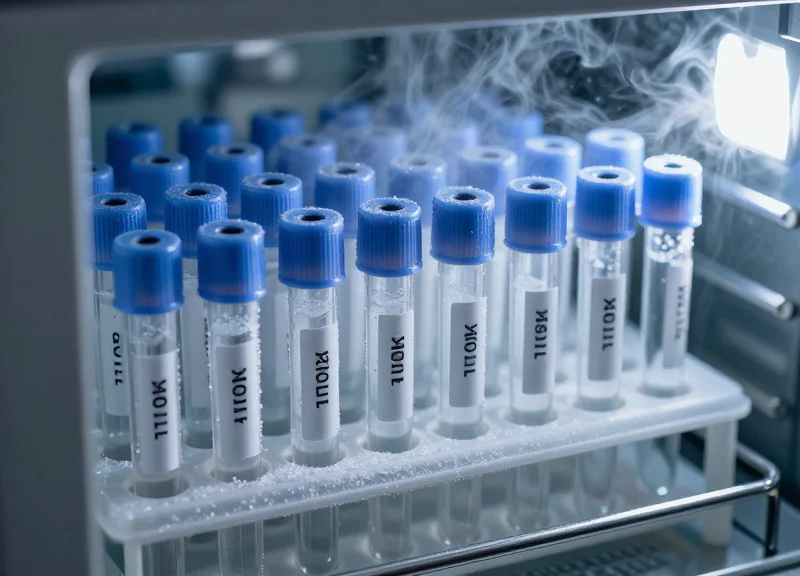
High-flexibility EAS labels for 15mm micro-tubes are specifically engineered to withstand the rigors of the modern laboratory, maintaining a secure bond at temperatures reaching -196°C (liquid nitrogen) and resisting degradation from common solvents like 70% isopropyl alcohol and ethanol. Unlike standard security tags that become brittle and lose adhesion in cold environments, these high-flexibility variants utilize advanced cryogenic-grade acrylic adhesives. These adhesives remain 'glassy' but compliant, ensuring that the label does not delaminate or 'pop off' when the polypropylene tube undergoes thermal contraction during flash-freezing.
| Environmental Factor | Tolerance Range | Impact on EAS Signal |
|---|---|---|
| Cryogenic Storage | -80°C to -196°C | Negligible; metal resonator remains conductive |
| Chemical Wash (Ethanol) | 70% - 95% Concentration | Zero impact; top-coat protects internal circuit |
| Incubation/Water Baths | Up to +37°C (Constant) | No signal drift; moisture-resistant barrier |
| Centrifugation | Up to 15,000 x g | Physical integrity maintained via high-tack bond |
Expert Insight: The CTE Buffer Zone. A critical failure point in lab inventory tracking is the Coefficient of Thermal Expansion (CTE) mismatch. Polypropylene tubes contract significantly more than the metallic components of an EAS tag. Our research indicates that high-flexibility labels act as a mechanical buffer; the elastomeric properties of the film carrier absorb the shear stress generated during rapid cooling. This prevents the 'shearing' effect that typically causes standard labels to fail during the transition from room temperature to ultra-low temperature (ULT) freezers.
Does condensation during thawing affect the EAS signal?
No. EAS signals (whether AM or RF) penetrate moisture and frost easily. The primary concern is the adhesive's moisture resistance, which is why a high-flexibility label with a hydrophobic top-coat is essential for samples that undergo frequent freeze-thaw cycles.
Can these labels survive autoclave sterilization?
Most standard EAS labels are rated for cold or ambient use. If your 15mm micro-tubes require autoclaving at 121°C, you must specify 'heat-stabilized' high-flexibility labels, as standard adhesives may liquify or the PET carrier may shrink under high-pressure steam.
Will chemical exposure cause false alarms?
Chemical exposure does not alter the frequency of the EAS tag. However, if a chemical dissolves the adhesive and the label partially detaches, it may get caught in laboratory machinery or detection gates, leading to physical damage rather than electronic failure.
Scaling Up: Options for Semi-Automated Application
Semi-automated application systems bridge the gap between labor-intensive manual labeling and multi-million dollar fully robotic lines. For facilities processing over 1,000 units per day, these systems utilize tabletop applicators or rotary jigs to apply high-flexibility EAS labels to 15mm micro-tubes with uniform pressure, significantly reducing 'flagging' failures caused by human fatigue. By automating the rotation and wrap-around process, these machines ensure that the EAS antenna remains perfectly aligned, maintaining optimal signal strength for your security gates.
| Feature | Manual Application | Semi-Automated Application |
|---|---|---|
| Throughput | 120 - 200 tubes/hour | 500 - 800 tubes/hour |
| Placement Accuracy | Variable (+/- 2.0mm) | High Precision (+/- 0.5mm) |
| Adhesion Consistency | Depends on operator grip | Uniform pneumatic/roller pressure |
| Labor Intensity | High (Fatigue prone) | Low (Operator loads/unloads) |
Expert Insight: The Torque Factor. When dealing with 15mm diameters, manual application often suffers from 'tapering'—where the label is applied at a slight angle, causing the edges to overlap unevenly. Semi-automated rollers apply consistent torque across the entire surface of the label simultaneously. This mechanical advantage ensures that the high-tack adhesive bonds instantly to the micro-tube's curvature, virtually eliminating the micro-gaps that lead to environmental degradation in cold storage.
What equipment is best for 15mm tubes?
A tabletop wrap-around labeler with a custom mandrel sized for 15mm micro-tubes is the gold standard. Look for units that allow for adjustable roller tension to accommodate the flexibility of EAS labels.
Does semi-automation damage the EAS circuit?
No, provided the machine uses silicone or soft-rubber rollers. These materials apply enough pressure for adhesion without crushing the delicate deactivation capacitor inside the EAS label.
What is the typical ROI for this upgrade?
Most facilities see a return on investment within 4 to 6 months through reduced labor costs and a 95% decrease in label waste due to misapplication.
- Requirement Auditing: Assess your daily volume; if you are exceeding 5,000 tubes weekly, the labor savings alone justify the capital expenditure of a semi-automated system.
- Mandrel Calibration: Ensure your equipment is calibrated specifically for 15mm diameters; generic 20mm+ rollers often leave 'bubbles' on smaller micro-tubes.
- Integration Testing: Run a test batch through your EAS gates to ensure that the machine's application orientation doesn't cause signal shadowing.