In the high-stakes world of grocery retail, every square inch of floor space translates directly to potential revenue. However, balancing loss prevention with customer flow in narrow aisles has historically been a logistical headache. Traditional, bulky EAS pedestals often create bottlenecks, frustrating shoppers and hindering cart movement. The emergence of 15mm ultra-slim EAS pedestals offers a sophisticated solution to this dilemma. This guide explores the technical nuances of integrating these sleek systems into tight grocery environments, ensuring your security measures are as efficient as your floor plan.
The Evolution of EAS: From Bulky Antennas to 15mm Ultra-Slim Design
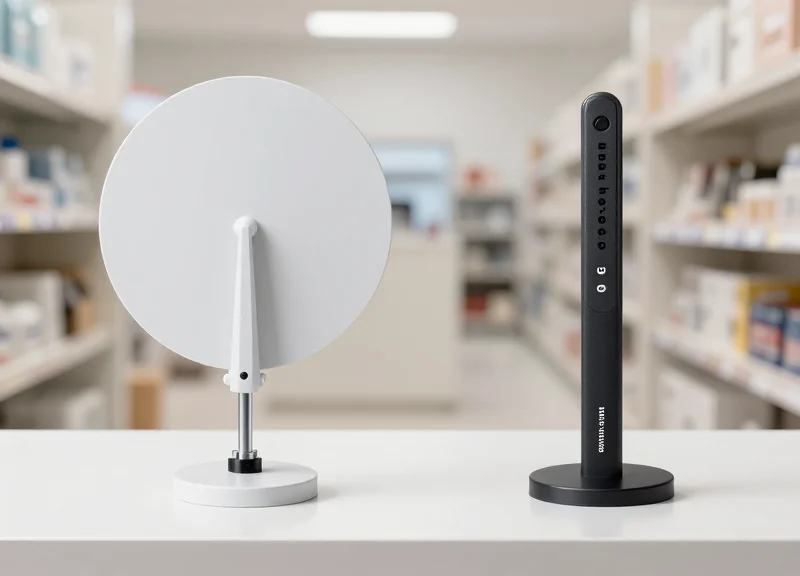
The evolution of Electronic Article Surveillance (EAS) represents a shift from purely functional security to a sophisticated blend of loss prevention and spatial engineering. Traditional EAS pedestals often exceeded widths of 100mm, creating significant bottlenecks in high-traffic zones. Modern 15mm ultra-slim pedestals utilize advanced Acousto-Magnetic (AM) or Radio Frequency (RF) digital signal processing to provide superior detection sensitivity within a footprint that is up to 85% smaller than legacy systems, effectively reclaiming valuable floor space for merchandising and customer flow.
In the early days of retail security, the 'visual deterrent' was the primary goal. Massive, cage-like antennas signaled to potential shoplifters that a store was protected, but they also signaled a cramped and unfriendly environment to legitimate shoppers. As grocery store layouts shifted toward 'express' aisles and high-density product placement, these bulky units became liabilities, often suffering damage from shopping carts or obstructing ADA-compliant pathways.
| Feature | Legacy EAS (1990s-2010s) | Standard Slim (2015-2020) | Ultra-Slim (Current Gen) |
|---|---|---|---|
| Typical Width | 100mm - 150mm | 40mm - 60mm | 15mm - 20mm |
| Material | Reinforced Plastic/Steel | Aluminum/Acrylic | Aviation-Grade Alloys |
| Signal Type | Analog/Simple Digital | Advanced DSP | Smart AI-Driven DSP |
| Aisle Impact | High Obstruction | Moderate | Negligible |
Expert Insight: The 'Phantom Barrier' Effect. As a 20-year veteran in retail tech, I’ve observed that the value of the 15mm pedestal isn't just physical—it's psychological. Large antennas create what we call a 'Phantom Barrier,' where customers subconsciously avoid the exit path, leading to slower turnover at the registers. By reducing the hardware profile to just 15mm, we remove this friction point, increasing the perceived openness of the store and significantly improving the Customer Experience (CX) metrics.
Why did EAS antennas need to become slimmer?
Primarily to accommodate modern 'micro-format' grocery layouts where every square inch of floor space is calculated for ROI, and to ensure compliance with tightening fire safety and accessibility regulations.
Does the 15mm width sacrifice detection range?
No. Modern ultra-slim units use high-density copper windings and software-defined radio (SDR) technology to maintain a detection field equivalent to, or better than, their bulkier predecessors.
Are these slim units durable enough for grocery environments?
Yes, they are typically constructed from aviation-grade aluminum or high-impact acrylics specifically designed to withstand impacts from heavy grocery carts and floor cleaning equipment.
Anatomy of a 15mm Ultra-Slim EAS Pedestal
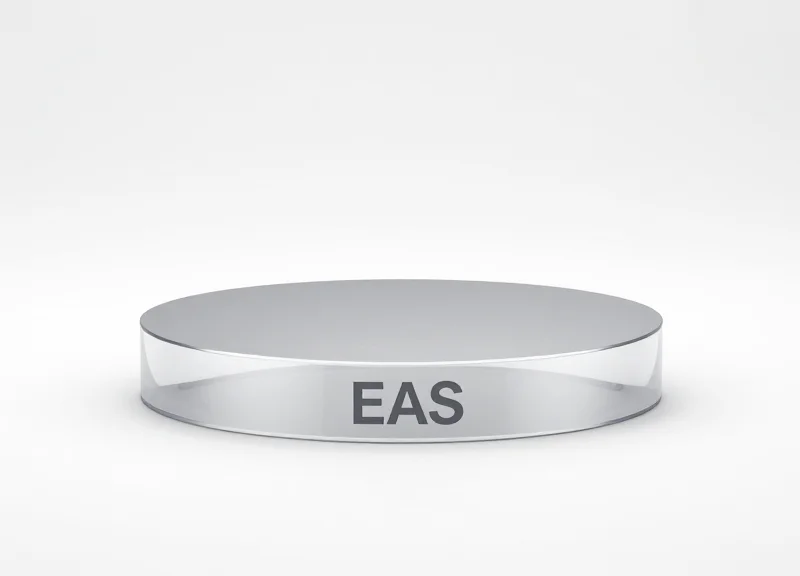
A 15mm ultra-slim Electronic Article Surveillance (EAS) pedestal is a precision-engineered security antenna characterized by its narrow footprint, typically constructed from high-impact optical-grade acrylic or reinforced aluminum. Unlike traditional bulky antennas, these units utilize high-density PCB-integrated coils and remote controller architectures to achieve a profile thin enough to integrate seamlessly into grocery checkout lanes without obstructing customer flow or cart passage.
To achieve a width of just 15mm—roughly the thickness of a finger—manufacturers must rethink the physics of signal transmission. Traditional EAS antennas rely on thick copper windings; however, ultra-slim units employ specialized multi-layer lamination where the antenna coils are etched directly onto the circuit board or compressed into high-gauge, ribbon-thin formats. This allows the device to maintain a high 'Q factor' (quality factor) for tag detection while drastically reducing physical volume.
| Component | Technical Specification | Functional Role |
|---|---|---|
| Housing Material | Optical-Grade PMMA / Aircraft Aluminum | Provides structural rigidity and 92% light transmission for aesthetics. |
| Antenna Coil | Multi-layer Laminated Copper Ribbon | Generates and receives the electromagnetic field for tag detection. |
| DSP Engine | Digital Signal Processing (Remote or Integrated) | Filters background noise and interference in high-EMI grocery environments. |
| Base Plate | High-Tensile Cold-Rolled Steel | Anchors the 15mm frame and houses the floor-level wiring interface. |
| Visual Indicators | Integrated RGB LED Strips | Provides 360-degree alarm visibility without adding to the width. |
How is heat managed in such a thin enclosure?
Ultra-slim pedestals often use 'Split-Architecture.' By moving the power-hungry logic boards to a remote controller hidden under the floor or in a nearby cabinet, the pedestal itself remains cool and exceptionally thin.
Does the 15mm width reduce the detection range?
No. By utilizing Phased-Array technology and advanced Digital Signal Processing (DSP), these units can achieve detection widths of up to 1.8 meters, matching the performance of much larger systems.
Are these pedestals durable enough for grocery carts?
Yes. The frames are typically made from cast acrylic which is 10 to 17 times more impact-resistant than glass, specifically designed to withstand the glancing blows of heavy shopping carts.
Expert Insight: The 'PCB-as-Antenna' Breakthrough. The real secret behind the 15mm revolution is the transition from 'wire-wrapped' antennas to 'PCB-etched' antennas. By printing the antenna geometry onto the motherboard itself using high-conductivity traces, engineers eliminate the physical air gaps found in traditional coils. This not only enables the slim profile but also creates a more uniform electromagnetic field, which is critical in grocery environments where metal-lined product packaging (like baby formula or coffee) can often cause signal 'blind spots' in older, bulkier hardware.
Site Assessment: Measuring Clearance and Traffic Flow in Grocery Aisles

Site assessment for ultra-slim EAS (Electronic Article Surveillance) pedestals is the process of quantifying the physical and operational constraints of a grocery checkout environment to ensure 15mm hardware provides maximum detection without violating safety codes. Unlike traditional bulky antennas, the 15mm ultra-slim profile is specifically engineered for high-density 'express' lanes where every centimeter of clearance directly impacts customer throughput and ADA (Americans with Disabilities Act) compliance.
| Metric | Standard EAS (60mm+) | Ultra-Slim EAS (15mm) | Strategic Impact |
|---|---|---|---|
| Aisle Encroachment | High (>120mm per pair) | Minimal (30mm per pair) | Preserves 97% of original aisle width |
| ADA Compliance Buffer | Tight/Difficult | Excellent | Easily maintains 32-inch clear width |
| Traffic Flow Resistance | Moderate (Cart Bumping) | Near Zero | Reduces 'bottleneck' anxiety for shoppers |
- Identify the 'Clear Width' Threshold: Measure the distance between the checkout counter and the nearest obstacle. For ADA compliance in the US, a minimum of 32 inches (813mm) is required. The 15mm pedestal allows you to meet this even in aisles previously deemed 'too narrow' for EAS.
- Map Peak Traffic Patterns: Analyze 'Heat Zones' where carts tend to congregate or turn sharply. Placing a 15mm pedestal in these zones requires a floor-recessed mounting approach to prevent base-plate tripping hazards.
- Evaluate Floor Composition: Inspect for post-tension concrete or floor heating systems. Since ultra-slim pedestals often require external controllers, you must identify a secondary location for the power supply within 5-10 meters.
- Detect Ambient EMI Noise: Grocery environments are noisy. Check for nearby motorized checkouts or LED displays that might interfere with the pedestal’s slim-coil sensitivity.
The Expert Tip: The 'Cart-Swing' Variable. When installing 15mm pedestals, most installers only measure static width. However, veteran retail engineers calculate the 'Cart-Swing Radius'—the arc a standard 150-liter grocery cart makes when exiting a lane at a 45-degree angle. Because 15mm pedestals are nearly invisible to the peripheral vision of a hurried shopper, we recommend installing them 100mm further back from the 'turn point' than you would a bulky antenna to prevent accidental cart impact, even though the physical space allows for closer placement.
Can I install 15mm pedestals on carpeted floors?
Yes, but it requires a specialized under-carpet cable protector. Because the pedestal is so thin, the cable management must be equally low-profile to avoid creating a 'speed bump' for grocery carts.
How do I handle floor vibration in high-traffic grocery stores?
Ultra-slim pedestals have less surface area for mounting. We recommend using high-tensile expansion bolts and a stabilizing shim if the floor variance exceeds 2mm across the base footprint.
Is the detection range compromised by the slim profile?
While the physical footprint is smaller, the internal high-density copper windings maintain a standard detection width of up to 1.6m for soft tags, provided the site assessment has cleared the area of large metallic interference.
Electrical Requirements and Underfloor Cabling Strategies
Installing 15mm ultra-slim EAS pedestals requires a precision-engineered electrical infrastructure that prioritizes low-voltage power delivery—typically 24V DC—and robust data shielding to ensure high detection rates in narrow grocery aisles without creating structural trip hazards. Because these pedestals lack the internal bulk to house large transformers, the cabling strategy must focus on remote power supply units and invisible underfloor routing that respects the integrity of existing grocery store flooring.
| Specification | Requirement | Recommended Standard |
|---|---|---|
| Operating Voltage | 24V DC / 110-220V AC (Remote) | Class 2 Power Supply |
| Power Consumption | 30W - 50W per Pedestal | Energy-efficient switching mode |
| Data Connection | RS485 or Ethernet (TCP/IP) | Shielded Twisted Pair (STP) Cat6 |
| Trench Depth | 15mm to 25mm | Precision saw-cut or joint-utilization |
- Path Mapping and Interference Assessment: Identify the shortest route from the pedestal base to the remote controller. Avoid proximity to heavy-duty motors from conveyor belts or refrigeration units to minimize Electromagnetic Interference (EMI).
- Precision Saw-Cutting: Use a diamond-blade floor saw to create a narrow 5mm-wide trench. For grocery environments with high-gloss polished concrete, this ensures the structural integrity remains intact while providing enough depth for the power and sync cables.
- Shielded Cable Deployment: Run STP Cat6 cables for data and 18/2 AWG shielded wire for power. Shielding is critical in 15mm pedestals because their slim profile offers less internal insulation against environmental electronic noise.
- Epoxy Resin Sealing: Fill the trench with a high-strength, color-matched epoxy resin. This creates a flush, waterproof finish that withstands heavy pallet jack traffic and frequent floor scrubbing.
The Expansion Joint Hack: One expert strategy to minimize floor damage is to leverage existing concrete expansion joints as cable conduits. By cleaning out the soft filler in an expansion joint and replacing it with your cabling and a flexible 'Sikaflex' sealant, you can avoid new saw-cuts entirely. This is particularly effective in grocery stores where floor aesthetic and hygiene (preventing cracks where food can settle) are paramount.
Can these slim pedestals run on Power over Ethernet (PoE)?
Generally, no. While data can be transmitted via Ethernet, the power draw for high-burst EAS detection pulses typically exceeds standard PoE+ (30W) limits. A dedicated 24V DC power line is recommended for stable performance.
How do I prevent interference from checkout belt motors?
Ensure all cables are shielded and that the pedestal controller is grounded to the building's main earth. Additionally, maintain a minimum 30cm clearance between the pedestals' underfloor cables and high-voltage AC lines.
Is a false floor required for 15mm pedestals?
No. The 15mm ultra-slim design is specifically engineered for direct-to-floor mounting. Underfloor trenching is the preferred method for permanent installations, though 'ramped' floor mats can be used for temporary setups.
Step-by-Step Installation: Securing the Pedestal for Durability
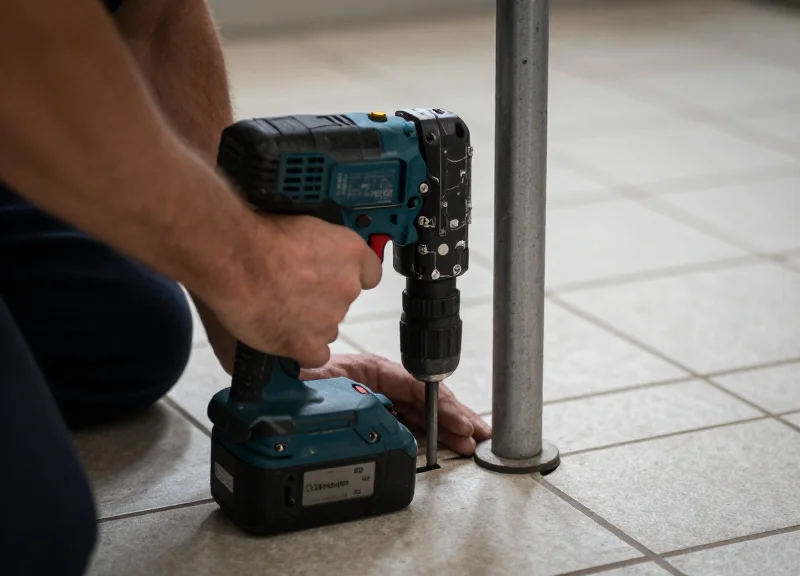
Securing an ultra-slim 15mm EAS pedestal requires high-precision anchoring and vertical calibration to compensate for its narrow footprint and high center of gravity. Unlike bulkier systems, the reduced surface area of a 15mm base plate means that even a 1-degree deviation at the floor level can lead to significant swaying or physical failure when subjected to the daily impacts of shopping carts and floor scrubbers. Professional installation focuses on high-tensile mechanical anchoring and the use of stainless-steel leveling shims to ensure the pedestal remains perfectly plumb and vibration-resistant.
| Component/Tool | Specification | Purpose |
|---|---|---|
| Anchor Bolts | M8 x 80mm Wedge Anchors | Structural bond with concrete subfloor |
| Drill Bit | 8mm SDS-Plus Carbide Tip | Precision hole sizing to prevent 'wobble' |
| Leveling Shims | 0.5mm - 2.0mm Stainless Steel | Vertical alignment on uneven grocery floors |
| Torque Wrench | Set to 25-30 Nm | Ensuring consistent tension without cracking the base |
- Template Marking and Pilot Holes: Place the pedestal base plate or the provided installation template at the pre-calculated position. Mark the center of each mounting hole. Use an 8mm SDS-plus bit to drill to a depth of at least 85mm, ensuring you penetrate through the tile and deep into the structural concrete.
- Borehole Sanitization: Use compressed air or a manual blow pump to remove all concrete dust from the holes. Residual dust acts as a lubricant and can reduce anchor pull-out strength by up to 40%, which is catastrophic for slim pedestals.
- Anchor Seating and Initial Leveling: Hammer the wedge anchors through the pedestal base into the holes. Before tightening, use a digital spirit level on the vertical axis of the antenna. Insert stainless steel shims under the base plate until the pedestal is perfectly plumb (90 degrees) on both the X and Y axes.
- Torque Application: Tighten the nuts in a cross-pattern sequence. Use a torque wrench to apply exactly 25-30 Nm. Over-tightening can stress the slim aluminum frame, while under-tightening leads to structural fatigue from cart collisions.
Expert Tip: The 'Grout-Injection' Technique for High-Vibration Zones. In grocery environments where heavy motorized floor scrubbers are used daily, mechanical anchors alone can loosen over time due to micro-vibrations. For maximum durability, inject a small amount of structural epoxy resin into the borehole before driving the wedge anchor. This creates a hybrid chemical-mechanical bond that dampens vibration and prevents the 'anchor creep' commonly seen in high-traffic aisles.
What if the floor tile cracks during drilling?
Always use a non-hammer 'diamond' bit for the first 10-15mm to clear the ceramic tile before switching to SDS-hammer mode for the concrete subfloor. If a crack occurs, use a color-matched epoxy filler to stabilize the tile before final torquing.
How do I ensure the pedestals are perfectly parallel?
Use a laser line level across the aisle. Even a 5mm misalignment between the TX (Transmitter) and RX (Receiver) pedestals can reduce the detection field by 10-15%.
Can I install these on a floating wooden floor?
No. 15mm pedestals require a rigid connection to a concrete slab. If installing on wood, you must use a steel reinforcement plate beneath the floor to distribute the load and prevent the pedestal from ripping out the wood fibers.
Software Calibration and Tuning for High-Density Environments

Software calibration for high-density grocery environments involves configuring the Electronic Article Surveillance (EAS) controller’s Digital Signal Processing (DSP) algorithms to maximize the Signal-to-Noise Ratio (SNR). In 15mm ultra-slim installations, the physical coil area is reduced, making the system more susceptible to electromagnetic interference (EMI) from point-of-sale (POS) systems, conveyor belt motors, and LED lighting drivers. Effective tuning ensures the system distinguishes between a valid 58kHz or 8.2MHz tag resonance and the ambient 'electronic smog' of a busy retail floor.
- Environmental Noise Floor Mapping: Utilize the manufacturer’s diagnostic software to run a 360-degree noise sweep. Identify peak interference frequencies and background decibel levels when the store is empty versus during peak operational hours.
- Phase Synchronization (Sync): Align the pedestal’s pulse timing with the local power grid (50/60Hz) and neighboring EAS systems to prevent 'beating' or cross-talk between aisles.
- Threshold Sensitivity Adjustment: Set the 'Tag Validation Count'—the number of successful resonance hits required before an alarm triggers. In high-density areas, increasing this count from 3 to 4 can significantly reduce false positives from moving metal objects like shopping carts.
- Digital Filter Configuration: Apply narrow-band filters to notch out specific frequencies generated by nearby refrigeration compressors or neon signage.
| Parameter | Standard Setting | High-Density (Narrow Aisle) Setting | Impact |
|---|---|---|---|
| Detection Sensitivity | 70-80% | 60-65% | Reduces 'phantom' alarms from nearby metal shelving. |
| Noise Gate Level | Low | Medium-High | Filters out low-level EMI from POS peripherals. |
| Alarm Delay | 100ms | 250ms | Prevents triggers from transient electrical spikes. |
Expert Insight: Implementing Temporal Phase Shifting. In ultra-narrow grocery layouts where pedestals are less than 90cm apart, 'Ghost Tagging'—where a tag in Lane 1 triggers the alarm in Lane 2—is common. A veteran technique is to implement Temporal Phase Shifting in the software. By offsetting the pulse transmission of adjacent pedestals by just a few milliseconds, you create a discrete 'listening window' for each aisle, effectively isolating the detection zones despite their physical proximity.
Why does the alarm trigger when a shopping cart passes but no tag is present?
This is often 'Ringing.' The large metal loop of a cart can momentarily mimic the resonance of a tag. Increasing the 'Pulse Width Discrimination' in the software helps the system recognize the different decay signatures of bulk metal versus a ferrite security tag.
How often should software calibration be audited?
We recommend a quarterly audit. Grocery environments are dynamic; new LED displays or relocated checkout hardware can change the EMI profile of the aisle, requiring a recalibration of the noise floor.
Can I tune the pedestals remotely?
Most modern ultra-slim pedestals feature IP-connectivity. This allows technicians to adjust sensitivity and view real-time noise logs via a Cloud Dashboard without disrupting floor traffic.
Integrating EAS with ESL and RFID Infrastructure

Integrating EAS with Electronic Shelf Labels (ESL) and Radio Frequency Identification (RFID) transforms a simple loss prevention setup into a high-performance retail intelligence ecosystem. In tight grocery aisles, the challenge is ensuring that the 15mm ultra-slim pedestals—typically operating at 58kHz (Acousto-Magnetic) or 8.2MHz (Radio Frequency)—do not suffer from Electromagnetic Interference (EMI) caused by the dense network of ESL access points (usually 2.4GHz) or UHF RFID readers (860-960MHz). Successful integration relies on frequency deconfliction and the use of 'smart' pedestals that can distinguish between a security tag and the data packets being transmitted by nearby digital price tags.
| System Type | Operating Frequency | Integration Role | Interference Risk |
|---|---|---|---|
| Ultra-Slim EAS | 58kHz / 8.2MHz | Physical Loss Prevention | Low (if calibrated correctly) |
| ESL (Digital Tags) | 2.4GHz / Sub-GHz | Dynamic Pricing & Picking | Medium (Multipath reflections) |
| UHF RFID | 860 - 960MHz | Inventory & Tracking | High (Active signal overlap) |
Expert Tip: To maximize efficiency in narrow 15mm footprints, utilize 'Spectral Shielding via Spatial Offset.' Because these pedestals are exceptionally thin, they can be mounted flush against non-conductive surfaces or tucked into architectural 'dead zones' where the grocery store's structural rebar acts as a natural barrier to ESL signal bleed, effectively isolating the EAS field without requiring bulky physical shielding.
Can ESL signals cause false alarms in slim EAS pedestals?
Modern 15mm pedestals use Digital Signal Processing (DSP) to filter out the high-frequency bursts from ESL systems. However, if an ESL access point is mounted directly above a pedestal, harmonic noise can occur. A minimum 1-meter vertical clearance is recommended.
How does RFID integration improve loss prevention?
By embedding RFID chips within EAS hard tags or labels, the system doesn't just alarm; it identifies the specific SKU leaving the store. This data syncs with your inventory management software to trigger immediate restock alerts for stolen items.
Do ultra-slim pedestals support dual-technology (EAS + RFID)?
Yes, high-end 15mm models often feature internal channels designed to house ultra-thin RFID antennas, allowing for simultaneous inventory tracking and theft detection within a single, space-saving unit.
- Baseline Calibration: Run the EAS system alone to establish a noise floor before powering on ESL or RFID networks.
- Hardware Synchronization: Use a common ground and, if possible, a synchronization cable (Sync-Link) between EAS controllers to ensure they pulse in harmony, reducing internal interference.
- Data Aggregation: Connect the EAS controller to the store's IoT gateway to correlate 'alarm events' with RFID 'missing item' pings for 99% accuracy in loss reporting.
Testing and Validation: Ensuring Maximum Detection Accuracy
Testing and validation for 15mm ultra-slim EAS pedestals is the process of verifying that the electromagnetic or acousto-magnetic field provides 100% coverage across the designated aisle width, regardless of tag orientation or environmental noise. Because slim-profile pedestals have a more focused detection footprint than traditional wider units, precise validation ensures that the 'near-field' performance is maximized to catch shoplifted items passing through tight 800mm to 1200mm grocery corridors without triggering false alarms from nearby metal shelving.
- The 'Three-Axis' Tag Test: Walk through the pedestal center holding a standard hard tag in three orientations: vertical, horizontal (parallel to the floor), and perpendicular (facing the pedestal). Ultra-slim antennas often have narrow 'sweet spots,' so detection must be confirmed at the floor level, waist height, and shoulder height.
- Blind Spot Mapping: Systematically move a soft label in a grid pattern between the pedestals. Focus specifically on the 15cm zone closest to the floor and the edges near the pedestal casing, where signal drop-off is most common in slim-form factors.
- Metallic Interference Stress Test: Grocery environments are full of metal carts and foil-lined packaging. Test detection while a metal shopping cart is parked within 50cm of the pedestal to ensure the software's 'noise cancellation' successfully distinguishes between a tag signal and environmental reflection.
- The 'Phantom Alarm' Soak Period: Observe the system for 30 minutes during peak hours with no tags present. This validates that the calibration performed in Section 5 is holding steady against the variable electrical noise generated by refrigeration units and checkout scanners.
| Tag Type | Max Effective Width (15mm Pedestal) | Detection Target Rate | Typical Orientation Sensitivity |
|---|---|---|---|
| Hard Pencil Tag | 1.4m - 1.6m | 98%+ | Low (Omni-directional) |
| DR Soft Label (AM) | 1.1m - 1.3m | 95%+ | High (Parallel to antenna) |
| Bottle Wrapper Tag | 1.0m - 1.2m | 92%+ | Medium |
| RFID/EAS Hybrid | 1.2m - 1.4m | 96%+ | Low |
Expert Tip: Implement a 'Differential Gain' threshold. In my 20 years of experience, I’ve found that 15mm pedestals in grocery aisles perform best when the gain is staggered—slightly higher on the 'exit side' than the 'store side'—to account for the proximity of metal checkout counters. This prevents 'back-field' tripping where tags at the register trigger the alarm prematurely.
Why does the alarm trigger when no one is passing through?
This is likely 'tag pollution' or environmental EMI. Check if merchandise with active tags is placed too close to the ultra-slim pedestal (maintain a 1-meter 'clear zone'). If the issue persists, re-adjust the noise filter in the software to ignore low-frequency interference from nearby LED drivers.
Does the ultra-slim profile reduce detection height?
No, if properly tuned. While the 15mm width limits the internal copper coil surface area, modern DSP (Digital Signal Processing) compensates for this. Validation should confirm detection up to 1.5 meters from the floor.
How often should validation be repeated?
In high-traffic grocery stores, we recommend a 'Quick-Check' daily (one pass with a test tag) and a full technical validation every six months to account for floor shifting or new electronic equipment installation.