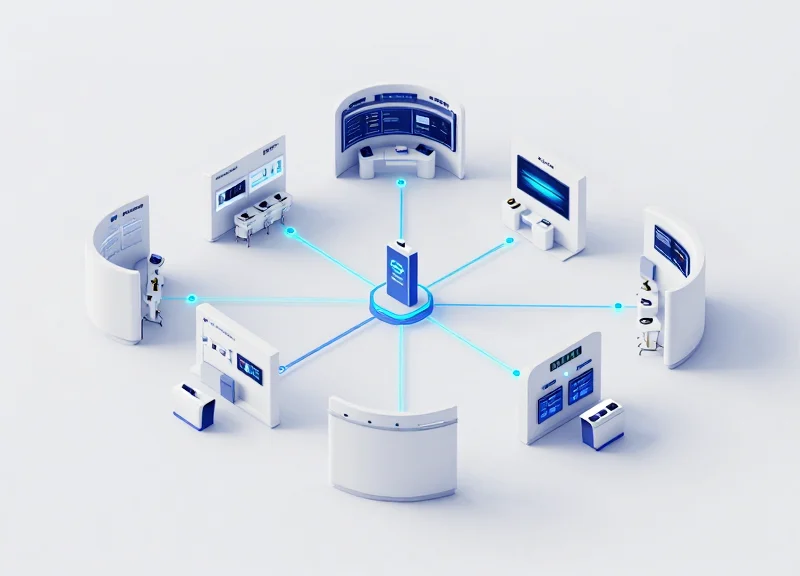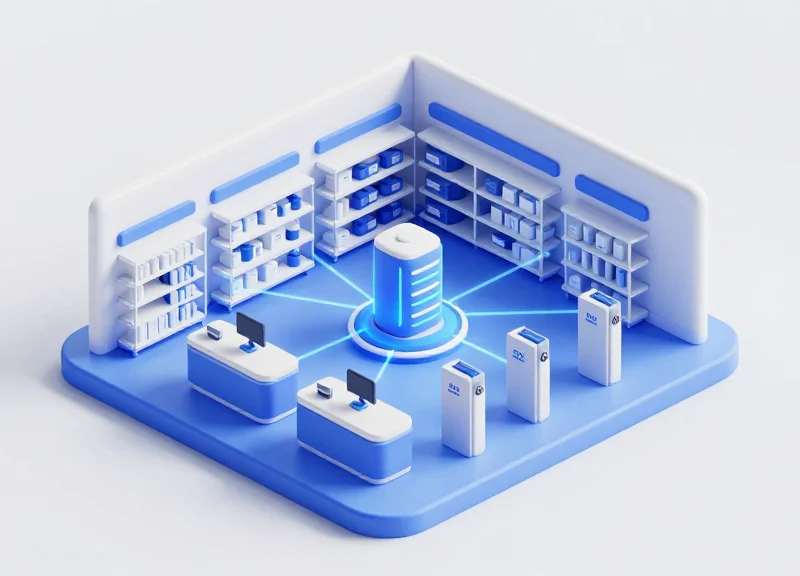
Open-concept furniture showrooms present a unique architectural challenge: how do you secure high-value assets across expansive, barrier-free layouts without destroying the carefully curated aesthetic? By 2026, the traditional 'security gate' at the entrance is increasingly viewed as an eyesore that disrupts the customer journey. This guide provides procurement specialists with a roadmap to selecting advanced Electronic Article Surveillance (EAS) systems that provide robust protection while remaining virtually invisible, ensuring your showroom remains both secure and sophisticated.
The Evolution of Security in Open-Concept Retail
The evolution of security in open-concept retail is defined by the shift from physical barriers to 'invisible' perimeters. As furniture showrooms move toward experience-driven layouts in 2026, traditional Electronic Article Surveillance (EAS) is being replaced by discrete technologies—such as under-floor loops and overhead RFID sensors—that protect high-value inventory without compromising architectural integrity. This 'Aesthetic Security' model ensures that the customer's first impression is of the design, not the defense mechanisms.
| Feature | Legacy Retail Security (Pre-2020) | Modern Open-Concept Security (2026) |
|---|---|---|
| Visual Impact | Bulky plastic pedestals at every exit. | Invisible/Integrated (Floor, Ceiling, or Doorframe). |
| Detection Method | Reactive: Alarms trigger at the door. | Proactive: AI-driven spatial tracking and RFID. |
| Customer Experience | High friction; 'Fortress' mentality. | Frictionless; Seamless movement throughout displays. |
| Data Integration | Standalone alarm systems. | Full IoT integration with inventory management. |
Why are traditional security pedestals becoming obsolete in showrooms?
Pedestals create visual 'noise' and physical bottlenecks that disrupt the open-flow design essential for luxury furniture showrooms. In 2026, procurement focuses on systems that disappear into the environment.
How does 2026 EAS technology handle wide showroom entrances?
Modern Acousto-Magnetic (AM) and RFID systems now utilize ultra-wide detection fields (up to 3 meters or more) through overhead or concealed floor antennas, eliminating the need for center-aisle gates.
What role does AI play in the evolution of furniture retail security?
AI-enhanced EAS now distinguishes between a customer moving a floor lamp for testing and an actual theft attempt, significantly reducing the 'false alarm fatigue' common in large-format stores.
Expert Insight: The 'Halo Effect' of Invisible Loss Prevention. In my two decades of retail strategy, I’ve observed that high-end furniture buyers are sensitive to 'surveillance cues.' When security is visible, it triggers a subconscious defensive posture in the consumer. By 2026, the most successful showrooms will utilize 'Spatial Intelligence'—where the system tracks the item’s location in 3D space. If a tagged item moves toward a non-traditional exit, the system alerts staff silently via haptic feedback on wearables, allowing for a customer-service-led intervention rather than a loud, embarrassing siren.
Aesthetic Security: Prioritizing Interior Design and UX

Aesthetic security is the strategic integration of loss prevention technology into a retail environment so that it remains invisible to the customer while providing maximum protection. In the context of 2026 furniture showrooms, this means moving beyond clunky plastic pedestals toward concealed floor loops, overhead sensors, and designer-grade antennas that complement rather than disrupt the curated lifestyle vignettes of an open-concept layout.
For furniture retailers, the showroom is a stage where customers imagine their future lives. When a security system creates a 'threshold barrier'—those imposing towers at Every entrance—it triggers a psychological shift from 'at home' to 'under surveillance.' Modern procurement focuses on UX-friendly EAS (Electronic Article Surveillance) that preserves the wide-open sightlines essential for high-ticket furniture sales.
| Feature | Traditional EAS | Aesthetic Security (2026) |
|---|---|---|
| Visual Impact | High-visibility towers; disrupts decor | Concealed in floor, door frames, or overhead |
| Customer Flow | Creates a 'choke point' at exits | Seamless, barrier-free transitions |
| Material Harmony | Grey/White plastic finishes | Acrylic, wood-grain, or custom metal finishes |
| Detection Method | Acousto-Magnetic (AM) or RF | RFID-Hybrid or Beam-Steering AI |
- The 'Invisible Boundary' Strategy: Our expert tip for 2026: Utilize floor-embedded RFID loops. By installing detection systems beneath the luxury vinyl tile (LVT) or hardwood flooring, you eliminate floor-standing hardware entirely. This allows furniture to be displayed right up to the exit line, maximizing high-value square footage while maintaining a 99% detection rate.
- Material Synchronization: Select EAS hardware that mirrors the showroom's palette. Leading systems now offer customizable skins or are built with premium materials like brushed brass or carbon fiber to match modern furniture legs and hardware.
- UX-Centric Deactivation: The 'walk-away' experience is ruined if a tag is missed. Integrate deactivators into sales desks or use mobile handhelds so the 'transaction' happens organically on a sofa or at a dining table, not just at a bulky checkout counter.
How do invisible systems handle large metal furniture pieces?
Modern Beam-Steering and RFID technologies use sophisticated algorithms to distinguish between static metal furniture and moving tagged items, preventing the false alarms common with older AM systems in metallic environments.
Do concealed systems have lower detection ranges?
No. In fact, by utilizing overhead 'Guardian' sensors alongside floor loops, 2026 systems often cover wider apertures (up to 12 feet) than traditional pedestal systems.
Can aesthetic tags be applied to leather or high-end fabrics?
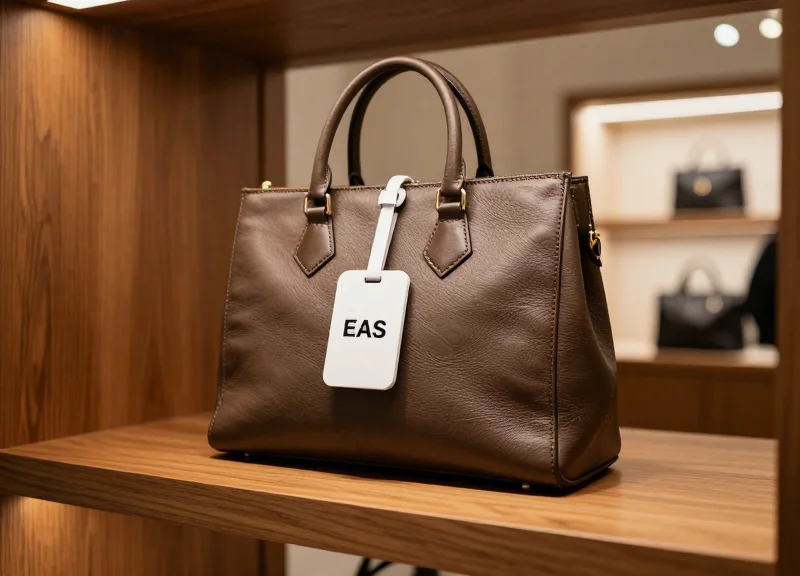
Yes, 'Non-Invasive' tagging technology now uses magnetic clasps or micro-RFID adhesive patches that leave no residue or puncture marks on premium materials like aniline leather or velvet.
Comparing Technologies: AM, RF, and the Rise of RFID
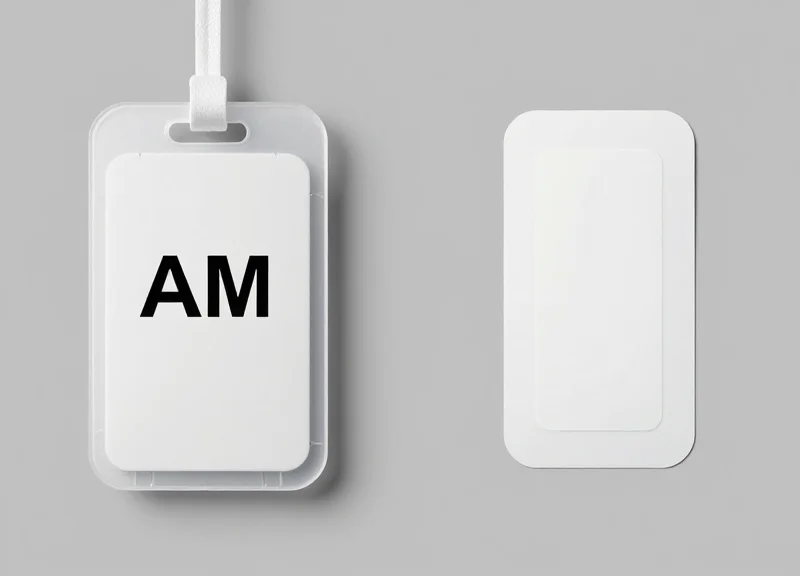
In 2026, selecting an Electronic Article Surveillance (EAS) technology for furniture showrooms is a strategic choice between the robust detection range of Acousto-Magnetic (AM) systems, the cost-effectiveness of Radio Frequency (RF), and the data-driven ecosystem provided by Radio Frequency Identification (RFID). While AM remains the industry standard for wide exits and metal-heavy environments, RFID is the 2026 frontrunner for 'Aesthetic Security,' merging loss prevention with real-time inventory visibility and near-invisible hardware integration.
| Technology | Typical Frequency | Metal Interference | Primary Advantage | Best Furniture Use Case |
|---|---|---|---|---|
| AM (Acousto-Magnetic) | 58 kHz | Minimal | Wide detection swaths | High-end showrooms with metal-framed furniture |
| RF (Radio Frequency) | 8.2 MHz | High (Detuning) | Inexpensive consumables | Soft-goods, upholstery, and decorative accents |
| RFID (UHF) | 860-960 MHz | Moderate | Inventory intelligence | Omnichannel hubs and luxury 'smart' showrooms |
- AM (Acousto-Magnetic): The reliable workhorse for furniture. AM tags work exceptionally well near metal, making them ideal for modern industrial-style furniture, steel-frame sofas, and spring mattresses that typically 'detune' and disable RF systems.
- RF (Radio Frequency): Budget-friendly but sensitive. RF is best suited for boutique showrooms focusing on soft furnishings and wooden decor. However, its limited range often requires more visible pedestals, which may clash with open-concept aesthetics.
- RFID (Radio Frequency Identification): The future of retail. Beyond security, RFID allows for 'invisible' gates embedded in floors or ceilings. It tracks individual SKU movements, providing data on which floor models are most frequently interacted with by customers.
Unique Insight: 2026 'Dielectric Tuning'. A critical advancement in 2026 EAS controllers is the ability to calibrate systems for the specific 'dielectric constants' of sustainable materials. As furniture shifts toward mycelium-based composites and recycled carbon fibers, older systems often trigger false alarms. Modern AM and RFID systems now feature AI-driven filtering that distinguishes between the signal of a security tag and the natural resonance of new-age eco-materials.
Can RFID replace traditional EAS in furniture stores?
Absolutely. In 2026, 'Exit-to-Cloud' logic allows RFID readers to trigger localized alarms while simultaneously flagging the specific SKU as 'stolen' in the global inventory database, facilitating automated insurance claims.
Which technology is most 'invisible'?
RFID is the clear winner for aesthetic security. Because it doesn't require the 'line-of-sight' or proximity constraints of RF, readers can be hidden within architectural features like crown molding or under-floor mats.
How does metal affect my choice?
If your showroom features significant amounts of chrome, steel, or aluminum, AM technology is the most stable choice to prevent 'shielding,' which is when metal blocks the security signal and allows tags to pass through undetected.
Invisible Protection: Under-Floor and Overhead EAS Solutions

Invisible Electronic Article Surveillance (EAS) refers to concealed security systems, specifically under-floor loops and overhead sensors, designed to detect active tags across wide showroom entrances without the use of visible pedestals. In 2026, these systems are the gold standard for open-concept furniture showrooms, offering detection ranges of up to 12 meters while maintaining an unobstructed path for customers and preserving the architectural integrity of high-end retail environments.
The transition to invisible protection is driven by the 'Experience First' retail model. Traditional pedestals create psychological barriers and physical bottlenecks that clash with the sprawling, curated 'room sets' typical of modern furniture galleries. By moving the antennas into the structural elements of the building—either the ceiling or the subfloor—retailers can secure massive exit spans that were previously impossible to cover without multiple, unsightly towers.
| Feature | Under-Floor (Concealed Loop) | Overhead (Ceiling Mount) |
|---|---|---|
| Installation Timing | Pre-flooring or major renovation required. | Post-construction or retrofit friendly. |
| Detection Height | Optimized for floor-to-waist level tags. | Optimized for head-to-waist level tags. |
| Visual Impact | 100% Zero Visibility. | Minimal (resembles lighting or smoke detectors). |
| Maximum Width | Up to 10-12 meters per controller. | Up to 6-8 meters per sensor unit. |
- Expert Tip: The 'Rebar Factor' in Under-Floor Systems: A critical 2026 procurement insight: If opting for under-floor loops, ensure your contractor performs a 'Signal Attenuation Map' before laying luxury screed. High concentrations of rebar or metal floor inlays (common in brutalist furniture designs) can create 'dead zones' or false alarms by distorting the magnetic field. Use non-conductive mesh within 1 meter of the loop to maintain peak performance.
Can overhead systems distinguish between a tag inside the store and one exiting?
Yes, modern 2026 overhead systems use phased-array antennas and directional sensing to determine the vector of a tag. This 'True-Exit' logic ensures that a tagged sofa near the entrance doesn't trigger an alarm unless it is physically moving toward the street.
Do invisible systems work with standard RFID tags?
Absolutely. While they originally utilized AM (Acousto-Magnetic) technology, current high-end invisible solutions are dual-mode, supporting both high-frequency RFID and traditional EAS to allow for both loss prevention and real-time inventory tracking.
What happens if a tag is detected by an invisible system?
Since there are no pedestals to flash red, invisible systems usually integrate with 'Smart Lighting' or 'Discreet Notification' systems. The showroom lights near the exit may pulse, or a silent alert is sent to staff mobile devices and wearable tech, allowing for a 'soft' recovery of the item.
Solving the 'Wide Entrance' Challenge

In 2026, the 'Wide Entrance' challenge is defined as the technical difficulty of maintaining a consistent electronic article surveillance (EAS) detection field across apertures exceeding 2.4 meters (approximately 8 feet) without the use of central floor-bolted pedestals. For furniture showrooms with sprawling glass facades and high-traffic open entryways, traditional proximity-based sensors often suffer from 'dead zones' in the center of the path. Solving this requires shifting from simple gate-based hardware to intelligent, synchronized antenna arrays that utilize beam-steering and phased-array technology to create a continuous, invisible security curtain.
| System Configuration | Max Effective Width | Aesthetic Impact | Best Use Case |
|---|---|---|---|
| High-Output AM Pedestals | Up to 2.4m | Moderate (Visible) | Standard double-door entries |
| Phased-Array Overhead | Unlimited (Modular) | Zero (Ceiling Hidden) | Mall-facing open storefronts |
| Hybrid Floor-Ceiling Sync | Up to 6.0m | Minimal (Low Profile) | High-ceiling flagship showrooms |
| RFID Beam Steering | Up to 10.0m | Low (Small Footprint) | Massive atrium-style galleries |
When dealing with non-standard architecture, such as double-height ceilings or metal-reinforced thresholds, procurement teams must look beyond 'out-of-the-box' specifications. The unique insight for 2026 is the adoption of Active Environmental Noise Cancellation (AENC). Unlike older systems that simply turn down sensitivity when they detect interference (leading to missed tags), AENC uses secondary 'listener' antennas to map background electromagnetic noise and digitally subtract it from the signal, allowing for wider detection spans even in environments crowded with LED displays and motorized furniture.
- Site Survey & RF Mapping: Before hardware selection, conduct a radio frequency (RF) audit to identify potential interference from HVAC systems, elevators, or neighboring storefronts.
- Antenna Synchronization: Ensure all antennas across a wide span are hard-wired to a single master controller to prevent 'phase cancellation' where overlapping signals negate each other.
- Beam Shaping Calibration: Utilize software-defined beam shaping to focus the detection energy specifically on the floor-level exit zone, preventing 'false alarms' from tagged furniture placed too close to the entrance.
How do I secure an entrance wider than 10 meters?
For ultra-wide entrances, we recommend a modular overhead RFID array. These systems can be daisy-chained across the entire ceiling span, providing zonal coverage that identifies exactly which item is leaving the 'geofenced' showroom area.
Do high ceilings (over 4m) affect overhead EAS?
Yes. Standard overhead systems lose effectiveness above 3.5 meters. In these cases, we deploy 'Pendant-Mount' antennas or high-gain narrow-beam sensors specifically tuned for long-distance detection.
Can I use wide-entrance systems with metal furniture?
Metal can reflect EAS signals, creating 'blind spots'. Solving this requires Acousto-Magnetic (AM) systems or specialized 'On-Metal' RFID tags that prevent the furniture frame from absorbing the signal.
Tagging High-Value Furniture: Discreet Solutions for Every Surface
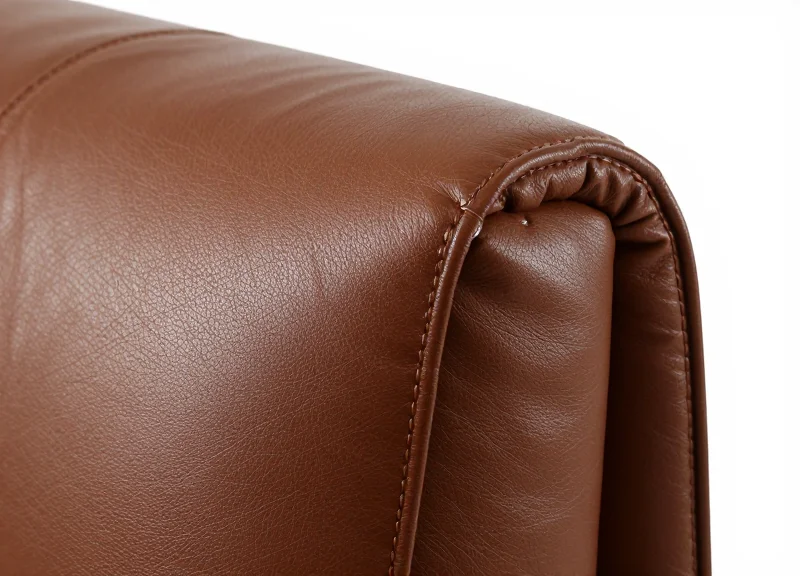
In 2026, the best EAS tagging strategy for furniture focuses on 'Substrate-Specific Security,' where the tag's attachment method—whether magnetic, adhesive, or mechanical—is engineered to prevent permanent marking or structural damage to luxury materials. By utilizing micro-RFID inlays or ultra-thin lanyard systems, showrooms can maintain a high-security perimeter while keeping the hardware nearly invisible to the casual shopper. Effective tagging balances high-strength detection with zero-impact application, ensuring that even the most delicate antiques or high-gloss modern finishes remain pristine.
| Material Type | Recommended Tagging Method | Impact Level | Best For |
|---|---|---|---|
| Solid Wood | Adjustable Steel Lanyard | Zero Impact | Dining tables, armoires, bed frames |
| Upholstered Fabric | Smooth-Pin Micro Tag | Minimal (Micro-puncture) | Sofas, armchairs, textile panels |
| Polished Metal | Shielded Adhesive RFID | Zero Impact | Modern shelving, accent tables |
| Fine Leather | Soft-Jaw Clamp Tag | Zero Impact | Executive chairs, premium ottomans |
Expert Insight: The 'Ghost-Tagging' Technique. For 2026, leading luxury retailers are adopting 'Ghost-Tagging'—the practice of applying tags to non-visible, non-finished surfaces like the underside of a marble slab or the interior of a sofa's dust cover. Unlike clothing, furniture allows for 'internalized security' where the tag is out of the buyer's sightline but within the EAS system's 2.5-meter read range. This preserves the tactile luxury experience, ensuring the customer interacts with the craftsmanship, not the security hardware.
Will tagging pins damage delicate upholstered fabrics?
Modern 2026-spec smooth-pin tags use a tapered, polished point that separates fabric fibers rather than cutting them. This prevents 'runs' or permanent holes, leaving no visible trace once the tag is removed with a professional detacher.
How do you tag metal furniture without signal interference?
Metal surfaces act as a shield for traditional RF signals. Use 'On-Metal' RFID tags or AM (Acousto-Magnetic) tags equipped with a ferrite spacer. This creates a tiny gap between the metal and the resonator, ensuring the signal is not grounded.
What is the best way to secure modular furniture sets?
For modular units, we recommend 'Anchor-and-Link' tagging. One high-visibility 'anchor' tag is placed on the primary piece, while discreet micro-RFID stickers are placed on secondary modules to ensure the entire configuration is tracked as a single unit.
- Substrate Audit: Identify the primary material of the piece (porous wood, metal, or textile) to determine if an adhesive, lanyard, or pin is safest.
- Hidden-Point Selection: Locate a structural point that is not visible during standard display—such as the rear leg interior or under the seat frame.
- Tag Orientation: Ensure the tag is oriented parallel to your EAS pedestals or under-floor sensors to maximize the pick-up rate and signal strength.
Integrating EAS with Smart Showroom Analytics

Integrating EAS with smart showroom analytics involves transforming your security pedestals and overhead sensors into sophisticated data collection nodes. By 2026, procurement standards have shifted from 'passive protection' to 'active intelligence,' where EAS hardware connects via cloud APIs to a central dashboard. This allows furniture retailers to correlate security events with foot traffic, dwell times, and staff response speeds, effectively turning a loss prevention tool into a high-powered marketing and operational asset.
| Feature | Legacy EAS Systems | 2026 Integrated Smart EAS |
|---|---|---|
| Primary Function | Alarm on exit trigger | Predictive behavior & flow analytics |
| Data Connectivity | Disconnected / Local Log | Real-time Cloud/API integration |
| Traffic Tracking | Basic beam breaking | AI-driven directional counting |
| ROI Metric | Reduced shrinkage only | Conversion rates & labor optimization |
- Establish API Connectivity: Ensure your EAS controller supports modern REST APIs or MQTT protocols to push data to your business intelligence (BI) software in real-time.
- Cross-Reference POS Data: Sync EAS 'alarm events' with point-of-sale data to distinguish between genuine theft attempts and 'non-deactivation errors' by staff.
- Deploy Heat Mapping: Utilize the sensor arrays in overhead EAS systems to generate heat maps of showroom traffic, identifying which furniture vignettes are attracting the most attention.
A unique insight for 2026 is the 'Zonal Engagement Metric.' By utilizing low-energy Bluetooth (BLE) embedded in modern RFID/EAS tags, showrooms can now track how often a specific armchair or sofa is sat upon or moved. When integrated with EAS exit data, retailers can identify if a 'high-touch' item is also a 'high-theft' item, allowing for dynamic adjustments in security staffing levels specifically for those high-risk zones without impacting the open-concept aesthetic.
How does EAS integration improve conversion rates?
By analyzing the ratio of foot traffic (from EAS sensors) to transactions (from POS), managers can identify if a showroom is understaffed during peak periods, leading to lost sales rather than theft.
Is the data GDPR compliant?
Yes, modern 2026 systems use anonymized metadata for tracking, focusing on movement patterns rather than individual facial recognition or personal identification.
Can smart EAS help with inventory management?
If using RFID-based EAS, the system automatically updates inventory levels as items pass through portals, reducing the need for manual cycle counts in large furniture warehouses.
ROI and Long-Term Maintenance for Furniture Retailers
In 2026, the Return on Investment (ROI) for furniture showroom security has shifted from simple 'shrinkage prevention' to 'operational asset management.' For high-end furniture retailers, the true ROI is realized when a system maintains a zero-profile aesthetic while reducing annual inventory loss by an average of 18–25% and cutting manual audit labor by up to 40%. A comprehensive Total Cost of Ownership (TCO) model must include the initial hardware and installation, recurring software licensing for smart analytics, and the labor cost associated with tag application and removal throughout the furniture lifecycle.
| Cost Factor | Concealed Under-Floor (5-Year) | Standard Pedestal (5-Year) | Impact on ROI |
|---|---|---|---|
| Initial Procurement | High ($15k - $30k) | Moderate ($5k - $12k) | Concealed systems take longer to break even but protect brand equity. |
| Installation Labor | High (Requires flooring work) | Low (Plug-and-play) | Strategic placement reduces future remodeling costs. |
| Maintenance & Support | Predictive (Cloud-monitored) | Reactive (On-site tech) | Remote diagnostics reduce downtime by 60% in modern systems. |
| Tag Reuse & Waste | Circular (Hard tags) | Consumable (Labels) | Tag reuse cycles significantly lower the TCO after Year 2. |
Expert Insight: The 'Aesthetic Tax' vs. 'Invisible Savings'. While concealed systems (under-floor or overhead) carry a 30-40% premium upfront, retailers often overlook the 'Phantom Labor Cost' of standard pedestals. In open-concept showrooms, pedestals often create 'dead zones' where furniture cannot be displayed, costing retailers potential sales per square foot. By choosing invisible security, you regain high-value floor space, often paying for the system's premium within the first 14 months through increased sales density alone.
- Step 1: Baseline Shrinkage Audit: Analyze the last 24 months of loss by category (e.g., small accessories vs. floor models) to determine where the highest recovery potential exists.
- Step 2: Calculate Labor for Tagging: Estimate the man-hours required for applying and removing tags. Modern RFID-EAS hybrid tags may take longer to apply but offer massive savings during inventory counts.
- Step 3: Factor in Remote Technical Support: Select a vendor offering 24/7 remote calibration. This prevents expensive on-site technician call-outs when metal-framed furniture is moved near sensors.
How long do EAS tags last in a furniture environment?
High-quality hard tags for furniture have a lifespan of 7–10 years. The internal batteries in active RFID components typically require replacement or recharging every 3–5 years depending on scan frequency.
What are the hidden costs of 'Tag Reuse'?
The primary hidden cost is the cleaning and detaching process. In 2026, we recommend automated magnetic detachers integrated into the POS to speed up this process and reduce human error.
Is a service contract necessary?
Yes. For furniture showrooms, environmental changes (like moving a steel-frame sofa) can cause signal interference. A service contract ensuring bi-annual recalibration is essential for preventing false alarms.
The 2026 Procurement Checklist: Top 5 Questions for Vendors
Selecting an EAS vendor in 2026 requires moving beyond simple price-per-tag metrics to a focus on 'Invisible ROI'—the intersection of aesthetic integrity, operational uptime, and data utility. For open-concept furniture showrooms, the procurement process must prioritize systems that provide 360-degree coverage without disrupting the carefully curated floor plan. Your goal is to identify a partner, like DragonGuardGroup, who treats security as an architectural element rather than a hardware add-on, ensuring the showroom remains a high-conversion environment while neutralizing the risk of high-ticket inventory shrinkage.
How does your system maintain a 98%+ detection rate across wide, open-concept entrances without visual pedestals?
In 2026, premium showrooms demand 'invisible' protection. Ask if the vendor utilizes under-floor loop technology or ceiling-mounted beam arrays. Ensure they provide a performance guarantee for detection widths exceeding 3 meters, specifically in environments with high ambient electronic noise from showroom lighting and smart furniture.
Can your EAS hardware integrate directly with our existing ERP and foot-traffic analytics platforms via open APIs?
Modern security should not exist in a silo. A top-tier vendor must offer cloud-ready hardware that syncs alarm data with store traffic patterns. This allows you to differentiate between a technical false alarm and a genuine security event, while also correlating loss events with specific sales-floor staffing levels.
What is the documented Total Cost of Ownership (TCO) over a 5-year period, including tag replacement and remote diagnostic fees?
Initial hardware costs are often the tip of the iceberg. Demand a breakdown of recurring costs: frequency of tag failures, the cost of specialized detachers, and whether system calibrations require an on-site technician or can be handled via remote firmware updates.
How do your tagging solutions protect high-end materials like velvet, leather, and reclaimed wood without leaving permanent marks?
Furniture protection is unique because the 'package' is the product. Vendors should demonstrate non-invasive tagging solutions, such as adjustable lanyards for chair legs or magnetic soft tags for upholstery seams, that leave zero residue or structural indentation upon removal.
What AI-driven false-alarm suppression features are included to minimize floor-staff distraction?
Frequent false alarms erode staff trust and customer comfort. Ask about 'Tag-in-Store' filtering, which prevents the system from triggering when tagged items are merely moved near the exit, a common issue in open-concept layouts where furniture displays are often adjusted.
| Evaluation Criterion | Threshold for Excellence | Weighting (%) |
|---|---|---|
| Aesthetic Impact | Zero-footprint (concealed or integrated) | 35% |
| Detection Range | Reliable coverage up to 4 meters per unit | 25% |
| Data Integration | Real-time API/Cloud dashboard access | 20% |
| Material Safety | Certified 'No-Mark' tagging mechanisms | 20% |
Expert Procurement Tip: Always request a 'Ghost-Signal Log' from a vendor's existing installation. By reviewing 24 hours of system logs from a similar high-ceiling, open-concept environment, you can see exactly how many 'phantom' alarms the system generated due to environmental interference. If a vendor cannot or will not provide this data, it is a significant red flag regarding the system's stability in a complex architectural space.