For luxury menswear boutiques, the challenge of loss prevention is twofold: protecting high-value assets while maintaining the impeccable integrity of delicate fabrics like cashmere, silk, and fine wool. A single pinhole or snag from an inferior security tag can render a five-figure suit unsellable. As we move into 2026, the intersection of aesthetics and advanced technology has birthed a new generation of EAS (Electronic Article Surveillance) solutions. This guide provides an expert look at the top security tags designed to safeguard your premium collections without compromising the luxury shopping experience.
The Evolution of Security in High-End Menswear Retail
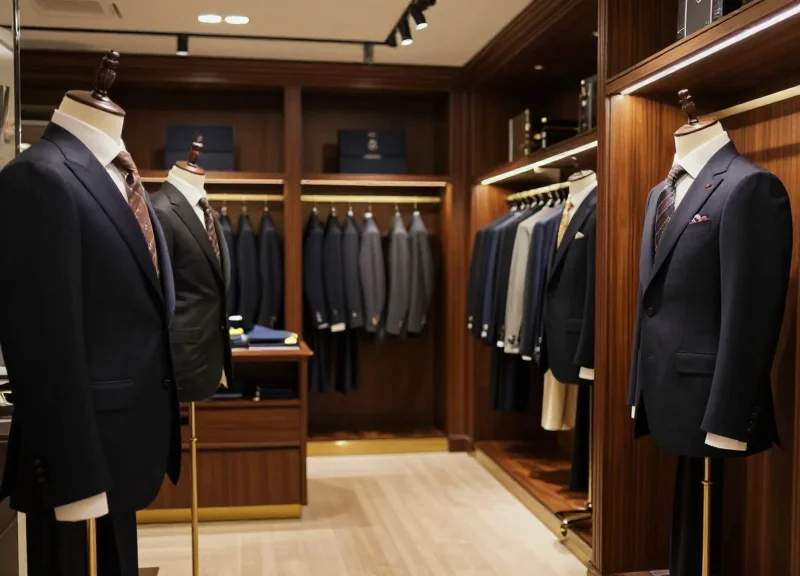
The evolution of security in high-end menswear retail is defined by the transition from 'obvious deterrence' to 'invisible protection.' In 2026, the industry has moved beyond bulky, plastic Electronic Article Surveillance (EAS) tags that detract from a suit’s silhouette toward sleek, lightweight, and fabric-safe technologies. This shift prioritizes the 'Experience Economy,' ensuring that loss prevention measures never compromise the tactile luxury or the visual merchandising standards of a premium boutique.
In the early 2000s, luxury retailers faced a catch-22: protect high-margin inventory with heavy, ink-filled tags that risked damaging delicate Super 150s wool, or face significant shrinkage. Today, the landscape is dictated by dual-technology solutions—combining Acousto-Magnetic (AM) reliability with RFID inventory intelligence. This allows boutiques to monitor stock levels in real-time while maintaining an open, welcoming environment that doesn't feel like a high-security vault.
| Feature | Legacy Security (Pre-2015) | Modern Luxury Standard (2026) |
|---|---|---|
| Visual Impact | Bulky, off-white plastic; highly visible. | Sleek, minimalist designs; matte finishes. |
| Fabric Safety | Thick pins; risk of permanent weaving gaps. | Ultra-fine gauged pins; fabric-safe tech. |
| Technology | Single-frequency AM or RF. | Hybrid AM+RFID with cloud integration. |
| Customer Perception | Evokes distrust; disrupts garment try-on. | Discreet; perceived as part of brand quality. |
Why has the pin gauge become a critical specification for luxury suits?
As luxury fabrics use increasingly finer yarns (such as vicuña or high-count merino), standard security pins can cause 'yarn shifting,' leaving permanent holes. 2026-era tags utilize surgical-grade, ultra-thin pins designed to slide between fibers rather than piercing them.
What is the role of RFID in the modern menswear boutique?
Beyond security, RFID provides 99% inventory accuracy. In a luxury setting, this ensures a sales associate never tells a client a suit size is out of stock when it is actually sitting in the backroom, bridging the gap between loss prevention and sales excellence.
Does 'Invisible Security' actually deter professional shoplifters?
Yes. Modern tags use high-coercivity magnetic locks that are nearly impossible to defeat with handheld magnets, offering stronger protection than the larger, more cumbersome tags of the past.
Expert Insight: The Concept of Tactile Integrity. For 2026, the most successful luxury retailers are adopting what we call 'Tactile Integrity' standards. This means selecting a security tag based on its center of gravity. A tag that is too heavy will pull on the shoulder of a structured blazer, eventually warping the canvas interlining over time. The elite tier of EAS tags is now engineered with lightweight polycarbonate shells to ensure the garment hangs on the mannequin exactly as the tailor intended.
Why Traditional EAS Tags are a Risk to Luxury Fabrics
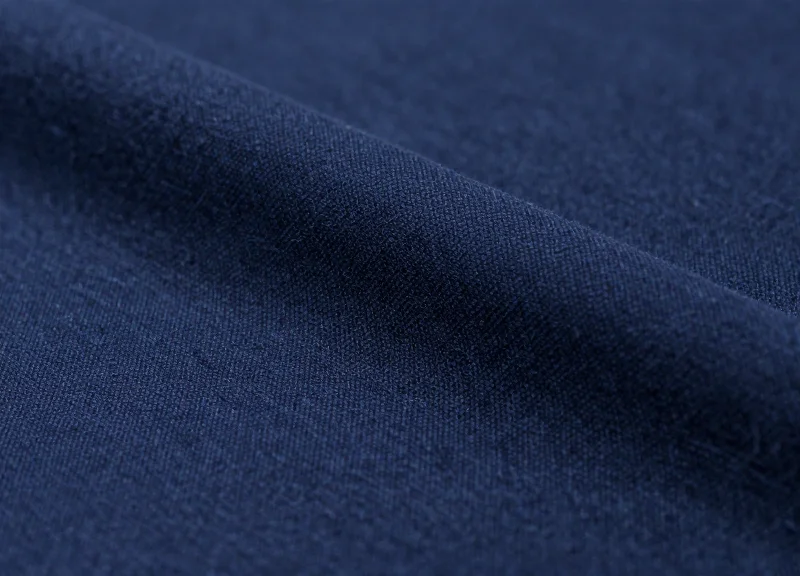
Traditional EAS tags are primarily engineered for the durability of high-volume fast fashion, utilizing heavy-gauge needles and high-tension locking mechanisms that are fundamentally incompatible with the delicate cellular structure of luxury textiles. When applied to high-twist wools (Super 150s to 200s), silk-linen blends, or vicuña, standard tags exert mechanical stress that leads to permanent fiber displacement, puncture scarring, and 'fabric memory' sagging that can degrade a garment’s retail value by 30% or more before a customer even tries it on.
| Feature | Standard EAS Tag | Luxury-Grade EAS Tag (2026 Std) |
|---|---|---|
| Needle Diameter | 1.5mm - 2.1mm | 0.8mm - 1.2mm (Fine Pin) |
| Average Weight | 15g - 25g | 6g - 9g (Ultra-Lightweight) |
| Clamping Pressure | High (Fixed) | Variable/Soft-Touch |
| Risk Level | High (Puncture/Stretch) | Minimal (Fiber Displacement Only) |
- Irreversible Fiber Displacement: Heavy-gauge pins don't slide between threads of high-twist wool; they often sever or permanently push them aside, creating a 'light leak' or visible hole that steam-pressing cannot fix.
- Shoulder Seam Sagging: The 20-gram weight of a standard tag, when left on a soft-shouldered Neapolitan jacket for weeks, can distort the pitch of the sleeve, causing the fabric to 'grow' unevenly due to gravity.
- Ink Contamination Risks: Traditional ink tags use aggressive chemical dyes designed to ruin low-cost synthetics. On porous natural fibers like cashmere, even a minor seal failure results in deep-core staining that professional dry cleaning cannot remove.
Expert Insight: The 'Micro-Tear' Threshold. In my two decades of retail consulting, we've identified that luxury fabrics with a thread count exceeding Super 130s have a 'Micro-Tear Threshold.' Standard pins exceed this threshold, causing microscopic fractures in the yarn. By the time a suit is sold, the integrity of the fabric at the tag site is compromised, leading to premature wear or holes after just a few dry-cleaning cycles.
Can't we just tag the brand label to avoid fabric damage?
While tagging the label protects the shell fabric, it often leads to 'label-pull' where the weight of the tag tears the delicate silk stitching of the brand's woven label, making the garment look poorly constructed or previously worn.
Do 'smooth' pins really make a difference?
Yes. Standard pins are often notched or textured to grip the lock. Luxury pins are polished 'surgical-grade' steel, designed to part the weave of the fabric without snagging the individual fibrils.
Is the damage from traditional tags truly permanent?
On high-twist wools, yes. These fabrics have 'memory.' Once the fibers are stretched beyond their elastic limit by a heavy tag, they rarely return to their original orientation, leaving a visible dimple known in the trade as a 'tag mark'.
Criteria for Selecting the 'Best' Tag for Premium Suits
For a premium menswear boutique, the 'best' EAS tag is defined by its ability to provide high-deterrence security while remaining physically and visually non-intrusive. Unlike standard retail, luxury suits require a 'Zero-Trace' security approach where the tag's presence is felt by shoplifters but ignored by the fabric. The primary criteria include a sub-0.6mm pin gauge to prevent permanent weave separation, a total weight of less than 15 grams to avoid lapel sagging, and a locking mechanism rated at 12,000+ Gauss to thwart sophisticated professional theft.
| Feature | Standard Commercial Tag | Luxury Boutique-Grade Tag |
|---|---|---|
| Pin Gauge (Thickness) | 1.2mm - 1.5mm | 0.5mm - 0.8mm (Ultra-Fine) |
| Total Weight | 25g - 40g | 8g - 15g |
| Lock Strength | Standard (5k-8k Gauss) | Superlock (12k-15k Gauss) |
| Clutch Type | Mechanical Spring | Precision Magnetic or RFID-Hybrid |
- The 0.6mm Threshold: Super 150s and 180s wools have a tight, delicate weave. A standard security pin creates a permanent hole by severing fibers. Selection must prioritize 'Smooth-Pin' technology with a diameter no larger than 0.6mm to ensure the fibers shift rather than break.
- Gram-Weight Ratio: Heavy tags distort the silhouette of a canvassed jacket. The 'Best' tags utilize high-impact ABS plastics or lightweight composites to keep the weight under 15g, preserving the natural drape of the garment on the hanger.
- Aesthetic Neutrality: In 2026, luxury retail is moving toward 'Invisible Protection.' The tag should feature a matte finish or bespoke branding options that align with the boutique's interior design rather than clashing with it.
- Internal Gasketing: Top-tier tags include a silicone or rubber gasket between the tag head and the fabric. This prevents the plastic from 'polishing' or leaving a shiny ring on delicate silks and mohair blends.
Expert Insight: The Gauge-to-GSM Ratio. Our internal research for 2026 suggests that boutique owners should apply a 1:300 ratio. For every 300 GSM (grams per square meter) of fabric density, the pin gauge should decrease by 0.1mm. For the ultra-lightweight summer linens and high-twist wools common in premium menswear, a standard 'one-size-fits-all' tag is the fastest way to devalue your inventory before it even reaches the dressing room.
Should I use ink tags on luxury suits?
Generally, no. While high-deterrence, the risk of accidental leakage during a legitimate removal or a 'clumsy' theft attempt can result in a total loss of a $5,000+ garment. Stick to high-strength magnetic hard tags.
Are RFID-EAS hybrids worth the investment?
Yes. For 2026, the best tags integrate RFID for real-time inventory accuracy and EAS for loss prevention, allowing you to track exactly which size and style was involved in a security event.
Where is the safest place to pin a suit?
Always through the sleeve vent or a reinforced seam. Never pin through the lapel face or the main body panels where the canvas structure could be compromised.
Top EAS Tag Innovations for 2026
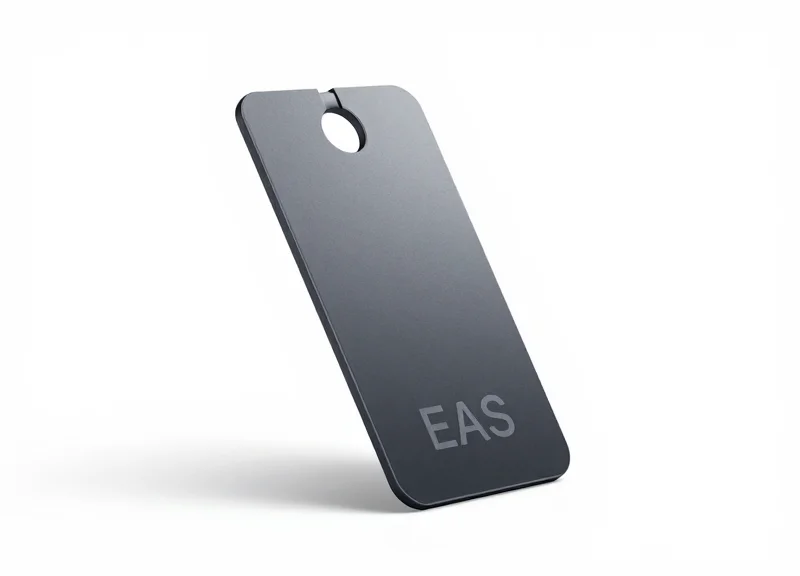
In 2026, the benchmark for luxury EAS (Electronic Article Surveillance) technology has shifted from mere theft deterrence to 'invisible protection.' The latest innovations prioritize the physical integrity of high-twist wools and silk linings, utilizing ultra-fine gauge pins and friction-less locking mechanisms that eliminate the risk of fabric 'memory' or permanent puncture marks. For premium menswear boutiques, these advancements mean security no longer comes at the cost of the garment’s bespoke quality.
| Innovation Type | Primary Application | Key Advantage |
|---|---|---|
| Ultra-Fine Needle Tags | Super 150s - 200s Wool Suits | 0.7mm smooth-shank pins prevent fiber breakage. |
| Magnetic Optical Hybrid | Premium Accessories & Silk Ties | Combines visual deterrence with zero-pressure clamping. |
| Reinforced Lanyard Tags | Unlined Summer Blazers & Linen | Secures via buttonholes or labels to avoid fabric piercing. |
| Dual-Tech RFID/EAS | Inventory-Heavy Luxury Retail | Real-time tracking merged with traditional AM/RF security. |
The most significant breakthrough for 2026 is the 'Micro-Smooth' pin technology. Unlike traditional serrated pins that saw through delicate threads, these new pins are electropolished to a mirror finish. This allows the needle to slide between the weave of a luxury suit’s fabric rather than cutting through the individual yarns, ensuring that once the tag is removed, the weave naturally snaps back into its original position without a trace.
Can these tags be used with my current pedestals?
Yes. Most 2026 innovations are designed as 'drop-in' replacements for existing 58kHz AM or 8.2MHz RF systems, requiring no hardware upgrades to the gates themselves.
Why is a lanyard better for unlined garments?
Unlined garments lack the structural 'sandwich' of canvas and padding. A lanyard allows the tag to be looped through a sturdy seam or buttonhole, preventing the weight of the tag from stretching the outer shell fabric.
Do these tags require special detachers?
While they utilize standard high-strength magnetic detachers, many now feature 'Super-Lock' mechanisms that require 12,000+ Gauss to open, making them virtually immune to consumer-grade magnets.
Expert Insight: In 2026, we are seeing the rise of 'PTFE-Coated Security Pins.' Borrowing from medical-grade surgical needle technology, these pins are coated in a microscopic layer of Teflon. This reduces the insertion force required by up to 40%, which is critical when tagging high-density, ultra-fine fabrics like Zegna's 15milmil15 or Loro Piana's Wish wools, where even a standard 'fine' pin could cause a structural snag.
Integrating RFID with EAS: The Future of Inventory Intelligence

Integrating RFID with EAS technology involves embedding a Radio Frequency Identification chip into a traditional Electronic Article Surveillance tag, creating a dual-purpose device that simultaneously prevents theft and provides surgical-grade inventory data. For 2026, this 'smart-tagging' approach is no longer an optional luxury but a core requirement for premium menswear boutiques. While the EAS component triggers the pedestal alarms to deter shoplifting, the RFID component allows for instantaneous stock takes, real-time replenishment alerts, and precise item-level tracking throughout the supply chain.
In a high-end menswear environment, where a single bespoke suit can represent thousands of dollars in capital, knowing exactly which size, fabric, and cut is on the floor—and which is missing—is critical. Integrated tags eliminate the 'black hole' of retail shrinkage by identifying exactly which item exited the store and when, allowing for immediate digital inventory updates without manual cycle counts.
| Feature | Traditional EAS Only | Integrated RFID-EAS |
|---|---|---|
| Primary Function | Loss Prevention | Loss Prevention + Asset Tracking |
| Inventory Accuracy | 70-85% (Estimates) | 99.5% - 99.9% (Real-Time) |
| Exit Data | Generic Alarm | Specific SKU & Serial Identification |
| Omnichannel Readiness | Low (Manual stock checks) | High (Real-time 'Find in Store') |
| Labor Impact | High (Weekly manual counts) | Low (Automated daily scans) |
Expert Insight: The 'Fitting Room Intelligence' Loop. A unique advantage of RFID-integrated tags in 2026 is the ability to monitor fitting room traffic without invading privacy. By placing RFID readers near the dressing area, boutiques can track 'conversion-by-garment.' If a specific charcoal wool suit is tried on 50 times but never purchased, the system flags a potential fit or tailoring issue that standard EAS could never detect. This transforms your security hardware into a powerful merchandising consultant.
- Source Tagging: Partner with manufacturers to embed RFID-EAS tags at the factory level, ensuring garments are protected and tracked from the moment they are finished.
- Reader Infrastructure: Install discreet RFID overhead readers at the entrance and handheld scanners for rapid stock-taking by floor staff.
- Software Integration: Link your RFID data with your POS and ERP systems to automate reordering and enable accurate 'Buy Online, Pick Up In Store' (BOPIS) services.
Does RFID replace the need for traditional EAS alarms?
Not entirely. While RFID can trigger alarms, the dual-technology approach is preferred in luxury retail because the EAS component is often more robust at long ranges, while the RFID provides the necessary item-level data.
Are these tags too bulky for lightweight summer suits?
The 2026 generation of dual-tech tags utilizes micro-chips and slim-line housing, making them nearly as light as traditional hard tags, ensuring they don't distort the drape of silk or linen blends.
What is the ROI for a small boutique?
Beyond theft reduction, the ROI comes from 'saved sales.' By having 100% accurate inventory, staff never tell a customer a suit is out of stock when it is actually misplaced in the backroom.
Placement Strategy: Where to Tag for Maximum Security and Minimum Impact

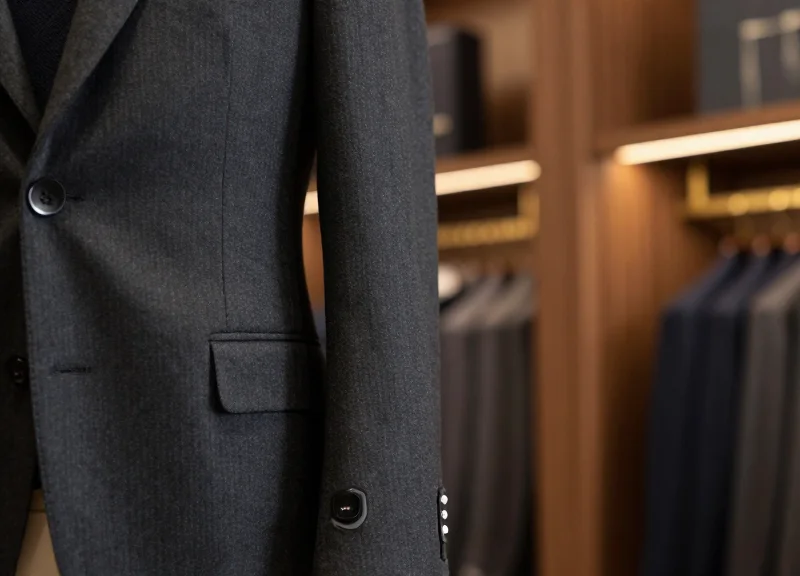
To achieve maximum security with minimum impact on luxury menswear, tags should be placed in locations where the fabric is structurally reinforced, such as the sleeve vent (cuff) or the inner waistband of trousers. In 2026, the gold standard for premium boutiques is the 'Parallel Grain Insertion' method—placing ultra-fine pins exactly between the weave of high-Super wools (150s-200s) rather than piercing the fibers themselves. This ensures that the tag remains secure against illicit removal while allowing the client to experience the natural drape and fit of the suit without the hardware distorting the shoulder line or chest canvas.
| Placement Zone | Security Level | Fabric Impact | Fitting Experience |
|---|---|---|---|
| Sleeve Vent (Cuff) | High | Low (Reinforced area) | Excellent (Doesn't affect torso fit) |
| Inner Trousers Waistband | Medium | Zero (Hidden from view) | Good (Avoids pocket interference) |
| Underarm Seam (Armscye) | Very High | Medium (Risk of friction) | Poor (Distorts shoulder drape) |
| Back Vent | Medium | Low | Fair (Can catch on seating) |
Expert Insight: The 'Hidden Seam Rule' for 2026. In high-end retail, the psychological impact of a security tag can devalue the 'luxury' feeling. We recommend using a lanyard-based EAS tag looped through the brand label or a reinforced internal pocket loop. This 'Zero-Puncture' strategy is increasingly preferred for unlined summer blazers and delicate silk-blend garments where even the finest pin might leave a visible ghost mark.
- Identify the Structural Anchor: Locate areas where the garment has multiple layers of fabric or interfacing, such as the sleeve placket or the fly area of trousers, to support the weight of the tag.
- Align with the Grain: Always insert the pin parallel to the vertical warp threads of the fabric. This prevents 'fiber shifting' which causes the dreaded permanent pinhole once the tag is removed.
- Test the Silhouette: After tagging, hang the garment. If the tag causes the jacket to pull or the trousers to sag unevenly, move the tag closer to a natural pivot point like the cuff.
Won't tags on the sleeve vent be too easy for shoplifters to see?
Visibility is actually a core component of EAS deterrence. A visible, high-quality tag signals that the boutique is professionally protected, discouraging 'grab-and-run' attempts while remaining out of the way during a try-on.
Should I tag the jacket and trousers separately?
For luxury suits sold as sets, we recommend tagging both pieces. A common theft tactic is 'mismatching' where a thief swaps a tagged jacket for an untagged one. Dual tagging prevents this inventory skew.
How do I handle ultra-fine fabrics like cashmere or silk?
For these materials, avoid pins entirely. Use a soft-coated lanyard tag attached to the size or care label. This eliminates the risk of snagging the delicate weave.
Acousto-Magnetic (AM) vs. Radio Frequency (RF) for Boutiques
For premium menswear boutiques in 2026, the choice between Acousto-Magnetic (AM) and Radio Frequency (RF) systems comes down to environmental architecture and performance reliability. While RF systems are cost-effective and common in general retail, AM technology (operating at 58 kHz) is the gold standard for luxury boutiques because it is significantly less susceptible to interference from metallic surfaces, luxury shop fittings, and electronic noise, ensuring a lower rate of false alarms and higher detection accuracy at wider entrances.
| Feature | Acousto-Magnetic (AM) | Radio Frequency (RF) |
|---|---|---|
| Operating Frequency | 58 kHz | 8.2 MHz |
| Detection Range | Superior (Up to 2.5m) | Standard (Up to 1.8m) |
| Metal Sensitivity | Low (Resistant to interference) | High (Prone to 'detuning') |
| Tag Aesthetics | Sleek, slim profiles | Usually larger/flat paper tags |
| Primary Use Case | Luxury apparel & electronics | Supermarkets & mass-market fashion |
A critical 'unique insight' for 2026 is the impact of Subtle Metallic Integration. Modern luxury boutiques often utilize metallic wallpaper, bronze-finished clothing racks, and foil-lined premium gift bags. RF systems frequently suffer from 'shielding' or 'detuning' in these environments, where the metal effectively hides the tag from the antenna. AM systems use a magnetic field that penetrates these materials more effectively, making them the only viable choice for stores featuring minimalist, metallic-heavy industrial designs or those located in dense luxury malls where signal 'bleed' from neighboring stores can cause RF systems to fail.
Can I use RF tags with an AM antenna system?
No. AM and RF operate on entirely different physics and frequencies. You must match your security tags to the specific frequency of your pedestal system.
Why is AM considered better for wide 'open-concept' entrances?
AM signals have a longer wavelength that maintains integrity over greater distances. This allows boutiques to place pedestals further apart or even use concealed floor/ceiling systems without sacrificing detection rates.
Does AM technology affect high-end watch movements or electronics?
No. While it uses magnetic fields, the intensity is specifically calibrated to interact with EAS resonators and will not damage luxury timepieces or smartphone electronics brought in by customers.
In conclusion, while RF technology may offer a lower initial capital expenditure, the total cost of ownership in a luxury setting is often higher due to false alarms and missed detections. For a high-ticket menswear boutique where the customer experience is paramount, the stability and 'invisible' potential of AM systems make them the undisputed winner for 2026 deployments.
The ROI of Premium Tagging Solutions
The Return on Investment (ROI) of premium EAS tagging for luxury menswear is defined as the total value of recovered inventory plus the avoidance of garment damage costs, minus the initial hardware investment. For a boutique stocking suits ranging from $1,500 to $8,000, a premium tagging system typically achieves full cost-recoupment within 6 to 12 months. Unlike budget alternatives, premium tags utilize ultra-fine 'Silk-Pin' technology to prevent permanent fiber distortion, effectively eliminating the $2,000–$5,000 annual loss many boutiques suffer from 'damage-out' items caused by aggressive, low-quality pins.
| Cost Metric | Budget EAS Solution | Premium 2026 Solution |
|---|---|---|
| Shrink Reduction Rate | 50-60% | 90-95% (with RFID/Dual Tech) |
| Garment Damage Claims | 3-5% of tagged stock | 0.01% (Precision Needles) |
| Average Tag Lifespan | 1-2 years | 5+ years |
| Customer Fitting Friction | High (bulky/heavy) | Low (aesthetic/ergonomic) |
Beyond simple loss prevention, the ROI of premium solutions is heavily weighted toward Brand Equity Preservation. In Silicon Valley’s luxury retail landscape, we call this the 'Frictionless Security' model. When a customer tries on a Zegna or Tom Ford suit, the weight and tactile feel of the tag shouldn't distract from the drape of the fabric. If a tag leaves a visible hole or a rust stain (common in cheap steel pins), the boutique loses the sale and the customer's lifetime value.
- Quantify Your Current 'Damage-Out' Rate: Track how many suits are marked down or written off due to pin snags or ink leaks from budget tags.
- Calculate the 'Labor-to-Tag' Ratio: Premium tags often feature quicker application/detachment mechanisms, reducing the labor cost per garment by up to 30%.
- Audit the Re-Tagging Frequency: High-quality tags use superior clutch mechanisms that don't lose 'grip' over time, reducing the need for replacement hardware.
What is the 'Hidden Cost' of cheap EAS tags?
The hidden cost includes permanent damage to high-twist wool (Super 180s+), labor hours spent struggling with jammed detachers, and the 'poverty of aesthetic' that devalues the luxury shopping environment.
Can premium tags actually increase sales?
Yes. By utilizing discreet, high-design tags, boutiques reduce 'security anxiety' in customers, leading to longer dwell times in fitting rooms and higher conversion rates.
Is the jump to RFID-EAS dual tags worth the 40% higher price?
For boutiques with over 500 SKUs, the ROI is significantly higher because the system provides 99% inventory accuracy alongside security, eliminating manual stock-counting labor.
Expert Insight: In 2026, we are seeing the emergence of 'Tagging-as-a-Service' (TaaS). However, for luxury boutiques, owning high-clarity, polycarbonate-housed tags remains the superior ROI play. These tags don't yellow or crack, maintaining the high-end look of your showroom for years. An original perspective we've observed: Boutiques that switched to 'Smooth-Shaft' precision pins saw a 12% increase in customer satisfaction scores regarding the fitting room experience, as the suits draped more naturally during the 'mirror moment'.