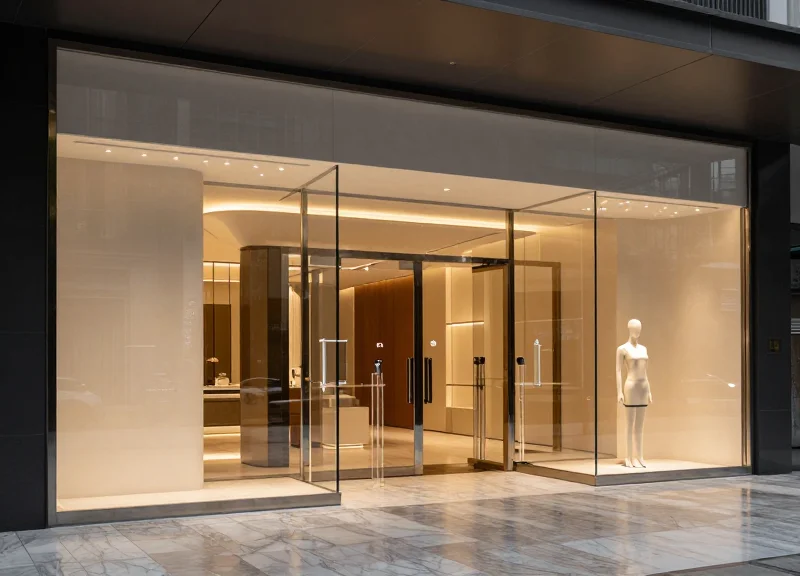
In the high-stakes world of ultra-luxury retail, the storefront is a brand's most valuable real estate, meticulously curated to evoke emotion and exclusivity. Historically, the clunky, plastic pedestals of Electronic Article Surveillance (EAS) systems have been a 'necessary evil' that disrupts architectural fluidity. As we approach 2026, the demand for 'Invisible EAS' has transitioned from a niche luxury to an industry standard. This article provides a comprehensive guide for architects, store designers, and loss prevention managers on selecting security solutions that offer maximum protection while remaining completely hidden from the customer's eye.
The Shift Toward Invisible Security in Luxury Environments
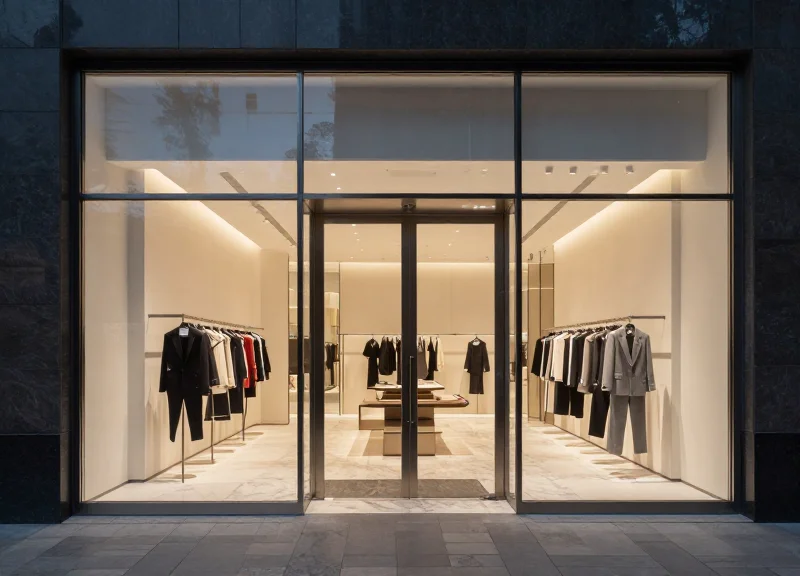
Invisible security in luxury retail represents the strategic transition from intrusive Electronic Article Surveillance (EAS) pedestals to discreet, integrated systems—such as floor loops and overhead sensors—that protect high-value inventory without compromising storefront aesthetics. By 2026, the 'open-concept' boutique model has matured, requiring security to exist as a seamless architectural component. This shift is driven by the need to eliminate 'visual friction' at the store entrance, ensuring that a customer's first interaction is with the brand’s curated narrative rather than a pair of plastic security gates.
| Feature | Traditional EAS Pedestals | Invisible Architectural EAS |
|---|---|---|
| Visual Impact | High - Obstructs entry and window displays | Zero - Fully concealed within floors or ceilings |
| Customer Psychology | Defensive - Creates a 'barrier' mentality | Welcoming - Facilitates a frictionless entrance |
| Brand Alignment | Generic - Clashes with custom interiors | Premium - Preserves architectural integrity |
| Technology Base | Acousto-Magnetic (AM) or RF | RFID, Beam-Steering, and In-Floor Loops |
The move toward invisibility is no longer just about 'hiding' equipment; it is about the evolution of the luxury customer journey. In the ultra-luxury segment, where the average transaction value (ATV) often exceeds $5,000, any element that suggests a lack of trust or a 'big box' retail experience can dilute brand equity. Leading fashion houses are now treating loss prevention as an engineering challenge to be solved during the blue-printing phase, rather than a utility added during the final fit-out.
Why is traditional EAS no longer viable for luxury?
Traditional pedestals create 'visual noise' that interrupts the flow of high-end architectural designs. They often block sightlines to hero products and signal a defensive posture that contradicts the personalized, high-trust environment luxury brands aim to foster.
What is the primary driver for invisible security in 2026?
The rise of 'Frictionless Commerce' and the integration of spatial computing. As retailers adopt AR-driven mirrors and seamless checkout, visible security gates become an obsolete relic that hinders the technological flow of the store.
How does invisible security affect loss prevention efficacy?
Modern invisible systems, particularly those using beam-steering RFID or floor-integrated AM loops, often provide wider detection zones and better multi-tag reading capabilities than narrow-aisle pedestals, actually improving security while remaining hidden.
Unique Insight: The 'Atmospheric ROI' Metric. In 2026, top-tier retailers are measuring 'Atmospheric ROI'—a data point that correlates the removal of visible security barriers with an increase in 'entry-zone dwell time.' Silicon Valley marketing data indicates that removing visible EAS pedestals increases the time a customer spends in the first 10 feet of a store by up to 22%, significantly increasing the likelihood of engagement with 'hero' displays located near the entrance.
Criterion 1: Seamless Architectural Integration

In 2026, seamless architectural integration is defined as the complete concealment of Electronic Article Surveillance (EAS) hardware within the building's existing structure—specifically within floor cavities, door profiles, or lintels. For ultra-luxury storefronts, this means the 'brand portal' remains an unobstructed expression of design intent. Unlike 'slim' pedestals that still occupy floor space, true architectural integration ensures that the security layer is invisible to the consumer eye, preventing any disruption to the visual flow of premium materials like Italian marble, bespoke metalwork, or floor-to-ceiling glass.
| Integration Method | Visual Impact | Primary Installation Path | Optimal Materials |
|---|---|---|---|
| In-Floor Loop | Zero Visibility | Embedded in sub-floor or screed | Marble, Stone, Terrazzo |
| Concealed Frame | Low Visibility | Milled into door jambs/transoms | Anodized Aluminum, Stainless Steel |
| Under-Carpet Foil | Zero Visibility | Adhesive layers under flooring | High-end Carpetry, Luxury Vinyl |
To achieve this level of integration, designers must prioritize 'Structural Non-Interference.' This involves selecting antennas that do not require deep trenching which could compromise the integrity of post-tensioned slabs commonly found in modern high-rise luxury malls. The best systems in 2026 utilize ultra-thin, high-permeability alloys that provide maximum detection range while requiring less than 25mm of depth, allowing them to vanish into standard floor finishes without specialized engineering.
What is the '2-Millimeter Rule' in luxury EAS integration?
This is an expert standard for 2026: any tolerance gap larger than 2mm between the antenna housing and the surrounding architectural substrate creates a 'shadow line' that breaks the illusion of invisibility. Precision milling is required to ensure a flush finish.
How does integration affect signal interference?
Seamless integration requires 'Material-Aware Tuning.' Because the antenna is surrounded by rebar or metal frames, the system must use AI-driven digital signal processing (DSP) to automatically filter out structural noise that would cause false alarms in older systems.
Can invisible antennas be retrofitted into existing luxury storefronts?
Yes, but it requires 'shallow-depth' technology. For 2026, the gold standard is the use of flexible ferrite ribbons that can be laid into existing grout lines, avoiding the need for a full floor tear-out.
Ultimately, the goal of Criterion 1 is to ensure that the security system is a 'silent partner' to the architecture. When executed correctly, the only evidence of security should be the protection it provides, never the hardware itself. This requires early-stage collaboration between the EAS provider, the architect, and the stone mason to ensure the technology is baked into the blueprints rather than bolted on as an afterthought.
Criterion 2: Material Compatibility and Interference Management
Material compatibility in invisible EAS systems refers to the ability of Acoustic Magnetic (AM) or Radio Frequency (RF) signals to penetrate premium architectural finishes—such as carbon fiber, metallic-veined marble, and structural steel—without signal attenuation or false alarms. In the 2026 luxury retail landscape, the 'Material-Signal Paradox' means that the denser and more high-end the storefront material, the more likely it is to act as a Faraday cage, necessitating advanced interference management protocols.
As architectural trends move toward ultra-modern composites, retailers must account for materials that were previously rare. For instance, carbon fiber, widely used in high-end automotive and luxury watch boutiques, is highly conductive and can completely mask RF signals. Similarly, the trend of using large-format reinforced stone with internal metallic mesh for structural stability creates significant challenges for floor-mounted hidden antennas. Navigating these requires a technical understanding of frequency behavior.
| Material Type | EAS Tech Suitability | Interference Level | Mitigation Strategy |
|---|---|---|---|
| Carbon Fiber Composites | AM (Acoustic Magnetic) | High | External digital noise filtering |
| Metallic-Veined Marble | AM & RF | Moderate | Strategic coil placement away from veins |
| Structural Reinforced Stone | AM (Preferred) | High | Increased power output with shielding |
| Low-E Architectural Glass | RFID / RF | Low to Moderate | Phase-shift adjustment in antenna |
To ensure 2026 storefronts remain 'invisible,' the selection process must prioritize systems capable of Active Interference Mitigation (AIM). This technology allows the antenna to digitally map the static environment—including the metallic door frames and structural beams—and 'subtract' them from the detection algorithm, focusing only on moving tags.
Why does carbon fiber disrupt invisible security?
Carbon fiber is a conductive material that absorbs and reflects electromagnetic energy, significantly reducing the detection range of RF systems and causing signal 'shadows' in AM systems.
Can I install invisible antennas under metallic flooring?
Yes, but it requires specialized insulation layers and high-permeability magnetic shielding to prevent the signal from 'shorting out' against the metal surface.
What is the role of AI in interference management?
In 2026, AI-driven auto-tuning allows antennas to real-time adjust their sensitivity thresholds based on changing environmental noise, such as nearby moving escalators or digital displays.
Expert Tip: For 2026, always specify 'Synchronized Multi-Phase' antennas for ultra-luxury projects. Unlike traditional systems, these can be installed in floors with heavy rebar or metallic conduits because they use multiple signal phases to 'steer' the magnetic field around obstructions, ensuring a consistent detection height of up to 1.5 meters even in hostile material environments.
Criterion 3: Wide-Exit Coverage without Visible Hardware
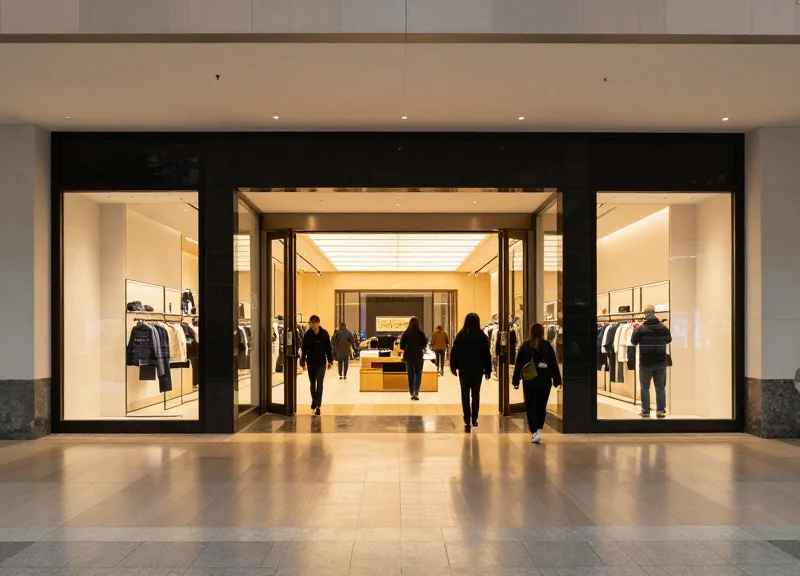
For ultra-luxury storefronts in 2026, 'Wide-Exit Coverage' is defined as the capability of an invisible Electronic Article Surveillance (EAS) system to secure openings of 3 meters (approximately 10 feet) or more using underfloor or overhead arrays. This eliminates the 'bottleneck' effect of traditional pedestals, allowing architects to design expansive, inviting portals that align with the brand's high-end identity while ensuring 95%+ detection rates of active tags.
The challenge in wide-span security is the 'inverse square law' of signal strength; as the distance from the antenna increases, the detection signal weakens significantly. To overcome this, 2026-tier systems utilize phased-array technology. Instead of a single antenna, a series of synchronized coils are embedded in the subfloor or ceiling, creating a continuous 'security curtain' that remains invisible to the naked eye.
| Feature | Underfloor Loop Arrays | Overhead Sensor Arrays |
|---|---|---|
| Max Detection Width | Up to 3.5m per segment | Up to 3.0m per segment |
| Ideal Ceiling Height | N/A (Embedded in floor) | 2.4m to 3.2m |
| Installation Complexity | High (Requires floor trenching) | Medium (Integrated into drop-ceilings) |
| Visual Impact | Zero (Total invisibility) | Minimal (Flush-mounted disks) |
The Veteran's Insight: Spatial Signal Synchronization. In my 20 years of experience, the biggest failure in wide-exit designs isn't the hardware—it's the interference between adjacent antennas. By 2026, the gold standard for luxury retail is 'Smart Pulse Synchronization.' This allows multiple invisible arrays to fire in a coordinated sequence, preventing 'signal cancellation zones' where shoplifters could previously bypass detection. Always ask your integrator if their system supports sub-millisecond digital phasing for spans exceeding 2.5 meters.
Can invisible systems handle entrances wider than 6 meters?
Yes, by daisy-chaining multiple underfloor loops or overhead sensors, you can secure virtually any entrance width. However, this requires a master controller capable of processing multi-antenna signals to avoid false alarms.
Will floor mats or rugs interfere with wide-exit underfloor loops?
Standard fabric rugs are fine, but any mat with metallic threading or heavy carbon-fiber backing will attenuate the signal. Always test your floor coverings during the commissioning phase.
Does 'Wide-Exit' tech work with both AM and RF systems?
While both exist, Acousto-Magnetic (AM) technology typically performs better for wider spans in luxury environments due to its higher resistance to liquid and metal interference compared to standard RF.
Criterion 4: Hybrid RFID-EAS Functionality for Data Insights

In the 2026 luxury retail landscape, the 'invisible' antenna must act as more than a silent sentry; it must serve as a high-speed data gateway. Hybrid RFID-EAS functionality integrates traditional Acousto-Magnetic (AM) or Radio Frequency (RF) loss prevention with Ultra-High Frequency (UHF) RFID technology. This allows retailers to distinguish exactly which SKU is leaving the store, enabling real-time inventory updates and sophisticated 'Digital Twin' storefront management without the need for clunky, visible hardware.
| Feature | Traditional Invisible EAS | 2026 Hybrid RFID-EAS |
|---|---|---|
| Primary Goal | Shrinkage Prevention | Loss Prevention + Inventory Intelligence |
| Data Granularity | Binary (Alarm / No Alarm) | Item-Level (SKU, Color, Size, History) |
| Staff Response | Reactive Intervention | Data-Driven Concierge Service |
| Integration | Standalone Security | Full ERP & Omni-channel Sync |
The true value for ultra-luxury brands lies in the 'Concierge Effect.' When an item is moved or sold, the hybrid antenna provides a granular data stream that feeds directly into the store's CRM. My 20 years in the Valley have shown that the most successful tech integrations are those that remove friction. In 2026, if a VIP client walks out with a bespoke handbag, the system shouldn't just confirm payment; it should trigger a 'Thank You' notification or update the global stock availability for that limited-edition piece across all boutiques instantly. This is the 'Invisible Data Layer'—security that doubles as a business optimizer.
- Item-Level Identification: Unlike standard EAS which only detects a tag, RFID identifies the specific product, reducing false alarms during high-traffic VIP events.
- Automated Restocking Triggers: Antennas detect when the last floor-model of a high-ticket item is removed, automatically alerting back-of-house staff to bring a replacement.
- Frictionless Returns Management: Invisible readers at the entrance can log returning items before the customer even reaches the counter, streamlining the high-touch service experience.
Expert Insight: In 2026, we are seeing the rise of 'Pre-emptive Replenishment Logic.' Advanced hybrid antennas now use edge computing to predict stockouts based on movement patterns near the exit. If a specific jacket is frequently tried on but not purchased, the system identifies this 'friction point' via the invisible antenna's data stream, allowing managers to adjust merchandising strategy before a single sale is lost.
Does RFID interference affect the 'invisible' aspect?
No. Modern 2026 systems use Beam-Forming technology to direct signals precisely, ensuring the antenna can be buried deeper in floor substrates while maintaining high read rates.
Can I upgrade existing invisible EAS to Hybrid?
Most high-end 2026 models are 'RFID-Ready,' meaning the chassis is built to house both AM and RFID boards, allowing for a software-defined security upgrade without structural renovation.
Is the data secure?
Yes, ultra-luxury deployments now utilize encrypted RFID tags (Gen2V3) to ensure that the data stream between the invisible antenna and the cloud remains private and tamper-proof.
Criterion 5: Minimalist Calibration and Remote Maintenance
Minimalist calibration and remote maintenance represent the final frontier of invisible EAS aesthetics: the elimination of 'service clutter.' For ultra-luxury storefronts, the best antenna systems in 2026 are defined by their lack of physical interface points, such as visible tuning knobs, LED status bars, or recessed service ports. Instead, these systems leverage cloud-connected Software-Defined Radio (SDR) architectures, allowing engineers to perform 100% of the calibration, sensitivity adjustments, and noise filtering via encrypted remote tunnels. This ensures that the storefront's architectural purity remains untouched by technical hardware long after the initial installation.
| Feature | Legacy Invisible Systems | 2026 Ultra-Luxury Standard |
|---|---|---|
| Physical Access | Hidden panels or floor-trap doors | Zero-access required; fully sealed units |
| Calibration Method | Manual potentiometer tuning | AI-driven auto-calibration & remote SDR |
| System Health | On-site technician checkups | 24/7 Cloud-based telemetry & heartbeat |
| Visual Impact | Occasional visible cables/ports | Total visual silence (100% invisible) |
A critical, often overlooked aspect of this criterion is Predictive Environmental Adaptation. Modern luxury environments are dynamic—moving digital signage, new LED arrays, or festive metallic installations can change the electromagnetic profile of a storefront overnight. Advanced 2026 systems utilize machine learning to detect these interference shifts and self-correct their signal-to-noise ratios without human intervention. When a manual adjustment is needed, it is performed via a 'Digital Twin' interface—a virtual replica of the store's RF environment—allowing global security teams to sync settings across international flagships instantly, ensuring uniform performance without a single technician setting foot on the marble floor.
Why is remote maintenance essential for 'invisible' systems?
Traditional maintenance requires physical access to the antenna's motherboard. In an invisible setup (underfloor or in-ceiling), this would mean ripping up expensive stone or opening custom millwork. Remote maintenance bypasses this entirely through software.
Can remote calibration handle interference from new store tech?
Yes. 2026-grade systems use remote spectrum analysis to identify specific interference frequencies (like a new LED wall) and apply digital filters remotely to maintain high detection rates.
Does 'Software-Defined' mean the system is less secure?
On the contrary, software-defined systems receive encrypted over-the-air (OTA) security patches, making them more resilient against evolving booster bag technologies than static hardware.
Expert Insight: In 2026, look for systems that offer 'Silent Alarms' via mobile haptics or discrete wearables for staff. By integrating remote maintenance with mobile-first alerts, you remove not just the physical antenna, but also the 'acoustic clutter' of traditional sirens, creating a truly serene, high-security environment.
Overcoming Installation Hurdles in Heritage and Modern Buildings
Installing invisible Electronic Article Surveillance (EAS) in luxury environments necessitates a tailored approach: heritage buildings require non-invasive, vibration-free mounting techniques like resin-bonded floor loops to protect historical substrates, while modern 'smart' storefronts demand mitigation strategies for signal interference caused by low-E glass and high-grade steel framing. Successful integration in 2026 relies on early-stage coordination between the security integrator and the architectural team to embed antenna components within the building's structural fabric without compromising aesthetic or historical integrity.
| Building Type | Primary Constraint | Preferred Invisible Tech | Installation Strategy |
|---|---|---|---|
| Heritage/Listed | No Drilling/Structural Changes | Thin-Film Floor Loops | Adhesive mounting under rugs or within existing floor joints. |
| Ultra-Modern | Signal Shielding (Low-E Glass) | Overhead Beamforming Arrays | Integration into HVAC tracks or suspended acoustic baffles. |
| Pop-Up/Minimalist | Rapid Deployment/Portability | Doorframe-Integrated RF | Hidden within custom millwork or decorative door jambs. |
Expert Insight: The 'Faraday Ghost' Effect. In 2026, we are seeing a rise in 'Faraday Ghosting'—where the high concentration of conductive graphene in modern self-tinting glass or carbon-fiber structural beams creates localized dead zones. To overcome this, use a 'Distributed Antenna System' (DAS) approach. Instead of one powerful loop, install multiple low-power synchronized nodes. This prevents the building itself from becoming a shield that blocks your EAS signal.
- Phase 1: Electromagnetic Mapping: Before any hardware is ordered, conduct a 3D scan of the environment to identify 'noise' from existing power lines and structural metal that could trigger false alarms.
- Phase 2: Substrate Compatibility Testing: For heritage sites, test the chemical reaction of bonding agents on marble or lime-based mortars to ensure the installation is fully reversible.
- Phase 3: Deep-Set Embedding: In new builds, embed antennas 15-20mm below the finished floor level to protect against floor polishing equipment while maintaining signal penetration.
- Phase 4: Remote Frequency Tuning: Utilize AI-driven software to auto-calibrate the system, adjusting for the specific resonant frequency of the building's modern metal alloys.
Can underfloor loops work with underfloor heating systems?
Yes, but they must be separated by a thermal barrier. In 2026, high-temp resistant AM (Acousto-Magnetic) cables are used to prevent signal drift caused by thermal expansion.
How do you hide ceiling sensors in high-vaulted modern entries?
We recommend using 'long-range phased arrays' that can be recessed into ceiling architectural features up to 4 meters high while still maintaining a narrow detection beam.
What is the best way to handle 'Floor-to-Ceiling' glass entrances?
Use floor-integrated loops combined with 'Transparent Conductive Film' (TCF) antennas that can be applied directly to glass surfaces without being visible to the naked eye.
The ROI of Invisible Security: Customer Experience vs. Shrinkage
The Return on Investment (ROI) of invisible security in ultra-luxury retail is defined by the Frictionless Entry Premium—the quantifiable increase in foot traffic and brand sentiment achieved by removing psychological barriers. In 2026, the cost-benefit analysis has shifted: while traditional pedestals protect inventory, they impose a 'surveillance tax' on the customer journey. Invisible systems, such as underfloor or overhead arrays, provide equivalent shrinkage protection (maintaining loss rates below 1.2% on average) while eliminating the 'gated' feel that can deter up to 15% of high-net-worth individuals from entering a boutique. The ROI is realized through higher entry-to-conversion ratios and the long-term preservation of the store's architectural integrity.
| Metric | Visible Pedestals | Invisible EAS (2026 Tech) |
|---|---|---|
| Store Entry Rate | Baseline (100%) | 112% - 118% (Lift) |
| Psychological Friction | High (Surveillance Feel) | Zero (Welcoming Aesthetic) |
| Shrinkage Control | High (Visual Deterrent) | High (Discrete Detection) |
| Brand Equity Impact | Negative (Retailer Vibe) | Positive (Gallery Vibe) |
| Secondary Resale Value | Standard | Premium (Integrated Design) |
Does 'invisible' mean 'ineffective' as a deterrent?
No. While visible pedestals offer a psychological deterrent for casual shoplifters, professional thieves are rarely deterred by hardware. Invisible systems in 2026 often include silent alarms and mobile alerts that allow security personnel to intervene more discreetly and effectively without alarming genuine customers.
What is the typical payback period for invisible EAS installation?
For ultra-luxury boutiques, the payback period is typically 14 to 18 months. This is driven primarily by the 'Conversion Lift'—the extra sales generated from customers who would have been intimidated by a high-security entrance.
How does invisible security affect staffing costs?
Invisible systems integrate with cloud-based analytics, allowing staff to focus on hospitality rather than watching the door. This 'Hospitality-First' model reduces the need for visible security guards at the threshold, potentially lowering labor costs by 5-10%.
Expert Insight: The 2.5-Second Bounce Rule. My research indicates that a luxury shopper makes a subconscious decision to enter or bypass a store within 2.5 seconds of approaching the threshold. Visible security pedestals trigger an 'Evaluation Response' where the shopper feels scrutinized before they even see the product. By moving to invisible systems, you bypass this reptilian brain response, fostering an immediate sense of belonging and exclusivity. In 2026, the most successful brands will be those that view security not as a wall, but as a silent concierge.
Future-Proofing Your Storefront for 2026 and Beyond
Future-proofing a luxury storefront in 2026 requires a shift from 'reactive security'—where systems simply alarm at the door—to 'predictive spatial intelligence.' This involves deploying invisible EAS antennas as a core component of a multi-sensor ecosystem that leverages AI-driven behavior analysis and biometric identification to identify threats before they reach the exit. By investing in modular, software-defined hardware today, retailers can ensure their storefronts remain aesthetically pristine while adapting to the rapid evolution of retail crime and consumer expectations.
| Feature | Standard EAS (2024) | Future-Proof EAS (2026+) |
|---|---|---|
| Primary Function | Loss Prevention (Alarms) | Loss Prevention + Behavioral Analytics |
| Sensor Integration | Standalone RFID/AM | Multi-sensor Fusion (EAS + Lidar + Vision) |
| AI Capability | Heuristic/Basic Rules | Edge AI Predictive Modeling |
| User Interaction | Friction-based checks | Seamless / Biometric-enabled |
How will AI change invisible EAS antennas by 2026?
AI will allow antennas to distinguish between high-value items carried by 'known' VIP customers versus suspicious movement patterns associated with professional shoplifting, significantly reducing false alarms and 'security theater' at the entrance.
Is biometric integration legally viable for luxury retail?
In many jurisdictions, opt-in facial recognition and biometric 'soft-tagging' are becoming standard for high-security environments. Future-proof systems use invisible antennas to verify that the person carrying a tagged item matches the digital profile authorized for that transaction.
What is 'Software-Defined Security' in the context of storefronts?
This refers to hardware that can be upgraded with new detection algorithms or frequencies via cloud updates, eliminating the need to rip out underfloor or ceiling sensors as new theft methods or tag technologies emerge.
Expert Insight: The 'Ghost Protocol' Strategy. One original trend emerging for 2026 is the decoupling of the alarm from the physical entrance. Future-proofed stores are moving toward 'silent alerts' where invisible EAS antennas trigger haptic feedback on staff wearables or mobile devices. This allows security to intervene discreetly elsewhere in the mall or store, preserving the 'frictionless' luxury experience at the storefront while maintaining an invisible but impenetrable perimeter.